Struggling with high water bills and pump repairs?
A failing pump can disrupt your home or business.
You need a reliable, efficient solution.
A good water pump brand offers proven reliability, high energy efficiency, and strong support. While legacy brands like Grundfos are leaders, the "best" brand truly depends on your specific application, water depth, and power source, with solar pumps emerging as a top choice for off-grid areas.
Choosing the right water pump is a critical decision.
It impacts your daily operations, long-term costs, and peace of mind.
A great pump works silently and efficiently in the background.
A bad one becomes a constant source of frustration and expense.
This guide will break down what makes a pump brand "good".
We will explore top-tier conventional brands.
Then, we will dive deep into the innovative world of solar water pumps.
This will help you find the perfect solution for your specific needs.
Top 10 Water Pump Brands – Reliability and performance
Feeling overwhelmed by countless pump brands?
Choosing the wrong one can lead to costly downtime and repairs.
You need clarity to make a confident decision.
The best water pump brands like Grundfos, Franklin Electric, and Xylem set the standard with cutting-edge technology and proven durability. They are trusted by professionals for their consistent performance in residential, commercial, and industrial applications.
When you look at the global market, a few names consistently rise to the top.
These companies have built their reputations over decades of engineering excellence.
They are known for innovation, quality control, and extensive service networks.
Understanding what makes these brands leaders can help you evaluate any pump, regardless of the name on the box.
The key is to look beyond marketing and focus on the factors that deliver real-world value.
These factors include the pump's construction, its energy efficiency, and its suitability for your specific water conditions.
A brand that excels in all these areas is a brand you can trust.
How Legacy Brands Set the Standard
Legacy brands like Grundfos, Wilo, and Franklin Electric are industry benchmarks for a reason.
They invest heavily in research and development, pushing the boundaries of what a pump can do.
Grundfos, for example, is renowned for its focus on energy efficiency and smart, self-regulating pumps.
These systems can reduce energy costs by over 20% in many applications.
Franklin Electric is a leader in motor technology, providing the powerhouse behind many of the world's most reliable submersible pumps.
Their motors are legendary for their durability, even in harsh conditions.
German manufacturer Wilo is known for precision engineering, resulting in pumps that are exceptionally quiet and have a long operational lifespan.
These companies prove that a higher upfront cost often translates to lower lifetime ownership costs through energy savings and fewer repairs.
Key Performance Indicators to Compare
Comparing brands requires looking at concrete data.
Simply choosing the cheapest option is a common mistake that leads to higher costs over time.
A pump's purchase price is often less than 15% of its total lifetime cost, with energy consumption making up the vast majority.
This is why efficiency is so important.
Here is a simplified comparison of what to look for:
| Feature | Premium Brands | Value Brands |
|---|---|---|
| Typical Lifespan | 15-25 years | 12-18 years |
| Energy Efficiency | Very High (Saves 10-20% more) | Moderate |
| Upfront Cost | $$$ (High) | $$ (Medium) |
| Best For | Deep wells, smart systems, critical use | Standard residential use, shallow wells |
| Construction | Stainless steel, advanced composites | Cast iron, standard plastics |
The Importance of Application-Specific Design
The best brands offer a wide range of products designed for specific tasks.
A pump designed for a residential basement (a sump pump) is fundamentally different from one designed to irrigate a 100-hectare farm.
For residential wells, submersible pumps are the standard.
They are installed inside the well casing, deep below the water level.
This design is more efficient and quieter than older jet pump systems.
Jet pumps are only suitable for very shallow wells, typically less than 25 feet deep, making them impractical for most modern well systems.
For agricultural or industrial use, pumps must be built for heavy-duty, continuous operation.
Brands like Goulds and KSB excel here, offering robust pumps that can move massive volumes of water for irrigation, dewatering, or municipal supply.
Choosing the right brand starts with matching the pump's design to your specific application.
Why Solar Water Pumps Are a Game-Changer
Reliant on an unstable or expensive power grid?
This limits access to essential water for your farm or home.
There is a better way.
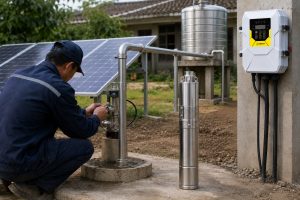
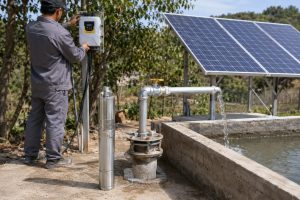
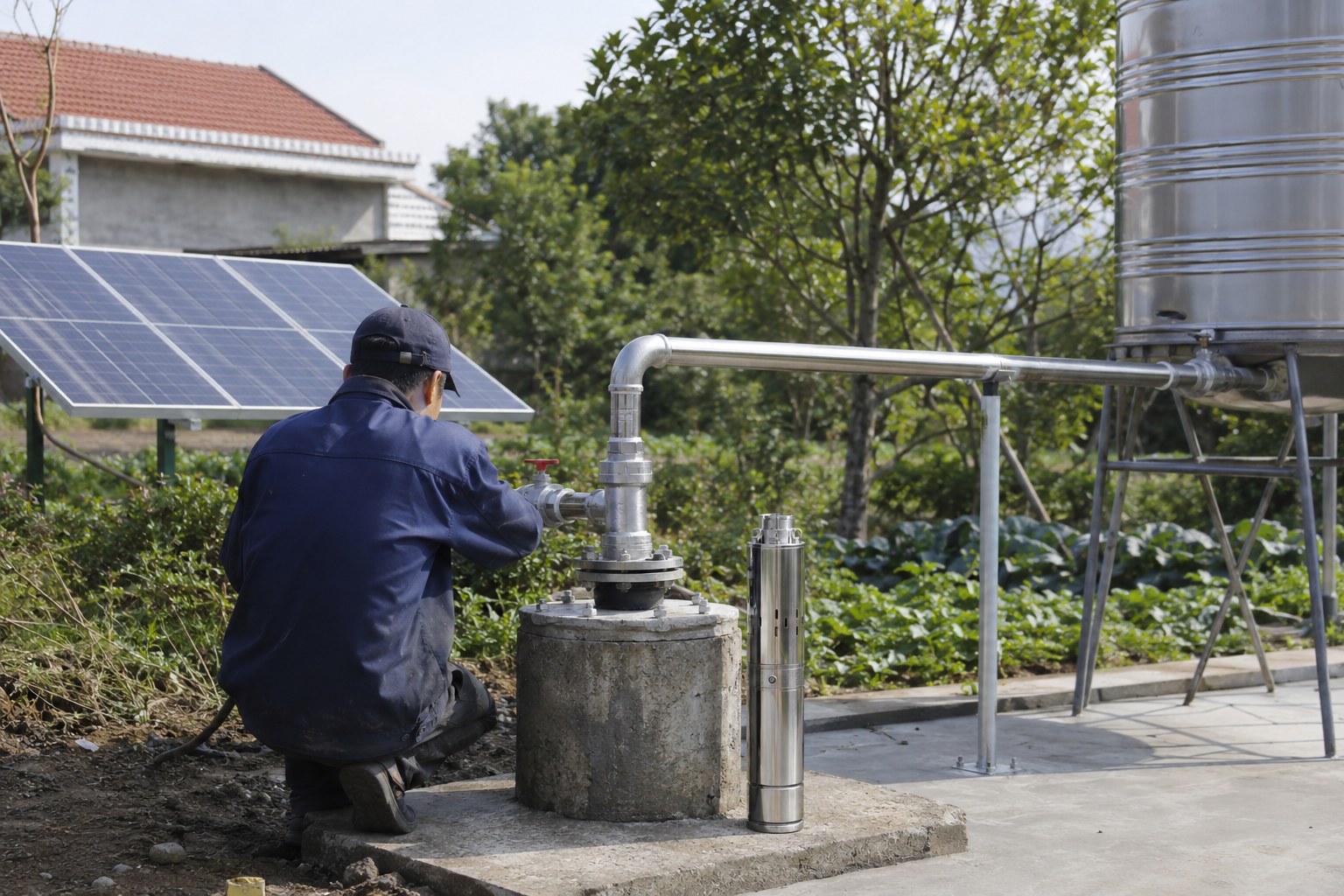
Solar water pumps are a game-changing solution, providing energy independence and significant cost savings. They operate off-grid, are eco-friendly, and deliver reliable water for agriculture and domestic use, making them essential in developing regions.
The conversation about water pumps is shifting.
While traditional brands are excellent, their reliance on grid electricity is a major limitation in many parts of the world.
In Africa, Australia, South America, and vast rural areas of Asia, the grid can be unreliable or non-existent.
Diesel generators have been the historical alternative, but they are expensive to run, require constant refueling, and produce harmful emissions.
This is where solar water pumps provide a revolutionary alternative.
They harness the power of the sun to provide a clean, free, and reliable energy source for pumping water.
This technology is unlocking agricultural potential and providing clean drinking water to communities that were previously underserved.
The Power of Off-Grid Water Solutions
The primary benefit of a solar pump is energy independence.
You are no longer at the mercy of power outages or fluctuating fuel prices.
Once installed, the fuel—sunlight—is free.
This can dramatically reduce operational costs, with many systems paying for themselves in just a few years.
Compared to a diesel generator, a solar pump system can reduce daily operating costs by over 90%.
It also eliminates the carbon footprint associated with fossil fuels.
This makes solar pumps an environmentally responsible choice for sustainable agriculture and water management.
The reliability is also a major factor.
With no complex moving parts like a generator engine, solar pump systems are incredibly durable and require very little maintenance.
The Heart of the System: The BLDC Motor
The magic behind modern solar pumps is the Brushless DC (BLDC) permanent magnet motor.
This is not the same motor you would find in an old appliance.
BLDC motors are a leap forward in efficiency and design.
Their efficiency ratings often exceed 90%, whereas traditional AC motors might operate at 70-80% efficiency.
This high efficiency is crucial for a solar-powered system.
It means the motor can do more work with less power.
As a result, you need fewer solar panels to run the pump, which significantly lowers the initial system cost.
These motors use powerful rare-earth magnets, like 40SH neodymium iron boron, in their rotors.
This design creates high torque in a compact size.
A modern BLDC pump motor can be up to 47% smaller and 39% lighter than a traditional motor of equivalent power.
This makes installation easier and less expensive, especially in remote locations.
The brushless design also means there are no brushes to wear out, making the motor virtually maintenance-free with a very long service life.
Choosing the Right Solar Deep Well Pump
Think all solar pumps perform the same?
A mismatch between the pump type and your well's needs leads to poor performance and premature failure.
Choosing the right solar deep well pump is critical. Solar screw pumps are for deep wells with low flow. Plastic impeller pumps offer high flow for irrigation. Stainless steel impeller pumps provide ultimate durability in corrosive water.
Once you have decided on solar, the next step is to choose the right type of pump.
The "pump end"—the part that actually moves the water—is designed for specific conditions.
Just like with conventional pumps, there is no one-size-fits-all solution.
A solar pump portfolio is built around three core designs, each powered by the same ultra-efficient BLDC motor.
The choice depends on a simple trade-off: flow rate versus head (pumping height).
It also depends on the quality of your water.
Understanding these three types will empower you to select the perfect pump for your well.
Solar Screw Pump: For Deep Wells and High Head
The solar screw pump is a specialist for deep wells.
It uses a positive displacement mechanism, featuring a single helical stainless steel screw (rotor) that turns inside a rubber stator.
This action traps and pushes pockets of water upward.
This design generates immense pressure, allowing it to pump water from extreme depths.
However, this high pressure comes at the cost of flow rate.
It is a low-flow, high-head device.
This makes it ideal for domestic water supply, filling storage tanks, and livestock watering in areas like Africa and Latin America where wells can be very deep.
Another key advantage is its exceptional resistance to sand, which would quickly destroy other pump types.
| Feature | Solar Screw Pump |
|---|---|
| Flow Rate | Low (e.g., 1-5 GPM) |
| Head (Height) | Very High (up to 200m+) |
| Sand Resistance | Excellent |
| Best Application | Deep domestic wells, livestock watering |
Solar Plastic Impeller Pump: For High Flow and General Use
This is the workhorse of solar pumps.
It is a multi-stage centrifugal pump.
It uses a series of stacked plastic impellers that spin at high speed, throwing water outward and upward from one stage to the next.
This design produces a much higher flow rate than a screw pump, but with a more moderate head.
It is perfect for applications that need more water volume, such as farm irrigation, pasture management, and supplying large home gardens.
Modern plastic impellers are made from durable, wear-resistant polymers that offer good resistance to fine sand.
They are also lightweight and more economical, making them a popular choice in the Americas and Africa for general agricultural use.
Their main limitation is in highly corrosive water or extremely deep wells, where other materials are more suitable.
| Feature | Solar Plastic Impeller Pump |
|---|---|
| Flow Rate | High (e.g., 10-50+ GPM) |
| Head (Height) | Medium (up to 100m) |
| Sand Resistance | Good (for fine sand) |
| Best Application | Farm irrigation, general water transfer |
Solar Stainless Steel Impeller Pump: For Durability and Corrosive Water
This is the premium option for challenging water conditions.
This pump is also a multi-stage centrifugal design, but it uses impellers made from high-grade SS304 stainless steel.
The pump housing and other key components are also stainless steel.
This construction provides superior resistance to corrosion from acidic or alkaline water.
It is the ideal choice for regions with aggressive water chemistry or alkaline soils, such as parts of Australia and the Americas.
It offers high flow rates and a long, reliable service life, making it suitable for high-end homes, commercial applications, and ranches where water quality is a concern and reliability is paramount.
The trade-off is a higher initial cost and greater weight, but for the right application, the investment provides unmatched durability.
| Feature | Solar Stainless Steel Impeller Pump |
|---|---|
| Flow Rate | High (e.g., 10-50+ GPM) |
| Head (Height) | Medium to High (up to 150m) |
| Corrosion Resistance | Excellent |
| Best Application | Corrosive water, high-end applications |
What About Cloudy Days or Nighttime Pumping?
Worried about your solar pump stopping on cloudy days or at night?
Your critical water supply can't wait for the sun.
You need a 24/7 solution.
Modern solar pumps solve this with AC/DC hybrid technology. An intelligent controller automatically switches to grid power or a generator when sunlight is low. This guarantees an uninterrupted water supply, day and night, in any weather.
The most common question about solar pumps is about their performance when the sun is not shining.
While many systems are designed to pump water into a storage tank during the day for later use, some applications require on-demand water 24/7.
This is a critical need for households and livestock that cannot be without water.
Early solar systems required a manual switchover to a backup power source, which was inconvenient.
Modern pump brands have solved this problem elegantly with advanced controller technology.
This innovation removes the final barrier for many people considering a switch to solar, offering the best of both worlds: free solar energy and round-the-clock reliability.
The AC/DC Hybrid Controller Explained
A hybrid controller is the brain of the modern solar pump system.
It is designed with two power inputs: one for the DC power from your solar panels and another for AC power from the grid or a generator.
The controller's primary job is to use solar power whenever it is available.
It continuously monitors the input from the solar panels.
When there is sufficient sunlight, the pump runs entirely on free solar energy.
If clouds roll in and the solar power drops, the controller automatically supplements the solar power with AC power to maintain pump performance.
This "hybrid" function maximizes the use of every bit of available solar energy.
When the sun sets and there is no solar input, the controller seamlessly switches over to the AC power source to keep the pump running.
The entire process is automatic, requiring no user intervention.
Benefits of a Hybrid Pumping System
This technology offers several powerful advantages.
First and foremost is the guarantee of an uninterrupted water supply.
You get water whenever you need it, regardless of the weather or time of day.
This provides invaluable peace of mind for critical applications.
Second, it delivers maximum energy savings.
The system is programmed to prioritize free solar energy, only drawing from the expensive grid or a generator when absolutely necessary.
This ensures you have the lowest possible electricity bill without sacrificing reliability.
Finally, it provides ultimate flexibility.
The system can be installed in a fully off-grid location with a generator backup, or in a location with an unstable grid connection.
It intelligently manages the available power sources to deliver a consistent and cost-effective water supply.
For a small increase in initial cost, the hybrid controller adds a massive amount of functionality and security to your water system.
Conclusion
Choosing the right brand means matching technology to your needs.
Modern solar pumps with high-efficiency motors and hybrid controls offer the most reliable, cost-effective, and sustainable water solutions available today.
FAQs
What is the most reliable water pump brand?
Brands like Grundfos and Franklin Electric are known for reliability. However, the best brand depends on your specific needs, with solar pumps offering top-tier reliability for off-grid applications.
How long should a good water pump last?
A premium quality well pump from a top brand can last 15 to 25 years. Lifespan is heavily influenced by water quality, usage, and proper installation.
Are more expensive water pumps worth it?
Yes. More expensive pumps typically have higher efficiency and superior construction. They save money over time through lower energy bills and a longer, more reliable service life.
What size water pump do I need for my house?
An average home needs a pump that can deliver 10-15 gallons per minute (GPM). However, a professional assessment is crucial for proper sizing based on well depth and pressure needs.
Can a solar pump run at night?
Yes, a solar pump system equipped with an AC/DC hybrid controller can run at night. It automatically switches to use grid power or a generator when solar energy is unavailable.
Which pump is best for deep wells?
Submersible pumps are essential for deep wells. For extremely deep applications, a solar screw pump is often the best choice due to its ability to generate very high pressure.
What is a BLDC motor in a pump?
A BLDC motor is a Brushless DC motor. It is highly efficient, durable, and virtually maintenance-free, making it the ideal motor technology for modern, high-performance solar water pumps.
How do I choose between a plastic and stainless steel impeller?
Choose a plastic impeller for general use and cost-effectiveness. Choose a stainless steel impeller for superior durability and resistance to corrosion if you have acidic or alkaline water.