Struggling to find a reliable water source for an off-grid property?
High energy bills and frequent pump failures can be a major source of frustration.
A better, more sustainable solution is closer than you think.
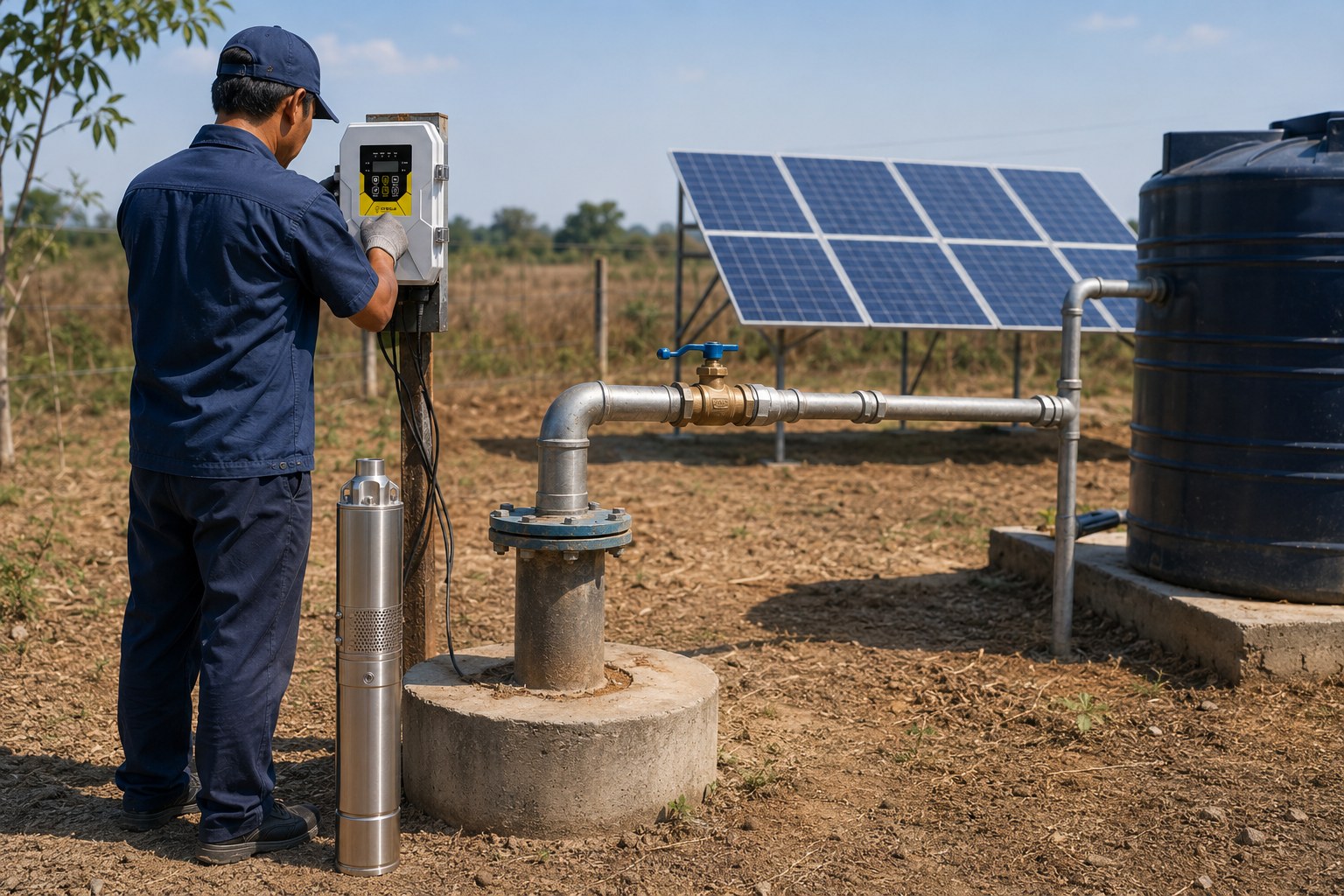
The best pump to buy is one that perfectly matches your specific application. For off-grid water needs, solar pumps offer unmatched value. To make the right choice, you must consider well depth, required water flow (GPM), and water quality to select between screw, plastic impeller, or stainless steel impeller models.
Choosing a pump isn't about finding a single "best" model, but about understanding which technology is best for a specific job.
A pump that excels in a deep well might be inefficient for farm irrigation.
This guide moves beyond one-size-fits-all recommendations.
We will break down the core pump technologies that dominate the market today.
This will help you, as an importer or distributor, build a versatile and competitive product portfolio.
Understanding these differences is the key to meeting diverse market demands and making profitable purchasing decisions.
Best Pumps for High Head & Deep Wells
Lifting water from a deep well is a significant engineering challenge.
Standard pumps often struggle with the immense back-pressure, leading to inefficiency and premature failure.
This problem demands a specialized solution designed for high-pressure applications.
For deep wells requiring high head, the solar screw pump is the definitive choice. Its unique progressive cavity design excels at pushing water from depths exceeding 100 meters, making it the ideal solution for domestic and livestock use in remote regions where electricity is scarce and wells are deep.
A screw pump, also known as a progressive cavity pump, operates on a fundamentally different principle than a centrifugal pump.
This unique mechanism is what makes it a specialist for deep well applications.
Let's explore the mechanics and performance metrics that set it apart.
How a Screw Pump Works
The core of the pump consists of a single-helix metal rotor (the "screw") that rotates inside a double-helix rubber stator.
As the rotor turns, it creates a series of sealed cavities that move progressively from the pump's inlet to its outlet.
Water is trapped within these cavities and is "pushed" upwards through the pipe.
This is a form of positive displacement, which generates very high pressure (head) but at a lower flow rate compared to centrifugal designs.
Key Performance Metrics
The screw pump's performance is characterized by its ability to overcome gravity over long distances.
It can achieve heads of over 150 meters with relatively low power consumption.
Another critical advantage is its exceptional resistance to sand and silt.
The flexible rubber stator can pass small abrasive particles without significant damage, a common failure point for tight-tolerance centrifugal pumps.
This makes it highly reliable in newly drilled or sandy wells.
| Feature | Solar Screw Pump | Standard Centrifugal Pump |
|---|---|---|
| Max Head | 150m+ | Typically < 80m |
| Flow Rate | Low to Medium | Medium to High |
| Sand Resistance | Excellent (up to 3% solids) | Poor to Fair |
| Primary Application | Deep well water extraction | Water transfer, boosting |
| Efficiency at High Head | Very High | Low (struggles) |
Ideal Applications & Geographic Suitability
The solar screw pump is the go-to solution for specific, challenging environments.
It is perfectly suited for:
- Domestic Water Supply: Providing drinking water for homes in rural and off-grid areas with deep boreholes.
- Livestock Watering: Reliably supplying water to drinking troughs for cattle, sheep, and other animals in vast pastures.
- Small-Scale Irrigation: Drip irrigation for high-value crops where well depth is the primary challenge.
Geographically, these pumps are essential in regions like arid parts of Africa, the highlands of Latin America, and remote areas of Australia where groundwater is the only option and it lies deep underground.
Limitations to Consider
While it excels at high head, the screw pump has limitations.
Its flow rate is inherently lower than that of a multi-stage centrifugal pump of similar power.
This makes it unsuitable for high-volume applications like flood irrigation or filling large reservoirs quickly.
The rubber stator is a wear part and may need replacement after several years, especially in highly abrasive conditions, though its lifespan is generally long.
The Best Pumps for High-Flow & Agricultural Use
Large farms and extensive pastures have a thirst for water that can't be quenched by a low-flow pump.
Productivity and profits are directly tied to the ability to move massive volumes of water efficiently.
Using the wrong pump leads to dry fields and wasted energy.
For high-flow applications like farm irrigation and pasture water supply, the solar plastic impeller pump is the top choice. This multi-stage centrifugal pump delivers an exceptional volume of water at an economical price, offering a powerful combination of performance, wear-resistance, and affordability for large-scale projects.
The workhorse of the solar pumping world is the multi-stage centrifugal pump.
Its design is optimized for moving large quantities of water at low-to-medium pressures.
The use of engineered plastic impellers has further revolutionized this category, striking a crucial balance between performance and cost.
Understanding Multi-Stage Centrifugal Design
Unlike a screw pump that pushes water, a centrifugal pump uses rotational energy to move it.
Water enters the center (eye) of a spinning impeller.
Centrifugal force throws the water outward at high velocity.
The pump casing (volute) then collects the water, slows it down, and converts the velocity into pressure.
In a multi-stage pump, several impellers and diffusers are stacked in series.
Each stage adds more pressure, increasing the total head the pump can achieve while maintaining a high flow rate.
The Advantage of Plastic Impellers
Modern solar pumps often use impellers made from high-strength, wear-resistant engineered polymers.
This is a strategic design choice with several key advantages over traditional materials.
- Cost-Effectiveness: Plastic impellers are significantly less expensive to manufacture than their stainless steel counterparts, which directly translates to a more accessible price point for the end user.
- Wear Resistance: These polymers are highly resistant to abrasion from fine sand and silt. The material has a slight "give" that allows it to pass small particles without being eroded as quickly as a rigid metal impeller. This provides a performance improvement of up to 25% in sandy conditions compared to some metal types.
- Lightweight: Plastic impellers reduce the overall weight of the pump and the rotational mass, which can decrease the start-up torque required from the motor, improving efficiency.
| Feature | Plastic Impeller Pump | Stainless Steel Impeller Pump |
|---|---|---|
| Initial Cost | Low | High |
| Fine Sand Resistance | Excellent | Good |
| Corrosion Resistance | Good (in neutral pH water) | Excellent |
| Weight | Lighter | Heavier |
| Target Market | General agriculture, residential | Corrosive water, premium market |
Market Position: The Volume Mover
The plastic impeller solar pump is the volume leader in the market for a reason.
It hits the sweet spot for the majority of agricultural and community water supply projects.
It provides the high flow rates needed for irrigation, is robust enough to handle average water quality, and is priced to make large projects economically viable.
For distributors, it's the essential, high-turnover product in a solar pump portfolio, widely applicable in markets across the Americas, Africa, and Southeast Asia.
The Best Pumps for Durability & Corrosive Water
Water is not always pure H2O.
In many regions, groundwater is acidic, alkaline, or high in dissolved minerals that can be highly corrosive.
A standard pump in such conditions can fail in months, not years, leading to costly replacements and system downtime.
When facing corrosive water, the solar stainless steel impeller pump is the only reliable, long-term solution. Its full SS304 or SS316 construction guarantees superior resistance to chemical attack, ensuring a long and predictable service life where other pumps would quickly fail. This makes it essential for demanding applications.
When longevity and reliability in harsh conditions are non-negotiable, material science becomes the most important factor.
The stainless steel impeller pump is a premium product designed not just to pump water, but to withstand it.
This is a long-term investment in operational security.
Why Material Matters: SS304 and SS316
Stainless steel's "superpower" is its passive chromium oxide layer.
This ultra-thin, invisible layer forms on the surface and protects the metal from reacting with its environment.
If scratched, it instantly reforms as long as oxygen is present.
- SS304 Stainless Steel: This is the industry standard for high-quality pumps. It offers excellent resistance to a wide range of organic and inorganic chemicals, making it ideal for most applications with moderately acidic or alkaline water. Its durability is approximately 3-5 times longer than a standard cast iron pump in such conditions.
- SS316 Stainless Steel: For even more aggressive environments, SS316 includes molybdenum. This addition significantly increases its resistance to chlorides (like salt) and other harsh industrial chemicals. It is the preferred choice for coastal areas, brine applications, and certain types of mining or industrial water.
Performance in Harsh Environments
The benefit of stainless steel goes beyond just the impeller.
Premium models feature a stainless steel pump body, intake, and outlet.
This creates a system where every wetted part is protected from corrosion.
This is crucial because corrosion is not just a surface issue; it can alter the precise tolerances within the pump, leading to a rapid decline in efficiency by up to 20-30% long before total failure.
A stainless steel pump maintains its hydraulic efficiency for much longer in these conditions.
| Attribute | Stainless Steel Pump | Plastic Impeller Pump |
|---|---|---|
| Corrosion Resistance | Excellent (pH 4-10) | Fair (pH 6-8) |
| Projected Lifespan | 10-15+ years | 5-8 years (in ideal water) |
| Upfront Cost | High | Low |
| Total Cost of Ownership | Lower (in corrosive water) | Higher (due to replacements) |
| Market Segment | Premium, Industrial, Special | General, Agricultural |
Target Markets: Where Quality is Paramount
The higher initial cost of a stainless steel pump positions it in specific, high-value markets.
It's not for every project, but it is essential for:
- Alkaline Soil Regions: Found in parts of Australia and the Americas, where high pH water is common.
- Coastal Areas: Where saltwater intrusion can occur.
- Industrial & Mining: Where water chemistry can be unpredictable and aggressive.
- High-End Homes & Ranches: For clients who demand the longest possible service life and are willing to pay for peace of mind.
For a distributor, offering a stainless steel option demonstrates a commitment to quality and provides a solution for the most demanding customers, opening up more profitable, niche markets.
The Core Technology Driving Performance
A pump is only as good as the motor that drives it.
An inefficient motor wastes precious solar energy, meaning you need more panels to do the same work.
This increases system cost and complexity.
Don't overlook the engine at the heart of the system.
The true competitive edge in modern solar pumps lies in the motor. High-efficiency Brushless DC (BLDC) permanent magnet motors, with efficiencies exceeding 90%, are the core technology. They dramatically reduce solar panel requirements, lower operating costs, and ensure a longer, maintenance-free life for the entire system.
The pump head (screw, impeller) determines the type of work a pump does, but the motor determines how well it does it.
The shift to BLDC permanent magnet motors has been the single greatest leap in solar pumping technology, making systems more powerful, compact, and efficient than ever before.
What is a BLDC Permanent Magnet Motor?
A BLDC motor is a marvel of efficiency.
Unlike traditional DC motors with "brushes" that wear out, a BLDC motor is electronically commutated.
It uses a smart controller to switch the direction of the magnetic field in the stator (the stationary part).
The rotor (the spinning part) is made of powerful permanent magnets (like 40SH neodymium iron boron).
These magnets are drawn to the rotating magnetic field, causing the rotor to spin with very little energy loss.
This design eliminates the friction and energy waste of brushes, leading to a much more efficient and reliable motor.
Efficiency by the Numbers
The efficiency gains are not minor; they are transformative.
| Motor Type | Typical Efficiency | Key Characteristics |
|---|---|---|
| AC Induction Motor | 60-75% | Bulky, less efficient, requires an inverter |
| Brushed DC Motor | 70-80% | Brushes wear out, requires maintenance |
| BLDC Permanent Magnet Motor | 88-92%+ | Highly efficient, compact, maintenance-free |
A BLDC motor is often 47% smaller and 39% lighter than an equivalent AC motor.
This efficiency means that for a given water pumping task, a system with a BLDC motor might require 25% fewer solar panels than one with a traditional motor. That's a massive cost saving.
The Strategic Role of the MPPT Controller
The BLDC motor works in perfect harmony with an MPPT (Maximum Power Point Tracking) controller.
The MPPT controller is the "brain" of the system.
It constantly adjusts the electrical load on the solar panels to ensure they are operating at their absolute peak point of efficiency, regardless of changing sunlight conditions.
It then converts this optimized power into the exact voltage and frequency the BLDC motor needs to run at the desired speed.
This synergy maximizes the amount of water pumped for every watt of solar energy produced.
The Hybrid Advantage: AC/DC Integration
The latest innovation is the AC/DC hybrid controller.
This technology provides the ultimate in water security.
The controller has inputs for both solar DC power and grid/generator AC power.
- Sunlight Available: The pump runs entirely on free solar energy.
- Cloudy Conditions: The controller automatically blends AC power with whatever DC power is available, maximizing the use of solar energy before drawing from the grid.
- Nighttime/No Sun: The system automatically switches over to full AC power.
This ensures a 24/7 water supply without having to manually switch power sources, offering complete peace of mind for critical applications.
Conclusion
The "best" pump is not a single product.
It is a complete system—the right pump type, a high-efficiency motor, and an intelligent controller—perfectly matched to the demands of the well and the application.
FAQs
What is the best brand of well pump?
The best brand is one that offers reliable technology matched to your needs. Focus on the pump type (screw, centrifugal), motor efficiency (BLDC is best), and material quality (e.g., stainless steel for corrosive water).
How long do solar well pumps last?
A quality solar pump system with a BLDC motor can last 10-15 years or more. The lifespan depends on the pump type, water quality, and proper installation.
Can a solar pump run without batteries?
Yes, most modern solar pumps are designed to run directly from solar panels during the day using an MPPT controller. Batteries are only needed if you require water at night without an AC backup.
How many solar panels are needed for a water pump?
This depends entirely on the pump's power rating (in watts), the well's depth, and your location's daily sun hours. A professional can calculate the exact number for you.
What is the difference between a submersible and surface pump?
A submersible pump is placed down inside the well, below the water level, and pushes water up. A surface pump sits on the ground and pulls water up, which limits its use to shallow wells (less than 7 meters).
Are solar water pumps worth it?
Absolutely. For off-grid locations, they are a game-changer, providing water without fuel or electricity costs. The return on investment is often just a few years compared to running a generator.
How deep can a solar pump pull water from?
Solar centrifugal pumps are effective up to around 80 meters. For deeper applications, a solar screw pump is the best choice, capable of pumping from depths of 150 meters or more.
What happens to a solar pump when it's cloudy?
On cloudy days, the pump will run at a reduced speed or may stop if there isn't enough light. Systems with an AC/DC hybrid controller can automatically switch to grid or generator power to ensure a continuous water supply.