Investing in a solar well pump feels uncertain.
You worry about its lifespan and potential replacement costs.
This guide provides a clear breakdown to help you understand the true longevity of your investment.
A quality solar well pump system is designed to last between 10 to 20 years. The solar panels themselves have a 25-year efficiency rating, while the pump motor's lifespan is typically 8 to 15 years, influenced heavily by usage, water conditions, and maintenance.
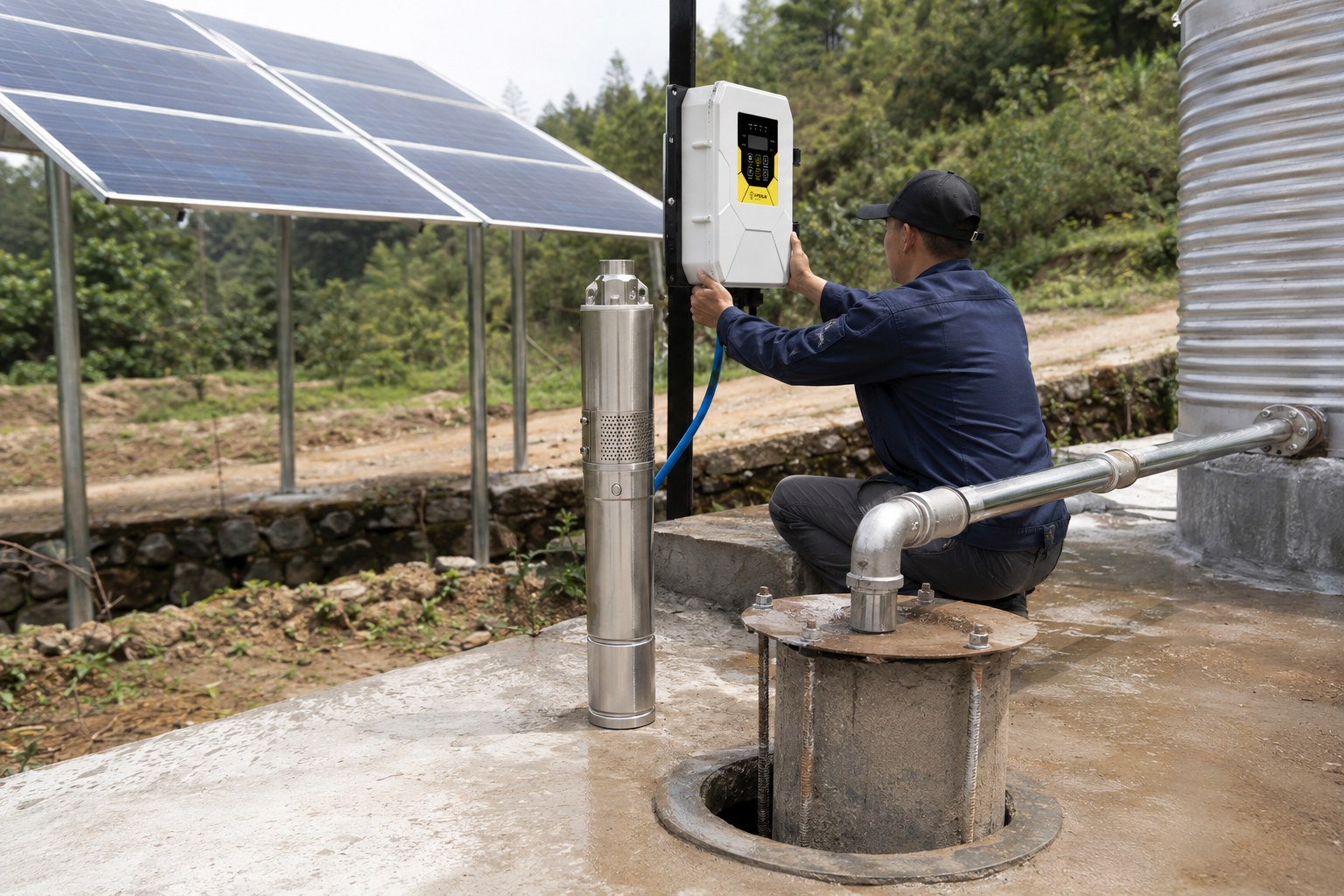
A solar pump is more than just a single part.
It is a complete system where each component has its own expected lifespan.
Understanding how these parts work together is the first step to maximizing the life of your entire water system.
This article will break down the lifespan of each component, explore the factors that cause wear, and provide clear guidance on how to get the most out of your solar well pump for years to come.
Average Lifespan of a Solar Well Pump System
You need a reliable off-grid water solution.
But you fear the system will fail prematurely, leaving you with no water and high costs.
This section details the lifespan of each component.
A complete solar well pump system is built for long-term operation. The solar panels are rated to maintain efficiency for 25 years. The pump motor itself should last between 10 and 20 years, with many lasting around 15 years with moderate use.
A solar pump system is an assembly of durable parts, not a single disposable unit.
To accurately predict its lifespan, we must look at each major component individually.
The longevity of the whole system is determined by the durability of its parts and how they interact.
While some parts, like panels, are incredibly long-lasting, others are wear-and-tear items that may require attention over the years.
Knowing what to expect from each piece helps you plan for maintenance and understand the true value of your investment.
Component Lifespan Breakdown
The system's overall durability is a sum of its parts.
The solar panels are the most resilient component.
They are typically rated to maintain at least 80% of their original efficiency after 25 years.
This means they will continue to produce usable power for decades, with only a slight, gradual decline in output of about 0.5% to 1% per year.
The pump motor is the hardworking heart of the system.
A well-built submersible solar pump motor generally has a lifespan of 10 to 20 years.
This range is highly dependent on its use case.
A pump running 24/7 will naturally have a shorter observed life than one running for 6-8 hours per day for residential or livestock use.
For most users, a lifespan of around 15 years is a reasonable expectation.
Other System Components
Other parts of the system also have their own life cycles.
The controller, or the "brain" of the system, often has a lifespan similar to the motor, typically around 8-10 years.
These electronic devices can be sensitive to heat and moisture if not properly housed.
Parts inside the pump, like the helical rotor or impellers, are considered wear items.
In wells with sandy or dirty water, these parts experience more abrasion.
Many high-quality kits include a spare pumping mechanism because it is easy to replace and can restore the pump to full production.
This simple replacement, often requiring only the removal of a few bolts, can significantly extend the pump's useful life without replacing the entire unit.
| Component | Average Lifespan | Key Factors |
|---|---|---|
| Solar Panels | 25+ years | UV exposure, weather conditions |
| Pump Motor (BLDC) | 10-20 years | Usage hours, water quality, motor type |
| Controller (MPPT) | 8-10 years | Housing, heat exposure, electrical surges |
| Pumping Mechanism | 2-5 years | Water sediment (sand, silt), run time |
| Pressure Tank | 5-15 years | Water quality, bladder material |
Factors That Directly Affect Pump Lifespan
Your pump isn't performing as you hoped.
You wonder what is causing the premature wear and tear.
Understanding these external factors can save you money and prevent future damage.
The most significant factors impacting a solar pump's lifespan are water quality, sunlight exposure, and your maintenance routine. Clean water and regular cleaning prevent clogs and wear, while consistent sun exposure ensures optimal, low-strain performance.
Several external variables determine how long your solar well pump will ultimately survive.
These factors can either contribute to a long, trouble-free service life or cause premature failure.
Proactively managing these elements is the most effective way to protect your investment.
From the water in your well to the weather in your region, each aspect plays a role in the system's overall health and durability.
By being aware of these influences, you can take simple steps to mitigate risks and ensure your pump operates efficiently for its maximum expected lifespan.
Water Quality and Its Impact
The quality of the water being pumped is perhaps the single most important factor.
Clean, debris-free water will cause minimal wear on the pump's internal components.
Conversely, water with high levels of sand, silt, or other abrasives will act like sandpaper on the pump's impellers or helical rotor.
This abrasive action wears down the components, reducing pumping volume and efficiency over time.
Hard water with high mineral content can also lead to scale buildup inside the pump, which restricts flow and forces the motor to work harder, potentially reducing its lifespan by up to 30%.
Corrosive water, with a high or low pH, can attack metal components, making stainless steel models a necessity in such environments.
Sunlight, Climate, and Usage
The amount and intensity of sunlight directly affect the pump's operation.
A properly sized solar array in a location with consistent sun exposure allows the pump to run smoothly without straining the motor.
Inconsistent sun or partial shading can cause the pump to start and stop frequently, which puts more stress on the motor than continuous operation.
Climate also plays a critical role.
Extreme cold can be damaging.
If water freezes inside the pump or its plumbing, it can expand and crack the internal components.
For this reason, it's essential to winterize the system and store the pump indoors in regions with freezing temperatures.
Finally, usage frequency is a simple matter of mechanics.
A pump that operates 12 hours a day will experience twice the wear of a pump that operates for 6 hours a day.
Matching the pump's duty cycle to your actual water needs is key to a long service life.
| Factor | High Impact on Lifespan | Low Impact on Lifespan |
|---|---|---|
| Water Quality | Sandy, silty, or corrosive water | Clean, clear, neutral pH water |
| Maintenance | Infrequent or no cleaning | Weekly filter and monthly panel cleaning |
| Climate | Freezing winters, extreme heat | Moderate, temperate climate |
| Usage | 24/7 continuous operation | 6-8 hours of daily, intermittent use |
| Sunlight | Partial shade, undersized panels | Full, direct sun exposure |
Comparing Different Types of Solar Well Pumps
Choosing the right solar pump feels overwhelming.
Making the wrong choice can lead to poor performance or a short lifespan.
This comparison clarifies which pump type is best for your specific well.
The best pump type depends entirely on your well's characteristics. Screw pumps excel in very deep wells with low flow needs. Plastic impeller pumps offer high flow for irrigation. Stainless steel impeller pumps are built to resist corrosion in harsh water.
Not all solar well pumps are created equal.
The technology inside the pump—specifically how it moves water—is designed for different applications.
The three most common types are solar screw pumps, solar plastic impeller pumps, and solar stainless steel impeller pumps.
Each has distinct advantages and is suited for different water conditions, well depths, and flow requirements.
Understanding these differences is crucial for distributors aiming to serve diverse markets and for end-users who need a reliable, long-lasting solution tailored to their property.
Choosing the correct pump type from the start is the foundation for a durable and efficient water system.
1. Solar Screw Pump: High Head Specialist
The solar screw pump is a type of progressing cavity pump.
It uses a single stainless steel helical rotor that spins inside a rubber stator.
This action creates sealed cavities of water that are "pushed" up to the surface.
This design is incredibly effective at creating high pressure, making it ideal for very deep wells where a high head is required.
Key Advantages:
- High Head Capability: Can pump water from extreme depths (over 200 meters).
- Excellent Sand Resistance: The screw design can handle a higher concentration of sand and sediment compared to centrifugal pumps without rapid wear.
- High Efficiency in Low Flow: It operates very efficiently when providing low volumes of water, perfect for domestic water supply or livestock troughs.
Limitations: Its primary limitation is a lower flow rate.
It is not designed for applications requiring large volumes of water, such as flood irrigation for large farms.
2. Solar Plastic Impeller Pump: High Flow Workhorse
This pump is a multi-stage centrifugal pump.
It uses a series of stacked impellers made of durable, engineering-grade plastic.
As water enters the pump, each impeller spins and adds pressure, pushing the water to the next stage and ultimately to the surface.
This design is optimized for moving large volumes of water at a medium head.
Key Advantages:
- High Flow Rate: It is the ideal choice for farm irrigation, pasture management, and filling large tanks quickly.
- Good Wear Resistance: High-quality plastic impellers are surprisingly resistant to fine sand and are less costly to replace than stainless steel.
- Lightweight and Economical: These pumps are generally lighter and more affordable, making them a popular choice in many markets.
Limitations: They are less suitable for highly corrosive water or for the extreme depths that screw pumps can handle.
3. Solar Stainless Steel Impeller Pump: The Durability Champion
This pump is structurally similar to the plastic impeller model but uses impellers made from SS304 or SS316 stainless steel.
The entire pump body is also typically made of stainless steel.
This construction makes it the premium choice for harsh environments.
Key Advantages:
- Superior Corrosion Resistance: It is designed to operate in acidic or alkaline water conditions without degrading, ensuring a very long service life.
- High Reliability: The robust metal construction provides maximum durability and reliability in challenging wells.
- Maintains Performance: Stainless steel impellers resist wear and maintain their shape, ensuring consistent performance for years.
Limitations: These pumps are heavier and have a higher initial cost, targeting them toward high-end applications or areas with known water quality issues.
| Pump Type | Primary Application | Max Head | Flow Rate | Sand Resistance |
|---|---|---|---|---|
| Solar Screw Pump | Deep well domestic/livestock water | Very High | Low | Excellent |
| Plastic Impeller Pump | Farm irrigation, high-volume use | Medium | High | Good |
| Stainless Steel Impeller Pump | Corrosive water, premium homes | Medium-High | High | Moderate |
The Heart of the System: Motor and Controller
You focus on the pump, but what powers it?
The motor and controller are often overlooked components.
Ignoring them leads to poor efficiency and higher long-term costs.
A high-efficiency brushless DC (BLDC) motor is the core of a modern solar pump. It can be over 90% efficient, which reduces the number of solar panels needed and extends the entire system's operational life.
While the pump type determines the application, the motor and controller determine the system's efficiency and intelligence.
These two components are the true engine of your water supply.
A superior pump body is ineffective if driven by an inefficient, unreliable motor.
Modern solar pump systems rely on advanced motor technology and smart controllers to squeeze every last watt of power from the sun.
This technological core is what separates a high-performance, long-lasting system from a basic, low-cost alternative.
Investing in a quality motor and controller directly translates to lower operational costs and greater reliability.
The Power of a Brushless DC (BLDC) Motor
The driving force behind all modern, high-quality solar pumps is the BLDC permanent magnet motor.
Unlike older brushed motors, BLDC motors have no brushes to wear out, making them virtually maintenance-free and significantly extending their lifespan.
Their key advantage is remarkable efficiency.
A high-quality BLDC motor can convert over 90% of the electrical energy from the solar panels into mechanical power to drive the pump.
Traditional AC or brushed DC motors often operate at 60-75% efficiency.
This 15-30% efficiency gain means a system with a BLDC motor requires fewer solar panels to do the same amount of work, saving up to 25% on the initial cost of panels.
These motors also run cooler and are more compact.
A modern BLDC motor can be up to 47% smaller and 39% lighter than a traditional motor of the same power, simplifying installation.
The Brains: Intelligent MPPT Controllers
If the motor is the heart, the controller is the brain.
Modern systems use a Maximum Power Point Tracking (MPPT) controller.
The MPPT controller constantly adjusts the electrical load to find the perfect balance of voltage and current that allows the solar panels to produce their maximum possible power at any given moment of sunlight.
This technology can boost the pump's output by up to 30% over the course of a day compared to a system without MPPT.
It ensures the pump starts earlier in the morning, runs later in the evening, and performs better on cloudy days.
Some advanced controllers also offer hybrid functionality.
They can accept both DC power from solar panels and AC power from the grid or a generator.
The controller will prioritize solar power and automatically switch to AC power only when sunlight is insufficient, guaranteeing a 24/7 water supply.
How to Make Your Solar Well Pump Last Longer
You want to protect your pump investment.
Simple neglect can drastically shorten its operational life.
Following a straightforward maintenance schedule is the secret to ensuring longevity and reliability.
Regular cleaning is the most crucial habit for extending pump life. Clean the pump's inlet and filter weekly and wipe down the solar panel monthly. Always ensure the pump remains fully submerged to prevent motor damage from running dry.
While high-quality solar well pumps are designed to be low-maintenance, they are not "no-maintenance".
A few simple, proactive habits can easily double the service life of your pump, taking it from an average of 7 years to 15 years or more.
These tasks are not complicated or time-consuming.
They are small investments of time that pay huge dividends in performance and longevity.
By treating your pump system with care, you prevent the most common causes of failure—clogging, overheating, and component wear—before they can cause permanent damage.
Routine Cleaning Schedule
The most common cause of pump failure is clogging from debris.
A simple cleaning routine prevents this.
- Weekly: Inspect and clean the pump's inlet screen or filter. Remove any leaves, algae, or sediment that has accumulated. This five-minute task ensures water can flow freely into the pump, preventing the motor from straining.
- Monthly: Clean the surface of the solar panels. Use a soft cloth and clean water to wipe away any dust, bird droppings, or water spots. A clean panel can absorb up to 20% more sunlight than a dirty one, improving the pump's performance.
Protecting from the Elements
Your pump's environment matters.
- Winter Storage: In climates with freezing temperatures, you must winterize your system. Before the first frost, drain the fountain or tank, remove the pump from the water, and store it indoors in a bucket of water. This prevents any residual water inside the pump from freezing and cracking the housing or internal parts.
- Keep it Submerged: A submersible pump uses the surrounding water to cool its motor. Never operate the pump out of water or in water levels that are too low. Running it dry can cause the motor to overheat and fail in minutes.
Operational Best Practices
How you use the pump affects its lifespan.
- Use Clean Water: Whenever possible, ensure the water source is clean. Avoid pumping from muddy ponds or water with harsh chemicals. If your well is known to be sandy, choose a pump type (like a screw pump) designed to handle it.
- Check for Wear: Pay attention to the pump's performance. If you notice a significant decrease in water flow even in full sun, it may be a sign that the internal pumping mechanism (rotor or impellers) is worn. Replacing this single part can restore your pump to full capacity.
Conclusion
A solar well pump's longevity is not a matter of chance.
It depends on two key things: choosing a quality model and performing consistent, simple maintenance.
This approach ensures a reliable water supply for years.
FAQs
Q1: What is the average life of a solar water pump?
Most quality solar water pump systems last 10-20 years. The panels can last over 25 years, while the pump motor's life is typically 10-15 years with proper care.
Q2: What is the main problem with solar water pumps?
The most common issue is clogging from sand, algae, or debris. This reduces flow and strains the motor, but regular cleaning easily prevents it.
Q3: How many solar panels does it take to run a well pump?
This depends on the pump's power and your location. A small domestic pump might only need 2-4 panels, while a large irrigation pump could require 10 or more.
Q4: Can a solar pump run at night?
A solar pump can run at night if the system includes a battery backup. Without batteries, it only operates when there is sufficient sunlight.
Q5: Do solar pumps need batteries?
Batteries are not required for daytime-only operation. They are an optional add-on for storing energy to use at night or on cloudy days.
Q6: How deep can a solar pump pull water from?
This varies by pump type. Solar screw pumps are specialists for deep wells and can pull water from over 200 meters (650 feet) deep.
Q7: Can I replace just the motor on my solar pump?
Yes, on most high-quality systems, the motor and the pump end (wet end) are separate components. You can replace just the motor if it fails.
Q8: Why did my solar pump stop working?
Check the most common causes first: a dirty solar panel, a clogged pump inlet, low water levels, or a loose wire connection.