Struggling with a stagnant, algae-filled pond?
A solar-powered pump can be the perfect green solution, but choosing the right one is key to reviving your water feature and keeping it healthy.
The best solar pump for your pond depends on its size, your desired water feature, and your local climate.
For small ponds and birdbaths, an all-in-one floating unit is great.
For larger ponds or waterfalls, a more powerful system with a separate solar panel and battery or hybrid controller is necessary.
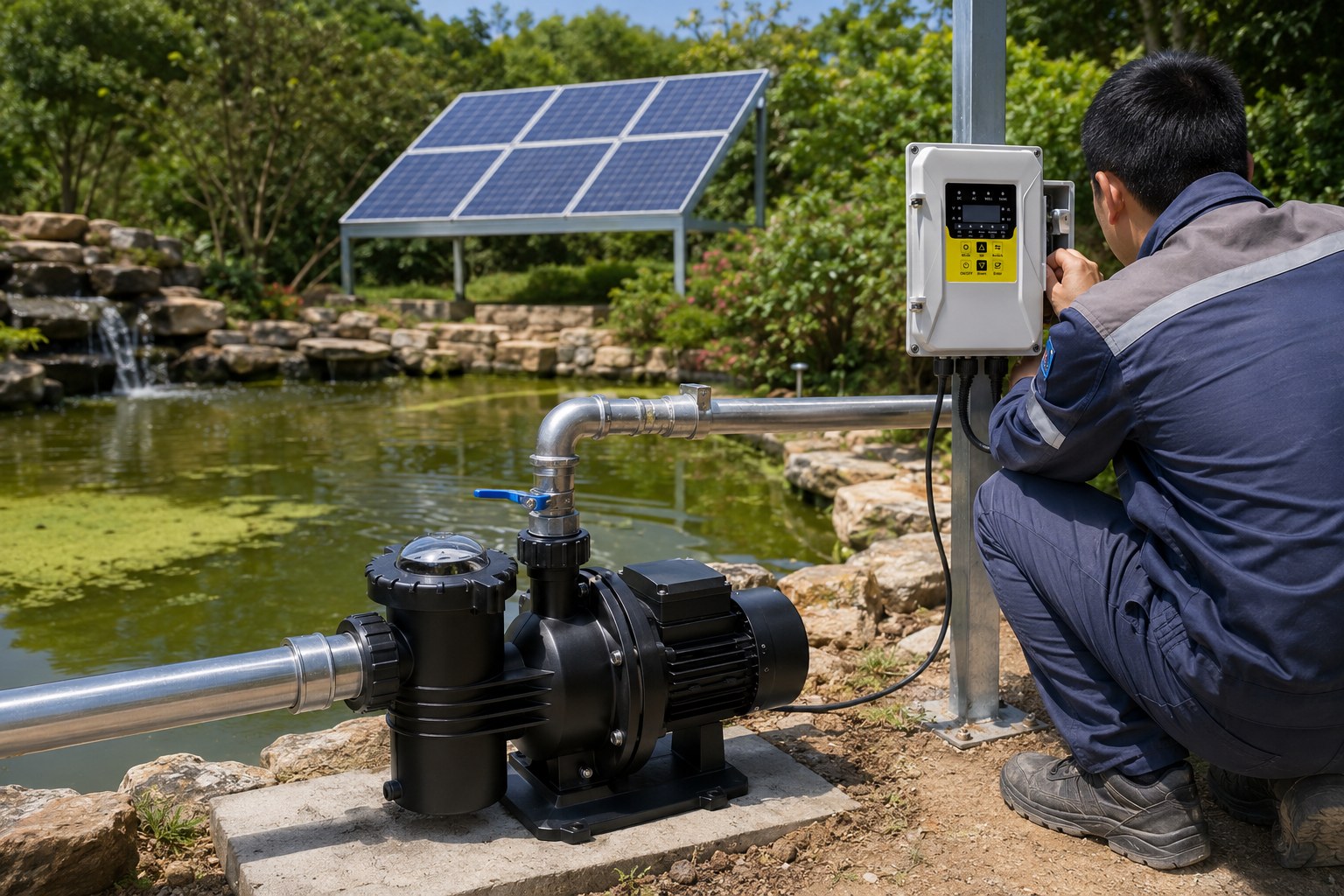
Choosing a solar pump can feel overwhelming.
You have to think about power, flow rate, installation, and whether it will even work on a cloudy day.
This guide will break down everything you need to know.
We will explore the different types of solar pumps, their pros and cons, and the key features to look for.
This will help you make an informed decision for a beautiful, healthy, and self-sufficient pond.
How Do Solar Pumps Work?
Tired of the cost and hassle of running electrical wires out to your garden pond?
Solar-powered pumps offer a simpler, grid-free solution to bring your water feature to life.
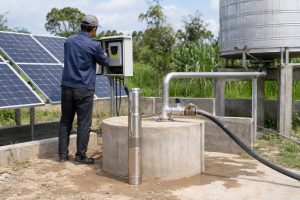
Solar pumps use a photovoltaic (PV) panel to capture sunlight.
The panel converts this light into DC electricity, which powers a motor.
This motor drives the pump to circulate or spray water, all without needing an electrical outlet or generating a utility bill.
To truly understand if a solar pump is right for you, it's helpful to look closer at its components and the key performance metrics.
The efficiency of the system isn't just about the solar panel; it's about how the panel, motor, and pump work together.
Understanding these details will help you differentiate between a simple birdbath bubbler and a system capable of sustaining a large pond.
The Core Components
A solar pump system is elegantly simple.
It consists of three main parts:
-
The Solar Panel: This is the power source.
It's made of photovoltaic cells that create an electrical current when exposed to sunlight.
The panel's wattage determines how much power it can generate. -
The Motor: This is the heart of the pump.
Most modern solar pumps use highly efficient Brushless DC (BLDC) motors.
These motors convert the electrical energy from the panel into mechanical motion to drive the pump. -
The Pump End: This is the part that actually moves the water.
It can be a simple propeller or a more complex series of impellers, depending on the pump's intended use.
Power and Pump Types
Solar pumps primarily run on Direct Current (DC) power generated directly by the panel.
This makes them simple and efficient for smaller applications like fountains.
Larger systems, designed for agriculture or large ponds, may use an inverter to convert DC to Alternating Current (AC).
This allows them to power more robust AC pumps but introduces an efficiency loss of about 5-10% during the conversion process.
Pumps themselves also come in two main configurations for pond use:
| Pump Type | Description | Best For |
|---|---|---|
| Surface Pump | Sits outside the water and draws water in through a hose. | Irrigation, draining flooded areas, large-scale water transfer. |
| Submersible Pump | Placed directly in the water. It is the most common type for ponds. | Ponds, fountains, wells, and decorative water features. |
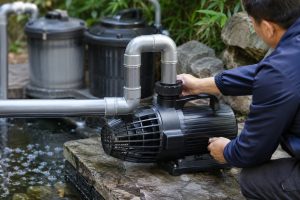
For most pond owners, a submersible DC pump is the most practical and common choice.
It's easy to install and designed specifically for continuous operation underwater.
What Are The Advantages And Disadvantages Of Solar Water Pumps For Ponds?
Is a solar pump the perfect, hands-off solution for your pond?
While the benefits are significant, it's crucial to understand the drawbacks before you invest.
Solar pumps are eco-friendly, cost nothing to run, and can be installed anywhere without electrical work.
However, their performance is weather-dependent, their flow can be inconsistent, and high-powered models have a significantly higher upfront cost compared to their traditional electric counterparts.
The decision to go solar involves weighing long-term benefits against initial costs and performance limitations.
For some, the freedom from the grid and zero running costs are unbeatable.
For others, the need for consistent, powerful water flow 24/7 might make a traditional pump a better, more reliable choice.
Let's break down the pros and cons with some hard numbers to give you a clearer picture.
The Clear Advantages
-
Zero Running Costs & Long-Term Savings: The most obvious benefit is that the sun's energy is free.
Once you purchase the system, you eliminate the electricity costs associated with running a conventional pump.
An average electric pond pump can add $20-$50 per month to your utility bill, meaning a solar pump could save you $240-$600 per year. -
Environmental Friendliness: Solar pumps operate with a zero-carbon footprint.
They produce no greenhouse gases, helping you reduce your environmental impact. -
Installation Flexibility: Without the need for an electrical outlet, you can place your pond, fountain, or water feature anywhere on your property.
This is perfect for large gardens, remote pastures, or any off-grid location.
The Realistic Disadvantages
-
High Initial Investment: Quality solar pumps are more expensive upfront.
A conventional 2500 LPH electric pump might cost around $279.
A solar-powered equivalent with similar performance could cost over $700, a price difference of more than 150%. -
Inconsistent Performance: A solar pump's output is directly tied to the intensity of sunlight.
On a cloudy day, the flow rate can drop by 50% or more.
At night, basic models don't run at all unless you invest in a battery backup system. -
Reliance on Location: The solar panel must be placed in a spot that receives several hours of direct, unobstructed sunlight each day.
This can limit the aesthetic placement of your pond or require you to run a long cable from the pump to a sunnier spot. -
Battery Dependence for 24/7 Operation: To run a pump at night or during overcast weather, you need a system with an integrated battery.
This adds complexity and cost, often increasing the total price by 40-60%.
Furthermore, these batteries have a limited lifespan of 3-5 years and will need to be replaced.
| Feature | Solar Pump | Conventional Electric Pump |
|---|---|---|
| Running Cost | $0 | $20 - $50+ / month |
| Initial Cost | High | Low to Medium |
| Performance | Variable (sun-dependent) | Consistent |
| Installation | Easy, no electrician needed | Requires outdoor outlet, potential trenching |
| Environmental Impact | Zero | Depends on grid power source |
What Size Solar Pump Do I Need For My Pond?
Buying the wrong size pump is a common and costly mistake.
A pump that's too weak won't keep your pond clean, while one that's too powerful will waste money and energy.
To maintain a healthy pond, your pump's flow rate (in Gallons Per Hour or Liters Per Hour) should be able to circulate the entire volume of your pond at least once every two hours.
For features like fountains or waterfalls, you must also consider the pump's maximum lift height.
Properly sizing a pump isn't just about picking a number off a box.
You need to do a little math to calculate your pond's volume and then match that to a pump's specifications.
You also need to understand how a pump's performance changes with height.
Let's walk through the simple steps to ensure you choose a pump with the right power for your specific needs.
How to Calculate Your Pond's Volume
First, you need to know how much water you're moving.
Use this simple formula:
Length (ft) x Width (ft) x Average Depth (ft) x 7.5 = Pond Volume in Gallons
For example, a pond that is 10 feet long, 5 feet wide, and has an average depth of 2 feet would be:
10 x 5 x 2 x 7.5 = 750 Gallons
Matching Flow Rate to Your Needs
The general rule is to circulate the water once every two hours.
So, for our 750-gallon pond, you'd need a pump with a flow rate of at least 375 GPH (750 Gallons / 2 Hours).
However, you should adjust this based on your pond's ecosystem:
- General Water Feature: Circulate volume every 2 hours.
- Pond with Fish: Circulate volume every 1 hour to ensure adequate oxygenation.
For our 750-gallon pond, this means you'd need a 750 GPH pump.
Understanding Max Vertical Head (MVH)
Max Vertical Head (or Max Lift) is the maximum height a pump can lift water.
If a pump has an MVH of 7.5 feet, it can push water straight up to that height, at which point the flow rate becomes zero.
This is critical for waterfalls or fountains.
If your waterfall is 4 feet high, you need a pump with an MVH significantly greater than 4 feet to get decent flow at the top.
A pump's flow rate decreases as the lift height increases.
Always check the manufacturer's performance chart to see what the flow rate will be at your desired height.
| Lift Height | Example Pump Flow Rate (Max 320 GPH) |
|---|---|
| 0 feet | 320 GPH (100%) |
| 3 feet | 200 GPH (~63%) |
| 5 feet | 110 GPH (~34%) |
| 7.5 feet | 0 GPH (0%) |
As you can see, even a powerful pump loses over two-thirds of its flow near its maximum head.
Always oversize your pump to account for this efficiency loss.
What Is The Technology Behind The Most Powerful And Reliable Solar Pumps?
Want to move beyond simple fountains and understand the tech for serious water-moving applications?
The true power of a solar pump lies in its core technology, not just its size.
The most powerful and reliable solar pumps are defined by their motor efficiency and pump-end design.
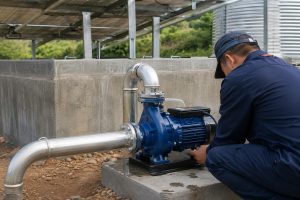
High-efficiency Brushless DC (BLDC) motors and specialized pump types (like screw or centrifugal impellers) are what enable high lift and strong flow, essential for deep wells or large-scale water features.
While a small floating fountain is a simple device, the technology used in larger-scale solar pumping systems is far more sophisticated.
These systems are designed for agricultural irrigation, livestock watering, and supplying off-grid homes.
The innovations in these heavy-duty pumps, particularly in motor and controller design, are what separate a hobbyist product from a professional-grade water solution.
Understanding this technology is key for anyone needing reliable, high-performance water delivery.
The Heart of the System: The BLDC Motor
The engine driving modern solar pumps is the Brushless DC (BLDC) permanent magnet motor.
Unlike older brushed motors that wear out over time, BLDC motors are maintenance-free and far more efficient.
-
Exceptional Efficiency: A high-quality BLDC motor can achieve an electrical-to-mechanical efficiency of over 90%.
This means more of the sun's energy is converted into water-pumping power, reducing the number of solar panels needed by up to 20%. -
Powerful & Compact Design: These motors use strong permanent magnets (like Neodymium iron boron) to generate high torque in a small package.
They can be up to 47% smaller and 39% lighter than traditional motors of similar power, simplifying installation. - Longevity: With no brushes to wear down, a BLDC motor's lifespan is significantly longer, often exceeding 10 years of reliable operation.
Choosing the Right Pump Type for the Job
The motor provides the power, but the pump end does the work.
Different designs are optimized for different tasks, primarily balancing flow rate against pressure (head).
| Pump Type | Flow Rate | Head (Lift) | Best Application | Key Feature |
|---|---|---|---|---|
| Solar Screw Pump | Low | Very High | Deep wells, domestic water supply from boreholes. | Pushes water with a rotating screw. Excellent sand resistance. |
| Plastic Impeller Pump | High | Medium | Farm irrigation, livestock troughs, large ponds. | Multi-stage centrifugal design is economical and wear-resistant to fine sand. |
| Stainless Steel Impeller Pump | High | Medium-High | Corrosive water (acidic/alkaline), premium domestic and agricultural use. | SS304 stainless steel resists corrosion for maximum durability and water quality. |
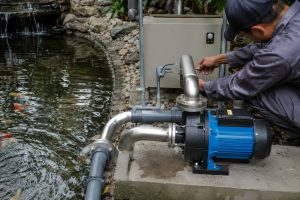
For a large pond or agricultural use, a centrifugal impeller pump offers the high flow rate needed.
The choice between a plastic or stainless steel impeller comes down to water quality and budget.
For very deep water sources, like a well, the high-pressure capability of a screw pump is unmatched.
How Do I Get My Solar Pump To Work At Night Or On Cloudy Days?
Frustrated that your beautiful solar fountain stops the moment a cloud passes overhead?
Consistent, 24/7 operation is a common challenge for solar-powered systems.
To get your pump to work at night or on cloudy days, you need a system with either a battery backup or a hybrid AC/DC controller.
Batteries store excess solar energy for later use, while hybrid controllers automatically switch to grid power (AC) when sunlight is insufficient.
Relying solely on direct sunlight means your water flow will be intermittent.
For applications where consistent circulation is vital—such as in a fish pond or an irrigation system—this simply isn't an option.
Fortunately, modern technology offers two robust solutions to this problem.
Each has its own set of costs, benefits, and maintenance requirements that you should consider carefully.
The Battery Backup Solution
This is the traditional method for off-grid energy storage.
-
How it Works: During peak sun, the solar panels power the pump and simultaneously charge a deep-cycle battery bank.
A solar charge controller manages this process to prevent overcharging.
When the sun goes down, the pump draws power from the batteries. -
Pros: Provides true off-grid autonomy.
Works even during a power outage. -
Cons: Significantly increases system cost (by 40-60%).
Batteries have a finite lifespan (typically 3-5 years for lead-acid, longer for lithium) and require replacement.
They add weight, complexity, and a maintenance component to the system.
The Hybrid AC/DC Controller Advantage
A more modern and increasingly popular solution is the hybrid controller.
-
How it Works: The controller has inputs for both solar (DC) and grid power (AC).
The system is designed to prioritize solar energy first.
When sunlight is low, the controller intelligently blends in just enough AC power to maintain the pump's required speed.
When there is no sunlight (at night), it automatically switches over to 100% AC power. -
Pros: Ensures uninterrupted 24/7 operation with maximum efficiency.
It uses every available watt of solar power before drawing from the grid, keeping electricity costs to a minimum.
There are no batteries to maintain or replace, leading to a lower total cost of ownership over the system's life. -
Cons: The system is dependent on the availability of grid power as a backup.
It is not a true off-grid solution.
| Feature | Battery Backup System | Hybrid AC/DC System |
|---|---|---|
| 24/7 Operation | Yes (until battery is depleted) | Yes (as long as grid is on) |
| Upfront Cost | Highest | High (but less than battery) |
| Maintenance | High (Battery testing & replacement) | Virtually None |
| Lifespan | Limited by battery (3-5 years) | Limited by electronics (10+ years) |
| Efficiency | Good (some loss in charging) | Highest (prioritizes direct solar use) |
For most users who have access to grid power, the hybrid AC/DC controller offers a more practical, cost-effective, and maintenance-free path to reliable, 24-hour water pumping.
Conclusion
The best solar pump matches your pond's needs.
For reliability and power, however, the efficiency of the BLDC motor and the intelligence of the control system are what truly matter.
FAQs
Do solar pond pumps work in winter?
Yes, they work in winter as long as the solar panel receives direct sunlight.
However, their performance will be reduced due to shorter days and lower sun intensity.
How long do solar pond pumps last?
A quality solar pump with a brushless motor can last for 5-10 years.
The solar panel itself often has a lifespan of over 20 years.
Can a solar pump run a waterfall?
Yes, but you must choose a pump with enough "max head" (lift height) to push water to the top of the waterfall with adequate flow.
Do you have to clean solar pond pumps?
Yes, the pump's filter or intake should be cleaned periodically to prevent clogging from debris, which can reduce water flow and strain the motor.
Are solar aerators worth it?
For ponds with fish or significant organic matter, a solar aerator is absolutely worth it.
It boosts oxygen levels, reduces muck, and improves overall water health without electricity costs.
What is the difference between a solar fountain and a solar pump?
A solar fountain is typically an all-in-one decorative unit.
A solar pump is the core component that can be used for fountains, waterfalls, filtration, or irrigation.
Can solar pond pumps run 24/7?
Only if the system includes a battery backup or a hybrid AC/DC controller.
Basic models only run when the sun is shining directly on the panel.