Struggling with a broken water pump and the high cost of replacement?
You need a fix, but buying a whole new unit feels like an expensive and unnecessary step.
Yes, a water pump can often be repaired without a full replacement.
For many common issues, such as minor leaks in the casing or seals, specific repair solutions are available.
However, for severe internal damage like a broken impeller shaft, replacement is usually the more practical and cost-effective option.
Understanding the difference between a simple fix and a fatal flaw is the key to managing your pump's health and your budget.
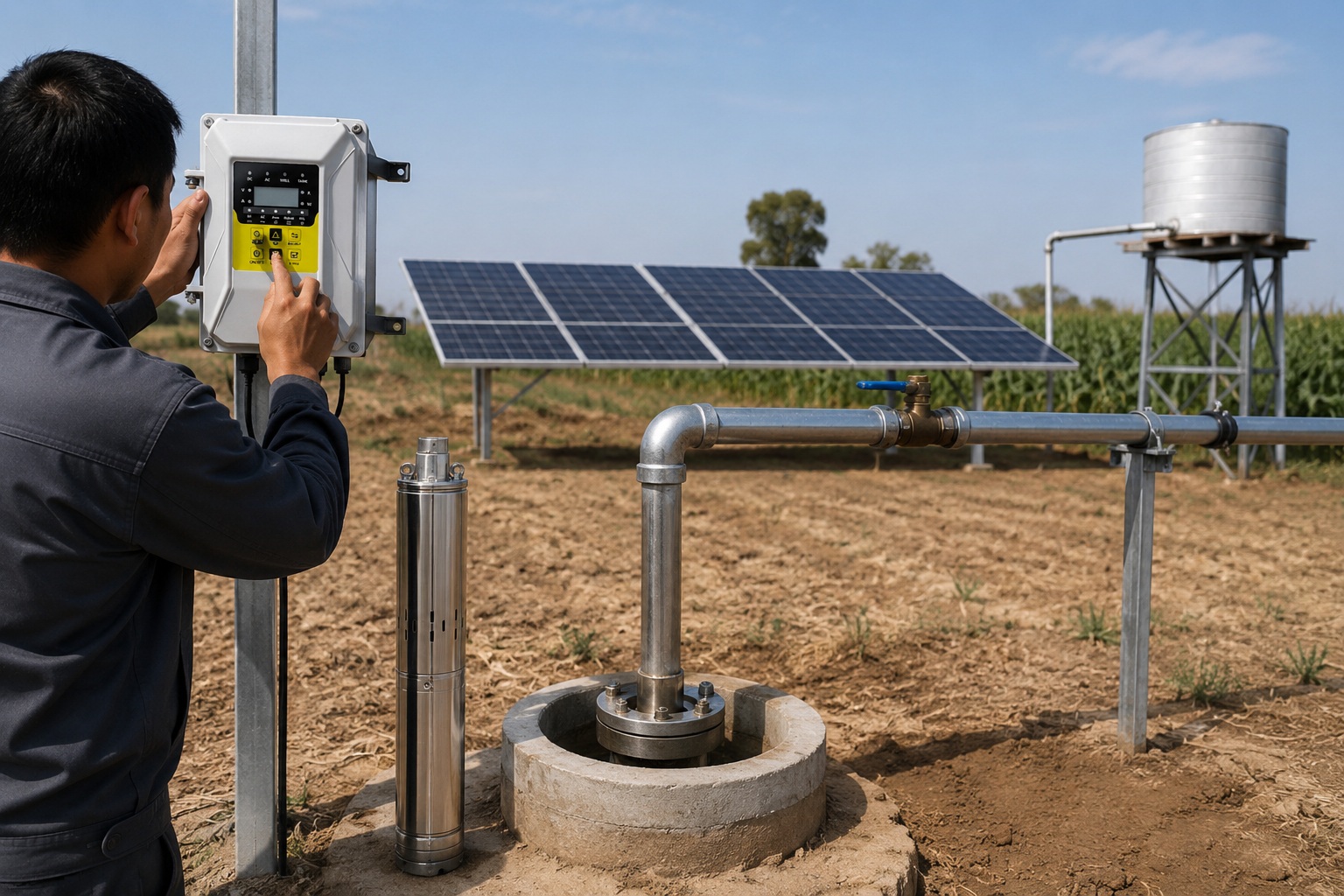
A water pump isn't just one type of device; its design and function vary greatly depending on the application, from the engine in your car to the solar-powered well in a remote field.
Knowing the specific type of pump you have is the first step in diagnosing the problem and finding the right solution.
Let's dive into what makes these pumps tick and what to do when they stop.
What is a water pump, and why is it important?
Your system is failing, whether it's an overheating engine or a dry field.
A small, often overlooked component—the water pump—is likely the culprit, causing major disruptions and potential financial loss.
A water pump is a critical device responsible for circulating fluid.
In a vehicle, it moves coolant to prevent the engine from overheating.
In other applications, it moves water for irrigation, livestock, or domestic use, ensuring a steady and reliable supply.
The fundamental job of a water pump is to generate flow and pressure within a system.
It achieves this using principles of physics, most commonly centrifugal force.
A spinning impeller inside the pump housing flings water outward, creating a low-pressure area at its center that draws in more fluid.
This continuous action creates the circulation needed to move massive volumes of liquid.
While the principle is simple, the applications and designs are incredibly diverse.
The pump in your car is just one example.
In agriculture, industry, and residential settings, pumps are the heart of the water supply system.
A failure here doesn't just mean inconvenience; it can mean lost crops, thirsty livestock, or even a home without running water.
This is especially true in off-grid locations where reliability is paramount.
The Engine of Modern Pumps: The BLDC Motor
In the world of modern water solutions, especially solar-powered systems, the motor driving the pump is as important as the pump itself.
The most advanced systems now use Brushless DC (BLDC) permanent magnet motors.
These motors represent a quantum leap in efficiency, with many designs achieving an energy conversion rate of over 90%.
This high efficiency is crucial for solar applications, as it means more water can be pumped using less power from the solar panels.
Compared to traditional motors, BLDC motors are significantly more compact and lightweight.
On average, a BLDC motor can be up to 47% smaller and 39% lighter than its conventional counterpart with the same power output.
This reduces material costs, simplifies installation, and makes the entire pump system easier to handle and service.
Furthermore, their brushless design eliminates the most common point of failure in older motors—worn-out brushes—making them virtually maintenance-free with a much longer operational lifespan.
A Portfolio of Specialized Solar Pumps
The pump end, or "wet end," is what directly interacts with the water, and its design must be tailored to the specific water conditions and performance requirements.
Three main types of solar deep well pumps dominate the market, each serving a distinct purpose.
| Pump Type | Key Feature | Best For | Application Examples |
|---|---|---|---|
| Solar Screw Pump | High Head, Low Flow | Deep wells, sandy water | Domestic water, livestock watering |
| Solar Plastic Impeller | High Flow, Wear-Resistant | High volume needs, fine sand | Farm irrigation, pasture water supply |
| Solar SS Impeller | Corrosion-Resistant | Harsh, corrosive water | Acidic water, high-end homes |
The solar screw pump is a positive displacement pump.
It uses a stainless steel screw rotating within a rubber stator to push water upward.
This design excels at creating very high pressure (head), making it ideal for drawing water from extremely deep wells.
Its ability to handle sandy water also makes it a robust choice for regions with challenging water quality.
The solar plastic impeller pump is a multi-stage centrifugal pump.
It uses a stack of durable plastic impellers to move large volumes of water at a medium head.
Its high flow rate makes it perfect for agricultural irrigation.
It offers excellent resistance to fine sand and is a lightweight, economical choice for many users.
The solar stainless steel impeller pump is the premium option for durability.
Built with SS304 stainless steel impellers and housing, it is designed to withstand corrosive water conditions, such as high acidity or alkalinity.
This makes it the go-to pump for specific geological areas and for applications where water purity and long-term reliability are non-negotiable.
Why do water pumps fail?
Your pump is leaking, noisy, or has simply stopped working.
You are now facing frustrating downtime and the threat of expensive damage, all while wondering what went wrong with this essential component.
Water pumps typically fail due to the gradual wear and tear of their moving parts, particularly seals and bearings.
Corrosion from poor-quality fluid or harsh water, along with damage from abrasive particles, can also lead to premature failure.
A water pump operates in a demanding environment, constantly subjected to high temperatures, corrosive fluids, and mechanical stress.
Over time, these factors inevitably lead to degradation and failure.
Understanding the specific causes can help in preventing them and choosing the right pump for the job.
The internal seal is one of the most common failure points.
This precision component prevents fluid from leaking out along the spinning shaft.
Constant exposure to high temperatures can cause the polished rubber surface of the seal to become brittle and develop tiny cracks, allowing fluid to escape.
Abrasive particles suspended in the fluid, such as sand, rust, or mineral deposits, act like sandpaper on the delicate seal faces and impeller surfaces.
This is why using distilled water when mixing engine coolant is so important, and why water quality is a major factor for well pumps.
Finally, a process called electrolysis can destroy a pump from the inside out.
As the corrosion inhibitors in coolant or the natural pH buffers in water break down over time, the fluid becomes more electrically conductive and acidic.
This creates a small electrical current between the different metals in the system, causing the metal components of the pump to corrode and fail.
Failure Modes in Diverse Pumping Environments
The environment in which a pump operates dramatically influences its lifespan and the way it fails.
Water quality is a primary factor.
For instance, in regions like Africa and Latin America, groundwater often contains a high concentration of sand and silt.
A standard centrifugal pump would quickly wear out in these conditions.
This is where a solar screw pump shines.
Its positive displacement design is inherently more resistant to abrasives, allowing it to have a service life up to 5 times longer in sandy water compared to a centrifugal pump.
For large-scale farming in areas like the Americas, the need is for high water volume.
Here, a solar plastic impeller pump offers a balanced solution.
The plastic material used for the impellers is engineered to be highly wear-resistant against fine sand, while the multi-stage design can deliver flow rates exceeding 10,000 liters per hour.
However, if the water is not just sandy but also corrosive—a common issue in the alkaline soils of Australia or in areas with industrial runoff—plastic impellers may not be enough.
In these cases, a solar stainless steel impeller pump is necessary.
The SS304 stainless steel used in these pumps is highly resistant to both acidic and alkaline corrosion, ensuring the pump maintains its structural integrity and performance for years, even in the harshest water.
The Critical Role of Proactive Maintenance
While choosing the right pump for the water type is crucial, maintenance can significantly extend its life.
For engine cooling systems, this means regular coolant flushes, with a 100% replacement every 30,000 to 50,000 miles.
This simple act removes abrasive particles and replenishes the corrosion inhibitors, protecting the entire system.
For water well pumps, maintenance is more about monitoring.
Regularly checking the water source for changes in sand content or clarity can provide an early warning of potential problems.
Installing a pre-filter or sediment filter can reduce the abrasive load on the pump by over 80%, drastically increasing its lifespan.
The good news is that the heart of modern solar pumps, the BLDC motor, is a sealed, maintenance-free unit.
This design eliminates the need for periodic service on the motor itself, shifting the maintenance focus entirely to the pump's wet end and the quality of the water it's moving.
What are the symptoms of water pump failure?
Your car's temperature gauge is in the red, or you spot a strange puddle under the engine.
These are urgent warning signs from your vehicle, pointing to a potential pump failure that could be catastrophic if ignored.
The most common symptoms of a failing water pump are engine overheating, visible fluid leaks under the front of the vehicle, and unusual whining or grinding noises.
You might also see steam or smoke from the engine area.
Identifying the signs of water pump failure early is crucial for preventing more severe and costly damage.
Each symptom points to a specific type of internal problem.
An overheating engine is the most serious red flag.
It indicates the pump is no longer circulating enough coolant to remove the engine's heat.
This could be due to a completely failed bearing, a broken impeller, or a massive leak that has drained the system of fluid.
Visible coolant leaks are the most common early warning sign.
A small drip or a puddle under the car after it has been parked is a clear indication that a seal has failed.
The "weep hole" on the pump housing is designed to let a small amount of coolant escape when the internal seal begins to fail, providing a visible warning before a catastrophic failure occurs.
The color of the fluid—typically bright green, orange, or pinkish-red—will confirm it is coolant.
A whining or grinding noise that changes pitch with engine speed often points to a worn-out bearing.
The bearings support the pump's main shaft, and when they wear out, the shaft can wobble.
This wobble not only creates noise but also puts immense stress on the seal, leading to its eventual failure.
If the noise sounds more like rattling, it could be a sign that the impeller has broken or come loose from the shaft.
Diagnosing Issues in Modern Solar Pumping Systems
The symptoms of failure in a solar water pump system are different but just as critical to recognize.
Instead of an overheating engine, the primary symptom is a significant reduction in water flow or a complete stoppage of water.
- Reduced Water Flow: If your pump is producing 30-50% less water than usual under full sun, it could indicate a worn impeller or a partially clogged intake.
- No Water Flow: If the sun is shining but no water is coming out, the problem could be more serious. This might point to a seized motor, a broken shaft, or an electrical issue with the controller or wiring.
- Increased Noise or Vibration: Just like in a car's pump, new or unusual noises from a well pump indicate mechanical trouble. A grinding sound often means sand or debris is trapped in the pump, while a loud humming might suggest the motor is struggling to turn.
- Controller Error Codes: This is a major advantage of modern systems. The intelligent controller is the brain of the operation and can self-diagnose.
The Power of an Intelligent MPPT Controller
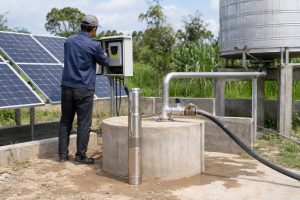
Modern solar pump systems are equipped with advanced Maximum Power Point Tracking (MPPT) controllers.
These controllers not only optimize the power from the solar panels—boosting water output by up to 30% compared to non-MPPT systems—but also serve as a powerful diagnostic tool.
The controller constantly monitors the pump's electrical performance.
It can detect and display error codes for a range of problems, taking the guesswork out of troubleshooting.
| Error Code | Potential Problem | Recommended Action |
|---|---|---|
| Dry Run Protection | Well water level is too low | Pump stops automatically. Check well-level probes. |
| High Current/Stall | Impeller is jammed by debris | Pump stops. Attempt to reverse motor via controller or pull pump for cleaning. |
| Low Voltage | Insufficient sunlight or panel issue | Normal during cloudy weather. If in full sun, check solar panel connections. |
| Phase Loss | Damaged cable to motor | Pump will not start. Inspect motor cable for damage and test continuity. |
This diagnostic capability is invaluable, especially for pumps installed in remote or inaccessible locations.
A user or technician can often identify the problem simply by looking at the controller's display, saving hours of unnecessary labor and diagnostic time.
How to repair a water pump?
Your pump is failing, and you're at a crossroads.
Do you attempt a DIY repair, call a professional for a potentially expensive fix, or just replace the entire unit?
You need a clear path forward.
A minor repair, like using a sealant for a small leak, is a temporary fix.
A full repair usually means disassembling the pump to replace faulty components like seals or bearings.
For most modern, sealed pumps, replacing the entire unit is the standard and most reliable procedure.
Repairing a water pump can range from a simple, quick fix to a complex, labor-intensive job.
The approach you take depends on the type of pump, the nature of the failure, and your own technical skill.
For a minor leak from a gasket or casing on an older, more serviceable pump, a specialized sealant can sometimes be a viable short-term solution.
These products contain microfibers that circulate within the system and plug small holes from the inside.
However, this is not a permanent repair and will not fix a leaking shaft seal.
A true repair involves a more hands-on process.
First, the power supply must be disconnected completely to ensure safety.
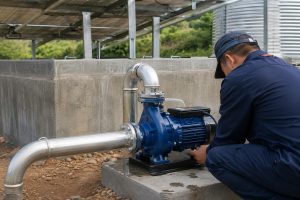
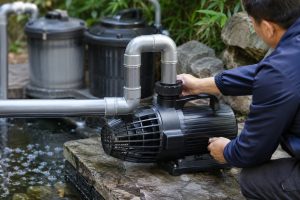
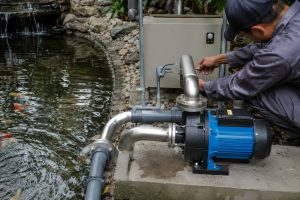
The pump then needs to be disassembled to access the internal components.
This typically requires a set of wrenches, screwdrivers, and possibly a gear puller to remove the pulley or impeller.
Once disassembled, you can inspect the individual parts.
A worn or noisy bearing, a damaged impeller, or a compromised seal will need to be replaced.
Finding the correct replacement parts can sometimes be a challenge, especially for older or less common models.
After replacing the faulty components, the pump must be carefully reassembled, ensuring all gaskets are correctly seated and all bolts are tightened to the proper torque specifications to prevent leaks.
Finally, after reinstallation, the system must be tested thoroughly to confirm the repair was successful.
The Repair vs. Replace Dilemma: A Cost-Benefit Analysis
The decision to repair or replace often comes down to cost.
While a simple repair might seem cheaper upfront, it's essential to consider the long-term value.
For a typical automotive water pump, a professional replacement can cost between $160 and $500, with labor accounting for over 70% of the bill.
| Repair Option | Avg. Cost (Automotive) | Avg. Cost (Solar Well Pump) | Long-Term Reliability |
|---|---|---|---|
| Sealant Additive | $20 - $40 | Not Recommended | Very Low / Temporary |
| DIY Component Repair | $50 - $100 (Parts) | $100 - $300 (Pump End) | Medium |
| Professional Replacement | $160 - $500+ | $800 - $2000+ | High |
For critical systems like a solar well pump that supplies water for a home or farm, reliability is paramount.
A failed repair could mean days without water.
In these scenarios, replacing the faulty unit with a new, high-efficiency model is often the wisest investment.
The improved performance, lower operating costs, and peace of mind provided by a new pump with a full warranty often outweigh the higher initial cost.
Preventative replacement can also be a smart financial move.
If a technician is already performing a major service that requires accessing the pump (like a timing belt change on a car), replacing the pump at the same time adds very little to the labor cost but resets the clock on its service life.
The Advantage of Modern, Modular Pump Design
Modern pump systems, particularly in the solar industry, are engineered with serviceability in mind.
They feature a modular design that separates the two main components: the motor and the pump end (or "wet end").
The BLDC motor is a highly reliable, sealed unit designed to last for tens of thousands of hours with no maintenance.
The pump end contains the parts that experience wear and tear—the impeller, diffuser, and seals.
This modularity means that in many cases, a "failure" doesn't require replacing the entire expensive pump and motor assembly.
Instead, a technician can simply replace the worn-out pump end, which is a fraction of the cost of a complete unit.
This process is significantly faster and more economical, reducing downtime and repair expenses by as much as 60%.
Furthermore, advanced systems offer even greater flexibility with components like the AC/DC hybrid controller.
This technology allows the pump to be powered by solar panels during the day and automatically switch to an AC power source (grid or generator) at night or on cloudy days.
This isn't a repair in the traditional sense, but it's a system-level solution that ensures 24/7 water availability, effectively "repairing" the problem of intermittent solar power and providing unmatched operational reliability.
Conclusion
Repairing a pump is possible for minor issues.
However, for critical applications, replacement with a modern, efficient, and reliable model is often the best long-term strategy for performance and peace of mind.
FAQs
How often should I service my water pump?
For pumps in demanding systems, a visual inspection and performance check every six months is recommended.
Sealed units, like solar pump motors, are maintenance-free.
Can I repair a water pump myself?
Simple repairs are possible if you have the right tools and mechanical skill.
However, for complex electrical or internal motor issues, professional service is highly recommended.
How much does it cost to fix a water pump?
Costs vary widely, from $20 for a sealant additive to over $1,000 for a full replacement of a high-performance deep well pump, including labor.
What happens if a water pump fails completely?
In a car, it can cause catastrophic engine damage within minutes.
In a water supply system, it results in a complete and immediate loss of water.
What is the first sign of a water pump going bad?
Often, it's a subtle new noise, like a faint whining or grinding sound.
For water systems, a noticeable drop in pressure or flow is a key indicator.
Is it worth replacing a water pump preventatively?
Yes, especially when other major service is being performed in the same area.
The added cost is minimal compared to the cost of a future emergency replacement.
How long can a water pump last?
A quality pump can last over 10 years or 100,000 miles in a car.
A well-maintained solar pump can operate for 15-20 years, especially with a durable BLDC motor.
Can a pump be damaged by running dry?
Yes, most pumps use the water they are moving for lubrication and cooling.
Running dry can cause the seals to overheat and fail in seconds.