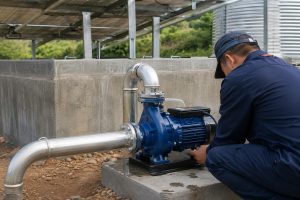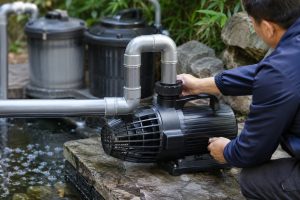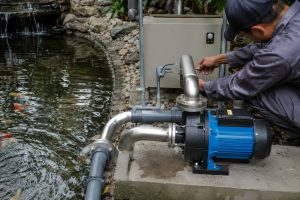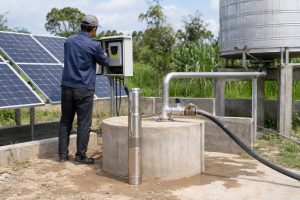
Your water pump just failed, threatening your farm, home, or livestock.
The sudden silence is stressful.
Now you're wondering if a costly replacement is your only option.
Yes, most water pumps can be repaired.
The feasibility of a repair depends on the pump type, the specific damage, and the availability of spare parts.
Often, repairing a key component is significantly more cost-effective and faster than replacing the entire unit, getting your water flowing again without breaking the budget.
Deciding whether to repair or replace a pump can be confusing.
It feels like a gamble.
But it doesn't have to be.
The key is understanding what's inside your pump.
Different designs have different strengths, weaknesses, and repair procedures.
By learning about the core components, you can make an informed decision that saves you time and money.
This guide will walk you through the most common types of solar pumps, breaking down their construction and how it impacts their repairability.
You will gain the confidence to diagnose issues and choose the best path forward for your specific situation.
Understanding the Heart of the Pump: The Motor
Your pump has stopped.
Is the whole unit a write-off?
A dead motor often feels like a terminal diagnosis for your entire water system.
Yes, a pump motor can be repaired or, more commonly, replaced.
Modern, high-efficiency motors are often modular.
This means you can swap out a faulty motor without replacing the entire pump, saving a perfectly good pump end and saving you a lot of money.
To truly grasp pump repair, we must start with the engine that drives it: the motor.
The motor is the single most critical component determining a pump's efficiency, lifespan, and overall performance.
For modern solar pumps, the gold standard is the Brushless DC (BLDC) permanent magnet motor.
The Power of BLDC Technology
Unlike older brushed motors that rely on physical contacts that wear out, BLDC motors use electronics for commutation.
This fundamental difference eliminates the most common failure point in DC motors, drastically reducing maintenance needs and extending service life.
These motors are not just reliable; they are incredibly efficient.
Many high-quality BLDC motors achieve an electrical-to-mechanical energy conversion efficiency of over 90%.
A standard AC motor or older DC motor might only reach 60-75% efficiency.
This 15-30% efficiency gain is massive.
It means the pump requires significantly fewer solar panels to do the same amount of work, directly cutting the initial system cost by up to 25%.
Advanced Materials and Design
The performance of a BLDC motor is further enhanced by the materials used.
The rotor, the spinning part of the motor, is often made from high-grade rare-earth magnets like 40SH neodymium iron boron.
This material creates a powerful magnetic field in a compact size, leading to higher torque and power.
The result is a motor that is much smaller and lighter than its traditional counterparts.
A modern BLDC motor can be up to 47% smaller and 39% lighter than an older motor with the same power output.
This makes installation, especially in deep wells, far easier and less labor-intensive.
| Feature | BLDC Permanent Magnet Motor | Traditional Brushed DC Motor |
|---|---|---|
| Efficiency | >90% | 60% - 75% |
| Lifespan | 10+ years | 3 - 5 years |
| Maintenance | Maintenance-free | Regular brush replacement |
| Size & Weight | Compact and lightweight | Bulky and heavy |
| Common Failure Point | Electronics (rare) | Brush wear |
| Repair Strategy | Replace controller or motor | Replace brushes, resurface commutator |
From a repair perspective, the BLDC system's modularity is its greatest strength.
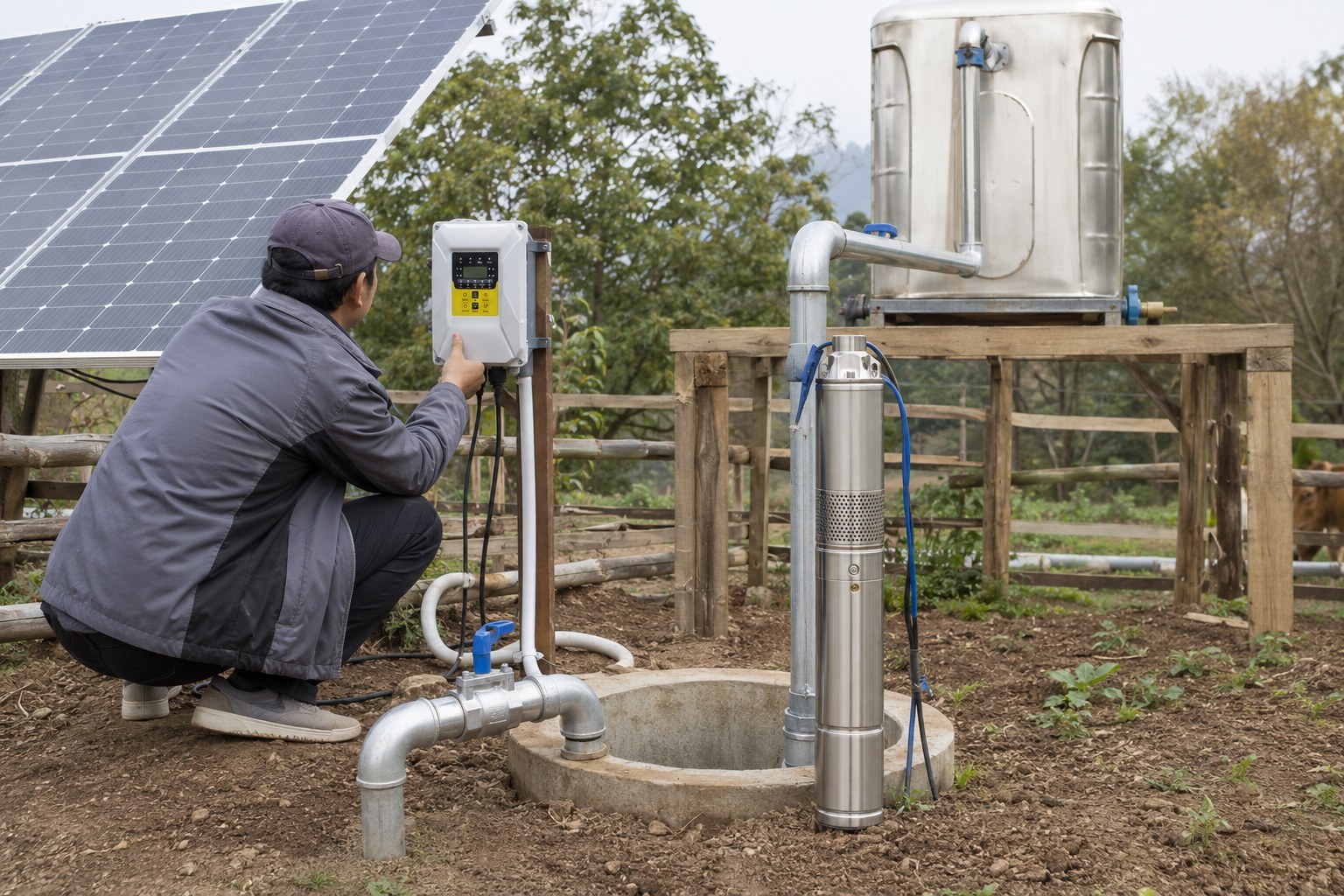
The system consists of the pump end, the motor, and an external controller.
If a problem occurs, it's often isolated to one of these three parts.
A faulty controller can be swapped out in minutes.
If the motor fails, it can be detached from the pump end and replaced.
You don't throw away the entire pump, just the failed component.
This approach makes troubleshooting simple and repairs more economical.
Assessing the Pump End: The Solar Screw Pump
You rely on a deep well, but sand and grit keep causing issues.
This constant wear leads to pump failure.
You need a solution that can handle the harsh conditions without frequent breakdowns.
Yes, solar screw pumps are designed for easy repair.
The primary wear part, the rubber stator, is a consumable component designed for replacement.
This makes repairs predictable, straightforward, and affordable, ensuring your pump can be quickly returned to service even after tough use.
When your water source is deep and potentially sandy, a specific type of pump is required.
The solar screw pump, also known as a progressive cavity pump, is a master of high-head, low-flow applications.
Its unique design makes it exceptionally durable and surprisingly easy to repair.
How a Screw Pump Works
The mechanism is simple yet effective.
It consists of a single helical rotor (the "screw"), typically made of stainless steel, that rotates inside a double-helical rubber stator.
As the screw turns, it forms a series of sealed cavities that "progress" from the pump's intake to its outlet.
This action pushes the water column upward with steady pressure.
It's not about spinning fast; it's about positive displacement.
This design provides immense lifting power, making it ideal for wells over 100 meters deep.
Built to Handle Abrasives
The number one enemy of most pumps is sand.
Abrasive particles quickly wear down the tight tolerances in centrifugal pumps, leading to a rapid loss of pressure and flow.
Screw pumps, however, excel in these conditions.
The flexible rubber stator can tolerate and pass small abrasive particles without significant damage.
The slow, steady movement minimizes the high-velocity friction that destroys other pump types.
This makes it the go-to choice for new or sandy boreholes in regions across Africa and Latin America.
| Pump Type | Typical Max Head | Typical Max Flow | Sand Resistance | Primary Application |
|---|---|---|---|---|
| Solar Screw Pump | 150m+ | 1-3 m³/hr | Excellent | Deep well domestic/livestock water |
| Plastic Impeller Pump | ~80m | 5-10 m³/hr | Good | High-volume irrigation |
| SS Impeller Pump | ~100m | 5-10 m³/hr | Moderate | Corrosive water, high-end use |
The Simplicity of Repair
The genius of the screw pump's design extends to its repairability.
The component that experiences the most wear is the rubber stator.
Over time, friction and abrasives will slowly wear it down, leading to a gradual loss of pressure.
This is not a catastrophic failure but a predictable maintenance event.
Replacing the stator is a simple process.
The pump end can be disassembled, the old stator is unscrewed, and a new one is put in its place.
The stainless steel rotor is incredibly durable and rarely needs replacement.
This means the primary "repair" is more like changing the oil in a car—a routine task with a single, affordable replacement part.
An experienced technician can perform this service in under an hour, restoring the pump to its original performance specifications.
This predictable maintenance makes the screw pump a reliable and cost-effective long-term solution for challenging wells.
When High Flow is Key: The Solar Plastic Impeller Pump
Your farm needs a lot of water, and fast.
But fine sand and continuous use wear down your equipment.
A failed irrigation pump during a dry spell can be devastating for your crops.
Absolutely.
The plastic impellers are designed as a modular, replaceable stack.
If performance drops due to wear, you can simply replace the impeller stack, not the whole pump.
This is an economical repair that quickly restores your pump's high-flow capabilities.
When the goal is moving large volumes of water for applications like farm irrigation or filling large storage tanks, a different design is needed.
The solar plastic impeller pump is a multi-stage centrifugal pump.
It is engineered to deliver high flow rates efficiently and economically, with a design that anticipates wear and simplifies repair.
The Centrifugal Force Principle
Unlike the positive displacement of a screw pump, this pump uses centrifugal force.
Water enters the center of a spinning disc called an impeller.
Vanes on the impeller catch the water and accelerate it outward at high speed.
This high-speed water is then directed by a diffuser into the next stage, converting its velocity into pressure.
A multi-stage pump simply contains a stack of these impeller-diffuser sets.
Each stage adds more pressure, increasing the total head the pump can achieve.
A pump with 10 stages can lift water roughly 10 times higher than a pump with a single, identical stage.
The Advantage of Plastic Impellers
The choice of plastic for the impellers is a deliberate engineering decision.
Modern engineering polymers are incredibly tough and wear-resistant.
They offer excellent resistance to fine sand, often outperforming harder materials like stainless steel in certain abrasive conditions.
The plastic can flex slightly, allowing fine particles to pass through without causing the catastrophic damage they might inflict on a rigid metal impeller.
There are significant other advantages:
- Cost: Plastic impellers are far more economical to manufacture than their stainless steel counterparts. This lowers the initial purchase price of the pump.
- Weight: Plastic is significantly lighter than metal. This reduces the overall weight of the pump, making it easier to handle and install. It also reduces the startup torque required from the motor.
- Efficiency: The smooth, molded surfaces of a plastic impeller can be very hydraulically efficient.
| Feature | Plastic Impeller | Stainless Steel Impeller |
|---|---|---|
| Initial Cost | Low | High |
| Weight | Light | Heavy |
| Fine Sand Resistance | Excellent | Moderate |
| Corrosion Resistance | Good (in neutral pH) | Excellent |
| Repair Cost | Low | High |
Modular Repair for Maximum Uptime
The most brilliant part of the design is its modularity.
The impellers, diffusers, and chambers are stacked on a central shaft.
Over years of use, the impellers closest to the pump intake will experience the most wear, leading to a gradual decline in performance.
Repairing the pump is straightforward.
A service kit, containing a new stack of impellers and associated seals, can be used to rebuild the pump's "wet end."
A technician disassembles the pump housing, slides the old impeller stack off the shaft, and installs the new one.
This process replaces all the primary wear components at once, effectively returning the pump to factory-new performance for a fraction of the cost of a new unit.
This makes the plastic impeller pump a workhorse for agriculture in Africa and the Americas, where high flow, good sand tolerance, and economical operation are paramount.
Built for a Tough Life: The Solar Stainless Steel Impeller Pump
Is your water quality destroying your equipment?
Acidic or alkaline water corrodes standard pumps, leading to frequent, expensive replacements.
You need a solution that can withstand these harsh conditions and provide lasting value.
Yes, even these premium pumps are repairable.
While they fail less often due to their robust construction, components like the SS304 impellers and mechanical seals can be replaced.
Repairing these high-value pumps is almost always more economical than replacing them.
In some environments, durability and chemical resistance are more important than initial cost.
When water is corrosive or the application demands the highest reliability, the solar stainless steel impeller pump is the premium choice.
This pump combines the high-flow design of a multi-stage centrifugal pump with materials built to endure the toughest conditions.
The Unmatched Durability of Stainless Steel
The key feature of this pump is its construction.
The pump body, shaft, and, most importantly, the impellers are all made from SS304 stainless steel.
This material offers exceptional resistance to corrosion from acidic or alkaline water.
While a plastic impeller pump might degrade in a low pH environment, a stainless steel pump will operate reliably for years.
This makes it the ideal solution for specific geological regions, such as the alkaline soil areas of Australia, or for high-end residential and commercial applications where water quality is unknown or potentially aggressive.
The rigidity of stainless steel also means it can be machined to very tight tolerances, potentially leading to higher efficiencies and heads compared to a similarly sized plastic model.
Performance and Application
Functionally, the stainless steel pump operates on the same multi-stage centrifugal principle as the plastic impeller version.
It is designed for high flow rates and can achieve medium-to-high heads.
However, its robust construction gives it a key advantage in longevity and reliability, especially under continuous, heavy-duty use.
The higher material strength allows it to operate at higher pressures without risk of component failure.
This reliability comes at a price.
Stainless steel is more expensive and more difficult to manufacture than plastic, resulting in a higher initial purchase price.
The pump is also significantly heavier, which can make installation more challenging.
| Parameter | Solar Plastic Impeller Pump | Solar Stainless Steel Impeller Pump |
|---|---|---|
| Best Use Case | General irrigation, high flow, budget-conscious | Corrosive water, high-end homes, maximum longevity |
| Corrosion Resistance | Moderate to Good | Excellent |
| Initial Cost | Lower (approx. 40% less) | Higher |
| Weight | Lighter | Heavier (approx. 30% more) |
| Service Life | 5-8 years | 10-15+ years |
A Repair-Focused Investment
Because of their higher initial cost, stainless steel pumps are prime candidates for repair rather than replacement.
While they are far less likely to fail from corrosion or wear, other components like the mechanical seal or motor bearings can eventually wear out.
The repair process is similar to that of the plastic impeller pump, involving the disassembly of the wet end to access the internal components.
Replacing a mechanical seal or even a damaged impeller is a specialized but common task for a pump technician.
Given that a stainless steel pump can cost 30-50% more than its plastic counterpart, spending a fraction of that on a repair to extend its life by several more years is a very logical economic decision.
This pump is an investment in long-term, trouble-free operation, and its repairable nature protects that investment.
Ensuring 24/7 Operation: The AC/DC Hybrid Controller
Your solar pump is great, but only when the sun shines.
On cloudy days or at night, your water supply stops.
This unreliability is a major problem for critical water needs.
The controller is a separate, replaceable electronic unit.
If it fails, it can be swapped out easily without touching the pump or motor.
This modularity makes troubleshooting simple and restores your system's "brain" and hybrid functionality quickly.
A solar pump system is more than just a pump and some panels.
The brain of the operation is the controller.
It manages the power, protects the motor, and maximizes water output.
The most advanced systems now use AC/DC hybrid controllers, transforming a daytime-only device into a 24/hour water solution and adding another layer of repairability to the system.
The Intelligence of MPPT
At the core of any good solar controller is Maximum Power Point Tracking (MPPT).
Solar panels have a complex power curve that changes with sunlight intensity and temperature.
MPPT technology constantly analyzes the output of the panels and adjusts the electrical load to ensure the motor is receiving the optimal voltage and current.
This process can boost the amount of water pumped per day by up to 30% compared to a simple controller.
It allows the pump to start earlier in the morning, run on overcast days, and shut down later in the evening.
The Hybrid Advantage: Non-Stop Water
The true game-changer is the hybrid functionality.
A standard solar pump system is a DC-only system.
When there's not enough DC power from the sun, the pump stops.
An AC/DC hybrid controller solves this by including a second power input for an AC source, like the utility grid or a generator.
The controller's logic is designed for seamless, automatic switching:
- Full Sun: The controller exclusively uses free DC power from the solar panels. The AC input is ignored.
- Low Sun: When solar power is insufficient (e.g., a cloudy day), the controller intelligently blends DC solar power with AC power. It uses every available watt of solar energy first, only supplementing with the exact amount of AC power needed to keep the pump running at the desired speed.
- No Sun: At night or during heavy storms, the controller automatically switches over to run entirely on the AC power source.
This ensures you have a reliable water supply 24/7, without any manual intervention.
System Modularity and Repair
This sophisticated controller also plays a crucial role in system diagnostics and repair.
Because the controller is a separate, external box, it isolates the system's electronics from the mechanical pump and motor down in the well.
If the pump stops working, the controller's display lights can often indicate the source of the problem (e.g., low water, power issue, motor fault).
If the controller itself is the problem, the repair is simple: disconnect the wiring, mount a new controller, and reconnect it.
There is no need to pull the pump from the well.
This modular approach—Pump, Motor, Controller—makes the entire system easier to maintain and repair.
It allows you to replace only the part that has failed, saving significant time, effort, and expense.
Conclusion
A pump's repairability depends on its design, materials, and modularity.
Understanding these factors is key.
Choosing a well-designed, serviceable pump is an investment in long-term reliability and lower lifetime costs.
FAQs
How do I know if my pump is worth repairing?
If the repair cost is less than 50% of a new pump's price, it's usually worth it. Consider the pump's age and the condition of other components before deciding.
How much does it cost to repair a water pump?
Costs vary widely, from under one hundred dollars for a simple seal to over a thousand for a major motor rebuild. The pump type and extent of damage are the biggest factors.
Can I repair a water pump myself?
Simple repairs like replacing a screw pump stator might be DIY-friendly. However, motor or complex impeller work often requires specialized tools and expertise for a reliable repair.
What is the most common failure in a water pump?
The most common failures are worn seals, which cause leaks, and worn impellers or stators, which cause a loss of pressure. For electric pumps, motor or controller failure is also common.
How long should a well pump last?
A quality submersible well pump should last 8 to 15 years. Lifespan is affected by water quality, runtime, and the quality of the initial installation.
Is it better to repair or replace a submersible pump?
For newer, high-value pumps, repair is often better. For older, cheaper, or severely damaged pumps, replacement might be more cost-effective in the long run.