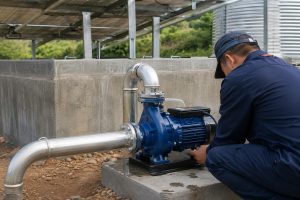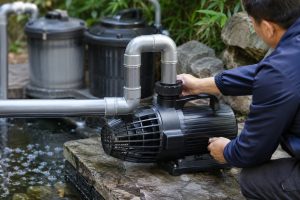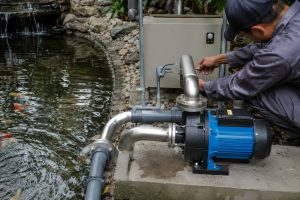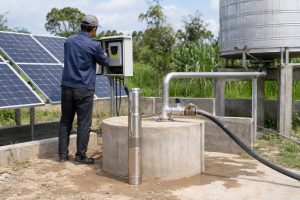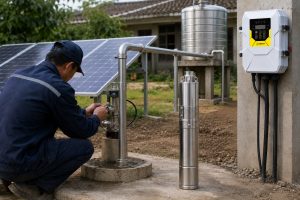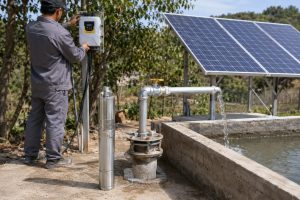
Struggling with water access in a remote location?
The high cost and complexity of connecting to the grid or using fuel can be a constant headache.
A solar pump offers a reliable, grid-independent solution.
A high-performance solar pump can handle a total pump head of up to 1,000 feet.
However, the physical pump unit itself can typically only be submerged about 400 feet below the water's surface.
Understanding the difference is key to selecting the right pump for your well.
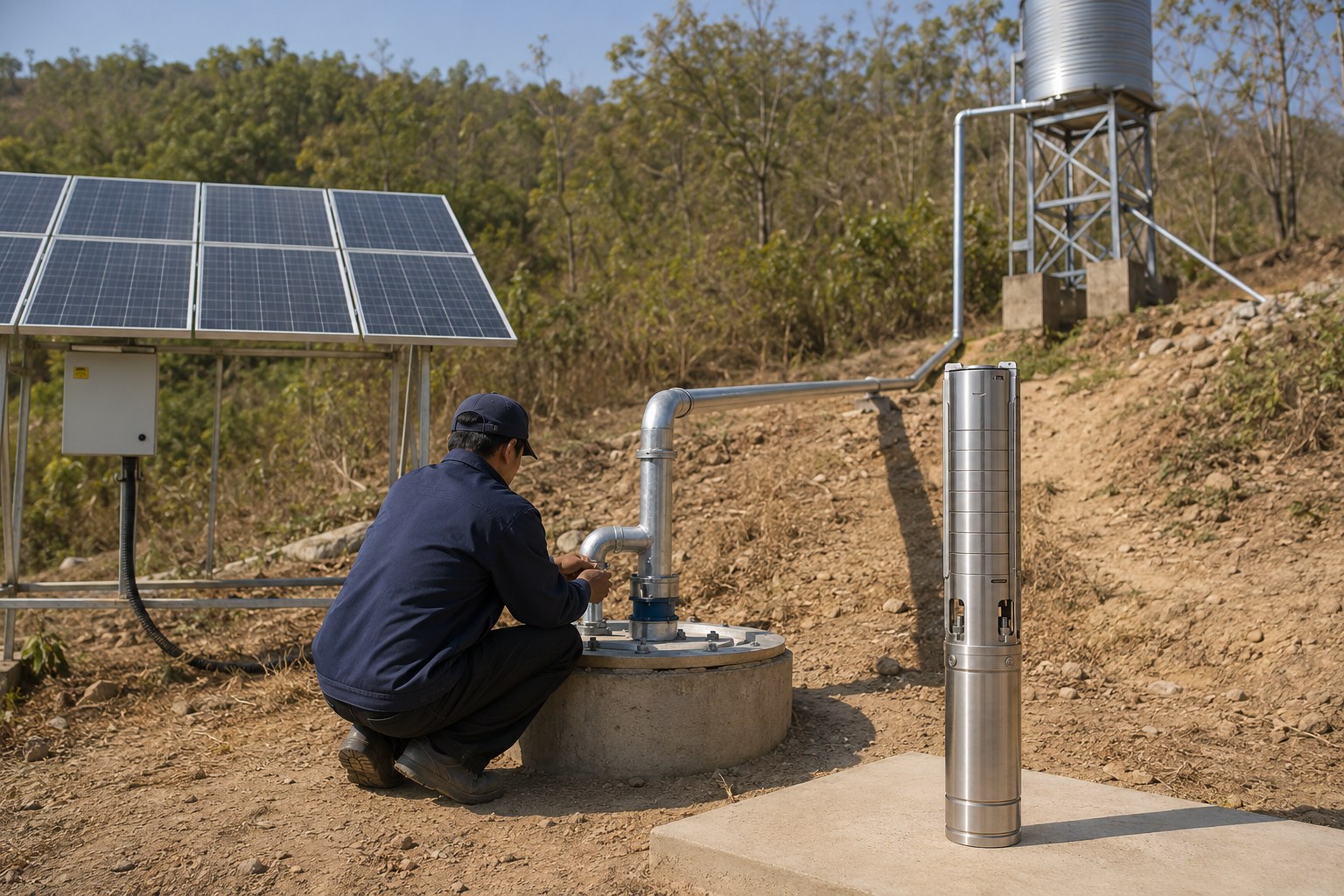
Choosing a solar pump involves more than just looking at the maximum depth.
It's a balance of technology, application, and understanding your specific water needs.
The type of pump, the motor that drives it, and the conditions of your well all play a critical role.
This guide will break down these factors, helping you understand how deep a solar pump can truly work for you.
We will explore the different types of pumps available, from high-head screw pumps to high-flow centrifugal models.
You will learn how to calculate your own requirements and make an informed decision.
This ensures you get a system that is not only powerful but also efficient and durable for years to come.
Defining Depth: How Deep Can a Solar Pump Work?
Need to lift water from a very deep well?
You might worry that a solar-powered system won't have the strength to do the job.
But modern solar pumps are surprisingly powerful.
Some high-performance solar pumps can handle a total dynamic head of over 1,000 feet.
This is different from how deep the pump can be submerged, which is often around 400 feet.
It's the total vertical distance the water is moved that defines the pump's capability.
Understanding Key Depth Metrics
To select the right pump, you must understand the language of water wells.
The terms can seem confusing, but they break down into simple concepts.
Knowing these will prevent you from buying a pump that is either underpowered or unnecessarily expensive.
Let's clarify the three most important measurements.
-
Static Water Level: This is the distance from the ground surface down to the top of the water in your well when the pump is off. It's your starting point for all calculations. If your static water level is 150 feet, this is the minimum height the pump must lift the water.
-
Submergence Depth: This refers to how far below the static water level the pump itself is placed. A pump can't be submerged infinitely deep. Most submersible pumps have a maximum submergence depth, often around 400 feet, due to pressure constraints on the pump's seals and housing.
-
Total Pump Head (or Total Dynamic Head - TDH): This is the most crucial number. It is the total equivalent height the pump must push water. It's calculated by adding the Static Water Level + any elevation change from the wellhead to a storage tank + friction loss in the pipes + pressure requirements for a tank.
Calculating Your Total Pump Head
Calculating your TDH accurately is the most important step in sizing a pump.
Let's break it down with an example.
Imagine your well has a static water level of 200 feet.
You want to pump this water to a storage tank on a hill that is 50 feet higher than the wellhead.
You are also pumping into a pressure tank that requires 40 PSI to operate.
Here’s how you would calculate your TDH:
| Component | Description | Value (in feet) |
|---|---|---|
| Static Water Level | Distance from ground to water | 200 ft |
| Elevation Gain | Height of tank above wellhead | 50 ft |
| Pressure Head | Converting PSI to feet of head | 92.4 ft (40 PSI x 2.31) |
| Friction Loss | Estimated for pipes/fittings | 20 ft (example) |
| Total Dynamic Head | Total Pumping Requirement | 362.4 ft |
In this scenario, you would need a solar pump system rated for at least 363 feet of total head.
This is a much more accurate number than just looking at the 200-foot static water level.
It ensures your pump can deliver water effectively under your specific conditions.
The Core Components: What is a Solar Water Pump?
Wondering what makes up a solar water pump system?
It can seem complex, but the core idea is simple: using sunlight to move water.
This eliminates fuel costs and reliance on an unstable power grid.
A solar water pump is a system that uses energy from photovoltaic (PV) panels to power an electric water pump.
The system consists of solar panels, a controller, and the pump unit itself.
The controller optimizes the power from the panels to run the pump motor efficiently.
The Heart of the System: The Motor
The real engine of a modern solar pump is its motor.
While the pump end moves the water, the motor provides the power to do so.
The efficiency of this motor directly impacts the entire system's performance and cost.
Today's leading solar pumps are powered by a Brushless DC (BLDC) permanent magnet motor.
This technology represents a significant leap forward from older motor designs.
They are more efficient, more durable, and more compact.
A high-quality BLDC motor can achieve an electrical efficiency of over 90%.
This means more of the sun's energy is converted into water-pumping power.
This high efficiency is crucial for solar applications.
It allows the pump to start earlier in the morning and run later in the afternoon, maximizing daily water output.
Compared to traditional AC or brushed DC motors, a BLDC motor can be up to 47% smaller and 39% lighter for the same power output.
This makes installation easier and reduces shipping costs.
The use of powerful neodymium iron boron permanent magnets in the rotor provides high torque, which is essential for starting the pump under load, especially in deep wells.
Because they have no brushes to wear out, these motors are virtually maintenance-free and have a much longer service life, a critical factor for equipment installed deep in a well.
The Brains of the System: The Controller
If the motor is the heart, the controller is the brain.
The controller's primary job is Maximum Power Point Tracking (MPPT).
Solar panels have a specific voltage and current at which they produce the most power.
This "maximum power point" changes throughout the day with the sun's intensity.
An MPPT controller constantly adjusts the electrical load to keep the panels operating at this peak efficiency point.
A system with an advanced MPPT controller can harvest up to 30% more power from the same solar array compared to a system without one.
This translates directly to more water pumped per day.
Modern controllers also include essential protections for the pump motor, such as:
- Dry-run protection: It shuts the pump off if the well water level drops too low, preventing damage.
- Over-voltage and under-voltage protection: Safeguards the electronics from power fluctuations.
- Over-current protection: Protects the motor from drawing too much power and overheating.
Some advanced systems also feature hybrid AC/DC controllers.
These allow the pump to be powered by solar panels during the day and automatically switch to an AC power source (like the grid or a generator) at night or on cloudy days.
This ensures a continuous, 24/7 water supply for critical applications.
Choosing Your Tool: Types of Solar Water Pump
Unsure which pump is right for your specific well?
Choosing the wrong type can lead to poor performance, frequent clogs, or premature failure.
You need a pump designed for your water depth, volume needs, and water quality.
Solar pumps are broadly divided into surface and submersible types.
Then, within submersibles, there are different mechanisms like screw or centrifugal impellers.
Matching the pump type to your application is the key to a reliable and long-lasting water system.
Surface vs. Submersible Pumps
The first decision is based on your water source's location.
Surface Pumps: These pumps are located on the ground and pull water up from a source through a suction hose.
Due to the laws of physics, they have a limited suction lift, typically a maximum of about 22 feet (7 meters).
They are ideal for drawing water from shallow wells, ponds, rivers, or storage tanks.
They are generally optimized for higher flow rates at lower lift heights.
Submersible Pumps: These pumps are placed directly into the water source, deep inside a well or borehole.
Instead of sucking water, they push it up to the surface.
This allows them to work at much greater depths, far beyond the limits of a surface pump.
If your water level is more than 22 feet below the ground, you will need a submersible pump.
Deep Dive into Submersible Pump Types
Within the submersible category, the internal pump mechanism defines its performance.
The three most common types are screw pumps, plastic impeller centrifugal pumps, and stainless steel impeller centrifugal pumps.
Each has distinct advantages for different applications.
1. The Solar Screw Pump (Low Flow, High Head)
This type, also known as a progressive cavity pump, uses a helical metal rotor spinning inside a rubber stator.
This action creates sealed cavities that move water upward.
It excels at creating very high pressure, making it perfect for extremely deep wells.
- Best For: Deep wells (over 500 feet), domestic water supply, and livestock watering where high pressure is needed more than high volume.
- Advantages: Can achieve very high head, excellent sand handling capability (up to 2% sand content), and maintains efficiency across a wide range of depths.
- Limitations: Lower flow rates compared to centrifugal pumps. Not ideal for large-scale irrigation.
2. The Solar Plastic Impeller Pump (High Flow, Wear-Resistant)
This is a multi-stage centrifugal pump.
It uses a series of stacked, durable plastic impellers that spin at high speed.
Each stage adds pressure, pushing water to the surface.
- Best For: Farm irrigation, pasture water supply, and filling tanks where high volume is the priority. Best for moderate depths (100-400 feet).
- Advantages: Delivers high flow rates, excellent resistance to fine sand, lightweight design, and is often the most economical option.
- Limitations: Not ideal for water with high levels of abrasive sand or highly corrosive water. The plastic may wear over time in very harsh conditions.
3. The Solar Stainless Steel Impeller Pump (Premium, Corrosion-Resistant)
This pump is functionally similar to the plastic impeller pump but uses impellers made from SS304 or SS316 stainless steel.
The entire pump body is also typically made of stainless steel.
- Best For: Water sources with acidic or alkaline properties, areas with corrosive soil, and high-end applications where longevity is the top priority.
- Advantages: Superior corrosion and abrasion resistance, extremely long service life, and high reliability in harsh water environments.
- Limitations: Higher initial cost and greater weight compared to plastic impeller models.
Comparison of Submersible Pump Types
| Feature | Solar Screw Pump | Solar Plastic Impeller Pump | Solar Stainless Steel Impeller Pump |
|---|---|---|---|
| Primary Use | Deep Wells, High Head | High Volume, Irrigation | Corrosive Water, Durability |
| Max Head | Very High (up to 1000+ ft) | Medium (up to 500 ft) | Medium-High (up to 600 ft) |
| Flow Rate | Low | High | High |
| Sand Resistance | Excellent (up to 2% sand) | Good (fine sand) | Very Good |
| Corrosion Resistance | Good | Fair | Excellent |
| Relative Cost | Medium | Low | High |
This portfolio of pump types allows you to precisely match a pump to your unique needs, whether it's pushing water from a 900-foot well in the mountains or irrigating acres of farmland.
Making the Right Choice: How to Choose the Best Solar Pump
Ready to invest in a solar pump?
Making the wrong choice can be a costly mistake, leading to insufficient water or a system that fails prematurely.
You must gather the right information to make a smart decision.
The best solar pump is one that perfectly matches your well's characteristics and your water demands.
This involves a simple, step-by-step process of evaluating your water source, calculating your needs, and considering long-term maintenance.
Step 1: Analyze Your Water Source
Before looking at any pumps, look at your water.
Where is it coming from, and what is it like?
- Source Type and Depth: Is it a deep well, a shallow well, a river, or a pond? As discussed, if the water is more than 22 feet below ground, you need a submersible pump. You must know your static water level accurately.
- Water Quality: Does your water have sand, grit, or high mineral content? If so, you'll need a pump designed to handle it. A screw pump or a stainless steel impeller pump will far outlast a standard plastic impeller pump in sandy or abrasive conditions. Consider getting your water tested for pH and mineral content if you suspect it's corrosive.
- Well Recovery Rate: Does your well have a strong, consistent supply of water? If the well could potentially run dry during pumping, you need a pump with a controller that has reliable dry-run protection. This feature is non-negotiable for protecting your investment.
Step 2: Define Your Water Needs
How much water do you need, and where does it need to go?
- Calculate Required Flow Rate: How many gallons or liters do you need per day? This is your total volume. Divide this by the number of peak sun hours in your location (typically 4-6 hours) to get a required flow rate in gallons per minute (GPM) or cubic meters per hour (m³/h). For irrigation, a common rule of thumb is:
Area of land (in acres) x Crop water requirement (in inches) = Volume of water needed - Calculate Total Dynamic Head (TDH): As we covered earlier, this is the single most important calculation. Be precise.
TDH = Static Water Level + Elevation Gain + Pressure Head + Friction Loss
Underestimating your TDH is the most common reason for a pump failing to deliver the expected amount of water. Always add a 10% safety margin to your final TDH calculation.
Step 3: Consider Power and Reliability
How will you power the system, and what happens when the sun isn't shining?
- Solar Panel Sizing: Once you have a pump selected based on your TDH and flow rate, the manufacturer will specify the required solar panel wattage. It's often wise to oversize your solar array by about 20-25%. This helps the pump perform better on cloudy days and extends its daily run time.
- System Maintenance: How easy is the pump to service? Pumps with user-serviceable parts can save you significant time and money over the pump's lifespan. Look for designs where wear parts like impellers or stators can be replaced in the field with basic tools. Ask the supplier about the availability and cost of spare parts.
- 24/7 Water Needs: Do you need water at night or on overcast days? If so, pumping to a storage tank during the day is the most energy-efficient solution. Alternatively, look for a system with a hybrid AC/DC controller. This allows the system to automatically switch to grid or generator power when solar energy is insufficient, providing uninterrupted water supply without needing a large, expensive battery bank.
By carefully working through these steps, you move from guessing to making an educated decision.
You'll select a system that is robust, efficient, and perfectly tailored to your needs for years of reliable, free water.
Conclusion
Solar pumps offer a powerful, sustainable solution for water needs.
Matching the pump type—screw, plastic, or steel impeller—to your specific head, flow, and water quality ensures optimal performance and durability.
FAQs
How long do solar water pumps last?
A quality solar pump system can last for 15-20 years. The solar panels are often warranted for 25 years, while the pump motor and controller may need servicing or replacement sooner.
Do solar pumps work on cloudy days?
Yes, but at a reduced flow rate. High-efficiency pumps and controllers can still operate in low-light conditions, and oversizing the solar array helps improve performance on overcast days.
Can a solar pump fill a water tank?
Absolutely. Pumping water to a raised storage tank is a very common and efficient application. This creates a gravity-fed water system for use 24/7, independent of the sun.
How much maintenance does a solar water pump need?
They are very low-maintenance. The main tasks are cleaning the solar panels a few times a year and checking pipe connections. The brushless motors are maintenance-free.
Can a solar pump run a sprinkler system?
Yes, if the pump is correctly sized. You must choose a pump that can provide both the flow rate (GPM) and the pressure (PSI) required by your specific sprinkler heads.
What is the difference between a solar pump and a regular pump?
The main difference is the power source and motor type. Solar pumps use efficient DC motors designed to run on variable power from solar panels, while regular pumps typically use AC motors.
How much does a solar water pump system cost?
Costs vary widely from a few hundred to several thousand dollars. The price depends on the pump's depth rating (head), flow rate, and the size of the required solar array.
Is it better to use batteries with a solar pump?
Generally, it's more cost-effective to pump water into a storage tank than to use batteries. Batteries add cost, complexity, and maintenance, while a tank provides a simple, reliable energy storage solution.