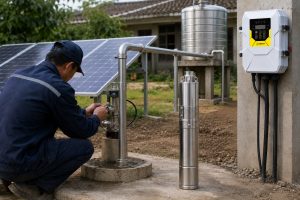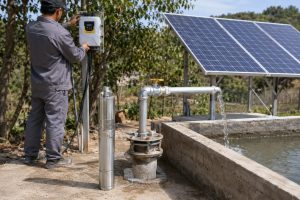
Struggling with unreliable water access in off-grid locations?
Diesel generators are expensive and dirty, but what is the alternative?
Solar-powered pumps offer a clean, cost-effective, and dependable solution.
Yes, a water pump can be powered entirely by solar energy.
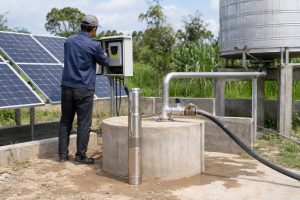
The system uses photovoltaic (PV) panels to convert sunlight into DC electricity.
This electricity powers a pump motor, which moves water from a source like a well or river to where it's needed for irrigation, livestock, or domestic use.
With the growing global demand for clean energy, solar water pumps have become a vital technology.
They operate independently from the power grid, making them essential in vast regions of Africa, the Americas, Australia, and Asia.
These systems are not just a possibility; they are an environmentally friendly and increasingly economical necessity.
This article will explain exactly how they work, their significant benefits, the different types available for specific needs, and the core technology that makes them so efficient.
Let's explore how you can harness the sun to provide a reliable water supply.
What Are Solar Pumps & How Do They Work?
The technology behind solar pumps can seem complex.
This perceived complexity can stop people from considering a highly effective solution.
Let's break down the system into its simple, core components to see how straightforward it truly is.
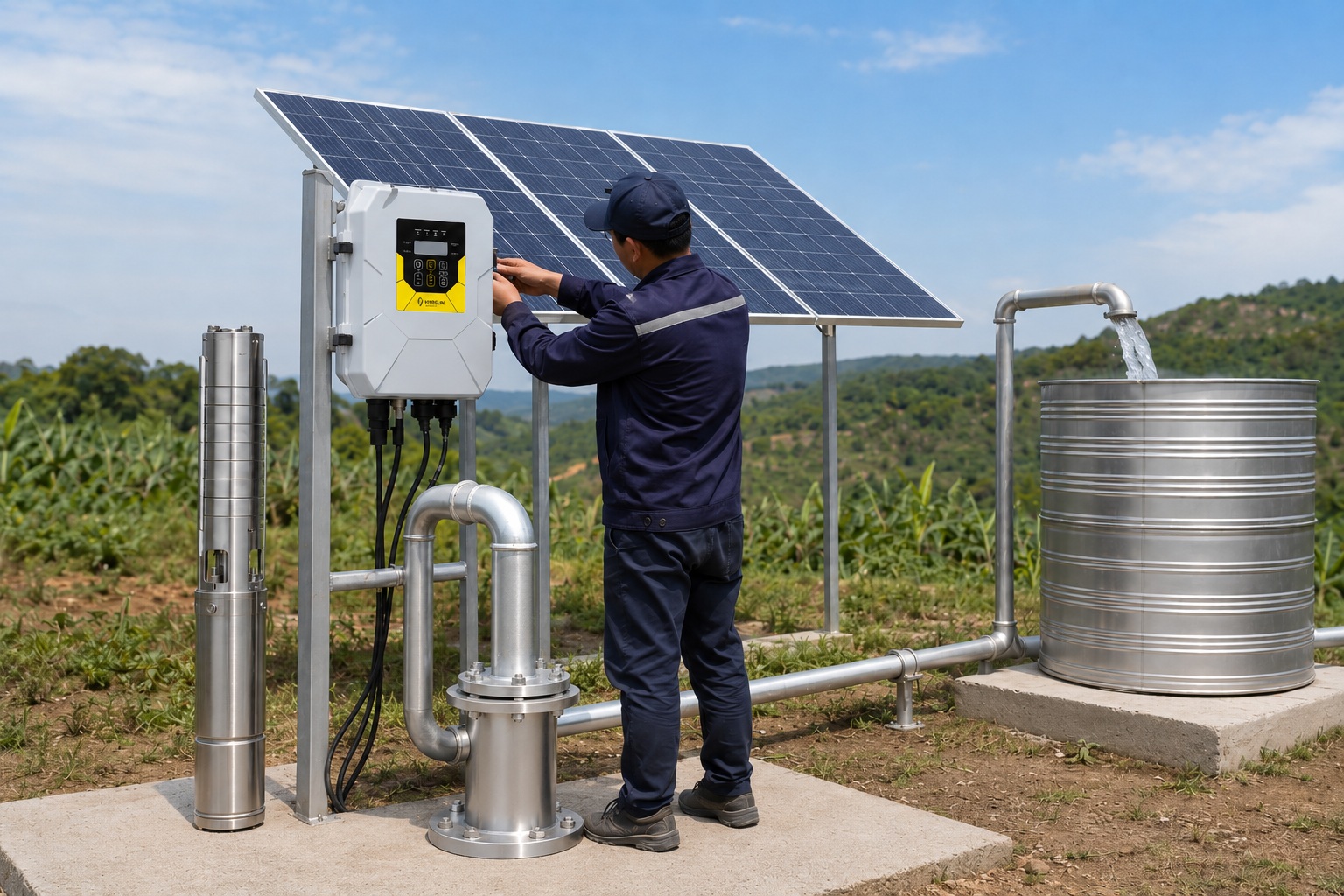
A solar pumping system works by using solar panels to capture sunlight and generate DC electricity.
This power is managed by a controller and sent to a motor, which operates the pump.
An inverter is sometimes used if the system requires AC power for the pump motor.
A solar water pump is more than just a pump connected to a panel.
It is a complete system where each component is chosen to work in harmony, maximizing efficiency from sunrise to sunset.
The primary goal is to convert solar energy into hydraulic energy—moving water—as effectively as possible.
World Bank reports show that agriculture accounts for over 70% of freshwater use globally, a figure that rises to over 80% in many developing regions.
A reliable water supply is therefore directly linked to food security and economic stability.
Core System Components
Understanding the function of each part demystifies the entire system.
-
Solar Panels (PV Array): This is the system's power plant. The panels are made of photovoltaic cells that absorb photons from sunlight. This process creates a direct current (DC) electrical flow. The size of the array is determined by the pump's power requirement and the local daily solar irradiation (sunlight availability).
-
Pump Motor: This is the heart of the system, converting electrical energy into the mechanical energy needed to move water. Modern systems overwhelmingly use high-efficiency Brushless DC (BLDC) permanent magnet motors. Their efficiency, often exceeding 90%, dramatically reduces the number of solar panels needed, lowering the total system cost.
-
Pump Controller (MPPT): The controller is the brain. It regulates the power from the panels to the motor. Most importantly, it uses Maximum Power Point Tracking (MPPT) technology. MPPT constantly adjusts the electrical load to find the perfect balance of voltage and current, maximizing the power harvested from the panels throughout the day, even in changing light conditions. It also protects the pump from damage due to electrical issues or running dry.
-
The Pump End: This is the mechanical part submerged in the water or placed at the surface. It can be a screw pump, a centrifugal pump, or another type, depending on the application's requirements for flow rate and pressure (head).
-
Supporting Infrastructure: This includes pipes to transport water, a water storage tank to ensure supply during non-sunny periods, and mounting structures for the solar array. Storing water in a tank is far more cost-effective than storing energy in batteries.
| Component | Function | Key Feature |
|---|---|---|
| Solar Panels | Convert sunlight into DC electricity. | The system's primary energy source. |
| BLDC Motor | Converts electricity to mechanical motion. | High efficiency (>90%) reduces panel needs. |
| MPPT Controller | Manages power and protects the pump. | Maximizes solar energy extraction. |
| Pump End | Moves the water. | Type is selected based on flow and head needs. |
| Water Tank | Stores water for later use. | A form of energy storage (potential energy). |
What Are the Benefits of Solar-Powered Water Pumps?
The high initial investment for a solar pump system can seem daunting.
Focusing only on this upfront expense means missing the massive long-term financial and operational advantages.
The truth is, the long-term economic and environmental benefits are so substantial that they often make solar the cheapest option over time.
The primary benefits of solar pumps are near-zero operational costs, extremely low maintenance requirements, and outstanding reliability.
They are environmentally friendly, operate effectively in remote areas without grid access, and directly contribute to increased agricultural productivity and community well-being.
Solar pumping systems offer a compelling alternative to traditional water pumping methods, especially those reliant on diesel fuel or an unreliable electrical grid.
The simple payback period for a solar pump system compared to a diesel-powered one can be as short as two years, after which the water is virtually free.
This makes them a powerful tool for improving food security, increasing community wellness, and reducing poverty.
Economic Advantages
The financial case for solar water pumps is stronger than ever.
The cost of photovoltaic (PV) panels has fallen significantly over the past decade, dramatically reducing the initial setup cost.
While the upfront capital is higher than for a comparable diesel system, the operating expenses are a fraction of the cost.
There are no fuel costs, fewer moving parts to replace, and minimal maintenance.
Let's compare the costs over a 20-year period for a moderately sized system.
| Cost Component | Solar Pump System (10 kWp) | Diesel Pump System (10.0 KVA) |
|---|---|---|
| Initial Capital Cost | $56,800 | $8,350 |
| Annual Operating Cost | $1,400 (maintenance) | $6,307 (fuel & maintenance) |
| Total Cost (10 Years) | $70,800 | $71,420 |
| Total Cost (20 Years) | $84,800 | $134,490 |
Data adapted from industry economic viability studies for illustrative purposes.
As the table shows, the solar system breaks even with the diesel system in under 10 years.
Over 20 years, the solar system costs approximately 63% of what the diesel system would cost, representing a massive long-term saving.
Environmental and Social Impact
Solar pumps run on clean, renewable energy.
Unlike diesel generators, they produce no greenhouse gas emissions or noise pollution during operation.
This protects the local environment and contributes to global climate change mitigation efforts.
The social benefits are equally profound.
In many developing countries, women and children are primarily responsible for collecting water, often walking for hours each day.
A solar pump saves countless hours of grueling labor.
This reclaimed time can be dedicated to education, income-generating activities, and improved family care.
Reliable access to clean water also dramatically improves sanitation and health, reducing waterborne diseases.
For farmers, it means moving from dependence on rainfall to reliable irrigation, potentially increasing harvests from once or twice a year to multiple times a year.
Operational Reliability
Solar water pumps are remarkably reliable.
They have very few moving mechanical parts compared to combustion engines, which significantly lessens the chance of breakdowns.
The expected lifespan of solar panels is 25 years or more, and brushless motors are designed for long-term, maintenance-free operation.
This reliability is crucial in remote areas where getting spare parts or a qualified mechanic can be difficult and expensive.
The system does not depend on volatile fuel prices or unreliable supply chains.
As long as the sun shines, water will be pumped.
How Do You Choose the Right Solar Pump for Your Needs?
With so many solar pump options on the market, the choice can seem overwhelming.
Choosing the wrong pump for your specific conditions can lead to poor performance, inefficiency, and premature failure.
By understanding three main types of deep well pumps, you can easily match the right technology to your water needs.
The right pump depends entirely on your application's requirements.
For deep wells needing high lift but low flow, a solar screw pump is ideal.
For high-volume farm irrigation, a wear-resistant plastic impeller pump is the economical choice.
For harsh, corrosive water, a durable stainless steel impeller pump is essential.
Choosing the right solar pump is a balancing act between the water source's characteristics and the end-user's demand.
The key factors to consider are the Total Dynamic Head (TDH)—the total height the water must be lifted—and the required flow rate (e.g., liters per minute).
Different pump designs are optimized for different combinations of head and flow.
A complete and competitive product portfolio should include options that cover the full spectrum of needs, from low-flow domestic use to high-flow agricultural irrigation.
All these pumps are best driven by high-efficiency BLDC motors to form a powerful and versatile water delivery system.
The Workhorse for Deep Wells: Solar Screw Pumps
This type of pump is a positive displacement pump.
It uses a single helical rotor (the screw) rotating inside a rubber stator.
This action creates sealed cavities that move water up through the pump.
It is designed for low flow rates but can generate very high pressure, making it perfect for pushing water up from very deep wells.
- Applications: Best for domestic water supply, livestock drinking water, and small-scale drip irrigation where the water source is deep. They are extremely popular in electricity-scarce regions of Africa and Latin America.
- Advantages: Their main strengths are their ability to handle very high heads and their excellent resistance to sand and silt, which would quickly destroy other pump types.
- Limitations: Their flow rate is inherently limited, making them unsuitable for applications requiring large volumes of water, such as flood irrigation for large farms.
The High-Volume Solution: Solar Plastic Impeller Pumps
This is a multi-stage centrifugal pump.
It uses a series of rotating impellers to build pressure and move water.
Using a durable, engineered plastic for the impellers creates a pump that delivers high flow rates at a medium head.
- Applications: The go-to choice for farm irrigation, pasture water supply, and filling large storage tanks quickly. They are widely used across Africa and the Americas for agricultural purposes.
- Advantages: Their standout feature is high water output at an economical price point. They offer good resistance to wear from fine sand, are lightweight, and are easier to install and service.
- Limitations: They are less durable in highly corrosive water or under the extreme pressures of very deep wells. The plastic components may degrade over time in harsh chemical environments.
The Premium Durability Option: Solar Stainless Steel Impeller Pumps
This model is also a multi-stage centrifugal pump, but it is built for maximum durability.
The pump body, impellers, and other key components are constructed from SS304 or higher-grade stainless steel.
This design is specifically for challenging water conditions.
- Applications: Essential for pumping water with acidic or alkaline properties, in coastal areas with saline groundwater, or in regions with alkaline soil like parts of Australia. They are also used for high-end homes and ranches where longevity is the top priority.
- Advantages: Their primary benefit is superior corrosion resistance, leading to a very long service life and high reliability. They can handle high flow rates at medium-to-high heads.
- Limitations: The use of stainless steel makes these pumps heavier and more expensive. Their cost positions them in more niche, high-end, or specialized markets where other pump types would fail.
| Pump Type | Primary Use | Key Feature | Flow Rate | Head (Lift) |
|---|---|---|---|---|
| Solar Screw Pump | Deep Well Domestic | Sand Resistance | Low | Very High |
| Plastic Impeller Pump | Farm Irrigation | High Flow, Economical | High | Medium |
| SS Impeller Pump | Corrosive Water | Corrosion Resistance | High | Medium-High |
What Is the "Engine" Driving the System?
Most people focus on the solar panels or the pump itself.
But the real secret to performance is the motor, where efficiency is either won or lost.
The Brushless DC (BLDC) permanent magnet motor is the true high-performance engine of a modern solar pump system.
The core technology powering modern solar pumps is the Brushless DC (BLDC) permanent magnet motor.
Its exceptional efficiency—often exceeding 90%—is a game-changer.
This means the system requires fewer solar panels to do the same amount of work, directly reducing the overall system cost and simplifying installation.
The motor's role is often overlooked, but it is the single most important factor determining the overall efficiency and competitiveness of a solar water pump system.
An inefficient motor wastes the precious energy generated by the solar panels, meaning you need to over-invest in a larger, more expensive solar array to compensate.
A high-efficiency BLDC motor is the strategic component that makes the entire system economically viable and powerful.
Why BLDC Motor Efficiency Matters
The efficiency of a motor is the percentage of electrical power it successfully converts into mechanical power.
Older DC motors might have efficiencies around 70-75%, while AC motors run through an inverter might have a combined efficiency of 65-80%.
A modern BLDC motor, with an efficiency of over 90%, provides a significant advantage.
This 10-25% gain in efficiency translates directly into a 10-25% reduction in the required size of the solar array.
Since the solar array can account for 50% or more of the total system cost, this efficiency gain delivers massive upfront savings for the end user.
Technical Advantages of BLDC Motors
The superior performance of BLDC motors comes from their advanced design and materials.
- No Brushes: Unlike traditional DC motors, there are no brushes to wear out. This eliminates a common point of failure, making the motor virtually maintenance-free and dramatically increasing its lifespan.
- Permanent Magnet Rotor: The rotor is made with powerful rare-earth magnets, such as 40SH neodymium iron boron. This creates a strong magnetic field with very little electrical input, resulting in high torque and power.
- Compact & Lightweight Design: The efficient design means BLDC motors can be made much smaller and lighter than traditional motors with the same power output. A BLDC motor can be up to 47% smaller and 39% lighter, which simplifies transportation and installation, especially when lowering a pump down a deep borehole.
Market and User Value
For a distributor, understanding and highlighting the motor's value is a key sales strategy.
It moves the conversation from just the pump to the entire system's performance.
For the end user, the benefits are clear and tangible.
- Lower Initial Cost: Fewer solar panels are needed, reducing the single biggest expense.
- Lower Operating Cost: Higher efficiency means more water is pumped per day using the same amount of sunlight, increasing productivity.
- Longer Service Life: The maintenance-free design ensures years of reliable operation without the cost and hassle of repairs.
- Easier Installation: The lighter weight makes handling and installing the pump far simpler and safer.
The BLDC motor is the enabling technology that elevates a solar pump from a simple device to a highly efficient, cost-effective water solution.
What About Cloudy Days and Nighttime Use?
A common concern with solar power is its dependence on direct sunlight.
This limitation can create anxiety about having enough water on overcast days or during the night.
Fortunately, modern solar pump systems have a powerful solution: hybrid power controllers for 24/7 reliability.
Advanced solar pump systems can incorporate a hybrid AC/DC controller.
This intelligent device allows the pump to be powered by both solar panels (DC) and a secondary source like the electrical grid or a generator (AC).
It automatically ensures an uninterrupted water supply, day or night, rain or shine.
While a standard solar-only system is perfect for many applications—especially when paired with a large water storage tank—some situations demand a constant, guaranteed water supply.
Critical applications like community water systems, intensive livestock operations, or precision irrigation cannot afford downtime.
The limitation of "no sun, no water" has been a significant barrier to the adoption of solar pumps in these markets.
The development of hybrid controllers directly overcomes this objection, making solar pumps a viable and superior choice for a much wider range of users.
How Hybrid AC/DC Controllers Work
A hybrid controller is designed with two separate power inputs: one for the DC power from the solar array and one for an AC power source.
The controller's internal logic is programmed to prioritize solar energy.
- Solar Priority: When there is sufficient sunlight, the controller draws 100% of its power from the solar panels. This ensures the system operates at the lowest possible cost.
- Power Blending: On partly cloudy days, when solar power is reduced but still available, the controller's hybrid function can blend the two sources. It will use all available solar energy and supplement it with just enough AC power to meet the pump's requirements. This maximizes the use of free solar energy.
- Automatic Switchover: When there is no solar input, such as at night or on very dark, rainy days, the controller seamlessly and automatically switches to the AC power source. When the sun returns, it automatically switches back to solar priority.
The Benefit of Uninterrupted Water Supply
This capability provides complete peace of mind.
The user no longer has to worry about the weather forecast or whether their storage tank will run dry.
The system intelligently manages its power sources to deliver water on demand, 24 hours a day, 365 days a year.
It combines the ultra-low operating cost of solar with the absolute reliability of a grid-connected or generator-backed system.
This makes it the best of both worlds.
A Strategic Advantage for Distributors
For water pump importers and distributors, offering systems with hybrid capabilities is a powerful strategic advantage.
It immediately answers the most common objection from potential customers.
It expands the addressable market from purely off-grid applications to include grid-connected customers who want to reduce their electricity bills but cannot risk any interruption in their water supply.
Presenting a portfolio that includes standard solar and hybrid options allows a distributor to meet the needs of virtually any customer, from a small-scale farmer to a large commercial operation.
Conclusion
Solar water pumps are a powerful, reliable, and cost-effective solution for global water needs.
The key to success lies in matching the pump type to the application and leveraging high-efficiency motors and intelligent hybrid controllers for maximum performance.
FAQs
How many solar panels does it take to run a water pump?
It depends on the pump's horsepower and local sunlight, but a typical 1 HP pump may require between 4 to 8 panels (around 1.5 kW of solar capacity).
Can solar run a 2hp pump?
Yes, a 2 HP pump can easily be run by solar. It would typically require a solar array of about 2.5 to 3 kilowatts (kWp) to operate effectively.
What is the lifespan of a solar water pump?
A well-maintained solar water pump system can last over 20 years. The solar panels are often warrantied for 25 years, and brushless motors are designed for long-term, reliable operation.
Do solar water pumps work on cloudy days?
Yes, they work on cloudy days but at a reduced output. Systems with hybrid AC/DC controllers can automatically switch to grid or generator power to ensure full performance.
How deep can a solar pump pull water from?
Solar pumps can pull water from very deep. Solar screw pumps, for example, are designed for high-head applications and can effectively pump water from depths exceeding 200 meters (650 feet).
Are solar water pumps worth it?
Absolutely. While the initial cost is higher than diesel pumps, their near-zero running costs and low maintenance mean they are often cheaper over the long term, with payback in just a few years.
What size solar pump do I need?
Sizing depends on your daily water requirement and the total dynamic head (lift). A professional supplier can calculate the optimal pump size and solar array for your specific needs.