Struggling with high electricity bills or no grid access for your water pump?
You feel trapped by rising costs and unreliable power, making essential water access a constant worry.
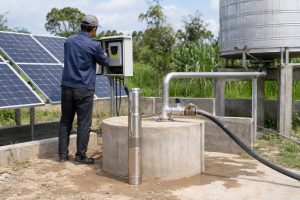
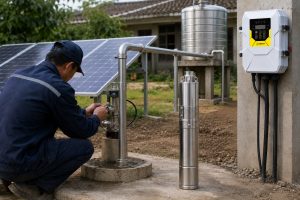
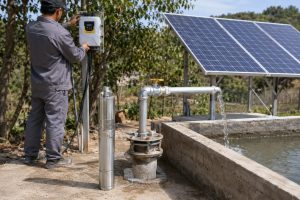
Yes, a solar panel can absolutely run a small water pump. A simple setup with a 100-watt panel can directly power a 12V DC pump, providing pressurized water for homes, gardens, or livestock completely off-grid, saving you money and ensuring water security.
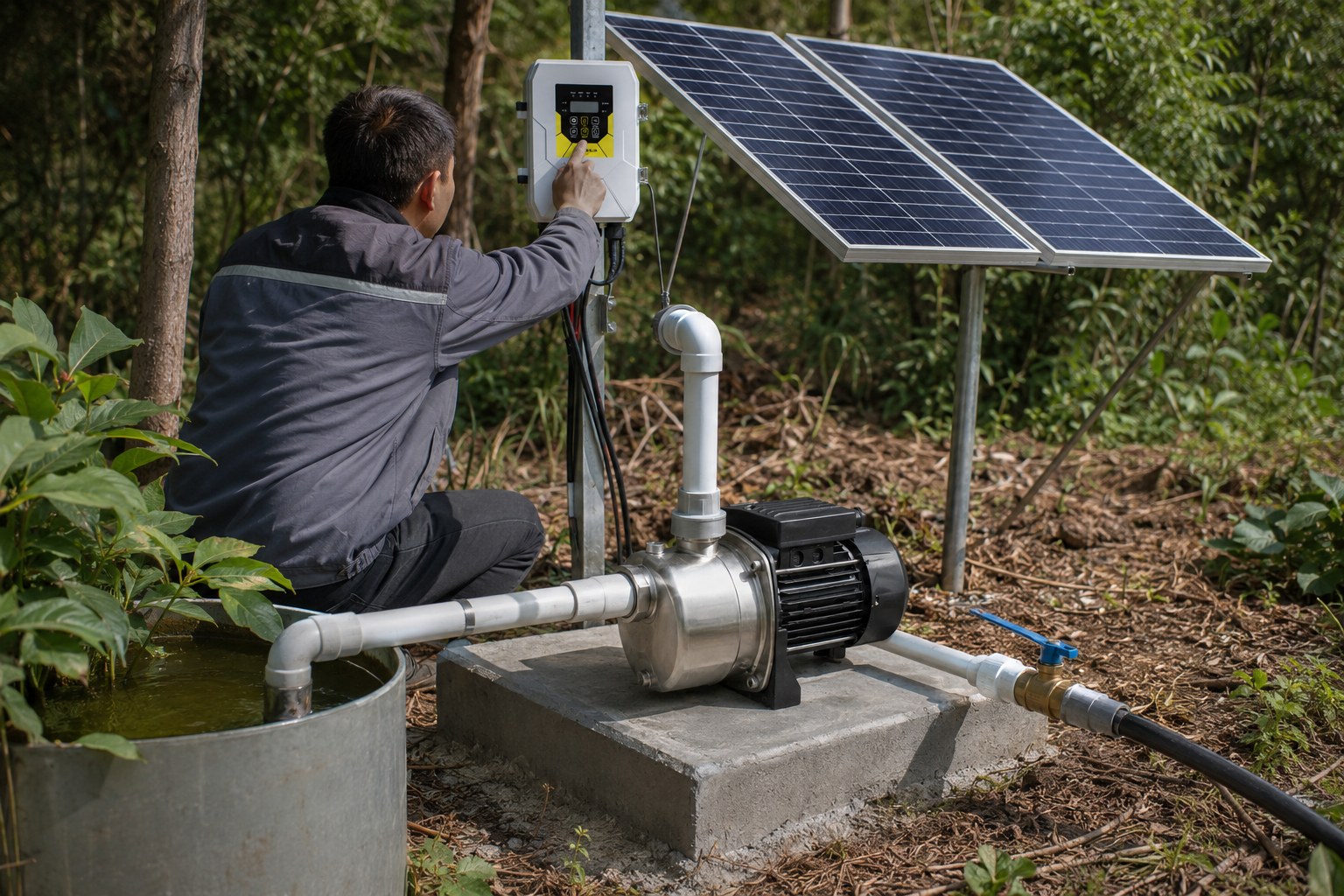
It's clear that solar is a great solution.
But the journey from a simple idea to a reliable, long-term water system involves making smart choices.
The pump you choose is just as important as the solar panels that power it.
Let's explore the different types of solar pumps available.
We will see how you can select the perfect one to build a system that meets your exact needs, from a simple setup to a high-performance, permanent installation.
Choosing a Pump for Basic Needs: The High-Head Specialist
Do you need to lift water from a very deep well but don't require massive water volume?
You worry that a standard pump won't have the power to reach your deep water source without a huge, expensive solar array.
A solar screw pump is the perfect solution. It excels at creating very high pressure (head) with minimal power, making it ideal for lifting water from deep wells for domestic use or livestock, even with a small solar system.
Let's dive deeper into what makes this pump a great choice for specific situations.
A solar screw pump, also known as a progressing cavity pump, is a true specialist.
Its design is fundamentally different from a typical centrifugal pump.
It uses a single metal screw (the rotor) rotating inside a rubber sleeve (the stator).
This action creates sealed cavities of water that are pushed, or "progressed," up the pump.
Think of it like a corkscrew turning inside a tube, steadily moving liquid upward with each rotation.
This mechanism is incredibly efficient at building pressure.
The Power of Positive Displacement
The magic behind the screw pump is a principle called positive displacement.
Unlike centrifugal pumps that "throw" water outward, a screw pump physically traps and moves a fixed volume of water with each rotation.
This has two major benefits:
- High Head Capability: It can push water to incredible heights, often exceeding 600 feet (over 180 meters), without needing a massive motor. It maintains its pressure consistently regardless of the flow rate.
- Low Power Consumption: Because it builds pressure so efficiently, it requires significantly less energy to start and run, making it a perfect match for smaller solar panel arrays. It's not uncommon for a screw pump system to operate effectively on just two 370-watt panels.
Where Does a Solar Screw Pump Shine?
This pump is not a one-size-fits-all solution, but it's unbeatable in the right scenarios.
- Deep Well Water Supply: For households in remote areas relying on deep boreholes for drinking water.
- Livestock Watering: Pumping water to a trough for cattle or sheep located far from a power source.
- Small-Scale Drip Irrigation: Providing a steady, low-flow supply to a small garden or orchard where high pressure is needed to overcome distance.
Here’s a breakdown of its characteristics:
| Feature | Solar Screw Pump |
|---|---|
| Pumping Mechanism | Positive Displacement (Screw & Stator) |
| Ideal Application | Deep wells, high-lift needs |
| Flow Rate | Low (Typically 1-10 GPM) |
| Head (Pressure) | Very High (Up to 600+ feet / 180+ meters) |
| Best For | Domestic water, livestock, low-volume irrigation. |
| Sand Handling | Excellent, can handle gritty and silty water. |
| Power Requirement | Low to Medium, ideal for small solar arrays. |
| Primary Advantage | Unmatched lifting capability for its power class. |
| Primary Limitation | Low water volume output. |
Because the rotor is made of stainless steel and the stator is flexible rubber, screw pumps are also remarkably resistant to sand and other abrasives in the water.
In many wells, especially newer ones, fine sand can quickly destroy the impellers of a centrifugal pump.
A screw pump, however, can often pass these particles without significant wear, leading to a much longer service life in harsh water conditions.
If your priority is lifting water from extreme depths efficiently, the solar screw pump is your champion.
Upgrading for Volume: The High-Flow Workhorse
Has your simple water system met its match?
You need more water for irrigation or multiple faucets, but your current pump just can't keep up, causing pressure drops and long waits.
For high-volume needs, a solar plastic impeller pump is the answer. This multi-stage centrifugal pump delivers a massive flow rate at a medium head, perfect for farm irrigation, pasture management, and larger homes, offering an exceptional balance of performance and value.
When your water demands grow, you need to switch from a specialist to a workhorse.
Let's break down why this pump is the go-to choice for moving a lot of water without breaking the bank.
The solar plastic impeller pump is a type of multi-stage centrifugal pump.
Instead of a single screw, it uses a series of rotating discs, called impellers, stacked on top of each other.
As water enters the pump, each impeller spins at high speed, using centrifugal force to throw the water outward and into the next stage above it.
Each stage adds more pressure, working together to lift a large volume of water.
A pump might have over 10 stages to achieve the desired pressure and flow.
The Material Advantage: Engineered Plastic
You might hear "plastic" and think it's a compromise on quality, but in this case, it's a strategic engineering choice.
The impellers are not made from ordinary plastic.
They are crafted from high-strength, wear-resistant polymers specifically designed for this application.
This provides several key advantages:
- Exceptional Sand Resistance: The engineered plastic is surprisingly durable against fine sand and silt. It's often more resilient than lower-grade metal impellers, which can be eroded quickly by abrasive particles. This makes them a great fit for many wells in Africa and the Americas where water quality can be a challenge.
- High-Volume Output: The centrifugal design is inherently built for high flow. These pumps can easily deliver over 50 Gallons Per Minute (GPM), a 5x to 10x increase over a typical screw pump, making them ideal for flooding a field or filling a large tank quickly.
- Lightweight and Economical: The use of polymer materials makes the pump lighter and less expensive to manufacture compared to an all-metal version. This reduces shipping costs, simplifies installation (as the pump is easier to handle and lower into the well), and makes it an incredible value for the amount of water it can move.
Flow vs. Head: A Different Balance
Unlike the screw pump, which prioritizes head (pressure), the plastic impeller pump prioritizes flow (volume).
Its performance is best suited for applications where moving a lot of water is more important than lifting it from extreme depths.
- Farm & Ranch Irrigation: Its high flow rate is perfect for sprinklers and flood irrigation systems.
- Filling Large Storage Tanks: Quickly fill a multi-thousand-gallon tank that can then gravity-feed to other locations.
- Community Water Supply: Serve multiple homes from a single, moderately deep well.
Let's compare it directly to the screw pump:
| Feature | Solar Screw Pump | Solar Plastic Impeller Pump |
|---|---|---|
| Primary Goal | Maximize Head | Maximize Flow |
| Typical Flow Rate | 1-10 GPM | 10-50+ GPM |
| Typical Head | Up to 600+ ft | Up to 350 ft |
| Best Use Case | Deep well, low volume | Shallow/Medium well, high volume |
| Cost | Moderate | Economical |
| Weight | Moderate | Lightweight |
While it has a lower maximum head than a screw pump, a "medium" head of 350 feet is still more than enough for the vast majority of wells.
If you need to irrigate a farm, water a large pasture, or supply a home with a a lot of water from a well that isn't excessively deep, the plastic impeller pump is the most cost-effective and powerful solution available.
The Premium Choice: A Pump for the Toughest Conditions
Is your water so harsh that it destroys ordinary pumps?
You're tired of replacing equipment due to corrosion from acidic, alkaline, or salty water, costing you time and money.
The solar stainless steel impeller pump is your permanent solution. Built with premium SS304 stainless steel, it offers unmatched corrosion resistance and durability, ensuring a long, reliable service life even in the most aggressive water environments.
When you need a system that's not just functional but truly permanent, you need to invest in materials that can withstand anything you throw at them.
Let's explore why this high-end pump is the ultimate choice for reliability and peace of mind.
This pump shares the same high-flow, multi-stage centrifugal design as the plastic impeller model.
The critical difference lies in the materials.
Every component that touches water—the pump body, the impellers, the shaft, and the inlet/outlet—is constructed from SS304 stainless steel.
This grade of steel is renowned for its exceptional resistance to rust and corrosion.
Built to Last: The Power of Stainless Steel
Choosing stainless steel isn't just about making the pump look shiny; it's a strategic decision for longevity in specific, challenging environments.
- Superior Corrosion Resistance: This is the pump's defining feature. It is specifically designed to operate in water that would eat away at lesser materials. This includes water with high or low pH (acidic or alkaline), high salinity (brackish water), or other dissolved corrosive minerals.
- Structural Strength and Durability: Stainless steel is inherently stronger than plastic. This provides greater rigidity and precision within the pump, which can contribute to higher efficiency and a longer operational lifespan. It's built to withstand the rigors of continuous, heavy-duty use for decades.
- Hygienic for Drinking Water: Stainless steel is non-porous and does not leach chemicals, making it an ideal material for systems providing high-quality drinking water for high-end homes or communities.
When is the Investment Worth It?
The stainless steel impeller pump comes with a higher price tag and more weight, so it's a targeted solution for specific markets and applications.
- Corrosive Water Environments: Essential for regions with acidic water, such as areas with mining runoff, or alkaline soil regions found in parts of Australia and the Americas.
- Coastal Areas: Perfect for wells near the coast that may have some saltwater intrusion.
- High-End Residential and Commercial Properties: For owners who demand the highest quality and longest-lasting equipment for their homes, ranches, or businesses.
- Food & Beverage Applications: Where water purity and equipment hygiene are non-negotiable.
Let's complete our comparison table:
| Feature | Solar Screw Pump | Solar Plastic Impeller Pump | Solar Stainless Steel Pump |
|---|---|---|---|
| Mechanism | Positive Displacement | Multi-Stage Centrifugal | Multi-Stage Centrifugal |
| Key Material | Rubber & Steel Screw | Engineered Polymer Impellers | SS304 Stainless Steel Impellers |
| Primary Strength | High Head | High Flow & Value | Corrosion Resistance & Durability |
| Typical Use | Deep wells, low volume | Farms, irrigation | Harsh water, high-end homes |
| Cost | Moderate | Economical | Premium |
| Weight | Moderate | Lightweight | Heavy |
If you are a distributor, offering this pump allows you to cater to a high-end niche market that values reliability above all else.
For an end-user like a ranch owner in an area with alkaline soil, investing in a stainless steel pump means installing it once and not having to worry about it for 10-20 years, saving them the recurring cost and hassle of replacing cheaper, failing pumps.
It's the ultimate "buy it once, cry once" solution for water pumping.
The Unseen Hero: Why the Motor is the Heart of the System
Do you focus only on the pump itself when choosing a solar water system?
Many people overlook the motor, yet it's the engine that drives everything, and a poor motor means a weak and inefficient pump, no matter how good the pump end is.
All high-performance solar pumps are powered by a BLDC permanent magnet motor. This advanced motor technology is the true core of the system, delivering over 90% efficiency, which reduces solar panel requirements, lowers costs, and ensures long-term reliability.
Whether you choose a screw pump, a plastic impeller pump, or a stainless steel model, the driving force behind it is the same.
Understanding this motor technology is key to appreciating the true value and competitiveness of a modern solar water pump system.
BLDC stands for Brushless Direct Current.
This is a massive leap forward from older, traditional brushed DC motors.
The BLDC Advantage
In a traditional motor, "brushes" make physical contact to deliver power, creating friction, heat, wear, and energy loss.
A brushless motor uses an electronic controller instead of physical brushes.
This eliminates friction and delivers several game-changing benefits:
- Incredible Efficiency: With no energy wasted on friction and heat, BLDC motors can convert over 90% of the electrical energy into mechanical power. A typical AC motor might only be 60-70% efficient. This 20-30% efficiency gain is huge.
- More Power, Less Size: Advanced materials, like rotors made from 40SH neodymium iron boron magnets, create an incredibly strong magnetic field. This allows BLDC motors to be much smaller and lighter while delivering more power and torque. A BLDC motor can be up to 47% smaller and 39% lighter than a traditional motor of equivalent power.
- Longer Lifespan & No Maintenance: No brushes means no parts to wear out. BLDC motors are virtually maintenance-free and are designed to run for tens of thousands of hours without issue.
What This Means for Your Solar Pump System
The high efficiency of the BLDC motor has a cascading effect that benefits the entire system, from cost to installation.
| Impact Area | Benefit of BLDC Motor |
|---|---|
| Solar Panels | The motor needs less power, so you need fewer solar panels to run the pump. A 30% efficiency gain could mean needing 2 panels instead of 3, a huge cost saving. |
| System Cost | Fewer panels, smaller mounting racks, and smaller wiring all contribute to a lower total system cost. |
| Installation | The lighter, more compact motor makes the entire pump assembly easier to handle, transport, and lower into a well. |
| Performance | The motor's high torque allows the pump to start easily, even in difficult conditions, and it can maintain speed reliably even as solar input fluctuates. |
| Operating Costs | The system is entirely "fueled" by the sun, and with the motor being maintenance-free, the long-term running cost is virtually zero. |
The motor, combined with an intelligent MPPT (Maximum Power Point Tracking) controller, forms the brain and heart of the solar pump.
The MPPT controller constantly adjusts the electrical load to ensure the solar panels are operating at their peak efficiency, squeezing every possible watt of power from the available sunlight and feeding it to the highly efficient BLDC motor.
So, when you are evaluating a solar pump, don't just look at the pump head and flow rate.
Ask about the motor technology.
A system built around a high-efficiency BLDC permanent magnet motor is a system designed for performance, value, and longevity.
Beyond the Sun: Hybrid Power for 24/7 Water
What happens when the sun doesn't shine?
You worry that a solar-only system will leave you without water on cloudy days or overnight, compromising your water security.
Modern solar pump systems solve this with an AC/DC hybrid controller. This smart device automatically switches to grid or generator power when solar energy is low, ensuring a seamless, uninterrupted water supply 24 hours a day, 7 days a week.
The beauty of solar is its independence, but true water security means having a reliable backup.
Let's look at how this advanced controller technology provides the best of both worlds.
A standard solar pump controller connects the solar panels directly to the pump motor.
It's a simple and effective system, but it's entirely dependent on sunlight.
An AC/DC hybrid controller revolutionizes this by adding a second power input.
This allows you to connect both your solar panel array and a conventional AC power source—like the public grid or a portable generator—to the controller at the same time.
Intelligent Power Management
The hybrid controller isn't just a simple switch; it's a smart power management hub.
It constantly monitors the power coming from the solar panels.
Its operation follows a clear priority system:
- Solar First Priority: As long as the sun is shining and the solar panels are producing enough power, the controller will use 100% free solar energy to run the pump. The AC input remains on standby.
- Hybrid Function: When clouds roll in and solar power drops, the controller doesn't just give up. It enters a hybrid mode, drawing as much power as it can from the solar panels and supplementing it with just enough AC power to keep the pump running at the desired speed. This maximizes your use of free solar energy and minimizes your reliance on paid electricity.
- Automatic AC Switchover: When the sun goes down or during extended periods of heavy overcast weather, the solar input will drop to zero. The controller detects this instantly and automatically switches over to the AC power source to run the pump.
- Seamless Operation: The entire process is fully automatic. You don't have to manually flip any switches. The controller handles everything, ensuring that you have pressurized water whenever you need it, day or night, rain or shine.
The Strategic Advantage of Hybrid Power
This technology provides immense value for both end-users and distributors.
| Stakeholder | Benefit of AC/DC Hybrid Controller |
|---|---|
| Homeowners | Enjoy the cost savings of solar during the day and the reliability of the grid at night, without any compromises. Worry-free water 24/7. |
| Farmers/Ranchers | Can guarantee water for critical irrigation cycles or livestock watering, regardless of weather conditions, protecting their investment. |
| Distributors | Offer a more versatile and compelling product that overcomes one of the main objections to solar-only systems (the "what if" of bad weather). |
For example, a farmer can set an irrigation timer to run at 3 AM.
The hybrid controller will power the pump using AC electricity to complete the task.
Then, when the sun comes up, the pump can continue to run on free solar power throughout the day.
This level of flexibility and reliability transforms a solar water pump from a great off-grid solution into a superior, all-around water management system that is smarter, more resilient, and more cost-effective than running on AC power alone.
Conclusion
Choosing the right solar pump system balances pump type, motor efficiency, and smart controls.
This ensures a reliable, cost-effective water solution tailored perfectly to your specific needs for years to come.
FAQs
What size solar panel do I need to run a water pump?
A small 12V DC pump needs a 100-watt panel for basic use. Larger pumps (0.5-1 HP) typically require a 500-watt to 1500-watt array, depending on the pump's power rating and your daily water needs.
Can you run a 240v pump on solar power?
Yes, but it requires more equipment. You need a large solar array, a powerful inverter to convert the DC solar power to 240V AC, and often a battery bank, making the system more complex and expensive.
How many solar panels does it take to run a 1 hp well pump?
A 1 HP pump (about 750 watts) running for several hours needs between 1200 and 1500 watts of solar panels. This is typically four 370-watt panels to account for real-world conditions and ensure reliable performance.
Can a solar pump run without a battery?
Yes, most modern DC solar pumps are designed to run directly off solar panels without batteries. An MPPT controller manages the variable solar input, running the pump at different speeds depending on the sunlight available.
How deep can a solar water pump work?
It depends on the pump type. Solar screw pumps are specialists for deep wells, capable of lifting water from over 600 feet (180 meters). High-flow centrifugal pumps typically work best in wells up to 350 feet (100 meters).
How long do solar water pumps last?
A well-maintained solar pump system can last for many years. The solar panels have a lifespan of 25+ years. The BLDC motor can run for over 10 years, and the pump end's life depends on water quality and usage but can also last a decade or more.