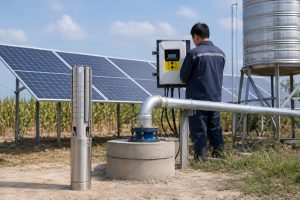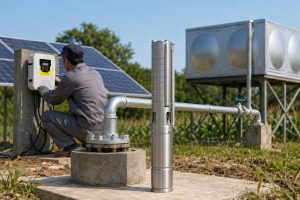
Struggling with high electricity bills from your water pump?
These costs can drain your operational budget and make sustainable water access a significant challenge.
The most energy-efficient pumps are solar-powered models driven by a Brushless DC (BLDC) permanent magnet motor.
These systems achieve efficiencies exceeding 90%.
This performance drastically reduces energy consumption compared to traditional AC pumps, which often operate at only 70-80% efficiency.
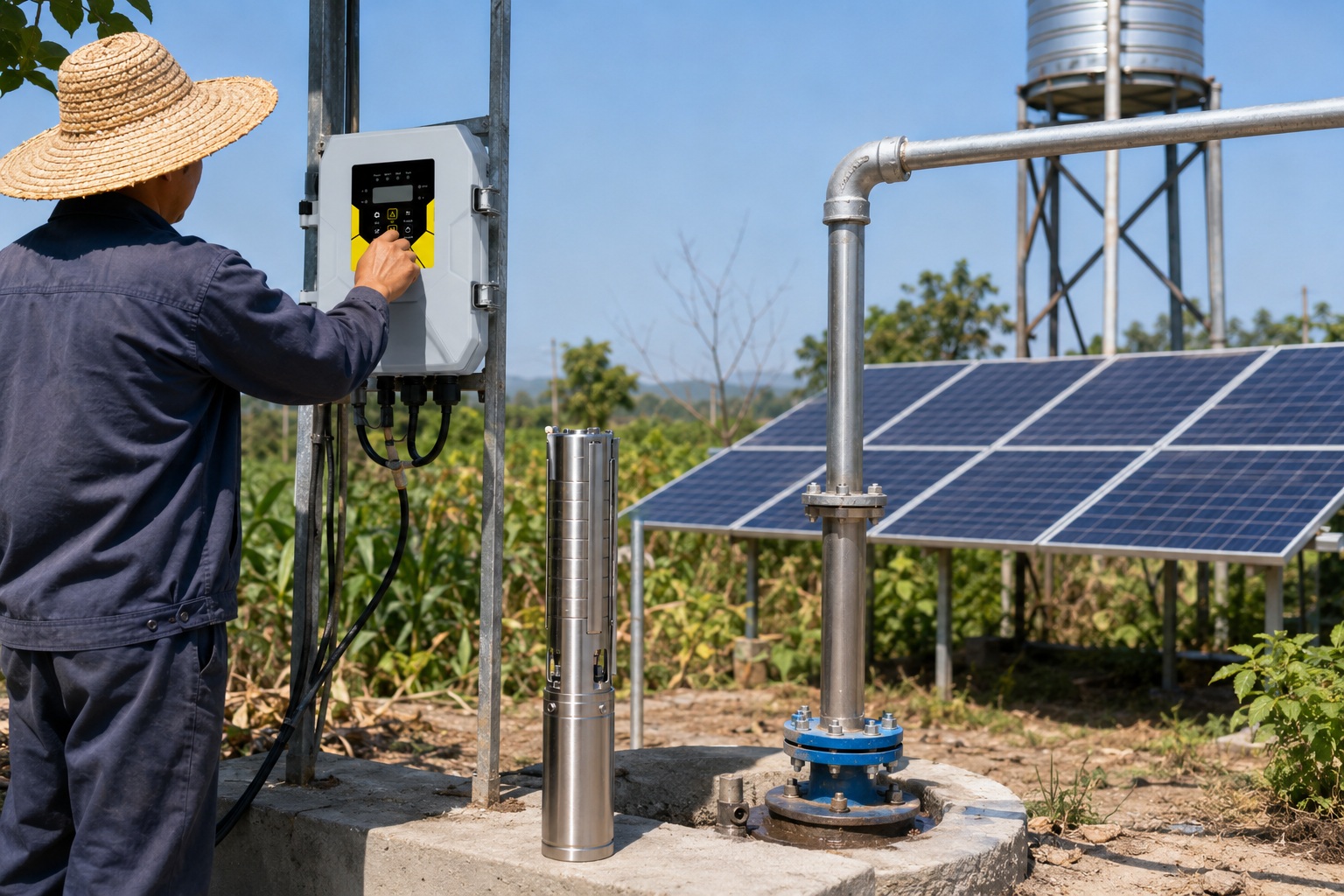
Understanding pump efficiency involves more than just the motor.
The pump's specific design and its intended application are just as critical for saving energy.
A pump that is perfect for a deep well might be wasteful for farm irrigation.
Let's explore which pump type offers the best efficiency for your specific needs.
We will look at different pump designs, their core technology, and how to choose the right one to maximize your savings and performance.
Focus On: The Heart of the Machine – The BLDC Motor
Are you tired of inefficient motors wasting precious solar power or grid electricity?
Old motor technology requires more energy, leading to higher costs and frequent maintenance headaches.
A Brushless DC (BLDC) permanent magnet motor is the core of modern energy efficiency.
It converts over 90% of electrical energy into mechanical power, drastically reducing waste compared to older motor designs.
What Makes BLDC Motors So Efficient?
BLDC motors are a masterpiece of modern engineering.
Their high efficiency comes from their unique design.
They use powerful permanent magnets on the rotor, typically made from high-grade materials like 40SH neodymium iron boron.
This eliminates the need for energy-consuming electromagnets on the rotor.
Furthermore, they are "brushless."
Traditional brushed motors use carbon brushes to transfer power, creating friction, heat, and wear.
This friction represents wasted energy.
BLDC motors use an electronic controller to switch the magnetic field, so there are no physical brushes.
This lack of friction means less energy is lost as heat, and almost all the power goes directly into pumping water.
This design also results in a much longer operational lifespan, often exceeding 20,000 hours, compared to the 2,000-5,000 hours typical of brushed motors.
BLDC vs. Traditional Motors: A Data-Driven Comparison
The difference in performance between motor types is not minor.
A BLDC motor offers substantial advantages over both AC induction motors and older brushed DC motors.
This efficiency gap translates directly into lower operational costs and a smaller environmental footprint.
The numbers clearly show why BLDC technology has become the standard for high-performance solar pumps.
| Feature | BLDC Motor | AC Induction Motor | Brushed DC Motor |
|---|---|---|---|
| Efficiency | 85% - 92% | 70% - 80% | 60% - 75% |
| Lifespan | 20,000+ hours | 15,000 - 20,000 hours | 2,000 - 5,000 hours |
| Maintenance | Virtually none | Low | Regular brush replacement |
| Size & Weight | Compact & Light | Bulky & Heavy | Moderate |
| Heat Generation | Low | Moderate | High |
The Market Value of High Efficiency
The strategic value of using a BLDC motor is immense.
Because the motor is over 90% efficient, the entire water pump system requires less power to operate.
For a solar pump, this means you can reduce the number of solar panels needed by 15% to 25%.
This lowers the initial investment cost significantly.
The compact design also provides value.
BLDC motors can be up to 47% smaller and 39% lighter than traditional motors with the same power output.
This makes transportation and installation easier and cheaper, especially in remote locations.
Ultimately, the BLDC motor is the foundational component that enables a solar pump to be a truly cost-effective and reliable long-term water solution.
Deep Well Specialist: The Solar Screw Pump
Need to lift water from very deep wells without a massive energy bill?
Traditional pumps often struggle or consume huge amounts of power to achieve high lift (head).
For deep wells, the solar screw pump is often the most energy-efficient choice.
Its progressive cavity design excels at creating high pressure with low flow, making it ideal for deep well domestic water supply.
How a Screw Pump Works
The screw pump, also known as a progressive cavity pump, operates on a simple yet powerful principle.
It does not use impellers like a centrifugal pump.
Instead, its core components are a single helical rotor (the screw) that rotates inside a double helical stator (a rubber sleeve).
The rotor is typically made of durable stainless steel.
As the rotor turns, it forms a series of sealed cavities between itself and the stator.
These cavities "progress" from the pump's inlet to its outlet, gently pushing a fixed volume of water with each rotation.
This mechanism is highly effective at building pressure.
It creates a consistent, non-pulsating flow and is exceptionally good at handling water with suspended solids, like sand.
Performance in Numbers: High Head, Low Flow
The screw pump's performance profile is very distinct.
It is designed for high-head, low-flow applications.
This makes it the perfect tool for lifting water from boreholes that can be hundreds of meters deep.
- Head (Pressure): Can efficiently achieve heads of 150 meters, 200 meters, or even more.
- Flow Rate: Delivers a lower, steady flow, typically ranging from 0.5 to 5 cubic meters per hour (m³/h).
- Sand Resistance: A major advantage is its ability to handle water with sand or silt. The rubber stator provides a resilient surface that is less prone to damage from abrasion than the tight tolerances in a centrifugal pump. Many models can handle water with a sand content of up to 5%.
Key Advantages and Ideal Applications
Choosing a screw pump comes down to your specific water needs.
It is a specialized tool, not a one-size-fits-all solution.
Advantages:
- Excellent for Deep Wells: Unmatched efficiency at high heads.
- High Sand Tolerance: Outperforms centrifugal pumps in sandy or silty water conditions.
- Reliable and Durable: Simple mechanical design with few moving parts leads to a long service life.
- Steady Flow: Provides a consistent, pulse-free water output.
Ideal Applications:
- Domestic Water Supply: Perfect for providing homes with water from a deep borehole.
- Livestock Drinking Water: Reliably supplies water troughs for animals in remote pastures.
- Small-Scale Irrigation: Suitable for drip irrigation or small gardens where high pressure is needed but flow demand is low.
It thrives in electricity-scarce regions where deep groundwater is the only reliable source.
Irrigation Powerhouse: The Solar Plastic Impeller Pump
Is your farm, ranch, or garden thirsty for water?
You need high flow, but the cost of running a large pump all day can be overwhelming.
The solar plastic impeller pump is the efficiency champion for many high-flow applications.
This multi-stage centrifugal pump delivers large volumes of water at an economical price point, perfect for farms and pastures.
Understanding Multi-Stage Centrifugal Design
This pump's ability to move large volumes of water comes from its multi-stage centrifugal design.
Inside the pump housing, there is a series of impellers and diffusers stacked on top of each other.
Water enters the first stage and is spun by the first impeller, which uses centrifugal force to increase the water's velocity.
The water then passes through a diffuser, which converts this velocity into pressure.
This pressurized water then flows into the eye of the next impeller, and the process repeats.
Each stage adds more pressure to the water.
By stacking multiple stages, the pump can achieve a useful head while maintaining a very high flow rate.
The impellers are made from durable, engineered plastics that are precisely molded for optimal hydraulic efficiency and wear resistance.
By the Numbers: Flow and Efficiency
This pump is all about moving a lot of water efficiently.
Its specifications are tailored for applications where volume is more critical than extreme pressure.
- Flow Rate: These pumps are workhorses, delivering high flow rates, often from 10 to 50 cubic meters per hour (m³/h) or more.
- Head (Pressure): They operate best at medium heads, typically in the range of 30 to 80 meters. They are not designed for extremely deep wells.
- Wear Resistance: While not as sand-tolerant as a screw pump, the high-quality plastic impellers offer excellent resistance to fine sand and abrasion, making them durable for farm and irrigation use.
Where Does It Shine?
The plastic impeller pump is a popular and versatile choice for a reason.
It hits a sweet spot between performance, cost, and durability for a wide range of uses.
Advantages:
- High Water Output: Its primary benefit is delivering a large volume of water.
- Economical: The use of engineered plastics makes these pumps more affordable than all-metal alternatives.
- Lightweight: Lighter construction simplifies transportation and installation.
- Good Efficiency: When paired with a BLDC motor, it offers excellent energy efficiency for high-flow tasks.
Ideal Applications:
- Farm Irrigation: The perfect solution for flooding fields, running sprinklers, or supplying pivot irrigation systems.
- Pasture Water Supply: Can quickly fill large stock tanks or supply water to multiple points across a large area.
- Large Home Gardens and Landscaping: Provides ample water for extensive residential or commercial landscaping needs.
However, its limitation is durability in highly corrosive water environments, where a different material may be required.
Built to Last: The Solar Stainless Steel Impeller Pump
Worried about corrosive water destroying your pump?
Standard pumps can fail quickly in acidic or alkaline conditions, leading to costly replacements and downtime.
For harsh water, the solar stainless steel impeller pump offers the best long-term efficiency and durability.
Its SS304 construction resists corrosion, ensuring a longer lifespan and reliable performance with minimal maintenance.
Why Stainless Steel Matters
Material selection is a critical factor in a pump's longevity and reliability.
Stainless steel, specifically grade SS304, is a premium choice for pump construction.
Its primary advantage is superior corrosion resistance.
Water is not always pure H2O; it can be acidic (low pH) or alkaline (high pH).
These conditions can rapidly corrode materials like cast iron or even some plastics.
SS304 stainless steel contains chromium, which forms a passive, invisible, and corrosion-resistant oxide film on the surface.
This layer protects the metal from a wide range of chemical attacks.
This makes it the ideal material for pumps installed in regions with acidic groundwater, alkaline soils, or a risk of saltwater intrusion.
It ensures the pump's internal hydraulic surfaces remain smooth and efficient for years, preventing the performance degradation that comes with rust and corrosion.
Performance Profile and Reliability
The stainless steel impeller pump shares its multi-stage centrifugal design with the plastic impeller models.
This means it is also built for high flow rates.
However, the use of stainless steel for the impellers, diffusers, and pump body elevates its performance and durability profile.
- Flow Rate: Delivers high flow rates, comparable to or exceeding plastic impeller models.
- Head (Pressure): Often capable of achieving medium-to-high heads, providing versatility for both irrigation and deeper water supply needs.
- Durability: The robust metal construction provides exceptional durability and resistance to wear, even under continuous operation.
- Reliability: It is considered a premium, high-reliability option. The resistance to corrosion means fewer failures and a longer, more predictable service life, which is critical for high-value applications.
Niche Applications and High-End Markets
While it can be used for general irrigation, the stainless steel pump is a problem-solver for specific, challenging environments.
Its higher cost is an investment in long-term, trouble-free operation.
Advantages:
- Maximum Corrosion Resistance: The ultimate choice for aggressive water conditions.
- Longest Service Life: Built to last for many years, providing a low total cost of ownership.
- High Reliability: Ensures consistent water supply for critical applications.
- Hygienic: Stainless steel is a sanitary material, making it suitable for potable water systems requiring high standards.
Ideal Applications:
- Coastal and Alkaline Regions: Perfect for areas in Australia or the Americas with alkaline soil or brackish water.
- Special Water Conditions: Used in applications with acidic or chemically treated water.
- High-End Homes and Ranches: Chosen by property owners who demand the highest quality and reliability for their water supply.
- Light Commercial Use: Suitable for businesses requiring a dependable, long-lasting water solution.
Maximizing Every Sunbeam: Intelligent Pump Controllers
Are you getting the most out of your solar panels?
Without smart control, your pump system could be losing up to 30% of its potential power, especially on cloudy days.
An intelligent MPPT (Maximum Power Point Tracking) controller is key to maximizing solar efficiency.
It constantly adjusts the pump's load to extract the absolute maximum power from your solar panels, boosting water output significantly.
What is MPPT?
Maximum Power Point Tracking (MPPT) is a sophisticated electronic algorithm that acts as the brain of the solar pump system.
A solar panel's power output (voltage and current) changes continuously with the intensity of sunlight.
The MPPT controller's job is to monitor the panel's output in real-time.
It then adjusts the electrical input to the pump's BLDC motor to find the "maximum power point" – the perfect combination of voltage and current that extracts the most watts from the panels at any given moment.
Think of it like an automatic transmission in a car.
It constantly shifts gears to keep the engine in its most efficient power band.
This process ensures that no solar energy is wasted, increasing the pump's overall daily water output by as much as 30% compared to systems without MPPT.
The AC/DC Hybrid Advantage
What happens when the sun isn't shining?
On cloudy days or at night, a standard solar pump simply stops working.
This is where an AC/DC hybrid controller provides a game-changing solution.
These advanced controllers are designed with two power inputs.
You can connect both your solar panels (DC power) and a secondary power source like the grid or a generator (AC power).
The controller automatically prioritizes solar power.
When there is enough sunlight, the pump runs entirely on free energy from the sun.
If clouds reduce the solar input, the hybrid function can blend AC power with the available DC power to maintain pump operation.
When there is no sunlight at all, it seamlessly switches over to the AC source.
This ensures you have a reliable, worry-free water supply 24 hours a day, combining the cost savings of solar with the reliability of the grid.
Added Protections for a Longer Lifespan
Beyond optimizing power, a quality controller also serves as a comprehensive protection system for the pump and motor.
This is crucial for ensuring a long and reliable service life.
Key Protective Features:
- Dry Run Protection: The controller can detect if the well has run out of water and will shut down the pump to prevent damage from running dry.
- Over/Under Voltage Protection: Protects the motor from damaging voltage spikes or sags from the power source.
- Overload and Over-Current Protection: Shuts the pump down if the motor is working too hard, preventing it from burning out.
- High Temperature Protection: Monitors motor temperature and stops operation if it gets too hot.
These intelligent features work together to make the entire system more robust and maintenance-free.
Conclusion
The most efficient pump combines the right pump type for your specific need with a high-efficiency BLDC motor and a smart MPPT controller for ultimate performance and savings.
Frequently Asked Questions
What is the most energy-efficient type of water pump?
Solar pumps with Brushless DC (BLDC) motors are the most efficient. Their motor efficiency exceeds 90%, significantly reducing power consumption compared to other types.
How much electricity does an energy-efficient pump use?
A variable speed pump, which adjusts power to demand, can use 60% to 80% less electricity than a comparable single-speed pump that always runs at full power.
Do variable speed pumps really save money?
Yes. The significant energy savings of a variable speed pump often pay for the higher initial purchase price within a few years of operation.
What is a BLDC motor in a pump?
A BLDC motor is a Brushless DC motor. It uses powerful permanent magnets and electronic controls, making it highly efficient, very reliable, and virtually maintenance-free.
How does a solar pump work on cloudy days?
On cloudy days, a solar pump runs at a reduced speed. A smart MPPT controller helps maximize output, while hybrid systems can automatically switch to grid power.
What is the difference between a screw pump and a centrifugal pump?
A screw pump uses a rotor to push water, creating high pressure for deep wells. A centrifugal pump uses spinning impellers to move high volumes of water.
How long do solar water pumps last?
A quality solar pump system featuring a BLDC motor and a protective controller can have a lifespan of 10 to 15 years or even longer with proper care.