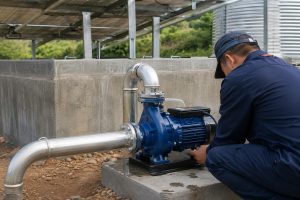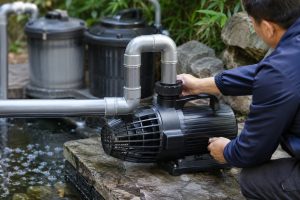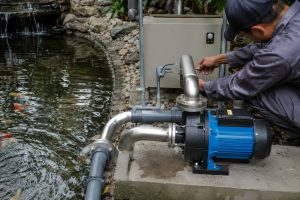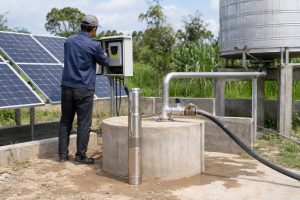
Choosing the wrong pump can lead to a murky, unhealthy pond.
This creates stress for you and your fish.
Don't let a simple choice ruin your backyard oasis.
For a 500-gallon pond, you need a pump with a flow rate of at least 500 to 750 gallons per hour (GPH).
This ensures the entire pond volume is circulated 1 to 1.5 times every hour.
This circulation is crucial for water clarity and oxygenation for your fish and plants.
Selecting the right pump is more than just matching gallons to GPH.
Several critical factors influence the final decision.
Understanding these variables ensures you invest in a pump that creates a thriving aquatic environment, not just a moving puddle.
Let’s explore the details to find the perfect pump for your specific needs.
Determining the Right Flow Rate (GPH)
A pump with the wrong flow rate can starve your pond of oxygen or create a whirlpool.
Both outcomes are bad for your pond's health.
Getting the GPH right is your first step.
The basic rule is to circulate your pond's total volume at least once per hour.
For a 500-gallon pond, this means a minimum flow rate of 500 GPH.
For ponds with fish, aiming for a 1.5x turnover, or 750 GPH, is a safer bet.
Choosing the correct flow rate, measured in Gallons Per Hour (GPH), is the most important decision you will make.
This rate is not just a random number.
It directly impacts the health of your entire pond ecosystem.
A proper flow rate ensures that water is constantly moving through your filter, removing waste and debris.
It also aerates the water, adding essential oxygen that fish and beneficial bacteria need to survive.
Too little flow leads to stagnant, green water and low oxygen levels.
Too much flow can create a stressful, turbulent environment for your fish and plants.
The Turnover Rate Explained
The "turnover rate" is a simple concept.
It's how many times the entire volume of your pond water passes through the pump and filter in one hour.
For a healthy pond, you want the water to turn over at least once every hour.
This means a 1.0x turnover rate.
This baseline is suitable for a simple water garden with plants but very few or no fish.
The circulation prevents water from becoming stagnant and helps filter out dust and pollen.
Adjusting for Pond Life
Fish, especially koi, produce a significant amount of waste.
This waste must be processed by your filtration system to prevent toxic ammonia buildup.
To move this waste to the filter effectively, you need a higher turnover rate.
For a pond with goldfish, a 1.5x turnover rate is recommended.
For a 500-gallon pond, this calculates to 750 GPH.
For a koi pond, which contains larger and messier fish, the recommendation increases to a 2.0x turnover rate.
This would require a 1000 GPH pump for your 500-gallon pond.
The chart below breaks down these recommendations.
| Pond Type | Fish Load | Recommended Turnover Rate | Required GPH for 500 Gallon Pond |
|---|---|---|---|
| Water Garden | No Fish / Few Small Fish | 1.0x per hour | 500 GPH |
| Goldfish Pond | Moderate | 1.5x per hour | 750 GPH |
| Koi Pond | Heavy (with turtles) | 2.0x per hour | 1000 GPH |
Factoring in Head Height and Water Features
You've found a 1000 GPH pump, but your waterfall is just a trickle.
This happens when you ignore head height.
It's a common and costly mistake that is easy to avoid with simple planning.
Head height is the vertical distance the pump must lift water.
Every foot of height reduces the pump's effective flow rate due to gravity.
You must choose a pump powerful enough to achieve your desired flow at the final height of your waterfall or fountain.
Every pump has a performance chart that shows its flow rate at different head heights.
A pump's advertised GPH is almost always its performance at zero feet of head height.
This means the pump is simply circulating water at the same level without lifting it.
As soon as you ask the pump to push water uphill to a waterfall or fountain, its actual output will decrease, sometimes significantly.
Failing to account for this is the number one reason for disappointing water feature performance.
You are not buying a 1000 GPH pump; you are buying a pump that delivers a specific GPH at a specific height.
What is "Total Dynamic Head"?
Total Dynamic Head is the total pressure the pump has to work against.
It's composed of two main things: vertical lift and friction loss.
Vertical lift, or head height, is the most significant factor.
It is the vertical distance in feet from the surface of your pond to the point where the water exits (e.g., the top of your waterfall).
Friction loss is the resistance created by water flowing through pipes and fittings.
A simple rule of thumb is that every 10 feet of flexible pipe adds the equivalent of 1 foot of head height.
So, a 2-foot waterfall with 20 feet of piping has a total dynamic head of about 4 feet (2 ft vertical + 2 ft for friction).
Reading a Pump's Performance Chart
Pump manufacturers provide a chart or table showing the GPH at various head heights.
You must consult this chart before buying.
Find your calculated total dynamic head on the chart, and then see what the flow rate is at that height.
For example, a pump might be rated at 2000 GPH, but that's at 0 feet.
At 5 feet of head, its performance might drop by 50% to only 1000 GPH.
If your 500-gallon koi pond needs 1000 GPH at the top of a 5-foot waterfall, this pump would be a perfect match, even though its maximum rating is 2000 GPH.
| Head Height (Feet) | Flow Rate (GPH) of a Sample Pump | Performance Reduction |
|---|---|---|
| 0 | 2000 | 0% |
| 2 | 1600 | 20% |
| 4 | 1100 | 45% |
| 6 | 700 | 65% |
| 8 (Max Head) | 0 | 100% |
Considering Your Pond's Inhabitants and Debris
Your pond is full of life, but it's also full of leaves and fish waste.
A standard pump can clog and fail, leaving you with a green, smelly mess.
You need a pump that can handle the dirty work of a real-world pond.
Ponds with many fish, especially large ones like koi, or ponds near trees, produce a lot of solid waste.
A "solids-handling" pump is designed to pass small debris without clogging.
This makes it a far more reliable choice for these "dirty" ponds, ensuring consistent flow to your filter.
Not all pumps are created equal when it comes to dealing with the realities of a living pond.
A pond is not a sterile swimming pool.
It contains fish that produce waste, plants that shed leaves, and debris that blows in from the surrounding yard.
A standard pump, designed for a clean water fountain, will have a fine mesh screen over its intake.
This screen will clog almost immediately in a fish pond, reducing flow to a trickle and requiring constant, frustrating maintenance.
Choosing a pump designed for the type of environment it will operate in is crucial for long-term success and your own sanity.
The Fish and Debris Factor
The more life you have in your pond, the more waste it will generate.
A single koi can produce a large amount of solid waste.
This waste needs to be pulled from the pond floor and sent to a filter.
Likewise, leaves, twigs, and other organic debris that fall into the pond need to be removed before they decompose and foul the water.
A standard pump simply cannot do this job.
It will either clog or be unable to move the solids.
Standard Pumps vs. Solids-Handling Pumps
This is where the distinction between pump types becomes critical.
Standard Pumps: These often have a pre-filter cage with very small openings. They are designed for clean water applications like decorative fountains where no debris is expected. They are not suitable as the primary filter pump for a fish pond.
Solids-Handling Pumps: These are the workhorses of the pond world. They are direct-drive pumps designed with large openings in the pump's volute, allowing them to pass solids up to 1.25 inches in diameter without clogging. They are the ideal choice for connecting to pond skimmers and waterfall filters, where they will encounter debris.
| Pump Type | Best For | Handles Solids? | Intake Design |
|---|---|---|---|
| Standard Submersible | Fountains, clean water features | No (up to ~1/4 inch) | Small, screened cage |
| Solids-Handling Pump | Skimmers, bottom drains, waterfalls | Yes (up to ~1.25 inches) | Large, open volute |
Choosing the Right Pump Type
You're standing in the store, seeing "submersible" and "external" pumps.
Choosing the wrong one means a difficult installation or a noisy backyard.
Let's make sure you get the right type for your pond from the start.
Submersible pumps are the most common choice for small to medium ponds like a 500-gallon setup.
They are easy to install, and their operation is muffled by the water, making them very quiet.
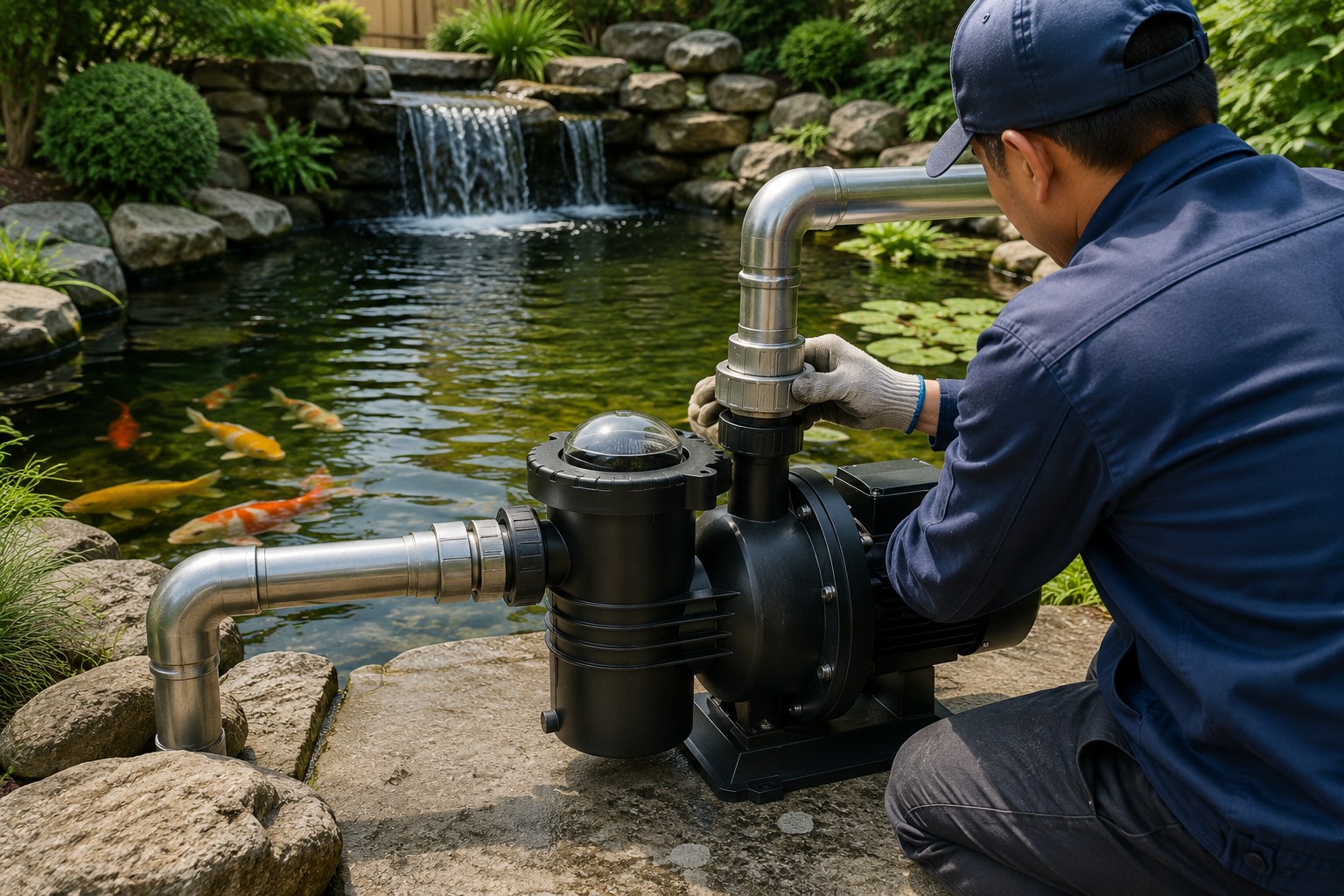
External pumps are more powerful and efficient for larger ponds but require more complex, out-of-pond plumbing.
Beyond the flow rate and solids-handling capability, the physical type of the pump is a key consideration.
The two main categories are submersible and external (or in-line) pumps.
For a 500-gallon pond, the decision is quite straightforward, but it's important to understand the differences as they impact installation, maintenance, and cost.
Each type has distinct advantages and is better suited for different applications.
Your choice will affect how you build and maintain your pond system.
The Submersible Pump Advantage
For most backyard ponds, and especially for a 500-gallon pond, a submersible pump is the ideal choice.
Installation is incredibly simple: you place the pump in the deepest part of your pond or skimmer, connect the hose, and plug it in.
The water surrounding the pump naturally cools the motor and muffles any operational noise, making them virtually silent.
They are generally more affordable upfront and are designed to be in the water, so no special housing is needed.
Their main drawback is that maintenance requires you to pull the pump out of the pond, which can be a cold and wet job.
When to Consider an External Pump
External pumps are heavy-duty machines designed for large ponds (typically over 2,000 gallons) or complex systems with very high flow rate demands.
They are installed in a dry, protected location outside of the pond, pulling water through pipes from a bottom drain or skimmer.
Their major advantages are power, efficiency at high flow rates, and ease of maintenance.
Since the pump is on dry land, cleaning a pre-filter basket or servicing the pump is much easier.
However, they are more expensive, can be noisier, and require more complex and careful plumbing to install correctly.
For a 500-gallon pond, an external pump is almost always unnecessary overkill.
| Feature | Submersible Pump | External Pump |
|---|---|---|
| Ideal Pond Size | < 1,500 Gallons | > 1,500 Gallons |
| Installation | Simple (place in pond) | Complex (requires plumbing) |
| Maintenance | Harder (must be removed from water) | Easier (accessible on dry land) |
| Noise Level | Very Quiet (muffled by water) | Louder (can be housed) |
| Initial Cost | Generally Lower | Generally Higher |
Exploring Energy-Efficient and Modern Options
Your pond is beautiful, but your electricity bill is terrifying.
A 24/7 pump can consume a surprising amount of power.
There are smarter, more efficient ways to power your pond that save money and help the environment.
Modern pumps use highly efficient motors that can cut energy consumption by over 50%.
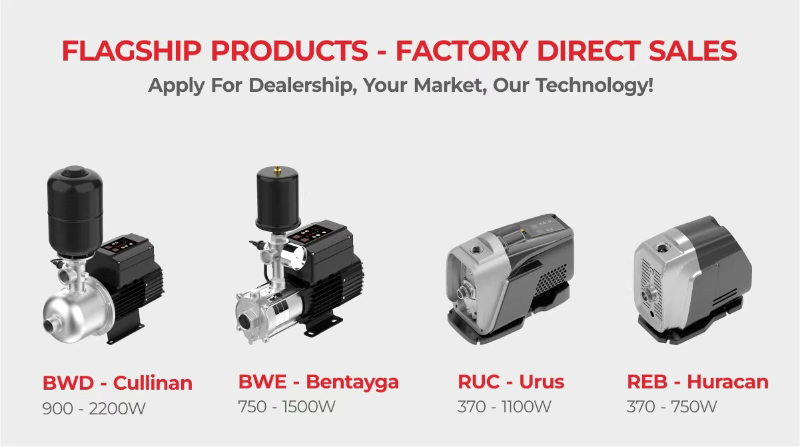
Options like solar-powered pumps can even eliminate electricity costs entirely.
This offers a green and cost-effective solution for running your pond, especially in sunny climates.
A pond pump is one of the few appliances in your home that runs 24 hours a day, 7 days a week.
Over the course of a year, this continuous operation can add up to a significant portion of your electricity bill.
An older, inefficient pump can easily consume over 250 watts of power.
However, technology has advanced dramatically.
Focusing on energy efficiency when you purchase a pump will pay for itself many times over during the life of the pump.
It is one of the wisest investments you can make for your pond.
The Hidden Cost of Pond Pumps
Let's look at the numbers.
An inefficient 250-watt pump, running 24/7, will consume 6 kWh of electricity per day.
At an average electricity cost of $0.25 per kWh, that's $1.50 per day, or about $550 per year.
This is a substantial hidden cost of pond ownership.
Many pond owners are shocked when they see their utility bills after installing a pond with an inefficient pump.
The Power of Modern Motor Technology
The key to efficiency lies in the motor.
Many modern, high-end pumps now use Brushless DC (BLDC) permanent magnet motors.
These motors are a technological leap forward, with operational efficiencies exceeding 90%.
An older AC pump might need 250 watts to produce a certain flow, while a new pump with a BLDC motor might achieve the same flow using only 100 watts.
That represents a 60% reduction in energy use and cost.
The annual running cost for the 100-watt pump would be just $220, a savings of $330 every single year.
The Solar and Hybrid Solution
The ultimate in energy efficiency is to use no grid electricity at all.
Solar-powered pumps, driven by these ultra-efficient BLDC motors, are a perfect fit for ponds, which are often located in sunny areas of the yard.
The high efficiency of the motor means fewer solar panels are needed, reducing the initial cost and simplifying installation.
For guaranteed 24/7 operation, hybrid AC/DC systems offer the best of both worlds.
These systems run on solar power whenever the sun is shining.
When clouds roll in or at night, an intelligent controller automatically switches to or supplements with household AC power, ensuring your pond never stops circulating.
| Pump Type | Power Source | Annual Energy Cost (Example @ $0.25/kWh) | Key Advantage |
|---|---|---|---|
| Standard AC Pump (250W) | Grid (AC) | ~$550 | Widely Available |
| High-Efficiency BLDC Pump (100W) | Grid (AC) | ~$220 | Over 50% energy savings |
| Solar Pump (with BLDC motor) | Solar Panels | $0 | No running costs, off-grid |
| Hybrid Solar/AC Pump | Solar + Grid | ~$50-$150 (varies with sun) | 24/7 reliability with maximum savings |
Conclusion
Choosing a pump for your 500-gallon pond involves balancing flow rate, head height, and pond life.
Prioritize a higher turnover rate and consider energy-efficient models for a healthy, affordable pond.
FAQs
How many GPH for a 500 gallon pond with fish?
For a 500-gallon pond with fish, aim for 750-1000 GPH. This ensures the water is turned over 1.5 to 2 times per hour for optimal filtration.
Is it better to have a bigger or smaller pond pump?
It is always better to go slightly bigger than too small. An oversized pump can be throttled back, but an undersized pump will always fail to keep the pond clean.
Should I run my 500 gallon pond pump 24/7?
Yes, you should run your pond pump 24/7. Continuous circulation is essential for oxygenating the water for your fish and allowing beneficial bacteria in your filter to thrive.
How much does it cost to run a pond pump?
Costs vary by pump wattage and electricity rates. A modern, efficient 100-watt pump running 24/7 could cost around $20-$25 per month, while older models can cost much more.
What is the best pump for a small pond?
A submersible pump is typically the best choice for small ponds under 1,500 gallons. They are quiet, affordable, and very easy to install for beginners.
Can a pump be too strong for a pond?
Yes, a pump can be too strong. If it creates excessive turbulence, it can stress fish and plants. The goal is gentle circulation, not a whirlpool.
How do I calculate the GPH I need?
Calculate GPH by multiplying your pond's volume in gallons by your desired turnover rate. For a 500-gallon pond with a 1.5x turnover, you need 750 GPH before accounting for head height.
What is head height for a pond pump?
Head height is the vertical distance from the pond's surface to the highest point the water is pumped, like the top of a waterfall. It reduces a pump's effective flow rate.