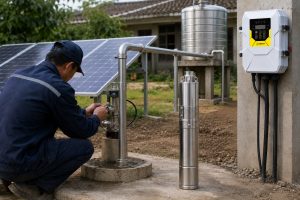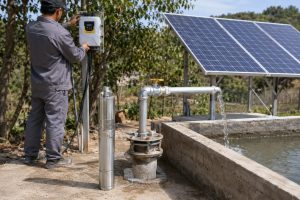
Your well is failing, leaving you without water when you need it most.
You're tired of high energy bills and unreliable grid power for your water supply.
What if you could have a durable, cost-effective water solution that works anywhere?
The strongest solar water pump isn't just one model, but a system whose strength is defined by its core components.
It combines a high-efficiency Brushless DC (BLDC) motor with the right pump type for your specific needs—be it a high-head screw pump, a high-flow centrifugal pump, or a corrosion-resistant stainless steel pump.
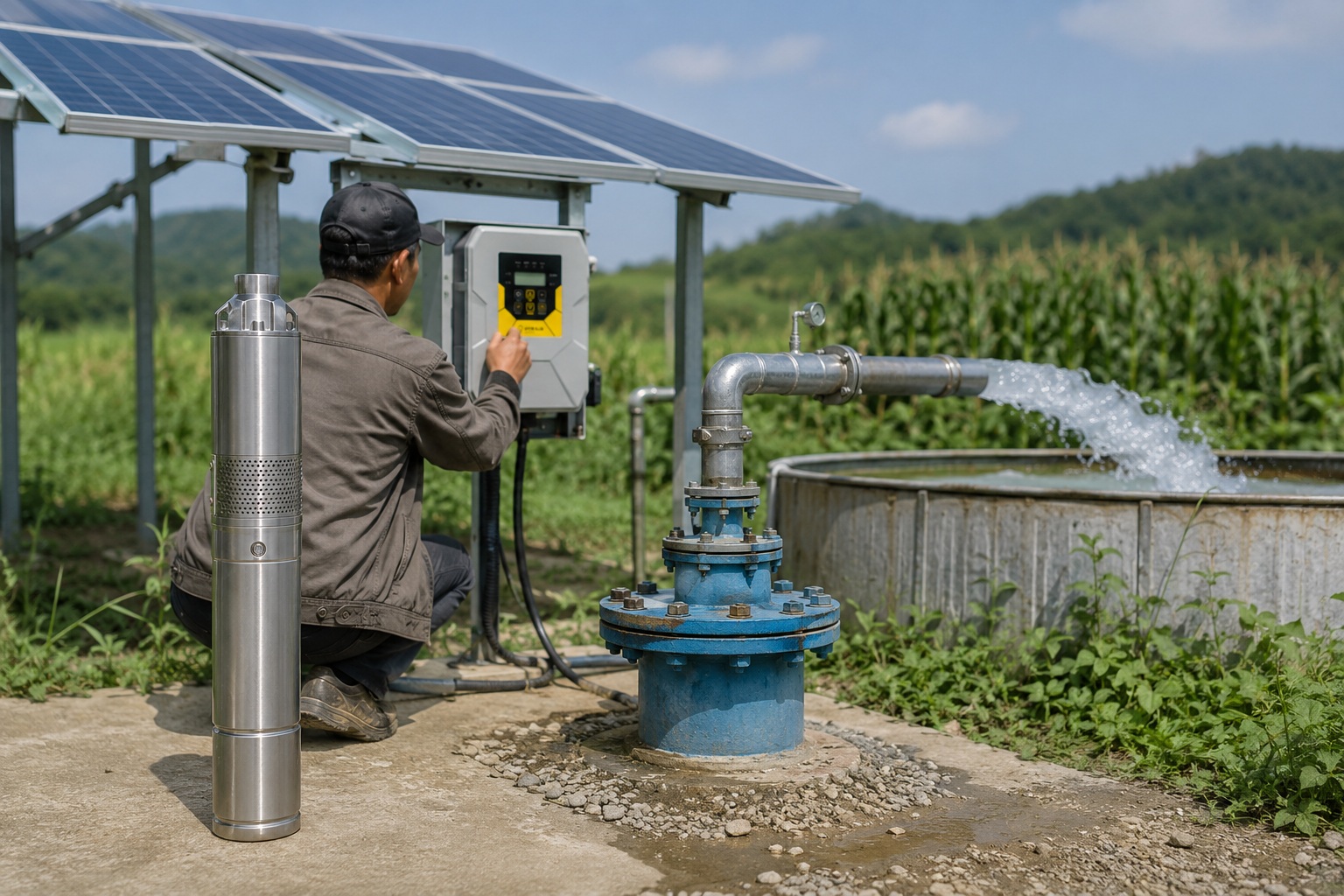
Choosing the right pump can mean the difference between decades of reliable service and constant, frustrating replacements.
With advancements in solar technology, you now have access to specialized pumps designed for any condition, from deep wells in Africa to large farms in the Americas.
Understanding the technology behind these pumps is the first step toward securing a truly robust and independent water source.
This guide breaks down the key components and pump types to help you identify the strongest solution for your market.
Critical Factors in Selecting a Powerful Well Pump
A pump's failure can bring your water supply to a screeching halt.
You need a solution that is not just powerful, but consistently reliable for years.
How do you ensure the pump you choose won't fail prematurely?
The most reliable and powerful pumps balance several key factors.
These include the quality of construction materials like stainless steel, the motor's horsepower and efficiency, the pump's flow rate (GPM), and the manufacturer's warranty and support.
Proven brands consistently deliver on these fronts.
The strength of a water pump is a combination of its design, materials, and motor technology.
While brand names like Grundfos and Franklin Electric set industry benchmarks for quality, the principles they follow apply to all powerful pumps.
A premium pump might have a higher initial cost, but its long-term value is unmatched.
They can offer lifespans of 15-25 years, compared to just 5-8 years for budget models.
Let's explore the essential factors that define a truly strong and lasting well pump.
1. Material Quality and Construction
The materials used in a pump determine its lifespan, especially in harsh water conditions.
Stainless steel is the premium choice for its superior resistance to corrosion and abrasion.
Pumps made with SS304 stainless steel can operate reliably in acidic or alkaline water that would quickly degrade lesser materials like cast iron or aluminum.
This is crucial for longevity in regions with challenging water quality.
2. Motor Horsepower (HP) and Flow Rate (GPM)
A pump's power is measured in horsepower (HP), which determines how much water it can move and how high it can lift it.
Flow rate, measured in Gallons Per Minute (GPM), indicates the volume of water delivered.
Matching these specifications to the well's depth and the user's water demand is critical.
- Small Homes (1-2 baths): 0.5 - 0.75 HP, 5-10 GPM
- Average Homes (2-3 baths): 0.75 - 1.0 HP, 10-15 GPM
- Large Homes or Irrigation: 1.5+ HP, 20+ GPM
3. Overall System Efficiency
The strongest pump isn't just about raw power; it's about efficient power.
An energy-efficient motor can reduce operational costs by 10-20% or more.
This efficiency also means you can power the same pump with a smaller, less expensive solar array, significantly lowering the total system cost.
High-efficiency motors, particularly BLDC types, are the core of a modern, powerful solar pump system.
Pump Selection Criteria: A Quick Comparison
| Feature | Budget Pump | Premium Pump | Impact on Strength |
|---|---|---|---|
| Lifespan | 5-8 years | 15-25+ years | Long-term reliability and lower replacement costs. |
| Material | Cast Iron, Plastic | Stainless Steel | Resists corrosion and wear, ensuring durability. |
| Efficiency | Lower | High (up to 92%+) | Reduces energy costs and solar panel requirements. |
| Warranty | 1-2 years | 3-5+ years | Indicates manufacturer confidence in product quality. |
| Initial Cost | $ | $$$ | Higher upfront cost is offset by lower lifetime costs. |
The Core of Strength: BLDC Permanent Magnet Motors
Your pump system is losing power and efficiency.
The motor overheats, wastes energy, and requires frequent maintenance, driving up your operating costs.
Is there a motor technology that offers superior power without these drawbacks?
The heart of the strongest solar pumps is the Brushless DC (BLDC) permanent magnet motor.
These motors achieve over 90% efficiency, delivering more power with less energy.
Their design is smaller, lighter, and eliminates the need for maintenance, providing unmatched reliability and performance.
The motor is the engine of your water pump.
Its performance dictates the entire system's efficiency, reliability, and lifespan.
Traditional brushed motors are inefficient and prone to wear, but the BLDC permanent magnet motor has revolutionized solar pumping.
This technology, once reserved for high-tech applications, is now the standard for any solar pump that claims to be the "strongest."
It is the critical component that reduces solar panel requirements, simplifies installation, and guarantees a long, trouble-free service life.
How BLDC Motors Achieve Superior Strength
A BLDC motor's strength comes from its innovative design.
Unlike brushed motors that use carbon brushes to transfer power to the rotor, BLDC motors use an electronic controller.
The rotor itself is made of powerful permanent magnets, such as 40SH neodymium iron boron.
This design has several key advantages:
- No Friction: With no brushes to wear down, the motor has fewer failure points and a significantly longer lifespan.
- High Efficiency: Energy is not wasted as heat from brush friction. This allows efficiencies to exceed 90%, whereas brushed motors often operate at 60-75% efficiency.
- High Torque: Permanent magnets provide high torque even at low speeds, allowing the pump to start easily and handle difficult loads.
The Tangible Benefits of BLDC Technology
This superior engineering translates directly into market value for distributors and end-users.
A BLDC motor is not just an incremental improvement; it's a game-changer.
It fundamentally alters the economics and practicality of solar pumping.
| Feature | Traditional Brushed Motor | BLDC Permanent Magnet Motor | Why It Matters for Strength |
|---|---|---|---|
| Efficiency | 60-75% | >90% | Reduces solar panel needs by up to 25%, lowering system cost. |
| Lifespan | 3,000-5,000 hours | 20,000+ hours | Provides over 4x the service life, ensuring long-term reliability. |
| Maintenance | Regular brush replacement | Maintenance-free | Eliminates a major cause of downtime and service costs. |
| Size & Weight | Larger & Heavier | Up to 47% smaller & 39% lighter | Simplifies shipping, handling, and installation. |
| Power Output | Lower torque, less consistent | High torque, stable power | Ensures reliable water flow even in variable sunlight. |
The Strategic Role of the Motor
Ultimately, the BLDC motor is the core driver of a pump's strength and competitiveness.
It empowers the entire system, allowing a well-designed pump to perform at its peak.
When combined with an intelligent MPPT (Maximum Power Point Tracking) controller, the system can continuously optimize its performance based on available sunlight, maximizing water output throughout the day.
For any distributor, offering pumps with BLDC motors establishes a position of technological leadership and efficiency.
Solar Screw Pump: The High-Head, Deep-Well Specialist
You need to draw water from an extremely deep well.
Centrifugal pumps can't generate enough pressure, and the water contains sand that would destroy them.
How can you reliably get water from hundreds of feet deep?
The solar screw pump is the definitive solution for high-head, low-flow applications.
It uses a stainless steel screw rotor within a rubber stator to push water, generating immense pressure.
This design excels in deep wells and is highly resistant to sand, making it incredibly durable.
When a well is exceptionally deep, a different kind of strength is required.
It's not about the volume of water, but the sheer force needed to lift it.
This is where the solar screw pump, also known as a progressive cavity pump, demonstrates its unique power.
Its simple yet effective mechanism is perfectly suited for domestic water supply and livestock watering in off-grid areas with deep aquifers, such as those found across Africa and Latin America.
It is the specialist pump for the most challenging vertical lifts.
The Mechanics of a Screw Pump
The screw pump operates on the principle of positive displacement.
A helical screw-shaped rotor, typically made of stainless steel, turns inside a double-helical rubber stator.
As the rotor turns, it forms a series of sealed cavities that "progress" from the pump's intake to its outlet.
This action pushes the water forward with consistent pressure, regardless of the depth.
This mechanism is what gives the screw pump its defining characteristics.
- High Head Capability: It can generate very high pressure, making it ideal for lifting water from wells that are hundreds of feet deep.
- Sand Resistance: The flexible rubber stator and the design of the cavities allow the pump to handle water with a higher concentration of sand and silt without damage. It can often handle up to 3-5 times more sand than a centrifugal pump.
- Consistent Flow: The flow rate is directly proportional to the pump's speed and remains relatively constant, even as the head pressure changes.
Performance Profile and Ideal Applications
A screw pump's strength is its lifting power, not its flow rate.
It is designed for low-flow, high-pressure scenarios.
| Parameter | Solar Screw Pump | Solar Centrifugal Pump | Analysis |
|---|---|---|---|
| Max Head | Very High (e.g., 500+ ft / 150m+) | Medium (e.g., 200-400 ft / 60-120m) | The screw pump is the clear winner for deep wells. |
| Flow Rate | Low (e.g., 1-10 GPM) | High (e.g., 10-50+ GPM) | Unsuitable for large-scale irrigation where volume is key. |
| Sand Handling | Excellent | Fair to Poor | Superior durability in wells with sandy or silty water. |
| Ideal Use Case | Deep well domestic supply, livestock water | Farm irrigation, filling large tanks | Each pump is specialized for a different task. |
Limitations to Consider
While incredibly strong in its niche, the screw pump is not a universal solution.
Its primary limitation is its low flow rate, which makes it unsuitable for applications requiring large volumes of water, like irrigating large fields.
Additionally, the rubber stator is a wear part that may eventually need replacement, although high-quality stators can last for many years.
However, for deep wells where reliability is paramount, the solar screw pump is undeniably one of the strongest and most dependable choices available.
Solar Plastic Impeller Pump: The High-Flow, Wear-Resistant Workhorse
Your farm or pasture needs a large volume of water daily.
The well isn't excessively deep, but it contains fine sand that wears down metal components.
You need a cost-effective pump that can deliver high flow without failing.
The solar plastic impeller pump is the high-flow champion for medium-depth wells.
This multi-stage centrifugal pump uses durable, engineered plastic impellers to deliver high water output.
It offers excellent resistance to abrasion from fine sand, making it a lightweight, economical, and powerful choice.
When the priority is water volume for irrigation or livestock, a different type of strength is needed.
The solar plastic impeller pump is a multi-stage centrifugal pump designed for this exact purpose.
It provides the high flow rates that screw pumps lack, while offering better sand resistance than many metal impeller pumps.
Its lightweight and economical design has made it a popular choice for farms, ranches, and home gardens across Africa and the Americas.
This pump is the workhorse of solar-powered agriculture.
Understanding Centrifugal Pump Strength
Unlike a screw pump that pushes water, a centrifugal pump uses impellers to throw water outward at high speed.
A multi-stage pump contains several impellers stacked on top of each other.
Each stage adds more pressure, increasing the height the water can be lifted.
The strength of this design lies in its ability to move large volumes of water efficiently.
Why Engineered Plastic Is a Strong Choice
The term "plastic" can be misleading.
The impellers in these pumps are not made from ordinary plastic.
They are precision-molded from high-strength, engineered polymers like Noryl or polycarbonate.
These materials offer a unique combination of advantages:
- Abrasion Resistance: They are highly resistant to wear from fine sand, often outlasting softer metals like brass in sandy conditions. The material's slight flexibility allows fine particles to pass without gouging the surface.
- Lightweight: Plastic impellers are much lighter than metal ones. This reduces the axial load on the motor bearings, potentially increasing the motor's lifespan. It also makes the pump easier to handle and install.
- Cost-Effective: Manufacturing engineered plastic components is typically less expensive than casting and machining stainless steel, making the overall pump more affordable.
Performance Comparison: Plastic vs. Stainless Steel Impellers
| Feature | Engineered Plastic Impeller | Stainless Steel Impeller | Application Insight |
|---|---|---|---|
| Sand Resistance | Excellent (for fine sand) | Good (but can wear) | Plastic is often superior for wells with fine, abrasive sand. |
| Corrosion Resistance | Good | Excellent | Stainless steel is necessary for acidic or highly mineralized water. |
| Initial Cost | $$ | $$$ | Plastic offers a lower entry cost for high-flow applications. |
| Weight | Lighter | Heavier | Lighter weight simplifies installation and reduces shipping costs. |
| Durability | Good | Excellent | Stainless steel provides a longer service life in ideal water conditions. |
Best-Fit Applications and Limitations
The solar plastic impeller pump thrives in medium-depth wells (up to ~300 feet / 90 meters) with a need for high water output.
It's the go-to choice for farm irrigation and filling large reservoirs.
However, its main limitation is its suitability for water chemistry.
It is not designed for highly corrosive (acidic or alkaline) water, where a stainless steel pump would be required.
In the right application, though, it represents the strongest value proposition for moving large volumes of water with solar power.
Solar Stainless Steel Impeller Pump: The Ultimate Durability Champion
Your water source is corrosive, with acidic or alkaline properties.
You've seen other pumps fail in just a few years due to rust and degradation.
You need the absolute strongest, most durable pump that can withstand these harsh conditions for decades.
The solar stainless steel impeller pump is the premium solution for maximum durability and corrosion resistance.
Built with SS304 stainless steel impellers and a stainless steel pump body, it is engineered to thrive in corrosive water.
It offers high flow rates and a long service life, making it the top choice for high-end and demanding applications.
When it comes to long-term strength and resilience, nothing beats stainless steel.
The solar stainless steel impeller pump is the pinnacle of durability in the solar centrifugal pump market.
This pump is specifically designed for environments where water chemistry is the primary challenge.
Whether dealing with acidic water, high mineral content, or alkaline soils found in parts of Australia and the Americas, this pump is built to last.
It is the investment of choice for high-end homes, critical commercial operations, and any user who demands the highest level of reliability.
The Unmatched Strength of Stainless Steel
SS304 is a specific grade of stainless steel known for its excellent corrosion resistance.
It contains high amounts of chromium and nickel, which form a passive, non-reactive layer on the surface of the metal.
This layer protects the underlying steel from reacting with corrosive elements in the water.
This material choice provides several key strengths:
- Corrosion Immunity: It can operate for years in water with a pH range that would destroy cast iron or even brass components.
- Structural Integrity: Stainless steel maintains its strength and shape under high pressure and temperature, ensuring the pump's internal tolerances remain precise over its lifetime.
- Hygienic Properties: Its smooth, non-porous surface is less likely to harbor bacteria, making it an excellent choice for potable water systems.
When is Stainless Steel Non-Negotiable?
While a plastic impeller pump offers great value, there are situations where only stainless steel will suffice.
Investing in a stainless steel pump is critical in these scenarios to avoid premature failure and frequent, costly replacements.
A general rule is to test the water's pH level.
| Water pH Level | Recommended Impeller Material | Rationale |
|---|---|---|
| pH < 6.5 (Acidic) | Stainless Steel | Acidic water will aggressively corrode most metals and can degrade some plastics over time. |
| pH 6.5 - 8.5 (Neutral) | Plastic or Stainless Steel | Either material works well. The choice depends on sand content and budget. |
| pH > 8.5 (Alkaline) | Stainless Steel | High alkalinity can also be corrosive, making stainless steel the safer, long-term choice. |
Long-Term Value Over Initial Cost
The primary drawback of a stainless steel impeller pump is its higher initial cost.
The material itself is more expensive, and the manufacturing process is more complex than molding plastic.
However, this upfront cost is an investment in longevity.
In a corrosive well, a plastic impeller pump might last 5-7 years, whereas a stainless steel pump can easily last 15-20 years or more.
When you factor in the cost of replacing the pump two or three times, the stainless steel option quickly becomes the more economical choice.
It represents the ultimate strength in terms of a long-term, worry-free water supply.
Conclusion
The strongest solar pump is a complete system, matching a high-efficiency BLDC motor with the right pump—screw, plastic, or steel—for your specific well conditions, ensuring durable, cost-effective water access.
Frequently Asked Questions
How long do solar water pumps last?
A quality solar pump system can last 15 to 25 years.
The pump itself may last 10-15 years, while the solar panels can last over 25 years with minimal degradation.
What size solar pump do I need?
Sizing depends on your daily water needs (gallons per day) and the total dynamic head (the vertical distance the water is lifted).
A professional can calculate this for proper sizing.
Can a solar pump work at night or on cloudy days?
Standard systems only work with sunlight.
However, AC/DC hybrid systems can automatically switch to grid power or a generator when solar energy is insufficient, ensuring 24/7 operation.
How deep can a solar pump go?
This depends on the pump type.
Solar screw pumps are designed for very deep wells, capable of lifting water from over 500 feet (150+ meters), while centrifugal pumps are better for medium depths.
Which is better, a solar screw pump or a centrifugal pump?
Neither is better; they are for different jobs.
Screw pumps are for deep wells with low flow needs.
Centrifugal pumps are for shallower wells that require high volumes of water.
How much does a solar water pump system cost?
Costs vary widely from $1,500 to over $5,000.
The price depends on the pump size, well depth, and the number of solar panels required for the system.
What does an MPPT controller do?
An MPPT (Maximum Power Point Tracking) controller is the "brain" of the system.
It constantly adjusts the electrical load to maximize the power drawn from the solar panels, increasing daily water output by up to 30%.