Struggling to choose a water pump that won’t fail you?
A poor choice leads to costly repairs, high energy bills, and frustrating downtime, derailing your entire water system.
The longest-lasting water pumps are those that perfectly match their environment and application.
They combine superior materials like stainless steel, a highly efficient motor like a BLDC, and a professional installation.
Premium brands can achieve a lifespan of 15-25 years under the right conditions.
Choosing a durable water pump isn't just about picking a famous brand off the shelf.
It’s about understanding the key components that contribute to a long and trouble-free service life.
From the motor that drives it to the materials that protect it from corrosion, every detail matters.
Let's explore the factors that separate a pump that lasts a few years from one that serves you for decades.
The Foundation of Durability: Top Brands and What Makes Them Last
Choosing a pump feels like a gamble.
With so many brands, how do you know which one offers true long-term value instead of just a fancy label?
The most durable water pump brands build their reputation on superior engineering, high-quality materials, and proven reliability over decades.
Brands like Grundfos and Franklin Electric lead by focusing on efficiency and robust construction, while others like Goulds excel in heavy-duty applications, ensuring a longer service life.
A brand's reputation is a good starting point, but true durability lies in the specific engineering and material choices they make.
Top-tier manufacturers don’t just assemble parts; they design integrated systems where every component is optimized for performance and longevity.
They invest heavily in research and development to create pumps that withstand harsh conditions, operate more efficiently, and require less maintenance over their lifespan.
This commitment to quality is what separates the leaders from the rest of the pack.
The Premium Tier: Where Efficiency Meets Longevity
Premium brands are defined by their advanced technology and uncompromising quality.
They often pioneer innovations that become industry standards years later.
For example, many top-tier pumps use stainless steel for their core components.
This isn't just for looks; stainless steel offers superior resistance to corrosion and abrasion, which is critical in wells with hard or sandy water.
This focus on material science directly translates to a longer operational life, often extending a pump's lifespan by 5-10 years compared to standard models.
Furthermore, these brands prioritize energy efficiency, which reduces operational stress on the motor and lowers lifetime running costs by up to 20%.
| Feature | Premium Brand A (e.g., Grundfos) | Premium Brand B (e.g., Franklin Electric) |
|---|---|---|
| Typical Lifespan | 15-25 Years | 15-25 Years |
| Key Advantage | Superior energy efficiency (10-20% less electricity) | Exceptional motor reliability and serviceability |
| Best For | Deep wells (>300 ft), mineral-heavy water | All-around residential and light commercial use |
| Construction | Primarily stainless steel, floating impellers | Robust motor design, wide availability of parts |
| Upfront Cost | Higher | Moderate-to-High |
The Heavy-Duty Workhorses: Built for Performance
While premium brands focus on cutting-edge efficiency, other reputable manufacturers build their legacy on raw power and ruggedness.
These "workhorse" brands are engineered for demanding scenarios like large-scale agriculture, irrigation, and industrial fluid transfer.
They may not always have the absolute highest efficiency ratings, but they are designed for continuous, high-volume operation without failure.
Their construction often features heavy-duty cast iron and oversized components built to handle the physical stresses of moving massive amounts of water.
This makes them an excellent choice for applications where sheer output and reliability under load are more critical than saving a few percentage points on an energy bill.
- High Flow Rates: Engineered to move more gallons per minute (GPM) for large properties and irrigation.
- Robust Construction: Often use thicker, more durable materials to withstand demanding cycles.
- Value Proposition: Offer excellent performance and durability for a more competitive upfront cost, providing a great return on investment in high-demand settings.
The Heart of the Pump: Why High-Efficiency Motors are Non-Negotiable
Worried that your water pump is secretly driving up your energy bills?
Many conventional pumps waste significant electricity, putting unnecessary strain on the motor and shortening its life.
The longest-lasting pumps are powered by highly efficient motors, such as brushless DC (BLDC) permanent magnet motors.
These motors run cooler, use less energy, and have fewer moving parts to wear out, directly contributing to a significantly longer and more reliable service life for the entire pump system.
The motor is the engine of your water pump.
Its performance and durability are arguably the single most important factor in the pump's overall lifespan.
A cheap, inefficient motor will not only consume more power but also generate more heat and vibration.
This excess heat degrades internal components like windings and bearings, leading to premature failure.
In contrast, a high-efficiency motor is designed to convert more electrical energy into mechanical power, minimizing wasted energy and reducing operational stress.
This is why modern pump systems are increasingly moving toward advanced motor technologies.
Inside the Brushless DC (BLDC) Permanent Magnet Motor
The breakthrough in pump longevity has been the adoption of BLDC permanent magnet motors.
Unlike traditional AC motors that rely on brushes that wear out over time, BLDC motors use a sophisticated electronic controller.
This design eliminates the most common point of mechanical failure.
The core of a BLDC motor features a rotor made from powerful permanent magnets, often high-grade neodymium iron boron.
This allows the motor to generate high torque with incredible efficiency—often exceeding 90%.
A traditional motor might struggle to reach 60-70% efficiency, with the lost energy turning into destructive heat.
The difference is substantial.
| Feature | BLDC Permanent Magnet Motor | Standard AC Induction Motor |
|---|---|---|
| Efficiency | >90% | 50-75% |
| Lifespan | Longer (no brushes to wear out) | Shorter (brushes and windings degrade) |
| Maintenance | Virtually maintenance-free | Requires periodic service/replacement |
| Heat Generation | Low | High |
| Size & Weight | Up to 47% smaller, 39% lighter | Larger and heavier for the same power |
| Control | Precise speed and torque control | Limited control |
The Real-World Impact of Motor Efficiency
The benefits of a high-efficiency motor extend far beyond just a longer lifespan.
In solar-powered water pump systems, higher motor efficiency is a game-changer.
A pump with a 90% efficient motor requires significantly fewer solar panels to achieve the same water output as a pump with a 60% efficient motor.
This directly reduces the initial system cost and complexity.
For distributors and importers, this means being able to offer a more competitive and cost-effective package to end-users.
The compact and lightweight nature of BLDC motors also simplifies logistics and installation.
A lighter pump is easier and cheaper to transport and can be installed by a smaller team without heavy equipment, a crucial advantage in remote areas.
This combination of lower operating costs, reduced upfront investment, and easier handling makes high-efficiency motors the clear choice for any modern, durable water pump system.
Built for the Challenge: Matching Pump Type to Water Conditions
Have you ever installed a new pump, only to have it fail because it couldn't handle your water?
Using the wrong pump type for your specific well depth or water quality is a recipe for disaster and wasted money.
The longest-lasting pump is one specifically designed for its environment.
A solar screw pump excels in deep, sandy wells, while a stainless steel impeller pump thrives in corrosive water.
Matching the pump's construction to the water conditions is essential for achieving maximum durability and performance.
There is no "one-size-fits-all" solution in the world of water pumps.
A pump that performs flawlessly in a shallow, clean-water well may clog and burn out within months in a deep, sandy well.
Durability is not an inherent quality of a pump alone; it is the result of a perfect match between the pump’s design and the demands of its application.
This is why a comprehensive product portfolio, offering different pump types, is crucial for suppliers.
It allows them to provide the right tool for the right job, ensuring customer satisfaction and a long service life for the product.
The Deep Well Specialist: Solar Screw Pumps
For deep wells or water sources with high sand content, the solar screw pump (also known as a progressive cavity pump) is the undisputed champion of durability.
Its unique design uses a rotating stainless steel screw within a rubber stator.
This mechanism "pushes" water upward through compression, rather than flinging it with impellers.
This design has two key advantages for longevity:
- High Head Capability: It can generate immense pressure, making it ideal for lifting water from very deep wells where centrifugal pumps would struggle or require excessive power.
- Sand Resistance: The gentle pushing action is far less susceptible to wear and tear from sand and other small solids than the high-speed spinning impellers of a centrifugal pump. This makes it incredibly durable in harsh water conditions common in parts of Africa and Latin America.
While its flow rate is typically lower, its ability to reliably deliver water from extreme depths makes it the longest-lasting option for domestic water supply and livestock watering in challenging geographies.
The High-Volume Performers: Solar Impeller Pumps
When high flow is the priority for applications like farm irrigation or large residential water systems, multi-stage centrifugal pumps are the answer.
These pumps use a series of impellers to build pressure and move large volumes of water.
However, the material of these impellers is critical to the pump's lifespan.
| Impeller Type | Best Application | Durability | Corrosion Resistance | Cost |
|---|---|---|---|---|
| Plastic Impeller | Farm irrigation, gardens, general use with fine sand. | Good wear resistance against fine sand. | Low. Not for acidic or alkaline water. | Economical |
| Stainless Steel Impeller | Corrosive water (acidic/alkaline), high-end homes, premium applications. | Excellent. Maintains performance over time. | High. SS304 resists corrosion. | Higher |
A plastic impeller pump offers an excellent balance of performance and cost-effectiveness. The durable plastics used are surprisingly resistant to abrasion from fine sand and are lightweight.
A stainless steel impeller pump is the premium choice for longevity, especially in aggressive water conditions. Stainless steel will not corrode, warp, or degrade over time, ensuring the pump maintains its hydraulic performance for many years. It is the go-to choice for alkaline soil regions or anywhere water quality is a concern.
Extreme Engineering: Lessons from the World's Largest Pumps
To understand the importance of purpose-built design, look at the world's mega-pumps.
The pumps at the IJmuiden Pumping Station in the Netherlands, for example, are designed to move 50,000 liters of water per second to protect the country from flooding.
These giants are not just scaled-up versions of a residential pump; they are marvels of engineering specifically designed to handle immense volume and run continuously.
They teach us a vital lesson: durability at any scale comes from engineering a solution for a specific problem, not from applying a generic product.
Beyond the Box: How Installation and Smart Controls Maximize Lifespan
Think a great pump is all you need for a reliable water supply?
Even the most expensive, highest-quality pump will fail prematurely if it's installed incorrectly or lacks modern control features.
True longevity comes from a holistic system approach.
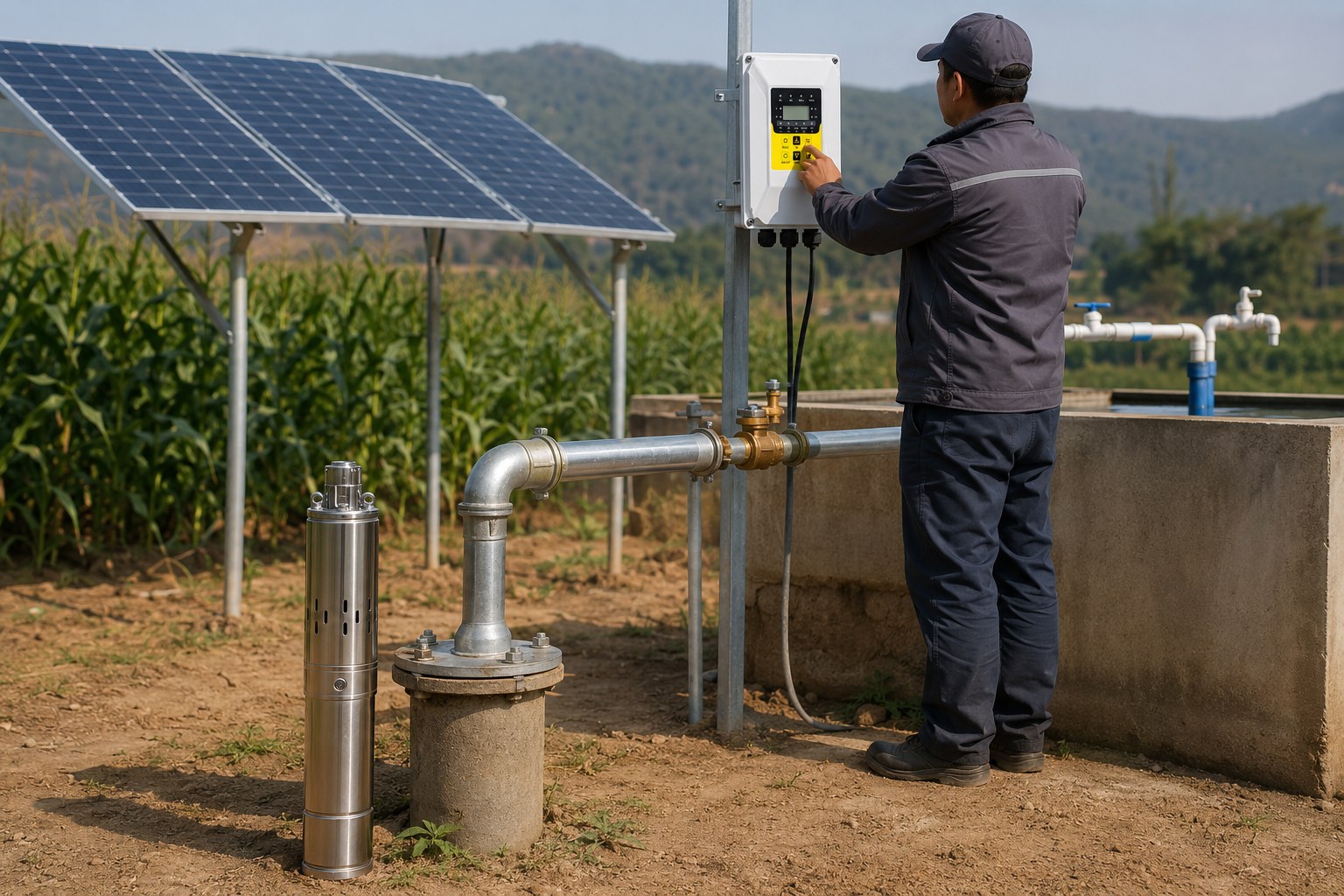
This includes professional installation with correctly sized components and the integration of smart controllers, like MPPT and AC/DC hybrid systems, which protect the pump from stress and ensure it operates at peak efficiency under all conditions.
Buying a top-tier pump is only half the battle.
The other half is ensuring it's installed and operated correctly.
A poor installation can cause a multitude of problems, from motor damage due to incorrect voltage to excessive wear from vibrations.
Similarly, running a pump without intelligent controls is like driving a high-performance car without a modern engine management system—you're not getting the best performance, and you're risking damage.
Smart controls protect the pump investment and maximize its operational life.
The Critical Role of Professional Installation
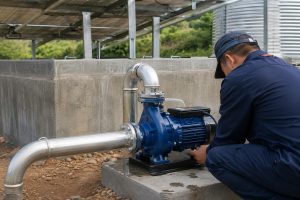
A quality installation is a series of small but crucial steps that collectively protect the pump from premature failure.
A licensed contractor will ensure every aspect of the system is correctly implemented.
Key installation elements that extend pump life include:
- Proper Pump Positioning: Setting the pump at the correct depth in the well—far enough from the bottom to avoid sucking up sediment, but deep enough to always be submerged.
- Torque Arrestors: Installing these devices prevents the pump from twisting violently upon startup, which can damage wiring and pipes over time.
- Correct Wire Sizing: Using wire that is thick enough for the pump's power draw and the length of the run. Undersized wire causes voltage drop, forcing the motor to work harder and overheat.
- Waterproof Splices: Ensuring all electrical connections are perfectly sealed. A single drop of water in a splice can cause a short circuit and destroy the motor.
- Pressure Tank Sizing: Matching the pressure tank to the pump's capacity prevents "short cycling"—the pump turning on and off too frequently, which is a leading cause of motor failure.
The Rise of Intelligent Pumping
Modern water pump systems are no longer just "on" or "off."
They are managed by sophisticated controllers that optimize performance and protect the equipment.
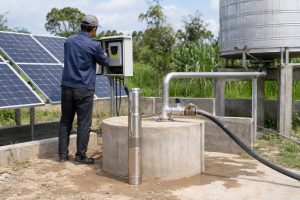
In solar pumping, the MPPT (Maximum Power Point Tracking) controller is essential.
It continuously adjusts the pump's electrical load to extract the maximum possible power from the solar panels as sunlight conditions change throughout the day.
This results in up to 30% more water pumped compared to a system without MPPT.
Taking this a step further, innovative AC/DC hybrid controllers offer the ultimate in reliability and convenience.
These controllers can be connected to both solar panels and an AC power source (grid or generator) simultaneously.
- Automatic Power Switching: The controller prioritizes solar power. When sunlight is sufficient, the pump runs entirely on free solar energy.
- Hybrid Functionality: If clouds reduce solar input, the controller intelligently blends in AC power to maintain pump performance, maximizing the use of available solar energy.
- 24/7 Operation: When there is no sunlight (e.g., at night or on very overcast days), the controller automatically switches over to the AC source, ensuring an uninterrupted water supply.
This technology protects the pump from the stress of intermittent power and guarantees that water is available whenever it's needed, dramatically increasing the system's utility and user satisfaction.
Conclusion
The longest-lasting water pump is not a single brand or model.
It's a complete system combining durable materials, an efficient motor, and a professional installation tailored to your specific needs.
FAQs
What is the best brand of well pump?
For all-around reliability and value, Franklin Electric is a top choice. For maximum efficiency and performance in deep or challenging wells, Grundfos is often considered the gold standard.
How long do well pumps last by brand?
Premium brands like Grundfos and Franklin Electric typically last 15-25 years. Mid-tier brands may last 12-20 years, while budget options often fail in 8-12 years.
Is Grundfos better than Franklin Electric?
Both are excellent. Grundfos often leads in energy efficiency and innovative features for deep wells. Franklin Electric is legendary for its motor reliability and wide service network.
How much does a quality well pump cost?
A quality submersible pump alone costs between $800 and $2,500. A complete professional installation, including the motor, wiring, and controls, typically ranges from $1,500 to $4,000 or more.
What is the most common cause of well pump failure?
The most common causes include short cycling from an improperly sized pressure tank, motor damage from voltage issues (like lightning or bad wiring), and running the pump dry.
Should I buy the cheapest pump?
No. A cheap pump almost always costs more in the long run due to higher energy consumption, more frequent repairs, and a much shorter lifespan, leading to higher lifetime costs.
Can a well pump last 30 years?
It is rare but possible under ideal conditions: clean water, perfect installation, and a properly sized system that doesn't overwork the pump. However, 15-25 years is a more realistic expectation.
What maintenance does a well pump require?
Submersible well pumps are designed to be maintenance-free. The best "maintenance" is a proper installation and regular inspection of the visible components like the pressure tank and control box.