Struggling with high energy costs and unreliable power grids?
You've considered solar, but the high initial price and inconsistent output make you hesitate, leaving you stuck with the status quo.
The most significant disadvantage of solar power is its high upfront installation cost combined with its intermittency.
Solar panels only generate electricity when the sun is shining, creating a reliability gap at night or during cloudy weather that often requires expensive storage solutions.
While these challenges are real, they are not insurmountable.
The initial sticker shock and the problem of intermittent power are precisely the issues that modern solar technology is engineered to solve.
Advances in system efficiency and intelligent power management are rapidly changing the economic equation of solar energy.
This makes it crucial to look beyond the headline disadvantages and explore the solutions that make solar a viable and profitable investment today.
Let's break down these challenges one by one and uncover how modern solutions are paving the way for reliable, affordable solar power.
The high initial costs of installing panels
Worried that the initial investment for a solar system is too high?
This cost barrier can make the long-term savings of solar energy feel completely out of reach for your business.
The upfront expense to purchase and install a complete solar energy system is a primary drawback.
This includes the cost of panels, inverters, mounting hardware, and professional labor, representing a significant capital investment before any savings are realized.
Breaking Down the Initial Investment
The total cost of a solar installation is more than just the panels.
It's a complete system where every component adds to the final price.
A typical system includes solar panels, an inverter to convert DC to AC power, racking to mount the panels, and wiring.
For off-grid applications, especially in sectors like agriculture, the cost of batteries and specialized controllers adds another significant layer to the initial budget.
For example, a standard 10kW residential system can cost anywhere from $15,000 to $25,000 before incentives.
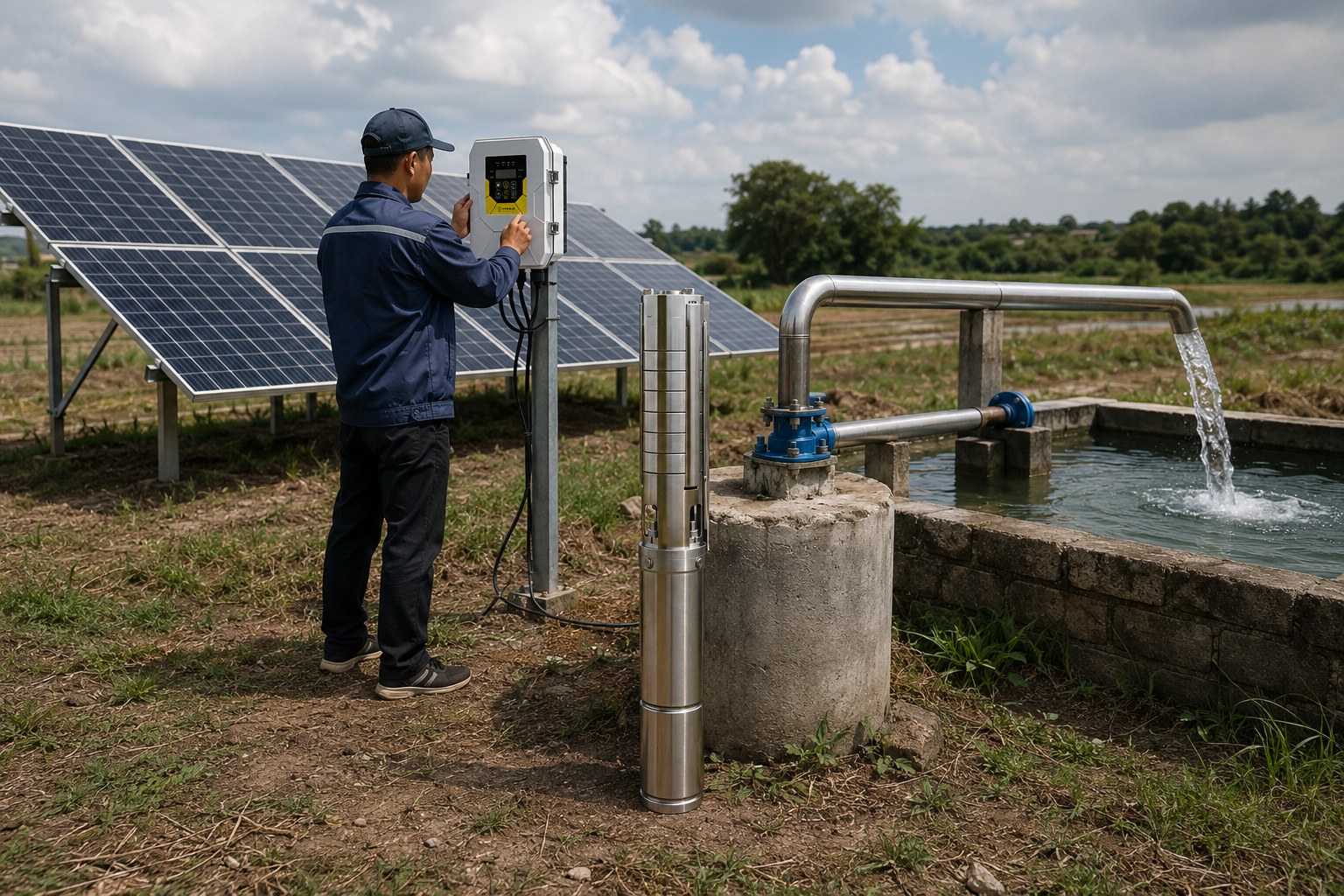
For a commercial agricultural operation requiring a solar water pumping system, this cost can be even higher depending on the well depth and water demand.
How High-Efficiency Components Reduce Overall Cost
A common misconception is that more panels always equal more power.
However, system efficiency plays a much larger role in managing costs.
The core of a modern solar water pump, for instance, is its motor.
A high-efficiency Brushless DC (BLDC) permanent magnet motor can achieve efficiencies exceeding 90%.
In contrast, a standard AC motor might only be 60-70% efficient.
This efficiency gap means a BLDC motor requires up to 30% fewer solar panels to produce the same water output.
Fewer panels directly translate to lower initial costs for panels, mounting hardware, and installation space.
| Component Feature | Standard System | High-Efficiency System | Cost Impact |
|---|---|---|---|
| Motor Efficiency | 60-70% | >90% | Reduces panel requirement by ~30% |
| Controller Type | Standard ON/OFF | MPPT Controller | Increases energy harvest by 20-30% |
| Total Panels Needed | 10 Panels (Example) | 7-8 Panels (Example) | Lowers equipment and installation cost |
Choosing the Right Equipment for Your Budget
Not all solar applications require the most expensive, top-of-the-line equipment.
A strategic product portfolio allows for cost optimization based on specific needs.
For distributors, offering a range of solutions is key to capturing a wider market.
- Solar Screw Pumps: These are ideal for deep wells where high pressure (head) is needed but flow rate is less critical. Their robust design is perfect for domestic water supply or livestock, offering a durable solution without the cost of a high-flow pump.
- Solar Plastic Impeller Pumps: For applications like farm irrigation where high flow is essential and water isn't corrosive, these pumps are an economical choice. They are lightweight and wear-resistant against fine sand, providing excellent value.
- Solar Stainless Steel Impeller Pumps: In areas with corrosive or alkaline water, the higher upfront cost of a stainless steel pump is a wise investment. Its extended service life prevents frequent, costly replacements, lowering the total cost of ownership over time.
By matching the pump type to the water conditions and application, end-users avoid overspending on unnecessary features, and distributors can serve diverse markets effectively.
Solar panels are dependent on sunlight
Afraid that cloudy days or nighttime will render your solar investment useless?
This reliance on the sun creates uncertainty, especially for critical operations like irrigation or livestock watering that require a constant supply.
Solar panels are fundamentally reliant on sunlight to produce electricity.
Their output drops significantly during overcast weather and ceases completely at night, posing a major challenge for applications demanding a consistent, 24/7 power source.
The Challenge of Solar Intermittency
A solar panel's output is directly proportional to the intensity of sunlight it receives, a metric known as solar irradiance.
On a clear, sunny day, a panel might operate at 100% of its rated capacity.
On a heavily overcast day, that output can plummet to just 10-25% of its potential.
At night, production is zero.
This variability is a significant operational risk.
For a farmer in South Africa, a week of cloudy weather could mean insufficient water for crops or livestock.
For a household in a remote area, it means no power after sunset.
This is the core problem that any serious off-grid solar system must solve.
Solution 1: Maximizing Daylight with MPPT Controllers
While we can't control the sun, we can control how efficiently we use its light.
A Maximum Power Point Tracking (MPPT) controller is an intelligent electronic device that optimizes the match between the solar array and the pump motor.
It constantly adjusts the electrical operating point of the panels to extract the maximum available power.
Compared to simpler PWM controllers, an MPPT can boost energy harvest by up to 30%.
This means that even on cloudy days, the system can capture more energy, extending its operational hours and making it more resilient to poor weather conditions.
Solution 2: Ensuring 24/7 Operation with Hybrid Power Systems
For applications that cannot tolerate downtime, a hybrid system is the ultimate solution.
Modern solar controllers are now designed with dual power inputs.
This allows the system to be connected to both the solar (DC) array and an alternative power source, such as the utility grid or a generator (AC), simultaneously.
Here is how it works:
- Priority on Solar: The controller automatically prioritizes solar power. As long as the sun provides enough energy, the system runs 100% on free, clean energy.
- Hybrid Function: When solar input decreases due to clouds, the controller can blend AC power with the available DC power to maintain full operation, maximizing the use of solar energy.
- Automatic Switchover: When solar input drops to zero at night, the controller seamlessly switches to the AC power source.
This ensures a continuous, uninterrupted water supply 24 hours a day, removing the risk of intermittency.
It offers the best of both worlds: the cost savings of solar and the reliability of the grid.
| System Type | Daytime Operation (Sunny) | Daytime Operation (Cloudy) | Nighttime Operation | Reliability |
|---|---|---|---|---|
| Solar Only | Full Power | Reduced/No Power | No Power | Low |
| Solar + Battery | Full Power | Uses Stored Power | Uses Stored Power | Medium-High |
| Solar Hybrid (AC/DC) | Full Power (Solar) | Blended Power | Full Power (AC) | Very High |
Solar energy storage is expensive
You need power when the sun isn't shining, but the cost of batteries is shocking.
This added expense can double the price of a solar system, making it financially unfeasible for many.
Storing solar power for nighttime or cloudy day use requires a battery bank, which is one of the most expensive components of an off-grid system.
The high cost, limited lifespan, and maintenance requirements of batteries present a major financial and logistical hurdle.
The High Cost of Energy Independence
Achieving true energy independence with solar means storing excess energy generated during the day.
Historically, this has been done with deep-cycle, lead-acid batteries.
While functional, these batteries are heavy, have a relatively short lifespan of 3-5 years, require regular maintenance (like checking water levels), and contain toxic materials.
Modern lithium-ion batteries offer a significant upgrade: they are lighter, last longer (10-15 years), and are virtually maintenance-free.
However, this performance comes at a premium.
A lithium-ion battery bank for a typical home can add $8,000 to $15,000 to the total system cost, an investment that can be difficult to justify.
Designing Systems to Reduce Battery Dependence
The most effective way to manage storage costs is to reduce the need for storage in the first place.
This is achieved by focusing on system-wide efficiency.
A solar water pumping system is a perfect example.
- Efficient Motors: A pump with a >90% efficient BLDC motor uses less energy to move the same amount of water. This means a smaller battery is needed to run the pump for the same duration.
- Intelligent Pumping: Instead of pumping water on demand at night from a battery, a more efficient strategy is to use the full power of the sun during the day to pump a larger volume of water into a storage tank. The water is then available 24/7 via gravity feed or a small, low-power delivery pump. This approach uses a water tank as a "battery," which is far cheaper and longer-lasting than an electrochemical one.
By shifting the storage medium from electricity (in a battery) to potential energy (in a water tank), the most expensive component of the system can be drastically reduced or even eliminated.
Comparing Storage Strategies
For a potential customer like an importer or distributor, understanding these trade-offs is critical for advising clients.
| Storage Method | Initial Cost | Lifespan | Maintenance | Best For |
|---|---|---|---|---|
| Lead-Acid Battery | Medium | 3-5 Years | High | Low-budget projects with tolerance for maintenance. |
| Lithium-Ion Battery | High | 10-15 Years | Low | Applications requiring reliable, maintenance-free power. |
| Water Tank Storage | Low-Medium | 20+ Years | Very Low | Agricultural and domestic water supply systems. |
| Hybrid AC/DC System | Low (if grid is available) | N/A | None | Areas with grid access seeking solar savings with 100% uptime. |
The rise of AC/DC hybrid systems provides another powerful alternative to batteries.
For users with access to a grid connection, a hybrid controller offers a much more cost-effective way to guarantee 24/7 operation than a large, expensive battery bank.
Production of panels and batteries can be harmful to the environment
You want to go green with solar, but you've heard the manufacturing process isn't clean.
This contradiction can be troubling, making you question if solar is truly an environmentally friendly choice.
While solar energy is clean during operation, the manufacturing of its components is not without environmental impact.
The production of solar panels and batteries requires significant energy and involves mining raw materials, which can contribute to pollution and habitat disruption.
The Environmental Lifecycle of Solar Technology
The journey of a solar panel from raw material to rooftop is an energy-intensive process.
It begins with mining quartz sand to produce high-purity silicon, which is then melted and formed into ingots and wafers.
This process requires vast amounts of electricity, which, ironically, is often generated by fossil fuels.
Similarly, batteries contain materials like lithium, cobalt, and lead.
The extraction of these metals can lead to water pollution and ecosystem damage.
Furthermore, the disposal of old panels and batteries presents a challenge.
If not handled correctly, toxic substances like cadmium from older panels or lead and sulfuric acid from lead-acid batteries can leach into the soil and water.
The Role of Durability in Reducing Environmental Footprint
The most effective way to mitigate the environmental impact of manufacturing is to extend the lifespan of the products.
A longer service life means fewer replacements are needed, which in turn reduces the demand for raw material extraction and energy-intensive production.
This is where product quality and material selection become critical environmental factors.
In solar water pumping, this principle is clear:
- Corrosion Resistance: In regions with acidic or alkaline water, such as parts of Australia or the Americas, a standard pump can fail in just a few years. A pump constructed with a SS304 stainless steel impeller and body is designed to resist this corrosion, potentially doubling or tripling its service life. This longevity dramatically lowers its lifetime environmental impact.
- Sand Resistance: A common cause of pump failure is abrasion from sand. A solar screw pump, with its stainless steel screw rotor, is highly resistant to sandy water. Similarly, plastic impeller pumps are designed to handle fine sand well. By selecting a pump engineered for the local water conditions, users can avoid premature failure and replacement.
- Motor Longevity: Brushless DC (BLDC) motors have no brushes that can wear out, giving them a significantly longer operational life than traditional brushed motors. A maintenance-free design with a service life of over a decade means less waste.
Balancing Pros and Cons: A Net Positive
While the manufacturing process has its drawbacks, it's crucial to view them in the context of the overall lifecycle.
The "energy payback time" (EPBT) for a solar panel—the time it takes to generate enough clean energy to offset the energy used in its production—is now typically between 1 to 2 years.
Given that panels have a lifespan of 25-30 years, they will produce 12 to 30 times more energy than was required to manufacture them.
This results in a massive net reduction in greenhouse gas emissions compared to fossil fuels.
For a distributor, communicating this net positive impact is key.
While no technology is perfect, solar power remains one of the most effective tools available in the fight against climate change.
Conclusion
While solar power has disadvantages like high costs and intermittency, modern technology offers powerful solutions.
Efficient motors, intelligent controllers, and durable materials make solar a reliable and cost-effective investment today.
FAQs
What are the 2 main disadvantages of solar energy?
The two main disadvantages are the high initial cost of purchasing and installing the system, and its intermittent nature, as it only produces power when there is sunlight.
Do solar panels work on cloudy or rainy days?
Yes, but at a reduced capacity.
On a heavily overcast day, a solar panel might only produce 10-25% of its normal output, which can be enhanced by an MPPT controller.
Can a house run on solar power alone?
Yes, a house can run entirely on solar power, but it requires a sufficiently large solar array and a battery storage system to provide electricity at night and on cloudy days.
How long do solar panels last?
Most solar panels are highly durable and come with a performance warranty of 25 years.
They often continue to produce power well beyond this period, though at a slightly lower efficiency.
Is solar energy really cheaper in the long run?
Yes, for most users.
Despite the high initial cost, solar energy is free.
Over the system's 25+ year lifespan, it can save tens of thousands of dollars on electricity bills.
What happens to solar power at night?
Without a storage system, solar power generation stops at night.
Homes and businesses must either draw power from a battery bank or switch to the utility grid.
Why is solar energy not used everywhere?
Barriers include high upfront costs, lack of suitable roof space, and the need for energy storage.
However, falling prices and community solar programs are making it more accessible.
What is the biggest problem with solar?
The biggest single problem is intermittency.
The sun is not always available, which creates a reliability challenge that requires either battery storage or a backup power source to overcome.