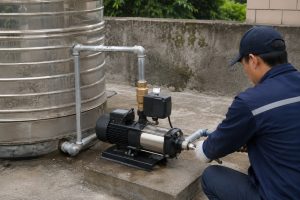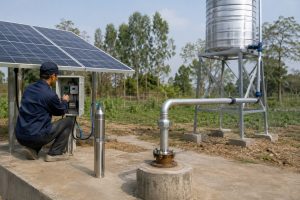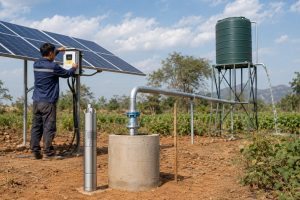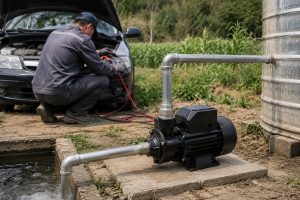
A broken water pump can disrupt your entire household.
Suddenly, you have no water for drinking, cleaning, or bathing.
Finding a solution quickly without overpaying feels overwhelming.
**The cost to replace a standard residential well pump typically ranges from $900 to $3,000.
However, prices can go as low as $200 for simple repairs or exceed $5,000 for complex systems with additional component replacements.
This guide will help you understand the costs involved.**
Understanding the full scope of water pump costs is crucial for homeowners.
The price on the box is only one part of the equation.
Installation labor, well depth, pump type, and potential system upgrades all play a significant role in the final bill.
This article breaks down every factor, from average replacement costs for different pump types to the long-term value of investing in modern, high-efficiency solutions.
We will explore traditional well pumps, specialized HVAC pumps, and the rising popularity of solar-powered systems.
By the end, you will have a clear, comprehensive understanding of what to expect, helping you make an informed and confident decision for your home's water supply.
Understanding the Average Cost to Replace a Water Pump
Your water has stopped running, and you suspect the pump is to blame.
The immediate worry is the cost.
Knowing the average replacement cost helps you budget for this unexpected but essential repair.
**The average cost to replace a well pump is about $1,900.
Most homeowners spend between $976 and $2,825.
This price includes the pump unit itself, professional labor, and basic installation materials.
Complex jobs or high-end pumps can increase the total cost.**
The total cost of a water pump replacement is not a single number.
It varies significantly based on the type of pump your system requires.
Each type is designed for different well depths and water demands, which directly influences its price and the complexity of its installation.
For example, a shallow well pump is far more accessible and cheaper to replace than a submersible pump located hundreds of feet underground.
Understanding these differences is the first step in accurately estimating your potential expenses.
Pump Types and Their Costs
The specific pump model your home needs is the largest single determinant of cost.
A simple hand pump used for backup might only be a few hundred dollars, while a high-performance constant pressure system represents a much larger investment.
The most common residential pumps fall into a few key categories, each with a distinct price range for the unit and its installation.
| Pump Type | Average Replacement Cost (including labor) | Description |
|---|---|---|
| Shallow Well Pump | $900 – $1,800 | For wells less than 25 feet deep. |
| Jet Pump | $1,000 – $2,500 | Used in shallow or moderately deep wells. |
| Submersible Well Pump | $1,500 – $3,000 | Installed deep inside the well; the most common type. |
| Constant Pressure Pump | $2,500 – $5,000 | Provides consistent water pressure, similar to city water. |
| Solar Well Pump | $1,800 – $6,500 | Uses solar panels for power; ideal for off-grid locations. |
Cost Breakdown: Unit vs. Labor
The final bill can be split into two main parts: equipment and labor.
The pump unit itself can account for 40% to 60% of the total cost.
For a standard submersible pump replacement costing around $2,000, the pump might cost $800, with the remaining $1,200 going towards professional labor.
Labor costs typically range from $300 to over $1,000, depending on the job's difficulty.
Replacing a submersible pump is more labor-intensive as it requires specialized equipment to pull hundreds of feet of pipe and wiring from the well.
This process can take a team of professionals several hours, contributing significantly to the overall expense.
Key Factors That Affect Water Pump Replacement Cost
You have a price range, but your specific situation could be at the low or high end.
Many variables influence the final invoice.
Ignoring these factors can lead to unexpected expenses during the replacement process.
**The final cost depends heavily on your well's depth, the pump's size and type, and local labor rates.
Deeper wells require more powerful pumps and more labor to install, driving up the price.
Additional repairs to wiring or pressure tanks will also increase the total cost.**
Several critical factors combine to determine the final cost of your water pump replacement.
It’s not just about the pump itself.
The unique characteristics of your well, the power your home requires, and the condition of the surrounding system components all play a vital role.
A shallow, 20-foot well will always be cheaper to service than a 300-foot deep well.
Likewise, a small ½ horsepower pump for a modest home costs less than a 1+ horsepower pump needed for a large family or small farm.
Let's dive deeper into each of these influencing factors to build a more accurate picture of what your project might entail.
Well Depth and Accessibility
The depth of your well is a primary cost driver.
Shallow wells, defined as those less than 25 feet deep, can use more affordable jet pumps installed above ground.
Deep wells, which can extend hundreds of feet, require submersible pumps.
Replacing a submersible pump is far more complex.
It requires a derrick or pump hoist to pull the old pump, pipe, and electrical wiring out of the well casing.
This specialized equipment and the increased labor time contribute to a higher cost, adding anywhere from $500 to $1,500 to the bill compared to a shallow well pump job.
Accessibility to the wellhead also matters.
If the well is in a cramped space, a basement, or surrounded by landscaping, it can increase labor time by 10-20%.
Pump Size and Power
Water pumps are sized by their horsepower (HP) and flow rate (gallons per minute, or GPM).
The right size depends on your household's water demand and the depth of the well.
- ½ HP Pumps: Suitable for smaller homes and shallow wells.
- ¾ HP Pumps: A common size for average family homes.
- 1 HP and Larger Pumps: Needed for deeper wells, larger homes, or properties with irrigation systems.
A higher horsepower pump costs more upfront.
For example, a 1 HP submersible pump unit can cost 25-40% more than a ½ HP model from the same brand.
While it might be tempting to save money with a smaller pump, undersizing can lead to low water pressure and premature pump failure, costing you more in the long run.
Additional System Components
Often, a pump failure is just one symptom of a larger problem.
During a replacement, a technician may find other components that are worn out or failing.
Replacing these at the same time is cost-effective.
| Additional Component | Average Replacement Cost | Reason for Replacement |
|---|---|---|
| Well Pressure Tank | $800 – $2,500 | A faulty tank can cause the pump to cycle too often, leading to burnout. |
| Pressure Switch | $50 – $200 | This switch tells the pump when to turn on and off; failure leads to no water or a constantly running pump. |
| Electrical Wiring | $100 – $500 | Damaged or corroded wiring is a safety hazard and can cause pump failure. |
| Pump Control Box | $150 – $400 | This component starts the pump and protects the motor; it's often replaced with a submersible pump. |
If your system needs a new pump, pressure tank, and switch, the total project cost could easily approach the $3,000 to $5,000 range.
Choosing the Right Pump: A Look at Modern and Off-Grid Solutions
Your old pump failed, presenting an opportunity.
You could simply replace it, or you could upgrade.
Sticking with outdated technology might mean higher energy bills and less reliability in the long run.
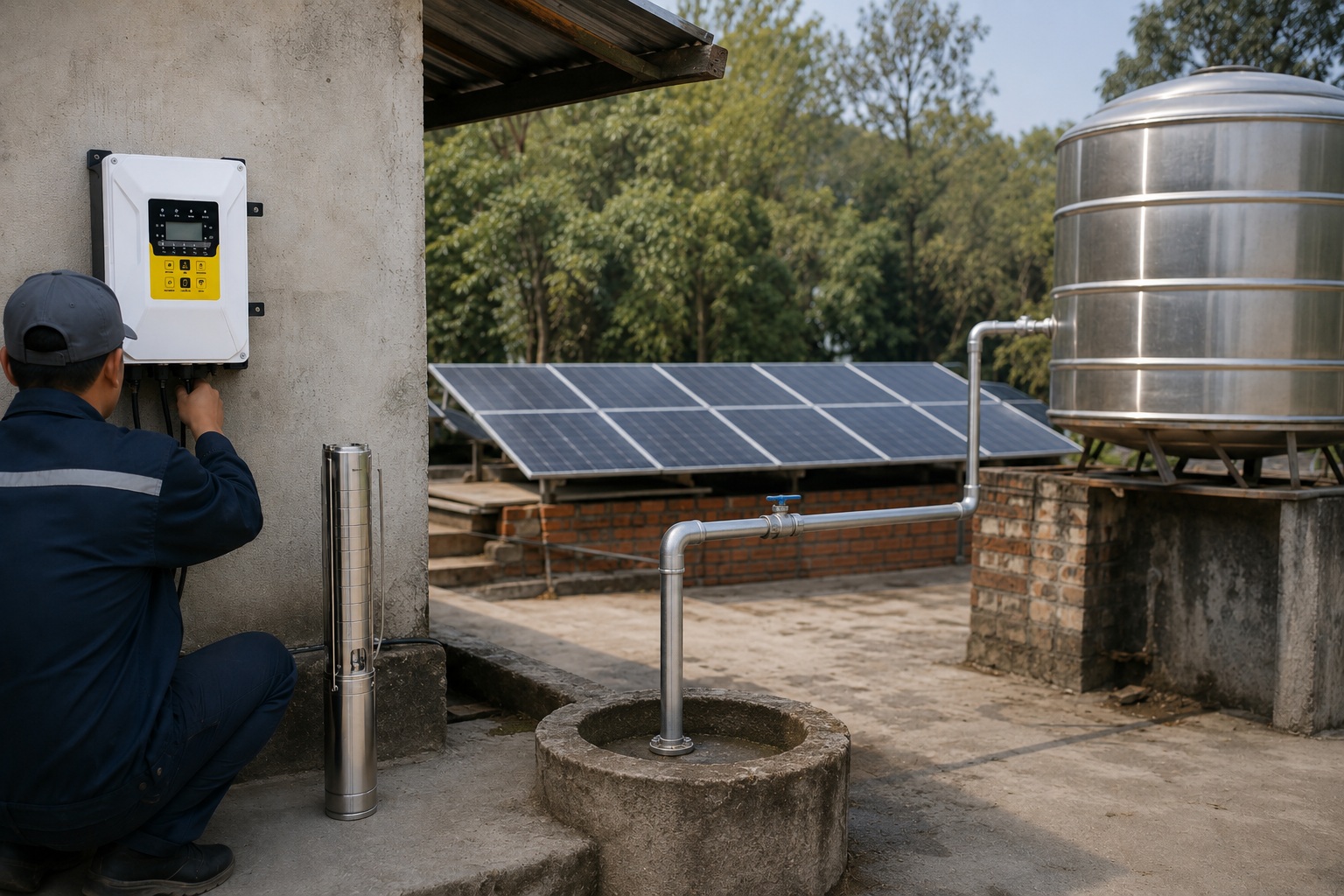
**Modern solar water pumps offer an energy-efficient and sustainable alternative to traditional grid-powered pumps.
These systems are ideal for off-grid locations and can significantly reduce long-term operating costs.
They are becoming increasingly popular for their reliability and environmental benefits.**
The world of water pumps has evolved beyond traditional electric models.
With a growing global focus on sustainability and energy independence, solar water pumps have emerged as a powerful and cost-effective solution.
These systems are no longer just for remote, off-grid cabins.
They are now a competitive option for homes, farms, and livestock operations in areas with abundant sunshine, such as Africa, Australia, and the Americas.
Powered by high-efficiency brushless DC motors, these pumps offer a reliable water supply without relying on the grid.
Let's explore the three most popular types of solar deep well pumps and understand how they meet diverse water needs.
1. The Solar Screw Pump: For Deep Wells and High Head
This pump is a workhorse for deep water sources.
It uses a stainless steel screw rotating inside a rubber stator.
This mechanism pushes water upwards through compression.
It's designed for low flow but can achieve a very high head, meaning it can lift water from great depths.
- Best Applications: Domestic water supply for deep wells, livestock drinking troughs, and small-scale drip irrigation. It is particularly valuable in electricity-scarce regions.
- Advantages: Its key advantage is the ability to handle sand and sediment without clogging, making it highly durable in harsh water conditions. It can efficiently draw water from wells over 300 feet deep.
- Limitations: The flow rate is limited, making it unsuitable for applications requiring large volumes of water quickly, like flood irrigation for large farms.
2. The Solar Plastic Impeller Pump: For High Flow and General Use
This is a multi-stage centrifugal pump.
It is equipped with durable, wear-resistant plastic impellers.
Its design prioritizes moving large volumes of water at a medium head.
This makes it an excellent all-around choice for many agricultural and residential uses.
- Best Applications: Farm irrigation, filling large stock tanks, pasture water supply, and residential garden systems.
- Advantages: It delivers a high flow rate, often exceeding 30 GPM. It is also lightweight and generally more economical than its stainless steel counterpart, representing a 20-30% cost saving on the unit price. Its excellent resistance to fine sand makes it reliable for general use.
- Limitations: In highly corrosive water or very deep wells, the plastic components may not have the longevity of stainless steel.
3. The Solar Stainless Steel Impeller Pump: For Premium Quality and Corrosion Resistance
This pump is built for durability in challenging environments.
It features a full SS304 stainless steel impeller and pump body.
This construction makes it highly resistant to corrosion from acidic or alkaline water.
It offers high flow rates and can handle medium-to-high head requirements.
- Best Applications: Water sources with unusual pH levels, coastal areas with saltwater intrusion risk, and high-end homes or ranches demanding maximum reliability. It's a popular choice in regions with alkaline soil, like parts of Australia.
- Advantages: Superior corrosion resistance ensures a very long service life, often 50% longer than other types in harsh conditions. It maintains high performance and reliability over its lifespan.
- Limitations: This premium quality comes at a higher cost, typically 30-50% more than a plastic impeller model. It is also heavier, which can slightly increase installation complexity.
The Power Behind the Pump: The BLDC Motor
All three of these advanced solar pumps are powered by a Brushless DC (BLDC) permanent magnet motor.
This motor is the system's core, with an efficiency exceeding 90%.
This is a significant improvement over traditional AC motors, which often operate at 60-75% efficiency.
This high efficiency means the pump system requires up to 30% fewer solar panels to do the same amount of work, directly reducing the initial system cost.
The motor's maintenance-free design and long service life further enhance its value, making solar pumps a smart long-term investment.
Some systems also offer hybrid AC/DC controllers.
This allows the pump to run on solar power when the sun is out and automatically switch to grid power or a generator on cloudy days or at night, ensuring a 24/7 water supply.
DIY vs. Hiring a Pro: Is It Worth the Risk?
Your pump is broken, and you're handy around the house.
You might be tempted to save money by replacing it yourself.
However, a well pump replacement is not a typical weekend DIY project.
**Replacing a well pump is a complex and potentially dangerous task.
It involves heavy lifting, specialized equipment, and high-voltage electrical work near water.
For safety and reliability, hiring a licensed professional is strongly recommended.
The cost of a mistake can far exceed the savings.**
While the appeal of saving on labor costs—which can be $500 to $1,000 or more—is understandable, the risks associated with a DIY well pump replacement are substantial.
This is particularly true for submersible pumps, which are the most common type in modern wells.
These pumps are located hundreds of feet underground, attached to a long, heavy column of pipe filled with water.
Attempting to pull this assembly by hand is not only difficult but also dangerous.
Dropping the pump down the well can cause irreparable damage to the well casing, a mistake that could cost over $10,000 to fix by drilling a new well.
Let's break down the specific challenges and why professional installation provides peace of mind and long-term value.
The Challenge of Heavy Lifting and Specialized Tools
A professional well service company arrives with a derrick truck or a portable pump puller.
This equipment is designed to safely and efficiently hoist the pump, pipe, and wiring from the well.
A 200-foot column of 1.25-inch pipe filled with water can weigh over 300 pounds.
Without the proper equipment, there is a high risk of losing control of the pipe, damaging the wiring against the well casing, or dropping the entire assembly.
The cost of a pump puller alone is several thousand dollars, making professional hire far more economical for a one-time job.
The Danger of Electrical Work
Water and electricity are a deadly combination.
A well pump, especially a 240-volt submersible model, involves high-voltage wiring.
Incorrectly wiring the pump, control box, or pressure switch can result in a short circuit that destroys the new pump motor.
Worse, it creates a severe electrocution hazard.
A licensed technician understands the electrical codes and safety protocols.
They ensure all connections are watertight and properly grounded, protecting both your investment and your family.
The cost of an emergency room visit or replacing a brand-new, fried pump motor vastly outweighs the $75 to $150 per hour labor charge for a professional.
The Complexity of System Diagnosis
Sometimes, the pump itself isn't the only problem.
Low water pressure or a pump that won't turn on could be caused by a faulty pressure tank, a bad pressure switch, a leak in the pipe, or a problem with the well itself.
A DIYer might replace the pump only to find the problem persists.
Professionals have the diagnostic tools and experience to test the entire system.
They check the pressure tank's air charge, test the electrical components, and inspect the pipes for leaks.
This ensures the root cause is fixed correctly the first time, saving you the time, money, and frustration of repeat work.
Hiring a pro isn't just paying for labor; it's investing in expertise, safety, and the assurance that your water system will work reliably for years to come.
Signs Your Water Pump Needs Replacement
Your water system seems a bit off, but you're not sure why.
Is it a minor issue or a sign of total pump failure?
Ignoring the early warning signs can lead to a sudden, complete loss of water and a more expensive emergency repair.
**Common signs of a failing well pump include low or fluctuating water pressure, strange noises, and air sputtering from faucets.
If your pump runs constantly or your electricity bills spike unexpectedly, it is time to call a professional for an inspection.**
A well pump rarely fails without warning.
It typically provides clues that it is wearing out and struggling to do its job.
Learning to recognize these symptoms allows you to be proactive, scheduling a service call before you are left without water.
An early diagnosis might even allow for a less expensive repair rather than a full replacement.
If you notice any of the following issues, it is a strong indication that your well pump or a related component in your water system is in trouble.
Let's examine each of these signs in more detail.
1. Low or Inconsistent Water Pressure
This is the most common symptom of a failing pump.
If your showers feel weaker or faucets don't deliver a strong stream, the pump's impellers may be worn out.
The pump can no longer generate enough force to push water into your home's pressure tank effectively.
This can also be a sign of a leak in the drop pipe within the well, or a clogged sediment filter.
A 30-50% drop in normal water pressure is a clear signal to investigate.
2. Air Sputtering From Faucets
When you turn on a tap and it spits and sputters air before a steady stream appears, it often points to a problem in the well.
This can be caused by a crack in the drop pipe that connects the pump to the surface, allowing air to be drawn into the system.
It could also mean the pump is set too high in the well and the water level has dropped below it, causing the pump to draw in air.
This is a serious issue that can quickly damage the pump motor.
3. Strange Noises
Your well pump system should operate relatively quietly.
Loud or unusual noises are a red flag.
- Grinding or Grating: This often indicates that the pump's bearings are worn out or that sand and sediment are being pulled through the pump, causing damage to the impellers.
- Constant Clicking: This can be a sign of a faulty pressure switch or a problem with the pressure tank, causing the pump to cycle on and off rapidly.
4. Pump Runs Continuously
A well pump is designed to run only until the pressure tank is full, then shut off.
If you can hear the pump running constantly, even when no water is being used, it signifies a major problem.
This could be a significant leak in your plumbing system, a broken check valve, or a pump that is so worn out it can no longer reach the cut-off pressure set by the pressure switch.
A constantly running pump will not only wear out quickly but also cause a dramatic increase in your electricity bill, sometimes by 50% or more.
5. Dirty Water
If your water suddenly appears cloudy, sandy, or muddy, it could mean the well pump has shifted or is failing.
A failing pump might not be filtering sediment properly.
It could also be creating enough vibration to stir up sediment at the bottom of the well.
This is a sign that the pump is too large for the well or that the well screen itself has been compromised.
What Is the Lifespan of a Water Pump?
You've invested in a new water pump.
How long will it last before you face this expense again?
Understanding the expected lifespan helps you plan for future maintenance and replacement costs.
**Most residential well pumps last between 8 and 15 years.
However, a pump's lifespan can vary greatly depending on its quality, usage frequency, and water conditions.
Proper maintenance can help extend the life of your pump significantly.**
The 8-to-15-year figure is a widely accepted average, but it is not a guarantee.
Some high-quality pumps in ideal conditions can last for 20 years or more, while others in harsh environments might fail in as little as 5 years.
Several key factors influence how long your specific pump will operate efficiently.
Being aware of these factors can empower you to take steps that maximize your pump's longevity, pushing it toward the higher end of its expected lifespan.
Protecting your investment involves more than just the initial installation; it requires an understanding of the forces that act on your pump every day.
Key Factors Affecting Pump Lifespan
Not all pumps are created equal, and not all wells are the same.
The longevity of your pump is a direct result of its working conditions.
- Pump Motor Quality: A pump with a high-quality, efficient motor, such as a BLDC motor in a solar pump, will generally outlast a cheaper, less efficient model.
- Frequency of Pump Cycling: The more often your pump starts and stops, the more wear and tear it experiences. A properly sized pressure tank reduces cycling and extends pump life. A pump that cycles every 30 seconds will fail much faster than one that cycles every 2 minutes.
- Water Quality: Hard water with high mineral content can cause scale buildup inside the pump, reducing efficiency and leading to failure. Water with a high concentration of sand or sediment is abrasive and will wear down the pump's impellers and bearings prematurely. Pumps in sandy wells may last only half as long as those in clean water.
- Well Depth: Pumps in deeper wells have to work harder to lift water to the surface, putting more strain on the motor and components.
How to Extend Your Pump's Life
While you can't change your well's depth or water quality, you can take proactive steps to get the most out of your pump.
Regular maintenance is key.
Consider having your well system professionally inspected every 3 to 5 years.
A technician can check the pressure tank's air charge, test the pump's amperage draw to ensure it's running efficiently, and inspect for any early signs of trouble.
Installing a sediment filter before the pressure tank can also help protect your pump and entire plumbing system if you have sandy water.
For submersible pumps, ensuring it is installed at the correct depth—not too close to the bottom of the well—can prevent it from sucking up excessive sediment.
These small, preventative measures can delay a costly replacement by several years.
Conclusion
The cost of a water pump varies widely.
It depends on the pump type, well conditions, and labor.
Planning for this expense and choosing the right pump ensures a reliable water supply.
FAQs
How do I know if my well pump or pressure tank is bad?
If your water pressure sputters or the pump cycles frequently, the pressure tank may be bad.
If you have no water or very low pressure, the pump itself is more likely the issue.
How long does it take to replace a well pump?
A straightforward well pump replacement typically takes 2 to 4 hours.
Complex jobs, especially in deep wells or with additional component failures, can take a full day to complete.
Can a well pump be repaired?
Yes, minor issues like a failed pressure switch or control box can often be repaired.
However, if the pump motor has failed or the internal parts are worn, a full replacement is usually more cost-effective.
What is the most common reason for well pump failure?
The most common reason is wear and tear from age and frequent cycling.
Other causes include damage from sediment, electrical surges, or running dry if the water level in the well drops too low.
Is it expensive to fix a well pump?
Minor repairs, like replacing a pressure switch, can cost between $100 and $300.
Major repairs or a full replacement will be more expensive, typically ranging from $900 to $3,000.
How much does a 1 HP well pump cost?
A 1 HP submersible pump unit alone typically costs between $500 and $1,200, depending on the brand and features.
The total replacement cost, including labor, will be higher.
What size well pump do I need for my house?
For an average-sized home, a ¾ or 1 HP pump providing 10-12 gallons per minute (GPM) is usually sufficient.
A professional can perform a water demand calculation to determine the perfect size.
Should I replace my well pump before it fails?
If your pump is over 15 years old and showing signs of wear, proactively replacing it can prevent a no-water emergency.
This allows you to schedule the work conveniently and avoid higher emergency service fees.