Struggling with a flooded basement or an arid farm?
Choosing the wrong pump wastes time and money, making your water problem even worse.
To choose the right pump, you must first identify your primary application. Then, calculate your required flow rate (GPM) and total head lift. Finally, match these needs with a quality pump type, whether for drainage, irrigation, or domestic use.
Making the right choice feels complex with so many models and specifications.
But it does not have to be.
This guide breaks down everything you need to know, step-by-step.
It will help you select the perfect water pump for any job.
Let's dive in and find your solution.
What Are the Main Types of Water Pumps?
Your pumping task is unique, but the market is flooded with options.
How do you pick the one designed specifically for your application without getting overwhelmed?
The main types are defined by their application. General pumps handle drainage, while specialized solar pumps, like screw, plastic impeller, and stainless steel impeller models, are designed for off-grid domestic use, irrigation, and handling specific water conditions with high efficiency.
Every pumping task is different.
Pumps are engineered differently to match their specific application.
Understanding these categories is the first step toward building a product portfolio that meets diverse customer demands, from homeowners to large-scale agricultural operations.
For distributors, offering a flexible range is key to capturing a wider market share.
Let's explore the most common types and their ideal uses.
General Purpose and Specialized Pumps
Water pumps can be broadly categorized by their power source and intended use.
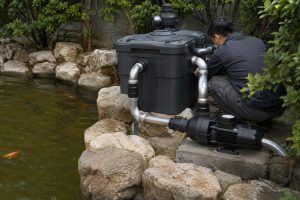
Traditional electric pumps are excellent for indoor applications like basements, where power is readily available.
Gas-powered pumps offer portability for job sites without electricity.
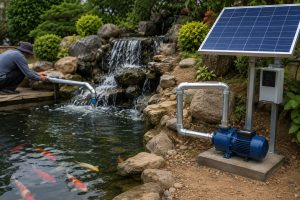
However, a rapidly growing category is solar-powered pumps.
These have become essential in off-grid regions across Africa, the Americas, Australia, and Asia.
They are environmentally friendly, cost-effective in the long run, and operate independently of any power grid.
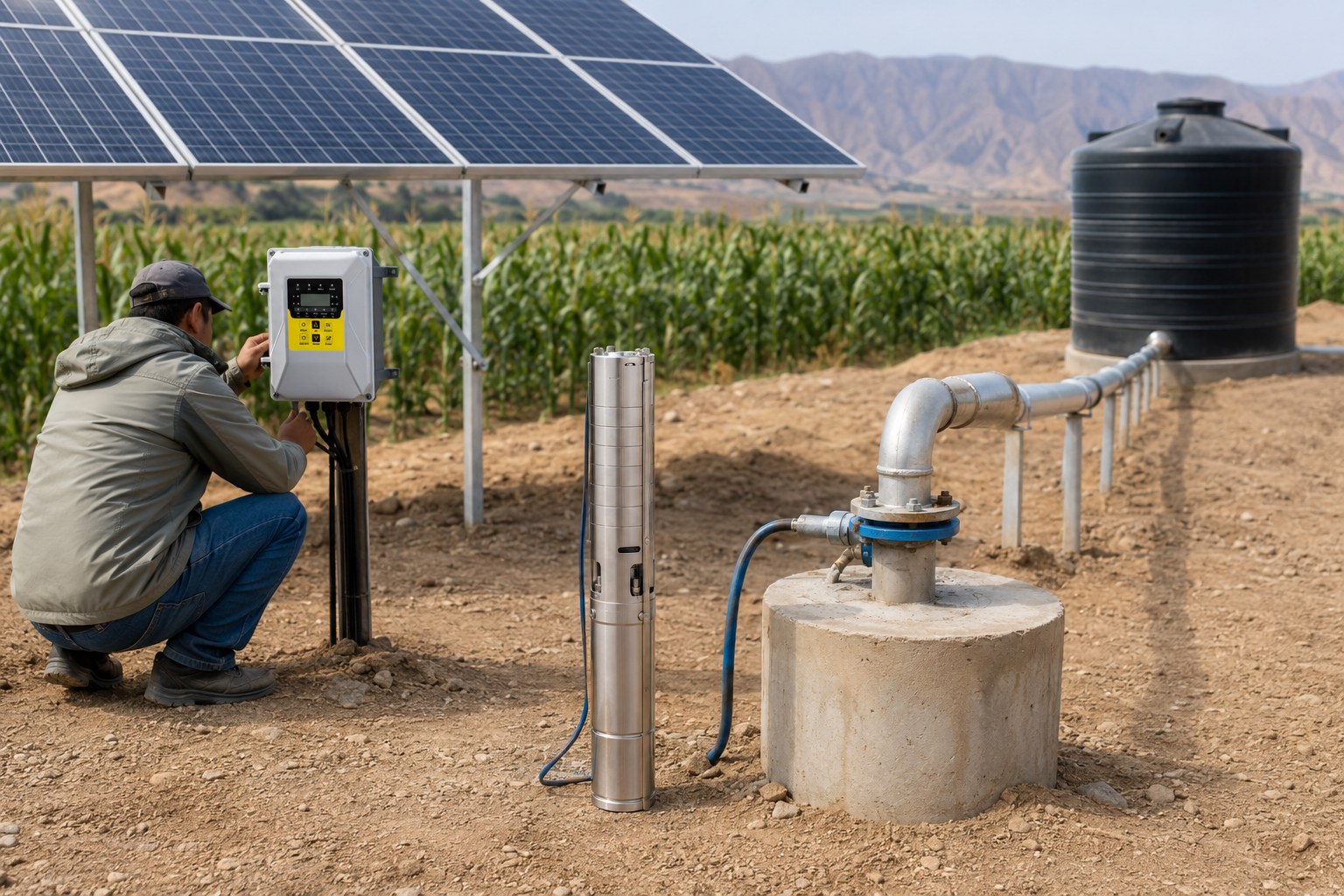
Within the solar category, three models have emerged as the most popular for deep well applications.
A Closer Look at Solar Deep Well Pumps
Specialized solar pumps offer solutions tailored to very specific water conditions and needs.
They are typically driven by high-efficiency brushless DC (BLDC) motors, forming a complete and competitive product portfolio for any distributor.
-
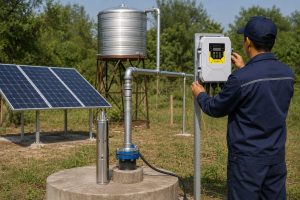
Solar Screw Pump: This pump uses a stainless steel screw inside a rubber stator. It pushes water through compression, delivering low flow but an exceptionally high head. It excels in deep wells and can handle sandy or harsh water conditions, making it ideal for domestic water supply and livestock in electricity-scarce regions.
-
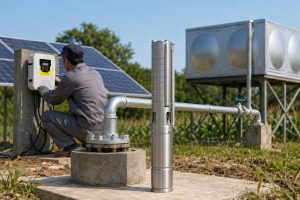
Solar Plastic Impeller Pump: This is a multi-stage centrifugal pump. It is equipped with a durable, wear-resistant plastic impeller. This design delivers high flow rates and a medium head, perfect for farm irrigation and pasture water supply. Its lightweight and economical nature makes it a top choice in Africa and the Americas.
-
Solar Stainless Steel Impeller Pump: This premium model features an SS304 stainless steel impeller and pump body. It is designed for corrosive water environments, such as areas with acidic or alkaline conditions. It offers high flow and a medium-to-high head, serving high-end homes and ranches in regions like Australia and parts of the Americas.
Matching the Pump to the Job
The key is to match the pump’s strengths to the application's demands.
A screw pump is perfect for a deep, narrow well supplying a home.
A plastic impeller pump can efficiently irrigate several acres of farmland.
A stainless steel impeller pump provides a durable solution for regions with poor water quality, ensuring a long service life and high reliability.
This targeted approach ensures end-users get the performance they expect, building trust in your product line.
| Pump Type | Flow Rate | Head Lift | Key Advantage | Ideal Application |
|---|---|---|---|---|
| Solar Screw Pump | Low | Very High | Sand-resistant, deep well capability | Domestic use, livestock water in deep wells |
| Solar Plastic Impeller Pump | High | Medium | Wear-resistant, high water output, economical | Farm irrigation, pasture water supply, gardens |
| Solar Stainless Steel Pump | High | Medium-High | Corrosion-resistant, long service life | Acidic/alkaline water, high-end homes |
How Do I Size a Water Pump Correctly?
You bought a new pump, but it is not moving enough water.
A pump that is sized incorrectly is inefficient and can even lead to premature failure and damage.
To size a pump correctly, calculate your required flow rate in Gallons Per Minute (GPM). Then, measure the suction head and total head lift to determine the power needed. Always match the hose size to the pump's inlet to avoid damage.
To ensure your pump delivers the results you and your customers expect, it must be sized correctly.
This is where technical specifications become critical.
Ignoring these details can lead to an underperforming system, customer complaints, and costly replacements.
You must calculate three essential ratings to determine the right power level for any job.
Getting these numbers right is the foundation of an effective water-moving solution.
Calculating Your Required Flow Rate (GPM/LPS)
The first metric is the flow rate.
This measures how many gallons the pump can move in one minute (GPM) or liters per second (LPS).
This figure is determined by two factors.
First is the total volume of water you need to move.
Second is the time you want to accomplish the task in.
For example, draining a 1,200-gallon flooded basement in an hour requires a flow rate of at least 20 GPM (1,200 gallons / 60 minutes).
For agricultural irrigation, the calculation would be based on the water needs of the crops over a specific area.
A pump with a higher discharge capacity ("Q") is needed if you need to move more water quickly.
Determining Total Head Lift (THL)
Total Head Lift (THL) is the ultimate measurement of a pump’s capability.
It represents the total height from the water source to the final discharge destination.
A pump's power is often measured by how high it can pump water against the force of gravity.
THL is the sum of the suction head, vertical discharge height, and any friction loss from pipes and hoses.
For instance, if you are pumping water from a basement 10 feet deep (suction head) to a hose that drains at street level 5 feet above the pump, your total head is over 15 feet.
The pump you choose must have a maximum head rating greater than your calculated THL.
The Importance of Suction Head (SH)
Suction Head (also called vertical suction lift) is a component of THL.
It is the vertical distance from the water source up to the pump itself.
This is crucial when you are draining a pond or a flooded underground room.
You must ensure the pump is capable of pulling water up that initial distance before it can begin pushing it toward the discharge point.
A pump's pulling capability decreases as this distance increases.
Why You Should Never Reduce the Inlet Size
This is a critical pro tip for installation.
When connecting your hoses, always match the size of your suction inlet hose exactly to the pump’s inlet fitting.
For instance, a 3-inch pump requires a 3-inch inlet hose.
Never reduce the diameter of the inlet hose, such as by using a 2-inch hose on a 3-inch pump.
This restriction starves the pump of water, reduces flow efficiency by up to 40-50%, and can cause cavitation.
Cavitation is the formation of air bubbles, which can severely damage the pump’s internal components over time.
Electric, Gas, or Solar: Which Power Source is Best?
Your pump needs power, but your job site is off-grid.
Relying on traditional power sources can be costly, noisy, and severely limit where you can work.
Electric pumps are for indoor use, and gas pumps offer portable power. Solar pumps are the most versatile, providing clean, cost-effective energy anywhere. They are ideal for remote regions in Africa, the Americas, and Australia, operating independently of the power grid.
The first major decision in choosing a pump is how you will power it.
This choice often dictates where you can use the pump and its long-term operating costs.
While traditional options have their place, modern solutions are opening new possibilities for water access globally.
Understanding the pros and cons of each power source is essential for distributors aiming to serve a broad and evolving market.
Let's break down the options.
Traditional Power Sources: A Trade-Off
Electric and gas pumps have been the standard for decades.
-
Electric Pumps: These are generally quieter, lighter, and require less maintenance than gas models. They are perfect for indoor use, such as a sump pump in a basement, where a consistent power source is available. Their main limitation is their reliance on a nearby electrical outlet.
-
Gas Pumps: These are the workhorses for remote job sites where portability and high power are needed. They are not dependent on the grid. However, they are noisy, produce fumes (making them unsuitable for enclosed spaces), and require regular refueling and maintenance.
The Solar Revolution in Water Pumping
Solar-powered water pumps have changed the game, especially in developing regions and for sustainable agriculture.
They run on free, abundant energy from the sun.
This eliminates fuel costs and reduces the carbon footprint.
Their independence from the power grid makes them the only viable solution for remote farms, villages, and livestock operations.
The initial investment is offset by near-zero running costs and minimal maintenance requirements.
This makes the total cost of ownership significantly lower over the pump's lifespan.
The Powerhouse: High-Efficiency BLDC Motors
The core of modern solar pumps is the Brushless DC (BLDC) permanent magnet motor.
This is not just any motor.
It is a piece of advanced technology that defines the pump's overall performance.
These motors achieve efficiencies exceeding 90%, compared to the 60-75% efficiency of typical AC motors.
The rotor is made from high-strength 40SH neodymium iron boron magnets, providing powerful torque in a compact design.
As a result, these motors are up to 47% smaller and 39% lighter than their traditional counterparts.
This high efficiency means fewer solar panels are needed, which lowers the system's initial cost by 15-25% and simplifies installation.
Smart Pumping with AC/DC Hybrid Technology
What happens on a cloudy day or at night?
The latest innovation addresses this challenge with AC/DC hybrid controllers.
These smart systems can be connected to both solar panels and an AC power source (like the grid or a generator) simultaneously.
The controller automatically prioritizes solar power when sunlight is available.
If solar energy is insufficient, it seamlessly blends in AC power or switches to it completely.
This ensures a reliable, 24/7 water supply without manual intervention.
It offers the best of both worlds: the cost savings of solar and the reliability of traditional power.
What Defines a High-Quality Water Pump?
A cheap pump seems like a good deal initially.
But frequent leaks, failures, and costly engine damage from overheating quickly reveal the true price of low quality.
A high-quality pump features durable materials like carbon ceramic seals and precision-machined housings. It meets or exceeds original equipment (OE) specifications for form and fit, ensuring reliability, longevity, and protecting your investment from costly repairs and downtime.
When evaluating a water pump, long-term reliability should be the top priority.
A failed pump does not just stop moving water.
It can lead to catastrophic damage, whether it is a flooded property or a ruined vehicle engine.
For distributors and repair shops, providing high-quality parts is not just about selling a product.
It is about protecting your customer's investment and your professional reputation.
Lower-cost options often lead to more comebacks and dissatisfied clients.
Let's examine the specific features that separate a premium pump from an inferior one.
Materials Matter: The Anatomy of a Durable Pump
The quality of a pump is determined by the components inside it.
Inferior parts wear out quickly, leading to leaks and failures.
Look for pumps built with superior materials designed for longevity.
- Seals: Premium-grade carbon ceramic mechanical seals offer superior temperature resistance and a much longer life than standard rubber seals. This is the first line of defense against leaks.
- Bearings: Robust, factory-installed bearings ensure smooth operation and can withstand the constant stress of pumping. Pre-installation in-house by the manufacturer guarantees proper fit and function.
- Housing: Look for CNC-machined housings. This process ensures exact tolerances, leading to maximum coolant or water flow and preventing operational issues.
- Impellers: High-flow impellers made from durable materials like SS304 stainless steel or reinforced polymers provide efficient circulation, even under tough conditions.
Engineering and Performance Standards
A quality pump should require no guesswork during installation.
The best aftermarket pumps are engineered to match Original Equipment (OE) specifications for form, fit, and function.
This means the bolt patterns, shape, and pulley size are identical to the original part, guaranteeing a seamless replacement.
This precision eliminates the need for modifications, saving valuable time and labor during installation.
It also ensures the pump operates as the original system designer intended, maintaining peak performance and efficiency.
The Value of Rigorous Quality Control
Reputable manufacturers invest heavily in quality control.
Every single pump should undergo a series of rigorous inspections and tests before it leaves the facility.
This includes checks for leaks, bearing noise, and flow rate.
Furthermore, look for products that meet international certifications like CE, IEC, and RoHS.
Advanced testing, such as 144-hour salt spray tests for corrosion and 1000-hour UV resistance tests, demonstrates a commitment to building a product that can survive in the harshest environments.
Why Partnering with a Reputable Supplier is Key
Ultimately, the easiest way to ensure quality is to buy from a trusted source.
Established brands with a history of manufacturing experience have refined their processes over decades.
They stand behind their products and provide consistent quality from one order to the next.
Partnering with a reputable manufacturer avoids installation issues, reduces the risk of premature failures, and gives you and your customers peace of mind.
It protects the end-user's asset and your reputation as a reliable distributor.
Conclusion
Choosing the right water pump means matching the type, size, power, and quality to your needs.
This ensures efficient, reliable, and cost-effective water management for any application.
FAQs
What is a good GPM for a water pump?
A good GPM depends on the task. For draining a small basement, 20-40 GPM is sufficient. For agricultural irrigation, you might need over 100 GPM.
What are the 3 main types of pumps?
The three main functional types are submersible pumps (placed in water), centrifugal pumps (using an impeller to move water), and diaphragm pumps (for low-flow applications).
What is the difference between head and lift in a pump?
Lift (or suction head) is the vertical distance from the water to the pump. Head (or total head) is the total vertical distance from the water to the final discharge point.
How much HP do I need for a water pump?
Horsepower (HP) depends on the required flow rate (GPM) and total head. A higher head or GPM requires more HP. There is no single answer; it must be calculated.
Is a higher GPM better for a water pump?
Not always. A higher GPM is only better if you need to move a large volume of water quickly. An oversized pump can be inefficient and waste energy.
How do I choose a submersible well pump?
To choose a submersible pump, you need to know the well's depth, the well's recovery rate, and your household's peak water demand in GPM.