A broken pump turns your sparkling oasis into a stagnant pond.
Don't let algae and bacteria ruin your fun.
You can typically leave a pool without a pump for 1-3 days. However, water quality degrades much faster in hot weather, often showing cloudiness within 24 hours. Acting quickly is crucial to prevent the water from turning green and requiring costly, time-consuming treatments to fix.
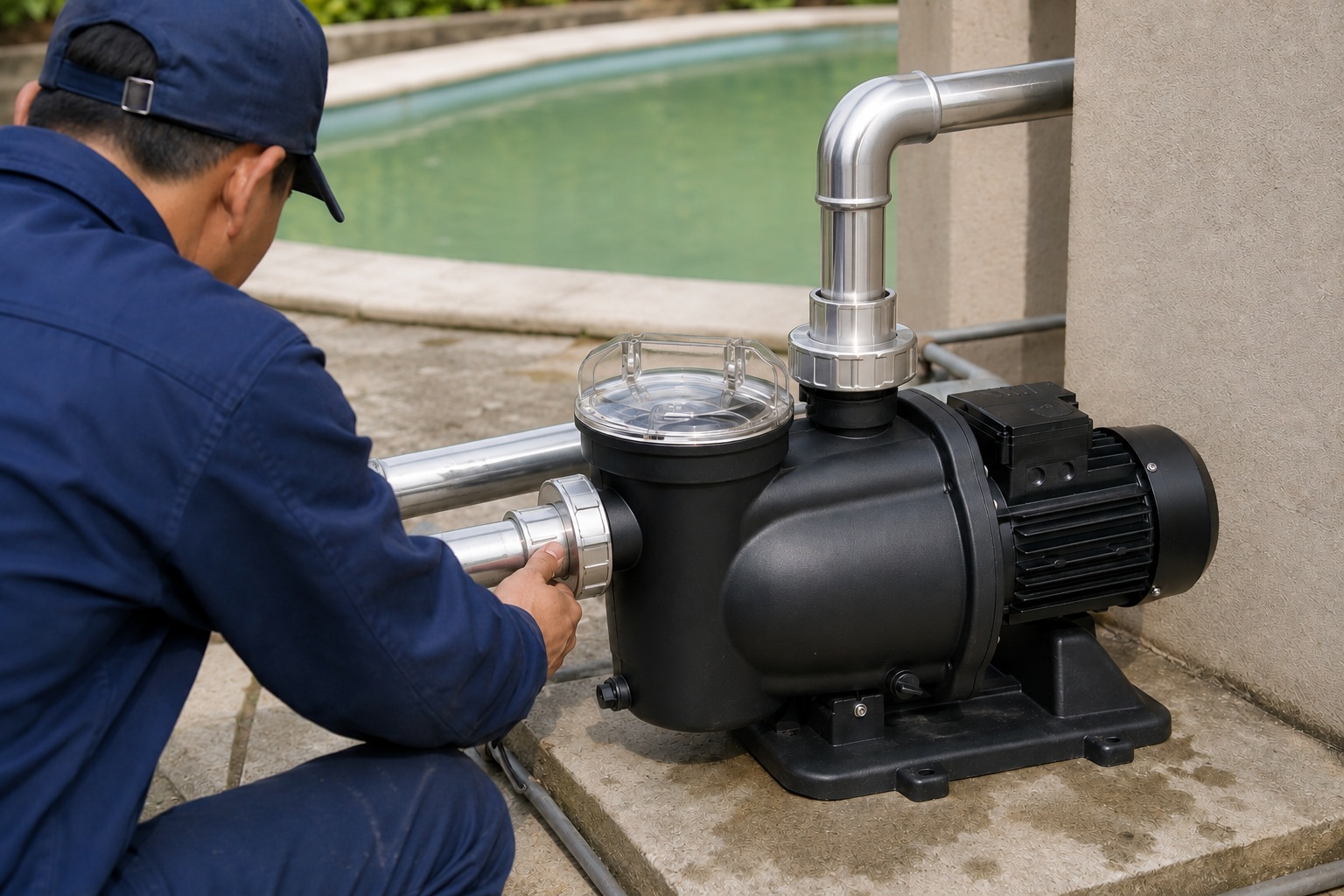
A pool pump is the heart of your pool's circulation system.
It's the single most important piece of equipment for maintaining clean, safe, and clear water.
When it stops working, whether from a power outage or mechanical failure, the countdown begins.
Understanding how quickly your pool can deteriorate and what steps to take can save you from a green, swampy mess.
This guide will walk you through the risks and provide practical solutions to manage your pool until the pump is back online.
Why Pool Pumps Are Essential for Water Circulation
Your pool pump is the lifeblood of your pool.
Without it, the water becomes stagnant and dirty.
Think of it as the system's heart, keeping everything clean and balanced.
A pool pump is essential because it powers the circulation system. It pushes water through the filter to remove debris, distributes chemicals evenly to sanitize the water, and prevents stagnation. This constant motion is critical for stopping algae and harmful bacteria from taking over your pool.
A pump does more than just move water.
It creates a healthy aquatic environment.
Without this circulation, your pool quickly transforms from a source of enjoyment into a significant problem.
The entire system, from filters to chemical feeders, relies on the flow generated by the pump.
Stagnant water is a breeding ground for contaminants.
This is why understanding the pump's role is the first step in appreciating the urgency when it fails.
The Heart of the Pool System
The pump pulls water from the pool through skimmers and the main drain.
It then pushes this water through the filter, where dirt, debris, and other impurities are captured.
After filtration, the clean water passes through heaters (if any) and chemical feeders before returning to the pool.
This cycle is known as "turnover," and a residential pool should ideally have its entire volume of water turned over at least once every 8-12 hours.
This process ensures that every drop of water is filtered and sanitized regularly.
It keeps the water clear, prevents chemical "hot spots," and makes it harder for algae to attach to surfaces.
What Happens When Circulation Stops?
When the pump stops, this entire cycle halts.
The consequences are immediate and compound over time.
- Debris Accumulation: Leaves, dirt, and other debris that would normally be pulled into the skimmer or filter instead sink to the bottom. They begin to decay, creating a food source for bacteria and algae.
- Chemical Imbalance: Sanitizers like chlorine are no longer distributed. The chlorine in the pool will quickly get used up by sunlight and contaminants, with levels dropping by over 50% in the first 48 hours. Pockets of untreated water become havens for pathogens.
- Algae and Bacteria Growth: Stagnant, warm water is the perfect environment for algae and bacteria to multiply. Algae spores are always present in the environment. Without moving water and consistent sanitization, they can bloom across your pool surfaces in just a few days.
Consequences of No Circulation
| Timeframe | Chemical Impact | Physical Appearance | Health Risk |
|---|---|---|---|
| 0-24 Hours | Chlorine levels begin to drop. pH can start to drift. | Water may still look clear. Fine debris starts settling on the floor. | Low |
| 24-72 Hours | Chlorine levels drop below 30% of the effective range. | Water becomes visibly cloudy. A slimy feel may develop on walls. | Moderate. Bacteria levels increase. |
| 3-7 Days | Chlorine is nearly gone. Algaecides are ineffective without circulation. | Green, yellow, or black algae blooms appear. Foul odors may develop. | High. Unsafe for swimming. Mosquito breeding ground. |
Timeline of Water Quality Degradation
Your pump is dead.
The clock is officially ticking.
Your pristine pool water is on a rapid journey toward becoming a green, murky swamp.
In most pools, noticeable decline begins within 24 to 48 hours. By day three, chlorine levels plummet, making the water unsafe. By day four or five, visible algae patches often appear on walls and the floor. In under a week, the pool can become completely green.
The speed of this decline can be shocking.
A pool that was crystal clear on Monday can be a cloudy mess by Wednesday and a green pond by Friday.
This is especially true during hot summer months.
Knowing this timeline helps you understand why immediate action is not just recommended, but necessary.
Let's break down what happens day by day.
The First 24 Hours: The Silent Decline
During the first day without a pump, you might not notice much of a change.
The water likely still looks clear and inviting.
However, below the surface, the degradation has already started.
Fine dust and small debris that are normally swept into the filter begin to settle on the pool floor.
The sun's UV rays start breaking down the free chlorine in the top layer of the water, and without circulation, this sanitized water isn't being replaced.
The chemical balance starts to shift, even if it's not yet visible to the naked eye.
Days 2-3: The Chemical Imbalance
This is when you'll start to see real problems.
Chlorine levels can drop by more than 50% during this period.
Without an effective sanitizer, bacteria begin to multiply rapidly.
The water will start to look hazy or cloudy as microscopic particles are no longer being filtered out.
You might notice a slimy feeling on the pool steps or walls, which is an early sign of biofilm and algae formation.
The water is now becoming unsanitary and unsafe for swimming.
Days 4-7: The Algae Invasion
By this point, the battle is often lost without intervention.
With almost no chlorine left and plenty of nutrients from settled debris, algae spores begin to bloom.
You'll see green, yellow, or even black patches forming on the pool surfaces.
The water will likely be very cloudy and may have a distinct green tint.
In warm or rainy weather, this process can happen even faster.
The pool is now a breeding ground for mosquitoes and other pests.
Fixing the pool at this stage is no longer a simple matter of turning the pump back on; it will require an expensive and labor-intensive cleanup process.
Factors That Affect How Quickly a Pool Deteriorates
Not all pools surrender to stagnation at the same rate.
A hot, sunny day can destroy your water quality.
Meanwhile, a cool, covered pool might hold on for longer.
High temperatures and direct sunlight are the biggest factors, as they accelerate chlorine loss and algae growth. Other key elements include recent rainfall, high swimmer use, debris from nearby trees, and the pool's initial chemical balance. The condition of your equipment also plays a role.
Several variables determine how long your pool can last without circulation.
Understanding these factors can help you predict how quickly you need to act.
If your pool is exposed to multiple negative factors, your window of time before serious issues arise could be less than 24 hours.
Let's examine these factors more closely.
Weather's Impact on Water Quality
Weather is arguably the most significant external factor.
- Temperature: For every 10°F (5.6°C) increase in temperature above 80°F (27°C), a pool's chlorine consumption can double. In a hot climate, a pump failure is a critical emergency.
- Sunlight: The sun's UV rays break down chlorine. On a bright, sunny day, you can lose up to 90% of your pool's unstabilized chlorine in just two hours without a pump circulating cyanuric acid (stabilizer).
- Rain: Rainwater is often acidic and contains algae spores and other contaminants. It can dilute your pool's chemicals and lower the pH and total alkalinity, making the water more susceptible to algae growth.
Pool Usage and Environmental Debris
How the pool is used and where it's located also have a major impact.
A pool that sees heavy use introduces more organic contaminants like sweat, oils, and sunscreen into the water.
These organics consume chlorine and provide food for bacteria.
The surrounding environment is another critical element.
Pools located near trees, gardens, or dusty areas will accumulate debris much faster.
Without the skimmer action from the pump, all these leaves, pollen, and dirt sink to the bottom and fuel algae growth.
The Role of Existing Equipment and Water Chemistry
The starting condition of your pool matters immensely.
If your water was perfectly balanced with adequate sanitizer levels before the pump failed, you have a better chance.
If your chlorine was already low or your pH was off, the decline will be much faster.
The age and condition of your pool surfaces also matter.
Older plaster or vinyl liners with microscopic pits and scratches provide a more welcoming surface for algae to attach to compared to a new, smooth surface.
Manual Cleaning and Circulation Without a Pump
Your pump is out, but you are not helpless.
A little manual labor can save your water.
It takes effort, but it's far better than dealing with a green pool later.
You can manually maintain your pool by skimming leaves with a net, brushing the walls and floor to prevent algae from taking hold, and using a manual vacuum. To circulate water, use a pool brush in a large, sweeping motion to mix the chemicals and water.
When your pump is down, you become the circulation system.
This proactive approach is your best defense against water quality collapse.
It won't replace a functioning pump, but it can buy you valuable time while you arrange for repairs or a replacement.
Consistency is key.
A few minutes of work each day can prevent many hours of cleanup later.
Essential Manual Cleaning Tools
To do the job right, you'll need a few basic tools.
Most pool owners already have these on hand.
- Telescopic Pole: The backbone of your manual cleaning toolkit.
- Skimmer Net: A fine-mesh net for removing floating debris like leaves, bugs, and pollen from the surface.
- Pool Brush: A stiff-bristled brush for scrubbing walls, steps, and the floor. This is crucial for preventing algae from attaching.
- Manual Vacuum Head and Hose: This tool connects to your telescopic pole and is used to vacuum debris from the pool floor. You will need to create a siphon to make it work without the pump.
Step-by-Step Manual Debris Removal
Here’s a simple routine to follow daily:
- Skim the Surface: Start by skimming all floating debris from the water's surface. Do this at least once a day, or more if it's windy. Removing debris before it sinks reduces the food source for algae.
- Brush Everything: Vigorously brush the entire pool, including walls, steps, ladders, and the floor. Pay special attention to corners and crevices where circulation is typically poor. This action lifts settled dirt into suspension and breaks up any budding algae colonies.
- Vacuum the Floor: After brushing, let the water settle for a bit, then manually vacuum the debris from the floor. This is the most labor-intensive part but is essential for a deep clean.
Creative Ways to Circulate Water
Manual circulation is vital for distributing chemicals.
After adding any chemicals, you need to mix them into the water.
The best way to do this is with your pool brush.
Walk around the perimeter of the pool, using the brush to push the water in a large circular motion.
Do this for 5-10 minutes to create a gentle current that helps mix the chemicals and moves water around.
For a more advanced technique, you can use a submersible utility pump (if you have one) and place it in the pool.
Simply drop it in one end and point the outlet hose towards the other to create continuous circulation.
How to Drain a Pool Without a Pump
Sometimes, you need to lower the water level.
No pump?
No problem.
Gravity and a few simple tools can get the job done for you.
The easiest method to drain a pool without a pump is by creating a siphon with a standard garden hose. For larger pools or faster draining, a wider pool vacuum hose works better. Some above-ground pools also have a built-in drain plug for easy emptying.
Whether you need to lower the water level after heavy rain or empty a small pool for cleaning, you don't need your main pump.
These methods rely on gravity, making them simple and effective.
However, it's crucial to choose the right method for your pool type and to be aware of the safety precautions, especially for in-ground pools.
Using a Garden Hose Siphon
This is the most common and accessible method.
- Place one end of the garden hose into the pool, ensuring it's fully submerged.
- Take the other end of the hose to a point that is lower than the pool's water level.
- Suck on the drain end of the hose until water begins to flow, or fill the entire hose with water from a spigot before submerging one end in the pool.
- Once the flow starts, gravity will take over. This method is slow but steady. A typical garden hose can drain about 200-300 gallons per hour.
Using a Pool Vacuum Hose for Faster Draining
A pool vacuum hose works on the same siphon principle but moves water much faster due to its wider diameter (typically 1.5 inches).
The process is similar: submerge the entire hose in the pool to fill it with water.
Then, quickly cap one end with your hand, pull it out of the pool, and direct it to your lower drainage area.
This method can drain over 1,000 gallons per hour, making it much more practical for larger pools.
A Warning for In-Ground Pools
Never fully drain an in-ground pool without consulting a professional.
This is extremely important.
The water in an in-ground pool helps to counteract the pressure from the surrounding groundwater.
If you empty the pool, especially in an area with a high water table, the external pressure can cause the pool shell to crack or even pop out of the ground.
This can lead to catastrophic and incredibly expensive damage, often costing over $10,000 to repair.
| Draining Method | Best For | Speed | Main Limitation |
|---|---|---|---|
| Garden Hose Siphon | Small pools, lowering water level | Slow (~5 gallons/min) | Requires a significant drop in elevation to work well. |
| Pool Vacuum Hose Siphon | Faster draining for any pool size | Medium (~20 gallons/min) | Can be bulky to handle; still relies on gravity. |
| Wet-Dry Vacuum | Small volumes, last few inches | Very Slow (tank capacity) | Extremely labor-intensive for large amounts of water. |
| Rented Trash/Sump Pump | Large pools, broken main pump | Fast (50+ gallons/min) | Costs money to rent; requires electricity. |
When to Replace vs. Repair a Pool Pump & Long-Term Solutions
Is your broken pump worth fixing?
An old, loud, or inefficient pump might be costing you more than you think.
It's time to weigh the costs of a quick fix versus a smart upgrade.
Consider repairing your pump if it's under 5 years old and the repair cost is less than 50% of a new one. Replace it if it's over 8-10 years old, needs frequent repairs, or is a single-speed model. Upgrading to a modern pump can save you money in the long run.
A pump failure can be a blessing in disguise.
It offers a chance to evaluate your system and consider a long-term, more efficient solution.
While a simple repair might seem cheaper upfront, a full replacement can offer significant savings on energy bills and provide greater reliability, especially with today's advanced technology.
Cost-Benefit Analysis: Repair vs. Replace
Before making a decision, ask a technician to diagnose the problem.
A minor issue like a failed capacitor might only cost $100-$200 to fix.
However, a major failure like a burnt-out motor could cost $400-$600 or more.
Given that a new, energy-efficient pump can cost between $800 and $1,500, the choice becomes more complex.
Use the 50% rule: if the repair cost is more than half the price of a new pump, replacement is almost always the better financial choice.
The Rise of Energy-Efficient Pumps
Old single-speed pumps are energy hogs.
They run at one high speed, consuming a large amount of electricity.
Modern variable-speed pumps, by contrast, can be programmed to run at lower speeds for longer periods.
This drastically reduces energy consumption—often by up to 90%.
The energy savings alone can be substantial, often between $300 and $500 per year, allowing the new pump to pay for itself in just 2-3 years.
The Ultimate Off-Grid Solution: Solar Pool Pumps
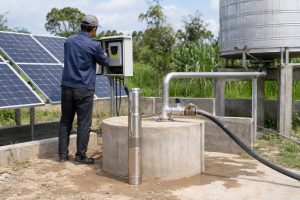
For ultimate reliability and sustainability, solar-powered pumps are an excellent long-term solution.
They operate independently of the electrical grid, meaning your pool circulation continues even during power outages.
These systems use a high-efficiency BLDC permanent magnet motor, which can be over 90% efficient.
This core technology reduces the number of solar panels needed and lowers overall system costs.
Different pump designs cater to various needs:
- Solar Screw Pumps: Ideal for situations needing high pressure (head) but lower flow, like pumping water up to a rooftop solar heater.
- Solar Impeller Pumps: These are perfect for standard pool circulation, offering high flow rates to ensure proper turnover. They come in durable plastic or premium stainless steel versions for longevity, even in saltwater pools.
Modern solar pump systems often include an AC/DC hybrid controller.
This allows the pump to run on solar power when the sun is out and automatically switch to grid power at night or on cloudy days, ensuring 24/7 circulation without interruption.
Conclusion
A broken pump is an urgent problem, but not a disaster.
With quick manual cleaning and smart chemical management, you can protect your pool while arranging a long-term fix.
FAQs
How can I circulate pool water without a pump?
Use a pool brush in a large, circular motion to manually stir the water. This helps distribute chemicals and prevents stagnant spots where algae can grow.
Can I swim in a pool if the pump is not working?
It is not recommended. Without circulation and filtration, bacteria levels can rise to unsafe levels within 24-48 hours, even if the water still looks clear.
How do I keep my pool clean during a power outage?
Manually skim, brush, and add a dose of liquid chlorine. Keep the pool covered to reduce debris and prevent sunlight from breaking down the chlorine too quickly.
Will my pool turn green if the pump is off for 3 days?
It is very likely, especially in warm, sunny weather. After 72 hours, chlorine levels are often too low to prevent algae spores from blooming on the pool surfaces.
What is the easiest way to empty a pool without a pump?
Using a garden hose to create a siphon is the easiest low-cost method. If your above-ground pool has a drain plug, that is even simpler.
How much does it cost to replace a pool pump?
A new pool pump can cost anywhere from $500 for a basic single-speed model to over $1,500 for a high-end variable-speed or solar-powered pump, plus installation.
How do I know if my pool pump motor is bad?
Common signs include the motor not turning on, making a loud humming or grinding noise, or tripping the circuit breaker repeatedly. It may also feel excessively hot to the touch.
Is it OK to run a pool pump 24/7?
While you can, it's not necessary or cost-effective with single-speed pumps. A variable-speed pump, however, is designed to run 24/7 at low, energy-saving speeds for optimal filtration.