Struggling with high electricity bills or the challenge of getting water to a remote location?
You're paying too much for grid power or diesel, and the unreliability is a constant worry.
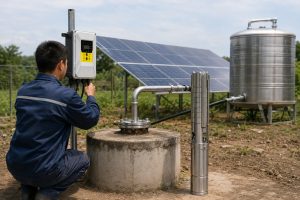
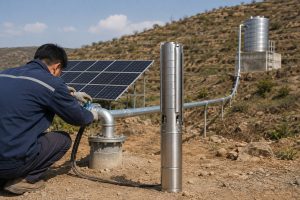
Solar-powered water pumps are an excellent, long-term solution for off-grid water needs.
They offer significant cost savings by eliminating fuel expenses, require minimal maintenance, and provide a reliable water supply, making them a smart investment for farms, homes, and ranches.
A reliable water supply is non-negotiable.
Whether for livestock, crops, or your home, you need water you can count on.
But conventional solutions are becoming more expensive and less practical every day.
The noise, fumes, and constant refueling of diesel generators are a hassle.
The cost of extending power lines to a remote well can be astronomical.
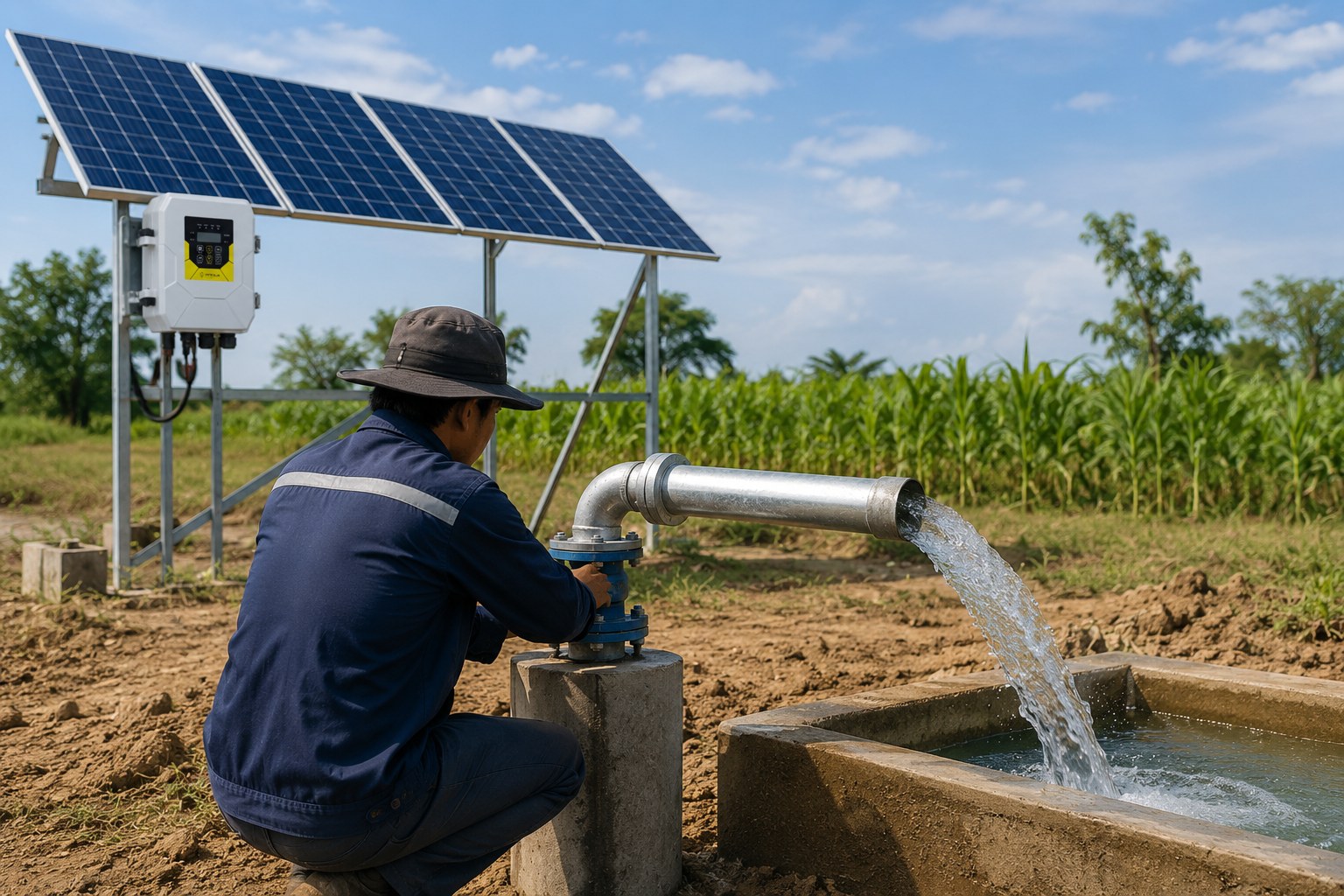
Solar water pumps offer a path to water independence.
They are a socially and environmentally attractive technology that harnesses the sun's free and abundant energy.
Let's dive into the specifics to see how they truly perform and if they are the right choice for you.
Pros and Cons of Solar Water Pumps
Worried about the high initial cost and performance on cloudy days?
These are common concerns, but the long-term financial and practical benefits often far outweigh the initial investment.
The biggest pros of solar pumps are zero ongoing energy costs and extremely low maintenance, leading to significant savings over time.
The main con is the higher upfront cost, though modern systems work efficiently even in low light.
The Financial Case: Upfront Cost vs. Long-Term Savings
The upfront cost of a solar water pump can seem substantial.
This is mainly due to the cost of the solar panels themselves.
However, this is a one-time investment.
Once installed, the energy is free.
Let's compare this to a diesel-powered pump.
A diesel pump has a lower initial purchase price, which can be tempting.
But it requires a constant supply of expensive fuel.
Fuel prices are volatile and have been on a steep upward trend for years.
Furthermore, diesel engines require frequent maintenance, part replacements, and labor, adding to the total cost of ownership.
Over a 20-year lifespan, a solar pump system is dramatically more economical.
Studies show that after just a few years, the fuel and maintenance savings from a solar pump surpass its higher initial cost.
You start making your money back right away.
To make this clearer, let's look at a cost comparison over time for similarly sized systems.
| Feature | Solar Pump System (4500 Wp) | Diesel Pump System (4.5 KVA) |
|---|---|---|
| Initial Capital Cost | ~$27,470 | ~$4,720 |
| Annual Operating Cost | ~$800 (minor maintenance) | ~$5,864 (fuel & maintenance) |
| Total Cost After 10 Years | ~$35,470 | ~$63,360 |
| Total Cost After 20 Years | ~$43,470 | ~$122,000 |
As the data shows, the diesel system's total cost is nearly 3 times higher over two decades.
The solar pump pays for itself and becomes a money-saving asset.
Maintenance and Labor: Set It and Forget It?
Another major advantage is the reduction in labor and maintenance.
Solar pumps are incredibly reliable.
There are no engines to service, no oil to change, and no fuel to haul.
You'll never have to make an emergency trip to the gas station when your cows are thirsty.
The primary maintenance task is simple: keep the solar panels clean.
Wiping away dust or snow a few times a year ensures they produce as much energy as possible.
Compare this to windmills, which require climbing and costly repairs, or diesel pumps with their regular servicing schedules.
A study by the U.S.
Bureau of Land Management found that a particular PV system required only 14% of the labor hours that a comparable diesel generator system needed.
This frees up your valuable time for more productive activities on your farm or ranch.
With modern warranties and lifetime customer support, a quality solar pump won't let you down.
Environmental Impact
In an era of growing environmental consciousness, solar pumps are a clear winner.
They greatly reduce the carbon footprint of any farm or ranch.
By eliminating the need for diesel generators, you stop emissions at the source.
If you're replacing grid-powered pumps, you are reducing the demand on power plants that often burn fossil fuels.
Solar water pumps are also extremely versatile.
They can bring water to remote, arid areas where it was previously unavailable.
This allows both native wildlife and vegetation to flourish, restoring ecological balance.
They are a quiet, clean, and sustainable solution for irrigation, watering livestock, or supplying an off-grid homestead.
Which Type of Solar Pump is Right for You?
Choosing a solar pump isn't one-size-fits-all.
The wrong pump can lead to poor performance, insufficient water, or even premature failure, wasting your investment.
The best pump type depends entirely on your water source and needs.
For deep wells and domestic use, a solar screw pump is ideal.
For high-volume farm irrigation, a plastic impeller pump is best.
For corrosive water, you need a stainless steel impeller pump.
The three most popular types of solar deep well pumps each serve a distinct purpose.
They are all driven by the same core technology—a high-efficiency motor—but the pump end is what makes them different.
Understanding these differences is key to building a successful and long-lasting water system.
Let's break down each type to see where it excels.
Solar Screw Pump: The Deep Well Specialist
The solar screw pump, also known as a progressive cavity pump, is a master of depth.
It uses a single helical stainless steel screw (the rotor) rotating inside a rubber stator.
This action creates sealed cavities that move water upwards through compression.
This mechanism is not designed for high speed or massive volume.
Instead, its strength is its ability to generate very high pressure.
This allows it to lift water from extreme depths, making it perfect for deep wells.
Its design also makes it highly resistant to sand and sediment, which would quickly destroy other pump types.
Applications: It's the go-to choice for domestic water supply in homes, providing drinking water for livestock from deep boreholes, and small-scale drip irrigation systems.
It is particularly valuable in regions across Africa and Latin America where wells are deep and water may not be perfectly clean.
Limitations: Its flow rate is limited, so it's not suitable for applications requiring large volumes of water quickly, like flood irrigation for large farms.
Solar Plastic Impeller Pump: The High-Volume Workhorse
This is a multi-stage centrifugal pump.
It uses a series of impellers stacked on top of each other.
As water passes through each rotating impeller, its velocity and pressure increase.
This model is equipped with durable, wear-resistant plastic impellers.
It is engineered to deliver high flow rates at a medium head (lift height).
This makes it an economical and effective solution for moving a lot of water.
The engineered plastic is lightweight and offers excellent resistance to abrasion from fine sand.
Applications: Its ability to produce high water output makes it perfect for farm irrigation, watering large herds of livestock on pastures, and supplying water to extensive home gardens.
It is widely used in agricultural regions throughout the Americas and Africa.
Limitations: While wear-resistant, the plastic impellers are not ideal for highly corrosive water or the extreme pressures found in very deep wells.
In those conditions, its durability can be compromised.
Solar Stainless Steel Impeller Pump: The Premium Durability Option
This pump is functionally similar to the plastic impeller pump but is built for the toughest conditions.
It features impellers and a pump body constructed from high-grade SS304 stainless steel.
This material gives it superior resistance to corrosion and abrasion.
It is designed specifically for environments where the water is acidic, alkaline, or has high mineral content.
It delivers high flow rates and can handle medium-to-high head applications.
Applications: This is the premium choice for pumping water in challenging environments.
This includes areas with acidic or alkaline water, alkaline soil regions found in Australia, parts of the Americas, and for high-end homes and ranches where long-term reliability and water purity are paramount.
Limitations: The high-quality materials and construction make it more expensive and heavier than the plastic impeller model.
Its market is more niche, targeting users who require its specific anti-corrosion properties.
Pump Type Comparison
| Feature | Solar Screw Pump | Solar Plastic Impeller Pump | Solar Stainless Steel Impeller Pump |
|---|---|---|---|
| Primary Function | High Head, Low Flow | High Flow, Medium Head | High Flow, High Durability |
| Best Application | Deep wells, domestic water | Farm irrigation, livestock | Corrosive water, premium homes |
| Sand Resistance | Excellent | Good (fine sand) | Very Good |
| Relative Cost | Moderate | Economical | Premium |
The Core of Efficiency: The Brushless DC Motor
A pump is just a pump, right?
Wrong.
The motor is the heart of the system, and it's what separates an average solar pump from a high-performance one.
Modern solar pumps use advanced Brushless DC (BLDC) motors with over 90% efficiency.
This means more of the sun's energy is converted into pumped water, reducing the number of solar panels needed and cutting overall system costs.
All three pump types—screw, plastic impeller, and stainless steel impeller—are powered by the same advanced motor technology.
This is the strategic core of the entire system.
A highly efficient motor is the key to maximizing your solar investment and ensuring reliable performance.
Without it, even the best pump end is just dead weight.
Let's explore why this motor technology is such a game-changer.
What Makes a BLDC Motor Superior?
A Brushless DC (BLDC) permanent magnet motor is a leap forward in technology.
Unlike older brushed motors that rely on physical contacts (brushes) to transmit power, a BLDC motor uses an electronic controller.
This eliminates friction, wear, and energy loss, making the motor dramatically more efficient.
Efficiencies regularly exceed 90%.
In contrast, a standard AC motor might be 75% efficient, and an older brushed DC motor even less.
The rotor in these high-tech motors is made of powerful 40SH neodymium iron boron permanent magnets.
This allows for a design that is incredibly power-dense.
A BLDC motor can be up to 47% smaller and 39% lighter than a traditional motor of equivalent power output.
It also provides high torque across its entire speed range, which is crucial for starting the pump and lifting water from deep wells.
The Impact on Your System's Cost and Performance
The high efficiency of a BLDC motor has a direct, positive impact on your wallet.
Because the motor converts over 90% of the electrical energy into mechanical work, it requires less power to do the same job.
This means you need fewer solar panels to run your pump.
Fewer panels directly translate to a lower initial system cost.
For example, a 25% increase in motor efficiency can reduce your solar panel requirement by a similar percentage.
This can save hundreds or even thousands of dollars on the initial purchase.
Furthermore, the brushless design means there are no brushes to wear out and replace.
The motor is virtually maintenance-free and has a significantly longer service life than its brushed counterparts, further reducing the total cost of ownership.
The Role of the MPPT Controller
The BLDC motor works in perfect harmony with an intelligent MPPT controller.
MPPT stands for Maximum Power Point Tracking.
This smart device constantly monitors the output of the solar panels and adjusts the electrical load to extract the maximum amount of power available at any given moment.
Sunlight intensity changes throughout the day and with passing clouds.
An MPPT controller ensures that even in low-light conditions, the system is optimized to deliver as much power as possible to the motor.
This intelligent management can boost the total daily water output by up to 30% compared to a system without MPPT.
It ensures your pump starts earlier in the morning, runs later in the afternoon, and performs better on overcast days.
What About Cloudy Days and Nighttime Use?
The sun doesn't shine 24/7.
Does this mean your water supply is at the mercy of the weather?
Not with today's advanced and flexible solar pumping solutions.
Modern solar pumps continue to operate even on cloudy days, albeit at a reduced rate.
For a guaranteed 24/7 water supply, the most common solution is to pump into a storage tank, or you can use a hybrid AC/DC controller for uninterrupted operation.
One of the most persistent myths about solar power is that it's useless without perfect, bright sunshine.
While it's true that output is highest in direct sun, a well-designed system is far from helpless on an overcast day.
And for nighttime use, a little bit of planning provides a simple and effective solution.
There are several strategies to ensure you have water whenever you need it, day or night, rain or shine.
Pumping on Overcast Days
It's a common misconception that solar pumps stop working the moment a cloud passes over.
In reality, high-quality solar pump systems have been known to continue pumping perfectly even on cloudy or rainy days.
Solar panels produce power from light, not heat, and there is still a significant amount of ambient light on an overcast day.
The MPPT controller plays a crucial role here, optimizing the reduced power to keep the motor running efficiently.
A modern system can often operate with power levels as low as 200 watts.
The flow rate will be lower than on a sunny day, but the system continues to work, steadily adding water to your tank or irrigating your fields.
The Storage Tank Solution
The simplest and most popular method for ensuring a constant water supply is to use a holding tank.
This is a form of energy storage, but instead of storing electricity in expensive batteries, you are storing water.
The strategy is straightforward: let the solar pump run during peak solar hours (roughly 9 AM to 3 PM), filling a large storage tank.
A large tank can hold enough water for one or more days of use.
Then, at night or on heavily overcast days, you can access this stored water.
Water can be moved from the tank via gravity feed if the tank is elevated.
Alternatively, a small, inexpensive tankless pressure pump can be used to move water from the storage tank into your home or fields on demand.
This approach eliminates the need for batteries, reducing system cost and complexity.
Hybrid AC/DC Systems for Ultimate Reliability
For critical applications where a 24/7 water supply is absolutely essential, a hybrid system offers the ultimate peace of mind.
Advanced hybrid AC/DC controllers are designed with two power inputs.
You can connect both your solar panels (DC power) and an AC power source (grid power or a generator) to the controller at the same time.
The controller's intelligent logic will automatically prioritize the free energy from the sun.
It will run the pump entirely on solar power whenever it is sufficient.
If solar power drops due to heavy clouds, the hybrid function will blend in just enough AC power to maintain the desired flow rate, maximizing the use of solar energy.
When there is no solar input at all, like at night, it will automatically switch over to the AC source.
This ensures you have worry-free water use 24 hours a day without any manual switching.
Conclusion
Solar water pumps are a powerful, reliable, and cost-effective solution.
Their true advantage lies in a complete system: the right pump, an efficient motor, and an intelligent controller.
FAQs
How long do solar water pumps last?
A quality solar pump motor can last for over 10 years.
The solar panels that power them are even more durable, typically guaranteed for 25 years or more.
Can a solar pump run without batteries?
Yes, absolutely.
The most common setup involves pumping water into a storage tank during the day, using the tank as a reservoir for nighttime or cloudy-day use.
How many solar panels do I need for a water pump?
The number of panels depends on the pump's power, your location's sunlight, and your daily water needs.
It is always best to have a professional size the system for you.
Do solar pumps work on cloudy days?
Yes.
Modern, efficient systems will continue to pump water on overcast days, although the flow rate will be lower than in full, direct sunlight.
What maintenance do solar water pumps require?
Maintenance is minimal.
The main task is to periodically clean the surface of the solar panels to remove dust, pollen, or snow to ensure they absorb maximum sunlight.
Are solar pumps worth the investment?
For off-grid properties, they are often a fantastic investment.
They are typically far cheaper than extending utility power lines and have a much lower lifetime cost than diesel generators.
Can a solar pump directly pressurize my home's water?
Not typically.
A solar pump's job is to lift water from the source.
A separate, smaller pressure booster pump is used to take water from a storage tank and pressurize it for your taps.