Your pond's pump has failed, and now your fish are in danger.
Stagnation can be fatal in just a few hours.
Understanding the timeline and the solutions is critical to protecting your aquatic life.
How long fish can survive without a pump depends heavily on weather and pond conditions, but it's a critical emergency.
Generally, in warm water with a high fish load, you may only have 6-12 hours before oxygen levels become dangerously low and fish start to die.
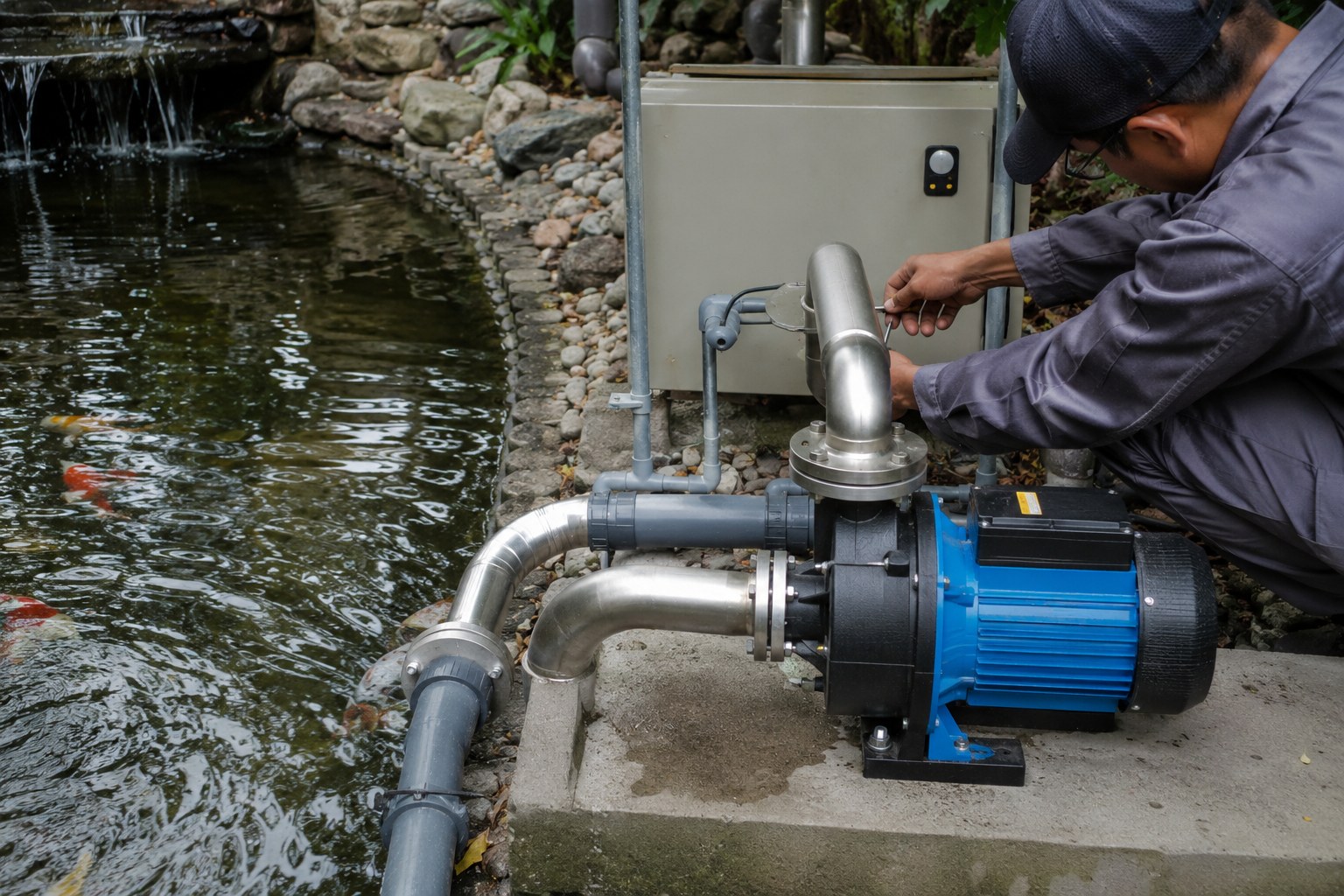
A functioning pump is the heart of your pond's ecosystem.
It is not just a decorative feature.
It is a life support system.
When that heart stops, the entire system begins to fail, and the clock starts ticking for your fish.
This isn't just about the inconvenience of a broken piece of equipment; it's about preventing a catastrophic loss of life and a significant financial investment.
But pump failures, whether from a power outage or mechanical breakdown, are not an "if" but a "when."
Knowing what happens second-by-second and having a robust plan is the difference between a minor issue and a major disaster.
Let's explore why circulation is non-negotiable and what you can do to ensure your pond never has to face a silent, stagnant death.
Why Water Circulation Issues
Stagnant pond water is a silent killer.
It may look calm, but beneath the surface, a deadly environment is forming.
You need constant movement to keep your pond's ecosystem balanced and thriving.
Water circulation is essential because it is the primary mechanism for oxygenating the water and distributing that oxygen throughout the pond.
It also moves water through filtration systems to remove toxic waste products like ammonia, preventing lethal buildups and harmful algae blooms.
The Science of Stagnation
A pond is a living, breathing ecosystem.
The surface of the water is where the most critical gas exchange happens.
Oxygen from the atmosphere dissolves into the water here.
A pump creates a current, circulating this oxygen-rich surface water down to the bottom of the pond where fish often rest.
Simultaneously, it pushes oxygen-poor water from the bottom, laden with carbon dioxide from fish respiration, up to the surface to release the CO2 and absorb fresh oxygen.
Without a pump, this cycle halts completely.
The water stratifies into layers.
An oxygen-rich top layer and an oxygen-depleted bottom layer.
Your fish, deprived of oxygen, will become stressed and eventually suffocate.
In warmer months, this process is dramatically accelerated.
Warmer water naturally holds less dissolved oxygen, and your fish's metabolism is higher, meaning they consume oxygen at a much faster rate.
Oxygen levels can plummet by more than 50% in as little as six hours under warm, stagnant conditions.
This creates "dead zones" within the pond where life cannot be sustained.
The Buildup of Toxins
Beyond oxygen, water circulation is vital for waste management.
Fish constantly release ammonia through their gills and waste.
In a healthy pond, a colony of beneficial aerobic bacteria (bacteria that need oxygen) colonizes your filter media.
The pump pushes ammonia-laden water through this filter.
The bacteria then convert the highly toxic ammonia into less harmful nitrites, and then into relatively harmless nitrates.
This is the nitrogen cycle.
When the pump stops, two devastating things happen.
First, the ammonia-rich water is no longer being delivered to the filter.
Ammonia hotspots concentrate around your fish, causing chemical burns to their gills and skin.
Second, the beneficial bacteria in your filter begin to die from lack of oxygen.
Within hours, your biological filter ceases to function, and even if the pump is turned back on, it will take days or weeks to re-establish this colony, leaving your pond vulnerable.
The Dangers of Reduced Oxygen Levels
Low oxygen in a pond is an invisible threat that has very visible, tragic consequences.
It is a primary stressor that triggers a cascade of other health problems.
Recognizing the signs early is essential for immediate intervention.
Reduced oxygen, or hypoxia, directly causes fish to become stressed and lethargic, forcing them to gasp for air at the surface.
It also halts the breakdown of waste, leading to a rapid accumulation of toxic ammonia and the formation of foul-smelling, decaying organic matter.
The Chemical Cascade of Suffocation
When oxygen levels drop, the first and most obvious sign is behavioral.
Fish will stop their normal activities like foraging and swimming.
They will congregate where oxygen is highest: at the surface, or near any waterfall or fountain where water is agitated.
This gasping at the surface is a desperate attempt to breathe.
It is the equivalent of a human being unable to catch their breath.
This immense stress weakens their immune systems, making them highly susceptible to parasites and bacterial infections.
Simultaneously, the pond's chemistry turns against them.
Without oxygen, the beneficial bacteria responsible for the nitrogen cycle die off.
Toxic ammonia, which is constantly being produced by fish, is no longer converted.
Ammonia levels can spike from a safe level of 0 parts per million (ppm) to a lethal 1-2 ppm in less than 24 hours.
This creates a doubly dangerous environment: the fish are suffocating from a lack of oxygen while also being poisoned by their own waste.
The Ultimate Failsafe: Off-Grid Pumping Solutions
The core problem is a single point of failure: dependency on a single pump connected to an unstable power grid.
The ultimate solution is to create a system that is reliable, self-sufficient, and tailored to specific water conditions.
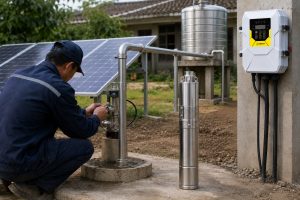
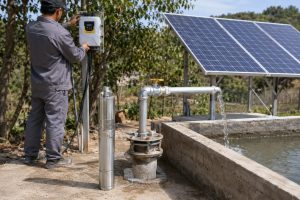
This is where advanced solar-powered pump technologies become not just a backup, but a superior primary system.
Distributors and importers need to understand the portfolio of solutions available to meet diverse customer needs.
| Pump Technology | Primary Application | Flow & Head Profile | Key Advantage |
|---|---|---|---|
| Solar Screw Pump | Deep wells, domestic water, livestock | Low Flow, High Head | Excellent for deep water sources; highly sand resistant. |
| Solar Plastic Impeller Pump | Farm irrigation, high-volume water transfer | High Flow, Medium Head | Economical and lightweight; excellent wear resistance to fine sand. |
| Solar Stainless Steel Impeller Pump | Corrosive water, high-end homes, coastal areas | High Flow, Medium-High Head | Superior corrosion resistance and durability for long service life. |
Each of these pump types addresses a different failure point.
A screw pump ensures water access from the deepest wells where other pumps can't reach.
A plastic impeller pump provides the high volume needed to quickly re-oxygenate large bodies of water like farm ponds.
A stainless steel impeller pump offers unmatched reliability in harsh water that would destroy lesser pumps, guaranteeing long-term operation.
Offering this diverse portfolio allows distributors to solve any customer's water security problem.
Exactly How to Safeguard Your Koi During Pump Failures
A pump failure is an emergency that requires immediate action.
While long-term solutions are best, you need a plan for the critical first few hours.
Your goal is simple: get oxygen into the water by any means necessary.
To protect fish during a pump failure, immediately introduce an alternative aeration source.
A battery-powered backup pump or air stone is ideal.
In a pinch, you can manually agitate the water with a bucket or hose to break the surface tension and introduce oxygen.
Short-Term Emergency Measures
The moment you notice your pump is not working, your priority is aeration.
- Backup Systems: The best immediate response is an automatic one. A battery backup system, or Uninterruptible Power Supply (UPS), can keep a small pump or an air pump running for several hours, providing a crucial buffer.
- Air Stones: A simple, dedicated air pump with air stones is an excellent, low-cost redundancy. It can be run on a small battery or generator and provides direct oxygenation independent of your main water pump.
- Manual Aeration: If you have no backup power, you must manually introduce oxygen. Take a bucket, fill it with pond water, and pour it back in from a height. Repeat this process continuously. The splashing agitates the surface and facilitates gas exchange. You can also use a garden hose to spray the surface of the pond.
These are temporary fixes.
They will buy you time, but they are not a sustainable solution for frequent outages or long-term reliability.
The Long-Term, Cost-Effective Solution: The Power of Solar
The most robust solution eliminates the root cause of most failures: grid dependency.
Modern solar pump systems offer unparalleled reliability, driven by hyper-efficient core technology.
The heart of these systems is the Brushless DC (BLDC) permanent magnet motor.
This is not the same as a standard AC motor.
BLDC motors achieve efficiencies exceeding 90%.
This is a significant leap from traditional motors, which often operate at 60-70% efficiency.
What does this mean for the user?
A 90% efficient motor requires significantly less power to do the same amount of work.
This directly translates to needing fewer solar panels to run the pump, reducing the initial system cost by as much as 25-30%.
These motors are also engineered to be more compact and lighter—often up to 47% smaller and 39% lighter than their AC counterparts.
This simplifies shipping and installation, a key benefit for distributors and installers.
Furthermore, advanced systems integrate intelligent Maximum Power Point Tracking (MPPT) controllers.
These controllers constantly adjust the electrical load to extract the maximum possible power from the solar panels, even in cloudy or low-light conditions, increasing daily water output by up to 30%.
For ultimate reliability, hybrid AC/DC controllers are the final piece of the puzzle.
These systems prioritize solar power by default.
However, if solar energy is insufficient on a cloudy day or at night, the controller can automatically blend in AC power from the grid or a generator, or switch to it entirely.
This guarantees 24/7, worry-free water circulation, making pump failure a thing of the past.
Why Solar-Powered Pumps Are Game-Changers
Moving beyond grid-tied pumps isn't just about backup power.
It's a fundamental shift in how we approach water management.
Solar-powered pumps offer a combination of reliability, cost savings, and environmental benefits that traditional systems cannot match.
Solar-powered pumps are game-changers because they provide complete energy independence.
They eliminate electricity costs and are immune to grid power outages, offering unparalleled reliability for critical applications like pond life support, irrigation, and livestock watering.
Economic Advantages for End-Users and Distributors
For the end-user, the return on investment (ROI) is clear and compelling.
The primary benefit is the elimination of electricity bills for running the pump.
A pond or irrigation pump can be one of the larger continuous energy draws in a household or on a farm.
Over the 10-20 year lifespan of a solar pump system, these savings can amount to thousands of dollars, far exceeding the initial investment.
Maintenance is another area of significant savings.
High-quality BLDC motors are brushless and designed for maintenance-free operation over many years.
There are no brushes to wear out and replace.
For distributors, the economic advantage lies in tapping into a rapidly growing global market.
Demand for off-grid water solutions is exploding in regions like Africa, Australia, South America, and rural parts of North America.
By offering a robust portfolio of solar pumps, distributors can position themselves as leaders in a sustainable, high-growth sector.
A flexible product mix allows you to cater to every need, from a small residential pond to a large agricultural operation.
Market-Product Fit for Global Distribution
Understanding which product to offer in which market is key to success for an importer or distributor.
A one-size-fits-all approach is ineffective.
A strategic portfolio addresses specific regional challenges and customer needs.
| Region/Market Need | Recommended Pump Type | Why It Fits the Market |
|---|---|---|
| Sub-Saharan Africa, Latin America | Solar Screw Pump | Addresses the common need for drawing water from very deep wells for domestic use and livestock. High sand resistance is critical for local water conditions. |
| American Midwest, Australian Outback | Solar Plastic Impeller Pump | Perfect for large-scale farm and ranch irrigation where high water volume is prioritized over extreme head. Its economical nature makes it ideal for large deployments. |
| Coastal Regions, Areas with Alkaline Soil | Solar Stainless Steel Impeller Pump | The SS304 construction is essential for longevity in corrosive, saline, or alkaline water environments, protecting the investment and ensuring reliability. |
| High-End Residential, Eco-Resorts | All Types with AC/DC Hybrid Controller | This market demands 24/7 reliability and convenience. The hybrid system provides peace of mind, blending eco-friendly solar with guaranteed grid/generator backup. |
Environmental Impact and Sustainability
Choosing solar is a powerful statement about environmental responsibility.
Every solar pump installed directly reduces the carbon footprint associated with electricity generation.
It promotes energy independence and resilience in the face of climate-related challenges and grid instability.
For businesses, adopting and promoting sustainable technologies is no longer just a niche advantage; it is becoming a core expectation from customers.
By providing solar water solutions, distributors and their clients become part of a global movement towards a cleaner, more sustainable future, enhancing brand reputation and aligning with modern consumer values.
Conclusion
A pump failure is a critical threat, but it is entirely preventable.
Reliable circulation is the key to a healthy pond.
Advanced solar pump systems offer the ultimate in security, efficiency, and sustainability.
FAQs
How can I oxygenate my pond without a pump?
Use air stones powered by a battery or generator, add oxygenating plants, or manually pour water from a height to agitate the surface.
Can fish survive in a pond without a filter?
It is extremely difficult. A filter removes toxic ammonia. Without it, even with oxygen, the water will eventually become poisonous for the fish.
Do pond pumps need to run 24/7?
Yes. Continuous operation is vital for stable oxygen levels and consistent waste removal. Turning a pump off at night can lead to dangerous oxygen drops.
How do I know if my pond has enough oxygen?
If fish are healthy and active, oxygen is likely sufficient. If they are gasping at the surface or are lethargic, oxygen is dangerously low.
What is more important a pump or a filter?
They are a team and both are crucial. The pump moves water, and the filter cleans it. One cannot function effectively without the other.
Will a solar fountain oxygenate a pond?
Yes, any feature that agitates the water's surface, like a fountain, will help introduce oxygen. It is a great supplementary aeration method.
How long can a pond go without a filter but with a pump?
The pump provides oxygen, so fish can survive longer than without a pump. However, toxins will still build up, so this is only a short-term situation.
Can koi survive winter without a pump?
This is very risky. A pump keeps a hole open in the ice, allowing harmful gases to escape and oxygen to enter. Without it, the pond can become toxic.