Your pool pump is secretly draining your bank account.
It's one of the most energy-hungry appliances you own, and the monthly cost is often a shocking surprise.
Running a standard 2,000-watt pool pump for 8 hours a day costs approximately $2.56 daily, adding up to $77 per month, or over $900 per year, based on average U.S. electricity rates.
However, costs can vary from $43 to $165 monthly depending on your pump type and location.
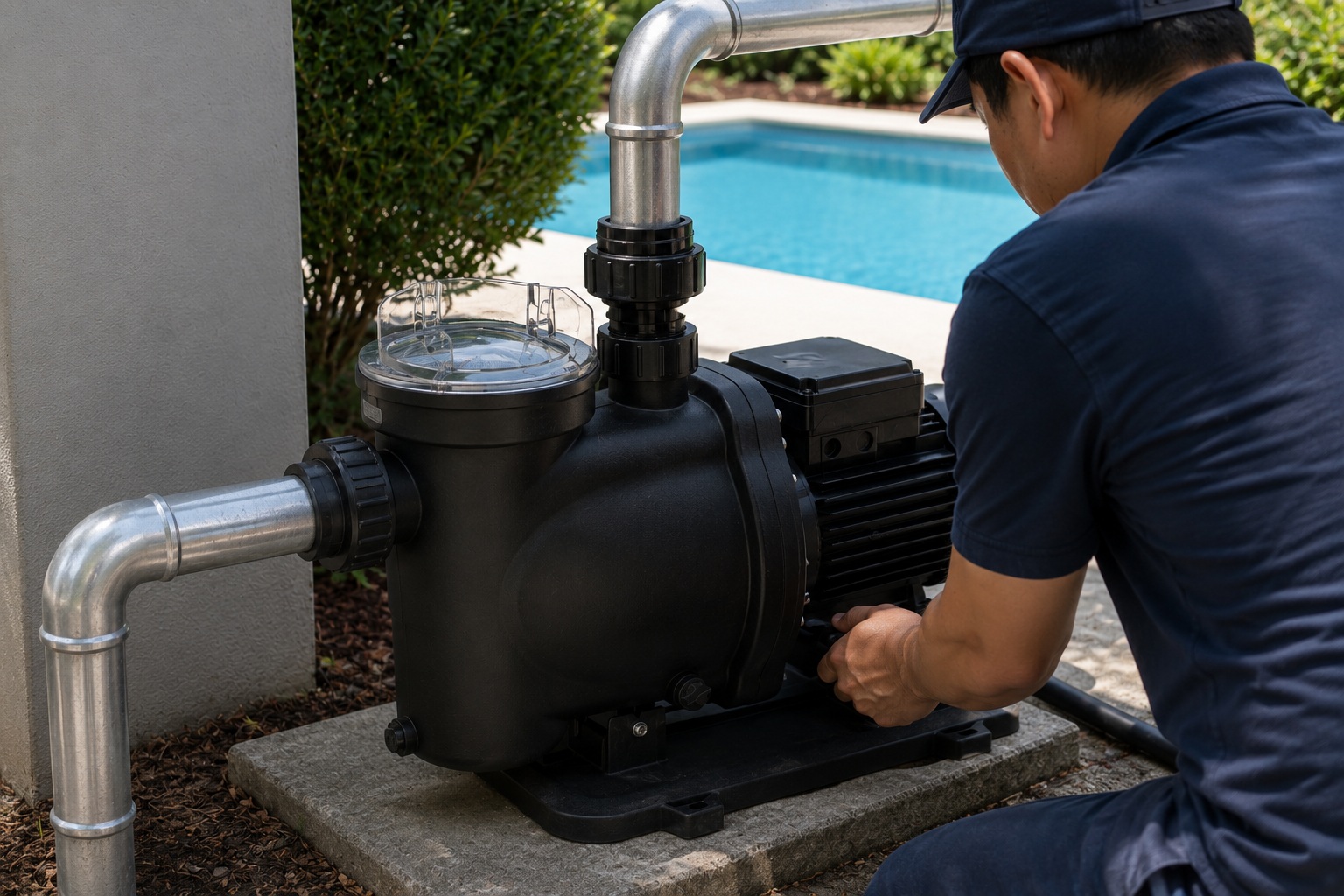
That electricity bill doesn't have to be so high.
Understanding exactly where that money goes is the first step toward slashing your pool's operating costs by 50-80%.
This guide will break down every factor, from pump types to revolutionary new technologies, to help you save hundreds, or even thousands, of dollars each year.
Let's dive in.
Pool Pump Electricity Usage Fundamentals
Confused by why your pool costs so much to maintain?
The culprit is likely the pump, working tirelessly but inefficiently to keep your water clean, leading to surprisingly high bills.
A pool pump consumes significant electricity by pulling water through a filtration system.
Its consumption depends on motor power (watts), runtime, and how hard it must work against plumbing resistance.
To truly grasp your pool pump's cost, you need to understand the basic mechanics of its power consumption.
It's not just about flipping a switch; several factors are at play, each adding to your monthly bill.
Knowing these fundamentals empowers you to identify inefficiencies and make smarter, cost-saving decisions.
This knowledge forms the foundation for optimizing your entire pool system.
How Pool Pumps Consume Electricity
A pool pump's job is simple: circulate water.
It creates a vacuum to pull water from the pool's skimmers and drains.
It then pushes that water through a filter to remove debris, and finally returns the clean water to the pool.
This continuous process of moving hundreds of gallons of water per minute requires a powerful electric motor.
The motor's consumption isn't static; it changes based on several key variables.
-
Motor Power (Horsepower and Watts): A larger motor, rated in horsepower (HP), has the potential to draw more electrical current (amps) and consume more power (watts).
A 1.5 HP pump naturally uses more energy than a 1.0 HP pump if all else is equal. -
Operating Voltage: Pumps can run on either 115V or 230V.
While a 230V circuit uses lower amperage for the same power output, the total watts consumed (Volts × Amps) remains the same.
However, running on 230V is often more efficient and can lead to a longer motor life. -
System Resistance (Total Dynamic Head): This is the crucial factor many pool owners overlook.
Your pump motor has to work harder to overcome friction and pressure within your plumbing system.
Narrow pipes, numerous sharp turns, a dirty filter, and added equipment like heaters all increase resistance, forcing the motor to draw more power to maintain flow. -
Runtime Hours: This is the most straightforward factor.
The longer the pump runs, the more electricity it uses.
Running a pump for 12 hours will cost 50% more than running it for 8 hours.
Understanding these elements is the first step toward taking control of your energy bills.
Detailed Cost Breakdown by Pump Type
Wondering which pump is draining your wallet?
The pump type you choose directly impacts your bill, with older models costing far more than you might think.
Single-speed models cost $70-$100+ monthly.
Dual-speed pumps can lower that to $30-$50.
But ultra-efficient variable-speed pumps can operate for as little as $8-$31 per month, offering dramatic savings.
The financial difference between pump types is not a small detail; it's the single biggest factor in your long-term cost of pool ownership.
A cheaper upfront cost for an inefficient pump can easily be wiped out by massive electricity bills in just one or two seasons.
Let's break down the real-world numbers to see exactly what you can expect to pay and save.
Single-Speed Pool Pumps: The Power Guzzler
Single-speed pumps are the old standard, built on a simple but outdated principle.
They operate at one constant, high speed, typically around 3,450 RPM, no matter the task.
This "all or nothing" approach is incredibly inefficient for daily filtration, which requires much less power.
A common 1.5 HP single-speed pump consumes between 1,700 and 2,500 watts.
Running it for 8 hours a day at an average electricity rate of $0.164/kWh translates to significant costs.
- Daily Cost: 2.0 kW × 8 hours × $0.164/kWh = $2.62
- Monthly Cost: $2.62 × 30 days = $78.60
- Annual Cost: $78.60 × 12 months = $943.20
In states with high electricity rates like Hawaii ($0.43/kWh) or Massachusetts, that monthly cost can easily skyrocket to over $150.
Dual-Speed Pool Pumps: A Step in the Right Direction
Dual-speed pumps offer a high and a low-speed setting.
The low speed, typically running at half the RPM (around 1,725 RPM), is used for general filtration and consumes significantly less energy.
The high speed is reserved for more demanding tasks like vacuuming or running a pool cleaner.
By running primarily on the low setting for 8 hours a day, a dual-speed pump can reduce energy consumption by over 50%.
This brings the average monthly cost down into the more manageable $31-$47 range.
Variable-Speed Pool Pumps: The Ultimate Energy Saver
Variable-speed (VS) pumps represent the pinnacle of pool pump efficiency.
They use advanced permanent magnet motors, the same technology found in modern electric vehicles.
This allows them to operate at a wide range of speeds, from a very low 600 RPM for basic circulation to a powerful 3,450 RPM for cleaning.
The key to their massive savings lies in a physics principle called the "Pump Affinity Law."
This law states that reducing a pump's speed by 50% decreases its energy consumption by a staggering 87.5%.
For daily filtration, a VS pump can be dialed in to the exact low speed needed, often using just 200-800 watts.
| Pump Type | Average Watts (8-hr cycle) | Monthly kWh (240 hrs) | Monthly Cost (at $0.164/kWh) | Typical Annual Savings (vs. Single-Speed) |
|---|---|---|---|---|
| Single-Speed | 2,000 W | 480 kWh | $78.72 | $0 |
| Dual-Speed (Low) | 900 W | 216 kWh | $35.42 | ~$520 |
| Variable-Speed | 400 W | 96 kWh | $15.74 | ~$755 |
As the data clearly shows, the savings are transformative.
While a VS pump has a higher upfront cost of $800-$1,500, the energy savings often deliver a full return on investment in just 12-24 months.
Factors Affecting Pool Pump Energy Consumption
Is your pump working harder than it needs to?
Many hidden factors in your pool's system can force your pump to consume excess energy, inflating your electricity bills without you realizing it.
Beyond just the pump type, energy use is heavily influenced by the pump's horsepower, the pool's size, the resistance from plumbing (head loss), and the cleanliness of your filter.
Optimizing your pool for energy efficiency goes beyond simply choosing a good pump.
It requires a holistic view of your entire pool circulation system.
Each component, from the pipes in the ground to the filter cartridge, plays a role in determining how much power your pump consumes.
Understanding these factors will help you pinpoint areas for improvement that can lead to significant and lasting savings.
Pump Horsepower vs. Motor Efficiency
Bigger is not always better.
Many pools are equipped with "oversized" pumps, meaning the horsepower is unnecessarily high for the pool's volume and plumbing.
A 1.5 HP pump might sound impressive, but if a 1.0 HP model can do the job, the larger pump is just wasting electricity.
More important than raw horsepower is the motor's efficiency rating.
A high-efficiency 1.0 HP motor can often outperform a standard-efficiency 1.5 HP motor while using substantially less power.
Always aim for the right size, with the highest efficiency rating you can find.
Pool Size and Turnover Requirements
The volume of your pool dictates the necessary flow rate to keep it clean.
The industry standard is to "turn over" the entire volume of pool water through the filter at least once every 6 to 8 hours.
A larger 30,000-gallon pool requires a higher flow rate (Gallons Per Minute, or GPM) than a smaller 15,000-gallon pool.
To calculate your minimum required flow rate:
(Pool Volume in Gallons) ÷ (Turnover Time in Minutes) = Required GPM
Example for a 20,000-gallon pool with an 8-hour turnover:
20,000 gallons ÷ 480 minutes = ~42 GPM
Your pump must be able to sustain this flow rate against your system's resistance.
Plumbing System Resistance (Head)
This is a critical, often-ignored factor.
"Head" is the term for the total resistance the pump must overcome.
Higher head forces the pump to work harder and consume more watts.
- Pipe Diameter: This has a massive impact.
Upgrading from 1.5-inch to 2-inch pipes can reduce friction and resistance by up to 40%. - Pipe Length and Fittings: Longer pipe runs and numerous sharp 90-degree elbows increase resistance.
Each 90-degree elbow adds as much resistance as several feet of straight pipe.
Using smoother "sweep" elbows instead can significantly reduce head. - Equipment: Every piece of equipment in the line—the filter, heater, chlorinator, and check valves—adds to the total system head.
Filter Type and Condition
The filter is often a major bottleneck.
As a filter collects dirt and debris, it becomes clogged, making it harder for the pump to push water through.
A dirty cartridge filter can easily double the pump's energy consumption as it strains to maintain the required flow rate.
Regular maintenance is key.
- Cartridge Filters: Clean every 2-4 weeks, or when pressure rises 8-10 PSI above the clean starting pressure.
- Sand Filters: Backwash when the pressure gauge reads 8-10 PSI above the clean pressure.
- Filter Size: A larger filter has more surface area, creating less resistance and allowing the pump to work more easily, even when the filter starts to get dirty.
By addressing these factors, you can dramatically lower your system's resistance, allowing your pump—especially a variable-speed model—to operate at much lower, energy-saving speeds.
Energy-Saving Strategies & Optimization
Are you letting your pump run on autopilot?
Default settings and outdated practices are likely costing you a fortune.
A few smart adjustments can cut your pool energy costs in half.
The most effective strategies are reducing pump runtime to the minimum needed (often 6-8 hours), upgrading to a variable-speed pump, and optimizing your system to reduce resistance.
Saving money isn't just about buying a new pump; it's about operating your entire system intelligently.
From simple schedule changes to strategic equipment upgrades, you have numerous tools at your disposal to fight back against high energy bills.
This section moves from theory to action, providing proven, practical steps you can take.
We will also explore the ultimate optimization: harnessing the power of the sun to run your pool for nearly free.
Optimal Pump Runtime Schedules
Most pool professionals set pumps to run for 8-12 hours, but this is often excessive.
The ideal runtime depends on your specific pool's needs.
Start with a 6-hour daily cycle.
If the water remains clear and balanced, you've found a new, cheaper baseline.
If it gets a little cloudy, increase the runtime in 30-minute increments until clarity is maintained.
For many residential pools, 6-8 hours is perfectly sufficient.
Also, consider running your pump during off-peak electricity hours (usually overnight) if your utility offers time-of-use rates, which can save you 30-50% on its own.
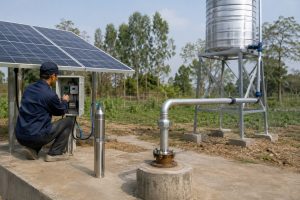
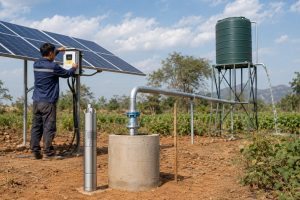
The Ultimate Solution: Solar-Powered Pumping
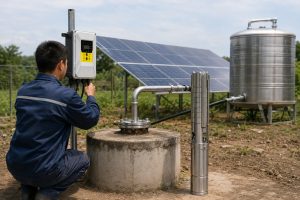
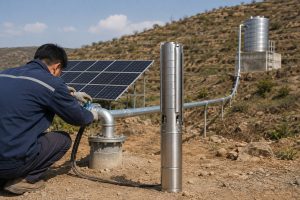
While variable-speed pumps dramatically cut electricity consumption, solar-powered pumps aim to eliminate the electricity cost altogether.
By running directly from energy generated by solar panels, a solar pump operates independently of the power grid, making it the most sustainable and cost-effective solution in the long run.
Understanding Solar Pump Technology
Modern solar pump systems are highly advanced and tailored for different water needs.
The core of every system is a hyper-efficient motor.
- BLDC Permanent Magnet Motor: This is the heart of the system.
These brushless DC motors achieve efficiencies exceeding 90%, a huge leap from traditional AC motors.
They are more powerful, generate higher torque for quick startups, and are significantly smaller and lighter.
This high efficiency is crucial, as it reduces the number of solar panels needed, lowering the system's overall cost and simplifying installation.
These motors power a variety of pump types, creating a versatile product portfolio for any application.
-
Solar Screw Pumps (Low Flow, High Head): These are ideal for deep wells where water needs to be lifted from great depths.
They work well for domestic water supply and livestock watering, especially in sunny, electricity-scarce regions.
Their design is highly resistant to sand and other abrasives. -
Solar Plastic Impeller Pumps (High Flow, Wear-Resistant): These centrifugal pumps are workhorses for farm irrigation and larger residential applications.
They deliver a high volume of water and are designed with durable materials that resist wear from fine sand, making them both economical and reliable. -
Solar Stainless Steel Impeller Pumps (Premium, Corrosion-Resistant): For environments with corrosive water (acidic or alkaline), these premium pumps are the answer.
The full stainless steel construction ensures a long service life and high reliability, perfect for high-end properties or regions with challenging water quality.
By matching the right solar pump type to your pool's needs, you can achieve complete energy independence for your water circulation.
Future-Proofing Your Pool’s Energy Efficiency
Is your pool ready for the future of energy?
Relying on the grid is becoming more expensive and less reliable.
Smart technologies are transforming pool ownership, offering unprecedented control and efficiency.
Future-proofing involves integrating smart automation and solar power.
Advanced systems can power your pump with free solar energy during the day and even provide backup power during outages.
The conversation about pool efficiency is no longer just about saving a few dollars.
It's about building a resilient, intelligent, and sustainable system.
Emerging technologies are making it possible to not only reduce costs but also to gain energy independence and ensure your pool remains a source of enjoyment, not a financial burden, for years to come.
Let's explore the innovations that are making this possible.
Smart Automation and Intelligent Control
The next leap in efficiency comes from smart pool automation systems.
These systems act as the brain of your pool, coordinating all equipment for optimal performance.
An intelligent controller can:
- Optimize pump schedules based on real-time weather, pool usage, and water chemistry readings.
- Automatically adjust a variable-speed pump to the lowest possible speed required at any given moment.
- Coordinate with the utility's rate schedule to ensure the pump only runs during the cheapest off-peak hours.
This level of intelligent control can reduce energy consumption by an additional 20-30% on top of the savings from an efficient pump alone.
The Power of Hybrid AC/DC Systems
One of the biggest concerns with solar has always been "what happens on cloudy days or at night?"
The most advanced solar pump solutions have solved this problem with hybrid AC/DC controllers.
This technology future-proofs your water supply by providing two power inputs.
-
Primary Power (DC Solar): The system defaults to using free power from your solar panels whenever sunlight is available.
The controller's built-in Maximum Power Point Tracking (MPPT) ensures it extracts every last watt of available energy from the panels, maximizing solar utilization. -
Backup Power (AC Grid/Generator): When solar input is insufficient due to heavy clouds or at night, the controller automatically switches to an AC power source, like your home's grid connection or a backup generator.
Some advanced hybrid functions can even blend AC and DC power to supplement weak sunlight, ensuring the pump continues to run efficiently without fully switching to the grid.
This guarantees you have a reliable water supply 24/7, giving you the best of both worlds: maximum solar savings with grid-level reliability.
This eliminates any dependency on weather conditions and makes solar a truly worry-free, year-round solution for your pool.
Integrating with Home Energy Storage
For the ultimate in resilience and savings, solar pump systems can be integrated with home battery storage solutions.
During peak sun hours, excess solar energy that isn't being used by the pump or your home can be stored in a battery.
This stored energy can then be used to run the pool pump at night for free, or to power your home.
Crucially, a battery storage system provides backup power during grid outages, keeping your pool circulating and clean even when the neighborhood goes dark.
This combination of a variable-speed pump, a hybrid solar controller, and battery storage represents the gold standard in pool energy efficiency and independence.
Conclusion
Running a pool doesn't have to break the bank.
By understanding consumption and adopting efficient technologies like variable-speed and solar pumps, you can slash energy costs by over 80%.
Frequently Asked Questions
How many hours a day should a pool pump run?
Start with 6 hours daily.
If water clarity is good, this is sufficient.
If not, increase in 30-minute increments until the water stays clear, typically 6-8 hours.
Is it cheaper to run a pool pump at night?
Yes, if your utility offers Time-Of-Use (TOU) rates.
Running the pump during off-peak hours, usually overnight, can reduce electricity costs by 30-50% in applicable areas.
Should I upgrade to a variable-speed pool pump?
Yes, in almost all cases.
Despite a higher upfront cost, a variable-speed pump typically pays for itself in 1-2 years through energy savings of $700+ annually.
What size pool pump do I need?
The right size depends on your pool's volume and plumbing system.
Oversizing wastes energy.
Consult a professional to calculate the correct horsepower and flow rate for your specific setup.
Can a pool cover reduce pump runtime?
Yes, indirectly.
A pool cover reduces debris, evaporation, and chemical loss.
This lessens the overall workload on your filtration system, potentially allowing for shorter pump runtimes.
How much can a variable-speed pump save me?
A variable-speed pump can reduce your pool's electricity consumption by up to 87% compared to a single-speed model, saving the average user over $700 per year.
What are the signs my pump is using too much electricity?
Signs include monthly pump costs over $100, the pump running constantly, unusual noises, or the motor feeling excessively hot to the touch.
These indicate inefficiency or a potential malfunction.
Do I need an electrician to install a variable-speed pump?
Yes, it is highly recommended.
Installation often involves 230V wiring and proper bonding and grounding.
A pool professional will also calibrate the pump for optimal efficiency.