Your pool pump just died.
The water sits perfectly still, and you know stagnant water quickly becomes a cloudy, green mess.
You need to act fast.
You can circulate pool water without a pump using temporary methods like a garden hose siphon, a wider vacuum hose, or even a wet-dry vac for small areas. These techniques use gravity or manual effort to create water movement, helping to distribute chemicals and prevent stagnation for a short time.
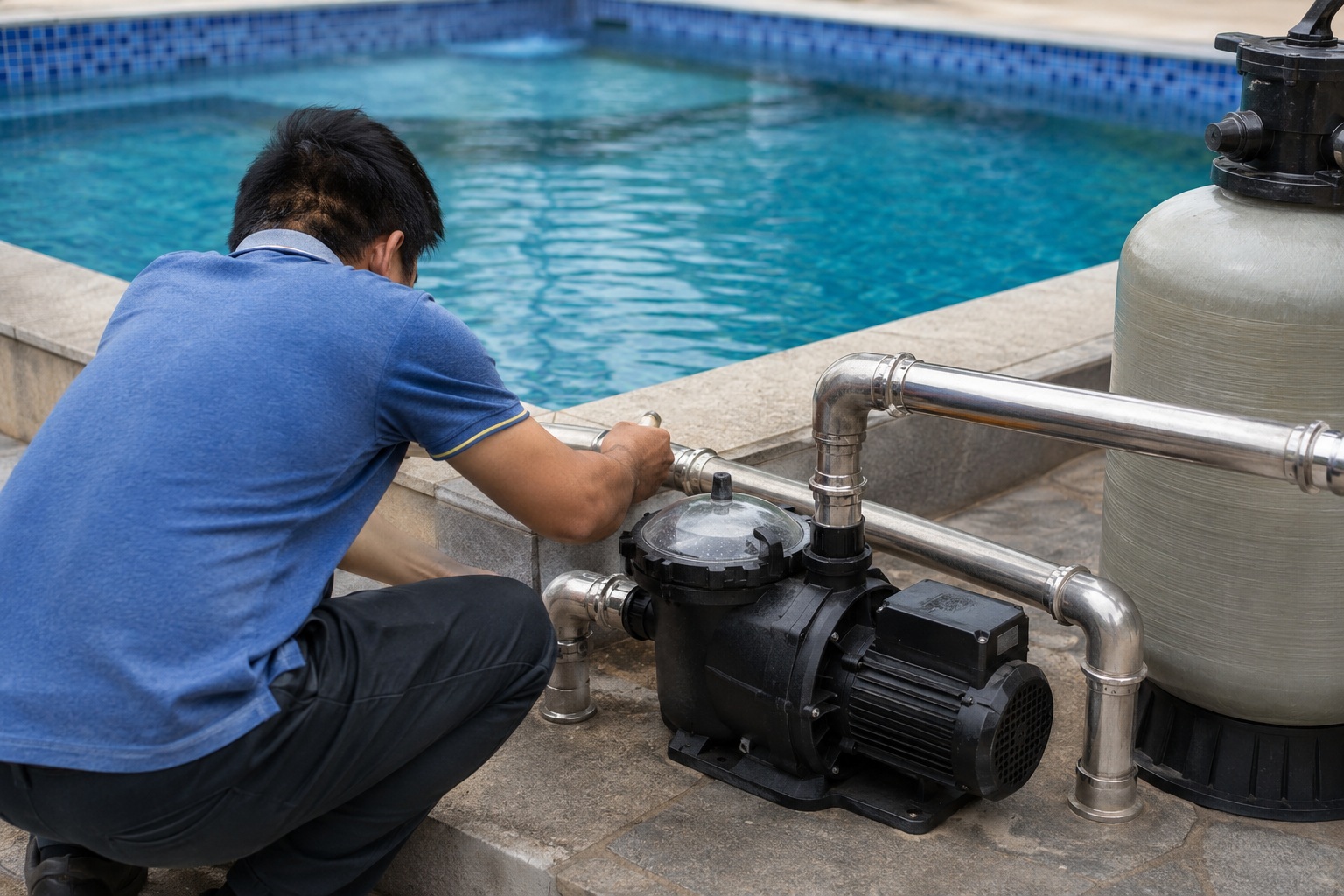
These manual methods are excellent for emergencies.
They buy you valuable time before the water quality declines significantly.
However, they are not long-term solutions for maintaining a healthy, swimmable pool.
Let's dive into how these temporary fixes work and then explore a permanent, cost-effective solution that frees you from relying on a traditional, grid-powered pump altogether.
Use a Garden Hose Siphon for Basic Circulation
Your pool water is stagnant and starting to look dull.
A simple garden hose is all you have available.
Here’s how you can use gravity to your advantage and create vital water movement.
Place one end of a hose in the pool and the other end at a lower point outside the pool. You must fill the entire hose with water first to remove all air and start the siphon. Gravity will then pull water out, creating circulation and lowering the water level.
This method is the simplest entry point into pump-free water removal.
It requires no electricity and uses equipment most homeowners already possess.
While it is slow, it is a reliable way to address an overfilled pool after heavy rain or to create some water movement in an emergency.
The key principle is gravity.
As long as the drain end of the hose is physically lower than the water's surface in the pool, the flow will continue.
How a Siphon Works: The Science of Gravity
A siphon operates on basic physics.
Water in the higher part of the hose (in the pool) has more potential energy than the water at the lower end (the drain point).
This difference in gravitational potential energy creates a pressure differential.
The weight of the water in the downward-sloping section of the hose effectively pulls the rest of the water over the edge of the pool.
This process will continue until the water level in the pool drops to the same height as the intake end of the hose or until the drain end is no longer lower than the pool's surface.
Step-by-Step Siphon Setup
- Submerge the Hose: Place the entire garden hose into the pool. This is the easiest way to fill it completely with water and expel all air. You will see bubbles escape from the hose.
- Seal One End: Once the bubbles stop, keep the hose fully submerged. Place your thumb securely over one end of the hose to create a vacuum seal.
- Position the Drain End: Carefully pull the sealed end of the hose out of the pool. Do not lift it higher than the pool water level. Carry it to your desired drainage area, which must be downhill from the pool.
- Release and Flow: Release your thumb from the hose. Water should begin to flow immediately.
Performance and Limitations
The effectiveness of a garden hose siphon is directly tied to its diameter and the height difference between the pool and the drain point.
It is not a high-performance solution.
A typical pump can circulate thousands of gallons per hour, whereas a siphon is drastically slower.
For instance, without circulation, your pool's chlorine effectiveness can drop by over 50% within just 48 hours.
A siphon helps mix the water, but it's a very slow mix.
| Hose Diameter | Typical Flow Rate (Gallons Per Hour) | Time to Remove 1,000 Gallons |
|---|---|---|
| 1/2 inch | ~150 GPH | ~6.5 hours |
| 5/8 inch | ~200 GPH | ~5 hours |
| 3/4 inch | ~275 GPH | ~3.6 hours |
This method is about 95% less effective at circulating water than a standard 1 HP pool pump.
It is a useful trick for lowering the water level, but it cannot replace the filtration and powerful circulation of a real pump.
Leverage a Pool Vacuum Hose for Faster Draining
The garden hose is just too slow for your large pool.
You need to move a significant volume of water much faster.
Your standard pool vacuum hose can become a powerful, pump-free tool for this job.
A wider vacuum hose functions as a more powerful siphon, moving substantially more water than a garden hose due to its larger diameter. The process is the same: fill the hose, keep one end submerged, and place the other at a lower drainage point.
This method is the next logical step up from a garden hose.
The larger diameter, typically 1.5 to 2 inches, allows for a dramatically increased flow rate.
This makes it a more practical option for draining larger above-ground pools or significantly lowering the water level in an in-ground pool.
While it still relies on gravity, the sheer volume of water it moves makes it a much more efficient manual method.
Comparing Hose Diameters: A Flow Rate Analysis
The difference in flow rate between a garden hose and a vacuum hose is not just linear; it's exponential.
The cross-sectional area of the hose is the determining factor.
A 1.5-inch vacuum hose has a cross-sectional area roughly 9 times larger than a 1/2-inch garden hose.
This translates to a massive increase in water-moving capability.
| Hose Type | Diameter | Typical Flow Rate (GPH) | Time to Remove 1,000 Gallons |
|---|---|---|---|
| Garden Hose | 5/8 inch | ~200 GPH | ~5 hours |
| Standard Vacuum Hose | 1.5 inches | ~1,200 GPH | ~50 minutes |
| Commercial Vacuum Hose | 2 inches | ~2,000 GPH | ~30 minutes |
As the table shows, using a vacuum hose can reduce draining time by over 80% compared to a garden hose.
The 'Push' Method for Starting the Siphon
Filling a long, bulky vacuum hose by submerging it can be awkward.
An alternative method is to use water pressure to start the siphon.
- Connect the vacuum hose to the skimmer plate or directly to a return jet in your pool.
- If using a return jet, hold the hose firmly against the opening. If your main pump is broken, this won't work.
- Alternatively, place the end of a running garden hose inside one end of the vacuum hose.
- Feed the vacuum hose into the pool, letting the garden hose's pressure push all the air out.
- Once water flows steadily from the other end, remove the garden hose, cap the vacuum hose end with your hand, and move it to the drainage area.
Common Pitfalls and How to Avoid Them
The most common issue with any siphon is an air lock.
If any air gets into the hose, the vacuum is broken, and the flow will stop.
Ensure the intake end of the hose stays well below the water's surface at all times.
As the water level drops, you may need to reposition the hose.
Hose kinking is another problem.
A sharp bend in the vacuum hose will restrict or stop the flow.
Ensure the hose has a smooth, gradual path from the pool to the drain point.
Using a Wet-Dry Vacuum for Targeted Cleaning
The siphon has stopped.
Those last few inches of water stubbornly remain at the bottom of the pool.
Debris is now concentrated in corners and on steps, and you need a precise way to remove it.
A wet-dry vacuum is the perfect tool for removing the last bits of water that a siphon cannot reach. It is also highly effective for spot-cleaning steps, benches, and spas. You simply vacuum the water until the canister is full, turn it off, empty it, and repeat.
This method shifts from a passive, gravity-fed approach to an active, powered one.
It is not designed for draining an entire pool.
Its strength lies in its precision and power for small-scale water removal.
Think of it as a cleanup tool rather than a draining tool.
For the final, frustrating dregs of water, a wet-dry vac is unmatched by other manual methods.
Safety First: Electricity and Water
This is the most critical consideration.
You are introducing an electric appliance into a wet environment.
- Use a GFCI Outlet: Always plug the vacuum into a Ground Fault Circuit Interrupter (GFCI) outlet. This will cut the power instantly if it detects any short-circuit, preventing electric shock.
- Keep the Motor Dry: The vacuum's motor unit must be kept far away from the water. Use the full length of the hose and extension cords to keep the power unit on dry, stable ground, well away from the pool's edge.
- Manage Cords: Ensure the power cord does not lie in any puddles or in the path of draining water.
Efficiency Breakdown: Is It Worth the Effort?
The efficiency of a wet-dry vac is measured in effort, not flow rate.
A standard 5-gallon wet-dry vac needs to be emptied 20 times to remove just 100 gallons of water.
This is labor-intensive and slow for large volumes.
However, for that last inch of water in a 1,000-square-foot pool (about 620 gallons), it's a manageable, albeit tedious, task.
Compared to using buckets, it's significantly faster and less physically straining.
Compared to a siphon that has stopped working, it is 100% effective.
Maximizing Your Wet-Dry Vac's Power
To get the most out of your machine, a few adjustments can help.
Remove the dry filter from inside the vacuum before use.
This filter is for dust and will be ruined by water, severely restricting airflow.
Most wet-dry vacs have a float mechanism that stops the suction when the tank is full to prevent water from reaching the motor.
Listen for the change in sound that indicates the float has activated.
Use a wide floor attachment or nozzle.
This allows you to suck up water more quickly over a larger area, similar to vacuuming a carpet.
Forcing the remaining water into one low spot with a pool brush can make the final cleanup even faster.
The Reality of Manual Methods vs. A Real Pump
You have spent hours siphoning and hauling buckets.
It is exhausting, incredibly slow, and despite your best efforts, the water is still getting cloudy.
There has to be a better, more permanent, and less labor-intensive solution.
Manual methods are only temporary fixes. They cannot filter debris, distribute chemicals effectively, or run unattended. For a truly healthy and safe pool, you need the consistent, powerful circulation that only a dedicated pump can provide, especially one not tied to the grid.
The limitations of pump-free methods become clear very quickly.
They are a bandage for a problem that requires a real cure.
Circulation is not just about moving water; it is the heart of your pool's entire ecosystem, responsible for filtration, sanitation, and temperature regulation.
Without it, you are fighting a losing battle against nature.
The Unseen Dangers of Stagnant Water
When water stops moving, a cascade of negative effects begins within 24 hours.
Bacteria Growth: Bacteria populations can double every few hours in warm, still water.
Algae Blooms: Algae spores, always present in the environment, find the perfect breeding ground on pool surfaces and begin to bloom, turning the water green.
Chemical Imbalance: Chlorine and other sanitizers are not distributed. They become concentrated in some areas and non-existent in others. The sun's UV rays also degrade chlorine much faster in still surface water, reducing its effectiveness by up to 60% in two days.
Debris Accumulation: Dirt, leaves, and oils settle on the floor and walls, providing food for algae and bacteria and creating a slimy surface.
Why Siphons Aren't a True Circulation Solution
A siphon is a draining tool, not a circulation tool.
It removes water from the pool but does not filter it and return it.
This one-way process cannot maintain water clarity or chemical balance in the way a proper pump and filter system can.
| Feature | Siphon / Manual Method | Dedicated Pump System |
|---|---|---|
| Filtration | None | Removes debris, contaminants |
| Chemical Distribution | Minimal / Uneven | Consistent / Even |
| Automation | Manual / Constant | Programmable / Automatic |
| Flow Rate | Very Low | High (4,000-8,000+ GPH) |
| Water Conservation | Wastes Water | Recirculates Water |
Introducing the Grid-Independent Solution: Solar Pumps
The problem often isn't the pump itself, but its reliance on grid electricity.
What if you could have the power and reliability of an automated pump without the electricity bill or the vulnerability to power outages?
This is where solar pump technology provides a modern, sustainable solution.
It offers the robust circulation needed to keep a pool pristine, powered entirely by the sun.
Understanding High-Efficiency Solar Pump Technology
You want a reliable pump but are concerned about high electricity bills.
The world of solar technology can seem complex and expensive.
Let's demystify the core components that make modern solar pumps so powerful and cost-effective.
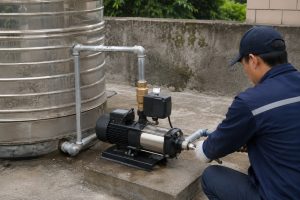
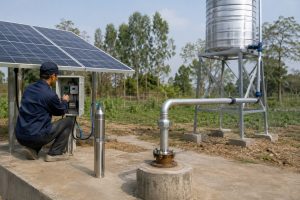
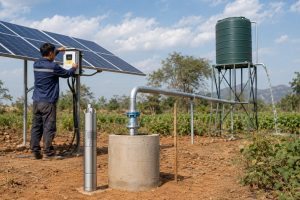
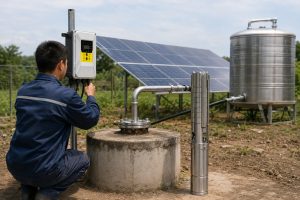
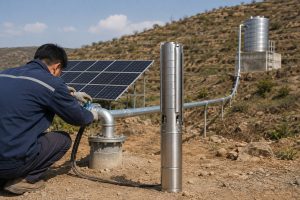
Modern solar pumps are driven by incredibly efficient Brushless DC (BLDC) motors. While often associated with deep wells, this core technology powers a wide range of water applications, providing reliable flow using only the sun's energy. Understanding the main types reveals what to look for.
The breakthrough in solar pumping isn't just the solar panel; it's the motor.
Traditional AC motors are inefficient, but BLDC motors change the game.
This technology, once expensive, is now accessible and forms the heart of high-performance solar water systems.
To understand its value, we can look at the different pump ends it can power, each designed for a specific task.
The Core of Power: The BLDC Permanent Magnet Motor
The BLDC motor is the engine of the solar pump system.
Its efficiency is its superpower.
- Efficiency: These motors regularly achieve efficiencies exceeding 90%. A conventional AC motor might only be 50-60% efficient, meaning nearly half the energy is wasted as heat.
- Power & Design: By using powerful permanent magnets, BLDC motors generate high torque in a compact size. They are often up to 47% smaller and 39% lighter than traditional motors of equivalent power.
- Market Value: High efficiency means the pump can run on fewer solar panels, directly lowering the initial system cost by 20-30%. Their brushless design means no parts to wear out, resulting in a maintenance-free, long service life.
Pump Type 1: The Screw Pump (Low Flow, High Head)
This pump uses a rotating stainless steel screw inside a rubber stator.
As the screw turns, it creates sealed cavities of water that are pushed upward.
It's excellent at creating high pressure (head) but delivers a lower volume of water (flow).
While ideal for pushing water up from very deep wells, its low-flow characteristic is less suited for the high-volume circulation required by most swimming pools.
Pump Type 2: The Plastic Impeller Pump (High Flow, Wear-Resistant)
This is a multi-stage centrifugal pump.
It uses a series of rotating plastic impellers to grab water and throw it outward by centrifugal force, pushing it to the next stage at a higher pressure.
This design is engineered for high flow rates at a medium head.
Its characteristics are highly analogous to a traditional pool pump, making this technology type an excellent, economical choice for pool circulation.
The durable plastic is also highly resistant to abrasion from fine sand.
Pump Type 3: The Stainless Steel Impeller Pump (Premium, Corrosion-Resistance)
This pump operates on the same centrifugal principle as the plastic impeller model but uses impellers made from SS304 stainless steel.
This material provides superior resistance to corrosion.
This is a critical feature for saltwater pools or pools in areas with aggressive or unbalanced water chemistry.
While it comes at a higher initial cost, its durability in harsh environments ensures a much longer service life, protecting the investment.
| Pump Technology | Flow Rate | Pressure (Head) | Sand Resistance | Corrosion Resistance | Best Use Case for Pools |
|---|---|---|---|---|---|
| Screw Pump | Low | Very High | Excellent | Good | Not ideal for pool circulation |
| Plastic Impeller | High | Medium | Very Good | Moderate | Standard freshwater pools, high-value choice |
| Stainless Steel Impeller | High | Medium-High | Good | Excellent | Saltwater pools, pools with aggressive water chemistry |
The Strategic Advantage of a Solar Pump System
Choosing a pump feels overwhelming.
Is a plastic impeller good enough?
Is the stainless steel model worth the extra cost?
Understanding the complete system—pump, motor, and controller—gives you a competitive advantage and long-term peace of mind.
A complete solar pump system strategically combines the right pump type (screw, plastic, or stainless steel) with a high-efficiency motor and an intelligent controller. This portfolio approach ensures you get the most reliable and cost-effective solution tailored to your specific water needs.
A great pump is only one part of the equation.
The true power of a modern solar water system lies in how the components work together.
The motor provides the raw power, the pump end directs that power effectively, and the controller acts as the brain, optimizing the entire operation.
This integrated design is what delivers unmatched performance and value.
The Brains of the Operation: The MPPT Controller
The Maximum Power Point Tracking (MPPT) controller is a sophisticated electronic device that sits between the solar panels and the pump motor.
Its job is to constantly adjust the electrical load on the solar panels to ensure they are operating at their peak efficiency, or "maximum power point."
- Performance Boost: An MPPT controller can boost the system's output by up to 30% compared to a system without one. This is especially true in the morning, late afternoon, or on overcast days when sunlight is not optimal.
- System Protection: The controller also provides vital protections for the motor, such as safeguards against overheating, running dry, and voltage fluctuations, significantly extending the life of the pump.
Building Your Ideal System: A Portfolio Approach
There is no "one-size-fits-all" solar pump.
The best choice depends entirely on the application.
By understanding the strengths of each component, you can configure a system that delivers exactly what you need without overpaying for features you don't.
| User Need | Recommended Pump End | Key Rationale |
|---|---|---|
| Small-to-Medium Residential Freshwater Pool | Plastic Impeller | High flow rate at an economical price point. Excellent value. |
| Large Residential or Commercial Saltwater Pool | Stainless Steel Impeller | Superior corrosion resistance ensures long life in a harsh environment. |
| Pool with a High-Pressure Water Feature (e.g., waterfall) | Stainless Steel Impeller | Provides both high flow and the higher head needed for features. |
Long-Term Value Proposition
A solar pump is an investment, not just a purchase.
While the initial cost is higher than a conventional pump, the return on investment is rapid and significant.
The primary saving comes from the complete elimination of electricity costs for pool circulation, which can account for up to 18% of a home's utility bill.
A typical 1.5 HP pool pump running 8 hours a day can cost $400-$800 per year in electricity.
A solar pump reduces that cost to zero.
Over a 5-year period, the savings can easily exceed $2,000, far outweighing the initial investment.
When combined with a maintenance-free BLDC motor and a long system lifespan, a solar pump offers the lowest total cost of ownership of any pumping solution on the market.
Conclusion
Manual methods are vital for emergencies when your pump fails.
However, a solar pump system provides a permanent, powerful, and cost-effective solution for long-term pool health, freeing you from grid-dependency and high electricity bills.
When you need to pump water on cloudy days or at night, an AC/DC hybrid controller is a powerful solution. When there is enough sunlight, the photovoltaic panels will be used for power supply. When there is no photovoltaic input, you can use AC power or a generator. AC/DC controllers are designed with two power inputs: you can connect to photovoltaic panels and an AC source at the same time. The controller automatically identifies and prioritizes photovoltaic power. When photovoltaic power is not enough, a hybrid function is used to maximize the use of solar energy. When there is no photovoltaic input, it will automatically switch to AC power supply, ensuring you have worry-free water use 24 hours a day.
FAQs
What is the fastest way to drain a pool without a pump?
The fastest method is using a wide-diameter (1.5" or 2") pool vacuum hose as a siphon. It moves significantly more water than a standard garden hose.
Can I leave my pool without a pump for a week?
It is not recommended. Within 2-3 days, especially in warm weather, algae can begin to grow, and the water can become cloudy, unsafe, and difficult to recover.
How do you circulate pool water without electricity?
You can create temporary circulation using a gravity-fed siphon with a garden or vacuum hose. This moves water but does not filter it.
Do I have to drain my pool if the pump is broken?
Not necessarily. You should focus on getting the pump repaired or replaced quickly. Draining should only be a last resort or for specific repairs.
How do you keep a pool from turning green without a pump?
Manually brush the walls and floor daily, skim debris, and use a siphon to create some water movement. You can also add liquid chlorine and manually stir the water to distribute it.
Can you add chemicals to a pool without the pump running?
Yes, but you must manually mix them. Pre-dissolve granular chemicals in a bucket of water and pour the solution evenly around the pool, then stir the water with a pool brush.
How much does a solar pool pump save?
A solar pool pump can save $400 to $800 or more annually on electricity costs, paying for itself in just a few years.
Is it safe to swim in a pool without a working pump?
It is unsafe if the water is not being sanitized. Without circulation, chemicals are not distributed, and bacteria can multiply, posing a health risk.