Your pool's energy bill is draining your wallet and harming the planet.
Continuing to pay high electricity costs for a luxury item feels wasteful, especially with rising energy prices and environmental concerns.
There are two main ways to power your pool pump with solar.
You can either install a dedicated off-grid system with a DC solar pump, or you can use a larger grid-tied home solar system to power your existing AC pump during the day.
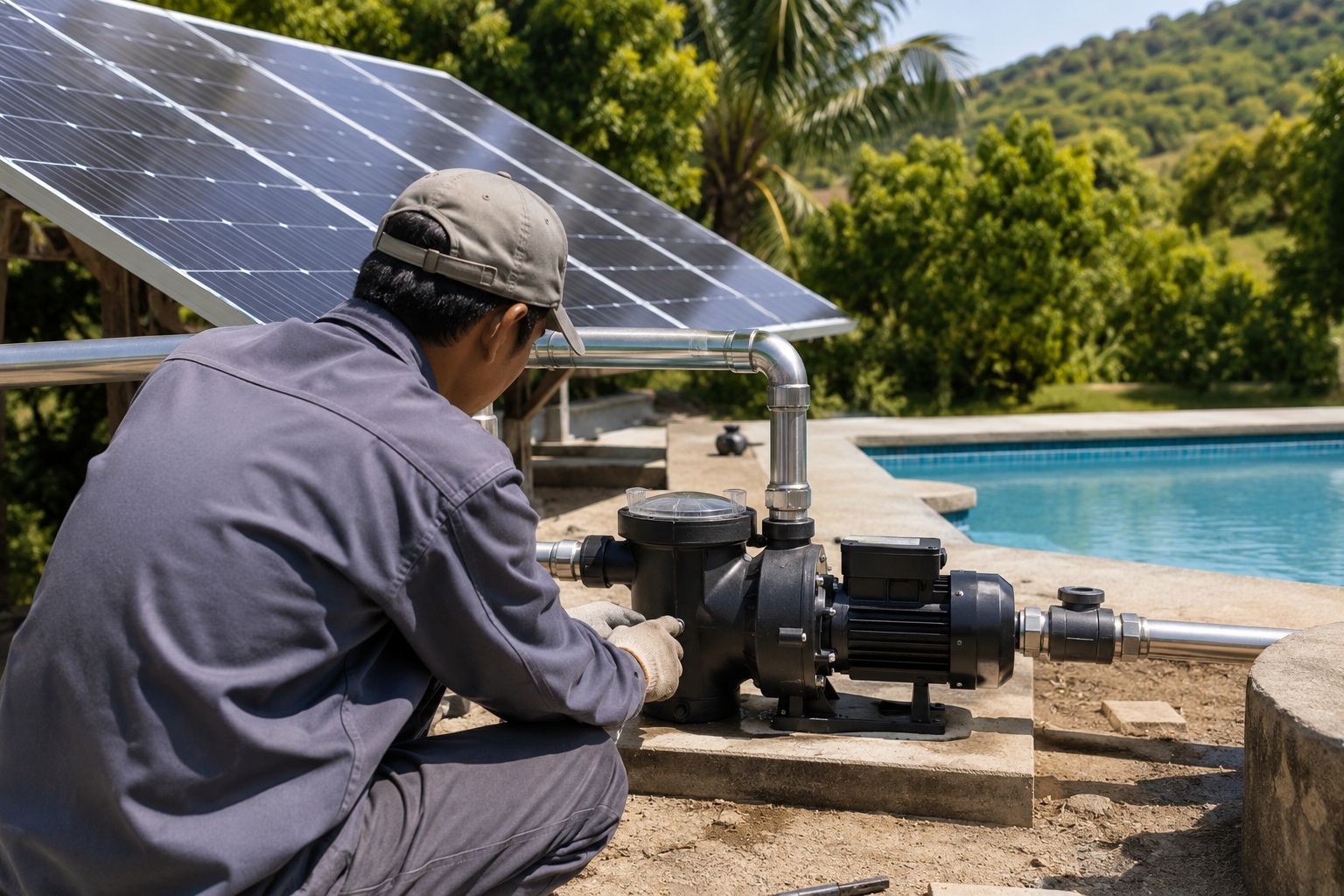
Making the switch to solar for your pool pump is a fantastic way to slash your electricity bills and reduce your carbon footprint.
It's a project with a surprisingly fast return on investment.
However, the path you choose and the quality of the components you select will make all the difference between a seamless, long-lasting solution and a frustrating, short-lived experiment.
This guide will walk you through the options, weigh the pros and cons, and dive deep into the technology that separates a good system from a great one.
We will explore everything from the initial setup costs to the critical inner workings of the pumps and controllers that make it all possible.
Let's get started.
Option 1: The Dedicated Off-Grid Solar Pool Pump
Tired of your pool pump adding hundreds to your annual electricity bill?
What if you could run it for free, powered only by the sun, completely independent of the grid?
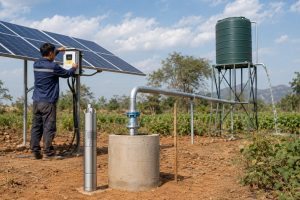
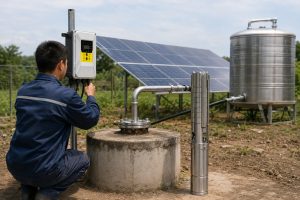
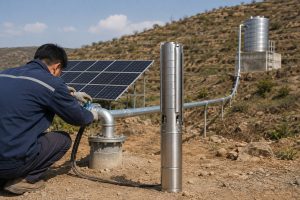
A dedicated off-grid system uses a special DC (Direct Current) pool pump connected directly to its own set of solar panels.
This setup operates entirely separate from your home's electricity, meaning the pump's energy cost drops to zero once installed.
How an Off-Grid System Works
The concept is straightforward.
Solar panels capture sunlight and generate DC electricity.
This power is sent through a specialized controller, which manages the voltage and current, directly running a DC-powered pool pump.
There's no need for grid connection, inverters to change power to AC, or utility company permission for these specific panels.
This makes it an attractive option for those who may have already maxed out their home's grid-tied solar allowance.
Calculating the Payback
The biggest question is always: "What will it cost, and when will it pay for itself?".
Let's break down a real-world example based on a DIY installation.
The initial investment covers the pump, panels, and necessary hardware.
While the upfront cost is over $800, the savings are immediate and substantial.
Initial Investment Breakdown
| Item | Quantity | Cost per Item | Total Cost |
|---|---|---|---|
| 400-watt PV Panels | 2 | $220 | $440 |
| 500-watt DC Pool Pump | 1 | $341 | $341 |
| Circuit Shut off/Timer | 1 | $75 | $75 |
| Cabling and Connectors | 1 | $25 | $25 |
| Total Initial Investment | $881 |
Annual Savings Calculation
To find the savings, we compare it to running a standard 1 HP (750-watt) AC pump.
- Daily Energy Use (Old Pump): 0.75 kW x 7 hours = 5.25 kWh
- Daily Cost (at $0.13/kWh): 5.25 kWh x $0.13 = $0.68
- Annual Cost (Old Pump): $0.68 x 365 days = $248.20
- Annual Savings with Solar: $248.20
With these numbers, the payback period is calculated by dividing the total investment by the annual savings.
Payback Period: $881 / $248.20 = 3.55 years
After just over three and a half years, the system has paid for itself.
Given that the core component, a quality DC brushless motor, has a potential lifespan of 20,000 to 30,000 hours (over 8 years of use), the long-term savings are enormous.
Potential Pitfalls and Workarounds
While the potential is huge, the market for these pumps is still developing.
Many available models are imports with a reputation for failure, often due to a significant design flaw.
The Cycling Glitch
The biggest issue reported is a "cycling glitch".
On partly cloudy days, the pump's simple controller reacts instantly to dips in sunlight.
This causes the motor to rapidly turn on and off every few seconds, creating immense stress on the components and leading to premature failure.
A simple workaround is to install a digital timer between the panels and the controller to shut the system down in the late afternoon when sunlight becomes inconsistent.
However, a better solution lies in more advanced controller technology.
Poor Support and Documentation
Another common complaint is the lack of clear instructions and customer support.
Installation manuals are often poorly translated and lack troubleshooting guidance, forcing users to rely on guesswork.
This can be a major deterrent for those not comfortable with DIY electrical work.
Option 2: Using Your Home's Grid-Tied Solar System
Do you already have a solar system on your roof, or are you planning to install one?
There might be a simpler way to power your pool pump without buying a whole new setup.
You can power your existing AC pool pump using the electricity generated by your home's grid-tied solar system.
This method avoids the cost of a new pump and leverages your existing investment, making it the most efficient use of every watt your panels produce.
How The Grid-Tied Method Works
This approach is beautifully simple.
Your rooftop solar panels generate electricity for your entire home.
By setting your pool pump's timer to run during peak sunlight hours (typically 10 a.m.
to 3 p.m.
), you use your own "free" solar power to run it instead of pulling expensive electricity from the grid.
Any excess solar power not used by the pump or other appliances is either used elsewhere in the house or exported back to the grid for a credit, ensuring no energy is wasted.
Sizing Your System Correctly
The key to this method's success is having a sufficiently large solar system.
A small system might not be able to cover your home's base energy needs and the significant draw of a pool pump.
A 1 HP pump can use 750 watts or more, which is a substantial load.
Experts recommend a system of at least 6kW to comfortably power both your home and the pump on a sunny day.
Power Consumption Example
| Appliance | Power Draw (Watts) |
|---|---|
| Typical Home Base Load | 300 - 500 W |
| 1 HP AC Pool Pump | ~750 W |
| Total Load | ~1050 - 1250 W |
| 6kW Solar System Output (Peak Sun) | 4,500 - 5,500 W |
As the table shows, a 6kW system produces more than enough power to cover both the pump and the home's background usage during sunny periods.
On overcast days, the system will still produce some power, but the pump may need to draw the remaining energy it needs from the grid.
Pros and Cons: Off-Grid vs.
Grid-Tied
Choosing the right path depends on your specific situation.
Do you have roof space?
Are you allowed to add more panels to your grid-tied system?
Do you want to invest in a new pump?
This table breaks down the key differences to help you decide.
| Feature | Off-Grid DC Pump System | Grid-Tied AC Pump System |
|---|---|---|
| Initial Cost | Higher (new pump, panels, controller) | Lower if you already have solar; higher for a new large system |
| Pump Replacement | Required (must use a DC pump) | Not required (uses your existing AC pump) |
| Energy Efficiency | Very high; direct DC-to-DC power minimizes loss. | Lower; power is converted from DC (panel) to AC (inverter). |
| Excess Energy | Wasted if pump doesn't need it. | Used by the home or exported to the grid for credit. |
| Cloudy Day Performance | Pump slows or stops. | Pump runs by drawing supplemental power from the grid. |
| Grid Independence | 100% for the pool pump. | Still dependent on the grid as a backup. |
| Installation Rules | Bypasses utility limits on total solar panel capacity. | Subject to utility company rules and size limitations. |
Choosing the Right Solar Pump: A Look Under the Hood
You've decided to go solar, but now face a sea of options.
The market is filled with pumps at wildly different price points, from $300 to over $1,000 for similar specs.
Understanding the technology inside the pump is the key to making a wise investment.
The true value lies not just in the pump itself, but in the motor that drives it and the controller that manages it.
These components determine efficiency, reliability, and lifespan.
The Heart of the System: The BLDC Motor
The most significant technological advantage of a modern solar pump is its motor.
High-quality systems use a BLDC (Brushless DC) permanent magnet motor, which is a game-changer for efficiency and durability.
Why is a BLDC Motor Superior?
Unlike older brushed motors that rely on physical contact to transfer power (creating friction, wear, and heat), brushless motors use electronics.
This results in a dramatic improvement in performance.
- Efficiency: BLDC motors can exceed 90% efficiency, converting more of the sun's energy directly into water movement. This means you need fewer solar panels to achieve the same performance, saving money and space.
- Lifespan: With no brushes to wear out, a BLDC motor's lifespan is rated at 20,000 to 30,000 hours. A conventional brushed motor might only last 2,000 to 5,000 hours. That's a 6x to 10x increase in longevity.
- Size and Weight: Advanced designs using powerful neodymium iron boron magnets allow these motors to be significantly more compact. They can be up to 47% smaller and 39% lighter than traditional motors of equivalent power.
- Maintenance: They are virtually maintenance-free.
The "cycling glitch" seen in cheaper pumps isn't a failure of the motor itself, but of the simple controller failing to protect this advanced component.
The Brains of the Operation: The Controller
The controller is just as important as the motor.
It's the intermediary that takes the fluctuating power from the solar panels and delivers it to the pump in a stable, usable format.
Basic vs. Advanced Controllers
Most basic solar pump kits come with a standard MPPT (Maximum Power Point Tracking) controller.
Its job is to optimize the voltage from the panels to get the most power out of them at any given moment.
While effective, they can be "dumb," leading to the damaging on/off cycling in variable light.
A more advanced solution, now entering the market, is the AC/DC hybrid controller.
This intelligent device solves the two biggest problems of solar-only systems: cloudy days and nighttime operation.
- Hybrid Power Input: These controllers have inputs for both solar panels (DC) and the grid (AC).
- Automatic Switching: The controller prioritizes solar power. When sunlight is sufficient, it runs the pump entirely off the panels.
- Smart Blending: If clouds reduce solar output, the controller seamlessly blends in just enough AC power from the grid to maintain pump speed without interruption.
- 24/7 Operation: When the sun goes down, it automatically switches over to full AC power, ensuring your pool stays clean around the clock if needed.
This technology eliminates the cycling glitch and provides worry-free, 24-hour operation while maximizing the use of free solar energy.
Pump Types for Different Needs
While the pool pump market is specific, it borrows technology from the broader water pump industry.
Understanding the different pump end designs reveals how a system can be tailored for various conditions.
| Pump Type | Key Feature | Flow / Head | Best Use Case |
|---|---|---|---|
| Solar Screw Pump | High Sand Resistance | Low Flow / High Head | Deep wells, lifting water long distances. |
| Solar Plastic Impeller | High Flow / Wear-Resistant | High Flow / Medium Head | General circulation, moving large volumes of water. |
| Solar Stainless Steel Impeller | Premium Corrosion Resistance | High Flow / Medium-High Head | Saltwater pools, harsh water chemistry. |
For a standard swimming pool, a variation of the plastic or stainless steel impeller pump is most common, designed to move large volumes of water (high flow) against relatively low pressure (low head).
Choosing a pump with a stainless steel impeller offers superior durability, especially for saltwater pools.
Conclusion
Switching your pool pump to solar is a smart financial and environmental decision.
You can choose a dedicated off-grid system for total energy independence or leverage a grid-tied home system for maximum efficiency.
Success depends on quality components, especially a brushless motor and an intelligent controller.
FAQs
Can I run my pool pump directly from a solar panel?
Only if it's a DC pump. A standard AC pump cannot be connected directly. The system requires a DC pump and a controller to manage the power from the panels.
How many solar panels does it take to run a pool pump?
This depends on the pump's wattage. A 500-watt DC pump typically requires two to three 400-watt panels to operate effectively throughout the day.
Is a solar pool pump worth it?
Yes. With payback periods often between 3-5 years, they provide significant long-term savings on electricity and reduce your carbon footprint, making them a very worthwhile investment.
Can a solar pool pump run at night?
Not without a battery bank. A standard solar pump system only runs when the sun is out. Adding batteries increases cost and complexity significantly.
How long do solar pool pumps last?
A quality pump with a brushless DC motor can last 20,000-30,000 hours. This translates to over 8-10 years of reliable seasonal use, far outlasting conventional pumps.
What size solar pump do I need for my pool?
The pump should be sized to turn over the entire volume of your pool's water at least once per day. Match the pump's flow rate (gallons per minute) to your pool's volume.
Can I use a solar pool pump for a saltwater pool?
Yes, but it is highly recommended to choose a model with a stainless steel pump head and impellers. This provides the necessary corrosion resistance to handle the saltwater environment.
Do I need a professional to install a solar pool pump?
While some systems are sold as DIY kits, installation involves both plumbing and electrical work. For safety and optimal performance, professional installation is often recommended.