Struggling with unreliable grid power and unpredictable water access?
A new pump is the answer, but the costs and options can feel overwhelming and complex.
The price of a water pump can range from $200 for basic models to over $5,000 for advanced systems.
Your final cost is shaped by the pump's type, its power source, and its specific job, whether for home use or large-scale irrigation.
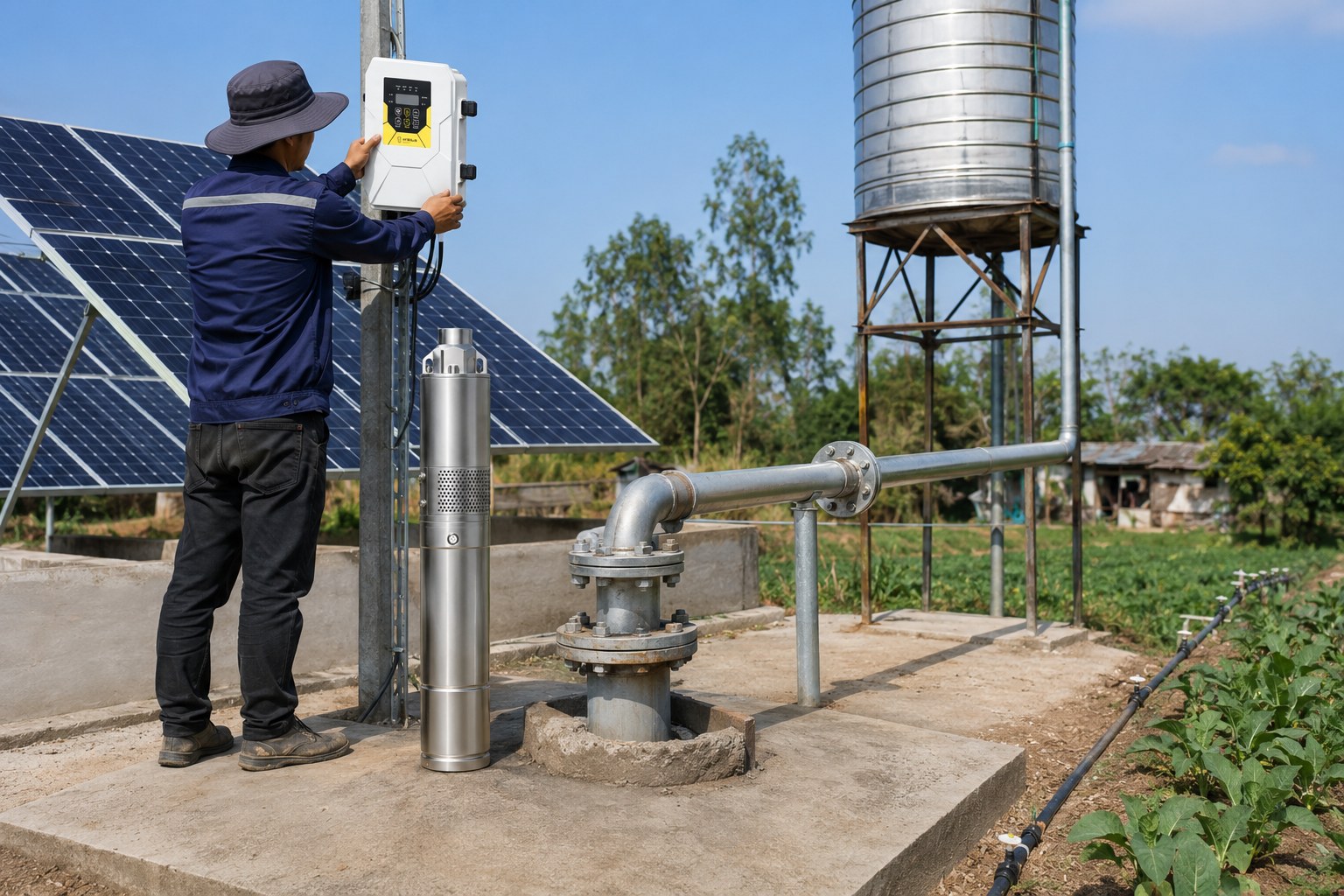
To make a smart investment, you must understand what drives these costs.
This guide will break down the prices for different pumps, from traditional well systems to modern solar solutions.
We will help you choose the best value for your needs.
Let's explore the factors that influence the final price tag and what you truly get for your money.
Understanding the Cost of Conventional Well Pumps
A failing well pump can stop your water supply completely, causing major household disruptions.
The sudden need for a replacement can bring shocking and unpredictable costs, leaving you feeling unprepared.
The average replacement cost for a standard well water pump typically falls between $900 and $3,000.
This price usually includes the pump unit itself and professional installation labor.
However, factors like your well's depth and the specific pump type can significantly change the final bill.
A Closer Look at Well Pump Replacement Costs
Replacing a well pump is a common but significant expense for homeowners who rely on private wells.
The total cost is not just about the pump itself but also involves labor and potentially other system components.
Understanding these costs helps you budget effectively and avoid surprises.
Breakdown of Typical Replacement Costs
The type of pump your system uses is the primary driver of cost.
Different designs are needed for different well depths, and their prices vary accordingly.
A submersible pump, for instance, requires more labor to replace as it is located deep inside the well casing.
Here is a general breakdown of costs you can expect.
| Pump Type | Average Replacement Cost (including labor) | Common Application |
|---|---|---|
| Shallow Well Pump | $900 – $1,800 | Wells less than 25 feet deep |
| Jet Pump | $1,000 – $2,500 | Shallow to moderately deep wells |
| Submersible Well Pump | $1,500 – $3,000 | Deep wells |
| Constant Pressure Pump | $2,500 – $5,000 | Systems requiring consistent pressure |
Key Factors That Influence the Final Price
Several variables can increase or decrease your total expenditure.
Well Depth: Deeper wells require more powerful pumps, longer pipes, and more extensive labor.
A pump for a 300-foot well will cost substantially more to install than one for a 30-foot well.
Pump Size (Horsepower): Pumps are rated in horsepower (HP).
Common residential sizes include ½ HP, ¾ HP, and 1 HP.
A higher HP pump provides greater water flow but comes at a higher initial cost.
Labor Costs: Professional installation can range from $300 to over $1,000.
This fee depends on the project's complexity, the pump's location, and regional labor rates.
Additional Components: Often, a pump failure is a symptom of a larger system issue.
You may also need to replace the well pressure tank ($800 - $2,500), the pressure switch ($50 - $200), or update electrical wiring ($100 - $500).
These additions can quickly escalate the total project cost.
Most well pumps have a lifespan of 8 to 15 years.
Knowing the signs of failure, such as low water pressure, sputtering faucets, or a constantly running pump, can help you plan for a replacement before it becomes an emergency.
Why Upgrade to a Modern Pump System?
Are you tired of seeing high energy bills from an old, inefficient pump?
Your current water system might be costing you more than you realize in both electricity and ongoing maintenance.
Upgrading from an outdated jet pump to a modern submersible or solar pump can boost efficiency by over 30%.
These advanced systems provide stronger, more consistent pressure, operate quietly, and offer significant long-term savings on both energy and repairs.
The Inefficiency of Older Technology
Many homes with older wells still use jet pumps.
While reliable for their time, these pumps have significant drawbacks compared to modern alternatives.
Their design often places the motor above ground, which creates noise and exposes it to the elements.
More importantly, they are less energy-efficient because they have to pull water up, working against gravity.
This constant struggle leads to higher electricity consumption, which can add up to hundreds of dollars per year.
Furthermore, jet pumps are prone to losing their prime, which requires manual intervention to fix and can cause wear and tear on the motor.
The Clear Advantages of a Modern Upgrade
Switching to a modern submersible pump offers immediate and measurable benefits.
Because they are submerged deep in the well, these pumps push water up instead of pulling it.
This action is inherently more efficient and can create strong water pressure up to 30% faster than a jet pump.
They are also self-priming and virtually silent during operation.
Though the initial investment for a submersible pump may be higher, the long-term savings are compelling.
A Comparative Look: Jet Pump vs. Submersible Pump
| Feature | Legacy Jet Pump | Modern Submersible Pump | Advantage of Upgrading |
|---|---|---|---|
| Energy Efficiency | Lower (works against gravity) | High (pushes water) | Up to 25-35% energy savings |
| Pressure Generation | Slower | 30% Faster | Immediate, consistent pressure |
| Maintenance | Requires priming, more frequent repairs | Self-priming, less maintenance | Lower long-term repair costs |
| Noise Level | Audible, often loud | Nearly silent | Improved quality of life |
| Lifespan | 8 - 12 years | 10 - 15+ years | Fewer replacements over time |
The financial case for upgrading is strong.
The energy and repair cost savings of a modern pump can pay back the initial investment over its lifespan, making it a wise choice for any homeowner looking to improve their water system and reduce costs.
This logic of seeking higher efficiency and lower operating costs is precisely what drives the market for the next evolution in water pumping: solar-powered systems.
Solar Screw Pumps: High Head for Deep Wells
Accessing water from extremely deep wells in remote, off-grid areas often feels like an impossible task.
Traditional pumps struggle with the immense depth and frequently fail, leaving you without a reliable water source.
Solar screw pumps are engineered for these challenging conditions, delivering very high head (pressure) with a consistent low flow.
They are the ideal solution for deep-well domestic water and livestock needs, offering unmatched reliability where other pumps fail.
How Solar Screw Pumps Conquer Deep Wells
The unique strength of a solar screw pump lies in its design, known as a progressing cavity pump.
It does not use impellers like other centrifugal pumps.
Instead, it features a single stainless steel helical screw that rotates within a durable rubber stator.
As the screw turns, it forms a series of sealed cavities that move water steadily upwards through the pump.
This mechanism acts like an elevator for water, pushing it with immense force.
It allows the pump to generate extremely high head, making it capable of lifting water from depths of 300 meters or more.
This method is less affected by depth compared to centrifugal pumps, maintaining steady performance.
Key Applications and Strategic Benefits
Solar screw pumps are not designed for high-volume applications but excel in their specific niche.
- Deep Well Domestic Supply: They are perfect for providing drinking water to homes in areas with very deep water tables, common in parts of Africa and Latin America.
- Livestock Watering: Their reliability and low power consumption make them perfect for watering troughs on vast, remote ranches.
- Small-Scale Irrigation: They can be used for drip irrigation where high pressure is needed to serve a small but critical area.
The most significant benefit is their exceptional resistance to sand.
The screw mechanism can handle water with higher concentrations of sand and sediment without the rapid wear that would destroy an impeller-based pump.
Performance Profile: Low Flow, High Power
| Feature | Specification / Performance | Why It Matters |
|---|---|---|
| Flow Rate | Low (e.g., 1-5 gallons per minute) | Optimized for lifting water, not for high-volume output. Perfect for filling a tank over time. |
| Maximum Head | Very High (Up to 300+ meters) | Enables access to water sources far deeper than what standard pumps can reach. |
| Sand Resistance | Excellent (can handle ~5% solids) | Drastically increases pump lifespan and reliability in wells with sandy or silty water. |
| Primary Limitation | Low Flow Volume | Not suitable for applications requiring large amounts of water quickly, like flood irrigation. |
For distributors and installers, the solar screw pump is a problem-solver.
It provides a dependable solution for the most challenging deep-well projects, opening up markets that are inaccessible with conventional pumping technology.
It represents a high-value, specialized tool in a complete solar pump portfolio.
Solar Plastic Impeller Pumps: High Flow for Agriculture
Large farms, ranches, and community gardens require a massive volume of water every single day.
Finding an affordable, high-flow pump that can withstand the wear and tear of sandy water is a constant challenge for agricultural users.
Solar plastic impeller pumps meet this need head-on.
They provide a high-flow, cost-effective solution for farm irrigation and livestock water supply.
Their durable, wear-resistant design handles fine sand effectively, making them a top choice in agricultural regions worldwide.
The Power of Multi-Stage Centrifugal Design
Unlike the screw pump, this model is a multi-stage centrifugal pump.
It works by using a series of impellers stacked on top of each other.
Each impeller and diffuser stage adds pressure to the water, collectively building the force needed to move large volumes to the surface.
The impellers in this pump are made from a high-strength, engineered plastic.
This material choice is strategic.
It is lightweight, which reduces manufacturing costs and the load on the motor.
Critically, it is also highly resistant to abrasion from fine sand, a common issue in agricultural wells that can quickly erode metal impellers.
This design delivers an optimal balance of high flow rates and moderate head, perfect for most irrigation needs.
Economic and Performance Advantages
This pump is the workhorse of the solar pumping world, valued for its practicality and performance.
- High Water Output: It is designed to move the maximum amount of water for the energy consumed, making it ideal for filling large tanks or directly irrigating fields.
- Cost-Effective: The use of engineered plastic for impellers makes these pumps more affordable to manufacture and purchase compared to all-metal versions.
- Lightweight: The reduced weight makes installation easier and less expensive, as it may not require heavy lifting equipment.
- Wear Resistance: It excels in environments with fine sand, offering a longer service life than many alternatives in such conditions.
A Comparative Look at Flow vs. Pressure
This pump's role is best understood when compared to the specialized screw pump.
| Feature | Plastic Impeller Pump | Solar Screw Pump |
|---|---|---|
| Primary Goal | High Volume (Flow) | High Pressure (Head) |
| Typical Application | Farm Irrigation, Pasture Supply | Deep Well Domestic Water |
| Flow Rate | High (e.g., 20-100+ GPM) | Low (e.g., 1-5 GPM) |
| Best Sand Type | Fine Sand | Coarse & Fine Sand |
| Cost | Economical | Moderate |
While highly effective, this pump has its limits.
It is not designed for extremely deep wells where a screw pump would excel, nor is it suitable for highly corrosive water, which could degrade the components over time.
For its intended purpose, however, it represents the best combination of performance and value for agricultural water supply.
Solar Stainless Steel Pumps: Durability for Harsh Water
Dealing with acidic, alkaline, or salty water quickly destroys standard water pumps.
The constant cycle of replacement and downtime becomes a significant financial and operational drain for high-end properties or industrial use.
For these corrosive environments, solar stainless steel impeller pumps are the definitive, premium solution.
Constructed with high-grade SS304 stainless steel, they provide maximum corrosion resistance, ensuring an exceptionally long service life and unwavering reliability in the world's toughest water.
Why Stainless Steel is the Superior Choice
The core value of this pump lies in its material science.
SS304 is a specific grade of stainless steel known for its excellent resistance to a wide range of corrosive agents.
In water systems, this means it can withstand:
- Low pH (Acidic) Water: Prevents the metal from being eaten away.
- High pH (Alkaline) Water: Resists mineral buildup and degradation.
- Salinity: Ideal for coastal areas where water may have some salt content.
While plastic impellers offer abrasion resistance and low cost, they can become brittle or break down in chemically aggressive water.
The stainless steel pump, in contrast, maintains its structural integrity and smooth surface, ensuring consistent efficiency and preventing contamination of the water from pump degradation.
The pump body and other key components are also made of stainless steel, creating a complete defense system against corrosion.
Ideal Markets for a Premium Investment
This pump is not for every application but is indispensable in specific, high-value markets.
- Regions with Problematic Water Chemistry: Common in parts of Australia with alkaline soils, certain regions in the Americas with mineral-rich water, and industrial sites.
- High-End Homes and Ranches: For property owners who demand the longest-lasting, most reliable equipment and pure water quality.
- Coastal Applications: Provides a durable solution where salt spray and brackish water are concerns.
Analyzing the Long-Term Value Proposition
The upfront cost of a stainless steel pump is higher than its plastic impeller counterpart.
However, the decision should be based on total cost of ownership, not just the initial price tag.
| Feature | Stainless Steel Impeller Pump | Plastic Impeller Pump |
|---|---|---|
| Corrosion Resistance | Excellent | Poor to Moderate |
| Estimated Lifespan | 15 - 25 Years | 5 - 10 Years (in ideal water) |
| Upfront Cost | High | Low |
| Long-Term Value | Excellent: Avoids multiple replacement cycles, saving on labor and hardware costs over time. | Poor: In corrosive water, it would fail quickly, leading to higher lifetime costs. |
For a distributor, this pump serves the top tier of the market.
It is a high-margin product that solves a critical problem for customers who are willing to pay for a permanent solution.
Offering this pump demonstrates a commitment to quality and an ability to meet the needs of the most demanding applications.
The Core of Efficiency: The BLDC Motor
You invested in a solar pump system, but it still requires a massive, expensive array of solar panels to run.
The promised energy savings are not happening because the pump's motor is inefficient and wasting precious solar power.
The secret to a truly cost-effective and powerful solar pump system is a high-efficiency BLDC motor.
With an efficiency rating exceeding 90%, these advanced motors can reduce the number of solar panels needed by 25% or more, dramatically lowering system costs.
The Technology Behind Superior Performance
BLDC stands for Brushless DC motor.
This design represents a major leap forward from older, brushed motors.
- Brushless Design: Traditional motors use carbon "brushes" to transmit power, which create friction, generate heat, wear out, and waste energy. BLDC motors use an electronic controller instead, eliminating this point of failure and inefficiency.
- Permanent Magnet Rotor: The rotor is built with powerful permanent magnets, often made from high-grade materials like 40SH neodymium iron boron. These magnets create a strong magnetic field, providing high torque and power from a compact size.
This combination results in a motor that is more powerful, more reliable, and vastly more efficient than its predecessors.
Quantifiable Advantages in the Field
The technical superiority of BLDC motors translates directly into tangible market value.
Their performance metrics are a game-changer for solar applications.
| Feature | BLDC Permanent Magnet Motor | Traditional Brushed Motor |
|---|---|---|
| Energy Efficiency | >90% | 60-75% |
| Physical Size | ~47% Smaller | Larger and Bulkier |
| Weight | ~39% Lighter | Heavier |
| Lifespan | Long (no brushes to wear out) | Shorter (brush replacement needed) |
| Maintenance | Virtually Maintenance-Free | Requires periodic service |
The Critical Impact on Total System Cost
The most important advantage in a solar pumping system is the motor's impact on the solar panel array.
Solar panels are often one of the most expensive components of the entire installation.
The relationship is simple: a more efficient motor requires less power to do the same amount of work.
If a motor is 25% more efficient, it needs 25% less input power.
This means you can purchase a smaller, less expensive solar array to run the pump.
This saving on solar panels can often offset the higher cost of the advanced pump and motor, resulting in a lower total system cost from day one.
For a distributor, this is a powerful selling point.
You are not just selling a pump; you are selling a more cost-effective and powerful total water solution.
Maximizing Performance with Intelligent Controllers
Solar pumps are a brilliant solution, but a common fear holds many back: what happens on cloudy days or at night?
The worry of having no water when the sun isn't shining is a major barrier to adoption.
Modern intelligent controllers eliminate this fear completely.
They use MPPT technology to squeeze every drop of energy from the sun and offer hybrid AC/DC capability to automatically switch to grid or generator power, guaranteeing an uninterrupted 24/7 water supply.
Getting the Most from the Sun: MPPT Technology
MPPT stands for Maximum Power Point Tracking.
It is a sophisticated technology that acts as a smart link between the solar panels and the pump motor.
The power output of a solar panel changes constantly with sunlight intensity.
An MPPT controller continuously monitors the panel's voltage and current, making micro-adjustments to ensure the motor is always receiving the optimal amount of power.
This process is far superior to simple controllers that connect panels directly to the motor.
A system with MPPT can harvest up to 30% more energy from the same solar array over the course of a day.
This means the pump starts earlier in the morning, runs longer on cloudy days, and pumps more water overall.
The Ultimate Solution: Hybrid AC/DC Control
The true game-changer is the hybrid AC/DC controller.
This device is designed with two power inputs: one for DC power from solar panels and one for AC power from the grid or a generator.
The controller's intelligence lies in how it manages these sources:
- Prioritizes Solar: As long as there is sufficient sunlight, the controller will run the pump exclusively on free solar energy.
- Blends Power: If sunlight decreases (e.g., a passing cloud), the hybrid function can blend a small amount of AC power with the solar power to maintain pump operation without fully switching over. This maximizes the use of free solar energy.
- Automatic Switchover: When there is no solar input (e.g., at night or during heavy storms), the controller automatically and seamlessly switches to the AC power source.
The user doesn't have to do anything.
The system ensures water is always available.
The Value of an Uninterrupted Water Supply
This hybrid capability transforms a solar pump from a supplementary or "daytime-only" device into a primary, 24/7 water supply system.
It removes the biggest objection to solar power—intermittency—and provides complete peace of mind.
For agricultural users, it means irrigation can happen at any time.
For homeowners, it means a shower will always work, day or night.
For distributors, offering a hybrid AC/DC solution dramatically expands the market for solar pumps, making them a viable and superior alternative to conventional grid-powered pumps for nearly any application.
Conclusion
The true cost of a water pump is not its price tag.
It is a balance of pump type, motor efficiency, and intelligent control that ensures long-term value, reliability, and peace of mind.
FAQs
How do I know if my well pump is broken?
Signs include low or no water pressure, air sputtering from faucets, dirty water, or a pump that runs constantly. These symptoms suggest a need for professional inspection.
How long does a well pump last?
Most well pumps last between 8 and 15 years. Lifespan depends on pump quality, water conditions, and usage frequency. Regular maintenance can extend this period.
Can I replace a well pump myself?
It is not recommended for DIY. The job involves heavy lifting, complex plumbing, and dangerous electrical work. Hiring a professional ensures safety and proper installation.
What is the most common type of well pump?
Submersible pumps are the most common type for residential wells. They are efficient, quiet, and well-suited for deep well applications, pushing water to the surface effectively.
How much does a solar water pump cost?
Solar pump systems vary widely, from around $500 for small kits to over $5,000 for large-scale irrigation systems. The cost depends on the pump type, motor, and solar panel size.
Is a solar water pump worth it?
Yes, for many applications. They eliminate electricity costs, work in remote off-grid locations, and are highly reliable. The long-term savings often outweigh the initial investment.
Can a solar pump work without a battery?
Yes, most modern systems are direct-drive. They use the sun's energy to pump water directly during the day, often filling a storage tank, which eliminates the need for batteries.
How deep can a solar pump pump water?
This depends on the pump type. Solar screw pumps are specialized for depth and can pump water from 300 meters (nearly 1,000 feet) or more, making them ideal for deep wells.