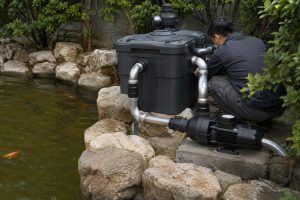
Running a pump dry causes severe damage and costly failures.
You need a reliable system, but unexpected issues can destroy your equipment.
Understanding why this happens is the key to prevention.
No, it is never okay to run a standard centrifugal pump dry.
The pumped fluid acts as a coolant and lubricant for the pump's internal components.
Without it, the pump will rapidly overheat, causing catastrophic failure of the mechanical seal, impeller, and casing within minutes.

Running a pump without water is like running a car engine without oil.
The result is swift, expensive, and entirely avoidable.
To truly grasp the severity of this issue, we need to look inside the pump itself.
Understanding the fundamental principles of its operation reveals exactly why fluid is not just a payload, but a lifeline for the machine.
Let's explore the mechanics, types, and vulnerabilities of these essential devices.
What is the principle behind the operation of centrifugal pumps?
Choosing the right pump feels complex and overwhelming.
Making the wrong choice leads to poor performance and wasted energy.
Understanding the core principle simplifies the selection process and ensures efficiency.
A centrifugal pump works by converting mechanical energy into hydraulic energy.
A motor spins an impeller, which imparts high velocity to the fluid.
This high-velocity fluid then flows into the pump casing (volute), where its speed is converted into high pressure, pushing it out the discharge port.
How a Centrifugal Pump Creates Flow and Pressure
A centrifugal pump is a marvel of fluid dynamics.
Its operation begins when fluid enters the pump through the suction inlet.
The fluid is then directed to the center, or "eye," of a rotating component called an impeller.
The impeller, which is driven by an external motor, has a series of curved vanes.
As the impeller spins at high speed (often 1,500 to 3,500 RPM), it slings the fluid outward using centrifugal force.
This action dramatically increases the fluid's velocity, converting the motor's rotational energy into kinetic energy.
Once the high-velocity fluid leaves the tips of the impeller, it enters the pump's casing, known as the volute.
The volute is a specially designed spiral chamber with a progressively larger cross-sectional area.
This expanding chamber forces the fast-moving fluid to slow down.
According to Bernoulli's principle, as the fluid's velocity decreases, its pressure increases.
This conversion of kinetic energy (velocity) into potential energy (pressure) is the pump's primary function.
The now-pressurized fluid is then directed out of the pump through the discharge outlet.
Key Components and Their Critical Roles
The elegant simplicity of a centrifugal pump's operation relies on several key components working in perfect harmony.
Even a minor failure in one part can compromise the entire system.
Understanding each component's role clarifies why running the pump dry is so destructive.
| Component | Function | Why It Fails When Run Dry |
|---|---|---|
| Impeller | Rotates to impart velocity to the fluid. | Without fluid, friction with air causes rapid overheating. The impeller can warp, melt (if plastic), or seize. |
| Casing (Volute) | Collects fluid from the impeller and converts its velocity into pressure. | Experiences extreme heat from the spinning impeller, leading to potential cracking or deformation. |
| Mechanical Seal | Prevents fluid from leaking out along the rotating shaft. | Relies on a thin film of pumped fluid for lubrication and cooling. Without it, the seal faces overheat and crack in under a minute. |
| Shaft | Transmits torque from the motor to the impeller. | Can become misaligned or damaged due to vibrations and heat caused by other failing components. |
| Bearings | Support the shaft and reduce friction, allowing it to spin smoothly. | Although not in direct contact with the pumped fluid, they can overheat from heat conducted through the shaft from the dry pump end. |
Why Fluid is the Lifeblood of the Pump
The fluid being pumped does more than just move from point A to point B.
It serves two critical secondary functions.
First, it acts as a coolant, absorbing and carrying away the immense heat generated by friction between the rotating impeller and the stationary casing.
This heat can be substantial, easily reaching temperatures that can damage metal and plastic components.
Second, the fluid provides essential lubrication, particularly for the mechanical seal.
The seal consists of two extremely flat, hard faces (often ceramic or carbon) pressed together.
A microscopic film of the pumped liquid works its way between these faces, lubricating them and preventing them from grinding each other to dust.
When you run a pump dry, you remove both the coolant and the lubricant, leading to a rapid and catastrophic thermal failure.
What are the different types of centrifugal pumps?
The market is flooded with countless pump types.
Choosing the wrong one means you're wasting money on an inefficient or unsuitable solution.
Learning the main categories helps you match the right pump to your specific needs.
Centrifugal pumps are primarily classified by their flow pattern (radial, axial, or mixed), the number of impellers (single-stage or multi-stage), and specialized features (like self-priming or submersible).
Each design is optimized for a specific combination of flow rate and pressure (head).
Classification by Flow Type
The direction the fluid travels through the impeller determines the pump's fundamental characteristics.
This classification is crucial because it dictates the pump's efficiency at different flow rates and pressures.
A mismatch here is a primary source of system inefficiency.
| Flow Type | Description | Best For | Common Applications |
|---|---|---|---|
| Radial Flow | Fluid enters axially and is discharged radially (at 90 degrees to the shaft). | High Pressure (Head), Low to Moderate Flow | Boiler feed, high-pressure industrial processes, water supply. |
| Axial Flow | Fluid flows parallel to the pump shaft, like a boat propeller. | High Flow, Low Pressure (Head) | Flood control, large-volume irrigation, cooling water circulation. |
| Mixed Flow | A hybrid design where fluid is discharged at an angle between radial and axial. | Moderate Flow, Moderate Pressure (Head) | Wastewater treatment, medium-scale irrigation, flood control. |
A radial flow pump excels at building pressure.
It uses centrifugal force to sling water outwards, converting speed into high head.
This makes it ideal for pushing water up tall buildings or through long pipelines.
Conversely, an axial flow pump is all about volume.
It acts like a large fan, pushing massive quantities of water with very little pressure, perfect for draining a flooded field.
A mixed flow pump strikes a balance, offering a good compromise for applications that need both decent flow and pressure, making it a versatile workhorse.
Classification by Number of Stages
A "stage" in a centrifugal pump consists of one impeller and its corresponding diffuser or volute.
The number of stages directly impacts the pump's maximum pressure output.
-
Single-Stage Pumps: These pumps have only one impeller.
They are simple, cost-effective, and easy to maintain.
Their design makes them perfect for low-pressure, high-flow applications.
You'll find them in residential water circulation, HVAC systems, and many general industrial tasks.
However, their pressure-generating capability is limited to what a single impeller can achieve, typically not exceeding 150 meters (about 500 feet) of head. -
Multi-Stage Pumps: These pumps feature two or more impellers arranged in series on a single shaft.
The fluid is discharged from the first impeller and directed into the suction eye of the second, and so on.
Each stage adds pressure to the fluid, compounding the head.
A multi-stage pump with four stages can generate roughly four times the pressure of a comparable single-stage pump.
This makes them essential for high-pressure applications like boiler feed water, reverse osmosis, and deep well pumping, where heads can exceed 1000 meters.
The trade-off is increased complexity, higher initial cost, and more intensive maintenance.
Specialized Pump Designs for Tricky Situations
Standard centrifugal pumps have one major weakness: they cannot pump air and must be primed.
Several specialized designs have been developed to overcome this and other challenges.
-
Self-Priming Pumps: These pumps have a special casing design that includes an internal fluid reservoir.
When the pump starts, it circulates the trapped liquid, which creates a vacuum in the suction line.
This vacuum is strong enough to pull air out of the line and draw fluid up into the pump, a process called priming.
Once the pump is fully primed, it operates like a standard centrifugal pump.
They are invaluable in applications where the pump is located above the fluid source, such as in construction dewatering or irrigation systems, as they eliminate the need for manual priming. -
Submersible Pumps: This design solves the priming problem in the most direct way possible: by placing the entire pump, including its sealed motor, directly into the fluid.
Being submerged ensures the pump is always flooded and ready to operate.
The surrounding fluid also provides excellent cooling for the motor, allowing for a more compact and efficient design.
Submersible pumps are the standard for deep well water extraction, sewage lift stations, and sump drainage.
Their main limitation is accessibility; maintenance or repair requires pulling the entire unit out of the fluid.
What are the drawbacks of centrifugal pumps?
Centrifugal pumps seem like the perfect solution, but they have weaknesses.
Ignoring these vulnerabilities can lead to sudden, catastrophic system failure.
Understanding their limitations is crucial for reliable operation and preventing costly damage.
The primary drawbacks are an inability to handle air (requiring priming), susceptibility to cavitation damage from improper suction conditions, and rapid self-destruction when run dry.
*They also experience reduced efficiency when handling high-viscosity fluids or operating far from their Best Efficiency Point (BEP).
Cavitation: The Silent Killer
Cavitation is one of the most destructive phenomena in a pumping system, often confused with but distinct from dry running.
It occurs when the pressure in the suction line drops below the vapor pressure of the liquid being pumped.
This pressure drop causes tiny vapor bubbles to form within the fluid.
These bubbles are harmless as they travel through the suction line and into the impeller eye.
However, as they are flung outward by the impeller, they move into a region of much higher pressure.
This high pressure causes the vapor bubbles to collapse, or "implode," with incredible force.
Each implosion acts like a microscopic hammer blow against the impeller's surface.
A single implosion is insignificant, but millions of them occurring every second create a continuous, high-frequency bombardment.
This process physically erodes the impeller material, creating a distinctive "pitted" or "spongy" appearance.
The noise is often described as sounding like "pumping gravel."
Cavitation drastically reduces pump efficiency, and if left unchecked, it will destroy the impeller, leading to costly repairs and downtime.
It is caused by issues like a clogged suction strainer, a suction line that is too long or too small, or trying to lift water from too great a depth.
The Catastrophic Consequences of Dry Running
While cavitation erodes a pump over time, dry running destroys it in minutes, sometimes seconds.
The damage is swift and comprehensive, caused almost entirely by extreme frictional heat.
| Component | Damage from Dry Running | Consequence |
|---|---|---|
| Mechanical Seal | The lapped faces overheat and crack due to lack of lubrication and cooling. This is often the first component to fail, typically in 30-60 seconds. | Complete loss of sealing. The pump will leak profusely once fluid is reintroduced. The seal is destroyed. |
| Impeller | Frictional heat can cause plastic impellers to melt and deform. Metal impellers can get hot enough to seize against the casing. | Reduced or no flow. The pump may become locked and unable to turn, tripping the motor's thermal overload. |
| Casing/Wear Rings | The close tolerances between the impeller and casing wear rings can close up due to thermal expansion, causing parts to gall and seize. | Irreversible damage to the pump's hydraulic components, requiring a complete rebuild or replacement. Efficiency is permanently lost. |
| Motor & Bearings | Extreme heat travels up the shaft to the bearings, causing grease to break down and leading to premature bearing failure. The motor may overload and burn out trying to turn a seized pump. | Costly motor and bearing replacement. Potential for a complete pump-motor unit failure. |
How to Protect Your Pump from Dry Running
Given the severe consequences, preventing dry running is a top priority in system design and operation.
Fortunately, several effective strategies and devices are available.
-
Proper Priming and Startup: The most basic method is ensuring the pump and suction line are completely full of liquid before ever turning the motor on.
For pumps below the liquid source (flooded suction), this is automatic.
For pumps above the source (suction lift), this requires manual priming or the use of a foot valve and a self-priming pump. -
Level Control Switches: Simple float switches or conductive probes can be installed in the supply tank or sump.
If the liquid level drops below a safe minimum, the switch sends a signal to shut off the pump, preventing it from running dry.
This is a reliable and cost-effective solution for many applications. -
Dry-Run Protection Devices: More advanced electronic monitors can be used.
- Power Monitors: These devices monitor the motor's power consumption.
When a pump runs dry, the load on the motor drops significantly.
The monitor detects this drop in amperage and shuts the pump down. - Temperature Sensors: A sensor can be fitted to the pump casing to detect the rapid rise in temperature that signals a dry-run condition.
- Flow Switches: A flow switch installed in the discharge line can directly confirm that fluid is moving.
If flow stops for any reason, including a dry-run event, the switch will stop the pump.
- Power Monitors: These devices monitor the motor's power consumption.
What are the applications and benefits of centrifugal pumps?
You need to move fluids for your home, farm, or business.
Using the wrong equipment is inefficient, unreliable, and costly.
Centrifugal pumps offer a versatile and powerful solution for countless applications.
Centrifugal pumps are the most common pump type, used in everything from residential water supply and fire protection to large-scale industrial chemical processing and oil production.
Their main benefits are simplicity, reliability, smooth flow, cost-effectiveness, and a wide range of available sizes and materials.
A World Powered by Centrifugal Pumps
It is not an exaggeration to say that modern society runs on centrifugal pumps.
Their versatility means they are found in nearly every sector that involves moving liquids.
Their simple design has been adapted and refined to handle an incredible range of fluids and conditions.
| Industry/Sector | Common Application | Typical Pump Type Used |
|---|---|---|
| Municipal | Water supply, wastewater treatment, flood control, fire protection. | Radial Flow, Mixed Flow, Submersible, Vertical Turbine |
| Agriculture | Irrigation, livestock watering, drainage. | Axial Flow, Self-Priming, Submersible Well Pumps |
| Industrial | Chemical processing, oil & gas transfer, boiler feed, cooling systems. | API Radial Flow, Multi-Stage, Chemical Pumps |
| Commercial | HVAC circulation, booster systems for tall buildings, sump drainage. | In-line, Single-Stage, Submersible Sump Pumps |
| Residential | Well water supply, pool circulation, sump pumps for basements. | Submersible Well Pumps, Single-Stage, 12V Utility Pumps |
From the massive axial flow pumps that protect coastal cities from floods to the tiny circulator pump in a home heating system, the underlying principle of a spinning impeller remains the same.
The key is matching the specific pump construction and materials to the demands of the application.
For example, a pump handling corrosive chemicals will be made of stainless steel or specialized alloys, while a simple water pump might use cast iron or even composite plastics.
The Unbeatable Benefits of Centrifugal Design
Why are centrifugal pumps so dominant?
Their widespread adoption comes down to a powerful combination of practical advantages over other pump types, like positive displacement pumps.
-
Simplicity and Reliability: A centrifugal pump has very few moving parts—primarily just the impeller and shaft.
This simple design leads to high reliability and long service intervals.
Fewer parts mean fewer potential points of failure. -
Energy Efficiency: Well-designed centrifugal pumps operating at their Best Efficiency Point (BEP) can achieve efficiencies well over 80%, with some large models exceeding 90%.
This means the vast majority of the electrical energy consumed by the motor is successfully converted into useful fluid movement, reducing operating costs. -
Smooth, Pulseless Flow: Unlike reciprocating pumps that deliver fluid in distinct pulses, a centrifugal pump provides a smooth, continuous, and uniform flow.
This is critical for many industrial processes and eliminates the need for expensive pulsation dampeners in the piping system. -
Cost-Effectiveness: For a given flow and pressure, a centrifugal pump is almost always less expensive to purchase than a positive displacement pump.
Their simple construction makes them easier and cheaper to manufacture. -
Versatility and Scalability: Centrifugal pumps are available in an enormous range of sizes, from small utility pumps moving a few gallons per minute to massive industrial units moving hundreds of thousands of gallons per minute.
They can be built from a wide variety of materials to handle everything from clean water to abrasive slurries and corrosive chemicals.
This scalability allows a single, proven technology to be applied to a vast spectrum of problems.
Conclusion
Running a centrifugal pump dry is a recipe for rapid, expensive failure.
Understanding pump types, their principles, and implementing protective measures are essential for ensuring the longevity and reliability of any fluid handling system.
FAQs
How long can a centrifugal pump run dry?
A pump can be damaged in as little as 30 to 60 seconds. The mechanical seal, which relies on the fluid for cooling, is often the first component to fail from overheating.
What happens if a pump runs dry?
The pump rapidly overheats due to friction. This destroys the mechanical seal, can melt plastic components like the impeller, and may cause the pump to seize, damaging the motor.
How do you protect a pump from running dry?
Use level switches in the supply tank, install electronic power monitors that detect the drop in load, or use flow switches in the discharge line to shut the pump off if fluid stops moving.
Can a centrifugal pump self-prime?
Standard centrifugal pumps cannot. However, specially designed self-priming pumps have an internal reservoir that allows them to evacuate air from the suction line and prime themselves automatically.
What is the difference between dry running and cavitation?
Dry running is operating with no liquid, causing overheating. Cavitation is operating with liquid, but under improper suction conditions that cause vapor bubbles to form and implode, eroding the impeller.
Does a submersible pump need to be primed?
No. Because a submersible pump is installed directly in the fluid, it is always flooded and primed by default, which is one of its key advantages.
What is the first thing to check when a centrifugal pump stops working?
First, ensure the motor is receiving power and the breaker has not tripped. If the motor is humming but not turning, the pump may be seized from a dry-run event or a blockage.