Struggling to find a pump with enough suction for your needs?
Choosing the wrong one leads to poor performance and wasted money.
This guide clarifies which pump type delivers the best suction for your specific application.
The "best" suction power depends entirely on your application.
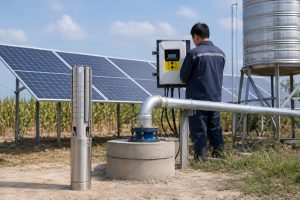
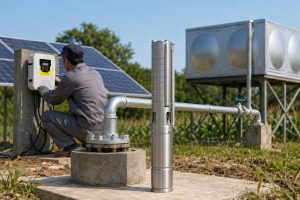
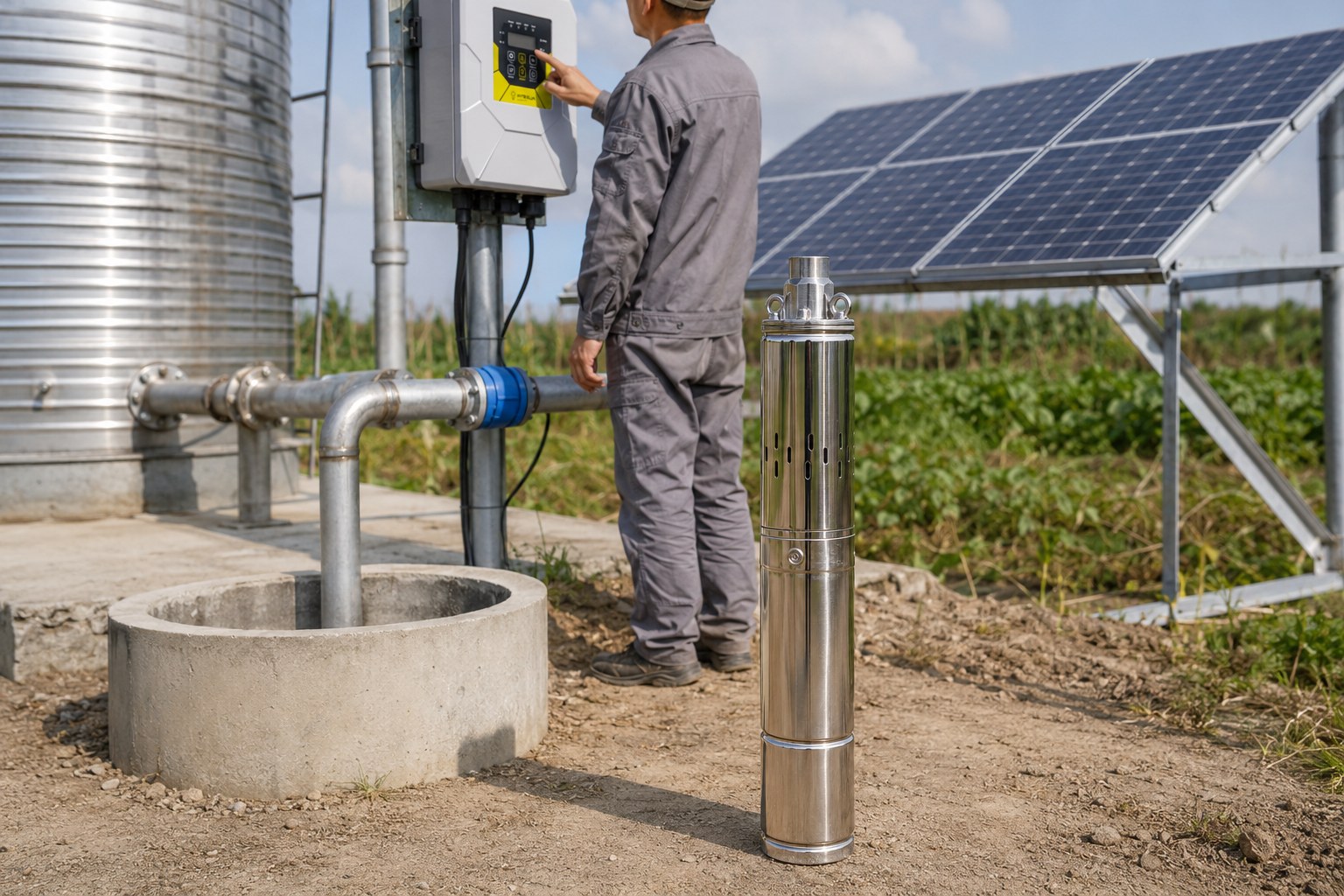
For lifting water from very deep wells, solar screw pumps and submersible pumps offer superior performance.
For moving high volumes of water from shallow sources, centrifugal impeller pumps are unmatched.
The key is to match the pump's design to your well depth and flow requirements.
"Suction power" isn't a single, simple metric.
It's a combination of a pump's ability to lift water (head) and the volume it can move (flow rate).
Different pumps are engineered to excel in different scenarios.
Some are designed for extreme depth, while others are built for massive flow.
Understanding these differences is the first step to selecting the perfect pump.
Let's explore the main types to see which one truly has the best suction power for your job.
Understanding Well Pump Types and Their Applications
Confused by the different types of well pumps available?
Making the wrong choice can lead to inefficient operation and costly repairs.
We'll break down the three main types to help you find the perfect match for your well.
Submersible pumps are the best choice for deep wells over 110 feet.
Centrifugal pumps are economical, above-ground solutions for shallow wells under 25 feet.
Jet pumps offer great versatility, handling depths up to 90 feet, making them adaptable to various well conditions.
To truly understand which pump has the best "suction," you must first understand how each type works and where it shines.
The term "suction pump" typically refers to pumps located above the water source that pull water up.
However, submersible pumps, which push water from below, are often the most effective solution for deep applications.
Let's dive deeper into the specific strengths and weaknesses of each.
Centrifugal Pumps: The High-Volume Choice
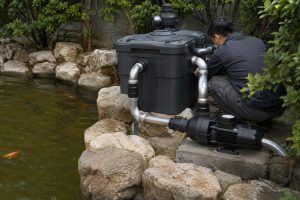
Centrifugal pumps are the most common type for shallow well applications.
They use a spinning impeller to create centrifugal force.
This force pulls water into the center of the impeller and pushes it out toward the discharge pipe.
They are highly effective at moving large volumes of water at relatively low pressure.
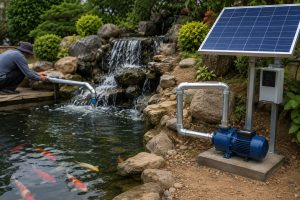
This makes them ideal for applications like home water systems, swimming pools, and irrigation from a nearby pond or shallow well.
Their performance, however, drops significantly as the suction lift (the vertical distance from the water to the pump) increases.
They are generally limited to a practical suction lift of about 25 feet.
Submersible Pumps: The Deep-Well Champion
For deep wells, submersible pumps are the undisputed champions.
These pumps are not "suction" pumps in the traditional sense.
Instead of pulling water, their entire sealed motor and pump assembly is lowered into the well.
They work by pushing water up to the surface.
This design is far more efficient for deep applications because it only has to overcome the vertical lift and friction loss, without fighting atmospheric pressure limitations.
High-quality models can push water from depths of 300 feet or more.
They offer a lifespan of 10-15 years and can be 10-30% more energy-efficient than other types for deep well tasks.
Jet Pumps: The Versatile Bridge
Jet pumps are clever devices that bridge the gap between shallow and deep well pumps.
They are surface-mounted pumps that use an ejector—a special nozzle and venturi—to create a vacuum and pull water up.
A shallow well jet pump uses a single pipe to draw water from depths up to 25 feet.
A convertible jet pump can be configured with a two-pipe system to draw water from depths down to 90 feet.
This makes them highly versatile for homeowners with fluctuating water tables.
| Pump Type | Ideal Depth | Pressure | Flow Rate (GPH) | Key Advantage |
|---|---|---|---|---|
| Centrifugal | < 25 feet | Low to Medium | 800 - 1,000+ | High volume, economical |
| Jet Pump | < 90 feet | Medium | 600 - 900 | Versatile for changing depths |
| Submersible | 110 - 300+ feet | High | 600 - 3,000+ | Most efficient for deep wells |
The Power of Positive Displacement: Solar Screw Pumps
Do you need to lift water from extreme depths where other pumps fail?
Standard centrifugal pumps can't handle the high pressure required.
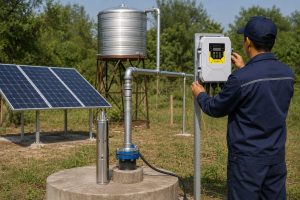
A solar screw pump provides a reliable, high-head solution powered by the sun.
Solar screw pumps deliver exceptional suction power for very deep wells.
They use a positive displacement mechanism—a rotating stainless steel screw inside a rubber stator—to push water upwards.
This design generates very high pressure (head) with lower flow, making it perfect for deep domestic wells
Unlike centrifugal pumps that lose efficiency at high pressure, positive displacement pumps thrive in these conditions.
The screw pump is a perfect example.
It doesn't "suck" water in the traditional sense; it traps pockets of water between the screw and the stator and forces them up the pipe.
This method is incredibly effective for overcoming the immense pressure of a deep water column.
Let's explore why this technology is a game-changer for off-grid water access.
How Screw Pumps Create High Head
The magic of a screw pump lies in its simple yet powerful design.
As the helical screw rotates, it creates sealed cavities that move progressively from the inlet to the outlet.
This action is similar to turning a screw into wood; it steadily moves material forward.
Because the water is trapped in these cavities, the pump can generate immense pressure.
This allows it to lift water from depths exceeding 400 feet, a feat that is impossible for most surface-mounted pumps.
The flow rate is directly proportional to the pump's speed, but the pressure capability remains high even at low speeds.
Key Applications and Advantages
Solar screw pumps are the ideal solution for specific, challenging applications.
Their ability to produce high head makes them perfect for:
- Deep Well Domestic Water: Providing water for homes and small communities in areas with deep water tables.
- Livestock Watering: Pumping water to remote troughs for cattle and other animals.
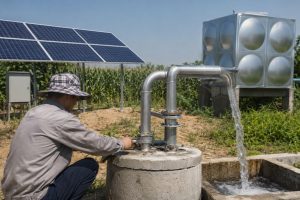
- Small-Scale Drip Irrigation: Supplying water to high-elevation fields or gardens.
A major advantage is their incredible resistance to sand and solids.
The rubber stator and stainless steel screw can handle abrasive water that would quickly destroy the tight tolerances of an impeller pump.
Some models can handle water with up to 5% sand content without significant wear.
Performance Metrics: Head vs. Flow
The defining characteristic of a screw pump is its performance curve.
It is the inverse of a high-flow centrifugal pump.
It provides low flow rates but achieves extremely high head.
This trade-off is crucial for deep well applications where lifting the water is the primary challenge, not moving a massive volume.
| Feature | Solar Screw Pump | Solar Centrifugal Pump |
|---|---|---|
| Primary Strength | High Head (Pressure) | High Flow (Volume) |
| Typical Max Head | 400+ feet | 150 - 250 feet |
| Typical Max Flow | 1 - 8 GPM | 10 - 50+ GPM |
| Sand Resistance | Excellent (up to 5% solids) | Fair to Poor |
| Best Application | Deep wells, low volume needs | Shallow/medium wells, high volume needs |
High-Flow Solutions: Solar Impeller Pumps
Need to irrigate a farm or water a large herd of livestock?
A low-flow pump simply won't get the job done.
Solar impeller pumps are designed to deliver the high volume of water you need, efficiently and reliably.
For high-volume applications, solar impeller pumps offer the best performance.
Plastic impeller models provide an economical, wear-resistant option ideal for farm irrigation.
For more demanding conditions, stainless steel impeller pumps deliver superior durability and corrosion resistance, ensuring a long-lasting, premium solution.
Solar impeller pumps are a type of multi-stage centrifugal pump.
They use a series of impellers stacked on top of each other.
Each stage adds more pressure to the water, allowing the pump to achieve both high flow rates and a respectable head.
This makes them the go-to choice for most agricultural and larger residential applications.
The material of the impeller itself becomes a critical factor in the pump's longevity and performance in different water conditions.
Plastic Impellers: The Economical Workhorse
Pumps with plastic impellers are a popular and cost-effective choice.
The "plastic" used is typically a high-strength, engineered polymer like Noryl.
This material is surprisingly durable and offers excellent resistance to abrasion from fine sand.
This makes plastic impeller pumps a great value for general farm use, pasture water supply, and home gardens where the water is not overly corrosive.
They are lightweight, which simplifies installation and reduces shipping costs.
While highly effective, their limitation is in very deep wells or in water with high levels of corrosive elements, where they may wear out faster than their metal counterparts.
Stainless Steel Impellers: The Premium Choice for Durability
When durability is non-negotiable, stainless steel impellers are the answer.
These pumps use impellers and a pump body made from SS304 or higher-grade stainless steel.
This material offers exceptional resistance to corrosion, making it perfect for acidic or alkaline water conditions.
They are the preferred choice for applications in regions with alkaline soils, such as parts of Australia and the Americas.
While the upfront cost is higher, the extended service life and reliability often result in a lower total cost of ownership, especially in harsh environments.
They are built for high-end homes, critical agricultural operations, and any situation where pump failure is not an option.
Comparing Impeller Materials
Choosing between plastic and stainless steel comes down to balancing cost, water conditions, and long-term expectations.
Both are excellent choices when used in the right application.
| Feature | Plastic Impeller (Noryl) | Stainless Steel Impeller (SS304) |
|---|---|---|
| Upfront Cost | Lower | Higher (approx. 20-40% more) |
| Corrosion Resistance | Good | Excellent |
| Abrasion Resistance | Excellent (for fine sand) | Good (can be damaged by larger grit) |
| Weight | Lighter | Heavier |
| Lifespan (Ideal Conditions) | 5 - 8 years | 10 - 15+ years |
| Best For | Farm irrigation, general use, budget-conscious projects | Corrosive water, high-end homes, long-term reliability |
The Engine Behind the Power: BLDC Motors and VFDs
A powerful pump is only as good as the motor that drives it.
Using an inefficient motor is like putting a lawnmower engine in a race car; it wastes energy and delivers poor performance.
High-efficiency BLDC motors are the solution for modern pump systems.
The true source of a pump's power and efficiency is its motor.
Modern solar pumps utilize advanced Brushless DC (BLDC) permanent magnet motors with efficiencies exceeding 90%.
These motors are significantly smaller, lighter, and more powerful, which reduces solar panel requirements and lowers overall operating costs.
The motor is the heart of any solar pump system.
Its ability to convert electrical energy into mechanical rotation with minimal loss is what determines the entire system's efficiency.
Traditional DC or AC motors can have efficiencies as low as 60-70%.
In contrast, a high-quality BLDC motor can achieve over 90% efficiency.
This massive improvement means more water is pumped for every watt of solar power generated.
Let's break down the technology that makes this possible.
Why BLDC Motors Outperform Traditional Motors
BLDC (Brushless DC) motors have several key advantages.
They use powerful permanent magnets (like Neodymium iron boron) on the rotor and electronically controlled electromagnets on the stator.
This design eliminates the physical brushes found in traditional DC motors, which are a major source of energy loss, friction, and wear.
The result is a motor that is:
- More Efficient: Over 90% efficiency compared to 60-70% for brushed motors.
- More Durable: No brushes to wear out, leading to a much longer, maintenance-free lifespan.
- More Compact: Up to 47% smaller and 39% lighter for the same power output.
- Higher Torque: Provides strong starting power, which is crucial for positive displacement pumps.
The Role of Variable Frequency Drives (VFDs)
A VFD, often integrated into the pump's controller, is the brain that manages the BLDC motor.
It precisely controls the frequency and voltage supplied to the motor.
This allows the motor's speed to be adjusted in real-time to match the available solar power and the system's water demand.
Instead of running at full speed all the time, the pump can slow down on cloudy days, saving energy and reducing wear.
This variable speed operation can lead to energy savings of 30-50% compared to a fixed-speed pump system.
Maximizing Efficiency with MPPT Controllers
The controller for a solar pump does more than just run the motor.
It incorporates Maximum Power Point Tracking (MPPT) technology.
An MPPT controller constantly analyzes the output of the solar panels and adjusts the electrical load to ensure the panels are operating at their peak efficiency point.
This technology can boost the energy harvest from your solar array by up to 30%.
When combined with a high-efficiency BLDC motor and a VFD, an MPPT controller ensures that every possible drop of water is pumped using the available sunlight.
Some advanced controllers also offer hybrid functionality, allowing the system to automatically switch to AC grid power or a generator when solar power is insufficient, guaranteeing a 24/7 water supply.
Sizing Your Pump for Peak Performance
Buying a pump that's too big or too small for your needs?
This common mistake leads to wasted energy, short cycling, and premature failure.
Properly sizing your pump is the most critical step for ensuring an efficient and long-lasting water system.
To size a pump correctly, you must calculate two key figures: your peak water demand in gallons per minute (GPM) and the Total Dynamic Head (TDH).
A typical home requires a base of 8-12 GPM, plus an additional 1 GPM for each water-using fixture.
Matching these figures to the pump's performance curve is essential.
Choosing a pump based on horsepower alone is a recipe for disaster.
A 1 HP pump from one brand might have a completely different performance curve than a 1 HP pump from another.
The goal is to find a pump that operates at or near its Best Efficiency Point (BEP) under your typical usage conditions.
This ensures you get the most water for the least amount of energy and maximizes the pump's lifespan.
Let's walk through the steps to get it right.
Calculating Your Gallons Per Minute (GPM)
Your GPM requirement is the maximum amount of water you expect to use at any one time.
A simple way to estimate this for a home is to count your fixtures.
Start with a baseline of 8-12 GPM for a standard 3-4 bedroom house.
Then, add 1 GPM for every fixture that could be running simultaneously (e.g., showers, faucets, toilets, washing machine, dishwasher).
For agriculture, the calculation is based on the needs of your crops or livestock.
For example, drip irrigation might require 10 GPM per acre, while a herd of 100 cattle might need 5 GPM during peak drinking times.
Understanding Total Dynamic Head (TDH)
Total Dynamic Head is the total pressure the pump must overcome to deliver water.
It is measured in feet or PSI (1 PSI = 2.31 feet of head).
TDH is the sum of three factors:
- Static Head: The total vertical distance in feet from the water level in the well to the highest point of use (e.g., a showerhead on the second floor).
- Friction Loss: The pressure lost due to friction as water moves through pipes, valves, and fittings. This depends on the pipe diameter, length, and flow rate.
- Pressure Head: The desired operating pressure at the point of use. Most homes require 40-60 PSI, which is equivalent to 92-138 feet of head.
TDH = Static Head + Friction Loss + Pressure Head
The Risk of Oversizing and Undersizing
Getting the sizing wrong can have serious consequences.
| Sizing Error | Consequence | Why It Happens |
|---|---|---|
| Oversizing | - Short cycling (rapid on/off) - Premature motor failure - Wasted energy |
The pump fills the pressure tank too quickly, causing the pressure switch to turn it off. The pressure then drops quickly, and the cycle repeats. |
| Undersizing | - Low water pressure - Pump runs continuously - Inability to meet demand |
The pump cannot generate enough pressure or flow to satisfy the system's needs, causing it to run constantly without ever reaching the shut-off pressure. |
Conclusion
The best suction power depends on your specific need.
Screw pumps excel at high-head, deep-well applications.
Impeller pumps are champions of high-flow for irrigation.
The motor and controller are the keys to ultimate efficiency.
FAQs
What is the best residential well pump?
For deep wells, a submersible pump is best.
For shallow wells, a jet or centrifugal pump works well.
The ideal choice depends on your well depth and water needs.
What kind of pump is used most often on residential wells?
Submersible pumps are the most common choice for modern residential wells.
Their efficiency and reliability in deep well applications make them the standard for most installations.
What is the most reliable water pump brand?
Reliability comes from quality components like stainless steel construction and efficient BLDC motors.
Look for brands with long warranties and a proven track record in your specific application.
Which water pump is best for a well?
Submersible pumps are best for wells deeper than 90 feet.
Convertible jet pumps are versatile for fluctuating water tables, while shallow well jet pumps are for depths under 25 feet.
How do I increase the suction power of my water pump?
You generally cannot increase a pump's inherent suction power.
Ensure there are no air leaks in the suction line and that the pipe diameter is correct to minimize friction loss.
What is the difference between a suction pump and a submersible pump?
A suction pump is located on the surface and pulls water up.
A submersible pump is placed inside the well and pushes water up, which is more efficient for deep applications.
Can a pump have too much suction?
Yes, if a pump's flow rate exceeds the well's recovery rate, it can draw the water level down and run dry.
This can damage the pump motor.
How deep can a suction pump lift water?
Due to atmospheric pressure, a surface suction pump has a theoretical maximum lift of 34 feet.
In practice, the effective limit is around 25 feet.