Staring at a high-pressure reading on your pool pump can be worrying.
You might fear that your equipment is about to break, leading to expensive repairs.
Understanding what that number means is the first step to a healthy pool and peace of mind.
A pool pump pressure of 25 PSI is on the higher side of the ideal range and should be investigated. It typically signals a restriction preventing water from returning to the pool, most often a dirty filter. Addressing this promptly prevents strain on your pump and plumbing.
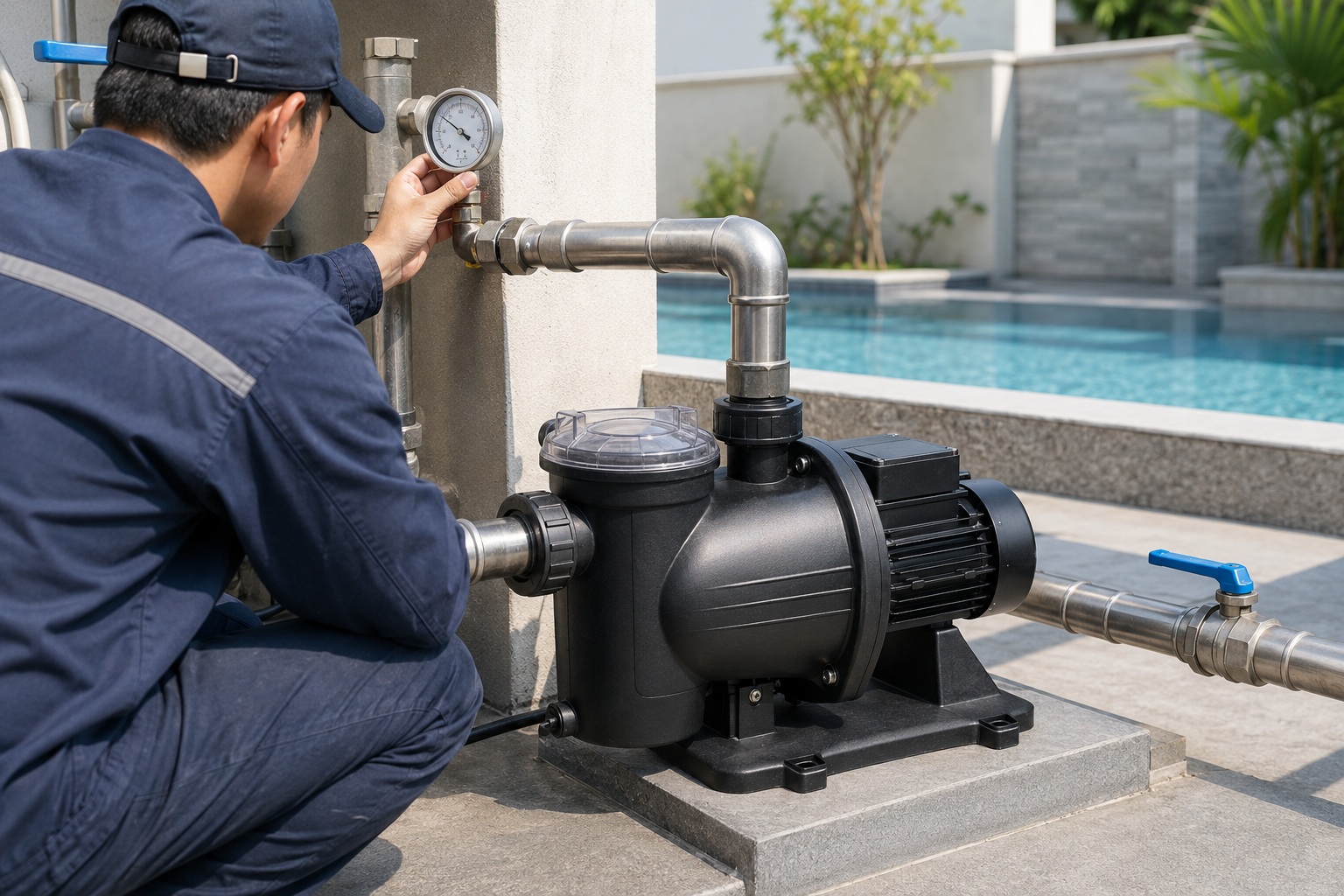
That pressure gauge is your pool's best communication tool.
It tells you the story of your circulation system's health.
A reading of 25 PSI isn't a reason to panic, but it is a clear signal to pay attention.
Let's dive into what your pump is trying to tell you and how you can respond.
Understanding Your Pool Pump's Pressure Gauge
Is your pressure gauge just a random number, or is it telling you a vital story?
Many pool owners ignore this gauge until something goes wrong, but it holds the key to proactive maintenance.
Learning to read it correctly saves you time, money, and stress.
Your pump's pressure gauge measures the resistance in your pool's filtration system. A "normal" reading is established when the filter is clean. A significant increase from this baseline, like a jump to 25 PSI, indicates a blockage or restriction that needs your attention.
To truly master your pool's health, you must first understand its language.
The pressure gauge is the most important dialect.
It doesn't just show a number; it reflects the effort your pump is exerting to circulate and clean your water.
A change in this number is a direct message about the system's condition.
What is a Normal PSI Reading?
For most residential swimming pools, the ideal operating pressure is between 10 and 20 PSI (pounds per square inch).
Some systems with more complex features or powerful pumps may operate normally up to 25 PSI.
However, the key isn't a universal number but your pool's specific "clean" pressure.
The Importance of a "Clean Filter" Baseline
The most crucial step is to establish your baseline.
After you've thoroughly cleaned or backwashed your filter, turn on the pump.
Note the PSI reading.
This is your system's normal operating pressure.
Write this number directly on the pump or filter with a permanent marker.
Any future readings should be compared to this baseline.
A rise of 8-10 PSI above this clean reading is a universal sign that your filter needs to be cleaned again.
If your clean pressure is 15 PSI, then a reading of 23-25 PSI means it's time for maintenance.
Interpreting High vs. Low Pressure Readings
Your gauge can indicate two main types of problems: high pressure and low pressure.
Understanding the difference helps you diagnose issues much faster.
High pressure means there's a blockage after the pump, while low pressure often points to a problem before the pump.
| Pressure Reading | What It Means | Common Causes |
|---|---|---|
| High Pressure | Water is struggling to get back to the pool. | 1. Dirty or clogged filter (most common). 2. Closed or partially closed return-side valves. 3. Clogged return jets or water features. 4. An oversized pump for the plumbing. |
| Low Pressure | The pump is struggling to pull water from the pool. | 1. Clogged skimmer or pump baskets. 2. Low water level in the pool. 3. An air leak on the suction side (pump lid, fittings). 4. A clog in the suction-side plumbing. |
What Causes High Pool Pump Pressure?
You've noticed the needle creeping up to 25 PSI, well above its clean baseline.
This isn't just a number; it's a symptom of a problem that is forcing your pump to work overtime.
Ignoring it can lead to reduced efficiency and premature equipment failure.
High pool pump pressure is almost always caused by a restriction on the return side of the system. The most common cause, accounting for over 90% of cases, is a dirty filter that is clogged with debris and restricting water flow back to the pool.
Think of your pool's plumbing like a city's road system.
High pressure is like a major traffic jam.
Water leaves the pump but can't get to its destination—the pool—efficiently.
This backup of pressure puts a strain on every component in the system, from the pump motor to the filter tank and plumbing joints.
Identifying the source of this "traffic jam" is essential.
The Number One Culprit: A Dirty Filter
Your pool filter is designed to trap dirt, debris, oils, and other contaminants.
As it does its job, this trapped material accumulates and begins to block the free flow of water.
This restriction forces the pump to push harder, causing the pressure to rise.
- Sand Filters: Over time, the spaces between sand particles become clogged. Backwashing reverses the water flow to flush this debris out to waste. If pressure remains high after backwashing, the sand may be old, channeled, or calcified, requiring a deep cleaning or replacement.
- Cartridge Filters: The fine pleats of a cartridge filter capture very small particles. As they clog, pressure rises. These filters must be removed and thoroughly cleaned with a hose. A reading of 25 PSI is a definite signal to clean your cartridges.
- Diatomaceous Earth (D.E.) Filters: D.E. filters offer the finest filtration but also clog the fastest. Like sand filters, they are cleaned by backwashing, after which a new layer of D.E. powder must be added.
Blockages in the Return Lines
If cleaning the filter doesn't lower the pressure, the blockage is further downstream.
Check the return jets in your pool.
Sometimes, debris can get lodged inside them, or they may be adjusted to a nearly closed position.
Ensure all your return jets are open and pointing in a direction that promotes circulation.
Incorrect Valve Settings
Your multiport or push-pull valve directs the flow of water.
If a valve is set incorrectly between settings or a return-line valve is partially closed, it will create immense back pressure.
Always ensure valves are securely locked into the correct position.
A common mistake is leaving a valve for a water feature, like a waterfall, partially closed when it's not in use, which can significantly increase system pressure.
Is Your Pump Too Powerful?
Sometimes, the problem isn't a clog but a mismatch of equipment.
Installing a pump that is too powerful for your filter or plumbing size is a frequent issue.
The pump tries to move more water (a higher GPM) than the pipes or filter can handle.
This creates a constant state of high resistance and pressure, even with a clean filter.
This "oversizing" not only wastes a tremendous amount of energy but also leads to premature failure of the pump motor, filter, and seals.
How to Lower Your Pool Pump Pressure: A Step-by-Step Guide
Seeing that 25 PSI reading is a call to action.
You're worried about damaging your equipment, but you're not sure where to start.
Following a simple troubleshooting process can quickly solve the problem and restore your peace of mind.
To lower high pool pump pressure, start with the most likely solution: cleaning your filter. If that doesn't work, inspect all return-side valves and jets for blockages or incorrect settings. This systematic approach will resolve the issue in most situations.
Bringing your pool's pressure back to its normal range is usually straightforward.
Don't be intimidated by the process.
By working through these steps logically, from the most common cause to the least, you can diagnose and fix the issue yourself.
This will save you the cost of a service call and empower you as a pool owner.
Step 1: Backwash or Clean Your Filter
This is the first and most important step.
Since a dirty filter causes over 90% of high-pressure situations, cleaning it will likely solve your problem.
-
For Sand or D.E. Filters:
- Turn off the pool pump.
- Set the multiport valve to the "BACKWASH" position.
- Roll out your backwash hose to a suitable drainage area.
- Turn the pump on and run it for 2-4 minutes, or until the water in the sight glass runs clear.
- Turn the pump off.
- Set the multiport valve to "RINSE" and run the pump for 30 seconds.
- Turn the pump off, return the valve to "FILTER," and turn the pump back on.
- Check the new pressure reading. For D.E. filters, add new D.E. powder through the skimmer.
-
For Cartridge Filters:
- Turn off the pump and release the air pressure from the filter tank using the air relief valve.
- Unscrew the filter lid and carefully remove the cartridge(s).
- Using a garden hose with a strong nozzle, spray down the pleats from top to bottom, removing all visible dirt and debris.
- Rinse thoroughly, inspect for damage, and place the cartridge(s) back in the tank.
- Secure the lid, open the air relief valve, and turn the pump on. Close the air relief valve once a steady stream of water emerges.
- Check the new pressure reading.
Step 2: Check Your Valves and Return Jets
If cleaning the filter didn't bring the pressure down to its normal baseline, the blockage is elsewhere.
Turn off the pump.
Manually inspect every valve on the return side (the plumbing after the filter).
Ensure they are all in the fully open position.
This includes valves for the main pool returns, spa jets, or water features.
Next, check the eyeball fittings inside the pool where the water returns.
Make sure the opening is not obstructed by debris or angled in a way that restricts flow.
Step 3: Inspect for Return-Side Blockages
This is less common, but an obstruction can sometimes get lodged inside the return plumbing itself.
This is more likely if you have had recent work done on the pool or if an item has broken near the return jets.
Diagnosing this can be difficult and may require the help of a professional with specialized tools to inspect or flush the lines.
When an Efficient Pump Is the Real Solution
Are you constantly battling pressure issues and high energy bills?
You clean the filter, but the pressure stays high, and your electricity costs are soaring.
Perhaps the problem isn't a clog, but the heart of your system: the pump itself.
An oversized, single-speed pump is a primary cause of chronic high pressure and wasted energy. Upgrading to a modern, correctly sized variable-speed or solar-powered pump can permanently solve pressure issues, reduce energy costs by up to 90%, and provide quieter, more effective filtration.
For decades, the "bigger is better" philosophy dominated pool pump selection.
This resulted in millions of pools being equipped with oversized, inefficient pumps that run at one high speed.
This approach is not only outdated but also incredibly wasteful.
Modern pump technology offers a smarter, more sustainable, and cost-effective way to circulate your pool water, directly addressing the root cause of many pressure and flow problems.
The Problem with Oversized Single-Speed Pumps
A single-speed pump operates at a fixed, high RPM (Revolutions Per Minute), typically 3,450 RPM.
This is often far more power than needed for routine filtration.
This excessive speed forces a high volume of water through pipes and filters that may not be designed for it, creating artificially high pressure.
It's like driving your car everywhere with the accelerator floored.
It's inefficient, loud, and causes excessive wear and tear on the engine.
The Rise of Variable-Speed (VS) Pumps
Variable-speed pumps are the new standard for a reason.
They allow you to run the pump at much lower speeds for most of the day, dramatically reducing energy consumption.
The key principle is the "Pump Affinity Law," which states that if you halve the pump's speed, you reduce its energy use by nearly 88%.
Running the pump at a lower speed for a longer period provides better filtration, reduces system pressure, and can save hundreds of dollars per year in electricity costs.
The Ultimate in Efficiency: Solar-Powered Pumps
The next evolution in pump technology is to remove the reliance on the grid entirely.
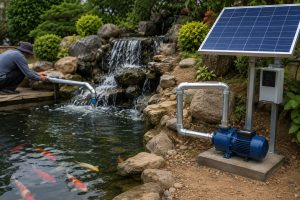
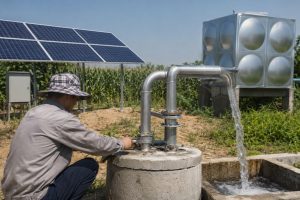
Solar-powered pool pumps use the sun's free energy to circulate your water.
At their core is an advanced Brushless DC (BLDC) permanent magnet motor.
These motors are a significant leap forward, with efficiencies often exceeding 90%, compared to the 60-70% efficiency of traditional AC motors.
This high efficiency means they require fewer solar panels to operate, reducing the initial investment and simplifying installation.
They provide clean, quiet, and cost-free circulation whenever the sun is shining.
Hybrid AC/DC Systems for 24/7 Operation
A common concern with solar is performance on cloudy days or at night.
Advanced hybrid systems solve this problem.
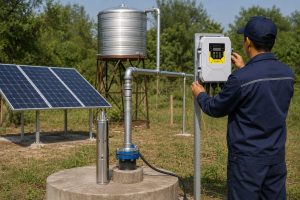
These systems use intelligent controllers that can draw power from both solar panels and your home's AC grid.
The controller automatically prioritizes solar power.
When sunlight is insufficient, it can blend in AC power or switch over completely to ensure your pool stays clean around the clock.
This gives you the best of both worlds: maximum energy savings from solar with the reliability of a grid connection.
Sizing Your Pump Correctly to Avoid Pressure Issues
Are you replacing an old pump and tempted to just buy the same horsepower?
This is a common mistake that perpetuates problems with high pressure and energy waste.
Choosing a pump based only on horsepower is like choosing a car based only on engine size, ignoring the car's weight or intended use.
Properly sizing a pool pump is about matching the pump's flow rate (GPM) to your pool's specific needs, including its volume and the resistance of its plumbing (TDH). Focusing on flow rate instead of horsepower ensures optimal performance, energy efficiency, and balanced pressure.
The goal of your pump is to "turn over" the entire volume of your pool water through the filter at least once per day.
An 8-hour turnover is a common residential standard.
Calculating the required flow rate to achieve this is the foundation of proper pump sizing.
This scientific approach prevents the issues of oversizing (chronic high pressure, wasted energy) and undersizing (poor circulation, cloudy water).
It's About Flow Rate (GPM), Not Just Horsepower
Horsepower (HP) is a measure of the motor's work output, not how much water it moves.
A well-designed 1.0 HP pump can move more water than a poorly designed 1.5 HP pump.
The critical metric is Gallons Per Minute (GPM).
You must select a pump that can deliver the target GPM for your specific pool's plumbing configuration.
A Simple Formula for Target GPM
You can easily calculate your target flow rate.
- Calculate Pool Volume (Gallons): For a rectangular pool, use:
Length × Width × Average Depth × 7.5. - Determine Target GPM: Use the formula:
Pool Gallons ÷ Turnover Hours ÷ 60 = Target GPM.
For example, a 20,000-gallon pool with a target 8-hour turnover needs a flow rate of:
20,000 ÷ 8 ÷ 60 = 41.7 GPM.
Your goal is to find a pump that can efficiently deliver approximately 42 GPM.
| Pool Volume (Gallons) | Target GPM for 8-Hour Turnover |
|---|---|
| 10,000 | 21 GPM |
| 15,000 | 31 GPM |
| 20,000 | 42 GPM |
| 25,000 | 52 GPM |
| 30,000 | 63 GPM |
Factoring in Total Dynamic Head (TDH)
Total Dynamic Head (TDH) is the total resistance the pump must overcome.
It's the sum of all friction from the pipes, fittings, filter, heater, and any elevation changes.
Every pump has a "pump curve" chart that shows how much GPM it can produce at different levels of TDH.
A pool with long plumbing runs, many sharp turns, or a rooftop solar heater will have a high TDH, requiring a more powerful pump to achieve the target GPM.
Conversely, a simple system with large, straight pipes will have a low TDH.
Accurately calculating TDH is complex, but a pool professional can help.
However, understanding the concept is key: you must select a pump that meets your GPM needs at your system's specific TDH.
Conclusion
A 25 PSI reading is a warning, not a disaster.
It's your pool's way of telling you to check for restrictions, starting with the filter.
For long-term health, ensure your pump is correctly sized and consider upgrading to an efficient modern model.
FAQs
What should my pool pump pressure be when running?
Your pump pressure should be at the "clean filter" baseline you establish, typically 10-20 PSI. A rise of 8-10 PSI above this indicates it's time to clean the filter.
What happens if pool pressure is too high?
Sustained high pressure strains the pump motor, filter tank, and plumbing seals. It can lead to leaks, cracked equipment, and premature failure, while also reducing filtration efficiency.
How do I know if my pool pump is too strong?
If your pressure is high even with a clean filter, or if you have a small pool with a high horsepower pump (e.g., 2.0 HP+), it may be oversized for the plumbing.
Is 30 psi too high for a sand filter?
Yes, 30 PSI is generally considered too high for most residential sand filters. This level indicates a significant blockage or that the filter is long overdue for a deep cleaning or sand change.
What causes a sudden increase in pool pump pressure?
A sudden spike in pressure is often caused by a valve being closed or turned to the wrong position, or a significant blockage suddenly lodging in a return line.
Can a clogged skimmer cause high pressure?
No, a clogged skimmer basket or pump basket restricts water coming into the pump. This starves the pump for water and will cause the pressure reading to be lower than normal.