Struggling with unreliable water access in off-grid areas?
Traditional pumps are expensive to run and grid-dependent, leaving you powerless.
Solar pumps offer a sustainable, cost-effective, and independent solution.
The three main types of centrifugal pumps are radial-flow, axial-flow, and mixed-flow, classified by how they move water.
However, for solar applications, the focus shifts to specific pump designs like high-flow plastic impeller and durable stainless steel impeller pumps, which are often compared against high-head solar screw pumps for deep well applications.
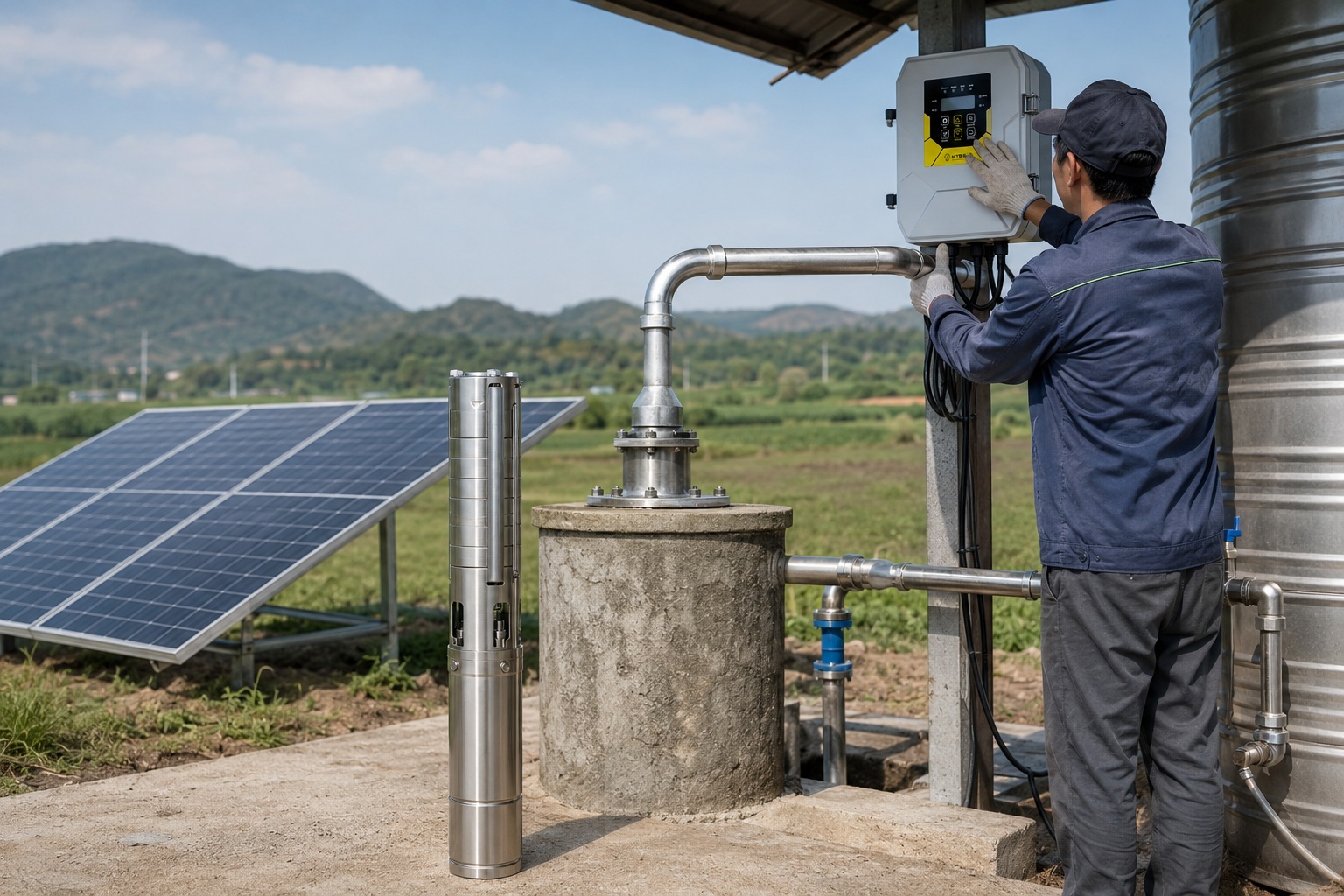
Now that we understand the basic classifications, let's dive deeper into the world of solar water pumps.
The real choice for distributors and end-users isn't just about pump theory.
It's about finding the right tool for the job.
We will explore the three most popular and competitive solar deep well pump solutions that are revolutionizing water access across the globe.
Understanding the unique strengths of each type will empower you to build a versatile and profitable product portfolio.
Solar Screw Pump: Low Flow, High Head
Your customers have a very deep well but struggle to find a pump with enough lifting power.
Standard pumps either fail to reach the water or burn out trying.
A solar screw pump delivers the extreme pressure needed to conquer great depths efficiently.
A solar screw pump is a positive displacement pump, not a centrifugal one.
It uses a helical stainless steel rotor (the screw) spinning inside a rubber stator.
This action creates sealed cavities of water that are pushed upwards, generating very high pressure (head) with a lower flow rate, perfect for deep wells.
The solar screw pump operates on a fundamentally different principle than a centrifugal pump.
Instead of "throwing" water outwards with an impeller, it "pushes" it upwards through compression.
This makes it a specialist tool for specific, challenging conditions.
How It Works: The Power of Positive Displacement
The core of the pump is the progressing cavity design.
A single helical screw (the rotor) rotates eccentrically within a double helical, flexible rubber sleeve (the stator).
As the rotor turns, it forms a series of sealed pockets of water that progress from the pump's intake to its outlet.
This mechanism acts like a continuous piston, providing a steady, non-pulsating flow and generating immense pressure.
This design is exceptionally effective at overcoming the force of gravity, which is why it excels in high-head applications.
Key Performance Metrics
The defining characteristic of a screw pump is its performance curve.
It provides a relatively constant flow rate across a wide range of pressure heads, only dropping off slightly as it approaches its maximum limit.
This is in stark contrast to centrifugal pumps, whose flow rate decreases dramatically as the head increases.
| Pump Type | Typical Flow Rate (m³/h) | Typical Max Head (meters) | Best For |
|---|---|---|---|
| Solar Screw Pump | 1 - 6 | 100 - 250+ | Deep wells, high lift |
| Solar Plastic Impeller | 5 - 20 | 40 - 80 | High volume, shallow wells |
| Solar SS Impeller | 5 - 20 | 50 - 100 | Corrosive water, medium wells |
Ideal Applications and Target Markets
This pump's unique capabilities make it the go-to solution in regions with deep water tables.
- Domestic Water Supply: In parts of Africa and Latin America, where wells can be over 100 meters deep, this pump is often the only viable option for providing reliable household water.
- Livestock Drinking Water: It can efficiently lift water to remote troughs for cattle and other animals, a critical need in arid ranching areas.
- High Sand Resistance: The gentle pushing action and durable rubber stator allow the pump to handle water with a higher concentration of sand and silt without the rapid wear and tear that would destroy a centrifugal pump. This makes it highly durable in harsh water conditions.
Advantages vs. Limitations
| Feature | Advantage | Limitation |
|---|---|---|
| Performance | Excellent high head (up to 250m+) | Limited flow rate |
| Durability | Highly resistant to sand and grit | Rubber stator can wear over time |
| Application | Ideal for very deep wells | Not suitable for large-scale irrigation |
| Cost | Cost-effective for high-lift needs | Can be more expensive than low-head pumps |
Solar Plastic Impeller Pump: High Flow, Wear-Resistant
Your customers on farms and ranches need to move massive amounts of water for irrigation.
Running a traditional pump for this purpose leads to sky-high electricity bills.
A high-flow solar plastic impeller pump provides the volume they need, powered entirely by the sun.
This is a multi-stage centrifugal pump that uses a series of impellers made from advanced, wear-resistant engineering plastics.
It is designed to deliver a high volume of water at a medium head, making it an extremely popular and cost-effective choice for agricultural and residential water supply.
This pump is the workhorse of the solar pump world.
It strikes an optimal balance between performance, cost, and durability, making it the most common choice for a wide range of applications where water volume is the top priority.
Its lightweight design also simplifies installation and reduces shipping costs.
Understanding Multi-Stage Centrifugal Design
A single centrifugal impeller can only generate a limited amount of pressure.
To achieve the medium head needed for many applications, these pumps use a multi-stage design.
This involves stacking several impellers on top of each other along a single shaft.
Water is discharged from one impeller and immediately enters the inlet of the next.
Each stage adds more pressure to the water, effectively multiplying the total head the pump can achieve without sacrificing the high flow rate.
A pump with 5 stages will generate roughly 5 times the pressure of a single-stage pump with the same impeller design.
The Role of Modern Plastic Impellers
The term "plastic" can be misleading.
These are not made from simple, brittle plastic.
The impellers are crafted from high-strength, precision-molded engineering polymers like Noryl.
This material offers several key advantages:
- Wear Resistance: It is highly resistant to abrasion from fine sand, which is a common issue in many wells.
- Lightweight: Plastic impellers are significantly lighter than their metal counterparts, reducing the motor's startup load and overall energy consumption.
- Cost-Effectiveness: Manufacturing plastic impellers is more economical, which translates to a lower purchase price for the end-user.
- Smooth Surface: The smooth molded surface reduces friction, improving hydraulic efficiency by up to 5-10% compared to rougher cast metal impellers.
Performance and Market Fit
This pump is designed for volume.
It's the ideal solution for applications where moving a lot of water is more important than lifting it from extreme depths.
| Pump Type | Typical Flow Rate (m³/h) | Typical Max Head (meters) | Primary Market |
|---|---|---|---|
| Solar Plastic Impeller | 5 - 20 | 40 - 80 | Farm Irrigation, Ranches |
| Solar Screw Pump | 1 - 6 | 100 - 250+ | Deep Well Domestic Use |
| Solar SS Impeller | 5 - 20 | 50 - 100 | Corrosive Water, Premium Homes |
Its widespread use in Africa and the Americas for farm irrigation, pasture water supply, and filling large storage tanks makes it a cornerstone product for any solar pump distributor.
Solar Stainless Steel Impeller Pump: Premium Quality, Corrosion Resistance
Your high-end clients or those in areas with aggressive water are tired of replacing pumps every few years.
Corrosive water eats through standard pumps, causing costly failures and downtime.
A solar stainless steel impeller pump offers the ultimate in durability and long-term reliability.
This premium multi-stage centrifugal pump features impellers, diffusers, and a pump body constructed from SS304 stainless steel.
It is engineered specifically to withstand corrosive water conditions, such as high acidity or alkalinity, while delivering high flow rates and medium-to-high head.
This pump represents the top-tier offering in a solar pump portfolio.
While it comes at a higher initial cost, its extended service life in harsh environments provides a superior total cost of ownership, making it a smart investment for customers who prioritize reliability and longevity above all else.
Why Stainless Steel is the Superior Choice
The key to this pump's longevity is the material science of stainless steel.
- Corrosion Resistance: SS304 grade stainless steel contains chromium, which reacts with oxygen to form a thin, invisible, and highly durable passive layer on the surface. This layer protects the underlying metal from rust and corrosion, even in acidic (low pH) or alkaline (high pH) water.
- Strength and Durability: Stainless steel is far stronger and more resistant to abrasion than plastic, allowing for tighter tolerances and better hydraulic efficiency that is maintained over the pump's life.
- Hygienic: The non-porous surface of stainless steel is easy to clean and resists bacterial growth, making it an excellent choice for potable water systems.
Target Applications and Niche Markets
This pump is not for every application, but it is the undisputed best choice for specific, high-value markets.
- Alkaline Soil Regions: In areas like parts of Australia, the groundwater can be highly alkaline. A stainless steel pump is essential for long-term operation in these conditions.
- Industrial or Mining Runoff: For applications where water may be contaminated with acidic compounds.
- High-End Homes and Ranches: For property owners who want a "set it and forget it" solution and are willing to pay a premium for peace of mind and maximum reliability.
- Coastal Areas: Where saltwater intrusion can lead to higher salinity and chloride levels, which are highly corrosive to standard materials.
A Comparative Look at Total Cost of Ownership
While the upfront cost is higher, the financial argument for a stainless steel pump becomes clear when looking at the total cost of ownership in a corrosive environment.
| Feature | Plastic Impeller Pump | Stainless Steel Impeller Pump |
|---|---|---|
| Initial Cost | $ | $$ |
| Est. Lifespan (Corrosive Water) | 2-4 years | 8-15 years |
| Replacement Cycles (over 10 years) | 2-4 | 0-1 |
| Total 10-Year Cost | High (Initial Cost + Replacements) | Low (Initial Cost only) |
For a distributor, this presents a clear value proposition for the right customer.
You are not just selling a pump; you are selling a long-term solution that saves money and eliminates hassle.
The Unseen Hero: The High-Efficiency BLDC Motor
An inefficient motor wastes the precious, limited power generated by your solar panels.
This forces you to buy more panels to compensate, dramatically increasing the total system cost.
A high-efficiency BLDC motor is the solution, maximizing every watt of solar energy produced.
The heart of all three of these advanced solar pumps is a Brushless DC (BLDC) permanent magnet motor.
With an operational efficiency exceeding 90%, it converts significantly more solar energy into water-pumping power, reducing the number of solar panels needed by up to 30% and lowering the overall system cost.
The motor is the engine that drives the entire system.
Its efficiency is the single most important factor determining the pump's performance and the system's overall cost-effectiveness.
A superior motor means a smaller solar array, easier installation, and lower long-term operating costs, making it the true competitive advantage in the market.
What Makes BLDC Motors Superior?
Brushless DC motors represent a major technological leap over older motor types.
- No Brushes: Traditional DC motors use carbon brushes to transfer power, which wear down, create dust, and cause energy loss through friction. BLDC motors use an electronic controller instead, eliminating this point of failure and boosting efficiency. This results in a maintenance-free design with a much longer service life.
- Permanent Magnets: The rotor is made from high-strength rare-earth magnets (like 40SH Neodymium Iron Boron). This creates a strong magnetic field without consuming electrical power, delivering high torque and power in a very compact package.
- Cooler Operation: Higher efficiency means less energy is wasted as heat. A cooler-running motor lasts longer and performs more reliably.
The Efficiency Advantage in Numbers
The difference in efficiency is not trivial; it has a massive impact on system design and cost.
| Motor Type | Typical Efficiency | Key Disadvantage |
|---|---|---|
| Standard AC Motor | 60-75% | Requires an inverter, high energy loss. |
| Brushed DC Motor | 75-80% | Brushes wear out, requires maintenance. |
| BLDC Permanent Magnet Motor | >90% | Highly efficient, long life, no maintenance. |
This efficiency gain means a BLDC motor can produce the same pumping power with significantly less input energy.
This directly translates into needing a smaller, less expensive solar panel array.
Furthermore, these motors are often 47% smaller and 39% lighter than traditional motors of the same power output, making them easier and cheaper to install, especially in remote locations.
The Brains of the Operation: The MPPT Controller
The BLDC motor is paired with an intelligent controller featuring Maximum Power Point Tracking (MPPT).
The MPPT controller is the "brain" that optimizes the connection between the solar panels and the motor.
It constantly monitors the panel's voltage and current and adjusts the electrical load to ensure it is always extracting the absolute maximum amount of power available, regardless of changing sunlight conditions.
This can boost the water output by up to 30% over the course of a day compared to a system without MPPT, especially during cloudy periods or in the early morning and late afternoon.
Many modern controllers also offer hybrid functionality, allowing the system to automatically switch to an AC power source (grid or generator) when solar energy is insufficient, ensuring a 24/7 water supply.
Conclusion
The best solar pump solution combines the right pump type for the job, a high-efficiency BLDC motor, and an intelligent MPPT controller.
This creates a powerful, reliable, and cost-effective system.
FAQs
Q. Do solar pond pumps work in winter?
Yes, but with reduced performance.
Shorter days and weaker sunlight mean the pump will operate for fewer hours and at a lower flow rate compared to summer.
Q. Do solar pond pumps work at night?
Standard solar pumps do not.
However, systems equipped with a battery backup can store energy during the day to operate at night or on cloudy days.
Q. How deep will a solar water pump work?
It varies greatly by type.
High-flow centrifugal pumps work well in shallow wells (under 80 meters), while specialized solar screw pumps can lift water from depths exceeding 200 meters.
Q. How much water can a solar-powered water pump move?
This depends on the pump's flow rate, measured in gallons or liters per hour (GPH/LPH).
Small fountain pumps move a few hundred GPH, while large irrigation pumps can move thousands.
Q. What size solar pump do I need for my well?
You need to know your well's depth (total head) and your daily water requirement (flow rate).
Choose a pump that exceeds both metrics to ensure reliable performance.
Q. How do I install a solar-powered pump?
Most kits are designed for easy setup.
Position the solar panel in direct sunlight, submerge the pump in the water source, and connect the wires to the controller.
Q. Can a solar pump run on cloudy days?
Yes, but performance will be significantly reduced.
An MPPT controller helps maximize output in low-light conditions, and systems with AC/DC hybrid controllers can switch to grid power.
Q. How long do solar water pumps last?
A quality system with a BLDC motor can last 10-15 years or more.
The pump itself may require occasional maintenance, but the motor is generally maintenance-free.