A dirty pond can ruin your garden's look and harm its ecosystem.
You need an effective way to drain it for cleaning or repairs, but where to start?
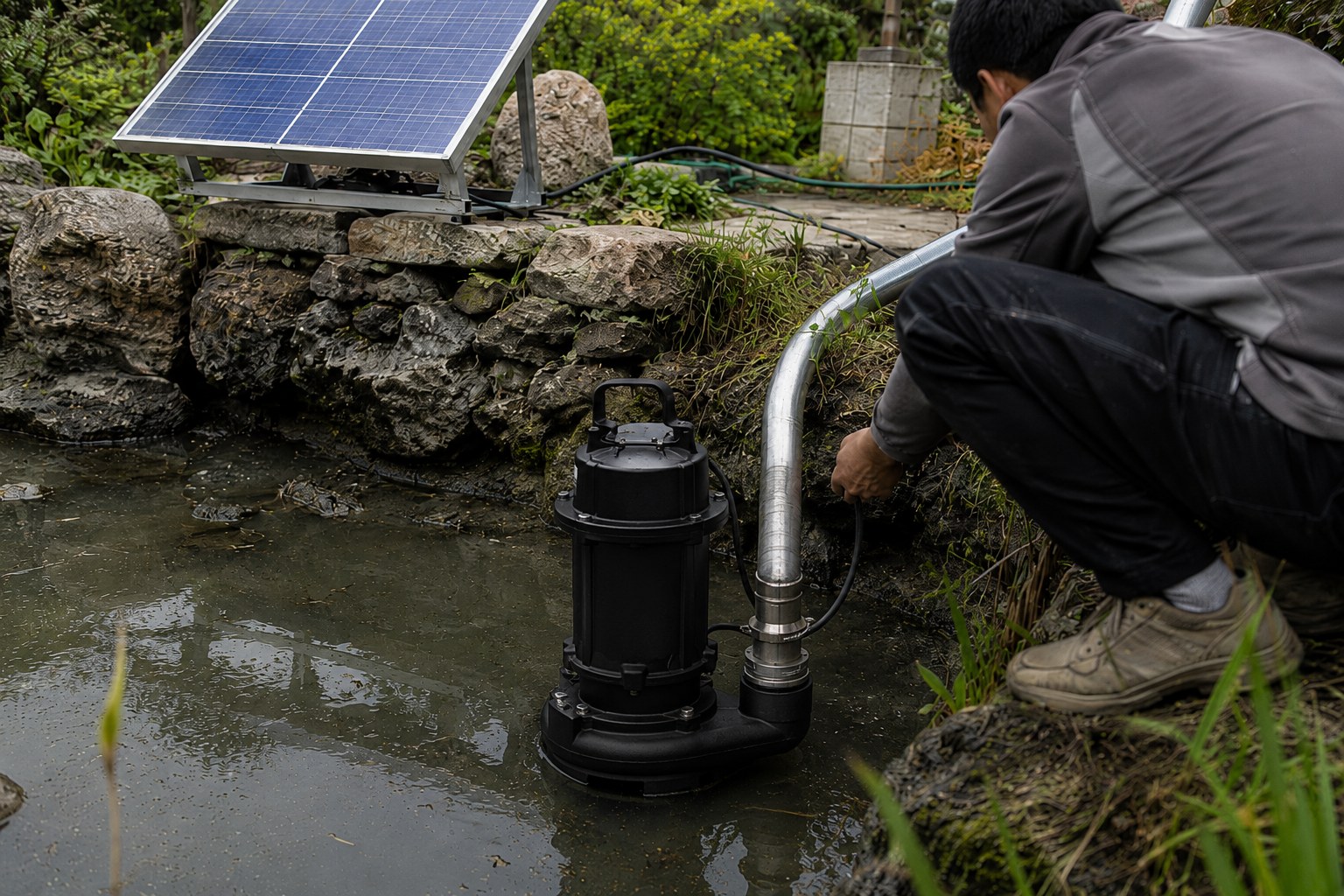
The best way to pump out a small pond is by using a submersible pump, placing it in the deepest area and running a hose to a safe discharge location. For non-electric options, a gravity-fed siphon hose works well if the discharge area is lower than the pond.
Choosing the right method for draining your pond is the first step toward successful maintenance.
Whether you face a repair, a deep clean, or a complete renovation, understanding your options is key.
This guide explores both pump-powered and pump-free techniques.
We will cover everything from identifying the need to drain to selecting the right equipment.
This ensures you can protect your pond's health and the life within it.
Let's dive into the signs that tell you it's time to take action.
Signs You Need to Drain Your Pond?
Your pond is showing signs of trouble, like constant cloudiness or water loss.
Ignoring these signals can lead to bigger, more expensive problems down the line.
Key signs include a damaged liner causing water loss, severe algae blooms depleting oxygen, a thick layer of bottom sludge, or a noticeable decline in the health of your fish and aquatic plants. These issues indicate the pond's ecosystem is out of balance and needs intervention.
Recognizing the early warning signs that your pond needs draining is crucial for preventative maintenance.
Acting on these signals promptly can save you from costly repairs and protect the delicate balance of your aquatic environment.
A healthy pond is a vibrant ecosystem, but certain issues can compromise its stability and require a partial or complete drain.
Damaged Pond Liner
A primary reason to drain a pond is to repair the liner.
Liners can develop cracks, holes, or general wear over time, especially from UV exposure or physical damage.
A water level drop of more than 2 inches in a week, without significant evaporation, strongly suggests a leak.
Draining the pond is the only way to accurately locate and patch the damage.
This prevents continuous water loss and protects the pond's foundation from erosion.
Severe Algae Blooms and Poor Water Quality
While some algae are normal, a persistent, thick bloom is a red flag.
This "green water" indicates an excess of nutrients, which can deplete oxygen levels by over 50% when the algae decomposes.
This condition, known as eutrophication, is dangerous for fish and other wildlife.
Similarly, a buildup of sludge and tannins from decaying leaves and organic matter clouds the water.
This buildup releases harmful gases and can clog pumps and filters.
A full drain and clean removes these excess nutrients and materials, effectively resetting the pond's ecosystem.
Fish and Wildlife Health
Observe the inhabitants of your pond.
Are the fish lethargic, gasping at the surface, or showing signs of disease?
A decline in the health and activity of your fish or a sudden disappearance of frogs and other wildlife often points to poor water quality.
Issues like low oxygen, high ammonia, or other toxins can create a stressful or fatal environment.
Draining the pond allows for a thorough inspection, cleaning, and a fresh start with clean, properly conditioned water.
| Sign | Indicator | Consequence if Ignored |
|---|---|---|
| Water Loss | Level drops >2 inches per week | Substrate erosion, pump damage, total water loss |
| Algae Bloom | Opaque, green water | Oxygen depletion, fish kills, unhealthy ecosystem |
| Sludge Buildup | >6 inches of bottom muck | Harmful gas release, clogs, poor water clarity |
| Sick Fish | Lethargy, gasping, visible sores | Widespread disease, loss of fish population |
How to Drain a Pond with a Pump?
You need to drain your pond, and a pump seems like the fastest way.
But with so many types, choosing the right one can feel overwhelming and expensive.
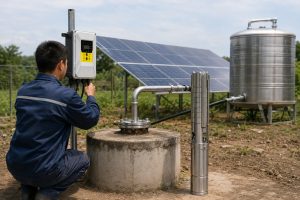
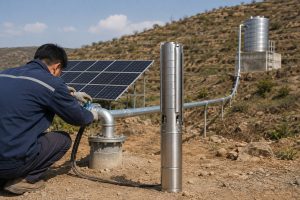
Use a submersible pump for general-purpose draining due to its ease of use. For a sustainable, off-grid solution, a solar-powered pump is ideal. Modern solar pumps offer high efficiency, making them a powerful and cost-effective choice for various pond sizes and situations.
Using a pump is the most efficient method for draining a pond of almost any size.
The technology has evolved significantly, offering options that are not only powerful but also energy-efficient and environmentally friendly.
From traditional submersible units to advanced solar-powered systems, the right pump can turn a daunting task into a manageable one.
Understanding the different types will help you select the best tool for your specific needs, balancing performance, cost, and convenience.
Traditional Pump Options
Submersible pumps are the most common choice for pond draining.
They are designed to be placed directly in the water, typically in the deepest part, and can move large volumes quickly, with capacities ranging from 50 to over 5,000 gallons per hour (GPH).
External pumps are another option, often used for larger ponds over 1,000 gallons.
They sit outside the pond and are known for their long-term reliability and energy efficiency, though their installation is more complex.
For very small jobs or removing the last few inches of water, a manual hand pump can provide precise control.
The Solar-Powered Revolution
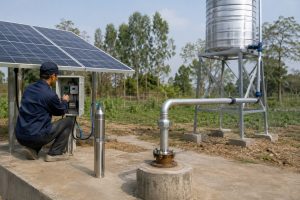
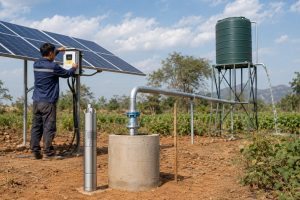
Modern solar-powered pumps represent a significant leap in pumping technology.
They offer a completely off-grid, sustainable solution for draining your pond.
These systems are no longer just for small water features.
The core of their performance lies in the high-efficiency Brushless DC (BLDC) permanent magnet motors.
These motors can achieve over 90% efficiency, which is a 30-50% improvement over traditional AC motors.
This means they convert more sunlight into pumping power, reducing the number of solar panels needed and lowering overall system costs.
Matching Solar Technology to Your Needs
The versatility of solar pump technology allows for specialized designs catering to different conditions.
- Solar Screw Pumps: These are ideal for situations requiring high lift but lower flow, perfect for draining deep sections of a pond or if the discharge area is significantly elevated. They are also highly resistant to sand and debris.
- Solar Plastic Impeller Pumps: For quickly draining a pond, these high-flow pumps are excellent. Their wear-resistant plastic impellers handle fine sand and sediment well, making them a cost-effective choice for general-purpose draining.
- Solar Stainless Steel Impeller Pumps: If your pond water has unusual pH levels or is treated with chemicals, a pump with SS304 stainless steel components provides superior corrosion resistance, ensuring a long service life even in harsh conditions.
This advanced motor and pump technology, once reserved for deep wells, is now perfectly suited for pond management, offering a powerful, durable, and eco-friendly draining solution.
| Pump Type | Power Source | Best For | GPH (Typical) | Key Advantage |
|---|---|---|---|---|
| Submersible | Electric Grid | General use, all sizes | 50 - 5,000 | Easy to set up and use |
| External | Electric Grid | Large ponds (>1,000 gal) | 3,000 - 10,000+ | High efficiency, reliable |
| Solar-Powered | Solar Panels | Off-grid, eco-friendly | 100 - 4,000+ | Zero running costs, sustainable |
| Hand Pump | Manual | Small ponds, final drainage | Variable | No power needed, precise control |
How to Drain a Pond without a Pump?
You need to empty your pond but lack a pump or electricity nearby.
This situation feels like an impossible roadblock, leaving your pond in a state of neglect.
You can easily drain a pond without a pump by using a garden hose to create a siphon. This method uses gravity to pull water out, requiring no electricity and minimal equipment. Simply fill the hose with water, cap one end, and place it in the lower discharge area.
Draining a pond without a pump might sound like a difficult chore, but it's entirely possible using some basic principles of physics.
These methods are perfect for smaller ponds, remote locations without power, or for anyone seeking a quiet, low-tech, and cost-free solution.
The two primary pump-free techniques are gravity drainage and siphoning.
Both are effective and rely on a height difference between your pond and the discharge point to move water.
Let's explore how to make gravity do the work for you.
Creating a Siphon
Siphoning is a simple and surprisingly effective way to drain a small to medium-sized pond.
All you need is a hose long enough to reach from the deepest part of your pond to a discharge point that is at a lower elevation than the pond's water surface.
Here is the step-by-step process:
- Submerge the Hose: Place the entire hose into the pond, allowing it to fill completely with water. You will see bubbles escape until it is full.
- Seal One End: Keep one end of the hose under the water. Take the other end and securely seal it with your thumb or a cap.
- Position the Discharge End: Quickly move the sealed end to your desired drainage area, ensuring it remains below the level of the pond's water surface.
- Release and Flow: Unseal the end. Water will begin to flow immediately and will continue as long as the intake end is submerged and the outlet end is lower.
This method can drain a significant amount of water.
A standard 5/8-inch garden hose can siphon water at a rate of approximately 200-300 gallons per hour, depending on the height difference.
Gravity Drainage Systems
If your pond is situated on a slope, you might be able to use a more permanent gravity drain.
This method is most effective when planned during the pond's construction but can sometimes be retrofitted.
It involves installing a pipe or digging a trench from the lowest point of the pond to a lower-lying area.
This creates a direct, controllable channel for water to flow out.
While it requires more initial setup, a gravity drain offers a very fast and effortless way to lower the water level whenever needed.
It is an ideal solution for ponds with bottom drains already installed.
| Method | Equipment Needed | Best For | Speed | Pros / Cons |
|---|---|---|---|---|
| Siphoning | Garden Hose | Small to medium ponds, no power access | Slow to Moderate (~200 GPH) | Pro: Simple, cheap, quiet. Con: Requires lower discharge point, can be slow. |
| Gravity Drain | Pipe or Trench | Ponds on a slope, pre-planned ponds | Fast | Pro: Very fast, no effort to run. Con: Requires significant setup, not always feasible. |
How to Choose the Right Pump Size?
Choosing the wrong pump size wastes energy and money.
An undersized pump won't do the job, while an oversized one is an inefficient power hog.
To size a pump, first calculate your pond's volume in gallons. A good rule of thumb is to choose a pump with a Gallons Per Hour (GPH) rating equal to half your pond's total volume. For example, a 1,000-gallon pond requires a 500 GPH pump for basic circulation.
Selecting a correctly sized pump is the most critical step for efficient pond management, whether for draining, filtration, or powering a water feature.
The right pump ensures the job is done effectively without wasting electricity.
The process involves two main calculations: determining the volume of your pond and then calculating the required flow rate based on your specific goal.
Getting these numbers right will save you time, energy, and frustration.
Step 1: Calculate Your Pond's Volume
Before you can choose a pump, you must know how much water you're dealing with.
For irregularly shaped ponds, use average measurements.
The formula is straightforward:
Pond Volume (in gallons) = Average Length (ft) x Average Width (ft) x Average Depth (ft) x 7.5
The number 7.5 is the conversion factor, as there are approximately 7.5 gallons in one cubic foot of water.
For example, a pond that is 10 feet long, 8 feet wide, and has an average depth of 2 feet contains 1,200 gallons (10 x 8 x 2 x 7.5).
Step 2: Determine Your Required Flow Rate (GPH)
The flow rate, measured in Gallons Per Hour (GPH), depends on what you need the pump to do.
The requirements for simply draining a pond are different from those for running a waterfall.
- For General Filtration/Circulation: The pump should circulate the entire volume of the pond at least once every two hours. So, the minimum GPH should be half your pond's volume. For our 1,200-gallon pond, you'd need a 600 GPH pump.
- For Draining: To drain the pond, you want a higher flow rate to finish the job faster. A pump that can drain the pond in 2-4 hours is ideal. For the 1,200-gallon pond, a pump rated between 300 GPH (4-hour drain) and 600 GPH (2-hour drain) would be effective.
- For Water Features: Waterfalls and fountains have specific needs based on their size.
| Feature | Flow Rate Calculation | Example (12-inch wide waterfall) |
|---|---|---|
| Light Flow Waterfall | 50 GPH x Width (in) | 50 x 12 = 600 GPH |
| Average Flow Waterfall | 100 GPH x Width (in) | 100 x 12 = 1200 GPH |
| Strong Flow Waterfall | 200 GPH x Width (in) | 200 x 12 = 2400 GPH |
Remember to also consider "head height," which is the vertical distance the pump must lift the water.
A pump's GPH rating decreases as the head height increases.
Always check the pump's performance chart to ensure it provides the required flow at your specific head height.
How to Maintain Your Pump for Longevity?
Your pond pump was a significant investment, but now it's running poorly.
Neglecting maintenance leads to clogs, reduced performance, and eventual pump failure, costing you more money.
Regularly unplug and clean your pump's intake screen, impeller, and housing every few months. This simple 15-minute task prevents clogs from leaves and sludge, ensuring optimal flow and preventing motor burnout. For hard water areas, an occasional vinegar soak can dissolve mineral buildup.
A water pump is the heart of your pond's circulation system.
Just like any hard-working piece of equipment, it requires a small amount of routine maintenance to deliver years of reliable performance.
Most pump issues stem from simple clogs or buildup that restrict water flow and strain the motor.
By dedicating a little time to cleaning your pump a couple of times a year, you can dramatically extend its lifespan, maintain its efficiency, and avoid the headache of a sudden failure.
Routine Cleaning Steps
For most submersible pumps, a quick cleaning is all that is needed.
The process is simple and should be done in the spring and fall, or more often in ponds with heavy debris.
- Unplug the Pump: Always disconnect the pump from its power source before removing it from the water.
- Remove from Pond: Take the pump out of the pond or skimmer box.
- Clean the Intake: Remove the outer filter cage or screen. Use a garden hose and a soft-bristled brush to clear away any leaves, string algae, and muck.
- Inspect the Impeller: Most pumps allow you to access the impeller, which is the small, fan-like part that moves the water. Remove the volute (impeller cover) and check for any debris wrapped around the impeller. Carefully clean the impeller and the housing it sits in.
- Reassemble: Put the pump back together and return it to the pond.
Tackling Tough Buildup and Winterization
In areas with hard water, you may notice a white, crusty mineral buildup on your pump.
This scale can impede the impeller's movement and reduce efficiency.
- Vinegar Soak: To remove this, you can soak the pump (or just the motor and impeller components) in a 50/50 solution of white vinegar and water for about 30-60 minutes. This will dissolve the calcium and mineral deposits. Afterwards, scrub lightly and rinse thoroughly.
- Winter Removal: In climates where winters are harsh and the pond may freeze solid, it is crucial to protect your pump. Shut down your water feature, remove the pump, and store it in a bucket of water in a frost-free location, such as a basement or garage. Storing it in water keeps the seals moist and prevents them from drying out and cracking.
| Maintenance Task | Frequency | Time Required | Impact if Neglected |
|---|---|---|---|
| Clean Intake Screen | 2-4 times per year | 5 minutes | Reduced flow, motor strain |
| Clean Impeller | 1-2 times per year | 10 minutes | Clogging, pump failure |
| Vinegar Soak | As needed (hard water) | 1 hour | Seized impeller, permanent damage |
| Winter Storage | Annually (cold climates) | 15 minutes | Cracked housing from ice expansion |
Conclusion
Effectively draining your pond, with or without a pump, is key to its health.
Understanding when to drain and choosing the right method ensures your water feature remains a beautiful, thriving ecosystem.
FAQs
Can I use a shop vac to drain a pond?
Yes, a shop vac is great for removing the last few inches of water and sludge that pumps can't get. It is not efficient for draining the entire pond.
How long does it take to drain a pond?
This depends on the pond size and pump GPH. A 1,000-gallon pond could take 2-3 hours with a 400 GPH pump or over 5 hours with a siphon hose.
What is the fastest way to drain a pond?
The fastest way is using a high-volume "dirty water" or trash pump. These are designed to move large amounts of water with debris quickly.
Do I need to remove fish when draining a pond?
Yes. You must place fish in a temporary holding tank with an aerator. Use water from the pond to minimize stress on the fish.
How do you drain the last bit of water from a pond?
Use a shop vac, buckets, or a small utility pump to remove the final inches of water and sludge from the lowest point in the pond.
Can I drain pond water onto my lawn?
Yes, untreated pond water is an excellent, nutrient-rich fertilizer for your lawn and garden plants. Avoid areas near streams to prevent runoff.