Worried about rising electricity bills or an unreliable power grid?
You need a stable water supply, but conventional pumps are costly and dependent on a fragile system.
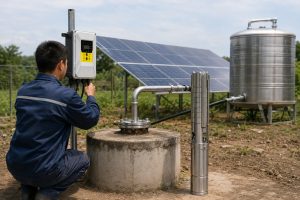
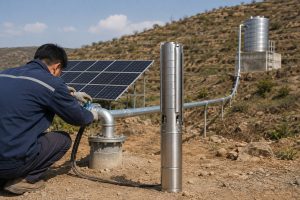
It's entirely possible to run a water pump on solar power. You can either convert an existing AC pump using solar panels and a special inverter or install a complete DC solar pump system, which is often more efficient and cost-effective in the long run.
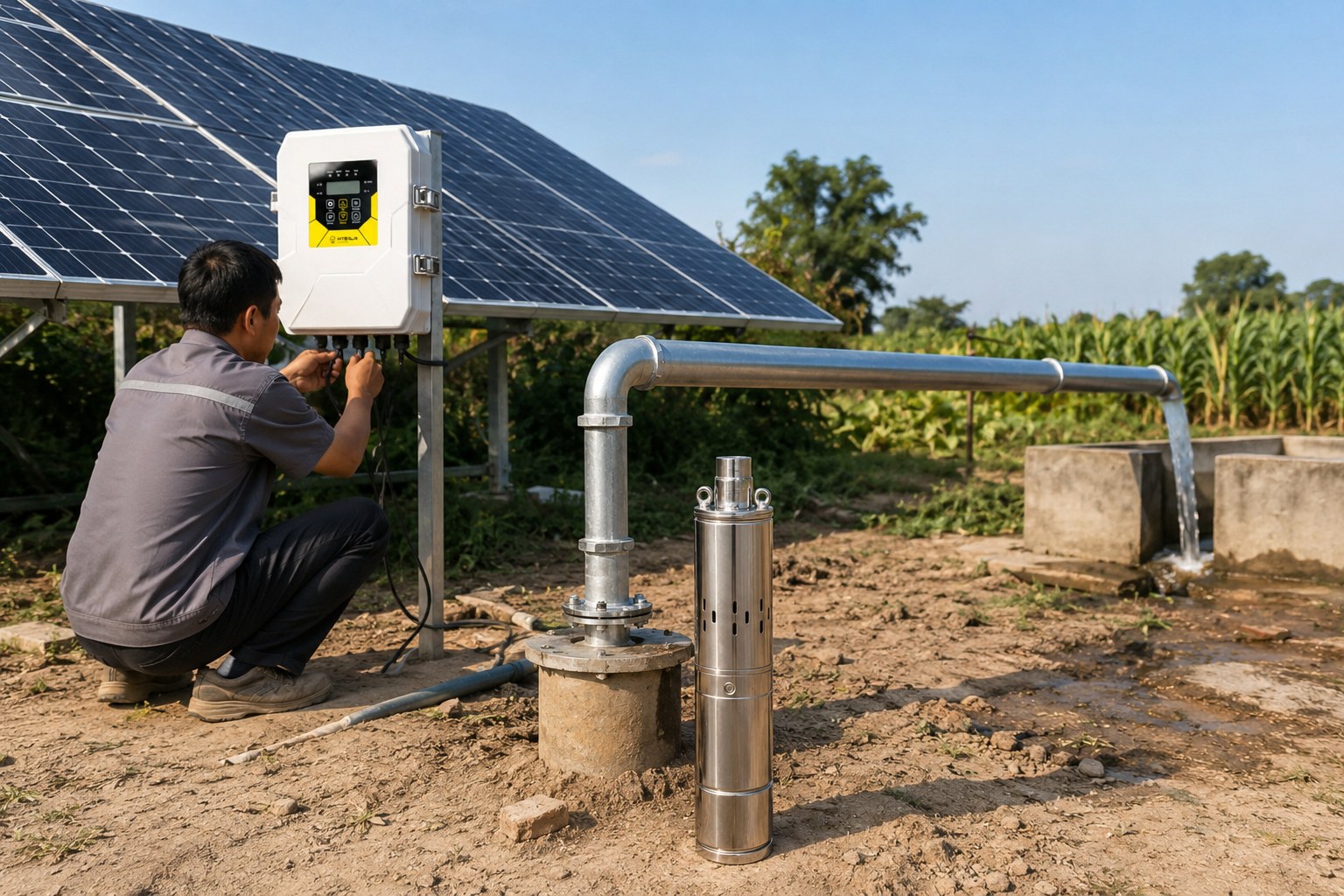
Running a well pump on solar is no longer a niche idea.
It has become a mainstream solution for achieving energy independence and securing a reliable water source.
Whether you're looking for peace of mind, lower operational costs, or an eco-friendly water solution, solar power offers a compelling path forward.
But the journey starts with a key decision.
Do you adapt what you already have, or do you invest in a new, dedicated system?
Understanding the pros and cons of each approach is the first step toward building a resilient and efficient water pumping setup.
Let's explore the options to find the best fit for your needs.
Should I Replace My Current AC Pump or Convert it to Solar?
You have a perfectly good AC pump but want the savings and reliability of solar.
The thought of pulling a pump from a deep well and installing a new one seems like a huge, expensive hassle.
Converting an existing AC pump can be simpler than a full replacement, often just requiring rewiring to a new solar inverter. However, a dedicated DC solar pump system is inherently more efficient and may be cheaper for larger pumps than buying the extra panels an AC pump needs.
Choosing between converting your current AC pump and replacing it with a new DC solar pump is a critical decision.
It directly impacts your initial investment, long-term efficiency, and installation complexity.
While the idea of simply adding solar panels to your existing setup sounds appealingly simple, the reality is more nuanced.
The efficiency and power requirements of AC pumps were never designed with solar in mind.
This can lead to hidden costs and performance issues.
A dedicated DC solar pump, on the other hand, is engineered from the ground up to maximize every watt of solar energy.
Let's break down the factors you need to consider.
Cost-Benefit Analysis: Conversion vs. Replacement
Converting an AC pump seems cost-effective at first glance.
You avoid the cost of a new pump.
However, the numbers can be deceiving.
Single-phase AC pumps, especially those 2 HP and larger, are power-hungry.
They require a significantly larger solar array to run compared to a more efficient DC or three-phase pump.
This can increase your solar panel costs by 20-30%.
Additionally, you need a robust, and often expensive, DC-to-AC inverter specifically designed to handle the pump's high startup power demand.
In many cases, the combined cost of a large inverter and the extra solar panels can exceed the price of a complete, new DC solar pump kit.
For example, a conversion kit for a 1HP 220V pump might cost over $4,000, while a new, more efficient DC pump system for the same job could be around $3,500.
| Feature | AC Pump Conversion (1HP) | New DC Pump System (Equivalent) |
|---|---|---|
| Initial Cost | ~$4,000+ (Inverter, Panels) | ~$3,500 (Full Kit) |
| Efficiency | Lower (DC->AC loss is 10-20%) | Higher (Direct DC power) |
| Solar Panels Needed | 6-8 Panels | 4-6 Panels |
| Installation | Simpler Wiring | Pump Installation Required |
| Payback Period | 4-6 Years | 2-4 Years |
| Long-Term Value | Moderate | High |
The Efficiency Gap: AC vs. DC Pumps
The fundamental difference lies in how the pumps use electricity.
Solar panels naturally produce Direct Current (DC) power.
A DC solar pump uses this power directly, making the system highly efficient.
When you run an AC pump on solar, the DC power from the panels must first be converted to Alternating Current (AC) by an inverter.
This conversion process is not 100% efficient.
You can lose between 10% and 20% of your precious solar energy as heat in the inverter.
This means you need more solar panels to do the same amount of work.
Furthermore, AC motors have a high inrush current when they start.
This requires an inverter that is rated for a much higher peak load than the pump's running wattage, adding to the cost and complexity.
A DC pump with a smart controller starts smoothly, putting less stress on the system and maximizing the energy available.
Installation Effort: DIY vs. Professional Help
The main appeal of conversion is the ease of installation.
In most cases, it involves rerouting the electrical wires from your home's breaker panel to the new solar inverter.
This is a task that many property owners can handle themselves in an afternoon, without needing to hire an electrician.
There is no need to pull the pump out of the well.
Replacing the pump, however, does require more physical effort.
You have to pull the existing pump, pipe, and wire out of the well and then lower the new system.
While this may sound daunting, modern solar pump kits are designed for straightforward installation.
They often come with detailed manuals, and support is available.
For a well of 100-200 feet, two people can typically complete the installation in a few hours.
The perceived difficulty of a new pump installation is often greater than the actual effort required.
What Kind of Solar Pump Systems Exist?
You know you want a solar pump, but the market is full of different types.
Choosing the wrong one could mean poor performance, a short lifespan, and wasted money, leaving you without the water you need.
Solar pump systems are tailored for specific tasks. Solar screw pumps excel at high-head, low-flow applications for deep wells. Plastic impeller pumps offer high flow for irrigation. Stainless steel impeller pumps provide ultimate durability against corrosion.
Not all solar pumps are created equal.
The global demand for reliable, off-grid water has driven the development of specialized pump designs.
The three most prominent types of solar deep well pumps each fill a specific niche, forming a comprehensive product portfolio for any distributor.
These are the solar screw pump, the plastic impeller centrifugal pump, and the stainless steel impeller centrifugal pump.
Understanding the unique strengths and ideal applications of each type is key to meeting diverse market demands, from small domestic wells in Africa to large-scale agricultural operations in the Americas.
Each pump is a tool designed for a specific job.
Let's dive into the mechanics and applications to see which tool is right for you.
The Deep Well Specialist: Solar Screw Pumps
The solar screw pump, also known as a progressing cavity pump, is an engineering marvel for deep wells.
It operates on the principle of positive displacement.
A stainless steel helical rotor (the "screw") turns inside a rubber stator.
This creates sealed cavities that move water upward with each rotation.
This mechanism is incredibly effective at building high pressure, allowing it to lift water from extreme depths where centrifugal pumps would fail.
They are the go-to solution for low-flow, high-head situations.
This makes them ideal for domestic water supply, livestock drinking troughs, and small-scale drip irrigation, especially in regions with deep water tables like parts of Latin America and Africa.
A key advantage is their exceptional resistance to sand and grit, as the rubber stator can flex to pass small particles without damage.
While their flow rate is limited, their ability to pump from depths exceeding 200 meters is unmatched.
| Pump Type | Best For | Sand Resistance | Max Head | Flow Rate |
|---|---|---|---|---|
| Screw Pump | Deep Wells, Homes | Excellent | 200m+ | Low (1-10 GPM) |
| Centrifugal | Irrigation, Ranches | Fair to Good | ~150m | High (10-100+ GPM) |
The High-Volume Workhorse: Solar Plastic Impeller Pumps
When the priority is moving a large volume of water for applications like farm irrigation or filling large tanks, the multi-stage centrifugal pump is king.
The plastic impeller version is a highly popular and economical choice.
This pump uses a series of impellers stacked on a single shaft.
Each stage adds pressure, pushing water to the surface.
Equipped with durable, wear-resistant plastic impellers, these pumps deliver high flow rates at a medium head.
They are perfect for supplying water to farms, pastures, and large gardens in regions like the Americas and Africa.
Their high water output and excellent resistance to fine sand make them a versatile workhorse.
Furthermore, they are lightweight and more affordable than their stainless steel counterparts, making them an attractive option for many buyers.
However, their durability can be a limitation in highly corrosive water or under the extreme pressures of very deep wells.
In these harsh conditions, their lifespan might be 15-25% shorter than a stainless steel model.
The Premium Choice: Solar Stainless Steel Impeller Pumps
For the most demanding conditions and high-end applications, the solar stainless steel impeller pump is the ultimate solution.
This model is structurally similar to the plastic impeller pump but upgrades the key components to SS304 stainless steel.
This includes the impellers, pump body, and intake/outlet.
This construction is specifically designed to withstand corrosive water environments, such as acidic or alkaline water sources found in parts of Australia and the Americas.
It offers high flow rates and medium-to-high head capabilities, but its primary advantage is longevity.
The stainless steel components provide superior corrosion resistance, ensuring a long and reliable service life even in harsh water.
This makes it the preferred choice for high-value applications like water supply for premium homes, commercial ranches, and anywhere water quality is a concern.
While the initial investment is higher—often 20-40% more than a comparable plastic model—the extended lifespan and reliability provide significant long-term value.
What is the "Heart" of a Solar Pump System?
You've picked the right pump type, but that's only half the story.
Focusing only on the pump can lead to an inefficient system that needs more panels and delivers less water, defeating the purpose of going solar.
A high-efficiency Brushless DC (BLDC) motor and an intelligent MPPT controller form the heart of a modern solar pump system. This combination dramatically reduces power consumption, lowers panel costs, and maximizes water output from sunrise to sunset.
The true competitive advantage of a top-tier solar water pump lies beyond the pump head itself.
It resides in the core technology that drives it.
The motor and the controller are the engine and the brain of the operation.
An inefficient motor wastes precious solar energy, forcing you to buy more solar panels to compensate.
A basic controller fails to extract the maximum power from those panels as sunlight conditions change throughout the day.
The most advanced systems pair a high-efficiency Brushless DC (BLDC) permanent magnet motor with a smart Maximum Power Point Tracking (MPPT) controller.
This powerful duo ensures that every possible watt of solar energy is converted into pumped water, delivering superior performance and a faster return on investment.
The Power of BLDC Permanent Magnet Motors
The BLDC motor is the key to an ultra-efficient solar pump system.
Unlike traditional motors with carbon brushes that create friction and wear out, BLDC motors use a permanent magnet rotor and an electronic controller.
This design eliminates friction, which boosts efficiency and drastically extends the motor's lifespan, making it virtually maintenance-free.
These motors can achieve efficiencies exceeding 90%.
In contrast, standard AC or brushed DC motors often operate in the 60-75% efficiency range.
This 15-30% efficiency gain is massive.
It means a pump with a BLDC motor needs significantly fewer solar panels to deliver the same amount of water, directly reducing the system's initial cost.
Using powerful materials like 40SH neodymium iron boron magnets, these motors produce high torque in a compact design.
They are often up to 47% smaller and 39% lighter than conventional motors of the same power rating, simplifying shipping and installation.
The Brains of the Operation: MPPT Controllers
If the BLDC motor is the heart, the MPPT controller is the brain.
Maximum Power Point Tracking (MPPT) is an intelligent technology that optimizes the match between the solar array and the pump.
The power output of a solar panel changes constantly with sunlight intensity and temperature.
An MPPT controller continuously monitors the panel's voltage and current and adjusts the electrical load to extract the absolute maximum power possible at any given moment.
This technology can boost the overall energy harvest by up to 30% compared to a system without MPPT.
The benefit is most pronounced in less-than-ideal conditions, such as on cloudy days or during the early morning and late afternoon.
This means more water pumped over a longer portion of the day.
Modern controllers also include critical protective functions, such as dry-run protection to save the pump if the well runs dry, over-voltage protection, and even options for remote monitoring.
| Feature | Without MPPT Controller | With MPPT Controller | % Improvement |
|---|---|---|---|
| Early Morning Power | 80W | 110W | +37.5% |
| Mid-day Power (Full Sun) | 350W | 370W | +5.7% |
| Cloudy Day Power | 120W | 160W | +33.3% |
| Total Daily Water | 3,000 Gallons | 3,900 Gallons | +30% |
How Can I Get Water When The Sun Isn't Shining?
Solar pumps are great, but the sun doesn't shine 24/7.
The fear of having no water on a cloudy day or at night is a major concern, potentially making you question the reliability of a solar-only system.
Hybrid AC/DC controllers solve this problem by automatically switching between solar power and a backup AC source like the grid or a generator. This ensures you have a reliable water supply 24 hours a day, using free solar energy whenever it's available.
The single biggest perceived drawback of solar power is its intermittency.
Water is a non-negotiable resource, and you need it on demand, not just when the sun is bright.
Fortunately, modern solar pumping technology has evolved to provide true, round-the-clock water security.
The two primary strategies are using an intelligent hybrid controller to integrate a backup power source, or storing excess production for later use.
For many, storing water in a tank is the simplest solution.
However, for those who need direct pressure or 24/7 pumping capability, hybrid controllers and battery systems offer robust solutions.
Choosing the right approach depends on whether you have access to an AC power source and your budget.
The Role of a Hybrid AC/DC Controller
A hybrid AC/DC controller is a game-changer for solar pumping reliability.
This intelligent device is designed with two power inputs: one for DC power from your solar panels and another for AC power from the electrical grid or a generator.
The controller's internal logic is programmed to prioritize solar power.
It will run the pump entirely on free solar energy whenever there is sufficient sunlight.
If clouds roll in and solar power drops, the controller can blend AC power with the available solar power to maintain pump operation.
When there is no solar input at all, like at night, it automatically switches over to the AC source.
This process is seamless and fully automatic.
It ensures you get water whenever you need it without any manual switching.
A smart hybrid system maximizes your use of free solar energy, potentially reducing your grid electricity consumption for pumping by over 80%, while providing the complete reliability of a traditional AC-powered pump.
Battery Backup Systems: The True Off-Grid Solution
For locations with no access to the electrical grid, a battery bank is the ultimate solution for 24/7 water.
In this setup, solar panels charge a bank of deep-cycle batteries during the day.
A solar charge controller manages this process to prevent overcharging and protect the batteries.
The pump then draws power from the batteries as needed, day or night.
This creates a self-sufficient, standalone system that is completely independent of any external power source.
However, this independence comes at a cost.
Batteries add significant expense and complexity to the system.
They also require periodic maintenance and will eventually need to be replaced, typically every 5-10 years.
For this reason, a hybrid system is often more cost-effective if grid power is available.
An even more economical alternative to batteries is to use a large water storage tank.
The solar pump fills the tank during sunny hours, and water is then supplied to the point of use via gravity or a small pressure pump.
This "water battery" approach is simple, cheap, and highly effective for most agricultural and domestic applications.
| Feature | Hybrid AC/DC System | Battery Backup System | Water Tank Storage |
|---|---|---|---|
| 24/7 Pumping | Yes (with AC source) | Yes | No (Water on demand) |
| Initial Cost | Moderate | High | Low |
| Complexity | Low | High | Very Low |
| Maintenance | Minimal | Battery care/replacement | Minimal |
| Best For | Grid-tied areas | Remote off-grid sites | Most applications |
Conclusion
Choosing the right solar pump system means matching the pump type, motor, and controller to your specific water needs, ensuring an efficient, durable, and cost-effective solution for years to come.
FAQs
How many solar panels do I need to run a water pump?
It depends on pump horsepower (HP), well depth, and desired flow. A typical 1HP DC pump might need four to six 370W panels for optimal performance.
Can a solar pump work on cloudy days?
Yes, but at a reduced flow rate. Systems with MPPT controllers are optimized to produce more water in low-light conditions compared to basic systems.
What is the lifespan of a solar water pump?
A quality system is a long-term investment. The solar panels are typically warrantied for 25 years, while a brushless motor and pump can last 10-20 years.
Do solar water pumps need batteries?
Not necessarily. Pumping water to a storage tank during the day is often more cost-effective. Batteries are mainly for off-grid sites that need 24/7 pressurized water.
How deep can a solar pump go?
This depends entirely on the pump model. Solar screw pumps are specifically designed for deep wells and can lift water from over 200 meters (650+ feet).
Is it cheaper to run a well pump on solar?
The initial setup cost is higher than a conventional pump. However, with zero ongoing fuel or electricity costs, the system often pays for itself in 2-5 years.
What maintenance do solar pumps require?
They are very low-maintenance. Panels may need occasional cleaning, and modern brushless motors require no service. It's good practice to inspect wiring and plumbing annually.