Your utility bills keep rising, and you know the water pump is a major energy hog.
You wonder if solar is a realistic solution.
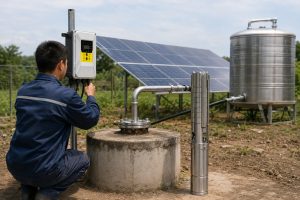
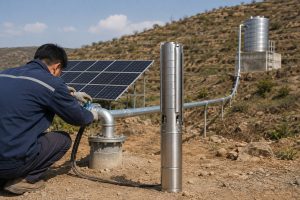
Yes, you can run a water pump straight from a solar panel, especially if it's a DC (Direct Current) pump. These systems are designed for direct connection through a controller, making them highly efficient. Running an AC (Alternating Current) pump requires an inverter and more panels.
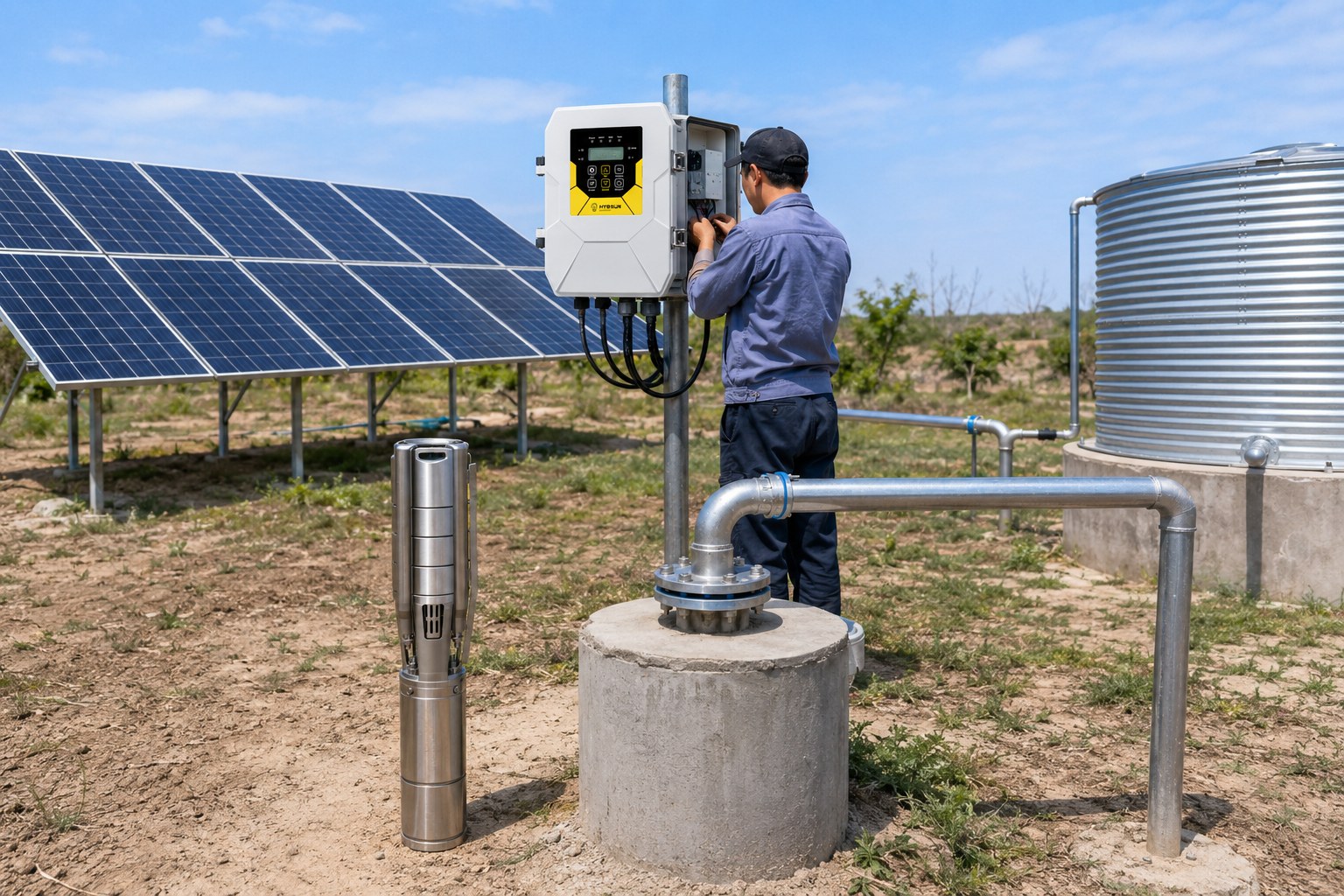
This setup offers a path to energy independence and significant cost savings over time.
However, the best solution depends on your existing equipment and your specific water needs.
Whether you should replace your current pump or convert it to solar power involves several key factors.
Let's explore the options to find the most efficient and cost-effective path for you.
Should I Replace My Current AC Pump or Convert it to Solar?
You have a working AC pump but want to cut energy costs with solar.
Is it better to replace the whole thing or just convert it to run on solar power?
Converting your AC pump can be simpler if the pump is in good condition, only requiring wiring changes. However, replacing it with a full DC solar pump system is often more energy-efficient and can be more cost-effective in the long run, especially for larger pumps.
The Efficiency Argument: DC vs. AC Solar Pumping
The core of the decision lies in system efficiency.
DC solar pumps are built from the ground up to work with solar panels.
The power flows from the DC panels, through a DC controller, and to a DC motor.
This direct path minimizes energy loss.
An AC pump, on the other hand, requires an inverter.
The inverter's job is to convert the DC power from the solar panels into AC power that the pump can use.
This conversion process itself consumes energy, with efficiency losses typically ranging from 5% to 15%.
This means you need more solar panels to get the same amount of water compared to a native DC pump system.
Let's consider a common scenario.
Imagine you have a 1HP well pump for a 100-foot well.
| Feature | Dedicated DC Pump System | AC Pump Conversion System |
|---|---|---|
| Pump Type | 1HP Brushless DC Solar Pump | Existing 1HP 220V AC Pump |
| System Efficiency | ~90% motor efficiency | ~75% overall efficiency (after inverter) |
| Solar Panels Needed | Approx. 800-1000 Watts | Approx. 1200-1500 Watts |
| Key Components | DC Pump, Controller, Panels | Inverter, Controller, Panels |
| Initial Cost | ~$3,500 (Pump, Controller, Panels, Mounts) | ~$4,000+ (Inverter, Panels, Mounts) |
| Long-Term Benefit | Higher efficiency, fewer panels, designed for solar | Keep existing pump, no pump installation |
As the table shows, the dedicated DC system requires about 25-35% less solar panel capacity for the same job.
While you save the labor of replacing the pump with a conversion kit, the initial equipment cost can be higher, and you'll occupy more space with additional panels.
Cost-Benefit Analysis for Pump Conversion
The financial breakdown is crucial.
If we assume the water pump accounts for $100 of a monthly electric bill, a $3,500 investment in a new DC system could pay for itself in under three years.
After that, you enjoy over a decade of nearly free water pumping, with system lifespans often exceeding 15 years.
However, conversion can seem attractive.
You avoid pulling the pump, which can be a significant job.
The process involves redirecting the wiring from your home's breaker box to a solar inverter.
Most property owners can handle this task in an afternoon.
But there are situations where conversion is not the best choice.
First, if your current AC pump is a 2-wire model (two wires plus a ground), it's likely incompatible with standard solar conversion controllers.
These pumps have their starting components built-in and require a pure AC signal, which most solar inverters don't provide perfectly.
Second, if your AC pump is grossly oversized for your needs, you're better off replacing it.
We often see 3 HP pumps installed where a 1.5 HP model would suffice.
Converting an oversized pump means you'll have to buy a massive, expensive solar array to power it, negating any potential savings.
For higher horsepower pumps (2 HP, 3 HP, and 5 HP), the cost of the larger inverter and the sheer number of solar panels required for conversion often exceeds the price of a brand new, correctly-sized DC pump system.
Understanding the Core Components of a Solar Pumping System
You're considering a solar pump but feel overwhelmed by the technical parts.
What are the essential components, and what do they actually do?
A solar water pumping system consists of three main parts: the solar panels that generate power, a controller that manages the energy, and the pump with its motor that moves the water. Each part must be correctly sized to work together efficiently.
The Power Source: Solar Panels
Solar panels are the fuel source for your pump.
Their job is to convert sunlight into DC electricity.
The number of panels you need depends on the pump's power requirement and your geographic location.
To maximize energy production, panels must be angled correctly toward the sun.
This optimal angle changes with the seasons and your latitude.
Online calculators can help you determine the best year-round angle for your specific location.
For example, a location in the Northern Hemisphere might require a steeper angle in the winter (when the sun is lower in the sky) and a shallower angle in the summer.
Typically, you install them at a fixed angle that provides a good average output throughout the year.
The panels are usually connected in series to create a "string."
Connecting panels in series increases the voltage while keeping the current the same.
The system controller has a maximum input voltage that you cannot exceed, so the number of panels per string is limited by this specification.
For larger systems, multiple strings can be connected in parallel to increase the current and overall power available to the controller.
The Brain: The Solar Pump Controller
The solar pump controller is the intelligent heart of the system.
It's much more than a simple on/off switch.
Its primary function is to regulate the power flowing from the solar panels to the pump motor.
Modern controllers use a technology called Maximum Power Point Tracking (MPPT).
MPPT technology constantly adjusts the electrical load to find the "sweet spot" where the solar panels produce the maximum amount of power.
This can boost the water output by up to 30% compared to a system without MPPT, especially during early morning, late afternoon, or on cloudy days.
The controller also provides critical protection for the pump.
Key Protective Features of a Controller:
- Dry-Run Protection: It uses sensors or software to detect if the well's water level has dropped below the pump intake. It then shuts the pump off to prevent it from overheating and damaging itself.
- Over-Voltage/Under-Voltage Protection: It shields the motor from harmful voltage spikes or drops from the solar array.
- Tank Full Switch: It can connect to a float switch in a storage tank. When the tank is full, the switch signals the controller to stop the pump, preventing overflows and saving energy.
- Diagnostic LEDs: Many controllers have indicator lights that provide real-time status updates on pump speed, power availability, and any fault conditions, making troubleshooting simple.
The Workhorse: The Pump and Motor
The pump and motor do the physical work of moving water.
In high-quality solar pumping systems, the motor is the star player.
The most advanced systems use a Brushless DC (BLDC) permanent magnet motor.
These motors are a game-changer for efficiency.
Unlike traditional AC motors, they don't have brushes that wear out, making them virtually maintenance-free.
Their efficiency regularly exceeds 90%, whereas standard AC motors might operate in the 70-80% efficiency range.
This high efficiency is critical.
A 10% increase in motor efficiency means you need 10% fewer solar panels to do the same amount of work.
This directly translates to lower initial system costs and a smaller physical footprint.
These BLDC motors are also more compact and lightweight.
They can be up to 47% smaller and 39% lighter than equivalent AC motors, simplifying installation, especially when lowering a pump hundreds of feet into a well.
The pump itself, or the "wet end," is attached to the motor and determines the flow rate and pressure.
The type of pump you choose depends entirely on your application.
Choosing the Right Solar Deep Well Pump for Your Needs
You know you need a solar pump, but the options are confusing.
Screw pump, impeller pump, plastic, stainless steel—which one is right for your well and your water use?
The right pump depends on your needs: solar screw pumps for deep wells (high head, low flow), plastic impeller pumps for irrigation (high flow, wear resistance), and stainless steel impeller pumps for corrosive water (high durability, corrosion resistance).
For Deep Wells and Low Flow: The Solar Screw Pump
The solar screw pump, also known as a progressing cavity pump, is a specialist for depth.
It works by using a single helical-shaped stainless steel screw (the rotor) that turns inside a double-helix rubber sleeve (the stator).
This action creates sealed cavities of water that are "pushed" up to the surface.
This mechanism is excellent at creating high pressure, making it ideal for lifting water from very deep wells.
It provides a lower, consistent flow rate but can achieve an exceptionally high head (the vertical distance it can lift water).
Key Features of a Solar Screw Pump:
- High Head, Low Flow: Perfect for deep domestic wells or lifting water to a high-elevation storage tank.
- Excellent Sand Resistance: The rubber stator can handle a higher concentration of sand and silt without damage compared to centrifugal pumps. This makes it a durable choice for wells with less-than-perfect water quality.
- Applications: It excels in providing water for homes, livestock drinking troughs, and small-scale drip irrigation systems in regions with deep water tables, such as parts of Africa and Latin America.
- Limitation: The lower flow rate means it's not suitable for applications requiring large volumes of water quickly, like flood irrigation for large farms.
For High Volume and Irrigation: The Solar Plastic Impeller Pump
When you need to move a lot of water, the solar plastic impeller pump is the workhorse.
This is a type of multi-stage centrifugal pump.
It uses a series of stacked impellers that spin at high speed.
Each impeller adds pressure to the water, and the more impellers (or stages) it has, the higher the head it can achieve.
These pumps are designed for high flow rates at a medium head.
The impellers are made from durable, engineered plastics that offer excellent resistance to wear from fine sand.
This makes them a cost-effective and lightweight option.
Key Features of a Plastic Impeller Pump:
- High Flow, Medium Head: Ideal for farm irrigation, filling large reservoirs, pasture water supply, and powering garden sprinkler systems.
- Wear-Resistant: The plastic material is surprisingly resilient against abrasion from fine particles, extending the pump's life in typical well conditions.
- Economical and Lightweight: These pumps are generally less expensive and lighter than their stainless steel counterparts, reducing both initial cost and installation difficulty.
- Applications: Widely used across Africa and the Americas for agricultural and residential applications where high water volume is the priority.
- Limitation: Not recommended for highly corrosive water or for the extreme pressures found in very deep wells.
For Harsh Conditions: The Solar Stainless Steel Impeller Pump
For the toughest jobs, the solar stainless steel impeller pump is the premium choice.
This pump operates on the same multi-stage centrifugal principle as the plastic model, but its key components are made from high-grade SS304 or SS316 stainless steel.
This construction gives it superior durability and resistance to corrosion.
It is specifically designed for water sources with challenging chemistry, such as acidic or alkaline water.
It offers high flow rates and can be configured for medium-to-high head applications.
Key Features of a Stainless Steel Impeller Pump:
- Superior Corrosion Resistance: The stainless steel build protects the pump from chemical damage, ensuring a very long service life in aggressive water environments.
- High Durability and Reliability: It can withstand higher pressures and temperatures, making it a reliable choice for critical applications and deep wells.
- Applications: Essential for water supply in coastal areas with saltwater intrusion risk, regions with alkaline soil like parts of Australia, and for high-end homes or commercial operations that demand the highest reliability.
- Limitation: This premium quality comes at a higher cost and weight, targeting a more niche segment of the market where durability is non-negotiable.
| Pump Type | Flow Rate | Head Capability | Sand Resistance | Primary Advantage | Ideal Application |
|---|---|---|---|---|---|
| Solar Screw Pump | Low | Very High | Excellent | Lifts water from extreme depths | Deep domestic wells, livestock |
| Plastic Impeller Pump | High | Medium | Good (fine sand) | High flow and cost-effective | Farm irrigation, filling ponds |
| Stainless Steel Impeller | High | Medium-High | Moderate | Extreme corrosion resistance | Corrosive water, high-end homes |
What About Pumping Water at Night or on Cloudy Days?
Solar pumps are great, but the sun isn't always shining.
How can you guarantee a water supply 24/7, even at night or during a week of rain?
To pump water without direct sunlight, you have two main options: a battery backup system that stores solar energy for later use, or an AC/DC hybrid controller that can automatically switch to grid or generator power when solar is unavailable.
The Battery Backup Solution
The traditional way to achieve off-sun pumping is with batteries.
During the day, the solar panels power the pump and simultaneously charge a bank of deep-cycle batteries.
A charge controller manages this process, preventing the batteries from being overcharged.
When the sun goes down or clouds roll in, the system automatically draws power from the batteries to run the pump.
This setup provides true off-grid energy independence.
You can have water whenever you need it, completely disconnected from the utility company.
However, this solution has drawbacks.
Batteries add significant cost to the initial system price, often increasing it by 30-50%.
They also require maintenance and have a limited lifespan, typically needing replacement every 5-10 years, depending on the type and usage.
This adds a recurring cost to your system.
Battery systems also introduce more complexity and another point of potential failure.
They are best suited for remote locations where no grid power is available and a 24/7 water supply is absolutely critical.
The AC/DC Hybrid Innovation
A more modern and increasingly popular solution is the AC/DC hybrid solar pump controller.
This intelligent device offers the best of both worlds.
The controller has inputs for both DC power from your solar panels and AC power from the electrical grid or a backup generator.
Its internal logic is programmed to prioritize solar power.
Whenever there is sufficient sunlight, the controller runs the pump using 100% free energy from your panels.
If the solar energy dips due to clouds, the controller can blend AC power with the available DC power to maintain pump operation, maximizing your use of solar energy.
When there is no solar input at all, such as at night, it seamlessly and automatically switches over to the AC power source.
This ensures you have a completely uninterrupted water supply without the need for expensive and maintenance-heavy batteries.
Benefits of an AC/DC Hybrid System:
- 24/7 Water Security: Guarantees water flow day or night, rain or shine.
- Lower Initial Cost: Avoids the high upfront expense of a battery bank.
- No Battery Maintenance: Eliminates the need to monitor, maintain, or replace batteries.
- Maximum Solar Utilization: The blending function ensures that every available watt of solar power is used before drawing from the grid.
For most users who have access to grid power, the AC/DC hybrid system represents the most practical and cost-effective solution for ensuring a round-the-clock water supply.
Conclusion
Connecting a pump directly to solar is not only possible but is often the most efficient solution, especially with DC systems.
The right pump and control system ensures energy independence and long-term savings.
FAQs
How many solar panels does it take to run a well pump?
It depends on the pump's horsepower (HP). A small 1/2 HP pump may need 300-500 watts, while a 2 HP pump could require 2000 watts or more.
Can a solar pump work without a battery?
Yes, most solar pumps are designed to run directly from solar panels during the day. Batteries are only needed if you require water at night or on cloudy days.
How long do solar water pumps last?
A quality solar pump system can last for 15-20 years. The brushless DC motors often have a lifespan of over 10 years, while solar panels are typically warrantied for 25 years.
What size solar pump do I need?
Sizing depends on your daily water requirement (gallons per day) and the total dynamic head (the vertical distance you're lifting the water plus friction loss).
Can solar panels run a 220v well pump?
Yes, but you need a solar inverter to convert the DC power from the panels to 220V AC power. This is generally less efficient than using a native DC solar pump.
Do solar pumps work on cloudy days?
Yes, they will still work but at a reduced flow rate. The pump's output is directly proportional to the amount of sunlight the panels receive.
How deep can a solar pump go?
Solar pumps are available for various depths. Solar screw pumps can lift water from over 1,000 feet, while centrifugal pumps are common for wells up to 500 feet.
What is the disadvantage of a solar water pump?
The main disadvantage is the high initial investment cost. Also, power generation is dependent on sunlight, requiring a backup solution like batteries or a hybrid controller for 24/7 operation.