Struggling with inconsistent water levels for your critical pumping operations?
This unpredictability can halt production and increase costs.
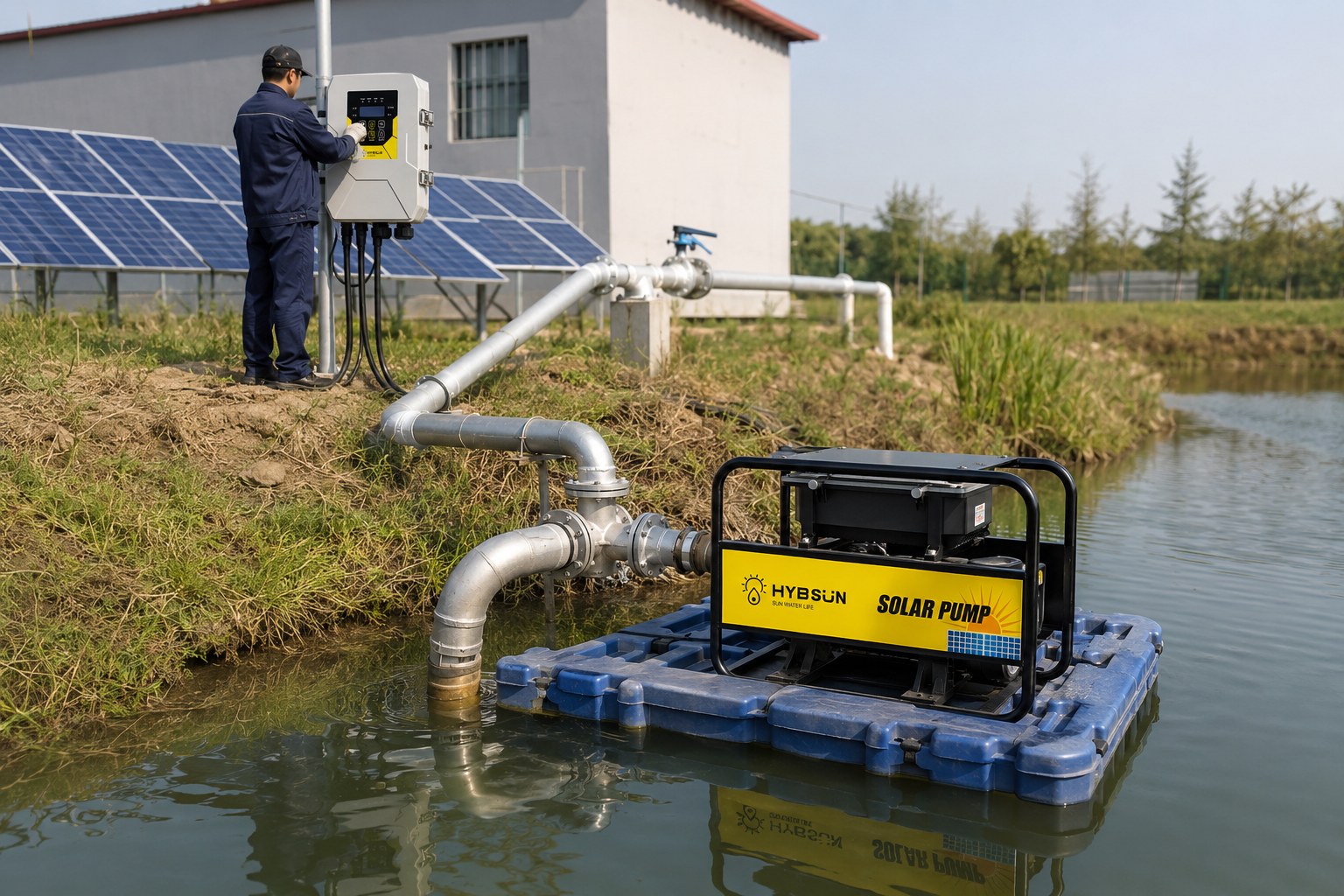
A floating pump is a complete pumping system mounted on a buoyant platform, such as a pontoon.
It automatically rises and falls with changing water levels.
This ensures a reliable, self-priming water source from rivers, lakes, or industrial ponds without needing fixed structures.
This adaptable technology is transforming water management across countless industries.
It offers a stark contrast to traditional, land-based pump houses that are often expensive, immobile, and vulnerable to water level changes.
Floating systems provide a modern solution that is not only efficient but also cost-effective and environmentally sensitive.
Let's explore the core components, significant advantages, and diverse applications that establish these pumps as a superior choice for many modern water transfer challenges.
The Core Components and Functionality of Floating Pumping Stations
Confused about how a pump can simply float on water and operate effectively?
The design might seem complex, but it is elegantly simple and highly reliable.
A floating pumping station functions by installing pumps onto a buoyant platform, which is securely anchored in a body of water.
This platform adjusts to the water level, keeping the pump's intake constantly submerged.
This design ensures continuous, efficient operation without the need for manual priming.
The Buoyant Platform: The Unsinkable Foundation
The platform, often called a pontoon, is the base of the entire system.
It is engineered to support the weight of the pumps and all associated equipment.
These platforms are typically constructed from robust materials like certified steel or high-density polyethylene (HDPE).
Steel platforms offer superior strength and are ideal for large, heavy-duty systems.
HDPE platforms provide excellent corrosion resistance and are lighter, making them suitable for smaller or more mobile applications.
Many designs are modular.
This means they can be transported in smaller sections and assembled on-site.
This feature is crucial for installation in remote or logistically challenging locations.
A modular design also allows for future expansion, as more pontoon sections and pumps can be added to increase capacity.
The platforms are built to withstand harsh environmental conditions, including constant water exposure, UV radiation, and turbulent water.
For example, steel pontoons often feature multi-layer protective coatings that prevent rust and corrosion, extending their operational life to over 25 years with proper maintenance.
The Pumping Unit: The Heart of the Operation
The choice of pump is critical and depends entirely on the application's requirements.
Floating stations can accommodate various pump types.
Vertical turbine pumps are often used for high-head applications, efficiently lifting water from significant depths.
Submersible centrifugal pumps are common for high-volume water transfer in applications like dewatering or irrigation.
For specialized tasks, other pumps like screw pumps can be integrated to handle low-flow, high-head requirements or water with some solids.
The drive system is equally versatile.
Pumps can be powered by electric motors connected to the grid, standalone diesel engines for off-grid sites, or increasingly, solar power systems.
Belt drives and direct drives are both used, offering flexibility in matching motor speed to pump requirements.
These systems can achieve massive flow rates, with some large-scale stations capable of moving up to 20,000 gallons per minute (GPM) through discharge pipes ranging from 2 to 16 inches in diameter.
The Anchoring System: Ensuring Stability
An anchoring system is essential to keep the floating station securely in place.
It prevents the platform from drifting due to wind, currents, or the thrust generated by the pumps.
The type of anchoring depends on site-specific conditions.
In rivers with strong currents, driven piles or robust mooring chains connected to deadweight anchors on the riverbed are used.
In calmer lakes or ponds, simpler systems with cables attached to the shore may suffice.
The engineering of the anchoring system is critical for safety and operational reliability.
It must be designed to handle the most extreme weather conditions expected at the site, ensuring the station remains stable and functional year-round.
Platform Material Comparison
| Feature | Steel Pontoon | HDPE Pontoon |
|---|---|---|
| Durability | Very high (20-25+ year lifespan) | High (10-15+ year lifespan) |
| Strength | Excellent, for heavy-duty pumps | Good, for light to medium pumps |
| Corrosion | Requires protective coatings | Inherently corrosion-resistant |
| Weight | Heavy, requires more logistics | Lightweight, easier to transport |
| Cost | Higher initial investment | Lower initial investment |
| Best For | Large, permanent industrial systems | Mobile, temporary, or corrosive water uses |
Key Advantages Over Traditional Pumping Systems
Tired of the high costs and inflexibility of traditional land-based pump houses?
There is a much more efficient, adaptable, and economical alternative.
Floating pumps eliminate the need for costly and time-consuming civil works like concrete foundations and pump houses.
They naturally adapt to fluctuating water levels, require no priming, have a minimal environmental footprint, and are significantly easier and safer to maintain.
Adaptability to Water Level Fluctuations
This is arguably the most significant advantage of a floating pump station.
Traditional fixed-intake pumps are highly vulnerable to changes in water levels.
During a drought, a falling water level can leave the intake high and dry, completely halting operations.
Conversely, during a flood, the entire pump house can become submerged, causing catastrophic damage to motors and electrical systems.
A floating pump station elegantly solves this problem.
Because it floats, the platform and its pumps rise and fall with the water.
This ensures the pump intake remains at an optimal depth below the surface.
This constant suction condition maintains pump efficiency and guarantees an uninterrupted water supply, whether the water level drops by 20 feet or rises by 20 feet.
This adaptability can increase operational uptime by over 90% in areas with significant seasonal water variation.
Reduced Installation Costs and Time
Building a conventional pump station is a major construction project.
It requires extensive land acquisition, excavation, concrete pouring, and building construction.
This process is not only expensive but can also take 6 to 12 months or longer to complete.
Floating pump stations bypass most of these steps.
Their modular components are fabricated off-site, transported to the location, and assembled on or near the water.
Installation is dramatically faster, with small to medium systems often deployed in just 2 to 6 months.
This accelerated timeline means operations can begin sooner, generating revenue faster.
The reduction in civil works and labor can slash initial capital expenditure by as much as 40-60% compared to a fixed installation of similar capacity.
Simplified Maintenance and Operation
Maintenance on traditional pumps, especially submersible or deeply set vertical pumps, can be a difficult and hazardous task.
It often requires heavy lifting equipment to pull the pump or motor for service.
Floating pump stations are designed for easier and safer maintenance.
Most key components, including the motor, drive system, and bearings, are positioned on the platform above the water level.
This provides clear and easy access for inspection and servicing.
Features like welded construction with no bolts to loosen and bearings that don't require daily oiling further reduce maintenance demands.
Because the pump is always submerged, it is self-priming, eliminating one of the most common operational headaches.
This practical design can reduce scheduled maintenance time by over 75%.
Floating vs. Fixed Pumping Stations
| Metric | Floating Pumping Station | Traditional Fixed Station |
|---|---|---|
| Capital Cost | Up to 60% lower | High |
| Installation Time | 2-9 months | 6-18+ months |
| Adaptability | Automatically adapts to any water level | Fails at high or low water levels |
| Maintenance | Easy access, reduced downtime by >75% | Difficult, requires heavy equipment |
| Environmental Impact | Minimal, no major excavation | Significant land and habitat disruption |
| Priming | Self-priming, no action needed | Requires priming systems |
Versatile Applications Across Various Industries
Do you think floating pumps are a niche solution for just one type of job?
These highly versatile systems are actively solving critical water management challenges in a wide range of sectors.
Floating pump stations are widely used in agriculture for large-scale irrigation, in the mining industry for dewatering and slurry transfer, for municipal water supply, in power generation for cooling water intake, and for emergency flood control and environmental management.
Their flexibility makes them an ideal solution for almost any raw water transfer application.
Agriculture and Irrigation
In agriculture, a consistent water supply is non-negotiable.
Floating pumps provide an incredibly reliable solution for drawing water from rivers, lakes, canals, and reservoirs.
As the water source depletes during a dry growing season, the floating pump simply follows the water down, ensuring the irrigation system never runs dry.
A fixed pump intake, in contrast, could be left metres above the water line, rendering it useless when water is most needed.
These systems can be customized with irrigation-specific fittings like ringlock or threaded pipe connections.
This ensures seamless integration with existing sprinkler or drip irrigation networks.
The ability to maintain a 100% reliable water source throughout the entire season can increase crop yields by 15-25% in water-scarce regions.
Mining and Industrial Operations
The mining industry relies heavily on robust water management for dewatering open pits, managing tailings ponds, and supplying water for processing.
Floating barge pumps are perfect for these tasks.
They can be easily moved to different locations within a large tailings or settling pond to manage water levels or remove process water more effectively.
A mobile floating pump can dewater a large pit 30% more efficiently than a fixed-point pump by targeting multiple low points.
Their durable construction can handle the abrasive and sometimes corrosive liquids found in mining environments.
Similarly, power plants use floating stations as intake structures for cooling water, ensuring a constant supply regardless of reservoir fluctuations.
Municipal and Urban Water Supply
For towns and cities located near large freshwater sources, floating pumping stations offer a flexible and scalable solution for raw water intake.
They can serve as the primary water supply system or as a redundant backup for emergencies.
Their modular nature means capacity can be easily expanded as a city's population grows.
Furthermore, their rapid deployment capability makes them invaluable for disaster relief.
After a flood or earthquake damages primary water infrastructure, a floating pump station can be quickly transported and installed to provide a temporary but essential water supply to the affected community.
Flood Control and Environmental Management
In low-lying coastal or riverine areas, floating pumps are a powerful tool for flood mitigation.
They can be activated to pump enormous volumes of excess water away from residential and agricultural land, significantly reducing flood damage.
In environmental conservation, they are used to precisely manage water levels in wetlands and wildlife habitats.
For example, a floating pump connected to a float switch can automatically maintain a specific water depth in a waterfowl nesting area.
This creates the ideal habitat conditions with minimal human intervention, promoting biodiversity.
Customization and Advanced Technology Integration
Do you need a pumping solution that perfectly matches your unique operational requirements?
Standard, off-the-shelf products often force compromises that reduce efficiency and increase long-term costs.
Modern floating pumping stations are not one-size-fits-all.
They are highly customizable systems.
You can specify everything from the pontoon material and pump type to the power source and control systems.
This includes integrating advanced technologies like remote telemetry and automated controls for unparalleled efficiency and convenience.
Tailored Pump and Pontoon Design
The customization process begins with the core components.
Based on your required flow rate, head pressure, and water quality, engineers will select the optimal pump.
This could be a high-flow centrifugal pump for irrigation, a high-head vertical turbine pump for deep water sources, or a specialized slurry pump for mining applications.
The pontoon is then designed around the selected pump.
A heavy-duty steel barge can be custom-fabricated to support a large vertical turbine pump, complete with access walkways and service cranes.
For smaller, more mobile needs, a lightweight HDPE modular pontoon might be chosen.
Every aspect, from the intake strainer type to the discharge hose material, can be tailored to the project's specific needs, ensuring maximum performance and longevity.
Power Source Flexibility (AC/DC Hybrid)
Floating pumps offer complete flexibility in power sources.
For sites with grid access, electric motors are a reliable and efficient choice.
In remote locations, diesel engines provide robust, independent power.
However, the most innovative solution is the integration of solar power, often in an AC/DC hybrid configuration.
In this setup, the pump system features dual power inputs.
During the day, high-efficiency solar panels provide clean, free energy to run the pump.
An intelligent controller automatically prioritizes solar power.
If cloud cover reduces solar input, the hybrid function can blend AC power from the grid or a generator to make up the difference, maximizing the use of solar energy.
When there is no solar input at night, the system seamlessly switches to the AC source.
This ensures 24/7 worry-free operation while reducing energy costs by up to 80% and minimizing carbon footprint.
Smart Controls and Remote Telemetry
The brain of a modern pumping station is its control system.
The integration of Variable Frequency Drives (VFDs) is a game-changer.
A VFD allows the pump motor's speed to be precisely adjusted to match the real-time demand.
This avoids running the pump at full speed unnecessarily, which can cut energy consumption by 30-50%.
Furthermore, advanced remote telemetry systems allow operators to monitor and control the entire station from a smartphone, tablet, or computer.
Operators can remotely start or stop pumps, adjust speed, monitor flow rates, and receive instant alerts for any potential issues.
This remote capability eliminates the need for constant on-site supervision, reducing labor costs by 20-30% and enabling faster response times to operational changes.
Power Source Comparison
| Power Source | Pros | Cons |
|---|---|---|
| Diesel Engine | High power, location independent | High fuel & maintenance costs, noisy, emissions |
| Grid Electricity (AC) | Reliable, low maintenance | Requires grid access, subject to outages & price hikes |
| Solar (DC) | Zero fuel cost, clean, low maintenance | High initial cost, dependent on sunlight |
| AC/DC Hybrid | Best of both, 24/7 operation, lowest running cost | Highest initial cost, most complex system |
Conclusion
Floating pumps deliver a flexible, efficient, and sustainable solution for today's water management challenges.
They adapt to any environment, reduce costs, and ensure a reliable water supply for any application.
FAQs
What is a floating pump?
A floating pump is a water pump mounted on a buoyant platform, like a pontoon.
It automatically adjusts its height with changing water levels.
What are the advantages of a floating pump?
They are adaptable to water levels, require no priming, have lower installation costs than fixed pumps, and are easier to maintain with minimal environmental impact.
What are floating pumps used for?
They are used for agricultural irrigation, mine dewatering, industrial water supply, municipal water intake, flood control, and managing water in wetlands and ponds.
Do floating pumps need priming?
No.
Because their intake is always kept submerged below the water's surface, they are self-priming, which simplifies operation and improves reliability.
How are floating pumps anchored?
They are secured using systems like mooring chains, driven piles, or cables connected to deadweight anchors or the shore, depending on water conditions.
Can floating pumps handle dirty water?
Yes.
They can be equipped with specialized pumps and intake screens designed to handle water containing solids, sediment, or corrosive elements, common in mining or floodwater.
What is a floating pump pontoon?
A floating pump pontoon is the buoyant platform that supports the pumps and other equipment on the water's surface, providing stability and access for maintenance.
How long do floating pumps last?
With proper maintenance, high-quality steel pontoon systems can last over 25 years.
HDPE systems typically have a lifespan of 10-15 years, offering excellent long-term value.