Staring at a flooded basement or a dry faucet is a homeowner's nightmare.
These water-related problems cause immense stress and lead to thousands of dollars in repairs.
The right submersible pump is your silent guardian against this chaos.
The best submersible pump is not a single model but the one perfectly matched to your specific task.
For well water, a deep well pump is essential.
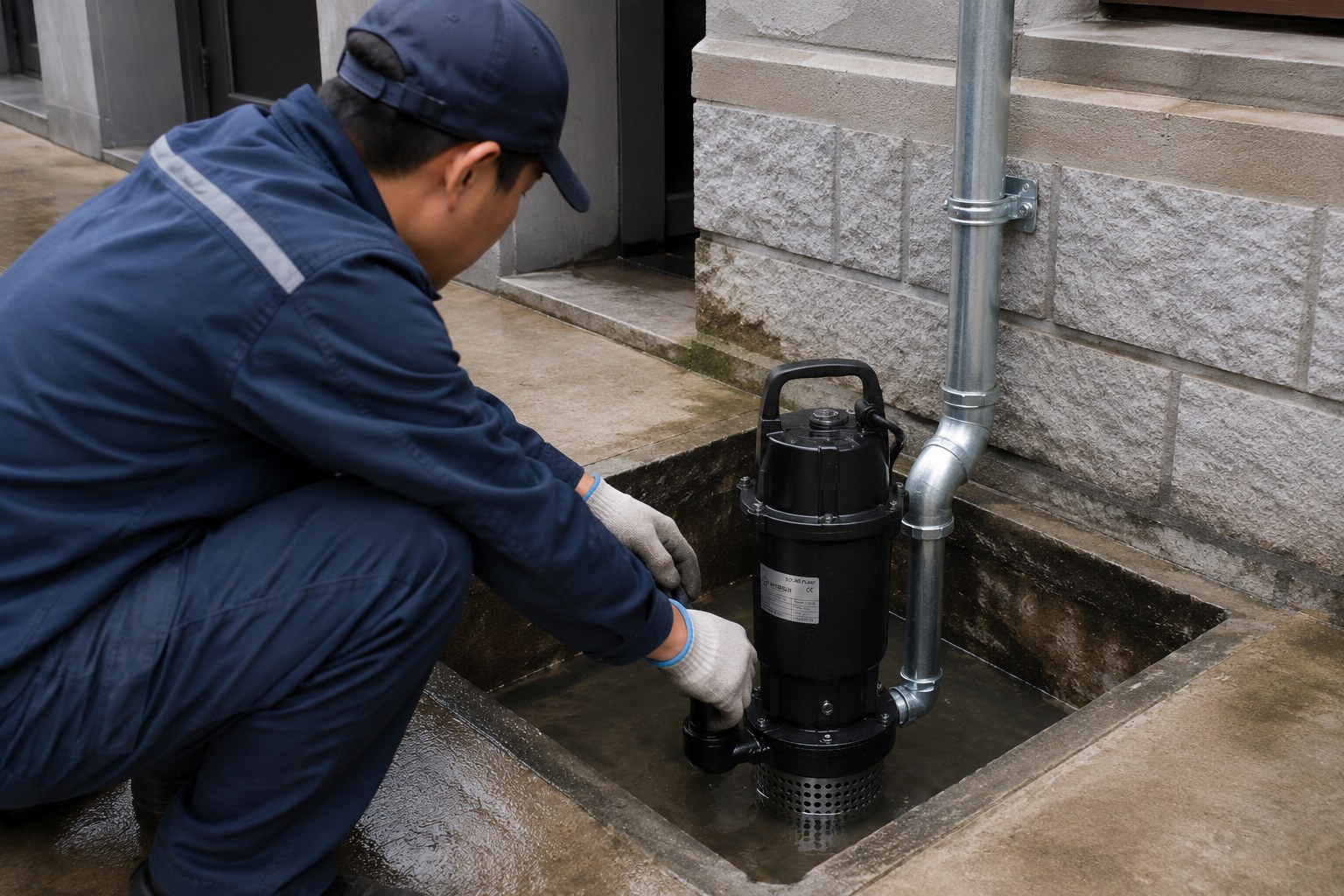
For basement flood protection, a sump pump is your first line of defense.
For versatile jobs, a utility pump is the right tool.
Choosing the right pump can feel overwhelming with so many types, brands, and features available.
This guide breaks down the most common types of submersible pumps in the United States.
We will explore their specific uses, compare their features, and provide the data you need to make an informed decision.
Let's dive in to find the perfect pump to protect your home and ensure a reliable water supply.
Submersible Well Pumps for Rural Homes
Living off-grid means relying on your own water system, but a failing pump can leave you high and dry.
The dependency on a single piece of equipment is stressful.
A reliable well pump is the heart of your rural home's water supply.
The best submersible well pump delivers consistent water pressure and flow from a deep well to your home.
These pumps are designed for longevity, typically lasting 10 to 15 years.
Models with stainless steel components and built-in check valves offer superior durability and performance for wells up to 500 feet deep.
A submersible well pump is a long-term investment in your home's infrastructure.
Understanding the key performance metrics is crucial before you buy.
The pump's horsepower (HP), gallons per minute (GPM), and materials will determine its suitability for your well's depth and your family's water needs.
A pump that is too weak will result in poor water pressure, while an overpowered one wastes energy.
How Well Pumps Work
Submersible well pumps are long, cylindrical pumps designed to be completely submerged in the well water.
They push water up to the surface through a pipe.
This design is significantly more efficient for deep wells (over 25 feet deep) compared to older jet pump styles that pull water from the surface.
Most modern rural homes use submersible pumps because they are quieter, more powerful, and less prone to losing their prime.
The pump itself sits near the bottom of the well, often hundreds of feet down, submerged in at least 25-30 feet of water to ensure proper cooling and operation.
Key Metrics: GPM and Horsepower
Horsepower (HP) indicates the motor's power, which determines how much water it can lift and how high.
Gallons Per Minute (GPM) measures the volume of water the pump can deliver.
A typical home requires 10-12 GPM.
The deeper your well and the higher your water demand, the more horsepower you will need.
| Horsepower (HP) | Typical Well Depth Range (feet) | Average Flow Rate (GPM) | Ideal Application |
|---|---|---|---|
| 0.5 HP | 25 - 150 | 10 - 12 GPM | Shallow wells, cabins, low-demand homes |
| 0.75 HP | 100 - 225 | 10 - 20 GPM | Standard residential wells, small farms |
| 1.0 HP | 150 - 300 | 12 - 25 GPM | Deeper wells, larger homes, livestock watering |
| 1.5 HP+ | 250 - 500+ | 20+ GPM | Very deep wells, irrigation, high-demand farms |
Comparing Popular Well Pump Features
Several brands offer reliable well pumps, but their features differ.
Construction materials are a key differentiator.
Pumps with stainless steel shells offer up to 70% more corrosion resistance than those with thermoplastic bodies.
Pumps with built-in check valves prevent backflow, maintaining system pressure and reducing wear on the pump.
Three-wire motors, which include a separate control box, offer easier servicing and troubleshooting compared to simpler two-wire motors.
| Feature | Red Lion | Flotec | Little Giant | Grundfos | BURCAM |
|---|---|---|---|---|---|
| Horsepower | 1 HP | 1 HP | 0.5 HP | 0.75 HP | 0.75 HP |
| Max Flow Rate | 12 GPM | 20 GPM | 12 GPM | 10 GPM | 10 GPM |
| Voltage | 230V (3-Wire) | 230V (3-Wire) | 230V | Varies | 230V (2-Wire) |
| Construction | Stainless Steel Shell | Stainless Steel Pump | Thermoplastic/Stainless | Stainless Steel | 316 Stainless Steel |
| Key Advantage | Built-in Check Valve | Patented Sand-Resistant Design | Franklin Electric Motor | Compact & Efficient | Continuous Duty Motor |
Submersible Sump Pumps for Basement Protection
A single inch of water in your basement can cause over $25,000 in damage.
With over 60% of U.S. homes experiencing basement moisture, this threat is all too real.
A quality sump pump is your primary defense against flooding and water damage.
The best sump pump is a reliable, powerful unit that automatically activates to remove groundwater before it can cause a flood.
Top-rated brands use durable cast-iron bodies for better heat dissipation and longevity.
Features like dual float switches and battery backups provide an essential second layer of protection against mechanical failure or power outages.
Not all sump pumps are created equal.
The difference between a dry basement and a disaster often comes down to the pump's build quality, switch type, and backup systems.
A cheap, plastic pump may save money upfront but is 80% more likely to fail during a severe storm when you need it most.
Investing in a robust system with modern features like smart monitoring gives you peace of mind, whether you're home or away.
Sump Pump Types: Primary vs. Backup
A primary sump pump is your daily workhorse, handling routine groundwater collection.
Most are submersible models that sit inside the sump pit.
A battery backup sump pump is a secondary, often smaller pump that takes over if the primary pump fails or, more commonly, if the power goes out.
Combination systems bundle a primary AC pump and a secondary DC battery-powered pump in one package, offering a complete, pre-assembled protection solution that can increase flood protection reliability by over 90%.
Critical Features to Look For
- Construction Material: Cast iron is the professional standard. It's heavier and more expensive than plastic but dissipates motor heat more effectively, extending the pump's life by up to 50%.
- Switch Type: The float switch turns the pump on and off. Vertical float switches are more reliable in narrow sump pits and less prone to getting stuck than older tethered float designs.
- Smart Monitoring: Modern pumps can connect to your home's Wi-Fi. They send text or email alerts to your phone for high water levels, pump activation, or power loss, providing critical information when you're away.
- Pumping Capacity: Measured in gallons per hour (GPH), this indicates how much water the pump can move. A typical 1/3 HP pump moves around 2,000-2,500 GPH at a 10-foot lift, which is sufficient for most homes.
Brand Performance Comparison
Top brands distinguish themselves with reliability, quiet operation, and innovative technology.
Professionals often trust brands known for durable, all-cast-iron construction.
Other brands focus on whisper-quiet operation or cutting-edge smart connectivity at a competitive price point.
| Brand | Average Cost | Key Feature | Best For |
|---|---|---|---|
| Zoeller | $250 - $900 | Professional-grade cast-iron durability | Overall performance and longevity |
| Liberty Pumps | $250 - $850 | App-based remote monitoring (NightEye®) | Smart home integration and remote alerts |
| Wayne | $200 - $800 | Whisper-quiet, energy-efficient motor | Quiet operation and easy DIY installation |
| Groundworks | $600 - $1,200 (Installed) | Professional installation & warranty | Complete, professionally-managed protection |
Submersible Utility Pumps for Versatile Tasks
You have a flooded window well or a pool cover that needs draining, but your garden hose isn't cutting it.
Small-scale water problems can quickly become big frustrations without the right tool.
A portable utility pump is the versatile solution for these everyday tasks.
A submersible utility pump is a lightweight, portable pump designed for temporary water removal jobs.
They don't require permanent installation and can be used anywhere you have water to move and a power outlet.
Models with garden hose adapters and long power cords offer maximum convenience for a variety of applications.
The beauty of a utility pump lies in its simplicity and adaptability.
Unlike specialized well or sump pumps, a utility pump is a generalist.
You can use it to empty a clogged sink one day and drain a small flooded area the next.
Key factors to consider are its pumping capacity (GPM), how small of a water level it can drain to, and whether it has an automatic on/off switch or needs to be manually operated.
Choosing one with a thermoplastic body keeps it lightweight and corrosion-resistant, making it up to 60% lighter than cast-iron models and easy to move around.
Common Applications for Utility Pumps
Utility pumps are the jack-of-all-trades in the pump world.
Their portability makes them ideal for a wide range of planned and emergency water transfer duties.
Common uses include:
- Draining water from pool covers, hot tubs, and ponds.
- Emptying aquariums or waterbeds.
- Removing water from flooded basements, crawl spaces, or window wells.
- Boosting water pressure for power washing or irrigation from a rain barrel.
- Emptying a water heater tank for maintenance.
Understanding Discharge and Portability
The discharge size determines the diameter of the hose you can connect.
Most utility pumps feature a standard 1-1/4" or 1-1/2" NPT (National Pipe Thread) discharge, and many include an adapter for a standard garden hose, increasing versatility.
A larger discharge allows for a higher flow rate.
Portability is also key.
Look for a pump with a long power cord (25 feet is excellent) to minimize the need for extension cords, especially in wet environments.
A built-in handle makes carrying and positioning the pump much easier and safer.
Utility Pump Feature Showdown
When comparing utility pumps, look beyond just the price.
Performance, measured in Gallons Per Minute (GPM), is critical.
Also, consider specialized features.
Some pumps are designed to handle high temperatures, making them suitable for draining hot water heaters, while others can pump water down to a fraction of an inch.
| Model Feature | PROFLO PF91335 | Liberty Pumps HT41A-2 | PROFLO PF91025 |
|---|---|---|---|
| Max Flow Rate | 40 GPM (2400 GPH) | 60 GPM (3600 GPH) | 26 GPM (1560 GPH) |
| Discharge Size | 1-1/4" NPT | 1-1/2" NPT | 1-1/4" NPT |
| Cord Length | Varies | 25 ft. | Varies |
| Key Advantage | Solid all-around performance | High-temperature (up to 180°F) rated | Economical choice for light duty |
| Includes Float Switch? | No (Manual Operation) | Yes (Automatic Operation) | No (Manual Operation) |
The Rise of Solar Submersible Pumps
Need water in a remote location with no access to the power grid?
The cost and hassle of running power lines or using a generator are significant hurdles.
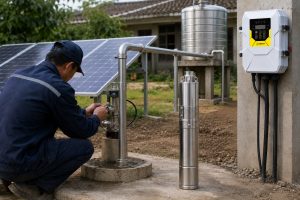
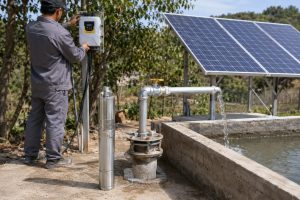
Solar submersible pumps offer a green, cost-effective, and self-sufficient solution.
Solar submersible pumps are a game-changing technology, providing reliable water for homes, livestock, and farms completely off-grid.
They run directly on energy from the sun, eliminating electricity bills and reducing environmental impact.
With highly efficient motors, these pumps can deliver water from deep wells using a surprisingly small number of solar panels.
The magic behind modern solar pumps is not just the sun, but advanced motor technology.
These systems are more than just a pump; they are a complete water delivery solution comprising solar panels, an intelligent controller, and a highly efficient pump.
This synergy maximizes every bit of solar energy, ensuring water flows even on partly cloudy days.
This technology is rapidly becoming the standard for water supply in electricity-scarce regions across the globe, from Africa and Australia to rural America.
The Core Technology: BLDC Motors
The heart of a modern solar pump is its Brushless DC (BLDC) permanent magnet motor.
These motors are an engineering marvel, achieving efficiencies of over 90%, which is 25-35% more efficient than a traditional AC motor.
This incredible efficiency means the pump can run effectively on less power, significantly reducing the number of solar panels needed and lowering the system's overall cost by up to 40%.
The rotor uses powerful neodymium iron boron magnets, and the brushless design eliminates parts that wear out, resulting in a motor that is virtually maintenance-free and has a much longer service life.
Solar Pump Types for Different Needs
Just like conventional pumps, solar pumps come in different designs for specific applications.
The three main types—screw, plastic impeller, and stainless steel impeller—create a versatile portfolio to meet nearly any off-grid water demand.
Choosing the right one depends on your well's depth, desired flow rate, and water quality.
| Pump Type | Best For | Flow Rate | Head (Lift) | Sand Resistance | Key Advantage |
|---|---|---|---|---|---|
| Solar Screw Pump | Deep wells, homes | Low | High | Excellent | Pushes water from extreme depths with ease. |
| Solar Plastic Impeller | Farms, irrigation | High | Medium | Good | High water output, economical, lightweight. |
| Solar Stainless Steel | Corrosive water, ranches | High | Med-High | Fair | Ultimate durability and corrosion resistance. |
Modern Advancements: Hybrid AC/DC Systems
What happens on cloudy days or at night when you still need water?
The latest innovation is the hybrid AC/DC solar pump controller.
This smart device allows the pump system to be connected to solar panels and an AC power source (like the grid or a generator) simultaneously.
The controller automatically prioritizes solar power, blending in AC power only when needed.
If solar is unavailable, it seamlessly switches to the AC source.
This guarantees a 24/7 water supply, giving you the cost savings of solar with the 100% reliability of a traditional electric pump.
Conclusion
The "best" submersible pump is the one that fits your specific needs for application, performance, and budget, providing reliable and efficient water management for years.
FAQs About Submersible Pumps
What is the most reliable brand of sump pump?
Brands that use cast-iron construction and offer long warranties are generally the most reliable.
Professionals often trust names known for durability and proven performance in the field.
How long should a submersible pump last?
A quality submersible well pump can last 10-15 years.
A sump pump's lifespan is typically 7-10 years, heavily dependent on how frequently it runs.
What is the difference between a sump pump and a submersible pump?
A sump pump is a specific type of submersible pump.
It is designed for one job: removing groundwater from a sump pit to prevent basement flooding.
Can I install a submersible pump myself?
Utility pumps are usually simple to use.
However, deep well pumps and primary sump pumps often benefit from professional installation to ensure safety, proper function, and warranty validity.
What size submersible pump do I need?
Pump size depends on the required flow rate (GPM/GPH) and total head (vertical lift).
Always consult the manufacturer's performance chart to match a pump to your specific requirements.
Are more expensive pumps better?
Often, yes.
A higher price typically reflects superior materials like cast iron, longer warranties, and advanced features, which lead to greater reliability and a longer operational lifespan.
What is better, a cast iron or stainless steel submersible pump?
Both are excellent, durable materials.
Cast iron is heavy and great at dissipating heat, while stainless steel offers superior resistance to corrosion, making it ideal for acidic or harsh water.
How deep should a submersible well pump be?
The pump should always be submerged, ideally in at least 25-30 feet of water.
The actual depth below ground can be hundreds of feet, depending on the well.