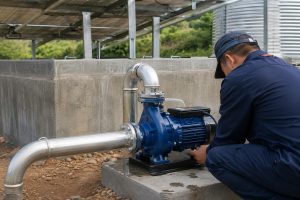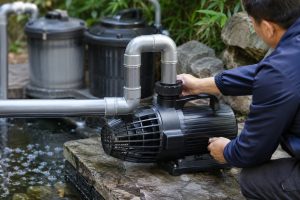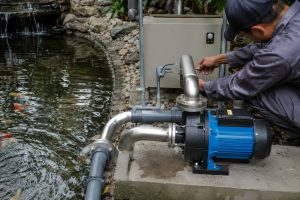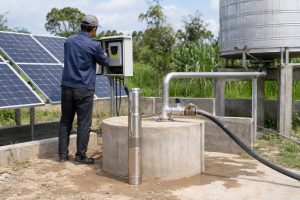
Struggling with inconsistent water supply in an off-grid location?
Finding a powerful and reliable solar pump can feel like searching for a needle in a haystack.
The "most powerful" solar water pump is not a single model. Power is defined by the application. For deep wells, a high-head screw pump is powerful. For farm irrigation, a high-flow impeller pump is powerful. True power comes from matching the right pump, motor, and controller to your specific needs.
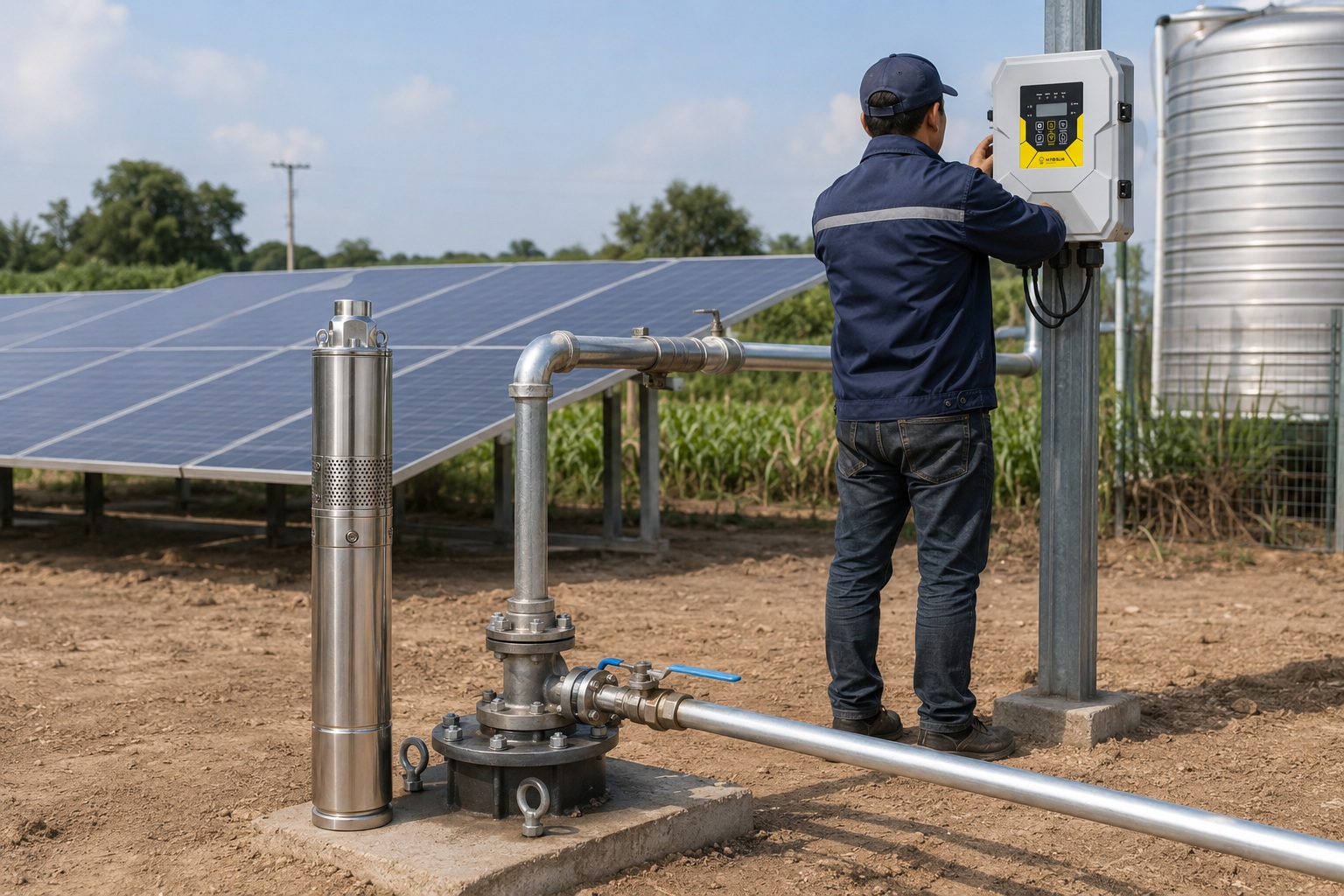
Understanding the nuances between pump types is the first step toward finding a truly powerful solution.
The market is filled with options, from tiny fountain pumps to robust systems designed for agriculture.
This guide will demystify the technology behind solar pumps.
We will explore the components that deliver real-world power and performance.
This will empower you, whether you're a homeowner, farmer, or a distributor, to make an informed decision.
Let's explore what makes a solar pump genuinely powerful.
A Deep Dive into Solar Pump Categories
Choosing the right solar pump can be a daunting task.
Do you need to lift water from a shallow pond or a 200-meter deep well?
Making the wrong choice leads to wasted investment and poor performance.
Solar pumps fall into two main categories: surface pumps for sources like ponds and submersible pumps for deep wells. Within these, the pumping mechanism, such as a screw or an impeller, determines its primary strength: delivering high pressure (head) or high volume (flow).
Submersible vs. Surface Pumps: The First Critical Choice
The location of your water source dictates the fundamental type of pump you need.
Surface pumps sit outside the water source.
They are designed to move water from shallow sources like ponds, streams, or storage tanks.
They are generally easier to install and access for maintenance.
However, their ability to pull water up from a depth is limited, typically to less than 7 meters.
Submersible pumps, as the name implies, are installed completely underwater in the source, such as a deep well or bore.
Because they push water up rather than pulling it, they can lift water from incredible depths, often exceeding 200 meters.
This makes them the only viable choice for deep well applications.
| Feature | Surface Pump | Submersible Pump |
|---|---|---|
| Application | Ponds, tanks, shallow wells | Deep wells, boreholes |
| Installation | Above ground, easier access | Underwater, more complex |
| Max Lift/Suction | ~7 meters | 200+ meters |
| Primary Action | Pulls water (suction) | Pushes water (pressure) |
The Heart of Performance: Screw vs. Impeller Technology
Once you've chosen between submersible and surface, the next layer of "power" is defined by the internal mechanism.
This is where the pump is specialized for either pressure or volume.
Solar Screw Pump (Progressing Cavity)
This pump design uses a helical stainless steel rotor (the screw) that turns inside a rubber stator.
This action creates sealed cavities of water that are "pushed" up the pump.
This mechanism is incredibly effective at creating high pressure.
It's the champion of high-head applications.
- Strengths: Can achieve very high heads (over 200 meters), making it ideal for domestic water supply from deep wells. It is highly resistant to sand and sediment, which would quickly destroy other pump types.
- Limitations: This design provides a relatively low flow rate. It is perfect for filling a tank over time but not for applications needing massive water volume instantly, like flood irrigation.
Solar Impeller Pump (Centrifugal)
This is the most common pump type, using one or more spinning impellers to throw water outwards by centrifugal force, creating flow.
The design of the impellers determines its performance characteristics.
-
Plastic Impeller: These multi-stage pumps are the workhorses for high-volume applications. They are engineered to deliver very high flow rates at low to medium heads. Their plastic construction makes them lightweight, economical, and impressively resistant to wear from fine sand. They are the top choice for farm irrigation, pasture water supply, and larger garden projects where moving a lot of water is the priority. Flow rates can easily exceed 15,000 liters per hour.
-
Stainless Steel Impeller: This is the premium option. Using SS304 stainless steel for the impeller and pump body provides superior durability and high corrosion resistance. This makes it the only suitable choice for acidic or alkaline water conditions, which can quickly degrade other materials. It offers a long service life and high reliability in harsh environments, making it ideal for high-end homes, ranches in alkaline soil regions, and any application where water quality is a concern.
Why the Motor is More Important Than the Pump Itself
You've selected a pump, but it's underperforming on cloudy days.
The issue might not be the pump itself, but the motor driving it.
An inefficient motor silently wastes precious solar energy every hour.
A high-efficiency Brushless DC (BLDC) motor is the engine of a powerful solar pump system. It converts over 90% of sunlight into pumping power, reducing the required solar panels by up to 25% and dramatically lowering long-term operational costs.
What is a BLDC Permanent Magnet Motor?
Think of it as the next generation of electric motors.
Traditional DC motors use carbon "brushes" to transfer power, which wear out, create dust, and generate friction, wasting energy.
A BLDC motor eliminates these brushes.
It uses a sophisticated electronic controller and powerful permanent magnets (like neodymium iron boron) to spin the rotor.
This design is fundamentally more efficient.
- Efficiency: A typical brushed motor might operate at 60-75% efficiency. A high-quality BLDC motor consistently exceeds 90% efficiency. This 15-30% improvement is massive in a solar-powered system.
- Maintenance-Free: With no brushes to wear out, the motor is virtually maintenance-free.
- Lifespan: The lack of friction and wear components allows BLDC motors to have a service life of over 30,000 hours, far surpassing their brushed counterparts.
The Tangible Business Benefits of High Efficiency
For a distributor or a large-scale user, the advantages of a BLDC motor translate directly to the bottom line.
Reduced System Costs
Higher motor efficiency means you need less power to do the same amount of work.
This directly reduces the number of solar panels required, which are often the most expensive component of the system.
| Pump Power | 75% Efficient Motor | 92% Efficient Motor | Panel Savings |
|---|---|---|---|
| 500W | Requires 667W of Panels | Requires 543W of Panels | ~19% |
| 1000W | Requires 1333W of Panels | Requires 1087W of Panels | ~19% |
| 1500W | Requires 2000W of Panels | Requires 1630W of Panels | ~19% |
This reduction in panel size and cost is a significant competitive advantage.
Superior Performance and Design
A high-efficiency motor isn't just about saving money; it's about better performance.
- Better Low-Light Operation: BLDC motors often incorporate a "soft-start" feature. They require very low current to begin operating, allowing the pump to start working earlier in the morning and continue later in the evening, maximizing the daily water output.
- Compact and Lightweight: Advanced BLDC motors can be significantly smaller and lighter than traditional motors with the same power output—sometimes up to 47% smaller and 39% lighter. This simplifies installation and reduces shipping costs, a crucial factor for international distribution.
The motor is the unsung hero.
Choosing a pump system with a high-efficiency BLDC motor is one of the most critical decisions for ensuring long-term power and reliability.
Getting the Most from Every Sunbeam: Intelligent Control Systems
Your solar pump stops on cloudy days or at night.
This inconsistency makes it seem unreliable for critical applications like livestock watering.
This is a common and frustrating problem with basic systems.
An MPPT (Maximum Power Point Tracking) controller is essential, boosting solar energy utilization by up to 30%. For ultimate reliability, advanced controllers offer hybrid AC/DC input, guaranteeing a 24/7 water supply by automatically switching to grid power or a generator when sunlight is unavailable.
How MPPT Controllers Unleash More Power
A solar panel's power output fluctuates constantly with the angle and intensity of the sun.
An MPPT controller acts as a smart power manager between the panels and the pump motor.
It continuously analyzes the output of the solar panels and adjusts the electrical load to ensure the panels are always operating at their absolute peak efficiency, or "maximum power point."
Without MPPT, the pump's motor is directly connected to the panels.
This creates a fixed electrical load, which is rarely the optimal load for the panels.
The result is wasted energy.
On a partly cloudy day, a system without MPPT might only capture 50% of the available solar energy.
An MPPT controller can intelligently find the new "sweet spot" and extract 65-75% of the available power.
This 20-30% boost in efficiency means more water pumped over the course of a day, especially during the non-ideal conditions of early morning, late evening, and overcast weather.
The Game-Changer: Hybrid AC/DC Functionality
The biggest limitation of a purely solar-powered system is that it depends on the sun.
Backup batteries can help, but they are expensive, have a limited lifespan, and add complexity and maintenance.
A far more robust and modern solution is a hybrid AC/DC controller.
This technology completely transforms the reliability of a solar water system.
- How it Works: The controller has inputs for both DC power (from solar panels) and AC power (from the grid or a generator). It is programmed to prioritize the free energy from the sun.
- Automatic Switching: When there is enough sunlight, the controller powers the pump using 100% solar energy.
- Hybrid Blending: When photovoltaic power is insufficient (e.g., on a cloudy day), the hybrid function intelligently supplements the solar power with just enough AC power to meet the demand, maximizing the use of free solar energy.
- AC Takeover: When there is no solar input (e.g., at night), the controller automatically switches over to the AC power source to keep the pump running.
For end-users, this means a worry-free, uninterrupted 24/7 water supply.
For distributors, this feature is a powerful selling point that overcomes the primary objection to solar pumps—their perceived unreliability.
It elevates the product from a niche, off-grid solution to a primary, highly reliable water system that also happens to save on energy costs.
So, What is The Most Powerful Pump For You?
You now understand the technology behind pumps, motors, and controllers.
But how do you combine this knowledge to make the right choice?
Buying the pump with the biggest Gallons Per Hour (GPH) rating could be a costly mistake if it can't lift water from your well.
The most powerful pump is the one best suited to your specific task. For deep well domestic water, a high-head screw pump is powerful. For large-scale farm irrigation, a high-flow plastic impeller pump is powerful. You must choose based on the job, not just the raw numbers on a spec sheet.
To truly identify the "most powerful" pump, you need to analyze your application.
Power is not a single metric; it is the optimal combination of flow rate (how much water) and head (how high it can be lifted) for a specific purpose.
A pump that delivers 10,000 liters per hour at a 10-meter head is incredibly powerful for filling a reservoir but completely useless for a 100-meter deep well.
Conversely, a pump that can lift water from 150 meters is powerful for a borehole but inefficient and overpriced for a simple pond.
Let's break this down into a practical decision-making matrix.
The Application-Based Power Matrix
This table connects common water needs with the pump technology that is most "powerful" for that context.
| Application | Water Need | Recommended Pump Type | Key Feature | Why It's "Powerful" |
|---|---|---|---|---|
| Deep Well Domestic Supply | Low Flow, High Head (e.g., 500 L/hr, 150m) | Solar Screw Pump | High-Pressure Design | Its power lies in its ability to overcome immense vertical distance, providing reliable water from deep underground. |
| Farm & Pasture Irrigation | High Flow, Medium Head (e.g., 10,000 L/hr, 40m) | Plastic Impeller Pump | High-Volume Output | Its power is measured in acres irrigated. It moves vast quantities of water efficiently to sustain crops and livestock. |
| Corrosive/Alkaline Water | High Flow, Medium Head (e.g., 8,000 L/hr, 60m) | Stainless Steel Impeller Pump | Corrosion Resistance | Its power is its longevity. It withstands harsh water that would destroy lesser pumps, ensuring a reliable supply for years. |
| Pond/Water Feature | Medium Flow, Low Head (e.g., 3,000 L/hr, 3m) | Submersible Pond Pump | Simplicity & Battery Option | Its power is its ability to run reliably and extend operation into the evening with a battery, enhancing an aesthetic feature. |
| 24/7 Critical Water Supply | Any | Any Pump + Hybrid Controller | Uninterrupted Operation | Here, the power comes from the system's intelligence. It guarantees water flow day or night, rain or shine. |
By starting with your application, you can identify the pump characteristics that define power for your needs.
This approach ensures you invest in a solution that is not just powerful on paper, but powerful in practice.
Conclusion
The true power of a solar pump lies in a complete, optimized system.
It's the synergy of the right pump type, a high-efficiency BLDC motor, and an intelligent controller, all tailored to your specific water needs.
Frequently Asked Questions
Do solar pond pumps work at night?
Basic solar pumps do not work at night.
However, models that include an integrated battery can store solar energy during the day to run for several hours after sunset.
How high can a solar pump lift water?
This varies greatly by model.
Small pond pumps may only lift water a few feet, while heavy-duty submersible deep well pumps can lift water over 200 meters (650+ feet).
What size solar pump do I need for my pond?
A good rule of thumb is to choose a pump with an hourly flow rate (GPH or LPH) equal to the total volume of your pond to ensure proper circulation.
Do solar pumps work in winter?
Yes, but their performance is significantly reduced due to shorter days and lower sun intensity.
A larger solar panel array is needed for reliable winter operation.
How long do solar water pumps last?
A quality system with a brushless motor can last for many years, with motors often rated for over 30,000 hours.
The solar panels themselves typically have a 20-25 year lifespan.
Can a solar pump run a sprinkler?
Yes, but it requires a system designed for high pressure.
A high-head pump, combined with a sufficient solar array and controller, is needed to meet the pressure demands of most sprinklers.
Can you oversize a solar pump system?
Yes, and it can be inefficient.
If the pump is too powerful for the well's recharge rate, it can run dry.
If the panels are oversized for the pump, you are wasting money.