Solar power promised a clean energy revolution for homeowners.
Yet, a growing number of people are removing their panels, turning a dream investment into a costly headache.
Homeowners are removing solar panels for practical reasons that often surface years after installation. These include high costs for roof repairs, lower-than-expected energy savings, and expensive ongoing maintenance. Complications when selling a home and changing household energy needs also contribute to this surprising trend.
This shift seems to contradict everything we’ve been told about the benefits of renewable energy.
What once appeared to be a permanent, value-adding upgrade is now being reconsidered by households worldwide.
This isn't a story about solar energy failing.
It's about the real-world experiences of ownership, where practical challenges and evolving needs are changing the conversation.
Let's explore the specific reasons behind this movement and the smarter, more flexible alternatives that are reshaping the future of personal energy.
Why Homeowners Are Removing Solar Panels
You thought solar panels were a one-time setup.
Now, your roof needs urgent repairs, and the panels are directly in the way, adding unexpected complexity and cost.
The most common reasons for removing solar panels are practical, not ideological. They often involve non-negotiable life events like roof replacements, the financial disappointment of low energy savings, or the logistical nightmare of selling a home with a leased system.
These issues often aren't discussed during the initial sales pitch.
Homeowners are left to navigate them years later, leading to frustration and, ultimately, removal.
Let's break down these real-world challenges that are pushing homeowners to part with their solar installations.
Roof Repairs and Renovations
A primary driver for panel removal is the need for roof maintenance.
Most residential roofs have a lifespan of 15-30 years, which often overlaps with the lifespan of a solar system.
When a roof requires replacement or significant repairs, the solar panels must be professionally detached, stored, and then reinstalled.
This process can be surprisingly expensive, adding thousands of dollars to the roofing project.
For a typical 6kW system, the cost to remove and reinstall can range from $2,000 to $6,000.
Some homeowners, faced with this extra cost, decide that reinstalling an aging solar system is not worth the investment.
They may choose to abandon the system altogether, especially if its performance has already started to decline.
Lower-Than-Expected Performance
Many homeowners invest in solar with the promise of drastic reductions in their electricity bills.
However, the actual energy output can fall short of these initial projections.
Several factors contribute to this underperformance:
- Shading: New tree growth or nearby construction can cast shadows on panels, reducing their output by up to 30%.
- Panel Orientation: Suboptimal roof direction or angle can significantly limit sun exposure.
- System Degradation: All solar panels lose efficiency over time, a process known as degradation, at an average rate of 0.5% per year.
- Dirt and Debris: Dust, leaves, and bird droppings can accumulate and block sunlight, cutting efficiency if not cleaned regularly.
When the promised savings fail to materialize, homeowner confidence wanes, and the system starts to feel more like a liability than an asset.
Selling or Relocating
Solar panels can complicate the process of selling a home.
While an owned system can increase a home's value by an average of 4.1%, a leased system often does the opposite.
Leases or Power Purchase Agreements (PPAs) require the new homeowner to assume the contract.
Many potential buyers are hesitant to take on a long-term financial commitment, which can delay or even derail a sale.
To avoid these complications, some sellers choose to pay off the lease and have the panels removed before listing their property, seeing it as the path of least resistance.
Financial Factors Behind Solar Panel Removal
Your solar system was meant to save you money.
Instead, ongoing maintenance costs and shifting utility policies are eating into your budget, making you question the entire investment.
The financial case for solar can unravel over time. Unexpectedly high repair costs after warranties expire, combined with unfavorable changes in net metering policies, can turn a promising investment into a long-term financial burden for many homeowners.
The initial price of solar panels has fallen dramatically, dropping over 70% in the last decade.
However, the total cost of ownership extends far beyond the purchase price.
These long-term financial burdens are a major reason why some people decide to remove their systems.
The ROI Reality Check
The return on investment (ROI) for a solar system is heavily dependent on factors that can change over time.
One of the biggest variables is net metering.
This policy allows homeowners to sell excess solar energy back to the grid for credits.
However, utility companies in many regions are reducing the rates they pay for this excess power.
A homeowner who installed a system when buyback rates were high might find their savings dramatically reduced a few years later.
This change can extend the payback period from an expected 7-10 years to 15 years or more, diminishing the financial appeal.
| Time Period | Assumed Net Metering Rate | Estimated Annual Savings | Payback Period |
|---|---|---|---|
| 2020 | $0.15/kWh | $1,800 | 8 years |
| 2026 | $0.08/kWh | $960 | 15 years |
As shown, a change in policy can nearly double the time it takes to break even.
The Hidden Costs of Maintenance and Repairs
While solar panels themselves are durable, other system components are not.
The inverter, which converts DC power from the panels to usable AC power for your home, is a common point of failure.
Most inverters have a warranty of 10-15 years, which is shorter than the 25-30 year lifespan of the panels.
Once the warranty expires, replacing a central inverter can cost between $1,500 and $4,000.
Other potential costs include wiring repairs, replacing faulty monitoring systems, and addressing roof leaks caused by improper installation.
These out-of-pocket expenses can accumulate, making the system a financial drain rather than a source of savings.
Insurance and Warranty Complications
Installing solar panels can also impact your homeowner's insurance.
Some providers increase premiums for homes with rooftop solar due to perceived risks of fire or structural damage.
Furthermore, a solar installation can sometimes void your roof's warranty.
If the installation company drills into the roof structure improperly, the roofing manufacturer may no longer be liable for leaks or other damages.
This leaves the homeowner caught between two companies, potentially facing significant costs for repairs that neither party will cover.
Technical and Efficiency Challenges
Your solar panels were state-of-the-art when you installed them.
Now, years later, their performance has noticeably declined, and the technology feels obsolete compared to newer models.
Technical issues are a leading cause of solar dissatisfaction. Panels naturally lose efficiency over time, and critical components like inverters have a much shorter lifespan. For many, the declining output makes keeping an old system unjustifiable.
Technology in the solar industry is advancing at a rapid pace.
Panels installed just a decade ago may be up to 40% less efficient than the models available today.
This performance gap, combined with the inevitable wear and tear of system components, often motivates homeowners to consider removal or a complete upgrade.
Natural Degradation: The Unspoken Truth
Every solar panel begins to lose its ability to produce power from the moment it's installed.
This process is called degradation.
The industry standard warranty typically guarantees that panels will retain at least 80-85% of their original output after 25 years.
This means an average annual degradation rate of 0.5% to 0.8%.
While this seems small, the cumulative effect is significant.
After 20 years, a system can lose 10-16% of its power-generating capacity.
For a household that carefully sized its system to meet 100% of its needs, this decline means they will have to start buying more electricity from the grid again, eroding their energy independence.
| System Age (Years) | Typical Power Output (% of Original) |
|---|---|
| 1 | 99.5% |
| 5 | 97.5% |
| 10 | 95.0% |
| 15 | 92.5% |
| 20 | 90.0% |
| 25 | 87.5% |
The Inverter: A System's Weakest Link?
The inverter is the hardworking brain of a solar system, but it's also often its most vulnerable component.
As mentioned, string inverters typically last only 10-15 years.
When an inverter fails, the entire system stops producing power until it is replaced.
This unexpected, multi-thousand-dollar expense is a common trigger for homeowners to re-evaluate their entire solar setup.
Some may choose to replace the inverter, but others, especially those with older, less efficient panels, may decide it's time to cut their losses and remove the system completely rather than continue investing in aging technology.
The Rise of Integrated Battery Storage
Many early solar installations were designed without energy storage.
This meant any excess power generated during the day had to be sent back to the grid.
With declining net metering rates, this excess power is now worth much less.
Modern solar solutions often include integrated battery storage.
Batteries allow homeowners to store their excess solar energy for use at night or during power outages.
Homeowners with older, battery-less systems may find that adding a battery is prohibitively expensive.
The cost of retrofitting a battery can be nearly as much as a new, smaller system that includes storage from the start.
This leads them to explore more modern, integrated alternatives instead of pouring more money into an outdated setup.
Solar Disposal Hurdles and Environmental Concerns
You installed solar panels to help the planet.
Now that it's time to remove them, you're discovering that disposal is an environmental challenge in itself.
Ironically, some homeowners remove panels due to environmental concerns. With limited specialized recycling facilities, many first-generation panels are ending up in landfills, creating a new wave of waste that undermines the "green" promise of solar energy.
The solar industry is facing a looming waste problem.
The International Renewable Energy Agency (IRENA) projects that by 2050, the world could be dealing with up to 78 million metric tons of solar panel waste.
This reality is causing some environmentally-conscious homeowners to question the sustainability of the entire solar lifecycle.
The Recycling Gap
Properly recycling a solar panel is a complex and expensive process.
Panels are made of glass, aluminum, silicon, and small amounts of valuable or hazardous metals like silver, copper, and lead.
Separating these materials requires specialized facilities that are not yet widely available.
In many regions, the cost to recycle a panel is higher than the value of the materials recovered.
As a result, an estimated 90% of decommissioned solar panels currently end up in landfills.
This not only wastes valuable resources but also poses a risk of heavy metals leaching into the soil and groundwater.
This lack of a clear, sustainable disposal pathway is a major concern for homeowners who are committed to reducing their environmental impact.
Manufacturing's Environmental Footprint
While solar panels produce clean energy during their operational life, their manufacturing process is energy-intensive.
Producing the high-purity silicon used in most panels requires melting quartz at extremely high temperatures, a process that has a significant carbon footprint.
Furthermore, the mining of raw materials like quartz and various metals has its own environmental and social impacts.
As awareness of these "upstream" emissions grows, some consumers are looking for energy solutions with a smaller overall lifecycle impact.
This might lead them away from large rooftop arrays and towards smaller, more targeted solar applications or other renewable technologies.
Planning for the End-of-Life Transition
Removing a solar system involves more than just dismantling the equipment.
Homeowners must also have a plan for their future energy needs.
Without a rooftop system, they will be fully reliant on the grid again, exposed to rising electricity rates and potential power outages.
This transition period can be challenging.
The logistical hurdles of panel disposal, coupled with the need to secure a new, reliable power source, lead many to explore more flexible energy solutions that don't involve a permanent installation on their roof.
What is Replacing Solar Panels?
You're tired of the inflexibility and long-term costs of rooftop solar.
Thankfully, a new generation of adaptable and powerful solar solutions offers energy independence without the permanent commitment.
Homeowners are now embracing flexible alternatives like portable solar generators and application-specific solar systems. These "plug-and-play" solutions provide reliable power for targeted needs, from emergency backup to off-grid water pumping, avoiding the complexities of rooftop installations.
The trend of removing rooftop panels isn't an abandonment of solar energy.
It's a shift towards more practical, versatile, and user-centric applications of the technology.
People want the benefits of solar power—clean energy, cost savings, and independence—without the permanent, high-stakes commitment of a massive rooftop array.
The "Plug-and-Play" Advantage
Portable solar generators are rapidly gaining popularity as an alternative to fixed systems.
These all-in-one units combine solar panels (often foldable), a high-capacity battery, and an inverter in a single, mobile package.
Their key advantages include:
- Mobility: Power can be used anywhere, from inside the home during an outage to an RV or a remote cabin.
- No Installation: They require no permits, no professional installers, and no drilling into your roof.
- Scalability: You can start with a smaller unit and add more batteries or panels as your needs grow.
- Flexibility: They are an asset you can take with you if you move, not a fixture tied to a property.
Application-Specific Solar: A Smarter Approach?
Instead of trying to power an entire home, many are now using solar for specific, high-value tasks.
This targeted approach is proving to be more efficient and cost-effective.
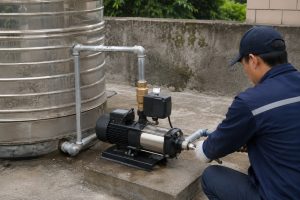
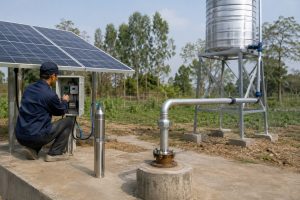
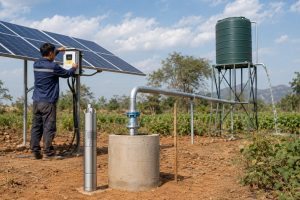
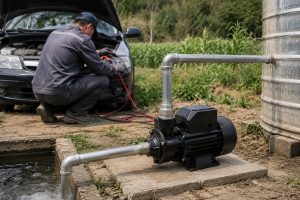
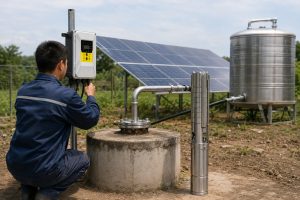
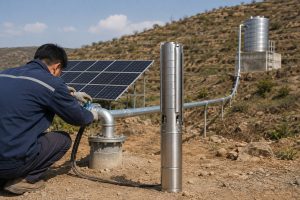
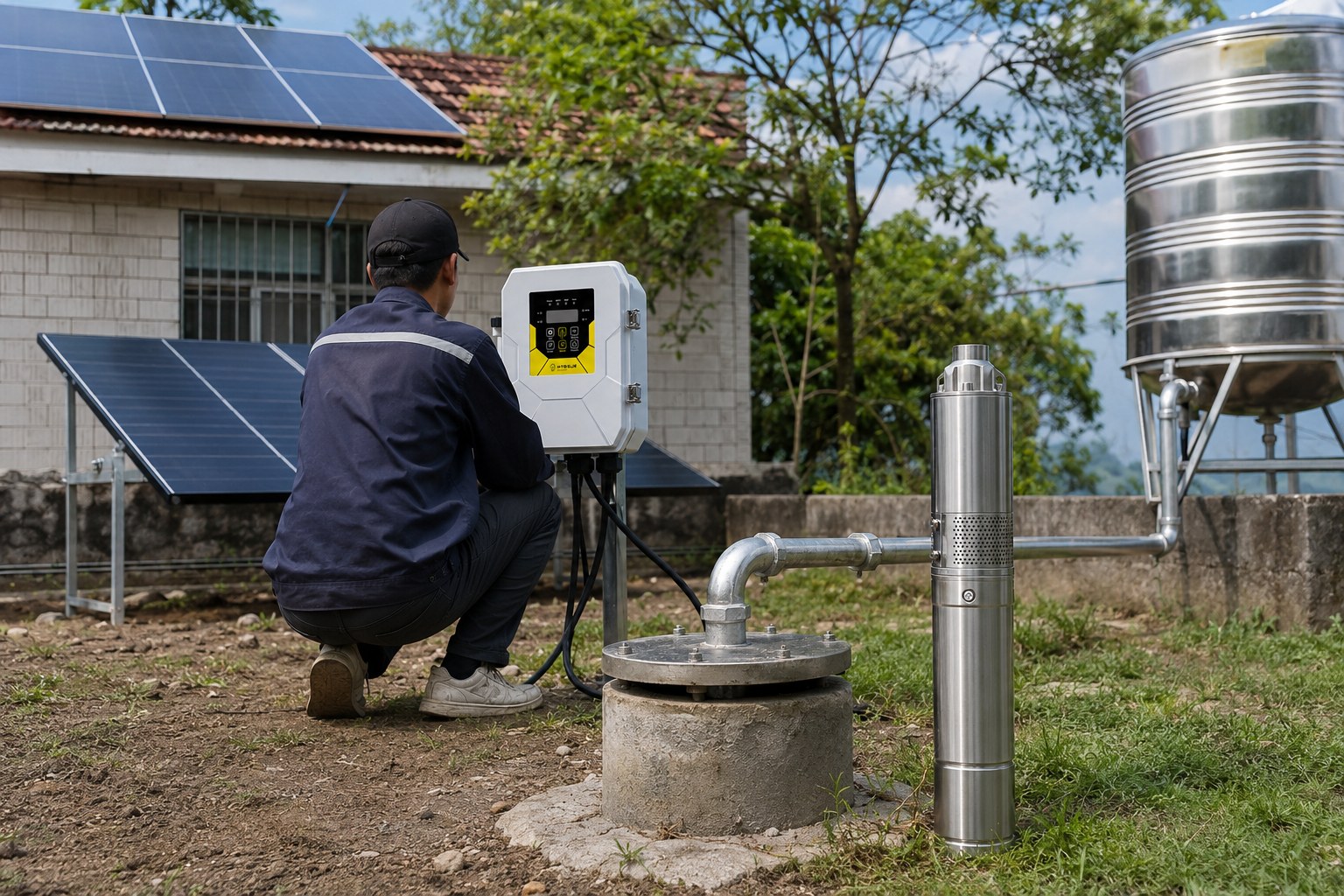
A prime example is the use of solar-powered water pumps in agriculture and for domestic water supply in off-grid areas.
These systems are designed for one purpose: moving water efficiently using the sun's energy.
They often utilize advanced technologies like high-efficiency brushless DC motors (with over 90% efficiency) and intelligent controllers that maximize every watt of solar power.
By focusing on a single application, these systems can be optimized for performance and reliability in a way that general-purpose home systems cannot.
Different pump designs cater to specific needs, such as:
- Screw pumps: Ideal for deep wells, delivering water from great depths (high head) at a steady rate (low flow).
- Impeller pumps: Perfect for irrigation, moving large volumes of water (high flow) at moderate pressure.
This specialization makes solar more accessible and practical for a wider range of users.
| Feature | Rooftop Solar System | Portable Solar Generator | Application-Specific Solar (e.g., Water Pump) |
|---|---|---|---|
| Installation | Permanent, complex, requires permits | Plug-and-play, no installation | Semi-permanent, simpler installation |
| Primary Use | General home electricity | Emergency backup, mobile power, supplemental | Dedicated task (e.g., water pumping, lighting) |
| Cost | $15,000 - $30,000+ | $500 - $5,000 | $800 - $4,000 |
| Mobility | Fixed to one property | Fully portable | System is movable, not tied to a building |
| Complexity | High (inverters, wiring, grid connection) | Low (all-in-one unit) | Moderate (pump, controller, panels) |
| ROI Focus | Reducing utility bills over 10-25 years | Immediate value (backup power, off-grid use) | Solving a specific problem (e.g., water access) |
This table illustrates a clear shift.
Consumers are moving from a one-size-fits-all approach to a more modular and needs-based strategy for harnessing solar power.
Conclusion
The removal of rooftop panels isn't the end of the solar story.
It marks an evolution towards smarter, more flexible, and user-focused energy solutions that fit modern needs.
FAQs
What is the biggest problem with solar panels?
The biggest problems are their long-term maintenance costs, performance degradation over time, and the environmental challenge of recycling them at the end of their life.
Is solar a dying industry?
No, the solar industry is growing rapidly. It is simply shifting, with more focus on flexible solutions, battery storage, and specialized applications beyond traditional rooftop installations.
Do solar panels lower home value?
Owned solar panels typically increase home value. However, leased systems can complicate a sale and may deter buyers, potentially lowering the perceived value of a home.
How long do solar panels really last?
Solar panels are built to last 25 to 30 years. However, their power output gradually decreases each year, and key components like inverters need replacement much sooner.
What is the 25-year rule for solar panels?
This refers to the standard industry warranty period. Most manufacturers guarantee that their panels will still produce at least 80-85% of their original power after 25 years.
Can you run a house on a solar generator?
A large-capacity solar generator can power essential appliances during an outage, but it typically cannot run an entire house continuously like a permanent rooftop system can.
Is it worth replacing 10-year-old solar panels?
It depends. If your panels are severely underperforming and new technology offers significantly higher efficiency, replacement might be cost-effective. Otherwise, upgrading the inverter might be a better option.
What is the maintenance cost of solar panels?
Annual maintenance can range from $150 for cleaning to thousands for inverter or panel replacement. On average, homeowners should budget 1-2% of the system's original cost per year.