Struggling with high electricity bills or the lack of power in remote areas?
You're looking for an independent, cost-effective energy solution but feel overwhelmed by technical details.
A 400W solar panel system offers a powerful and versatile starting point.
A single 400-watt solar panel can generate enough electricity—typically 1.6 to 2.4 kWh per day—to run numerous small electronics and appliances. When connected in an array with battery storage, these panels can power larger devices like refrigerators, tools, and even specialized equipment like high-efficiency water pumps.
A 400W solar panel represents a perfect balance of size, power output, and affordability, which is why it has become a popular choice for residential, agricultural, and off-grid applications.
But its actual output isn't a simple number; it's influenced by various real-world factors.
Understanding these variables is the first step toward building a solar system that truly meets your needs, whether you're powering a home or running a farm.
Let's explore what you can realistically expect from a 400W solar panel and how to maximize its potential.
How Much Electricity Does a 400-Watt Panel Actually Produce?
Are you wondering why your solar panel's output doesn't match its 400W rating?
The advertised power is based on perfect lab conditions that rarely exist in the real world.
This discrepancy can make planning your energy needs frustrating and inaccurate.
A 400-watt solar panel produces its rated 400 watts of power for each hour of peak sunlight. In real-world conditions with 4 to 6 hours of peak sun, this translates to about 1.6 to 2.4 kilowatt-hours (kWh) of energy per day, or roughly 48 to 72 kWh per month.
A panel's rated power is a benchmark, not a constant guarantee.
It's determined under Standard Test Conditions (STC), which involve a specific light intensity (1000 W/m²), cell temperature (25°C or 77°F), and air mass.
Your actual daily energy harvest will fluctuate based on a handful of critical environmental and geographical factors.
Achieving, and even exceeding, the expected output is possible, but it requires careful planning and placement.
Let's break down the key variables that directly impact your panel's performance.
Factors That Influence Real-World Output
The journey of sunlight from the sun to usable electricity is affected by everything from your geographic coordinates to the dust on your panel's surface.
Understanding these elements allows you to optimize your setup for maximum efficiency.
- Peak Sun Hours: This is the most significant factor. It measures how many hours your location receives sunlight at an intensity of 1,000 watts per square meter. A desert location might get 6-7 peak sun hours, while a northern, cloudier region might only average 3-4 hours.
- Geographic Location & Season: Areas closer to the equator receive more direct and consistent sunlight year-round. In contrast, locations at higher latitudes experience significant seasonal variations, with much lower production during winter months due to the sun's lower angle and shorter days.
- Panel Angle and Orientation: The tilt and direction of your panels are crucial. For maximum annual production in the Northern Hemisphere, panels should face true south. The ideal tilt angle often corresponds to your location's latitude, though adjustments can be made seasonally for a 5-15% boost in output.
- Weather and Shading: Overcast days can drastically reduce output to just 10-25% of the panel's rating. Even partial shading from trees, chimneys, or adjacent buildings can have a disproportionate impact, as it can limit the production of the entire panel string.
- Temperature: Solar panels are less efficient when they get hot. For every degree Celsius above the standard test condition of 25°C (77°F), a panel's efficiency typically drops by about 0.3% to 0.5%. Proper mounting with adequate airflow is essential to keep panels cool.
The table below gives a clearer picture of how these factors can impact daily energy production from a single 400W panel.
| Condition | Peak Sun Hours | Temperature | Expected Daily Output (kWh) | Performance vs. Ideal |
|---|---|---|---|---|
| Ideal (Desert, Summer) | 6 | 25°C / 77°F | 2.4 kWh | 100% |
| Average (Temperate, Spring) | 4.5 | 35°C / 95°F | 1.7 kWh | ~71% |
| Poor (Northern, Cloudy Winter) | 2 | 10°C / 50°F | 0.4 kWh | ~17% |
Can a Single 400W Panel Power Common Household Appliances?
Can a 400W panel really power your essential devices?
It's easy to assume solar power is only for small gadgets, leaving you uncertain about its utility for bigger appliances.
This might prevent you from investing in a system that could genuinely reduce your energy costs.
Yes, a 400-watt solar panel, combined with a battery and inverter, can power a wide range of household appliances. It can directly run small devices and, by storing energy, can operate larger items like an energy-efficient refrigerator for several hours or a television for an entire evening.
A solar panel alone does not directly power your appliances.
It acts as the engine of your solar energy system.
The energy it produces must be managed by a charge controller, stored in batteries for later use, and converted from Direct Current (DC) to Alternating Current (AC) by an inverter to power standard household devices.
This complete setup is often called the "balance of system."
With this system in place, the 1.6 to 2.4 kWh generated daily by your 400W panel becomes a versatile power source, capable of handling everything from charging your phone to making your morning coffee.
What Can You Run Directly vs. With Battery Storage?
The key to using solar power effectively is understanding the difference between instantaneous power (watts) and energy over time (watt-hours).
A 400W panel provides 400 watts of power in real-time under peak sun.
This is enough to run many devices directly.
However, for high-power appliances or for use after sunset, battery storage is essential.
Small Electronics and Devices
These items have a low power draw and can often be run or charged directly from the system on a sunny day.
Your 400W panel system can easily handle multiple small devices simultaneously.
- Smartphone Charging (5-10W)
- Laptop Operation (50-80W)
- LED Lighting (5-15W per bulb)
- Wi-Fi Router (10-20W)
- Small Fans (30-60W)
Medium to Large Appliances
These appliances require significantly more power to run, often exceeding the panel's instantaneous 400W output.
They rely on the stored energy in your battery bank.
The table below illustrates how long you could run these appliances with the approximately 2,000 watt-hours (2 kWh) of energy produced on an average day.
| Appliance | Average Power Draw (Watts) | Estimated Run Time on 2 kWh |
|---|---|---|
| ENERGY STAR® Refrigerator (20 cu. ft.) | 150-200W (when running) | 10-13 hours |
| LCD Television (50-inch) | 100W | 20 hours |
| Microwave (1000W model) | 1,500W | 1.3 hours (total usage) |
| Coffee Maker | 800W | 2.5 hours (total usage) |
| Washing Machine | 500W | 4 hours |
| Sump Pump (1/3 HP) | 800W | 2.5 hours |
It's important to note that many appliances, like refrigerators, cycle on and off, so their total daily energy consumption is what matters most for sizing your battery bank.
Powering Agriculture & Industry: The Solar Water Pump Example
Think solar power is only for homes and small gadgets?
Many agricultural and industrial operations in remote areas require reliable power for critical machinery but face unreliable grids.
This assumption overlooks one of solar energy's most transformative applications.
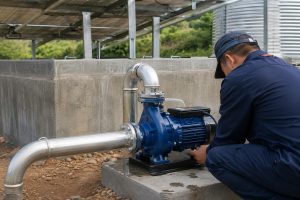
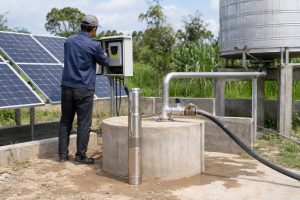
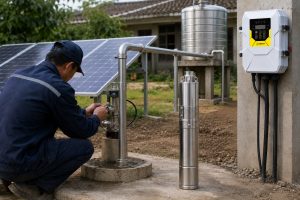
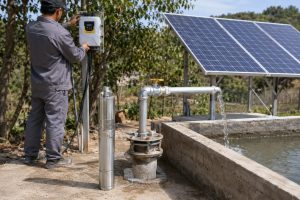
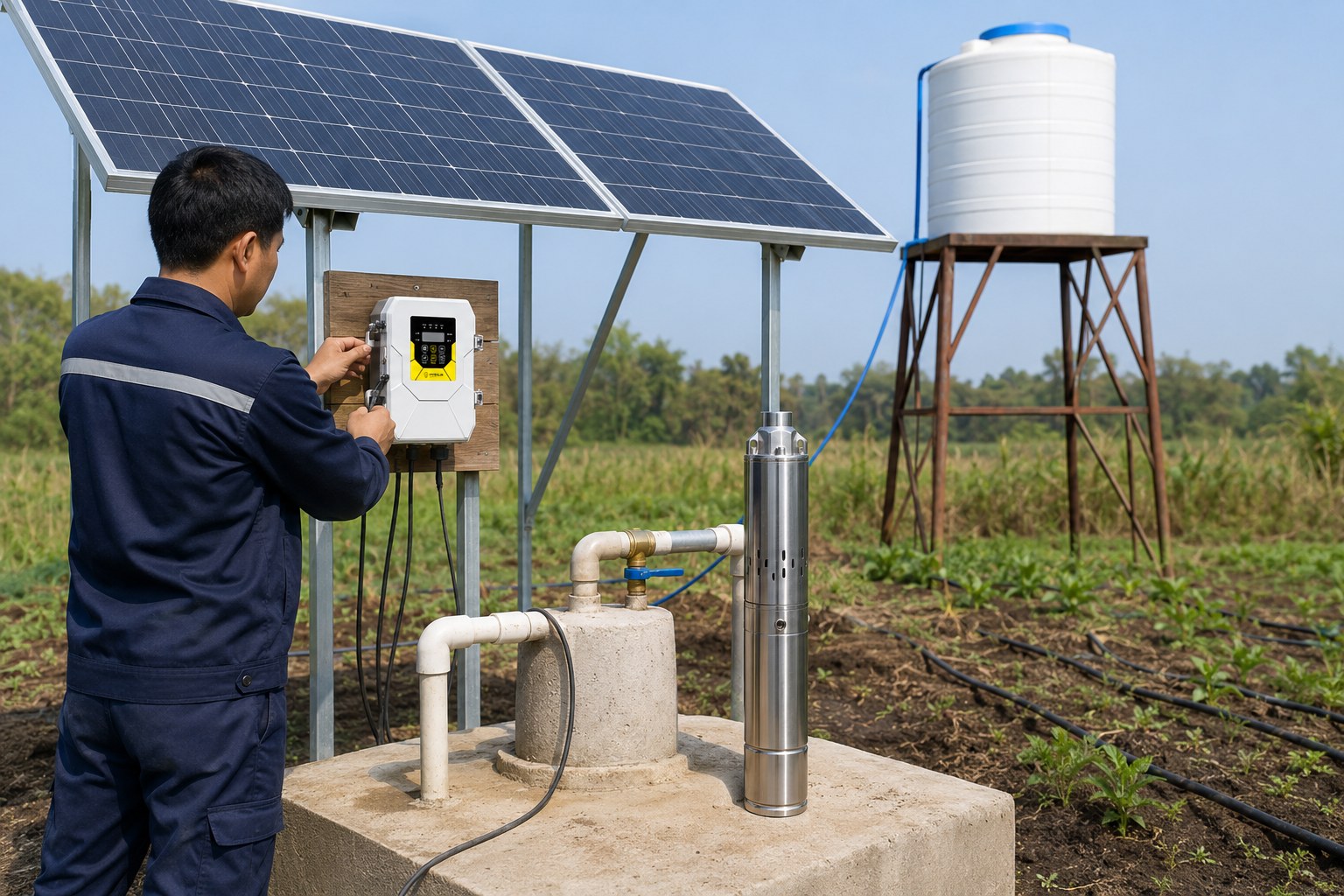
With a properly sized system, 400W solar panels are instrumental in powering high-demand equipment like water pumps for agriculture and livestock. The key is pairing them with high-efficiency motors and controllers, which minimizes the number of panels needed and maximizes water output, even in off-grid locations.
The application of solar power extends far beyond residential use.
In sectors like agriculture, access to water is non-negotiable, but access to a stable power grid is often a luxury.
Solar water pumping systems have emerged as a game-changing solution, providing energy independence and operational security.
A system built around 400W panels can drive modern, high-efficiency pumps, delivering water for irrigation, livestock, and community supply reliably and cost-effectively.
This technology isn't just a convenience; it's a vital tool for food security and economic development worldwide.
The Core Component: High-Efficiency DC Motors
The secret behind a powerful and cost-effective solar pump isn't just the pump itself—it's the motor.
Modern solar pumps utilize Brushless DC (BLDC) permanent magnet motors, which are a leap forward in efficiency.
- Exceptional Efficiency: BLDC motors can achieve efficiencies exceeding 90%. In contrast, traditional AC motors often operate at 60-75% efficiency. This means nearly all the solar energy captured is converted into pumping power.
- Reduced System Cost: A 90% efficient motor requires significantly fewer solar panels to do the same amount of work as a less efficient one. This can reduce the initial system investment by 20-30%.
- Compact and Durable: These motors are often up to 45% smaller and 40% lighter than their AC counterparts, simplifying installation. With no brushes to wear out, they offer a maintenance-free service life of over 20,000 hours.
Matching the Right Pump to the Water Source
The versatility of a solar pumping system comes from selecting the right pump for the specific application.
With a high-efficiency motor as the foundation, different pump ends can be used to meet diverse needs for flow rate (how much water) and head (how high it's lifted).
| Pump Type | Key Characteristic | Best Application | Primary Advantage |
|---|---|---|---|
| Solar Screw Pump | Low Flow, High Head | Deep wells, domestic water, livestock troughs | Excellent for lifting water from great depths (over 100m); highly sand-resistant. |
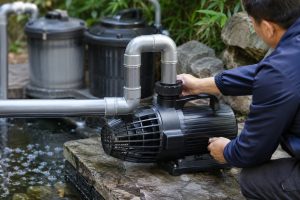
| Plastic Impeller Pump | High Flow, Medium Head | Farm irrigation, garden watering, pond filling | Delivers large volumes of water efficiently; lightweight and very cost-effective. |
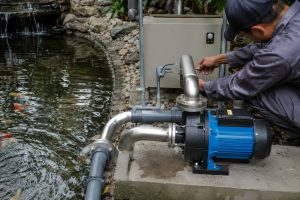
| Stainless Steel Impeller Pump | High Flow, Corrosion Resistance | Corrosive water, acidic soils, high-end homes | Extremely durable and long-lasting in harsh water conditions; ensures water purity. |
Essential System Intelligence: The MPPT Controller
A solar pump controller is the brain of the system.
It optimizes the power transfer from the solar panels to the motor.
Modern controllers use Maximum Power Point Tracking (MPPT) technology, which constantly adjusts the electrical load to ensure the panels operate at their peak efficiency, boosting water output by up to 30% over the course of a day.
Advanced controllers also offer hybrid functionality, automatically switching to an AC power source (grid or generator) during cloudy weather or at night, guaranteeing a 24/7 water supply.
How Many 400-Watt Panels Does It Take to Power a House?
Is going fully off-grid with solar panels a distant dream?
Many homeowners are discouraged by the perceived complexity and high number of panels required.
This often leads to inaction, missing out on potential energy independence and savings.
To power an average U.S. home, which uses about 29 kWh per day, you would need a solar array of approximately 18 to 20 of the 400-watt panels. This calculation assumes an average of 5 peak sun hours per day and accounts for system inefficiencies.
The question of how many panels are needed to power an entire home is one of the most common, and the answer is deeply personal.
It depends on two main variables: your household's total energy consumption and your location's available sunlight.
A home in Arizona will require significantly fewer panels than an identical home in Seattle to generate the same amount of power.
Calculating your specific needs is a straightforward process that empowers you to size a system that fits your lifestyle and budget perfectly, moving you closer to energy self-sufficiency.
Step 1: Determine Your Daily Energy Consumption
The first and most critical step is to understand how much electricity you use.
- Check Your Utility Bill: Your electric bill is the best source of this information. Look for your "Average Daily kWh Use" or a monthly total that you can divide by 30.
- U.S. Average: The average American home uses about 10,600 kWh per year, which breaks down to roughly 29 kWh per day.
- Energy Audit: For a more precise figure, you can perform a simple energy audit. Add up the wattage of all your appliances and estimate how many hours you use each one per day.
Step 2: Calculate Your Daily Solar Production
Next, you need to estimate how much energy one 400W panel can produce in your specific location.
- Find Your Peak Sun Hours: Use online resources like the NREL solar maps to find the average daily peak sun hours for your city. Let’s use a conservative national average of 4.5 hours for this example.
- Calculate Single Panel Production:
Panel Wattage × Peak Sun Hours = Daily Watt-Hours400 Watts × 4.5 Hours = 1,800 Watt-hours or 1.8 kWh
- Account for Inefficiency: Solar systems are not 100% efficient. Energy is lost during conversion from DC to AC power, in wiring, and due to heat. A conservative efficiency factor is 85%.
1.8 kWh × 0.85 = 1.53 kWh per day (real-world output per panel)
Step 3: Calculate the Total Number of Panels Needed
Finally, divide your total daily energy need by the daily production of a single panel.
- Formula:
Total Daily kWh Needed / Daily kWh Production Per Panel = Number of Panels - Example Calculation:
29 kWh / 1.53 kWh = 18.95 panels
Based on this calculation, you would need to install at least 19 panels of 400W each to cover the energy needs of an average American home.
This table provides a quick reference for different consumption levels and locations.
| Location | Avg. Peak Sun Hours | Daily Panel Output (kWh) | Panels for 29 kWh/day Home | Panels for 15 kWh/day Home |
|---|---|---|---|---|
| Phoenix, AZ | 6.5 | 2.21 | 14 Panels | 7 Panels |
| Denver, CO | 5.5 | 1.87 | 16 Panels | 9 Panels |
| Chicago, IL | 4.3 | 1.46 | 20 Panels | 11 Panels |
| Seattle, WA | 3.8 | 1.29 | 23 Panels | 12 Panels |
Conclusion
A 400W solar panel is a powerful building block for energy independence, capable of running everything from phones to critical agricultural pumps, making sustainability both accessible and practical for diverse needs.
FAQs
What size inverter do I need for a 400-watt solar panel?
You need an inverter with a continuous output rating higher than the total wattage of the appliances you'll run simultaneously, and it must handle the panel's input voltage and amperage.
How much does a 400-watt solar panel cost?
The cost of a single 400W panel typically ranges from $200 to $450, depending on the brand, efficiency, and technology. The total system cost will be significantly higher.
Can I connect a 400w solar panel directly to a battery?
No, you must use a solar charge controller between the panel and the battery to regulate the voltage and current, preventing overcharging and damage to the battery.
How long will a 400-watt solar panel last?
High-quality 400W solar panels are very durable and come with a performance warranty of 25 years or more. They often continue producing power effectively for over 30 years.
Can a 400W solar panel run an air conditioner?
A single 400W panel cannot run a standard AC unit, which often requires 1,000-4,000 watts. However, a larger array of multiple 400W panels can power an efficient AC unit.
What is the advantage of a 400W panel over a 100W panel?
A 400W panel produces four times the power in roughly twice the space of a 100W panel, reducing installation complexity, mounting hardware, and the overall number of connections needed.
Can you mix different wattage solar panels?
It is not recommended to mix panels of different wattages in the same string, as the output of the entire string will be limited by the lowest-wattage panel, reducing overall efficiency.
Do 400W solar panels work on cloudy days?
Yes, they still produce power on cloudy days, but the output is significantly reduced, typically to about 10-25% of their rated capacity depending on the cloud cover.