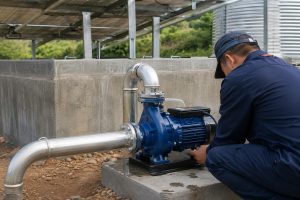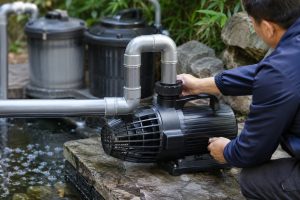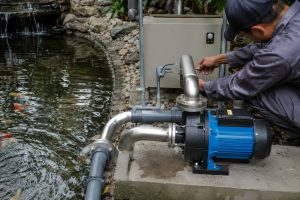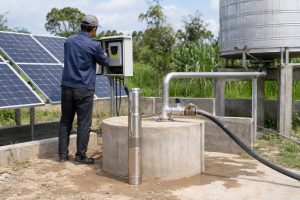
Struggling with high water bills or unreliable grid power for your water supply?
You're left with either costly utility bills or the manual labor of hauling water.
A complete solar water pump kit for a basic system starts around $1,600 to $2,000.
The price increases with well depth and required water volume, with high-end deep well systems costing up to $10,500 or more.
The final cost depends on the pump type, controller, and the number of solar panels needed.
Understanding the cost of a solar water pump goes beyond just a single price tag.
It involves a mix of factors, from the depth of your well to the type of pump you need and the complexity of the system.
In this guide, we'll break down everything that influences the price.
We will explore different pump technologies and help you figure out which system offers the best value for your specific needs.
Let's dive into what makes up the cost of these efficient, off-grid water solutions, so you can make a smart, informed investment.
Cost Breakdown: What Influences the Price of a Solar Pump?
Wondering why solar pump prices vary so much?
The final bill isn't just about the pump itself.
It's a combination of system components and site-specific needs.
A basic, complete solar water pump kit for a shallow well up to 150 feet will cost around $1,600 to $2,000.
For deeper wells, expect to pay more as the pump and panel requirements increase.
Your total investment is shaped by several key variables working together.
The price of a solar water pumping system is not a one-size-fits-all number.
It's a tailored solution where every component contributes to the final cost.
The most significant factors are the required water flow rate (Gallons Per Minute) and the total dynamic head (the vertical distance you need to lift the water).
Deeper wells and higher flow demands require more powerful pumps and, consequently, more solar panels to power them.
This directly scales up the cost.
Key Cost Components
The system is more than just the pump.
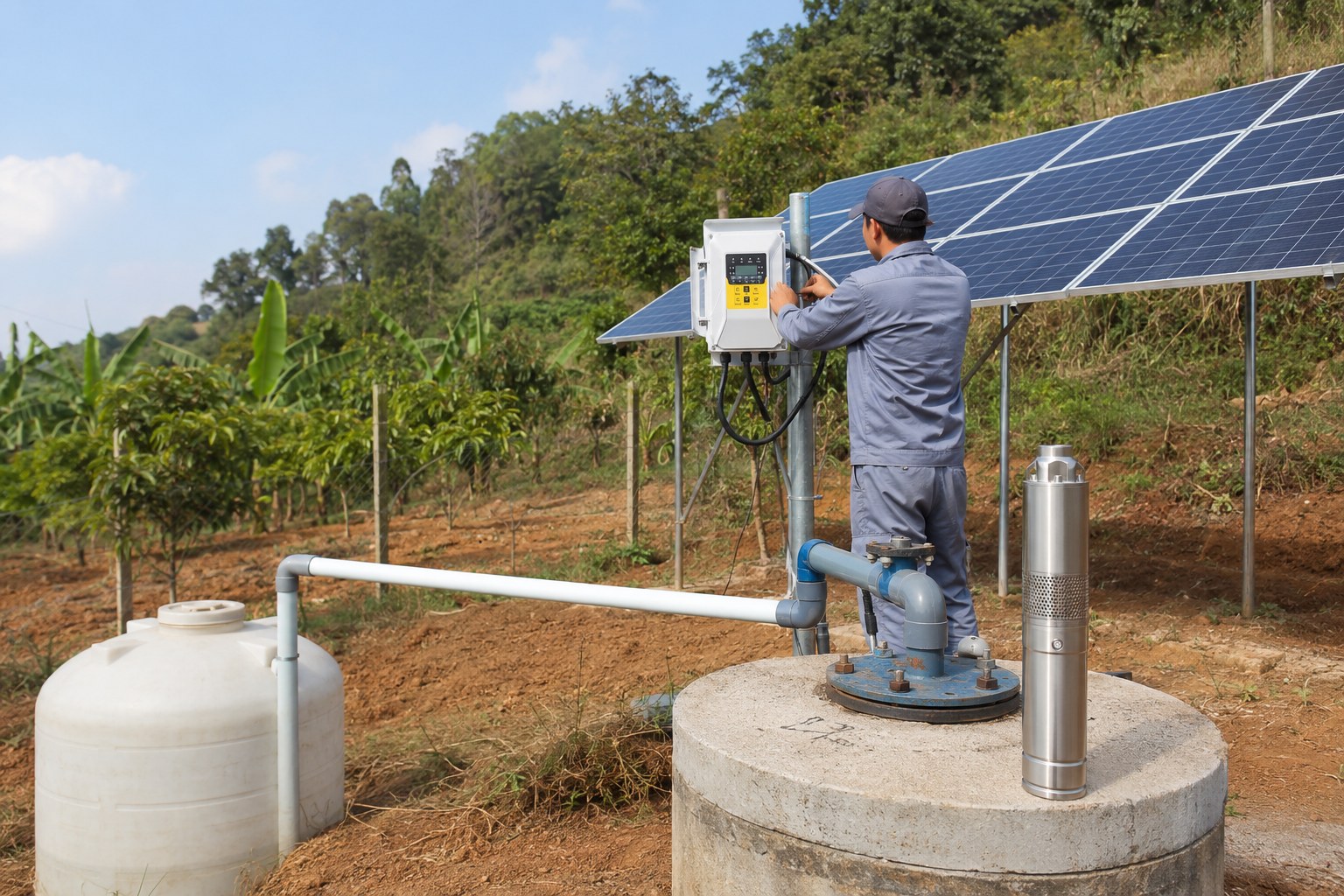
A complete kit includes the pump itself, solar panels, and a controller.
The controller is the brain of the system, optimizing the power from the panels to the pump motor.
More advanced MPPT (Maximum Power Point Tracking) controllers can boost efficiency by up to 30%, but they also add to the initial cost.
Mounting hardware for the solar panels is another expense, which can range from a simple pole mount costing a few hundred dollars to a more complex tracking system that costs over $2,000.
Cost by Well Depth
The depth of your water source is a primary driver of cost.
A deeper well requires a pump with a higher "head" rating, which means it needs more power to lift the water.
This creates a domino effect: a more powerful pump requires a more powerful motor, which in turn needs more solar panels, a more robust controller, and thicker wiring.
Each of these upgrades adds to the total price.
Here's a general breakdown of costs by well depth:
| Well Depth | Estimated System Cost Range | Primary Use Case |
|---|---|---|
| Up to 150 feet | $1,600 - $2,000 | Shallow wells, livestock watering |
| 150 - 300 feet | $2,500 - $3,000 | Moderate depth residential wells |
| 300 - 700 feet | $3,500 - $6,500 | Deep wells for farms, irrigation |
| 700 - 1100+ feet | $7,000 - $10,500+ | Very deep wells, remote communities |
Beware of "Too Good to Be True" Prices
You might find pumps on Amazon or eBay for just a few hundred dollars.
These are often called "trash pumps" for a reason.
They typically use cheap plastic components and brushed motors, which have an expected lifespan of only 6 to 12 months.
Brushed motors contain parts designed to wear down, and once they fail, the entire pump is often useless.
In contrast, professional-grade systems use rust-proof stainless steel housings and brushless permanent magnet motors designed for longevity, often lasting over a decade with minimal maintenance.
These higher-quality systems represent a long-term investment, not a recurring expense.
Pump Types & Costs: Solar Screw Pumps for Deep Wells
Need to pull water from a very deep well?
A standard pump might not have the power.
A solar screw pump is the solution.
Designed for high head and low flow, these pumps excel at lifting water from extreme depths.
They use a stainless steel screw to push water up, making them ideal for domestic water supply and livestock in areas with deep water tables.
This specialized design can handle depths that centrifugal pumps can't reach.
Solar screw pumps, also known as progressive cavity pumps, are engineered for a specific, challenging task: moving water efficiently against high pressure.
This makes them the go-to choice for deep wells where the water level might be hundreds of feet below the surface.
Their unique mechanism provides consistent, non-pulsating flow, which is gentler on your plumbing system compared to some other pump types.
How They Work and Why They Excel
The core of a screw pump is a helical stainless steel rotor rotating inside a rubber stator.
As the rotor turns, it creates a series of sealed cavities that "progress" from the pump's inlet to its outlet, carrying water with them.
This positive displacement action generates very high pressure, allowing the pump to achieve a high "head"—the vertical distance it can lift water.
This design has another key advantage: it is highly resistant to abrasion from sand and grit.
In many well systems, sand can quickly wear down the impellers of a centrifugal pump, leading to premature failure.
Screw pumps, however, can handle water with a significant sand content (up to 5% by volume for some models), making them exceptionally durable in harsh water conditions often found in Africa and Latin America.
Performance and Cost Comparison
While they are champions of depth, screw pumps are not built for high volume.
They are best suited for applications requiring low but steady flow rates.
Think of it as filling a bucket slowly but reliably from a great depth.
This makes them perfect for filling a storage tank for a home, cabin, or livestock trough.
Let's compare its performance characteristics:
| Feature | Solar Screw Pump | Standard Centrifugal Pump |
|---|---|---|
| Max Head | Very High (up to 1000+ ft) | Moderate (up to 400 ft) |
| Flow Rate | Low to Moderate | High to Very High |
| Sand Resistance | Excellent (up to 5% sand content) | Poor to Fair (quickly degrades) |
| Ideal Application | Deep wells, domestic supply, livestock | Shallow wells, irrigation, high-volume transfer |
| Relative Cost | Moderate to High | Low to Moderate |
The Power Behind the Pump
Like other high-quality solar pumps, these systems are typically driven by a Brushless DC (BLDC) permanent magnet motor.
These motors boast efficiencies exceeding 90%, which is crucial for a solar-powered system.
Higher motor efficiency means you need fewer solar panels to achieve the same pumping performance, directly reducing the overall system cost and footprint.
The compact, maintenance-free design of these motors further adds to the long-term value and reliability of the screw pump system.
Pump Types & Costs: Plastic Impeller Pumps for High Flow
Need to move a lot of water for your farm or garden?
A low-flow pump just won't cut it.
You need high volume for efficient irrigation.
A solar pump with wear-resistant plastic impellers is the answer.
This multi-stage centrifugal pump delivers high flow at a medium head, making it perfect for farm irrigation, pasture water supply, and large gardens.
It delivers the volume you need, powered by the sun.
When your primary goal is moving a large volume of water rather than lifting it from extreme depths, a multi-stage centrifugal pump is the ideal choice.
Models equipped with plastic impellers offer an excellent balance of performance, durability, and cost-effectiveness.
These pumps are widely used across Africa and the Americas for agricultural applications where a high flow rate is essential for success.
The Advantage of Multi-Stage Design
A "multi-stage" pump contains several impellers and diffusers stacked in a series.
Each stage adds more pressure to the water, collectively increasing the total head the pump can achieve.
This design allows the pump to deliver a strong flow rate even at moderate depths.
The impellers themselves are the key to the pump's performance.
Using a durable, engineered plastic for the impellers offers several benefits:
- High Flow: The impeller shape is optimized for moving large volumes of water efficiently.
- Wear Resistance: High-quality plastics are surprisingly resistant to abrasion from fine sand, outperforming some lower-grade metals.
- Lightweight: Plastic impellers reduce the overall weight of the pump, making it easier and cheaper to install.
- Cost-Effective: Manufacturing plastic components is generally less expensive than casting and machining stainless steel, making the pump more affordable.
Ideal Applications and Limitations
These pumps shine in scenarios where you need to water crops, irrigate pastures, or manage large residential gardens.
Their ability to deliver a consistent, high-volume water supply can dramatically increase agricultural productivity.
However, they do have limitations.
While resistant to fine sand, they are not suited for highly corrosive water (very acidic or alkaline).
Furthermore, in extremely deep wells where the pump is under immense pressure, the durability of stainless steel may be required.
Here's how they stack up against other pump types:
| Feature | Plastic Impeller Pump | Solar Screw Pump | Stainless Steel Impeller Pump |
|---|---|---|---|
| Primary Strength | High Flow & Value | High Head & Sand Resistance | Corrosion Resistance & Durability |
| Flow Rate | High | Low | High |
| Max Head | Moderate | Very High | Moderate to High |
| Fine Sand Tolerance | Excellent | Excellent | Good |
| Corrosion Resistance | Fair | Good | Excellent |
| Relative Cost | Low to Moderate | Moderate to High | High |
The combination of high water output, good sand resistance, and an affordable price point makes the solar plastic impeller pump a workhorse for many off-grid agricultural and residential water systems.
Pump Types & Costs: Stainless Steel Impeller Pumps for Durability
Dealing with corrosive water that destroys ordinary pumps?
Acidic or alkaline water can eat away at pump components.
You need a pump built to last in harsh conditions.
A solar pump with SS304 stainless steel impellers and housing is the premium solution.
It offers high flow and exceptional corrosion resistance, ensuring a long service life even in the most challenging water environments.
This is the ultimate choice for reliability.
For applications where water quality is a concern, a standard pump may not survive long.
Aggressive water, whether acidic or alkaline, can quickly corrode and destroy internal components, leading to frequent and costly replacements.
The solar stainless steel impeller pump is specifically engineered to thrive in these conditions, providing unmatched durability and reliability.
This premium option is designed for users who cannot afford downtime and require a pump that will perform flawlessly for years.
The Power of Stainless Steel
The key to this pump's resilience is its construction.
Using SS304 stainless steel for all components that come into contact with water—including the impellers, diffuser, pump body, and motor housing—provides superior protection.
SS304 is a high-grade, food-safe alloy renowned for its ability to resist rust and corrosion from a wide range of chemical compounds found in groundwater.
This makes it the ideal material for:
- Acidic or Alkaline Water: Common in certain geological areas or near industrial sites.
- High Salinity Water: Although not designed for seawater, it handles brackish water far better than other pumps.
- Alkaline Soil Regions: Found in places like Australia and parts of the Americas, where soil content affects water chemistry.
When is Premium Quality Worth the Cost?
The superior materials and manufacturing processes make stainless steel impeller pumps more expensive than their plastic counterparts.
This higher upfront cost is an investment in longevity and peace of mind.
For a high-end home, a critical agricultural operation, or a remote ranch where replacing a pump is a major undertaking, the higher initial cost is easily justified by the lower total cost of ownership over the pump's lifetime.
A pump that lasts 10-15 years instead of 3-5 is a smarter financial decision.
| Feature | Stainless Steel Impeller Pump | Plastic Impeller Pump |
|---|---|---|
| Corrosion Resistance | Excellent (SS304 Construction) | Fair (Vulnerable to harsh chemistry) |
| Service Life | Very Long (10-15+ years) | Moderate (3-8 years) |
| Upfront Cost | High | Low to Moderate |
| Weight | Heavier | Lighter |
| Target Market | High-end, special water conditions | General purpose, budget-conscious |
Hybrid Systems for 24/7 Water
To further enhance reliability, these high-end systems can be paired with advanced controllers that support both AC and DC power inputs.
This hybrid functionality ensures you have access to water around the clock.
During the day, the pump runs on free energy from the solar panels.
If it's a cloudy day or you need water at night, the controller can automatically switch to an AC power source, like the grid or a generator, ensuring your water supply is never interrupted.
This redundancy is invaluable for critical applications.
Conclusion
The true value of a solar pump lies in a complete, efficient system.
It's about matching the right pump, motor, and controller to your specific water needs for a reliable, long-term solution.
FAQs
What are the main components of a solar water pump system?
A system includes the solar pump, solar panels to provide power, and a controller to manage the energy flow and protect the motor.
Can a solar water pump work at night or on cloudy days?
Not on its own, but systems can be paired with batteries or a hybrid AC/DC controller to ensure a 24/7 water supply using grid or generator power.
How long do solar water pumps last?
High-quality, brushless motor pumps can last over 10 years with minimal maintenance, while cheaper brushed-motor pumps may only last a year.
Do I need a battery for my solar pump?
Batteries are not usually required. It's more cost-effective to pump water into a storage tank during the day for use at any time.
How deep can a solar pump pull water from?
It depends on the pump. Solar screw pumps are designed for deep wells and can lift water from over 1,000 feet.
What maintenance is required for a solar water pump?
Solar pumps are very low-maintenance. The main tasks are occasionally cleaning the solar panels and checking the pump's intake for debris.
Is it difficult to install a solar water pump?
Many solar pump kits are designed for DIY installation. However, for very deep wells, professional help with a boom truck may be needed for safety.
How many solar panels do I need?
The number of panels depends on the pump's power requirement and your location's sun exposure. A pump sizing tool or specialist can help you calculate this.