Worried about your pool pump draining your wallet?
High electricity bills from pool maintenance can be a shock.
This guide will break down the costs and reveal smarter solutions.
Running a standard 1.5 HP pool pump for 8 hours a day can cost between $2.00 and $7.00 daily. This translates to a monthly expense of $60 to over $210, depending heavily on your pump's efficiency and your local electricity rates, which can vary by over 300%.
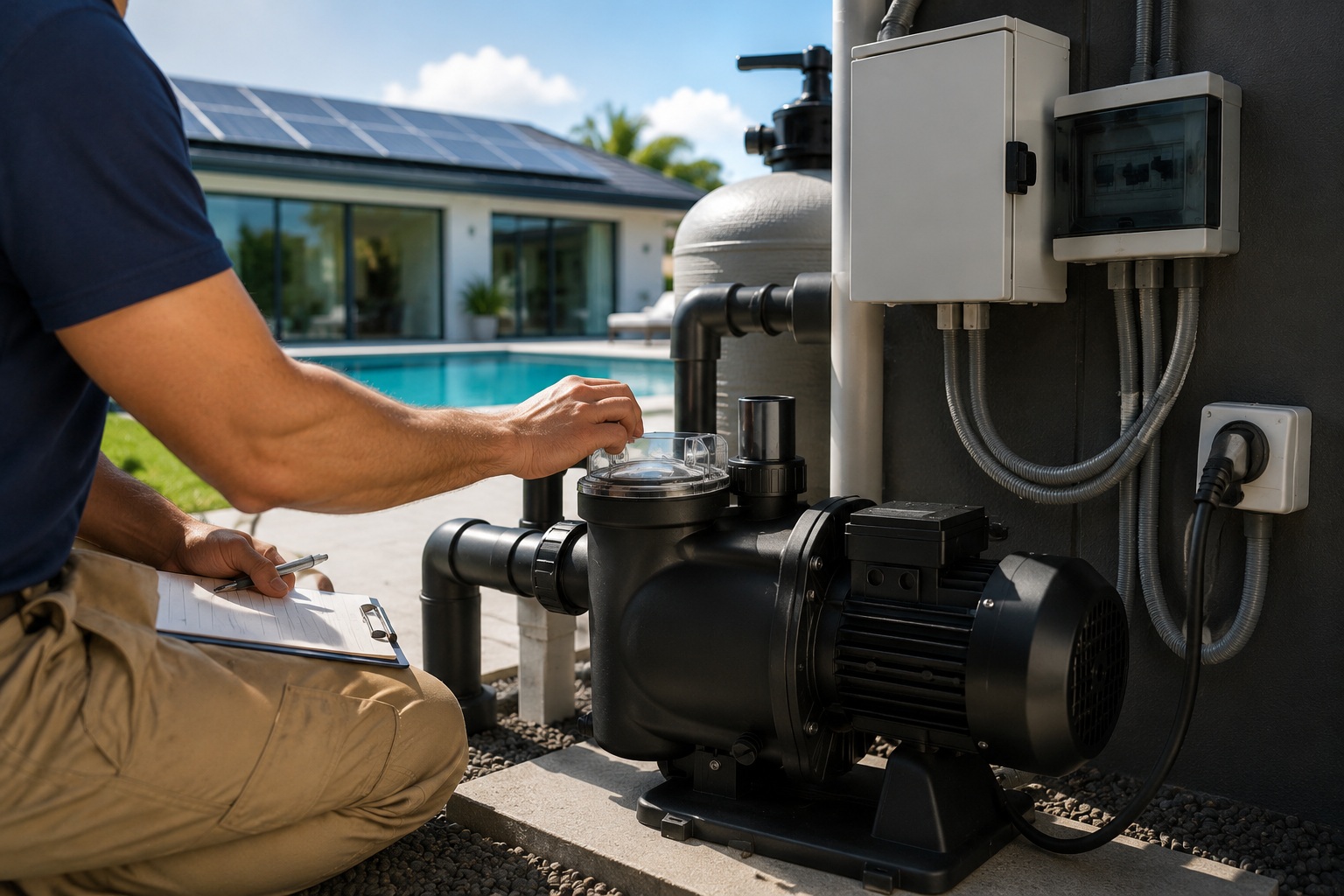
The shock of seeing your electricity bill skyrocket during swimming season is a common frustration for pool owners.
Many don't realize that their pool pump is often the second-largest energy consumer in the home, right after the air conditioner.
This article will not only detail the exact factors driving these high costs but also explore advanced, sustainable technologies that can drastically reduce or even eliminate this financial burden.
We will explore everything from basic calculations to the revolutionary efficiency of modern pump systems.
Prepare to learn how you can maintain a crystal-clear pool without the crippling energy expenses.
Why Your Single-Speed Pump is a Major Energy Hog
Stuck with an old, noisy pool pump?
You're likely paying far more than necessary for pool circulation.
These outdated pumps are massive energy drains, quietly adding hundreds to your annual bills.
A typical single-speed pool pump is an energy hog, often consuming between 1,500 and 2,500 watts. Running for 8 hours daily, this inefficient technology can easily cost over $550 per year in a state with average electricity rates, and significantly more in high-cost areas.
The core issue with single-speed pumps lies in their outdated motor technology and fixed operational speed.
These pumps operate at a constant, high speed of around 3,450 RPM, regardless of the actual task.
This is like driving your car with the accelerator pushed to the floor for every trip, whether you're going to the corner store or racing on a track.
This "one-size-fits-all" approach is incredibly wasteful.
Routine filtration, which is the primary job of a pool pump for about 95% of its runtime, requires only a fraction of that power.
The high speed is only necessary for demanding tasks like running a pool cleaner or backwashing the filter.
The Hidden Costs of Inefficiency
A standard 1.5 HP single-speed pump is a common sight in many residential pools.
This unit typically draws around 1,700-2,000 watts.
Let's break down the real-world financial impact of this inefficiency.
The calculation is straightforward: Power (kW) multiplied by Time (hours) equals Energy Consumption (kWh).
This is then multiplied by your local electricity rate.
Understanding the Power Draw
The power consumption of a pump is listed on its motor nameplate, but this can be misleading.
The actual power used depends on the system's "total dynamic head" or resistance.
Factors that increase this resistance and force the pump to work harder include:
- Dirty Filters: A clogged filter can increase energy consumption by up to 25% as the pump struggles to push water through.
- Narrow Plumbing: Older pools often have 1.5-inch pipes, which create significantly more friction than modern 2-inch plumbing.
- Complex Features: Waterfalls, spa jets, and in-floor cleaning systems add to the system's overall resistance.
The table below illustrates how costs can escalate based on the pump's power draw and the local cost of electricity.
| Pump Wattage | Daily kWh (8 Hrs) | Monthly Cost (Low Rate: $0.12/kWh) | Monthly Cost (High Rate: $0.35/kWh) | Yearly Cost (High Rate: $0.35/kWh) |
|---|---|---|---|---|
| 1,500W | 12 kWh | $43.20 | $126.00 | $1,512.00 |
| 2,000W | 16 kWh | $57.60 | $168.00 | $2,016.00 |
| 2,500W | 20 kWh | $72.00 | $210.00 | $2,520.00 |
As you can see, a single appliance can be responsible for a significant portion of your household's energy bill.
This sustained, high-power operation not only costs money but also leads to more wear and tear on the motor, potentially shortening its lifespan.
The Superior Alternatives: Variable-Speed and Solar Pumps
Tired of unpredictable and high energy bills from your pool?
There are modern solutions that offer drastic savings and consistent performance.
Upgrading your pump is the single most effective way to cut costs.
Variable-speed pumps are a massive upgrade, reducing energy use by up to 80% by running at lower speeds. Solar pool pumps take this a step further, offering the potential to circulate your pool water for free using only the power of the sun, effectively eliminating pumping costs entirely.
The evolution of pool pump technology offers homeowners powerful tools to combat rising energy costs.
Unlike their single-speed predecessors, variable-speed and solar pumps are designed with efficiency as the top priority.
They address the fundamental flaw of older pumps: running at full power all the time.
By intelligently matching motor speed to the task at hand, these modern pumps achieve unparalleled energy savings while maintaining excellent water quality.
Variable-Speed Pumps: The Smart Upgrade
Variable-speed pumps have become the industry standard for new pool installations, and for good reason.
They utilize advanced permanent magnet motors, similar to those found in electric vehicles, which are inherently more efficient than the induction motors in single-speed pumps.
Their key feature is the ability to be programmed to run at different speeds for different tasks.
For routine filtration, the pump can be set to a very low speed, often consuming as little as 200-500 watts.
This is possible due to the "Pump Affinity Law," a principle of physics stating that if you halve the speed of a pump's impeller, you reduce its energy consumption by a factor of eight.
This means a 50% reduction in speed can lead to an energy savings of nearly 87%.
The result is a dramatic decrease in daily operating costs, with payback on the initial investment often realized in just 12 to 24 months.
Solar Pool Pumps: The Ultimate Energy Solution
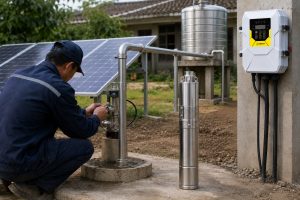
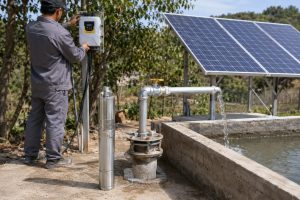
For those seeking to completely eliminate their pool pumping electricity costs, a solar direct pump system is the ultimate solution.
This technology powers the pool pump directly from dedicated solar panels, operating entirely off-grid.
The system is elegant in its simplicity, consisting of solar panels, a specialized DC pump, and an intelligent controller.
During the day, sunlight generates DC electricity, which powers the high-efficiency brushless DC (BLDC) motor in the pump.
The controller optimizes the power from the panels and adjusts the pump's speed based on the intensity of the sunlight, ensuring maximum water circulation throughout the day.
This approach offers several incredible benefits:
- Zero Operating Cost: The energy from the sun is free, eliminating the pump's portion of your utility bill forever.
- Energy Independence: The pump operates even during grid power outages, keeping your pool clean after storms.
- Long Lifespan: BLDC motors have fewer wearable parts and are known for their durability and long service life.
While the initial investment for a solar pump system is higher than a variable-speed pump, the long-term savings are unmatched, especially in regions with high electricity rates or abundant sunshine.
It represents a complete shift from renting power from a utility to owning your pool's energy source.
The Core Technology: High-Efficiency BLDC Motors
Have you ever wondered what makes modern solar pumps so efficient?
The secret lies in the motor that drives them.
It's a complete departure from the technology used in traditional pumps.
The heart of every modern solar pump is a Brushless DC (BLDC) permanent magnet motor. With an efficiency rating exceeding 90%, this advanced motor technology is the core reason for the massive energy savings, using up to 47% less space and weighing 39% less than traditional motors.
The technological leap from traditional AC induction motors to BLDC permanent magnet motors is the single biggest factor in the energy efficiency revolution for water pumps.
This core component is what enables solar pumps to perform so effectively using only the limited power available from a small set of solar panels.
Unlike traditional motors that use electricity to create temporary magnetic fields, BLDC motors use powerful, rare-earth permanent magnets on the rotor.
This eliminates a significant source of energy loss.
Why BLDC Motors are Superior
The design of a BLDC motor offers a multitude of advantages that are perfectly suited for solar-powered applications.
An electronic controller replaces the mechanical brushes found in older DC motors, leading to a host of performance improvements.
- Unmatched Efficiency: Standard AC motors might operate at 50-70% efficiency. BLDC motors consistently achieve over 90% efficiency, meaning more of the sun's energy is converted into water movement instead of being wasted as heat.
- High Torque at Low Speeds: Solar pumps need to start working even in low-light conditions. BLDC motors provide high starting torque, allowing the pump to begin circulating water earlier in the morning and continue later in the afternoon.
- Durability and Longevity: The absence of brushes to wear out means these motors are virtually maintenance-free and have a significantly longer operational lifespan, often exceeding 10 years of reliable service.
- Compact and Lightweight Design: The high power density of permanent magnets means BLDC motors can be built much smaller and lighter for the same power output. This simplifies installation and reduces shipping costs.
This high level of efficiency has a direct impact on the entire solar pumping system.
A more efficient motor requires fewer solar panels to achieve the desired water flow.
This not only lowers the initial system cost but also reduces the physical footprint of the installation, making it more practical for a wider range of properties.
Intelligent Control: Maximizing Every Ray of Sun
The BLDC motor works in tandem with an intelligent MPPT (Maximum Power Point Tracking) controller.
This controller is the brain of the system.
It continuously analyzes the voltage and current from the solar panels and adjusts the electrical load to extract the absolute maximum amount of power available at any given moment.
It also provides crucial safety features, such as protection against running dry, overheating, and voltage fluctuations.
For even greater flexibility, advanced controllers can blend power sources.
They can be designed to prioritize solar energy but automatically switch to or supplement with AC grid power or a generator during cloudy days or for nighttime operation, ensuring a constant water supply 24/7 without compromise.
This combination of an ultra-efficient motor and a smart controller makes solar pumping systems a robust, reliable, and cost-effective solution for a variety of water needs.
Matching the Right Pump to Your Water Needs
Is your water source a deep well or a shallow pond?
Do you need high pressure or high volume?
Choosing the wrong pump is a costly mistake that leads to poor performance and wasted energy.
Selecting the right solar pump is critical for performance. For deep wells with low flow needs, a Solar Screw Pump is ideal. For farm irrigation requiring high volume, a Solar Plastic Impeller Pump is best. For corrosive water, the durable Solar Stainless Steel Impeller Pump is the premium choice.
The perfect solar water pumping system is not a one-size-fits-all solution.
A successful installation depends on carefully matching the pump's hydraulic characteristics—its flow rate and pressure (head)—to the specific demands of the application and the conditions of the water source.
The global market for solar pumps has matured to offer a diverse portfolio of products, each engineered for a specific purpose.
Understanding the key differences between these pump types is essential for distributors and end-users alike to ensure optimal performance, efficiency, and longevity.
Three main types of solar deep well pumps dominate the market, each powered by the same ultra-efficient BLDC motor technology but utilizing different mechanisms to move water.
Type 1: Solar Screw Pump (Low Flow, High Head)
This type of pump is a positive displacement pump.
It uses a helical stainless steel rotor (the screw) that turns inside a rubber stator.
This action creates sealed cavities of water that are pushed progressively up towards the outlet.
- Best Applications: Domestic water supply from deep wells, livestock watering, and small-scale drip irrigation systems. It is a workhorse in regions with deep water tables, such as parts of Africa and Latin America.
- Key Advantages: Its primary strength is the ability to generate very high pressure (head), making it perfect for lifting water from extreme depths. It is also highly resistant to sand and sediment, which would quickly destroy other pump types.
- Limitations: The design inherently limits its flow rate, making it unsuitable for applications requiring large volumes of water, like flood irrigation for large farms.
Type 2: Solar Plastic Impeller Pump (High Flow, Wear-Resistant)
This is a multi-stage centrifugal pump.
It uses a series of stacked, engineered plastic impellers that spin at high speed to push water outward and upward through the pump stages.
- Best Applications: Farm irrigation, filling reservoirs or stock tanks, and large residential garden watering. It is widely used for agricultural purposes across the Americas and Africa.
- Key Advantages: This pump is designed to deliver high volumes of water at moderate pressure. The use of durable, wear-resistant plastic for the impellers makes it lightweight, economical, and surprisingly resilient against fine sand.
- Limitations: While durable, it may not be the best choice for extremely deep wells or for water with high levels of corrosive elements, where a more robust material would be required.
Type 3: Solar Stainless Steel Impeller Pump (Premium Quality, Corrosion-Resistant)
This model is functionally similar to the plastic impeller pump but is built with premium materials.
Both the impellers and the pump housing are constructed from SS304 or higher-grade stainless steel.
- Best Applications: Pumping water with unusual pH levels (acidic or alkaline), use in regions with alkaline soil like parts of Australia, and high-end residential or commercial water supply where maximum reliability and longevity are paramount.
- Key Advantages: Its main benefit is exceptional resistance to corrosion and abrasion, ensuring a very long service life even in harsh water conditions. It offers high reliability and can handle high flow rates at medium-to-high head.
- Limitations: The use of stainless steel makes this pump heavier and more expensive. It targets a more niche, high-end market segment where water quality or longevity are the primary purchasing drivers.
The table below summarizes the ideal use cases for each pump type.
| Pump Type | Primary Characteristic | Ideal Application | Best Geographic Markets |
|---|---|---|---|
| Solar Screw Pump | Low Flow, High Head | Deep well home & livestock water | Africa, Latin America |
| Solar Plastic Impeller | High Flow, Wear-Resistant | Farm irrigation, pasture water supply | Africa, The Americas |
| Solar Stainless Steel Impeller | High Flow, Corrosion-Resistant | Special water quality, high-end homes | Australia, Parts of the Americas, a |
By offering a flexible portfolio that includes all three types, distributors can effectively meet the diverse water challenges faced by customers across different markets and applications.
Conclusion
Ultimately, understanding and controlling your pool pump's energy cost is achievable. Modern technologies like solar and variable-speed pumps offer powerful, lasting solutions that put you back in control of your electricity bills.
FAQs
Does a pool pump use a lot of electricity?
Yes, a pool pump is often one of the most energy-intensive appliances in a home, consuming between 1,500 and 2,500 watts, similar to running multiple large refrigerators at once.
How many hours a day should a pool pump run?
Most residential pools need 6-8 hours of runtime per day in the summer to ensure proper filtration and chemical circulation. This can often be reduced during cooler months.
Is it cheaper to run a pool pump at night?
It can be significantly cheaper if your utility company offers Time-of-Use (TOU) rates with lower off-peak pricing at night. Check your electric bill for details on your rate structure.
How can I reduce my pool pump electricity bill?
The most effective ways are to upgrade to a variable-speed or solar pump, reduce daily runtime, keep filters clean, and ensure your plumbing is optimized to reduce resistance.
What is the most energy-efficient pool pump?
A solar-powered DC pump is the most efficient, as it has zero electricity cost. Among grid-tied pumps, a certified variable-speed pump is the most efficient, using up to 80% less energy than single-speed models.
Do solar pool pumps work on cloudy days?
Solar pumps will run at a reduced speed on overcast days. For guaranteed performance, hybrid systems with an AC power backup can automatically switch over when sunlight is insufficient.
Are variable-speed pumps really worth the money?
Yes, for most pool owners. Despite a higher upfront cost, a variable-speed pump typically pays for itself through energy savings within 1 to 2 years, delivering significant savings for years after.
Can a solar pump power my pool heater?
No, a standard solar pool pump is designed only for water circulation. It does not generate enough pressure or flow needed to efficiently operate most solar heaters, gas heaters, or electric heat pumps.