Struggling with high summer electricity bills from your swimming pool?
The cost can be shocking.
You're searching for a way to enjoy your pool without the financial drain.
Yes, pool pumps consume a lot of electricity.
A standard pool pump can be the second-biggest energy user in a home after the air conditioner, potentially adding over $150 to your monthly bill just by itself. Upgrading to an energy-efficient model can drastically cut this cost.
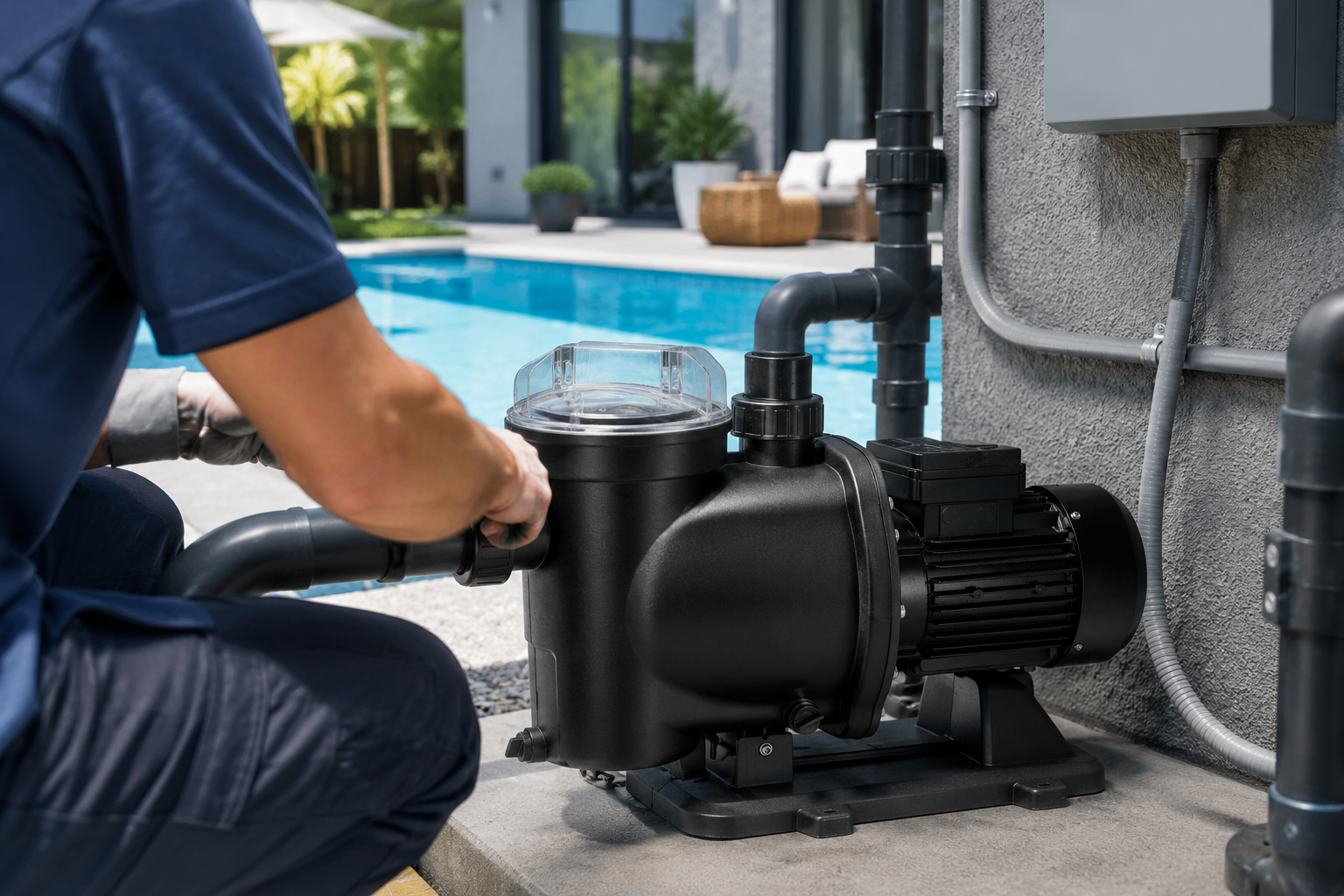
That high energy bill isn't just a number; it represents a significant, ongoing expense that makes owning a pool less enjoyable.
You might feel trapped, forced to choose between a clean, inviting pool and a manageable budget, especially as utility rates continue to climb.
But what if you could slash that energy consumption by over 80%?
There are advanced, efficient solutions that not only save you money but also offer superior performance and reliability.
Keep reading to discover how modern pump technology can transform your pool from an energy hog into a model of efficiency, putting hundreds of dollars back in your pocket each year.
How Much Electricity Does a Pool Pump Use?
Worried that your pool pump is secretly driving up your electricity bill?
It probably is.
This single appliance can consume more power than you realize, making a significant impact.
A standard 2.5 horsepower pool pump running 8 hours a day uses about 480 kWh of electricity per month.
In contrast, a modern variable-speed pump uses only around 72 kWh for the same task. This represents a potential energy saving of over 85%, directly lowering your monthly utility costs.
To truly grasp the impact of your pool pump, you need to understand the factors that determine its energy use.
It's not just about turning it on; it's about the type of pump you have, its power rating, and how long it runs each day.
Many homeowners are unaware that their older, single-speed pump operates at maximum power all the time, even when only gentle circulation is needed.
This is like driving your car everywhere in first gear—it's incredibly inefficient and costly.
The electricity your pump consumes is calculated by multiplying its power (in kilowatts) by its run time (in hours).
A small change in either of these factors can lead to big savings.
Let’s break down the numbers to see the stark difference between old and new technology.
The Three Core Factors of Pool Pump Energy Use
Your pump's electricity consumption depends on three key elements:
- Wattage (Power): This measures how much energy the pump motor draws. A standard pump might use 1,500 to 2,500 watts, while an energy-efficient variable-speed model can operate as low as 300 watts for routine filtration.
- Run Time (Hours): Most pools require the water to be fully circulated at least once a day, which typically takes 6 to 8 hours. Running the pump longer than necessary directly increases your bill.
- Utility Rate (Cost per kWh): The price you pay for electricity in your area determines the final cost. Higher rates amplify the financial benefit of an efficient pump.
Comparing Standard vs. Variable-Speed Pumps
The most significant factor you can control is the type of pump you use.
Single-speed pumps are the "energy hogs" of the pool world.
They have one speed: high.
This is necessary for tasks like backwashing, but it's massive overkill for simple, daily water circulation.
Variable-speed pumps, on the other hand, are intelligent.
They can adjust their speed and power consumption to match the task at hand.
For routine filtering, they run at a very low, quiet, and energy-sipping speed.
When you need more power for cleaning or running a water feature, they can ramp up instantly.
This smart functionality leads to dramatic energy savings.
Let's look at a direct comparison for a typical 20,000-gallon pool.
| Pump Type | Average Watts | Daily Run Time | Daily kWh Usage | Monthly kWh Usage |
|---|---|---|---|---|
| Standard Single-Speed | 2,000 W | 8 hours | 16 kWh | 480 kWh |
| Variable-Speed | 300 W | 8 hours | 2.4 kWh | 72 kWh |
As the table shows, switching to a variable-speed pump can reduce your pool's electricity usage by 408 kWh per month.
At an average electricity rate of $0.15 per kWh, that's a direct saving of over $60 every month, or more than $720 per year.
This efficiency not only lowers your bills but also reduces strain on the electrical grid and decreases your home's carbon footprint.
Why a Solar Pool Pump Isn't Always the Answer
Thinking a solar-direct pump is the ultimate free-energy solution?
The idea is compelling.
Run your pool pump using only the sun's power, eliminating a huge chunk of your electric bill.
While solar pool pumps promise zero-cost operation, they come with serious limitations.
Their performance is entirely dependent on weather, they often lack the power for pool features like jets or heaters, and they cannot operate at night. These drawbacks can compromise your pool's health and functionality.
The dream of "free" pool circulation can quickly turn into a maintenance nightmare.
The core issue with a solar-direct system is its unreliability.
Your pool requires consistent daily water turnover to distribute chemicals, filter out debris, and prevent algae growth.
A standard solar pump's speed and flow rate fluctuate with the intensity of the sun.
On a cloudy day, or during a week of storms, your circulation can drop to dangerously low levels.
This inconsistency can leave you with a green, murky pool that requires expensive chemical treatments and extra work to fix.
Furthermore, these systems often fail to meet the demands of modern pools.
If you have a spa, waterfall, or in-floor cleaning system, a solar-direct pump likely won't provide the necessary water pressure to operate them effectively, if at all.
Let's examine these hidden costs and functional trade-offs more closely.
The Performance Gap of Solar-Direct Systems
Relying solely on direct sunlight for power introduces several performance challenges:
- Weather Dependency: Your pump’s ability to circulate water is directly tied to the weather. Several consecutive cloudy days can lead to insufficient filtration, algae blooms, and an unbalanced chemical environment in your pool. Keeping a traditional AC pump plumbed in parallel as a backup is often recommended, adding complexity and cost.
- Inadequate Flow for Features: Modern pools are more than just bodies of water; they have features that require robust flow rates. Spa jets, waterfalls, and pool heaters all have minimum flow requirements. A solar pump's variable output often can't meet these demands, rendering your expensive features underwhelming or completely inoperable.
- No Nighttime Operation: Want to enjoy a heated spa in the evening or run your filter after a daytime pool party? Without a costly and complex battery backup system, a solar-direct pump is useless after sunset. This severely limits the usability of your pool and spa.
The Financial Equation: Payback vs. Reality
While the promise of saving on electricity is attractive, the financial breakdown isn't always favorable.
A typical solar pool pump kit can cost upwards of $5,000.
Even with a 30% federal tax credit, your net cost might be around $3,500.
If you save $550 per year on electricity, the simple payback period is over six years.
However, this calculation makes a critical assumption: that nothing goes wrong.
| Factor | Description | Financial Impact |
|---|---|---|
| Initial Cost | Installed price of pump, controller, and panels. | $3,500 - $6,000+ (after credits) |
| Payback Period | Time to recover initial investment through savings. | Often 6 to 9 years. |
| Warranty Period | Manufacturer's warranty on the pump and controller. | Typically 2 to 5 years. |
| Risk | Pump failure before the payback period is over. | An early failure can negate all savings and add significant replacement costs. |
The critical issue is that the payback period often exceeds the warranty period for the pump and electronics.
If the pump motor or controller fails in year four or five—a common occurrence—you will have to pay for expensive repairs out of pocket.
This unexpected cost can completely wipe out your projected savings, making the entire investment a financial loss.
A more reliable and functional approach is needed.
A Smarter Approach: Combining High-Efficiency Pumps with Solar
Feeling frustrated by the limitations of standard and solar-direct pumps?
There is a better way.
Imagine a solution that gives you massive energy savings without sacrificing performance or reliability.
The most effective solution is pairing a high-efficiency variable-speed pump with a grid-interactive solar electricity system.
This combination allows you to power your entire home, including the pump, with solar energy. You get the best of both worlds: extreme pump efficiency and reliable, clean power for all your needs.
This integrated strategy overcomes the weaknesses of standalone systems.
Instead of dedicating a few solar panels just to a specialized, underpowered DC pump, you install a proper photovoltaic (PV) system that powers your whole house.
During the day, the solar panels generate electricity that can run your highly efficient variable-speed pump, your air conditioner, and your other appliances.
Any excess power you generate is sent back to the grid, often earning you credits from your utility company.
This approach is fundamentally more versatile and economically sound.
The heart of this superior system is the advancement in motor technology.
The game-changer is the Brushless DC (BLDC) permanent magnet motor, which is the engine that drives modern, high-efficiency pumps.
Let's explore why this technology is at the core of true energy savings.
The Power of the BLDC Motor
The magic behind the incredible efficiency of variable-speed pumps lies in their motor design.
Unlike the noisy and inefficient AC induction motors found in old single-speed pumps, modern pumps use advanced BLDC permanent magnet motors.
These are the same type of high-tech motors used in electric vehicles and advanced robotics, prized for their power, control, and efficiency.
Key advantages include:
- Exceptional Efficiency: BLDC motors can achieve efficiencies of over 90%, compared to the 60-70% efficiency of traditional motors. This means more of the electrical energy is converted into water-pumping power, and less is wasted as heat and noise.
- Precision Control: These motors allow for precise control of the pump's speed (RPM). This is what enables a variable-speed pump to slow down for filtering and speed up for cleaning, perfectly matching power consumption to the task.
- Durability and Longevity: With fewer moving parts and less wear, BLDC motors are inherently more reliable and have a longer service life than their brushed counterparts. They are often sealed and fan-cooled, protecting them from the elements.
Why a Whole-Home Solar System Makes More Sense
Investing in a grid-interactive solar PV system offers far greater benefits than a dedicated solar pump system.
It's a more holistic and future-proof energy solution for your home.
| Feature | Solar-Direct Pump System | Whole-Home PV System with VSP |
|---|---|---|
| Energy Usage | Only powers the pool pump. | Powers the pump, A/C, lights, and all other appliances. |
| Grid Interaction | Operates off-grid; no benefit from excess power. | Sends surplus energy to the grid, earning you credits. |
| Reliability | Pump performance depends on immediate sunlight. | Provides stable power from either solar or the grid. |
| Expandability | System is fixed and cannot be easily expanded. | Can be expanded with more panels or batteries in the future. |
| Overall Value | A single-purpose investment with functional limitations. | A comprehensive home energy solution that increases property value. |
Pairing an ultra-efficient variable-speed pump powered by a BLDC motor with a whole-home solar system is the ultimate strategy.
It allows you to run your pool for a fraction of the cost, maintains full functionality of all your pool's features, and provides clean energy for your entire household.
It's an investment in both energy savings and a more sustainable lifestyle.
Choosing the Right Solar Pumping Solution for Your Needs
Ready to embrace solar water pumping but unsure which technology is right for you?
The perfect pump isn't a one-size-fits-all solution.
Your specific needs dictate the ideal choice for unmatched efficiency and reliability.
The best solar pumping solution depends on your water requirements.
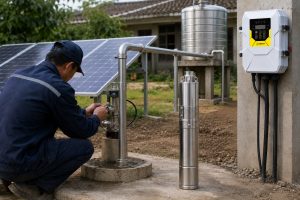
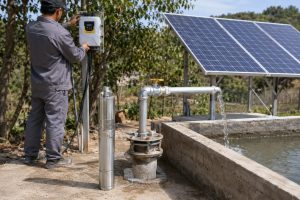
For deep wells, a solar screw pump offers high head. For high-volume irrigation, a plastic impeller pump is best. For corrosive water, a stainless steel impeller pump provides durability. All are powered by ultra-efficient BLDC motors.
While we have focused on pool pumps, the same solar-powered BLDC motor technology is revolutionizing water pumping for a wide range of applications, from providing drinking water for livestock to irrigating entire farms.
Understanding the different types of solar water pumps available helps you make an informed decision, ensuring you get a system that is perfectly tailored to your environment.
The core technology—a high-efficiency BLDC motor paired with an intelligent MPPT controller—remains consistent.
This ensures you are maximizing every bit of solar energy captured by your panels.
However, the "wet end" of the pump—the part that actually moves the water—is designed differently for specific tasks.
Let's explore the three leading types of solar deep-well pumps to see how they meet diverse water needs around the globe, from the arid plains of Africa to the sprawling ranches of Australia.
The Solar Screw Pump: High Head for Deep Wells
When you need to lift water from great depths, the solar screw pump is the ideal choice.
This type of pump is a "positive displacement" pump.
It uses a helical stainless steel rotor (the screw) that turns inside a flexible rubber stator.
This action traps pockets of water and forces them upward, creating very high pressure.
- Best For: Low-flow, high-head applications.
- Common Uses: Domestic water supply from deep wells, livestock watering troughs, and small-scale, high-pressure irrigation systems.
- Key Advantage: It can handle sandy or silty water far better than centrifugal pumps and can operate efficiently even in very deep wells (over 200 meters). This makes it perfect for off-grid homes and remote agricultural settings.
The Solar Plastic Impeller Pump: High Flow for Agriculture
For applications requiring a large volume of water at a moderate pressure, the multi-stage centrifugal pump with plastic impellers is the workhorse.
This pump uses a series of rotating impellers to gradually increase water pressure and push a high flow rate to the surface.
- Best For: High-flow, medium-head applications.
- Common Uses: Farm and crop irrigation, pasture water management, large garden watering, and filling reservoirs.
- Key Advantage: It delivers a much higher volume of water than a screw pump, making it ideal for agriculture. The engineered plastic impellers are lightweight, cost-effective, and surprisingly resistant to abrasion from fine sand.
The Solar Stainless Steel Impeller Pump: Durability for Harsh Water
When water quality is a concern, you need a pump built to last.
This premium model uses the same multi-stage centrifugal design but features impellers and a pump body made from corrosion-resistant SS304 or SS316 stainless steel.
- Best For: High-flow, medium-to-high head applications in corrosive environments.
- Common Uses: Water supply in areas with acidic or alkaline water, coastal regions with saltwater intrusion risks, and for high-end homes or facilities demanding maximum reliability.
- Key Advantage: Its superior corrosion resistance ensures a very long service life and protects water quality from contamination, even in the harshest water conditions. While the initial cost is higher, the long-term reliability justifies the investment.
| Pump Type | Primary Application | Flow Rate | Head (Lift) | Sand Resistance |
|---|---|---|---|---|
| Solar Screw Pump | Deep Well Water Supply | Low | Very High | Excellent |
| Plastic Impeller | Farm Irrigation | High | Medium | Good |
| Stainless Steel Impeller | Corrosive Water | High | Medium-High | Fair |
By choosing the right pump type for your specific needs, you ensure optimal performance and long-term value from your solar water pumping system.
Never Worry About Water Supply Again with a Hybrid Controller
What happens to your water access on cloudy days or at night?
Running out of water is not an option.
You need a system that guarantees a reliable water supply, 24/7, regardless of the weather.
A hybrid AC/DC solar pump controller ensures you always have water.
It intelligently uses free solar power when available and automatically switches to an AC source like the grid or a generator when sunlight is insufficient. It provides a seamless, uninterrupted water supply day and night.
The single biggest drawback of any off-grid solar application is its dependence on sunlight.
For critical needs like drinking water for a home or livestock, you cannot afford to have your system shut down for hours or even days due to bad weather.
This is where a hybrid, or AC/DC, solar pump controller becomes an essential component for true water security.
This advanced controller is designed with dual power inputs, allowing you to connect both your solar panel array and a conventional AC power source simultaneously.
The built-in intelligent logic completely automates the power management process.
You get the economic benefits of solar without ever having to worry about the system's reliability.
This technology represents the pinnacle of modern solar pumping, offering both sustainability and peace of mind.
Let's look at how this system operates seamlessly to keep the water flowing.
How the Hybrid System Works
The genius of the hybrid controller lies in its automatic and intelligent power sourcing.
The controller constantly monitors the power being produced by the solar panels.
- Full Sun Conditions: When there is ample sunlight, the controller directs 100% of the DC power from the solar panels to run the pump. The AC connection remains on standby, consuming no power. You are effectively getting free water from the sun.
- Low Sun or Cloudy Conditions: When cloud cover or the time of day reduces the solar panel output, the controller's hybrid function activates. It will draw the maximum available power from the solar panels and supplement it by blending in just enough AC power to keep the pump running at the required speed. This prioritizes the use of free solar energy at all times.
- No Sun (Nighttime): Once the sun sets and solar output drops to zero, the controller automatically and seamlessly switches over to the AC power source. The pump continues to operate without any interruption, ensuring you have water whenever you need it.
The Unbeatable Advantages of a Hybrid System
Integrating a hybrid controller into your solar pumping system offers several crucial benefits that make it the superior choice for nearly any critical water application.
| Benefit | Description | Why It Matters |
|---|---|---|
| 24/7 Reliability | Guarantees water access regardless of weather or time of day. | Essential for drinking water, livestock, and mission-critical irrigation. Eliminates water anxiety. |
| Maximized Savings | Prioritizes the use of free solar energy before drawing from the grid. | Keeps your operating costs as low as possible without sacrificing reliability. |
| Total Automation | The system manages power sources automatically; no manual switching is required. | Provides a "set it and forget it" user experience, making advanced technology simple to use. |
| System Flexibility | Allows you to be grid-connected or use a backup generator in a completely off-grid setup. | Offers a solution that can adapt to any location or power infrastructure. |
With a hybrid AC/DC controller, you are no longer making a trade-off between sustainability and reliability.
You can have both.
It is the key to creating a modern, resilient, and cost-effective water supply system that you can depend on, day in and day out.
Conclusion
A pool pump is a major energy consumer, but modern technology offers powerful solutions.
By choosing a high-efficiency variable-speed pump, you can drastically reduce costs while maintaining a perfect pool.
FAQs
How much does it cost to run a pool pump 24 hours a day?
Running a standard 2000-watt pool pump 24/7 can cost over $450 per month.
A variable-speed pump running continuously would cost around $55, but 24-hour operation is rarely necessary.
Is it cheaper to run a pool pump at night?
It can be if your utility offers time-of-use rates with lower prices overnight.
However, it's generally better for pool health to run the pump during the day to combat algae growth.
Can I turn my pool pump off at night?
Yes, absolutely.
Most pools only need 6-8 hours of filtration per day.
Turning the pump off overnight is a standard way to save energy without harming the pool.
How many hours a day should you run a pool pump?
Run your pump long enough to turn over the pool's entire water volume once daily.
This is typically 6-8 hours, but you can reduce it until you notice any decline in water clarity.
How can I reduce my pool pump electricity bill?
Switch to a variable-speed pump for the biggest impact.
Also, reduce the daily run time, keep filters clean, and consider using a pool cover to reduce filtration needs.
What is the most energy-efficient pool pump?
Variable-speed pool pumps are by far the most energy-efficient.
They can reduce energy consumption by up to 90% compared to older single-speed or two-speed models.
Does a smaller pool pump save money?
Yes, a properly sized smaller pump will use less energy than an oversized one.
However, a variable-speed pump is a better solution as it can adjust its speed for maximum efficiency.
Do I need to run my pool pump every day in the winter?
You should still run it for a few hours each day during winter.
This prevents stagnant water and protects the equipment from freezing damage in colder climates.