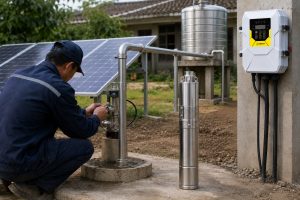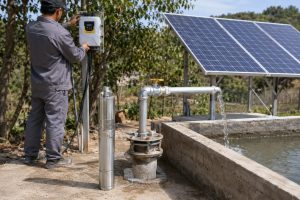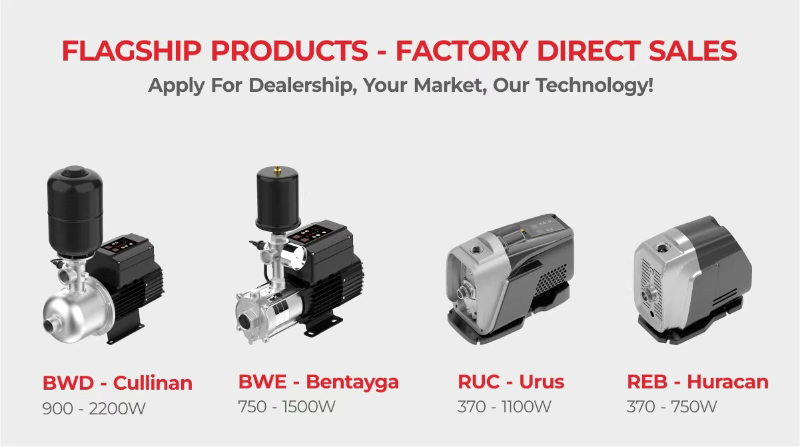
Worried about your pool pump's lifespan and high energy bills?
Solar pumps seem ideal, but their durability is a major question.
Unlock the secrets to a long-lasting, efficient system.
A solar pool pump's lifespan varies by component. The solar panels are incredibly durable, rated to last over 25 years. The pump motor itself typically lasts between 10 and 20 years. This longevity ultimately depends on usage frequency, water quality, and the specific pump technology.
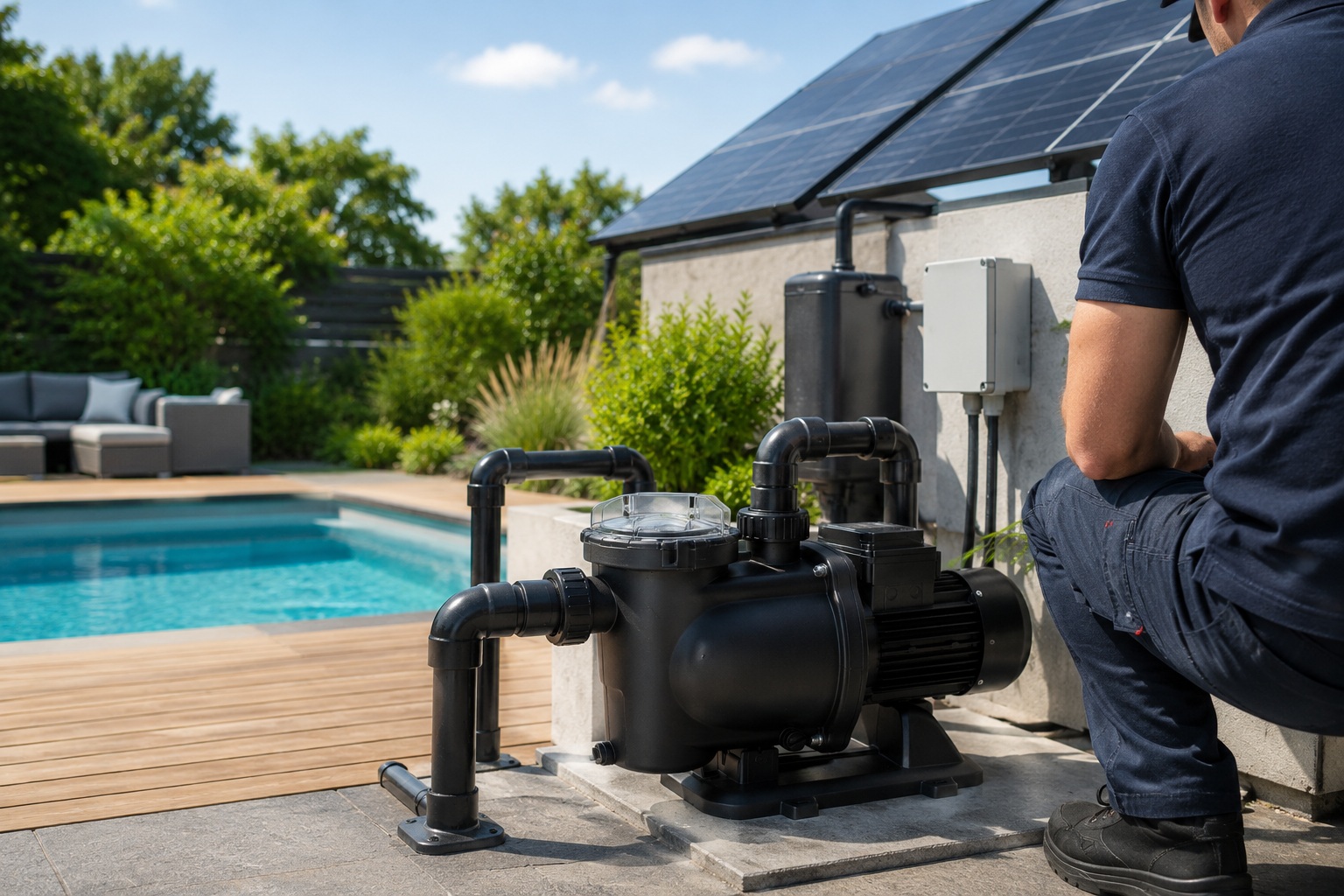
Understanding the lifespan is just the beginning.
To make a smart investment, you need to know how these pumps work, their true costs and benefits, and the powerful alternatives available.
This knowledge will help you choose the right water circulation solution for your needs.
Let's dive deeper to explore what really determines the durability and performance of a solar pump system.
A Closer Look at How Solar Pool Pumps Work
Is the complexity of a solar pump system holding you back?
It appears complicated, combining solar energy with pool plumbing.
However, understanding the core components makes it simple and accessible.
A solar pool pump kit typically includes the pump, a controller, and solar panels. Solar-direct systems, the most common type, use DC power from panels to run the pump. The controller optimizes this power to maximize performance and ensure safe operation without needing expensive batteries.
To truly grasp their operation and lifespan, you must look at the system's core components and how they interact.
The entire system is designed for efficiency and longevity, but each part plays a distinct role.
The Heart of the System: The Motor and Controller
The pump's motor is its engine.
Modern solar pumps utilize advanced Brushless DC (BLDC) permanent magnet motors.
These motors are a game-changer, with efficiencies exceeding 90%.
Their design is compact, making them about 47% smaller and 39% lighter than traditional motors.
This high efficiency means you need fewer solar panels to achieve the same water flow, reducing initial costs.
The intelligent controller acts as the brain.
It uses Maximum Power Point Tracking (MPPT) technology to constantly adjust the electrical load.
This ensures the solar panels operate at their peak efficiency, squeezing every possible watt of power from the available sunlight.
It also provides crucial safety features like run-dry protection and overheating shut-offs.
Two Main System Types
You will encounter two primary types of solar pump systems.
Understanding their differences is key to choosing the right one.
| System Type | Power Source | Complexity & Cost | Maintenance | Best For |
|---|---|---|---|---|
| Solar Direct | DC power directly from solar panels. | Simple and less expensive. | Low maintenance. | Day-time pool circulation. |
| Battery-Based | Solar panels charge batteries; pump runs from batteries. | Complex and drastically more expensive. | High; batteries need replacement. | 24/7 operation and off-grid homes. |
Solar direct systems are the most popular for pools due to their simplicity and cost-effectiveness.
They circulate water when the sun is shining, which is when pools are most often used and when sanitation is most needed.
Battery-based systems offer 24-hour operation but come with significant drawbacks, including high initial costs, complexity, and the recurring expense of battery replacement every few years.
For most pool owners, the solar direct model offers the best balance of performance, cost, and longevity.
The Financial Case: How Much Will You Save?
Are you tired of seeing your electric bill skyrocket because of your pool pump?
This energy hog can be the second-biggest power consumer in your home.
A solar pump promises to eliminate this cost entirely.
A typical 1 HP single-speed pump can cost over $550 per year to operate in many regions. A solar pool pump eliminates this recurring expense. With a 30% federal tax credit, the system's payback period can be as short as 6-7 years, offering significant long-term savings.
The savings are attractive, but a complete financial picture requires looking beyond the simple payback calculation.
You must consider initial investment, incentives, and how a solar pump compares to other energy-saving options.
Calculating Your Return on Investment (ROI)
Let's break down the real numbers.
A standard single-speed pool pump is notoriously inefficient.
It runs at one high speed, consuming significant power for hours every day.
We are billed for energy, which is power multiplied by time.
Running an energy-hungry appliance for 6 to 12 hours daily, 365 days a year, adds up quickly.
A typical 1 HP pump running 8 hours a day costs around $1.50 per day, totaling about $550 annually.
This cost is even higher for larger pumps or in areas with higher electricity rates.
Now, consider a solar pump investment.
An average system might cost around $5,000.
However, many homeowners are eligible for a 30% Federal Tax Credit, which reduces the net cost to just $3,500.
Based on an annual saving of $550, the investment is recovered in about 6.3 years.
This equates to an impressive ROI of over 15%, which is better than many riskier market investments.
Other Financial Benefits
The advantages extend beyond direct savings.
- Tax Incentives: Besides the federal credit, many states offer their own benefits. For example, solar energy equipment is often exempt from state sales tax and property tax assessments.
- Hedge Against Inflation: Utility rates consistently increase over time. By generating your own free energy, you lock in your pumping costs at zero, protecting you from future price hikes.
- Increased Home Value: A modern, energy-efficient feature like a solar-powered pool can make your home more attractive to potential buyers.
These financial incentives make a compelling case.
They transform the pump from a simple purchase into a long-term financial asset for your home.
The Hidden Downsides: Why Should You Avoid a Solar Pool Pump?
Is a solar pool pump a perfect, cost-free solution?
The promise of free pool circulation is tempting.
However, the reality is that "free" comes with significant trade-offs that can affect your pool's health and enjoyment.
Solar pool pumps are weather-dependent, meaning poor circulation on cloudy days, which can lead to algae growth. They often lack the power for features like spa jets or waterfalls and cannot operate at night. The payback period may also exceed the pump's warranty.
These limitations might not just be minor inconveniences; they can fundamentally compromise your pool's functionality.
Before committing, it is crucial to weigh these disadvantages against the benefits.
Let's examine the specific issues that make solar pool pumps a poor choice for many homeowners.
Performance and Functionality Issues
A pool is more than just a body of water; it's an ecosystem that requires consistent management.
- Weather-Dependent Circulation: Proper sanitation depends on adequate water turnover to distribute chemicals and filter out debris. A solar-direct pump's speed varies with the sun's intensity. During extended periods of cloudy weather, your pool may not get the circulation it needs, creating a perfect environment for algae blooms. Many experts recommend keeping your old AC pump plumbed in as a backup.
- Inadequate Flow for Features: Do you have a spa, waterfall, or deck jets? A solar pump will likely disappoint you. These features require strong, consistent flow rates to work correctly. The variable and often weaker flow from a solar pump means spa jets will lack invigorating pressure, and waterfalls may be reduced to a trickle.
- No Nighttime Operation: Without a costly battery bank, your pump cannot run after sunset. This renders spas and water features unusable for evening entertainment. It also prevents you from running the pump during off-peak electricity hours if that were part of your strategy.
Financial and Compatibility Risks
The problems extend into financial and equipment-related areas.
- Payback vs. Warranty: If the pump's motor or controller fails before the 6-to-7-year payback period is over, your expected ROI will be significantly diminished. You would face repair or replacement costs that extend the time it takes to break even.
- Heater Incompatibility: Both solar and traditional gas or electric heat pumps require a specific, consistent flow rate to function safely and efficiently. The variable flow of a solar pump is often too low and inconsistent. This can prevent your heater from turning on or cause it to short-cycle, leading to nuisance tripping and potentially damaging the unit.
For these reasons, a standalone solar pool pump may not be the robust solution most pool owners need.
The Superior Alternative: Why Variable Speed Pumps Are a Better Choice
If a solar pump has too many drawbacks, what is the best solution?
You need energy savings without sacrificing performance.
A variable speed pump (VSP) offers the perfect balance, providing massive efficiency gains while maintaining full functionality.
Variable speed pumps are a better choice for most pool owners. They can reduce pumping energy costs by up to 90% while providing the consistent flow needed for heaters and water features. The initial investment is less than a third of a solar pump system.
Driven by new energy regulations, VSPs have become the industry standard for new pools and upgrades.
They provide the best of both worlds: dramatic energy savings and complete, reliable control over your pool.
Let's explore why this technology outperforms solar pumps for residential pools.
The Power of "Low and Slow"
The secret to a VSP's efficiency lies in a principle of physics known as the Pump Affinity Law.
This law states that if you halve the pump's motor speed (RPM), you reduce the energy consumption by a factor of eight.
A VSP allows you to run the pump at a much lower speed for a longer period.
This "low and slow" approach provides the necessary water turnover for sanitation while consuming a fraction of the energy.
For example, a VSP might run for 12 hours at a low RPM and use less electricity than a single-speed pump running for just 6 hours at full blast.
VSP vs. Solar Pump: A Head-to-Head Comparison
| Feature | Variable Speed Pump (VSP) | Solar Pool Pump | Winner |
|---|---|---|---|
| Energy Savings | Up to 90% reduction | 100% reduction | Solar (but with caveats) |
| Initial Cost | Low (approx. $1,200-$1,800) | High (approx. $3,500-$5,000 net) | VSP |
| Payback Period | 1-2 years | 6-7 years | VSP |
| Performance | Excellent; full flow on demand | Poor; variable and weather-dependent | VSP |
| Feature Support | Yes (heaters, spas, waterfalls) | No (or very limited) | VSP |
| Night Operation | Yes | No (without batteries) | VSP |
While a solar pump offers 100% savings, its functional limitations are severe.
A VSP delivers nearly comparable long-term savings with a much faster payback period and without compromising any of your pool's features.
You retain the ability to crank up the speed for cleaning, heating, or running the spa, then return to a whisper-quiet, ultra-low-energy mode for daily filtration.
The Ultimate Solution: VSP + Grid-Tied Solar
For those truly committed to eliminating their pool's energy cost, there is an even better strategy.
Combine a variable speed pump with a traditional grid-interactive solar electricity (PV) system on your roof.
The PV system powers your entire home, including the VSP.
When the pump isn't running, the solar panels continue to produce power, further reducing your overall utility bill.
This approach costs more initially but provides a more holistic, reliable, and expandable energy solution.
It powers your pool perfectly and contributes to your home's total energy independence.
Choosing the Right Pump for the Job: When is a Solar Pump a Good Idea?
While not ideal for most pools, are there situations where a solar pump excels?
Absolutely.
In specific applications, its unique strengths make it the perfect choice.
It's all about matching the technology to the right task, especially in off-grid or specialized scenarios.
Solar direct pumps are excellent for applications where the timing of water movement is not critical. They are ideal for lifting water into a storage tank for later use in agriculture, livestock watering, or remote domestic water systems where grid power is unavailable or expensive.
For tasks beyond swimming pools, the solar pump finds its true calling.
Its ability to operate independently of the grid makes it a vital tool for water security in many parts of the world.
Let's explore the pump types designed for these demanding jobs.
Specialized Solar Pumps for Demanding Applications
The solar pump market offers specialized models for nearly any water-lifting need.
The right choice depends on the water source depth (head) and the required volume (flow).
-
Solar Screw Pumps: The Deep Well Specialist
These pumps use a stainless steel helical rotor inside a rubber stator. This design acts like a screw, pushing water upward with immense pressure. It is perfect for very deep wells where high head is required, but flow rates can be lower. They are also highly resistant to sand and silt, making them durable in harsh water conditions found in many rural and developing regions.
-
Solar Plastic Impeller Pumps: The High-Flow Workhorse
For applications needing high water volume, like farm irrigation or livestock troughs, a multi-stage centrifugal pump with plastic impellers is ideal. These are lightweight, economical, and offer excellent wear resistance against fine sand. They deliver high flow at medium head, making them perfect for shallower wells and surface water transfer.
-
Solar Stainless Steel Impeller Pumps: The Durability Champion
In environments with corrosive water (acidic or alkaline), a pump with stainless steel impellers and housing is necessary. These premium models offer exceptional resistance to corrosion and abrasion, ensuring a very long service life in challenging water conditions. They are the go-to choice for high-end off-grid homes and agricultural operations in areas with known water quality issues.
The AC/DC Hybrid Advantage
What happens on cloudy days or when you need water at night for livestock?
Modern solar pump systems have solved this problem with AC/DC hybrid controllers.
These smart devices can accept power from both solar panels and an AC source, like the grid or a generator.
The controller automatically prioritizes solar power.
When sunlight is insufficient, it seamlessly blends in AC power or switches to it completely.
This ensures a reliable, 24/7 water supply without the need for batteries, combining the free energy of solar with the reliability of conventional power.
This hybrid technology makes solar pumping a viable and worry-free solution for critical applications worldwide.
Conclusion
A solar pump's lifespan is long, but its limitations make variable speed pumps a better choice for most pools.
For off-grid water lifting, specialized solar pumps are the undisputed champions.
FAQs
How many solar panels does it take to run a pool pump?
Typically, it takes 2 to 6 solar panels (around 600 to 1,800 watts) to run a pool pump, depending on the pump's size and your daily circulation needs.
Do solar pumps work on cloudy days?
Yes, but at a reduced speed. The pump's flow rate is directly proportional to the amount of sunlight the panels receive, so circulation will be significantly lower on overcast days.
Can a solar pool pump run a cleaner?
Most pressure-side or robotic pool cleaners require strong, consistent flow to operate effectively. A solar pump's variable output often isn't sufficient to run them properly.
What maintenance does a solar pool pump require?
Maintenance is minimal. You should periodically clean the solar panels to ensure maximum sun exposure and inspect the pump and controller for any signs of wear or damage.
Is a solar pool pump noisy?
No, solar pool pumps use brushless DC motors, which are generally much quieter than the induction motors found in traditional single-speed pumps. They are often described as whisper-quiet.
Can you run a solar pump at night?
Not without a battery-based system. A standard solar-direct pump only operates when the sun is shining on the panels, so it cannot run after dark.
How deep can a solar pump pull water from?
It depends on the pump type. Solar screw pumps are designed for deep wells and can lift water from hundreds of feet, while centrifugal impeller pumps are better for shallower wells.
What is the difference between a solar pool pump and a solar well pump?
Solar pool pumps are designed for high-volume, low-pressure circulation. Solar well pumps are built for high-pressure, lower-volume applications to lift water from deep underground.