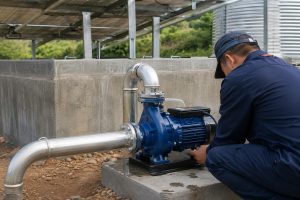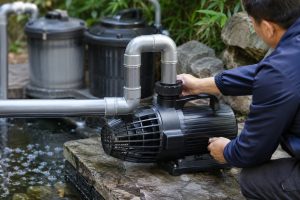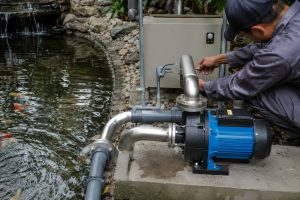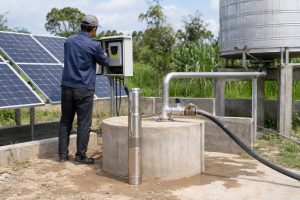
Choosing a pump feels overwhelming.
You worry an overpowering pump will harm your fish and plants.
The right information ensures you select a perfectly balanced pump for a healthy water system.
Yes, a pump can be too strong for a pond. An oversized pump creates excessive water flow. This can stress fish, damage plants, and erode pond structures. It also wastes energy and increases operational costs. Matching the pump's flow rate to your pond's volume is essential for a healthy ecosystem.
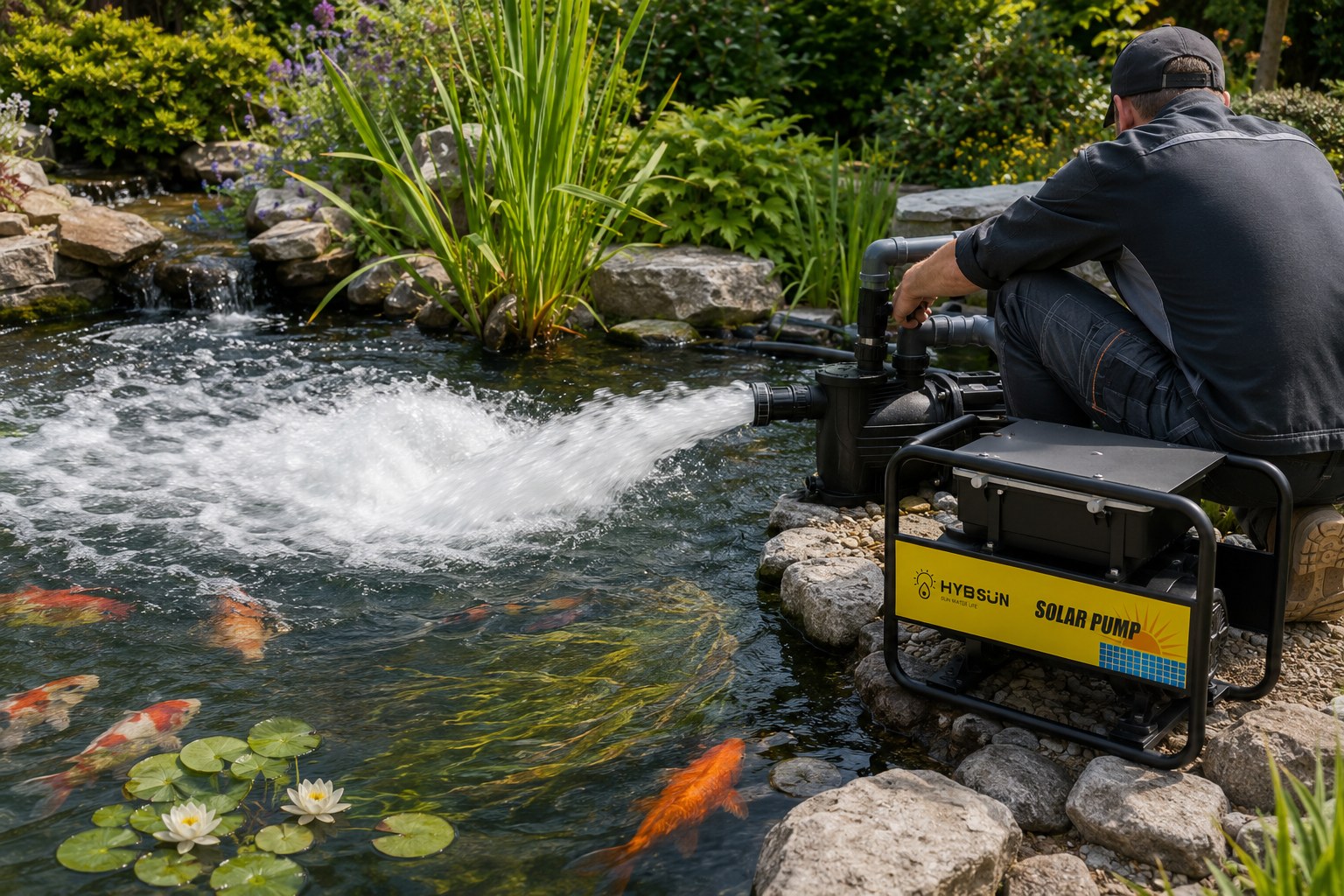
Understanding the correct pump size for a pond is a great starting point.
This principle of matching equipment to specific needs applies to all water systems.
From garden ponds to large-scale agriculture, getting the flow and pressure right is key.
This guide explores the wider world of specialized water pumps.
It focuses on advanced solar solutions for agriculture, livestock, and domestic use.
We will see how a strategic approach ensures efficiency and reliability.
Choosing the Right Solar Pump: The Power of a Diverse Portfolio
Finding one pump for every job is impossible.
Different environments have unique water demands.
A modern water solution requires a flexible product portfolio to meet these diverse needs.
A comprehensive solar pump portfolio meets varied global water needs. It includes low-flow, high-head pumps for deep wells. It has high-flow, wear-resistant pumps for farms. It also features corrosion-resistant pumps for special water conditions. This variety ensures an optimal solution for every application.
The global demand for sustainable water solutions is growing rapidly.
Solar water pumps are now essential in regions like Africa, the Americas, and Asia.
They operate independently from the power grid.
This makes them environmentally friendly and cost-effective.
Let's explore three popular types of solar deep well pumps.
Each one offers distinct advantages for specific situations.
Solar Screw Pumps: Low Flow, High Head
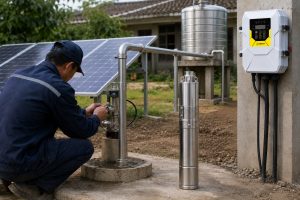
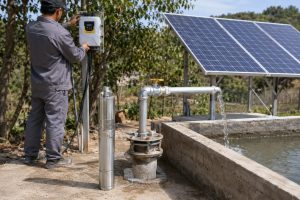
Solar screw pumps are excellent for deep well applications.
They use a simple and effective design.
A stainless steel screw rotates inside a rubber stator.
This action pushes water upwards through compression.
The result is a lower flow of water, but it can be lifted from very great depths.
This is called having a very high "head".
These pumps are ideal for specific uses.
They work well for domestic water supply in remote homes.
They are also perfect for providing drinking water to livestock.
Small-scale irrigation projects can also benefit from their design.
Their reliability makes them a popular choice in Africa and Latin America, where electricity is often scarce.
A major advantage is their ability to handle tough conditions.
They can draw water from very deep wells effectively.
They are also highly resistant to sand and sediment in the water.
This durability allows them to operate reliably in harsh water environments.
However, they do have limitations.
Their flow rate is limited, which makes them unsuitable for irrigating large farms.
Solar Plastic Impeller Pumps: High Flow, High Value
These pumps are multi-stage centrifugal pumps.
They are equipped with durable plastic impellers.
This design allows them to deliver a high flow of water at a medium head.
They are the workhorses for many agricultural and residential applications.
Their primary use is for farm irrigation.
They can supply the large volumes of water needed for crops.
They also work well for pasture water supply for large herds of livestock.
Home gardens and landscaping projects can also use their high output.
They are widely used across Africa and the Americas due to their performance and value.
The advantages are significant.
They provide a very high water output, moving thousands of gallons per hour.
They have excellent resistance to fine sand, which protects the pump from wear.
They are also lightweight, making them easier to install.
Economically, they offer great performance for their price.
However, their plastic components may not last in highly corrosive water.
They are also less suited for the extreme pressures of very deep wells.
Solar Stainless Steel Impeller Pumps: Premium and Corrosion-Resistant
This model is a premium option for challenging water conditions.
It utilizes a high-grade SS304 stainless steel impeller and pump body.
The entire design focuses on durability in corrosive environments.
It offers high flow rates and can achieve medium-to-high head.
These pumps are designed for specific, difficult applications.
They are perfect for water that is acidic or alkaline.
This makes them essential in regions with alkaline soil, like parts of Australia.
They are also used in areas of the Americas with poor water quality.
High-end homes and ranches often choose them for their reliability and long life.
The main advantage is superior corrosion resistance.
Stainless steel resists chemical damage that would destroy other pumps.
This leads to a much longer service life and higher reliability.
They are a true "install and forget" solution.
The limitations are primarily cost and weight.
The high-grade materials make them more expensive.
They are also heavier, which can complicate installation.
These pumps target a niche, high-end market that demands the best performance and durability.
The table below summarizes the key differences.
| Pump Type | Key Feature | Best For | Advantages | Limitations |
|---|---|---|---|---|
| Solar Screw Pump | Low Flow, High Head | Deep wells, Homes, Livestock | Handles sand, High head | Limited flow rate |
| Plastic Impeller | High Flow, Wear-Resistant | Farm Irrigation, Pastures | High output, Economical | Less durable in corrosive water |
| Stainless Steel Impeller | Premium Quality, Corrosion-Resistant | Corrosive Water, High-End Homes | Long life, High reliability | Higher cost and weight |
The Core Power: Why the Motor Matters Most
A pump is only as good as its motor.
The motor is the heart of the entire water pumping system.
Its efficiency and power determine the overall performance.
Investing in advanced motor technology is crucial for a competitive product.
The efficiency of the motor is the true competitive advantage of a solar pump. A high-efficiency Brushless DC (BLDC) permanent magnet motor, with over 90% efficiency, significantly reduces the number of solar panels needed. This lowers initial costs, simplifies installation, and improves overall system reliability.
All three of the solar pumps discussed use the same core technology.
They are driven by a high-efficiency BLDC permanent magnet brushless motor.
This is not a coincidence.
This motor technology is what makes modern solar pumping possible and practical.
Let's dive deeper into why this motor is so important.
Unmatched Efficiency
The efficiency of these motors often exceeds 90%.
This is a remarkable number compared to traditional AC motors.
This high efficiency comes from its advanced design.
The rotor uses powerful materials like 40SH neodymium iron boron magnets.
This allows the motor to convert more electrical energy directly into rotational force.
Less energy is wasted as heat.
An efficient motor means the pump can do more work with less power.
This directly impacts the size and cost of the solar array needed.
A pump system with a 90% efficient motor may need 25-30% fewer solar panels than a system with a 65% efficient motor.
Powerful and Compact Design
BLDC motors deliver powerful performance.
They provide high torque, which is the rotational force needed to start the pump and push water.
This is especially important in deep well applications.
Despite their power, they have a surprisingly compact design.
They can be up to 47% smaller and 39% lighter than older motor types.
This size and weight reduction has practical benefits.
It makes the pumps easier to transport.
It also simplifies the installation process, which can save time and labor costs.
Market Value and Strategic Role
The motor's quality has a huge impact on market success.
A more efficient motor directly reduces the customer's initial investment.
Fewer solar panels are needed, which is often the most expensive part of the system.
It also reduces long-term operating costs because the system runs so efficiently.
The brushless design means there are no brushes to wear out.
This makes the motor virtually maintenance-free.
It also contributes to a very long service life.
From a strategic perspective, the motor is the core of the system.
It defines the overall efficiency and competitiveness of the entire water pump product line.
For distributors, offering products with superior motors is a key selling point.
It positions their brand as a leader in "efficiency, durability, and environmental friendliness."
Beyond Sunlight: Hybrid Pumps for 24/7 Operation
What happens when the sun doesn't shine?
Solar pumps depend on sunlight to operate.
This can be a problem on cloudy days or at night.
Traditional systems would simply stop pumping, which is not acceptable for critical water needs.
Modern solar pumping systems solve this with hybrid AC/DC controllers. These intelligent controllers automatically switch between solar power and a grid or generator backup. This ensures a reliable, uninterrupted water supply 24 hours a day, maximizing the use of free solar energy whenever available.
The need for a constant water supply has driven innovation.
Simply providing a DC solar pump is no longer enough for many markets.
The solution is a hybrid, or AC/DC, solar water pump system.
This technology provides the ultimate in flexibility and reliability.
How Hybrid Controllers Work
A hybrid AC/DC controller is the brain of the system.
It is designed with two power inputs.
You can connect both the solar panels (DC power) and an AC power source at the same time.
The AC source could be the main electrical grid or a backup generator.
The controller's software is intelligent.
It constantly monitors the power coming from the solar panels.
When there is enough sunlight, the controller automatically prioritizes and uses the free solar power to run the pump.
Maximizing Solar Energy
The system always tries to use solar energy first.
When photovoltaic power is not enough to run the pump at full speed, the hybrid function activates.
It will blend AC power with the available DC power.
This feature maximizes the use of every bit of solar energy produced.
It only draws the minimum amount of AC power needed to make up the difference.
This is much more efficient than switching completely to AC power as soon as the sun weakens slightly.
Seamless Power Switching
When there is no solar input at all, like at night, the controller switches automatically.
It will seamlessly change to the AC power supply.
The pump continues to operate without any interruption.
The user doesn't have to do anything.
The system manages the power sources on its own.
This transition is smooth and protects the pump motor.
It ensures that you have worry-free water use 24 hours a day.
This capability is essential for domestic water systems, livestock operations, and critical irrigation schedules.
It provides peace of mind, combining the cost savings of solar with the reliability of the grid.
Conclusion
A pump can be too strong, but choosing the right system is simple.
It requires understanding the application and available technology.
A diverse portfolio of efficient, reliable pumps meets every need.
FAQs
What happens if my pond pump is too strong?
An overly strong pump can create a whirlpool effect, disturb sediment, and cause rapid water evaporation. It can also be noisy and may overwhelm your filtration system.
How many hours a day should a pond pump run?
A pond pump should run 24 hours a day, 7 days a week. Continuous circulation is vital for oxygenating the water and allowing the biological filter to process waste effectively.
Can I use a submersible well pump for a pond?
It is generally not recommended. Well pumps are designed for clean water and high pressure, while pond pumps are designed to handle some debris and provide volume circulation at low pressure.
How do I calculate the right pump size for my pond?
A good rule is to choose a pump that can circulate the entire volume of your pond at least once every two hours. For a 1000-gallon pond, you need a pump with a flow rate of at least 500 gallons per hour (GPH).
Does a waterfall need a special kind of pump?
Yes, waterfalls require a pump that can handle the "head height," which is the vertical distance the water needs to be lifted. Fountain pumps or specialized waterfall pumps are designed for this high-pressure task.
Is a solar pond pump powerful enough?
Solar pond pumps are great for small to medium ponds and water features. For larger ponds or those with high waterfalls, a traditional AC-powered or a more robust AC/DC hybrid solar pump system may be necessary.