Tired of weak showers and trickling faucets?
Low water pressure disrupts your daily life, turning simple tasks into frustrating chores.
The best water pressure pump for your home depends on your specific needs.
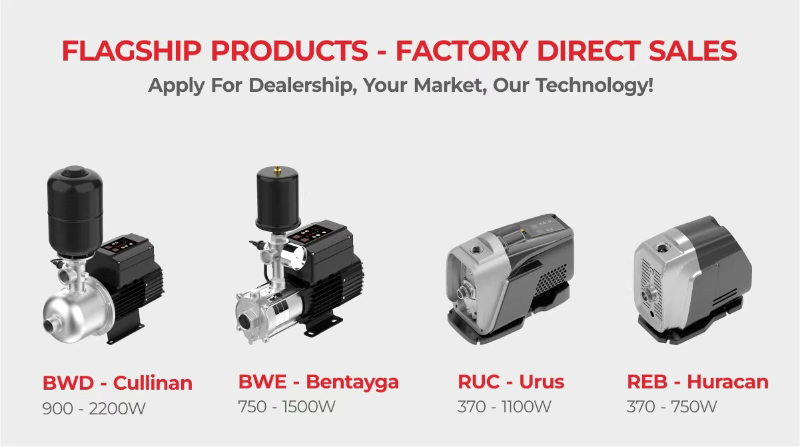
For consistent pressure, a Variable Frequency Drive (VFD) or booster pump is ideal.
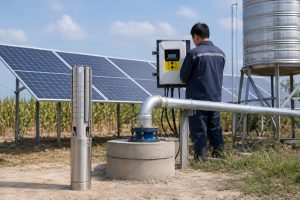
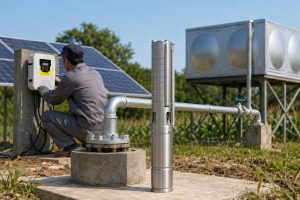
For well water, a submersible pump is necessary.
The key is matching the pump type, flow rate, and head to your household's demands.
Choosing the right pump can feel overwhelming with so many options available.
Let's break down the factors you need to consider to make an informed decision.
This ensures you invest in a solution that provides reliable water pressure for years to come.
This guide will walk you through everything from diagnosing pressure issues to understanding the advanced technology that powers modern pumps.
What Are the Causes of Low Water Pressure?
Is low water pressure a constant headache?
This problem can stem from issues inside or outside your home, making even simple tasks difficult.
Common causes of low water pressure include gravity in multi-story buildings, distance from the water source, low municipal supply, added water filtration systems, or underlying plumbing problems.
Identifying the root cause is the first step to finding the right solution.
Understanding the source of your low water pressure is critical before you purchase any equipment.
A booster pump can solve many problems, but it won't fix a clogged pipe or a major leak.
Taking the time to diagnose the issue correctly can save you significant time and money.
Let's examine the common culprits in more detail.
The Impact of Gravity and Elevation
Gravity is a powerful and constant force.
If water needs to travel uphill to a second or third story, it has to fight against gravity every step of the way.
This natural resistance directly reduces water pressure at the destination.
As a rule of thumb, water pressure decreases by approximately 4.3 PSI for every 10 feet of vertical elevation gain.
For a three-story home where water must be lifted 30 feet, you could lose nearly 13 PSI by the time it reaches the top floor.
A standard home water pressure of 50 PSI at the entry point could feel like a sluggish 37 PSI in an upstairs shower.
This is why multi-story homes and apartment buildings are prime candidates for pressure-boosting solutions.
Distance and Pipe Size
The journey water takes from its source to your faucet also impacts its pressure.
As water travels through pipes, it creates friction against the pipe walls.
This friction slows the water down and reduces its pressure, a phenomenon known as friction loss.
Longer pipe runs result in greater friction loss.
The diameter of your plumbing also plays a crucial role.
Smaller pipes force the same amount of water through a more restricted space, increasing friction and further reducing pressure.
Upgrading from a 1/2-inch pipe to a 3/4-inch pipe can reduce friction loss by over 60%, significantly improving water flow and pressure.
External and Internal Factors
Sometimes the problem originates outside your home.
Your property might be located at the end of a municipal water line or at a higher elevation than the water tower, resulting in naturally low pressure from the city supply.
Additional water systems, such as whole-house water filters or softeners, also introduce resistance and can cause a pressure drop of 5-10 PSI.
However, the issue could also be inside your house.
| Potential Cause | Description | Common Solution |
|---|---|---|
| Clogged Pipes | Mineral buildup (scale) or debris inside pipes restricts water flow. | Pipe cleaning or replacement. |
| Failing Pressure Regulator | The valve that controls water pressure entering your home may be malfunctioning. | Adjustment or replacement of the regulator. |
| Partially Closed Valves | The main shut-off valve or meter valve might not be fully open. | Check and fully open all relevant water valves. |
| Hidden Leaks | A leak somewhere in your plumbing system can cause a significant drop in pressure. | Professional leak detection and repair. |
Before investing in a pump, it's wise to have a plumber inspect your system for these internal issues.
Understanding Different Types of Residential Water Pumps
Confused by terms like "centrifugal" and "submersible"?
The market is full of different pump types, each designed for a specific purpose.
Key residential pumps include booster pumps to increase existing pressure, submersible pumps for wells, jet pumps for shallow wells or tanks, and circulating pumps for hot water systems.
Each type has unique advantages for ensuring efficient water management in your home.
Choosing the correct pump type is as important as diagnosing your pressure problem.
Installing the wrong kind of pump will not solve your issue and could even damage your plumbing system.
Each category of pump is engineered to perform a specific job, from lifting water hundreds of feet to simply giving your city water an extra push.
Let's explore the most common types and their ideal applications.
Booster Pumps: The Pressure Enhancers
Booster pumps are designed to increase the pressure within an existing water line.
They do not draw water from a source themselves; they "boost" the pressure of water already flowing through the pipes.
This makes them the perfect solution for homes with low municipal water pressure.
Automatic Booster Pumps with Pressure Tanks are a common choice.
They use a pressure switch to turn on when pressure drops below a set level (e.g., 40 PSI) and turn off when it reaches a high setpoint (e.g., 60 PSI).
The attached pressure tank holds a small reservoir of pressurized water to reduce pump cycling, which minimizes wear and tear.
VFD Smart Pumps, or Variable Frequency Drive pumps, are a more advanced option.
Instead of a simple on/off switch, these pumps adjust their motor speed in real-time based on water demand.
When you open a single faucet, the pump runs slowly.
When a shower and a washing machine are running simultaneously, it speeds up to maintain constant, unwavering pressure throughout the house.
This intelligent operation can reduce energy consumption by 30-50% compared to traditional pumps.
Submersible Pumps: The Deep Well Solution
If your home relies on a private well, a submersible pump is likely your best choice.
As the name suggests, the entire pump unit is submerged deep within the well casing, below the water level.
Unlike other pumps that suck water, a submersible pump pushes water up to the surface.
This pushing action is far more efficient for lifting water from significant depths, often from hundreds of feet underground.
They are hermetically sealed to prevent water from damaging the motor and are known for their quiet operation since they are located deep in the ground.
The materials used are critical for longevity, with stainless steel being the preferred choice for corrosion resistance against harsh water conditions.
Jet Pumps: The Versatile Self-Primer
Jet pumps are surface pumps, meaning the motor is located above ground.
They work by creating a vacuum to suck water up from a source.
This makes them suitable for drawing water from shallow wells (less than 25 feet deep) or from water storage tanks, such as those used in rainwater harvesting systems.
One of their key advantages is their "self-priming" capability.
This means they can create the necessary suction to start pumping even if there is air in the intake line, making them easier to operate and more forgiving in installations with variable water availability.
Circulating and Sump Pumps: The Specialists
While not directly for boosting household water pressure, two other pump types are essential for modern homes.
Circulating Pumps are used in hot water systems.
They continuously circulate hot water through your pipes, so you get instant hot water at the faucet without waiting and wasting water.
Sump Pumps are installed in the lowest part of a home, like a basement or crawlspace.
They are a crucial defense against flooding, automatically turning on to pump out any water that accumulates.
The Core Technology: Why the Motor is Critical
Think all pumps are created equal?
The motor is the heart of the system, and its efficiency directly impacts your energy bills and the pump's lifespan.
Modern pumps are increasingly powered by Brushless DC (BLDC) permanent magnet motors.
These motors can achieve efficiencies over 90%, significantly reducing solar panel requirements and operational costs while offering a longer, maintenance-free service life.
When evaluating a water pump, it's easy to focus only on flow rate and pressure.
However, the motor that drives the pump is the engine that determines its overall performance, reliability, and long-term cost of ownership.
The shift towards advanced motor technology represents one of the most significant innovations in the pump industry.
Understanding this technology helps you choose a pump that is not just powerful, but also smart and economical.
What is a BLDC Permanent Magnet Motor?
A Brushless DC (BLDC) motor is a major leap forward from traditional brushed motors.
In a conventional motor, "brushes" are used to transmit power to the spinning rotor, but these brushes wear down over time, create friction, and generate heat, leading to energy loss.
BLDC motors eliminate these brushes entirely.
Instead, they use an electronic controller to switch the motor's electromagnets.
The rotor itself is made of powerful permanent magnets, often a high-grade neodymium iron boron material, which provides strong and consistent torque.
This design results in a motor with dramatically less friction and higher efficiency.
Because they are electronically controlled, they can also be operated at variable speeds with precision, which is the technology behind VFD smart pumps.
The Efficiency Advantage
The most significant benefit of a BLDC motor is its exceptional efficiency.
While a standard AC induction motor might have an efficiency of 75-85%, a high-quality BLDC motor consistently operates at efficiencies exceeding 90%.
This 10-15% improvement in efficiency translates directly into lower energy consumption.
For a solar-powered pump, this means you can achieve the same water output with a smaller, less expensive solar panel array.
This efficiency also means less energy is wasted as heat, allowing the motor to run cooler and last longer.
The compact power of this technology allows for designs that are significantly smaller and lighter—in some cases, up to 47% smaller and 39% lighter than their conventional counterparts for the same power output.
The Long-Term Value
Investing in a pump with a BLDC motor offers substantial long-term value.
| Feature | BLDC Permanent Magnet Motor | Standard AC Induction Motor |
|---|---|---|
| Efficiency | > 90% | 75-85% |
| Lifespan | Longer due to less friction and heat | Shorter due to brush wear |
| Maintenance | Virtually maintenance-free | Brushes require periodic replacement |
| Control | Precise speed and torque control | Limited speed control |
| Size & Weight | Compact and lightweight | Bulkier and heavier |
The absence of brushes eliminates the most common point of failure in traditional motors, leading to a "maintenance-free" design and a significantly extended service life.
Over the 10 to 20-year lifespan of a pump, the accumulated energy savings and lack of maintenance costs make pumps with BLDC motors a financially superior investment.
Choosing the Right Pump for Off-Grid and Well Systems
Relying on a well for your water?
Selecting the right pump is not just about pressure; it's about matching the pump to your well's depth and water quality.
For well systems, the choice often comes down to screw pumps for deep wells with low flow, plastic impeller pumps for high flow in sandy conditions, or stainless steel impeller pumps for corrosive water.
Each offers a specific solution for different environmental challenges.
For off-grid homes or farms that depend on well water, the pump is a lifeline.
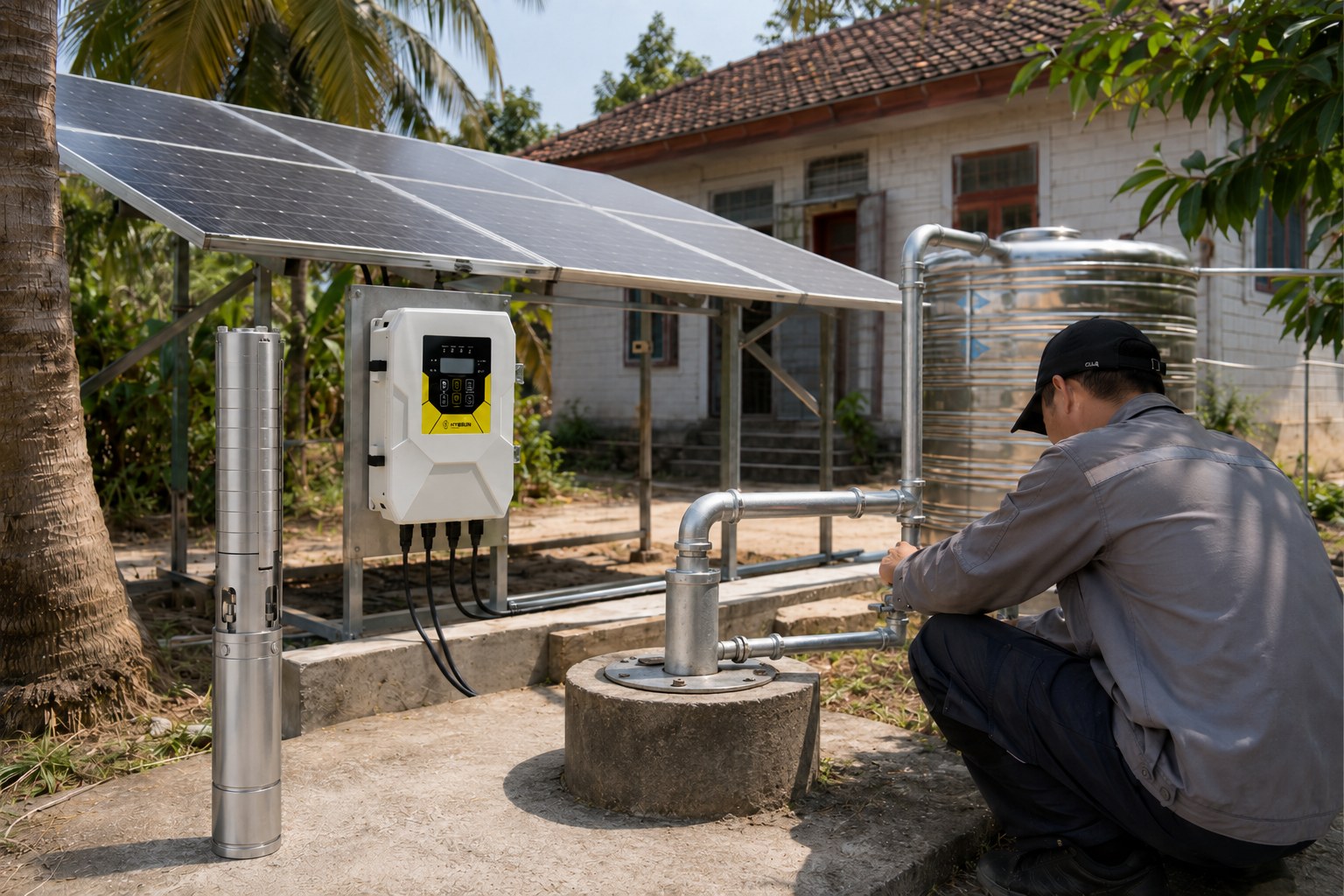
Solar-powered submersible pumps have become an essential solution in these areas, offering independence from the power grid and a sustainable water supply.
However, not all submersible pumps are the same.
The geology of your land and the chemistry of your water dictate which pump design will perform reliably.
A flexible product portfolio allows you to meet these diverse needs effectively.
The Deep Well Specialist: Solar Screw Pumps
When you need to lift water from extreme depths, a solar screw pump is often the best tool for the job.
This type of pump operates on a "progressing cavity" principle.
It uses a single helical stainless steel screw (rotor) that rotates inside a flexible rubber housing (stator).
As the screw turns, it creates sealed cavities of water that are pushed progressively up the pump.
This mechanism is incredibly effective at generating very high pressure (high head), making it ideal for deep wells where other pumps struggle.
While their flow rate is generally lower than centrifugal pumps, their ability to handle sandy water without significant wear makes them a durable choice for harsh well conditions found in parts of Africa and Latin America.
The High-Flow Workhorse: Solar Plastic Impeller Pumps
For applications that demand a high volume of water, such as farm irrigation or livestock watering, a multi-stage centrifugal pump with plastic impellers is a popular and economical choice.
These pumps use a series of stacked impellers that spin at high speed, flinging water outwards and upwards through each stage to build pressure.
The use of high-strength, wear-resistant engineering plastic for the impellers provides excellent durability against fine sand.
This design delivers a high flow rate at a medium head, perfect for moving large quantities of water from shallow to moderately deep wells.
Their lightweight construction and cost-effectiveness make them a go-to solution for agricultural and domestic use in the Americas and Africa.
The Premium Choice: Solar Stainless Steel Impeller Pumps
In regions with aggressive water chemistry, durability is paramount.
If your well water is acidic or alkaline, it can quickly corrode standard pump components, leading to premature failure.
This is where a solar pump with stainless steel impellers shines.
Constructed from high-grade SS304 stainless steel, both the impellers and the pump body offer superior resistance to corrosion.
These pumps are built for longevity and reliability in the toughest environments, such as the alkaline soil regions of Australia or for high-end homes where water quality and system purity are top priorities.
While they come at a higher initial cost, their extended service life and unwavering performance in corrosive water provide excellent long-term value.
| Pump Type | Best For | Flow Rate | Head | Sand Resistance | Corrosion Resistance |
|---|---|---|---|---|---|
| Solar Screw Pump | Deep wells, domestic use | Low | Very High | Excellent | Good |
| Plastic Impeller Pump | Farm irrigation, high volume | High | Medium | Very Good | Fair |
| Stainless Steel Pump | Corrosive water, premium homes | High | Medium-High | Good | Excellent |
Ensuring 24/7 Water: The Power of Hybrid Systems
Worried about your solar pump stopping on cloudy days or at night?
This limitation can disrupt your water supply and daily routines.
Modern solar pump systems now feature AC/DC hybrid controllers.
These systems automatically switch from solar power to a grid or generator backup when sunlight is insufficient, ensuring a continuous, worry-free water supply 24 hours a day.
The primary drawback of a purely solar-powered system has always been its dependence on sunlight.
For critical applications where a consistent water supply is non-negotiable, this can be a significant risk.
The development of intelligent hybrid power systems has effectively solved this problem, combining the free energy of the sun with the reliability of a conventional power source.
This technology ensures you have water whenever you need it, day or night, rain or shine.
How Hybrid Controllers Work
An AC/DC hybrid controller is the brain of the modern solar pumping system.
It is designed with two power inputs: one for the DC power from your solar panels and another for an AC power source, like the local electricity grid or a backup generator.
The controller's primary logic is to always prioritize the use of free solar energy.
Throughout the day, it continuously monitors the power being produced by the solar panels.
When there is sufficient sunlight, the controller directs this DC power to the pump motor.
If clouds roll in or as night falls and the solar input drops below the level needed to run the pump, the controller automatically and seamlessly switches over to the AC power source.
The user doesn't have to do anything; the transition is fully automated.
The 'Hybrid' Function Explained
Advanced controllers take this a step further with a "hybrid" or "blending" function.
Instead of a simple on/off switch between solar and AC, these controllers can supplement weak solar power with AC power.
For example, on a partially cloudy day, if the solar panels are only producing 70% of the power the pump needs, the controller will draw the remaining 30% from the AC grid.
This maximizes the use of every bit of available solar energy, keeping electricity costs to an absolute minimum while still guaranteeing the pump's performance.
It ensures that you are only paying for the exact amount of supplemental energy you need, when you need it.
The Benefits of an Uninterrupted Supply
The most obvious benefit of a hybrid system is the peace of mind that comes with a reliable, 24/7 water supply.
This is essential for:
- Livestock Farming: Animals need constant access to drinking water.
- Agriculture: Irrigation schedules can be maintained regardless of weather.
- Domestic Use: Household water is available for cooking, cleaning, and sanitation at all hours.
By eliminating the unreliability of a solar-only system, hybrid technology makes solar pumping a viable and practical solution for a much wider range of critical applications.
It offers the best of both worlds: the environmental and cost-saving benefits of solar, combined with the on-demand reliability of the grid.
Conclusion
The best pump combines the right type with an efficient motor and smart controls.
This ensures reliable, cost-effective water pressure tailored to your home's unique needs for years to come.
FAQs
What PSI is good for a house water pump?
Most homes operate best between 40-60 PSI.
Higher pressure can damage plumbing and appliances, while lower pressure results in weak flow from faucets and showers.
How do I choose a water pressure booster pump?
Consider your flow rate needs (GPM), the required pressure boost (PSI), and your home's size.
Also, decide between a standard booster or a VFD pump for constant pressure.
Can a water pump be too powerful?
Yes.
An oversized pump can cause excessively high pressure, leading to leaks, pipe strain, and a shorter lifespan for your fixtures and appliances.
It also wastes energy.
What is the difference between a water pump and a booster pump?
A water pump moves water from a source, like a well or tank.
A booster pump is installed in an existing water line to increase the pressure of water that is already flowing.
How long should a water pressure pump last?
A quality well pump can last 8 to 15 years, with premium models lasting over 20 years.
Booster pumps typically have a lifespan of around 10 years, depending on usage.
Do I need a pressure tank with a booster pump?
A pressure tank is highly recommended.
It prevents the pump from cycling on and off every time a faucet is used, which reduces wear and tear and saves energy.
What is the most reliable water pump brand?
Reliability comes from quality construction and proven technology, not just a brand name.
Look for brands that use stainless steel components, high-efficiency motors, and offer strong warranties.
What is the best quality well pressure tank?
The best tanks use durable materials and reliable bladder systems to prevent waterlogging.
Look for models with a 5-7 year warranty from established manufacturers for peace of mind.