Finding the right water pump can be a frustrating search.
You risk choosing a model that fails quickly or just doesn't perform.
The key is to understand what makes a pump truly effective.
Yes, aftermarket water pumps can be exceptionally good, often providing better value and performance for specific applications than generic, big-box brands. Their quality hinges on matching the right pump technology—like screw or centrifugal—and motor efficiency to your exact needs, rather than just relying on a famous name.
Choosing a water pump feels like a high-stakes decision.
Pick the wrong one, and you could face anything from weak water pressure to a complete system failure, leaving you with costly repairs and no water.
But what if you could look beyond the mainstream brands and find a pump perfectly engineered for your specific situation?
The world of aftermarket pumps isn't about cheap knock-offs; it's about specialized solutions.
Whether you have a deep well, sandy water, or need high volumes for irrigation, there's likely an aftermarket pump designed to outperform a one-size-fits-all model.
To see if an aftermarket pump is the right choice, we need to dive into the specific types and the powerful technology that drives them.
Let's explore how these specialized pumps deliver superior reliability and performance where it matters most.
Why Choose a Solar Screw Pump for Deep Wells?
You have a very deep well, but the water replenishment rate is slow.
Standard pumps either can't lift the water high enough or run inefficiently, wasting energy.
A solar screw pump is engineered precisely for this high-head, low-flow scenario.
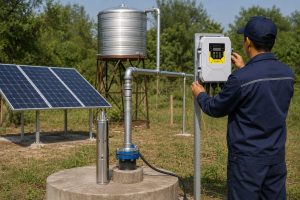
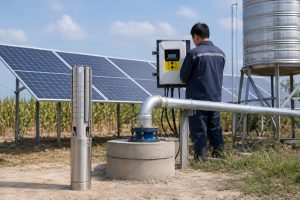
Solar screw pumps are the top choice for deep wells with low yields. Their unique design pushes water from extreme depths with minimal flow, handles sandy conditions exceptionally well, and is perfect for providing essential water for homes and livestock in off-grid areas.
A common challenge in many rural and off-grid regions, particularly in parts of Africa and Latin America, is accessing water from boreholes that are hundreds of meters deep.
In these situations, conventional centrifugal pumps often struggle.
They may fail to generate enough pressure (head) to lift the water to the surface, or they become highly inefficient, requiring significantly more power.
This is where the specialized design of a solar screw pump becomes invaluable.
Instead of spinning water out with impellers, it uses a completely different, more direct method to move water.
The Power of Progressive Cavity Pumping
A solar screw pump, also known as a progressive cavity pump, operates using a single helical rotor (the screw) that rotates inside a double helical stator (a rubber sleeve).
As the screw turns, it forms a series of sealed cavities that progress from the pump's inlet to its outlet.
Water is trapped in these cavities and pushed steadily upwards.
This mechanism is less about velocity and more about positive displacement, allowing it to generate immense pressure.
This makes it capable of lifting water from depths exceeding 200 meters, a feat that would require a much larger and more power-hungry multi-stage centrifugal pump.
Unmatched Performance in Tough Conditions
One of the biggest advantages of the screw pump design is its remarkable resistance to abrasion.
Wells often contain sand and other small particles that can quickly wear down the delicate impellers of a centrifugal pump, causing a performance drop of over 50% and eventual failure.
The screw pump's robust stainless steel screw and flexible rubber stator can handle this sandy water with minimal wear, ensuring a much longer operational life in harsh well conditions.
| Feature | Solar Screw Pump | Standard Centrifugal Pump |
|---|---|---|
| Ideal Application | High Head, Low Flow | Medium Head, High Flow |
| Max Head | 200m+ | 50-100m (typical for size) |
| Sand Resistance | Excellent | Poor to Fair |
| Efficiency in Deep Wells | High | Low to Moderate |
| Common Use Cases | Domestic water, livestock watering | Irrigation, general water transfer |
Strategic Value for Off-Grid Water Supply
For a homeowner or small farmer in a remote area, reliability is everything.
The solar screw pump's ability to provide a consistent water supply from a deep, low-yield well, all while running on a modest solar array, is a game-changer.
It represents a highly resilient and cost-effective solution for securing life's most essential resource.
When is a Plastic Impeller Pump the Smart Choice?
You need to move a lot of water for your farm, but the budget is tight.
Heavy, all-metal pumps are expensive and difficult to install.
A solar pump with engineered plastic impellers offers a lightweight, cost-effective, high-flow solution.
A solar plastic impeller pump is the smart choice when you need high water volume on a budget. Its durable, wear-resistant impellers provide excellent flow for irrigation and are more affordable and lighter than stainless steel alternatives, making them perfect for many agricultural applications.
For many agricultural and residential applications, the primary goal isn't lifting water from extreme depths but moving a large volume of it efficiently.
Think of farm irrigation, watering livestock in a pasture, or maintaining a large home garden.
In these scenarios, a high flow rate is more critical than an ultra-high head.
While stainless steel pumps are often seen as the premium option, modern aftermarket pumps with engineered plastic impellers present a compelling and intelligent alternative.
They are specifically designed to meet the demand for high output without the high cost and weight of all-metal pumps.
The Advantage of Engineered Materials
The term "plastic" can be misleading.
These are not the brittle plastics found in cheap toys.
Aftermarket pump impellers are typically made from advanced, wear-resistant polymers like Polyoxymethylene (POM).
This material is chosen for its:
- High Strength and Rigidity: It can withstand the high rotational speeds and pressures inside the pump.
- Excellent Wear Resistance: It holds up remarkably well against fine sand and silt, often outperforming softer metals in abrasive conditions.
- Low Friction: The smooth surface reduces drag, contributing to the pump's overall hydraulic efficiency.
- Cost-Effectiveness: Manufacturing impellers from engineered plastic is significantly more economical than casting and machining them from stainless steel.
This results in a pump that can be 40-50% lighter than its stainless steel counterpart, making it far easier to transport and install, which is a major benefit for farmers and rural homeowners.
Performance Profile: High Flow, Great Value
A solar plastic impeller pump is a type of multi-stage centrifugal pump.
It uses a series of impellers stacked on a shaft to build pressure and flow.
This design is inherently good at producing high flow rates, often delivering up to 15 cubic meters per hour (m³/h) or more, depending on the model.
This makes it ideal for flood irrigation, filling storage tanks quickly, or running multiple sprinkler systems.
| Attribute | Plastic Impeller Pump | Stainless Steel Impeller Pump | Screw Pump |
|---|---|---|---|
| Primary Strength | High Flow Rate | Corrosion Resistance | High Head |
| Relative Cost | $ | $$$ | $$ |
| Weight | Light | Heavy | Medium |
| Ideal Water | General Use, Fine Sand | Corrosive / Alkaline | Sandy / Gritty |
Knowing the Limitations
While an excellent choice for many, the plastic impeller pump is not a universal solution.
Its primary limitation is in highly corrosive water conditions (e.g., very acidic or alkaline water).
In these environments, even engineered plastic can degrade over time.
Furthermore, in extremely deep wells where immense pressure builds up, the superior structural integrity of stainless steel is often required.
For the vast majority of agricultural and residential wells in regions like the Americas and Africa, the solar plastic impeller pump hits the sweet spot of performance, durability, and affordability.
Is a Stainless Steel Impeller Pump Worth the Investment?
Your water is corrosive, and it's destroying your pumps every few years.
The constant cycle of replacement is expensive and incredibly disruptive.
Investing in a pump with stainless steel impellers offers a permanent solution.
Absolutely. For corrosive, acidic, or alkaline water, a stainless steel impeller pump is the only long-term solution. While the initial cost is higher, its unmatched durability prevents frequent replacements, delivering a lower total cost of ownership and superior reliability in harsh water environments.
Not all water is created equal.
In many parts of the world, from the alkaline soils of Australia to certain regions in the Americas, groundwater can be chemically aggressive.
This corrosive water contains minerals and has a pH level that can eat away at standard pump materials like cast iron or even some plastics.
For people in these areas, installing a standard pump is like starting a countdown to its inevitable failure.
This is where the premium quality of a solar stainless steel impeller pump isn't a luxury—it's a necessity.
It's an investment in stopping the costly cycle of pump replacement.
The Unmatched Durability of SS304
High-quality aftermarket pumps use SS304 or even SS316 grade stainless steel for all components that come into contact with water, including the impellers, diffusers, and pump body.
This material is the gold standard for a reason:
- Exceptional Corrosion Resistance: Stainless steel contains chromium, which forms a passive, invisible, and self-healing oxide layer on the surface. This layer protects the metal from reacting with corrosive elements in the water, making it highly resistant to a wide pH range (typically 4-9).
- Structural Strength: Stainless steel provides the rigidity and strength needed to maintain precise tolerances within the pump, even under the high pressures found in deep wells. This ensures consistent performance and high efficiency over the pump's entire lifespan.
- Hygienic and Safe: It's a non-leaching, non-toxic material, ensuring the purity of the water supply, which is critical for domestic use and high-end residential applications.
Long-Term Value vs. Short-Term Cost
The primary barrier for many is the higher initial purchase price of a stainless steel pump.
However, a simple cost-benefit analysis reveals its true value.
| Factor | Stainless Steel Pump | Standard/Plastic Pump (in Corrosive Water) |
|---|---|---|
| Initial Cost | High (e.g., 20-30% more) | Low |
| Expected Lifespan | 10-20 Years | 2-5 Years |
| Maintenance/Replacement Cost | Very Low | High (multiple replacements) |
| Total Cost of Ownership (10 Yrs) | Lower | Higher |
While the upfront cost might be 20-30% higher, a stainless steel pump can easily last 2 to 3 times longer, or even more, in aggressive water.
This means you avoid the cost of buying multiple replacement pumps, not to mention the labor costs and downtime associated with each installation.
Over a decade, the stainless steel pump is almost always the more economical choice.
This makes it the clear solution for high-end homes, ranches, and any application where water quality and long-term reliability are non-negotiable.
What Truly Powers a High-Performance Aftermarket Pump?
A pump's casing and impellers are important, but the motor is its heart.
An inefficient motor wastes precious solar power, forcing you to buy more panels.
The secret weapon of top-tier aftermarket solar pumps is the high-efficiency BLDC motor.
The core of a modern solar pump is its Brushless DC (BLDC) permanent magnet motor. With an efficiency of over 90%, it dramatically reduces solar panel requirements and operating costs, providing powerful, reliable, and maintenance-free performance that defines the pump's overall value.
You can have the most perfectly designed pump body, whether it's a screw pump or a centrifugal one, but without an efficient and powerful motor, it's just dead weight.
The motor is the single most critical component determining how much water you get for every watt of solar energy you produce.
This is where leading aftermarket manufacturers have made a massive technological leap, leaving older pump designs far behind.
The adoption of the Brushless DC (BLDC) permanent magnet motor is not just an upgrade; it's a revolution in pump performance.
The BLDC Efficiency Advantage
Traditional pumps often use brushed DC motors or AC motors (requiring an inverter), which are inherently less efficient.
A significant portion of the energy they consume is lost as heat.
BLDC motors are a different breed.
Their efficiency routinely exceeds 90%, compared to the 60-75% efficiency of older motor types.
| Feature | BLDC Permanent Magnet Motor | Brushed DC Motor | Standard AC Motor |
|---|---|---|---|
| Efficiency | > 90% | 60-75% | 70-80% (plus inverter loss) |
| Lifespan | Very Long | Shorter (brush wear) | Long |
| Maintenance | None (no brushes) | Brush Replacement | None |
| Size / Weight | Compact & Light | Bulky | Bulky |
This leap in efficiency has a direct and massive impact.
A pump system with a 90% efficient motor might only need a 300-watt solar array to do the same job as a system with a 70% efficient motor that needs over 385 watts.
That's a direct saving on the number of solar panels required, significantly lowering the initial investment.
Advanced Technology Inside
This incredible performance comes from advanced engineering.
The rotor of a high-end BLDC motor is made from powerful permanent magnets, often high-grade 40SH neodymium iron boron.
These magnets create a strong magnetic field without needing electrical power, which is a major source of energy loss in other motors.
The brushless design also eliminates physical contacts (brushes) that wear out, making the motor virtually maintenance-free and dramatically extending its service life.
This advanced design also results in a motor that is significantly more compact and lightweight—often 47% smaller and 39% lighter than traditional motors of equivalent power.
This simplifies installation, especially for submersible pumps that need to be lowered deep into a well.
The Brains: MPPT Control
To complete the system, these motors are paired with an intelligent Maximum Power Point Tracking (MPPT) controller.
This controller continuously adjusts the electrical load to ensure the solar panels are always operating at their peak efficiency, regardless of changing sunlight conditions.
An MPPT controller can boost the total water pumped per day by up to 30% compared to a system without one.
It's the combination of a specialized pump end, a hyper-efficient BLDC motor, and an intelligent controller that makes modern aftermarket solar pumps a technologically superior and highly competitive solution.
How Can You Get Water 24/7 from a Solar Pump?
Solar pumps are amazing, but they stop working when the sun goes down.
This can be a major problem if you need water at night or on overcast days.
The solution is an intelligent AC/DC hybrid controller that guarantees a constant water supply.
Modern aftermarket pumps offer AC/DC hybrid controllers that automatically and seamlessly switch between solar power and a backup AC source like the grid or a generator. This ensures you have a reliable, 24/7 water supply, maximizing the use of free solar energy while providing total peace of mind.
The single biggest perceived drawback of a solar-powered system is its dependence on the sun.
For critical applications like providing drinking water for a household or ensuring livestock don't go thirsty, the inability to pump water at night or during extended periods of heavy cloud cover is a significant liability.
While battery storage is one option, it adds considerable cost, complexity, and maintenance to the system.
Leading aftermarket pump manufacturers have developed a far more elegant and practical solution: the AC/DC hybrid controller.
This technology transforms a solar pump from a daytime-only device into a full-time, uninterrupted water solution.
Intelligent, Automatic Power Blending
The genius of the AC/DC hybrid controller lies in its ability to manage two power sources simultaneously and intelligently.
Here’s how it works:
- Solar Priority: By default, the system runs entirely on the free energy generated by the solar panels. The controller's MPPT function ensures it squeezes every possible watt from the available sunlight.
- Hybrid Function: When solar power is insufficient (e.g., on a cloudy day), the controller doesn't just shut off. It automatically draws just enough AC power from the grid or a generator to supplement the solar input and maintain the desired pump performance. This hybrid function maximizes the use of free solar energy before relying on the paid AC source.
- Automatic Switchover: When there is no solar input at all (e.g., at night), the controller automatically switches over to run the pump entirely on the AC source. When the sun rises the next morning, it seamlessly switches back to solar priority.
The entire process is automatic. The user doesn't have to flip any switches; they just get a continuous, reliable flow of water.
The Benefits of Uninterrupted Water Supply
This 24-hour capability is crucial for a wide range of users:
- Agriculture: Irrigation schedules can be maintained without interruption, protecting crop health and yields, regardless of the weather.
- Domestic Use: Families have consistent water pressure for showers, laundry, and drinking water at any time, day or night.
- Livestock Farming: Animals have constant access to drinking water, which is essential for their health and productivity.
This hybrid technology provides the best of both worlds: the environmental and cost-saving benefits of solar, combined with the 24/7 reliability of a traditional grid-powered pump. It's a key feature that demonstrates how specialized aftermarket solutions are designed to solve real-world problems that generic pumps don't address.
Conclusion
The quality of an aftermarket pump depends on its technology and application.
By matching a specialized pump and an efficient motor to your needs, you can achieve superior, reliable, and cost-effective performance.
FAQs
What is the most reliable water pump brand?
While large brands like Grundfos are known for reliability, the most reliable pump for you depends on the job. A specialized aftermarket screw pump is more reliable in sandy water than any other type.
Are smart water pumps worth it in 2026?
Yes. Smart pumps with features like MPPT controllers and AC/DC hybrid functionality increase daily water output by up to 30% and provide 24/7 operation, making them a very worthwhile investment.
How long do submersible well pumps last?
A quality submersible pump should last 10-15 years. However, in corrosive water, a standard pump may fail in 2-3 years, while a stainless steel model will last its full lifespan.
What is the best pump for sandy water?
A solar screw pump is the best choice for sandy conditions. Its progressive cavity design is highly resistant to abrasion from sand and grit, which can quickly destroy the impellers of a centrifugal pump.
Can solar pumps work on cloudy days?
They can operate at reduced speed on cloudy days. Systems with AC/DC hybrid controllers solve this problem by automatically supplementing with grid or generator power to ensure full performance.
What horsepower (HP) well pump do I need?
This depends on your well's depth (head) and the flow rate you need. A 0.5 HP screw pump might be perfect for a deep, low-yield well, while a 1.5 HP centrifugal pump may be needed for high-volume irrigation.
What's the difference between a 2-wire and 3-wire pump?
A 2-wire pump has its starting components inside the motor, while a 3-wire pump has them in an external control box. Three-wire pumps are often easier to service since the control box is accessible at the surface.
What is the best quality well pressure tank?
Brands like Amtrol and WaterWorker are highly regarded for their durable materials and reliable bladder systems. A good pressure tank is crucial for reducing pump cycling and extending its life.