Struggling to budget for a new 1 hp pump?
Confusing prices and hidden fees can make a simple purchase feel overwhelming.
This guide breaks down all the costs involved.
The average installed cost for a 1 hp well pump system ranges from $1,500 to $3,500. This price includes the pump itself, professional labor, and basic components. However, factors like pump type, well depth, and additional system upgrades can push the total cost closer to $5,000.
Understanding the initial price of a 1 hp pump is just the beginning.
The true cost of ownership is a combination of the equipment price, installation fees, and long-term operational expenses.
Many homeowners focus only on the sticker price, overlooking factors that can dramatically increase the total investment over the pump's lifespan.
To make an informed decision, you need to look beyond the initial quote.
This article will explore the different types of 1 hp pumps, break down installation and running costs, and reveal the hidden expenses you need to anticipate.
How Does Pump Type Impact the Total Cost?
Choosing the right pump feels like a complex puzzle.
Making the wrong choice can lead to poor water pressure and unexpectedly high electricity bills.
Knowing the differences between pump types helps you select the most valuable option for your needs.
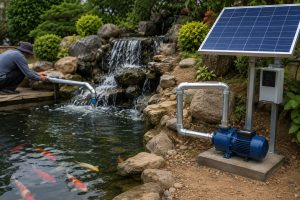
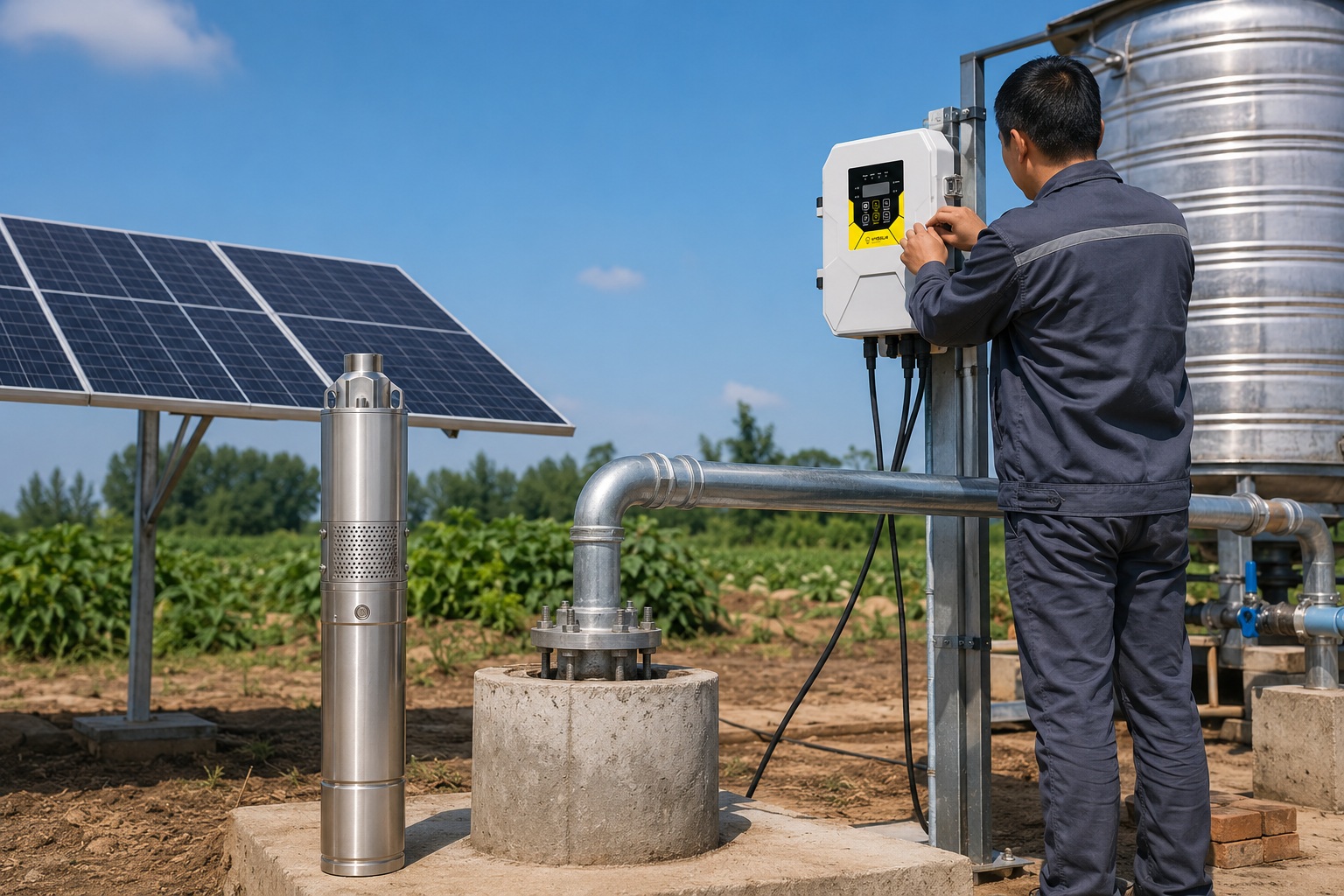
A standard 1 hp submersible well pump replacement typically costs between $1,500 and $3,000, while a jet pump system might be slightly less. For off-grid applications, a 1 hp solar pump system might have a higher initial cost but offers significant long-term savings on electricity.
The type of pump you choose is the single biggest factor influencing the total cost.
A 1 hp pump isn't a one-size-fits-all product.
The technology inside the pump determines its performance, durability, and suitability for your specific water source.
This is especially true when comparing traditional grid-powered pumps with modern solar-powered solutions.
Solar pumps, while often requiring a larger upfront investment, are gaining popularity in regions like Africa, the Americas, and Australia for their grid independence and near-zero running costs.
Let's explore how different 1 hp pump technologies stack up in terms of cost and value.
The Rise of Solar-Powered Pumps
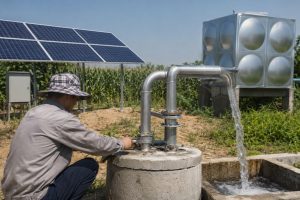
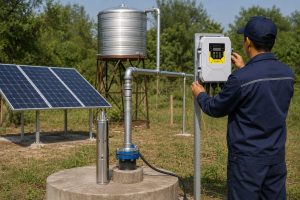
Solar water pumps have become a key technology for providing reliable water in off-grid areas.
They are driven by highly efficient motors and operate independently of the electrical grid.
This makes them an environmentally friendly and cost-effective solution for everything from domestic water supply to agricultural irrigation.
The core of these systems is a portfolio of specialized pumps designed for different needs.
Comparing 1 HP Solar Pump Technologies
Within the solar pump category, three main types dominate the market, each with a distinct cost-to-performance profile.
-
Solar Screw Pumps: These pumps are designed for low flow and high head applications. They use a stainless steel screw to push water, making them ideal for very deep wells. They are exceptionally resistant to sand, a common issue in harsh water conditions found in parts of Africa and Latin America. While their flow rate is limited, their ability to lift water from great depths provides unique value where other pumps fail.
-
Solar Plastic Impeller Pumps: For high-flow needs like farm irrigation, this pump is an economical and effective choice. It uses a durable, wear-resistant plastic impeller to move large volumes of water at medium head. Its lightweight design and resistance to fine sand make it a popular choice in the Americas and Africa for agricultural and domestic use.
-
Solar Stainless Steel Impeller Pumps: This is a premium option built for durability and longevity. The stainless steel components offer superior resistance to corrosion, making it perfect for areas with acidic or alkaline water, such as parts of Australia. While it has a higher initial cost, its long service life in aggressive water environments delivers excellent long-term value.
| Pump Type | Primary Application | Flow/Head Profile | Cost Profile | Key Advantage |
|---|---|---|---|---|
| 1 HP Solar Screw Pump | Deep wells, domestic water | Low Flow / High Head | Moderate | Excellent sand resistance |
| 1 HP Plastic Impeller Pump | Farm irrigation, high volume | High Flow / Medium Head | Economical | High wear resistance |
| 1 HP Stainless Steel Pump | Corrosive water, premium homes | High Flow / Medium-High Head | Premium | Superior corrosion resistance |
What Are the Installation and Labor Costs for a 1 HP Pump?
You found a great price on a 1 hp pump, but that's only half the battle.
Realizing that professional installation can cost as much as the pump itself can be a frustrating surprise.
Understanding what goes into labor costs helps you budget accurately and avoid shock.
Professional installation for a 1 hp well pump typically adds $300 to $1,000 to your total project cost. This fee covers the specialized labor and equipment needed to safely remove the old pump and install the new one, with costs increasing for deeper wells.
The complexity of the installation is a major cost driver.
Replacing a shallow well pump is far simpler and cheaper than replacing a submersible pump located hundreds of feet underground.
The depth of your well directly impacts the amount of labor, time, and equipment required for the job.
A professional installer doesn't just swap out the pump; they ensure the entire system works harmoniously.
This includes pulling up potentially hundreds of feet of pipe, handling electrical connections safely, and testing the system's pressure settings.
While a DIY approach might seem tempting to save money, the risks are significant.
Why Well Depth Drives Up Costs
The deeper your well, the more you can expect to pay for installation.
This is for several key reasons.
- Labor Intensity: Pulling a pump from a 300-foot well requires a specialized hoist or rig, more time, and often more than one technician. This is significantly more work than accessing a pump in a 25-foot shallow well.
- Material Costs: Deeper wells require more feet of pipe and electrical wiring, adding to the material cost of the project.
- Equipment Needs: Professional installers use specific equipment to prevent the pump from getting stuck or dropping down the well during removal or installation, a risk that increases with depth.
| Well Depth | Typical Installation Cost Range (Labor Only) | Estimated Total Replacement Cost (1 HP Pump) | Complexity |
|---|---|---|---|
| Shallow Well (< 25 ft) | $300 – $600 | $900 – $1,800 | Low |
| Moderate Well (25-100 ft) | $500 – $800 | $1,500 – $2,500 | Medium |
| Deep Well (> 100 ft) | $700 – $1,000+ | $2,000 – $4,000+ | High |
DIY vs. Professional Installation: A Cost-Benefit Analysis
Some homeowners consider replacing a well pump themselves to save on the $300 to $1,000 labor fee.
However, this is a risky task for most people.
Replacing a submersible pump involves handling heavy, water-filled pipes, working with high-voltage electrical connections, and ensuring the pump is set at the correct depth.
A mistake can be costly.
Dropping the pump down the well could require a new well to be drilled.
Improperly wired connections are a serious fire or electrocution hazard.
For these reasons, over 95% of homeowners hire professional well service companies.
The peace of mind that comes with a professional, warrantied installation is often worth far more than the potential savings of a DIY project.
Are There Hidden Costs to Consider with a 1 HP Pump?
You've budgeted for the pump and the installation labor.
But unexpected expenses can quickly turn your project into a financial headache.
Failing to plan for these "extras" is a common and costly mistake.
Beyond the pump and labor, be prepared for additional costs. These can include a new well pressure tank ($800–$2,500), a pressure switch ($50–$200), or a pump control box ($150–$400). These components can easily add another $1,000 or more to the final invoice.
When a well pump fails, it often doesn't fail alone.
The stress of a failing pump can cause other components in your water system to wear out or break.
A professional installer will inspect the entire system during the replacement process.
It is common to discover that other parts, like the pressure tank or control box, are also near the end of their lifespan.
While replacing these parts at the same time adds to the upfront cost, it is far more economical than paying for a separate service call a few months later.
Thinking of the well pump as part of an interconnected system is key to effective budgeting.
Essential System Components That Add to the Cost
A well water system is more than just the pump.
Several other parts are critical for its operation, and they may need to be replaced at the same time as your 1 hp pump.
- Well Pressure Tank: This tank stores water under pressure, reducing how often your pump needs to cycle on and off. A failing tank can cause the pump to run constantly, leading to premature failure. Replacement is a significant expense, often costing $800 to $2,500.
- Pressure Switch: This small device tells the pump when to turn on and off based on the pressure in the tank. It's a relatively inexpensive part ($50-$200) but is crucial for proper operation.
- Pump Control Box: For submersible pumps, this box houses the starting components. A faulty control box can prevent the pump from starting or cause it to burn out. A replacement costs around $150 to $400.
- Electrical Wiring: Old or damaged wiring may need to be upgraded to meet current safety codes or to handle the load of a new pump. This can cost anywhere from $100 to over $500.
| Additional Component | Average Replacement Cost | Why It Might Be Needed |
|---|---|---|
| Well Pressure Tank | $800 – $2,500 | Prevents pump from short-cycling; often fails with the pump. |
| Pressure Switch | $50 – $200 | Controls pump operation; a common point of failure. |
| Pump Control Box | $150 – $400 | Essential for starting 3-wire submersible pumps. |
| Electrical Wiring Upgrades | $100 – $500+ | Required for safety or if old wiring is damaged. |
Pre-Installation Checks and Services
Before a new pump is even installed, you may face additional costs.
A thorough contractor will recommend a well inspection to check the integrity of the well casing and look for sediment buildup.
This can cost between $200 and $1,000.
Water quality testing ($30-$300) may also be necessary to ensure the water is safe and to select a pump material that can withstand the water chemistry.
These diagnostic steps help ensure your new pump will have a long and efficient life, making them a wise investment.
How Do Running Costs and Efficiency Affect the Long-Term Price?
You've focused on the upfront cost to get your water running again.
But the electricity bill that arrives every month can make a cheap pump a very expensive long-term choice.
Ignoring operational efficiency is a mistake that costs you money year after year.
A standard 1 hp well pump running several hours a day can add $60 to $100 or more to your monthly electricity bill. Choosing a high-efficiency pump, especially a solar model, can reduce these running costs by over 90%, offering a return on investment within a few years.
The true cost of any appliance is the purchase price plus the cost of the energy it consumes over its lifetime.
This is especially true for a well pump, which is one of the more power-hungry devices in a rural home.
A pump that is 10% more efficient may cost slightly more upfront, but it can save you hundreds or even thousands of dollars in electricity over its 8 to 15-year lifespan.
This is where the technology inside the pump motor becomes critically important.
The motor is the heart of the pump, and its efficiency determines how much of the electricity it consumes is converted into useful water flow.
Advanced motor technology is the key to lowering the total cost of ownership.
The Power of an Efficient Motor
The engine driving modern, high-efficiency solar pumps is the Brushless DC (BLDC) permanent magnet motor.
This technology represents a major leap forward from older motor designs.
These motors regularly achieve efficiencies exceeding 90%, compared to 60-70% for conventional motors.
This means more water is pumped for every watt of energy used.
The technical advantages are clear.
BLDC motors are significantly more compact and lightweight, with some designs being up to 47% smaller and 39% lighter than their traditional counterparts.
This makes installation easier and less costly.
For solar applications, this high efficiency is a game-changer.
A more efficient motor requires fewer solar panels to achieve the same water output, which can reduce the total system cost by 20-30%.
They are also virtually maintenance-free and have a very long service life, further reducing the total cost of ownership.
24/7 Water with Hybrid Technology
A major concern for those considering solar pumps is water availability on cloudy days or at night.
Advanced hybrid controllers solve this problem.
These smart devices can be connected to both solar panels and an AC power source (like the grid or a generator) simultaneously.
The controller's logic is designed to maximize the use of free solar energy.
When the sun is shining, the pump runs entirely on solar power.
If clouds reduce the solar input, the hybrid function can blend in just enough AC power to maintain water flow, still prioritizing the solar energy.
When there is no solar input at night, the controller automatically switches to the AC source.
This ensures a reliable, 24/hour water supply while keeping electricity costs to an absolute minimum.
| Feature | Standard 1 HP Pump System | High-Efficiency 1 HP Solar System | Long-Term Cost Impact |
|---|---|---|---|
| Motor Efficiency | ~65% | >90% | Solar system uses 30%+ less energy. |
| Monthly Running Cost | $82 - $98 | ~$0 (with AC backup) | Potentially saves over $1,000 per year. |
| Core Technology | AC Induction Motor | BLDC Permanent Magnet Motor | BLDC motor is lighter, smaller, and maintenance-free. |
| Energy Source | Grid Power Only | Solar with AC/Generator Hybrid | Hybrid system offers grid independence and cost savings. |
Conclusion
The true cost of a 1 hp pump is far more than its sticker price.
It's a balance of pump type, installation complexity, and long-term running costs.
FAQs
How much does a 1HP submersible pump cost?
The pump alone costs $400 to $1,500.
The total installed cost typically ranges from $1,500 to $3,000, depending on well depth and labor.
How many gallons per minute is a 1 HP well pump?
A 1 HP pump can typically deliver 10 to 20 gallons per minute (GPM).
The exact flow rate depends on the well depth and system pressure.
Can I replace a well pump myself?
It is not recommended.
Replacing a pump involves high-voltage electricity and specialized equipment, making it a job best left for licensed professionals to ensure safety and proper installation.
How long does a 1 HP well pump last?
Most well pumps last between 8 and 15 years.
Lifespan is affected by water quality, usage frequency, and whether the system is properly maintained.
What size pressure tank do I need for a 1 HP pump?
For a 1 HP pump, a pressure tank of at least 20 gallons is recommended.
A larger tank reduces pump cycling and extends the pump's life.
How much does it cost to run a 1 HP well pump?
Running a standard 1 HP well pump can cost $60 to $100 per month.
This cost depends on your local electricity rates and daily water usage.