A broken water pump can cause serious engine damage.
This leads to expensive and time-consuming repairs.
Learning simple diagnostic tests can save you from major mechanical failures and high costs.
The quickest way to test if a water pump is working is to check for three key signs.
First, look for coolant leaks at the front of the engine.
Second, listen for unusual grinding or squealing noises.
Third, check if the engine is overheating.
Your engine’s cooling system is critical for its health.
The water pump is the heart of this system.
It circulates coolant to prevent the engine from overheating.
When this pump fails, the consequences can be severe.
However, a failing pump rarely stops working without warning.
Understanding the signs and knowing how to perform simple tests can help you diagnose the problem before it leads to a catastrophic failure.
This guide will walk you through the symptoms, diagnostic tests, and important considerations for dealing with a faulty water pump.
Let's explore how to confirm if your water pump is the source of your troubles.
Signs Your Water Pump is Failing
An overheating engine light is a driver's worst nightmare.
Ignoring it can lead to catastrophic engine failure.
You can avoid this by learning the specific signs of a failing water pump.
Key signs of a failing water pump include coolant leaks from the front of the engine, overheating, and unusual squealing or whining noises that change with engine RPM.
These symptoms indicate that the pump is no longer circulating coolant effectively.
A water pump is a mechanical device subject to wear and tear.
Its failure can be gradual or sudden.
Recognizing the early warning signs is crucial for preventing expensive damage, such as a blown head gasket which can cost over $1,000 to repair.
The symptoms of a bad water pump are often distinct and can be identified with a careful inspection.
Let's dive deeper into the specific indicators that tell you your water pump is on its last legs.
Coolant Leaks - The Telltale Drip
A coolant leak is one of the most common signs of a failing water pump.
These leaks typically originate from one of two places.
The first is the mounting gasket that seals the pump to the engine block.
Over time, this gasket can degrade and allow coolant to escape.
The second, and more common, point of failure is the pump’s internal shaft seal.
This seal prevents coolant from leaking out around the spinning pump shaft.
When this seal wears out, coolant will escape through a small opening called a "weep hole."
This hole is designed to let coolant drip out to signal a failing seal.
You may find a puddle of green, orange, or pink fluid under the front of your vehicle.
In minor cases, the leak might not reach the ground.
The heat from the engine can cause the coolant to evaporate, leaving behind a white, crusty trail tinged with the color of your coolant.
Any coolant leak is a serious issue that requires immediate attention.
Engine Overheating - A Critical Warning
The primary job of the water pump is to move coolant.
If it fails to do this, the engine will quickly overheat.
An overheating engine is a critical condition.
You should stop the vehicle immediately if you see the temperature gauge spike into the red zone or if a warning light appears.
There are several reasons a pump can stop circulating coolant.
The impeller fins inside the pump can corrode and break off, leaving nothing to push the fluid.
This happens when incorrect or contaminated coolant is used.
The pump's shaft can also seize due to a failed internal bearing or severe corrosion.
A seized pump will not spin, completely halting coolant circulation.
Continued driving with an overheating engine can cause irreversible damage.
This includes a warped cylinder head, a blown head gasket, or even a completely seized engine.
Unusual Noises - The Pump's Cry for Help
Your ears are a powerful diagnostic tool.
A failing water pump often makes distinct noises.
- Squealing or Chirping: A high-pitched squealing sound from the front of the engine that rises and falls with RPMs is a classic symptom. This is often caused by a loose serpentine belt slipping on the pump's pulley. The slippage occurs because a failing bearing in the pump is creating extra drag.
- Whining or Rumbling: A low-pitched rumbling or grinding noise indicates a worn-out bearing. The bearings support the pump shaft, and when they fail, the shaft can wobble. This noise is a clear sign that the pump is close to complete failure.
- Popping Sounds: In some cases, you might hear popping sounds near the pump. This can be a sign of cavitation, which occurs when air pockets form and implode within the coolant. Cavitation is highly destructive and can quickly erode the pump's impeller.
Visual Inspection - What to Look For
A visual check can often confirm your suspicions.
Look for the following:
- Corrosion: Visible rust or buildup on the pump's housing or pulley is a bad sign. Corrosion can cause the pulley to run untrue, leading to belt issues.
- Wobbly Pulley: With the engine off, try to wiggle the water pump pulley. There should be no side-to-side movement. If it feels loose, the internal bearing has failed.
- Belt Wear: A failing water pump can cause premature wear on the serpentine belt. Look for fraying or glazing on the belt.
| Symptom | Likely Cause | Severity | Action Required |
|---|---|---|---|
| Coolant Puddle (Front) | Failed Shaft Seal or Gasket | High | Immediate Inspection & Repair |
| Engine Overheating | Seized Bearing / Broken Impeller | Critical | Stop Driving Immediately |
| High-Pitched Squeal | Worn Bearing, Slipping Belt | Medium | Schedule Inspection |
| Low-Pitched Grinding | Failed Bearing | High | Immediate Inspection |
| Wobbly Pulley | Failed Bearing | High | Do Not Drive, Repair |
How to Tell If Your Water Pump or Thermostat Is Failing?
Your engine is overheating.
You know it's a cooling system problem, but what part is the culprit?
Guessing between the water pump and thermostat can cost you time and money on the wrong repair.
A bad thermostat typically causes predictable temperature issues, like overheating after warm-up (stuck closed) or the engine never getting warm (stuck open).
In contrast, a bad water pump is more likely to cause coolant leaks, grinding noises, or sudden overheating at any time.
The water pump and thermostat are a team.
They work together to keep your engine at its ideal operating temperature, usually between 180°F and 220°F (82°C to 104°C).
The pump is the heart, constantly moving coolant.
The thermostat is the brain, deciding when to send coolant to the radiator for cooling.
If one fails, the entire system breaks down.
Because their failure can both lead to overheating, it is easy to misdiagnose the problem.
However, with a couple of simple, hands-on tests, you can determine which component is at fault with a high degree of certainty.
These tests require no special tools and can save you from replacing the wrong part.
Understanding Their Roles
To diagnose the problem, you must first understand how each part works.
- The Water Pump: Driven by a belt, the water pump's job is simple. It uses an impeller to continuously circulate coolant through the engine and radiator. Its job is to ensure coolant is always moving.
- The Thermostat: This is a temperature-sensitive valve. It remains closed when the engine is cold, allowing coolant to circulate only within the engine block. This helps the engine warm up quickly. Once the engine reaches its operating temperature (e.g., 195°F), the thermostat opens. This allows hot coolant to flow to the radiator to be cooled.
If the pump fails, coolant stands still, even if the thermostat is open.
If the thermostat is stuck closed, the pump works fine, but the coolant is blocked from reaching the radiator.
The "Hot Water" Test for Thermostats
This classic test directly confirms if your thermostat is functioning correctly.
Warning: Only perform this test on a completely cool engine to avoid severe burns.
- Locate and Remove the Thermostat: You will need to drain some coolant to access the thermostat housing. Once you remove the thermostat, note the temperature stamped on it.
- Prepare the Test: Place the cool thermostat in a pot of water on a stove.
- Observe and Heat: Heat the water while watching the thermostat. It should be fully closed when cold. As the water nears the temperature stamped on the part, its valve should begin to open.
- The Verdict: If the thermostat fails to open at all, it is stuck closed. If it was already open in the cool water, it is stuck open. This test provides a definitive pass or fail result. It removes all guesswork about the thermostat's condition.
The "Coolant Flow" Check for Water Pumps
This test helps you see if the water pump is actually moving fluid.
Warning: The engine will be running, so be cautious of moving parts.
- Remove Radiator Cap: With the engine completely cold, remove the radiator cap.
- Start the Engine: Let the engine idle.
- Look for Flow: As the engine warms up and the thermostat opens, you should see the coolant in the radiator begin to circulate or flow. If the coolant remains perfectly still as the temperature gauge climbs, it is a strong sign that the water pump's impeller is not working.
- Squeeze the Hose: An alternative method is to carefully squeeze the upper radiator hose. As the engine reaches operating temperature, you should feel a surge of hot fluid and pressure through the hose when the thermostat opens. If the engine is overheating but the hose remains cool and soft, no coolant is circulating. This points directly to a failed water pump.
| Symptom | Likely Water Pump Failure | Likely Thermostat Failure |
|---|---|---|
| Overheats Gradually After Startup | Unlikely | Very Likely (Stuck Closed) |
| Engine Never Reaches Operating Temp | Not a symptom | Very Likely (Stuck Open) |
| Visible Coolant Leak at Front | Very Likely | Possible, but less common |
| Grinding or Whining Noise | Very Likely (Failing Bearing) | Not a symptom |
| Temp Gauge Swings Wildly | Unlikely | Very Likely (Sticking Valve) |
| No Heat From Vents While Overheating | Possible if airlocked | Very Likely |
Five Things to Check When Your Pump Doesn't Work
A pump that has completely stopped working is a major problem.
Before assuming the worst and ordering a replacement, there are several basic checks you can perform.
These simple steps can help you identify a simple fix and potentially save you a large repair bill.
When a pump isn't working at all, first check the power source, including drive belts, wiring, and fuses.
Then, listen for any sounds, look for leaks or misalignments, and inspect for visible signs of wear and tear on all related components.
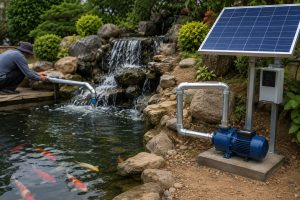
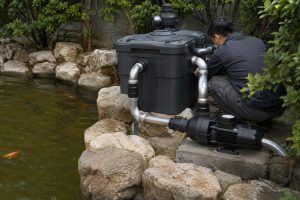
Whether you have a traditional vehicle water pump or a specialized industrial or solar pump, the diagnostic principles are similar.
A pump is part of a larger system.
A failure in one part of that system can make it seem like the pump itself is broken.
By systematically checking the most common failure points, you can accurately diagnose the root cause.
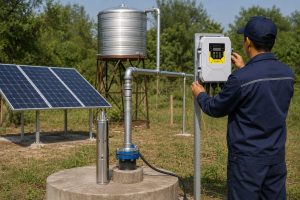
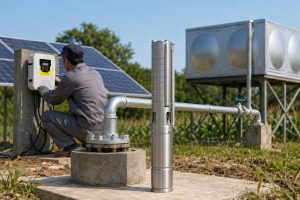
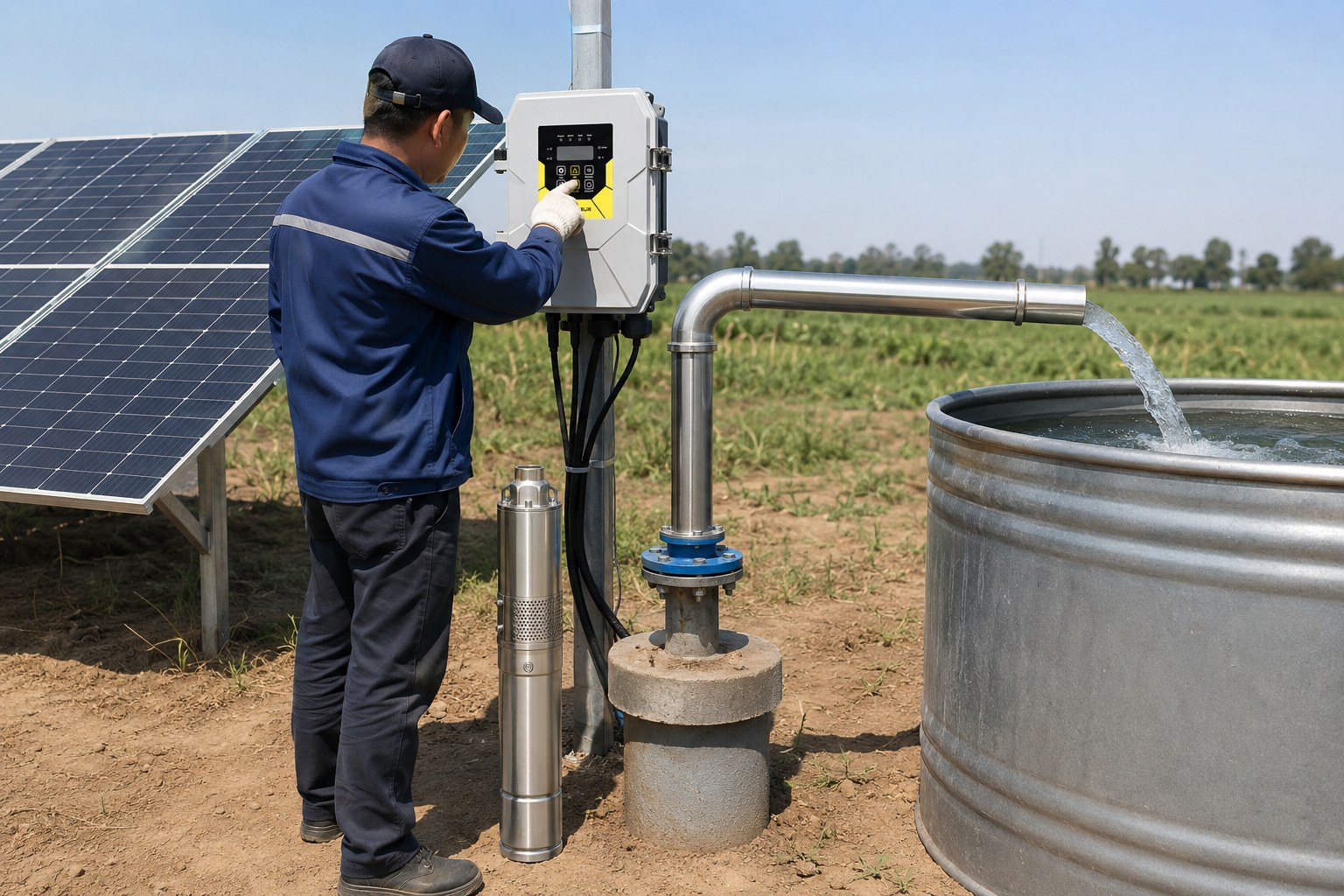
This methodical approach is essential, especially for more complex systems like solar-powered pumps, where the issue could be with the pump, the controller, or the power source.
Let's look at the five critical areas to check.
Checking the Power Source
A pump cannot run without power.
The source of that power varies by pump type.
- For Vehicle Pumps: The power source is the engine itself, transferred via a serpentine or timing belt. Check the belt for proper tension and condition. A broken or slipped belt is a common reason for a pump to stop working. The engine will not be able to turn the pump's pulley.
- For Electric/Solar Pumps: The power source is electrical. Start by checking fuses and circuit breakers. Use a multimeter to verify that the correct voltage is reaching the pump's controller and the motor itself. For solar pumps, check the output from the solar panels. Cloud cover or a dirty panel can reduce power output by over 50%, preventing the pump from starting. Also inspect all wiring for loose connections or damage.
Analyzing the Sound (or Lack Thereof)
Sound is a vital diagnostic clue.
If a pump is trying to run but can't, it may make a humming or buzzing noise.
This could indicate a jam or a seized motor.
If there is no sound at all, it further points to a power supply issue.
Conversely, a sudden, loud grinding noise followed by silence could mean a catastrophic internal failure, such as a shattered impeller or a seized bearing that has now broken completely.
Listen closely when you attempt to power on the pump.
Even a faint click from a controller or relay can tell you that the system is trying to work.
Verifying Alignment and Leaks
Proper installation is key to a long pump life.
Misalignment is a silent killer of pumps.
On a vehicle, a misaligned pulley will cause excessive vibration and put stress on the pump's bearing, leading to premature failure.
It will also quickly destroy the drive belt.
Check to see that the pump pulley lines up perfectly with the other pulleys.
On any pump system, check that the connected pipes are not putting stress on the pump housing.
Improperly supported pipes can cause the pump housing to crack.
And as always, any sign of a leak from a seal, gasket, or fitting indicates a problem that must be fixed immediately.
Inspecting for Wear & Tear
All pumps have components that wear out over time.
A thorough visual inspection can reveal the problem.
- Impellers: The impeller is the part that moves the fluid. Over time, it can be eroded by abrasive materials (like sand) or corrosion.
- Plastic Impellers: Common in some vehicle and solar pumps, these are lightweight and efficient. However, they can become brittle and crack after 3-5 years, especially in high-heat conditions. A cracked impeller will not generate flow.
- Stainless Steel Impellers: These are much more durable and can last over 10 years. They resist corrosion but can still be damaged by large debris.
- Screw Rotors (Progressing Cavity Pumps): Used in high-head solar pumps, these use a metal screw inside a rubber stator. The stator is a wear part and will degrade over time, reducing the pump's ability to build pressure.
| Pump Impeller Type | Typical Lifespan | Strengths | Weaknesses |
|---|---|---|---|
| Plastic Impeller | 3-5 Years | High Flow, Low Cost | Prone to cracking, low corrosion resistance |
| Stainless Steel Impeller | 7-10+ Years | High Durability, Corrosion Resistant | Higher Cost, Heavier |
| Screw Rotor / Stator | 2-5 Years (Stator) | High Head, Handles Sand Well | Stator is a wear part, lower flow rate |
Comparing to Factory Performance
Every pump has a specification sheet that details its expected performance (e.g., flow rate and pressure/head).
If your pump is running but not meeting these specifications, something is wrong.
For example, a solar pump might be rated to deliver 20 gallons per minute at a 100-foot head.
If you are only getting 5 gallons per minute, there is a problem.
The issue could be a worn impeller, a leak in the system, or insufficient power.
Modern high-efficiency pumps, such as those with brushless DC (BLDC) motors, are over 90% efficient.
A drop in performance almost always points to an issue with the "wet end" (the impeller/stator) or the power supply, not the motor itself.
Always have your pump's performance curve on hand to compare its actual output to its rated output.
Should You Replace the Thermostat and Water Pump Together?
You've diagnosed a bad water pump.
The mechanic suggests replacing the thermostat at the same time.
Is this a necessary precaution or an attempt to upsell you on a part you don't need?
Understanding the logic behind this recommendation is key.
Yes, it is highly recommended to replace the thermostat when replacing the water pump.
The labor to access the pump often overlaps, the parts have a similar lifespan, and a dual replacement is a cost-effective strategy that prevents future breakdowns.
When a major component like a water pump fails, it's an opportunity to perform preventive maintenance on related parts.
The decision to replace additional components should be based on logic, cost-effectiveness, and risk reduction.
In the case of the water pump and thermostat, replacing them together is considered a best practice by nearly all professional mechanics.
The reasoning is sound and is designed to save you money and inconvenience in the long run.
Let's break down the top reasons why this is a smart maintenance strategy.
The most significant cost in a water pump replacement is almost always the labor, not the part itself.
Depending on the vehicle, accessing the water pump can take several hours.
It may require removing the serpentine belt, pulleys, and sometimes even the timing belt cover.
During this process, the cooling system must be completely drained.
The thermostat is located nearby and becomes easily accessible once this work is done.
Replacing the thermostat at this point adds maybe 10-15 minutes to the job.
The cost of the thermostat part is relatively low, often between $20 and $50.
If you decline to replace it and it fails six months later, you will have to pay for the entire labor process again.
This includes draining the system, accessing the part, and refilling the coolant.
This would effectively mean paying for the same labor twice.
The Principle of Similar Lifespan
Water pumps and thermostats are exposed to the exact same operating conditions.
They endure thousands of heat cycles, constant pressure, and the chemical properties of the engine coolant.
Because of this, they tend to have similar service lives.
A typical water pump is designed to last between 60,000 and 100,000 miles.
Thermostats have a similar life expectancy.
If your water pump has failed at 80,000 miles due to wear and tear, it is very likely that the original thermostat is also nearing the end of its reliable service life.
Replacing only the failed part is a gamble.
You are betting that the old thermostat will outlast the new pump, which is statistically unlikely.
A Cost-Benefit Analysis
Let's look at the numbers to see why a dual replacement makes financial sense.
-
Scenario A (Replace Pump Only):
- Water Pump Part: $150
- Coolant: $30
- Labor (3 hours): $360
- Total: $540
- If the thermostat fails 1 year later, you then pay for a separate repair:
- Thermostat Part: $40
- Coolant: $30
- Labor (1.5 hours): $180
- Second Repair Total: $250
- Grand Total Cost: $790
-
Scenario B (Replace Both at Once):
- Water Pump Part: $150
- Thermostat Part: $40
- Coolant: $30
- Labor (3.25 hours): $390
- Grand Total Cost: $610
In this common scenario, replacing both parts at the same time saves you $180.
It also saves you the massive inconvenience of a second breakdown and another trip to the repair shop.
The small upfront cost for the thermostat is an investment that provides peace of mind and significant long-term savings.
Conclusion
Diagnosing a water pump involves checking for leaks, noises, and overheating.
Simple tests can differentiate pump and thermostat issues.
Replacing both parts together is a smart, cost-effective strategy for long-term reliability.
Frequently Asked Questions
What are the 3 main signs of a bad water pump?
The three primary signs are coolant leaks from the front of the engine, a grinding or squealing noise from the pump pulley, and engine overheating.
Can a water pump fail without leaking?
Yes. The pump’s internal impeller can break or the bearing can seize. This will cause overheating or noise without any external coolant leak.
How long can you drive with a failing water pump?
It is not recommended. A small leak might be manageable for a short time, but a seized pump can cause catastrophic engine damage within minutes.
What sound does a failing water pump make?
It typically makes a high-pitched squeal from a slipping belt or a low-pitched grinding or rumbling noise from a failed bearing that changes with engine speed.
Does a new water pump need to be bled?
Yes, absolutely. After replacing the pump, the entire cooling system must be properly bled of air to prevent air pockets that cause overheating.
Is it expensive to replace a water pump?
Costs vary widely. The part can range from $50 to over $800, while labor can add $200 to $800, making the total repair $250 to $1,600+.
What is a water pump weep hole?
It is a small hole on the pump’s housing designed to let a small amount of coolant escape. This signals that the internal shaft seal is failing.
Can a bad water pump damage an engine?
Yes, a failed water pump is one of the quickest ways to severely damage an engine. Overheating can warp heads, blow gaskets, and seize the motor.