High electricity bills from running a pond pump can be frustrating.
This constant energy drain feels wasteful and is not environmentally friendly.
Solar power offers a sustainable, cost-effective solution.
Yes, you can absolutely run a pond pump using solar power.
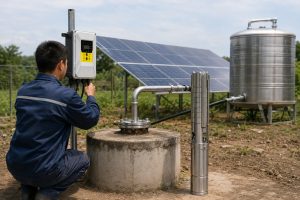
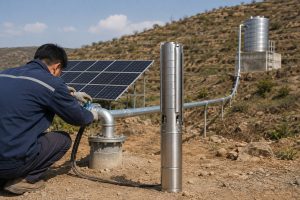
A complete solar pump system, which includes solar panels, an intelligent controller, and a high-efficiency DC pump, provides a reliable and eco-friendly method to circulate and aerate water, operating entirely off-grid.
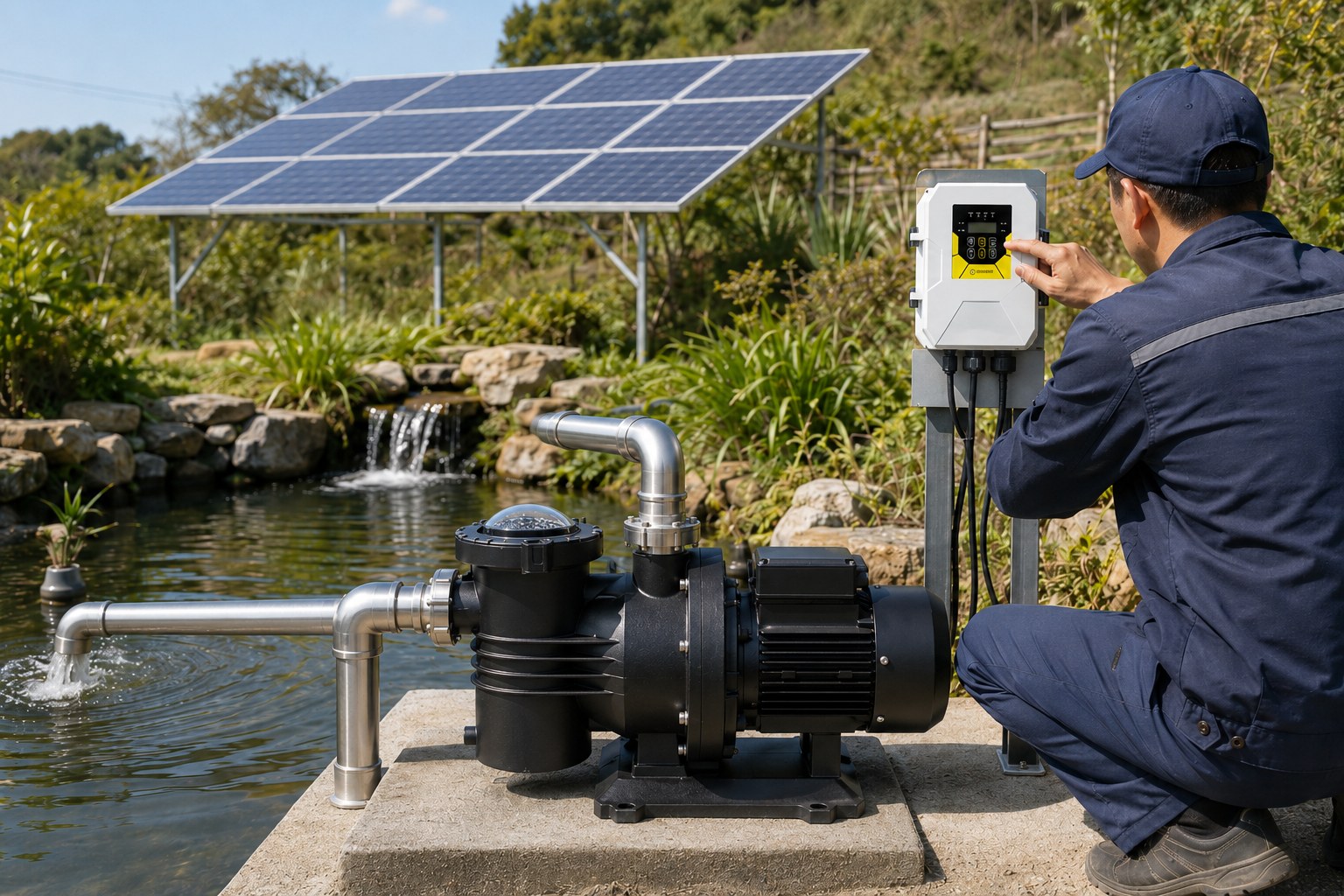
Running a pond pump on solar is not just a concept; it's a practical and increasingly popular solution.
The technology has evolved far beyond small, decorative fountains.
Modern solar pumping systems leverage the same robust technology used in demanding agricultural and residential water supply applications worldwide.
This means you can power everything from a small backyard water feature to a large koi pond requiring constant aeration.
Understanding the core components of these systems is the first step to harnessing the sun's free energy for your pond.
Let's explore the powerful technology that makes this possible and how to choose the right setup for your specific needs.
The Core Technology: What Makes Solar Pumps Tick?
You might be unsure about the reliability of solar pumps.
Concerns about performance on cloudy days or overall power can be daunting.
Discover the advanced motor and controller technology that guarantees consistent operation and efficiency.
Modern solar pumps are driven by highly efficient Brushless DC (BLDC) permanent magnet motors.
These motors convert solar energy into powerful water movement with efficiencies often exceeding 90%, ensuring your pond receives the circulation it needs even in less-than-perfect sunlight.
Dive Deeper
The heart of any effective solar pump system is its motor and controller.
These two components determine how efficiently solar energy is converted into water flow.
Outdated systems were often inefficient, but today's technology has made significant leaps forward, offering performance that rivals traditional AC pumps.
The Powerhouse: BLDC Permanent Magnet Motors
A Brushless DC (BLDC) motor is the core driver in modern solar water pumps.
Unlike older brushed motors, they have no physical brushes to wear out, drastically increasing their lifespan and eliminating maintenance.
The rotor is constructed with powerful permanent magnets, often made from high-grade materials like 40SH neodymium iron boron.
This design results in several key advantages.
- Exceptional Efficiency: BLDC motors can achieve an electrical-to-mechanical power conversion efficiency of over 90%.
This is a significant improvement over traditional AC motors, which may operate at 60-75% efficiency.
This means more of the sun's energy is used to move water and less is wasted as heat. - Compact and Lightweight: The high power density of these motors allows them to be significantly smaller and lighter.
Compared to an AC motor of equivalent power, a BLDC motor can be up to 47% smaller and 39% lighter, simplifying installation and reducing material costs. - High Torque: They provide strong starting torque, which is essential for getting water moving, especially in systems with higher head pressure like a waterfall.
| Feature | BLDC Permanent Magnet Motor | Standard AC Motor |
|---|---|---|
| Efficiency | > 90% | 60% - 75% |
| Lifespan | Long (no brushes to wear out) | Shorter (brushes require replacement) |
| Maintenance | Virtually maintenance-free | Requires periodic maintenance |
| Size & Weight | Compact and lightweight | Bulkier and heavier |
| Power Source | Native DC (ideal for solar) | AC (requires inverter for solar) |
The Brains: MPPT Controllers
The motor is only half of the equation.
An intelligent controller acts as the brain, managing the power flow from the solar panels.
The most advanced systems use Maximum Power Point Tracking (MPPT) technology.
An MPPT controller constantly analyzes the output from the solar panels and adjusts the electrical load to extract the maximum possible power at any given moment.
This is crucial because sunlight intensity varies throughout the day.
An MPPT controller can boost the energy harvested from your solar panels by as much as 30% compared to a simple controller.
This means the pump can start working earlier in the morning, run later into the evening, and perform better on overcast days, maximizing the daily water circulation in your pond.
Choosing the Right Solar Pump for Your Pond
Feeling overwhelmed by the sheer number of pump options available?
Choosing the wrong pump can lead to poor performance or premature failure.
Learn how to match the right pump design to your pond's unique needs.
The best pump for your pond depends entirely on its size, depth, and features.
For large ponds or those with waterfalls, you must consider the required flow rate (GPH/LPH) and total head pressure to ensure proper filtration and aeration for a healthy ecosystem.
Dive Deeper
While the motor provides the power, the pump end (also known as the "wet end") does the physical work of moving water.
The design of the wet end determines its performance characteristics, such as its flow rate, pressure capabilities, and durability in different water conditions.
The technology is often adapted from more demanding applications, like deep well pumping, giving you robust options for any pond setup.
For High-Lift Features: The Screw Design Principle
If your pond design includes a tall waterfall or a stream that starts high above the pond's surface, you need a pump that can generate high pressure (head).
This is where technology adapted from solar screw pumps becomes relevant.
These pumps use a helical rotor (a screw) inside a rubber stator.
As the screw turns, it creates sealed cavities of water that are pushed progressively upwards.
This mechanism is extremely efficient at lifting water vertically.
While a pure screw pump is uncommon for ponds, pumps designed with high-lift impellers use a similar principle to prioritize pressure over flow.
Their ability to handle some solids also makes them a durable choice for natural-bottom ponds where silt might be present.
For High Flow and General Circulation: The Centrifugal Impeller
This is the most common and versatile design for pond pumps.
A centrifugal pump uses a spinning impeller to draw water in at the center and throw it outwards with centrifugal force.
Multi-stage centrifugal pumps use several impellers in a series to generate higher pressures.
The key difference for pond applications often comes down to the material of the impeller.
-
Plastic Impellers: These are an excellent, economical choice for most residential ponds.
The plastic used is a high-strength, engineered polymer designed for durability and wear resistance.
They are lightweight and perform very well in typical pond conditions, even with some fine sand or organic debris.
They provide a fantastic balance of high flow, decent pressure, and cost-effectiveness. -
Stainless Steel Impellers: This is the premium option for ultimate durability.
Using SS304 or higher-grade stainless steel, these impellers are virtually immune to corrosion and highly resistant to abrasion.
They are the ideal choice for ponds with treated water, high mineral content (hard water), or brackish/saltwater environments.
While they come at a higher initial cost, their extended service life and reliability make them a worthwhile investment for serious pond keepers or critical applications.
| Material | Best For | Advantages | Limitations |
|---|---|---|---|
| Engineered Plastic | General ponds, small to medium waterfalls, budget-conscious projects. | High flow, lightweight, economical, good fine-sand resistance. | Less durable in highly corrosive water or extreme conditions. |
| Stainless Steel | Koi ponds, ponds with treated water, high-mineral water, saltwater ponds. | Excellent corrosion resistance, maximum durability, long service life, high reliability. | Higher initial cost, heavier. |
What About Cloudy Days and Nighttime Operation?
Are you worried that a solar pump will stop working when your pond needs it most?
The health of fish and your pond's ecosystem depends on 24/7 circulation.
Discover hybrid technology that guarantees your pump runs nonstop.
For uninterrupted, 24/7 operation, AC/DC hybrid solar pump systems are the perfect solution.
They intelligently use free solar power when available and automatically switch to grid electricity (AC) during cloudy periods or at night, ensuring constant, worry-free water flow.
Dive Deeper
A standard solar pump system will only operate when the sun is shining.
For a small decorative water feature, this is perfectly fine.
However, for a pond with fish and a biological filter, circulation must run 24 hours a day to provide oxygen and keep beneficial bacteria alive.
Stopping the pump overnight can lead to oxygen depletion and a crash in water quality.
There are two primary solutions to achieve continuous operation.
The Power of Hybrid AC/DC Systems
This is the most seamless and increasingly popular solution for 24/7 pumping.
A hybrid system uses a special controller with two power inputs: one for the DC power from your solar panels and one for the AC power from your home's electrical grid or a generator.
The controller's logic is designed for maximum efficiency and cost savings.
- Solar Priority: The controller will always prioritize using the free DC power from the solar panels.
- Automatic Blending/Switchover: When solar energy decreases due to clouds, sunset, or high power demand, the controller can do one of two things.
Some models will blend AC power with the available DC power to maintain pump speed.
Other models will automatically switch over completely to the AC power source once the DC input drops below a usable level. - Seamless Transition: This process is fully automatic.
The system ensures the pump continues running without any manual intervention, providing peace of mind and guaranteeing the health of your pond.
It offers the best of both worlds: the cost savings of solar and the reliability of the grid.
The Alternative: Sizing a Battery Backup
The other method to achieve 24/7 operation is a fully off-grid DC system with a battery bank.
In this setup, the solar panels charge a bank of deep-cycle batteries during the day.
The pump then draws power from the batteries as needed, including overnight and on cloudy days.
While this offers true energy independence, it comes with trade-offs.
| Feature | AC/DC Hybrid System | Battery Backup System |
|---|---|---|
| 24/7 Reliability | Excellent, backed by the grid | Excellent, if sized correctly |
| Initial Cost | Moderate (pump, panels, controller) | High (adds expensive batteries & charge controller) |
| Maintenance | Very low | Moderate (battery testing, cleaning, eventual replacement) |
| Lifespan | Long (no major wear components) | Limited by battery lifespan (typically 3-7 years) |
| Complexity | Simple installation | More complex wiring and setup |
For most pond owners who have access to grid power, the AC/DC hybrid system presents a more practical, cost-effective, and lower-maintenance solution for achieving reliable, round-the-clock pond circulation.
Calculating Your Solar Pond Pump System
Feeling confused about how to size a solar pump system?
A mismatched system with the wrong pump or too few panels will be inefficient and frustrating.
Learn the key factors to calculate the perfect system for your pond.
To size your system correctly, you need two key numbers: your pump's power consumption (in watts) and your location's average peak sun hours.
Multiply the pump's wattage by its daily run time, then divide by the peak sun hours to estimate your required solar panel wattage.
Dive Deeper
Correctly sizing your solar pump system is the most critical step for success.
An undersized system will fail to perform, while an oversized one is a waste of money.
The process can be broken down into three simple steps.
Step 1: Determine Your Water Pumping Needs
First, you must define what you need the pump to do.
This involves two main calculations:
-
Flow Rate: For a healthy pond, you should aim to circulate the entire volume of water at least once every one to two hours.
For a koi pond with a heavy fish load, circulating the volume once per hour is recommended.- Example: A 3,000-gallon pond requires a pump with a flow rate of at least 1,500 to 3,000 Gallons Per Hour (GPH).
-
Total Dynamic Head (TDH): This is the total pressure the pump must work against.
It is the sum of two factors:- Static Head: The vertical height from the surface of the pond to the highest point the water is discharged (e.g., the top of your waterfall or the outlet of your filter).
- Friction Loss: The resistance created by water moving through pipes, fittings, UV clarifiers, and pressure filters.
Longer pipe runs and narrower pipe diameters dramatically increase friction loss.
Online calculators can help you estimate this value.
Step 2: Select the Right Pump
With your required GPH and TDH, you can now look at pump specification sheets.
Manufacturers provide a "pump curve" chart that shows the flow rate at different head pressures.
Find a pump that provides your target GPH at your calculated TDH.
Once you've identified a suitable pump, note its power consumption in watts.
This is the "W" in your solar calculation.
Step 3: Calculate Your Solar Panel Requirements
The final step is to determine how many solar panels you need to run your selected pump.
The basic formula is:
Required Panel Wattage = (Pump Wattage x Daily Run Hours) / Peak Sun Hours
-
Peak Sun Hours: This is not the same as hours of daylight.
It's a value representing the number of hours per day that the sun's intensity equals 1,000 watts per square meter.
You can find this value for your specific location online.
It varies by season and geography. -
Oversizing: It is crucial to oversize your solar array by at least 25-30%.
This buffer accounts for cloudy weather, panel degradation over time, and controller inefficiencies.
| Pond Size | Required Flow (GPH) | Example Pump Power | Required Panels (5 Sun Hours, 6hr Run) | Recommended Panels (+30%) |
|---|---|---|---|---|
| 1,000 Gallons | 500-1,000 | 50 Watts | (50W * 6h) / 5h = 60W | ~80W - 100W |
| 3,000 Gallons | 1,500-3,000 | 150 Watts | (150W * 6h) / 5h = 180W | ~235W - 250W |
| 5,000 Gallons | 2,500-5,000 | 250 Watts | (250W * 6h) / 5h = 300W | ~390W - 400W |
Following these steps ensures you build a balanced and efficient system that meets your pond's needs and provides reliable performance for years to come.
Conclusion
Running a pond on solar power is not only possible but also highly efficient and reliable with modern technology.
A well-chosen system will save money and support a healthy pond ecosystem.
FAQs
How long do solar pond pumps last?
A quality BLDC solar pump can last over 10 years due to its brushless design.
Solar panels typically have a performance warranty of 25 years, making the system very durable.
Can a solar pump run a waterfall?
Yes, but you must choose a pump designed for high pressure (head).
Calculate your waterfall's height (static head) to select a pump that can provide adequate flow at that elevation.
Do solar pond pumps work on cloudy days?
They will run at a reduced speed on overcast days.
For consistent flow, an AC/DC hybrid system or a battery backup is necessary to compensate for the lack of direct sunlight.
Do you need a battery for a solar pond pump?
You only need a battery if you want 24/7 off-grid operation.
An AC/DC hybrid controller is a more common, lower-maintenance alternative if you have access to grid power.
How big of a solar panel do I need for my pond pump?
This depends on the pump's wattage and your location's sun hours.
A general rule is to have a solar panel wattage that is 1.5 to 2 times the pump's wattage.
Are solar pond pumps powerful enough?
Absolutely.
Modern solar pump systems are available in a wide range of sizes, capable of powering everything from small features to large pond circulation and agricultural irrigation systems.
Can I convert my existing AC pond pump to solar?
It is not practical.
AC pumps are inefficient on solar and require a large, expensive inverter and battery bank.
It is more effective to replace it with a native DC solar pump system.
What maintenance do solar pond pumps require?
Maintenance is minimal.
You should periodically clean the solar panels and check the pump's intake for debris, just as you would with any pond pump.
The motor itself is maintenance-free.