Struggling to find a water pump that won’t fail when you need it most?
You are facing constant pressure to deliver reliable and cost-effective solutions.
Choosing the wrong pump leads to system failures and unhappy customers.
The best water pump brands are those that combine proven reliability, application-specific engineering, and energy efficiency.
For industrial and municipal projects, leaders include Grundfos, Xylem, and KSB.
For residential use, Pentair and Franklin Electric are trusted.
For off-grid applications, solar pumps with BLDC motors are the most efficient choice.
Choosing a water pump can feel overwhelming.
The market is filled with hundreds of manufacturers, each claiming to be the best.
But a pump that excels in a high-rise building is not the right choice for a farm in an off-grid location.
The key is to understand the leaders in each category.
This guide breaks down the top manufacturers by application, from global industrial giants to specialists in solar technology.
It provides the insights you need to select the right pump manufacturer for any project.
Let's explore who truly makes a good water pump.
Top Global Leaders in Water Pump Manufacturing
Choosing a pump for a large-scale project feels like a high-stakes decision.
You need a brand with a proven track record of engineering excellence.
Failure is not an option when critical infrastructure is on the line.
Global leaders like Grundfos, Xylem (Goulds), and KSB set the industry standard for large municipal and industrial applications.
Their reputation is built on decades of innovation, exceptional reliability, and advanced smart technologies that optimize performance and reduce operational costs.
The world of heavy-duty water pumps is dominated by a few key players.
These companies have earned their place through decades of relentless innovation and proven performance in the field.
They are the go-to choice for engineers and project managers overseeing municipal water systems, large-scale industrial processes, and major infrastructure developments.
Their products represent the pinnacle of pump engineering, designed for maximum efficiency, longevity, and control.
However, this level of quality comes with a premium price tag, reflecting significant investment in research, development, and global support networks.
A Legacy of Engineering Excellence
These top-tier brands often originate from countries with strong engineering traditions, like Germany and Denmark.
Their success is not accidental.
It is the result of a long-term commitment to quality and a deep understanding of fluid dynamics.
Brands like Grundfos are known for their forward-thinking approach, focusing on sustainability and intelligent pumps that self-regulate.
This can reduce energy consumption by over 50% in many HVAC and circulation systems.
Similarly, KSB and Wilo, with German engineering at their core, produce heavy-duty pumps that are fixtures in power plants and wastewater treatment facilities worldwide.
They build equipment designed to run continuously for years with minimal downtime.
Key Performance Indicators of Top Brands
When you compare these industrial giants, you see a clear focus on performance and intelligence.
They compete on more than just water flow.
They compete on energy efficiency, system integration, and total cost of ownership.
Many of their flagship products now feature IE5 efficiency-rated motors, the highest standard available, which can offer 10-15% more efficiency than their predecessors.
Smart features, like Xylem’s Flygt Concertor system or KSB Guard, provide real-time remote monitoring and predictive maintenance alerts.
This data-driven approach allows operators to prevent failures before they happen, saving thousands in potential repair costs and downtime.
| Manufacturer | Country of Origin | Core Specialization | Key Technology Focus |
|---|---|---|---|
| Grundfos | Denmark | Energy Efficiency & Smart Pumps | Intelligent Controls, IE5 Motors, Digital Integration |
| Xylem (Goulds) | USA | Complex Water Challenges | Smart Pump Systems, Remote Diagnostics, e-HM Series |
| KSB | Germany | Heavy-Duty & Engineered Pumps | PumpDrive Automation, Remote Diagnostics, Industrial Durability |
| Wilo | Germany | Urban Infrastructure & Smart Buildings | High-Efficiency Circulation, Full System Connectivity |
Reliable Brands for Commercial and Residential Use
Industrial-grade pumps are often too powerful and expensive for homes or small businesses.
You need a pump that is reliable and cost-effective.
It must deliver consistent performance without a complex setup.
For residential and light commercial applications, brands like Pentair, Franklin Electric, and Zoeller are highly trusted.
They specialize in durable, easy-to-install pumps for wells, pools, and sump applications, offering an excellent balance of performance and long-term value.
When the application is closer to home, the priorities shift.
For homeowners, small business owners, and residential contractors, reliability and ease of use are paramount.
The pump needs to work quietly in the background, whether it's providing water from a well, keeping a basement dry, or circulating pool water.
The leading brands in this space have built their reputations on creating products that are both dependable and accessible.
They understand that their customers value a long service life and the availability of spare parts over the complex digital features found in top-tier industrial pumps.
The American Standard for Home Water Systems
In North America, a few brands have become household names for water management.
Zoeller is synonymous with sump pumps.
Their all-cast-iron construction makes them incredibly durable for the critical task of preventing basement flooding.
A Zoeller M53 Mighty-Mate is a trusted workhorse found in millions of homes.
Franklin Electric has a stellar reputation for its submersible motors, which are the heart of many deep well pump systems.
Their focus on motor reliability ensures consistent water supply even under fluctuating voltage conditions.
Pentair, through its popular sub-brands like Sta-Rite and Myers, offers one of the most diverse portfolios.
They cover everything from high-performance pool pumps to rugged jet pumps for shallow wells.
Performance vs. Price in Residential Pumps
For a residential buyer, the choice often comes down to balancing upfront cost with expected lifespan and performance.
A cheaper, plastic-bodied sump pump might save money initially but could fail after only 3-5 years.
In contrast, a cast-iron Zoeller pump may cost 50% more but can easily last 10 years or longer.
The right choice depends on the application's importance.
For critical systems like well pumps or septic pumps, investing in a proven brand is a wise decision.
For less critical tasks, a more budget-friendly option might suffice.
| Brand | Primary Application | Key Feature | General Price Point |
|---|---|---|---|
| Zoeller | Sump, Sewage & Effluent | Heavy-Duty Cast Iron Construction | Mid-to-High Range |
| Franklin Electric | Submersible Well & Surface Pumps | Highly Reliable Motors, Solar Options | Mid-to-High Range |
| Pentair (Sta-Rite, Myers) | Pools, Wells, Boosters, Sump | Diverse Product Range, User-Friendly | Mid-Range |
| Davey | Rural & Fire Protection | Rugged Design for Harsh Conditions | Mid-Range |
Specialist Brands for Demanding Environments
Standard pumps quickly fail when faced with abrasive sand, corrosive chemicals, or thick sludge.
This leads to costly downtime and frequent replacements.
You need a pump specifically engineered for the harshest conditions.
For extreme applications, specialist brands like Tsurumi, EBARA, and Davey are the top choices.
Tsurumi excels in dewatering, EBARA in corrosion resistance with its stainless steel pumps, and Davey in ruggedness for remote locations, ensuring performance where others cannot.
Not all water is clean.
In construction, mining, and certain industrial processes, pumps must handle fluids laden with sand, grit, slurry, or chemicals.
A standard pump's impeller would be destroyed in hours.
This is where specialist manufacturers come in.
These brands focus their entire engineering philosophy on durability and resistance.
They use advanced materials science and patented designs to create pumps that not only survive but thrive in the most challenging environments on earth.
Choosing a specialist brand isn't about preference; it's about necessity for the job at hand.
Built to Withstand the Unforgiving
Tsurumi, a Japanese manufacturer, is the go-to name for construction dewatering.
Their submersible pumps are legendary for their durability.
They use high-chromium iron impellers and a patented oil lifter that ensures mechanical seal lubrication, allowing their pumps to run dry for extended periods without damage.
EBARA, another Japanese powerhouse, is a leader in stainless steel pump technology.
Their pumps are essential in water treatment plants, food and beverage production, and applications involving mildly corrosive water.
Using SS304 or SS316 grade stainless steel provides superior longevity and hygiene compared to cast iron.
Davey Water Products from Australia designs pumps for the rugged outback.
Their products, like the famous Firefighter pump, are built to be reliable in remote, off-grid locations where help is far away.
This focus on robust performance makes them ideal for agriculture and fire protection systems globally.
Matching the Pump to the Problem
Selecting the right specialist pump requires a clear understanding of the fluid being moved.
The material of the pump's "wet end" components—the impeller and casing—is the most critical factor.
For example, a pump handling sand and grit needs an abrasion-resistant material like high-chrome iron.
A pump for acidic or alkaline water requires the corrosion resistance of stainless steel or specialized alloys.
Failure to match the material to the application is the single biggest cause of premature pump failure in demanding environments.
| Brand | Specialty | Key Material Focus | Ideal Application Scenario |
|---|---|---|---|
| Tsurumi | Submersible Dewatering & Slurry | High-Chrome Iron, Urethane | Construction sites, mining, tunnels with abrasive fluids |
| EBARA | Stainless Steel Pumps | SS304 / SS316 Stainless Steel | Water treatment, food processing, mildly corrosive water |
| Davey | Rugged Environment Pumps | Engineered Composites & Metals | Remote farms, fire protection, rainwater harvesting |
Who makes the best water pressure pump? The Rise of Solar Solutions
Grid power is expensive, unreliable, or simply unavailable in many regions.
This makes traditional water pumping impossible for farms and homes.
A lack of water stifles agriculture and affects daily life.
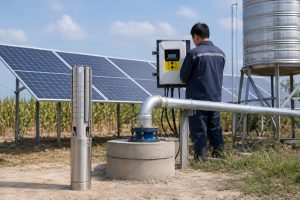
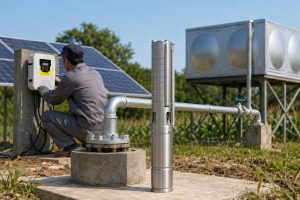
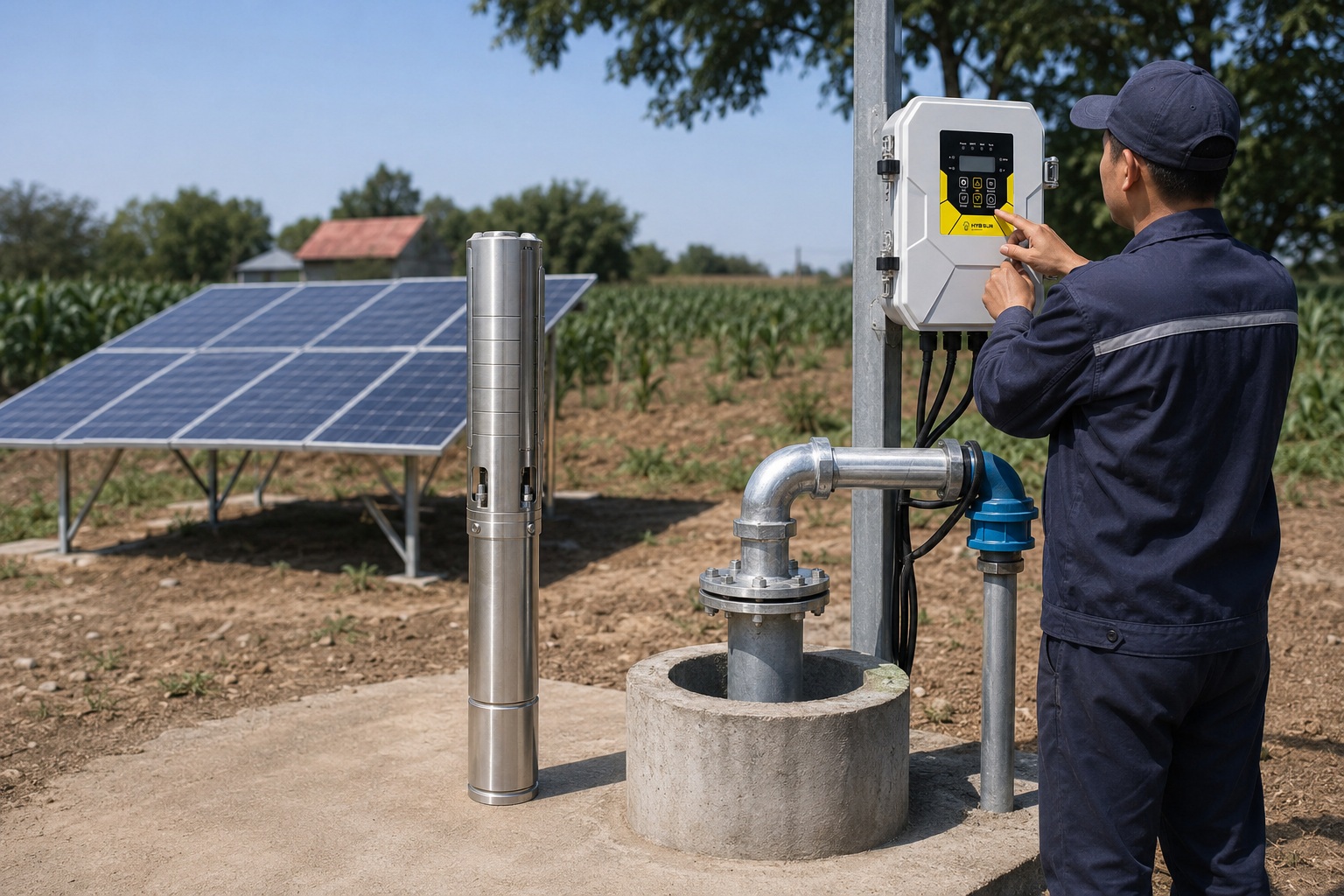
The best pressure pump for off-grid areas is a solar-powered one.
These systems use high-efficiency BLDC motors to provide reliable water pressure for deep wells and irrigation, operating entirely on solar energy without any electricity costs or grid dependence.
The conversation about the "best" water pump is changing.
As the world seeks sustainable and independent solutions, solar water pumps have become a dominant force.
This is especially true in agriculture, livestock farming, and residential water supply in sun-rich regions like Africa, Australia, and the Americas.
The best modern solar pumps are not just a pump with a panel.
They are highly integrated systems designed around a core of incredible efficiency.
This technology is making reliable water access a reality for millions, completely independent of the electrical grid.
The Core of Modern Solar Pumps: The BLDC Motor
The breakthrough in solar pumping is the Brushless DC (BLDC) permanent magnet motor.
This is the heart of the system.
Unlike older motor types with efficiencies around 60-70%, a high-quality BLDC motor can exceed 90% efficiency.
This leap in performance is transformative.
It means the pump can do more work with less power.
Technologically, these motors use powerful rare-earth magnets (like Neodymium Iron Boron) and have no brushes to wear out, making them virtually maintenance-free.
They are also significantly more compact.
A modern BLDC motor can be up to 47% smaller and 39% lighter than a traditional motor of the same power output.
For a distributor or installer, this means a system that requires up to 25% fewer solar panels, reducing the total system cost and simplifying installation.
A Portfolio Approach to Solar Pumping
A single solar pump cannot meet every need.
The best manufacturers offer a portfolio of solutions, each optimized for a specific task.
This allows distributors to serve a wide range of customers, from homeowners with a deep well to farmers with large irrigation needs.
The three primary types of solar deep well pumps each have a distinct profile.
For a distributor in Australia, offering robust stainless steel models is crucial for areas with corrosive or alkaline water.
For a partner in Africa, the sand resistance of a screw pump is a key selling point for deep borehole applications.
The plastic impeller pump offers a high-value option for general agricultural use everywhere.
| Pump Type | Primary Mechanism | Flow/Head Profile | Best For... | Key Advantage | Limitation |
|---|---|---|---|---|---|
| Solar Screw Pump | Stainless Steel Screw | Low Flow / High Head | Deep wells (>100m), livestock, domestic water | High sand resistance, high head | Limited flow rate |
| Solar Plastic Impeller Pump | Multi-stage Centrifugal | High Flow / Medium Head | Farm irrigation, pasture water, large gardens | Economical, wear-resistant against fine sand | Less durable in corrosion |
| Solar Stainless Steel Impeller Pump | Multi-stage Centrifugal | High Flow / High Head | Corrosive water (acidic/alkaline), high-end homes | Superior corrosion resistance, long life | Higher cost and weight |
Beyond the Pump: The Importance of Intelligent Control
A great pump is only one part of an effective water system.
Without proper control, a pump can run inefficiently or not at all.
This wastes energy and leads to an unreliable water supply.
The best pump systems integrate a high-efficiency pump with an intelligent controller.
MPPT controllers maximize solar energy utilization by up to 30%, while AC/DC hybrid controllers guarantee 24/7 water access by automatically switching to grid or generator power when sunlight is insufficient.
In modern water pumping, especially with solar, intelligence matters just as much as muscle.
The controller is the brain of the system.
It manages the flow of power from the source to the motor, optimizing performance and protecting the equipment.
A state-of-the-art pump paired with a basic controller is a system operating at a fraction of its potential.
The leading manufacturers understand this.
They develop their pumps and controllers as a single, cohesive system designed to deliver the most water for the least amount of energy, while providing unparalleled reliability.
What is MPPT and Why Does It Matter?
Maximum Power Point Tracking (MPPT) is a critical technology in solar pump controllers.
Solar panels have a non-linear output that changes with sunlight intensity and temperature.
An MPPT controller constantly tracks this output and adjusts the electrical load on the panels to extract the absolute maximum amount of power available at any given moment.
The difference is significant.
Compared to a basic controller, an MPPT controller can increase the daily water output by up to 30%.
This is especially true during periods of lower light, such as on cloudy days or early in the morning.
For the end-user, this means a longer pumping day and more consistent water flow, all from the same set of solar panels.
The Ultimate in Reliability: AC/DC Hybrid Systems
The biggest concern for any solar-powered system is what happens when the sun isn't shining.
This is where AC/DC hybrid controllers provide the ultimate solution.
These advanced controllers are designed with inputs for both DC power from solar panels and AC power from the grid or a generator.
The system's logic prioritizes solar power first.
When sunlight is abundant, the pump runs entirely on solar.
If clouds roll in and solar power drops, the controller can blend AC power to supplement the solar input, ensuring the pump continues to run.
When there is no solar power available at night, the controller automatically switches to the AC source.
This creates a truly "worry-free" 24/7 water supply, providing the eco-friendly benefits of solar with the absolute reliability of grid power.
This feature is a powerful selling point for distributors, as it completely eliminates the end-user's anxiety about water availability.
Conclusion
The right pump depends on the application.
Global leaders excel in industrial settings, while other brands master residential use.
For off-grid reliability, the best systems combine efficient solar pumps with intelligent AC/DC controllers.
FAQs
What is the most reliable water pump brand?
Brands like Grundfos and Franklin Electric are widely regarded for reliability. However, the best brand truly depends on the specific application, whether it's for a home, industry, or farm.
Which water pump brand is best for residential use?
For home use, brands such as Zoeller, Pentair, and Franklin Electric are popular choices. They offer a great balance of durability, performance, and value for well, sump, and booster pumps.
Are smart water pumps worth it?
Yes, smart pumps are worth it for their efficiency and diagnostic capabilities. They can reduce energy consumption by over 50% and provide predictive maintenance alerts to prevent costly downtime.
What is the best water pump for low water pressure?
A booster pump is the correct solution for low water pressure. Quality manufacturers like Grundfos, DAB, and Pentair offer reliable models that increase and stabilize pressure throughout a home.
How long should a good water pump last?
A quality submersible well pump can last 8 to 15 years, while a sump pump typically lasts 7 to 10 years. Longevity depends heavily on usage frequency and water quality.
What is the most energy-efficient water pump?
Pumps powered by Brushless DC (BLDC) motors and equipped with variable speed drives are the most energy-efficient. Their motor efficiency can exceed 90%, significantly reducing power consumption.
What's the difference between a grinder pump and a sewage pump?
A sewage pump is designed to pass larger solid waste (up to 2 inches). A grinder pump macerates all waste into a fine slurry, allowing it to be pumped through smaller-diameter pipes.
Can you use a regular pump for a solar setup?
It's not ideal. A dedicated DC pump is far more efficient for a direct solar setup. An AC pump can be used, but it requires a solar inverter, which adds cost and reduces overall system efficiency.