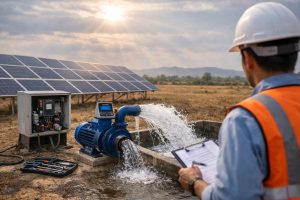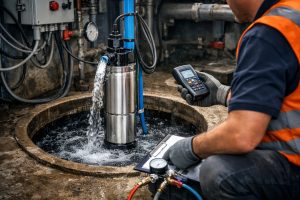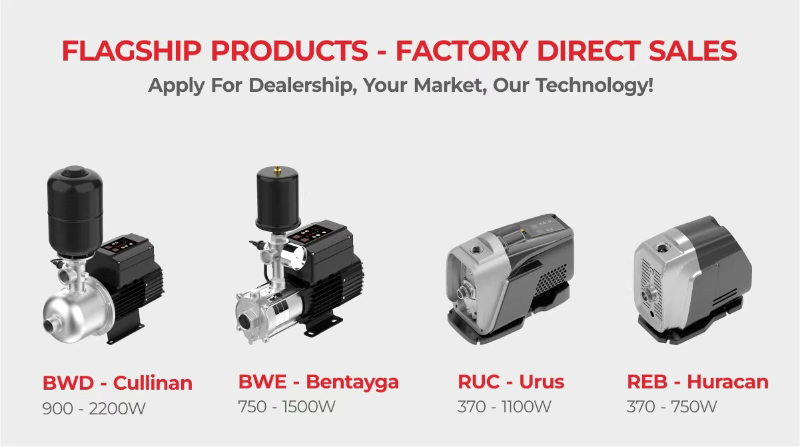
Struggling to build a product portfolio that meets diverse customer demands for off-grid water solutions?
The wrong pump selection can lead to lost sales and operational headaches.
Offering a strategic mix of specialized solar pumps is the key to capturing the market.
The best solar deep well pump depends entirely on the application\'s specific needs for flow, head, and water quality. For deep wells, choose a screw pump. For high-volume irrigation, a plastic impeller pump is ideal. For corrosive water, a stainless steel impeller pump is essential.
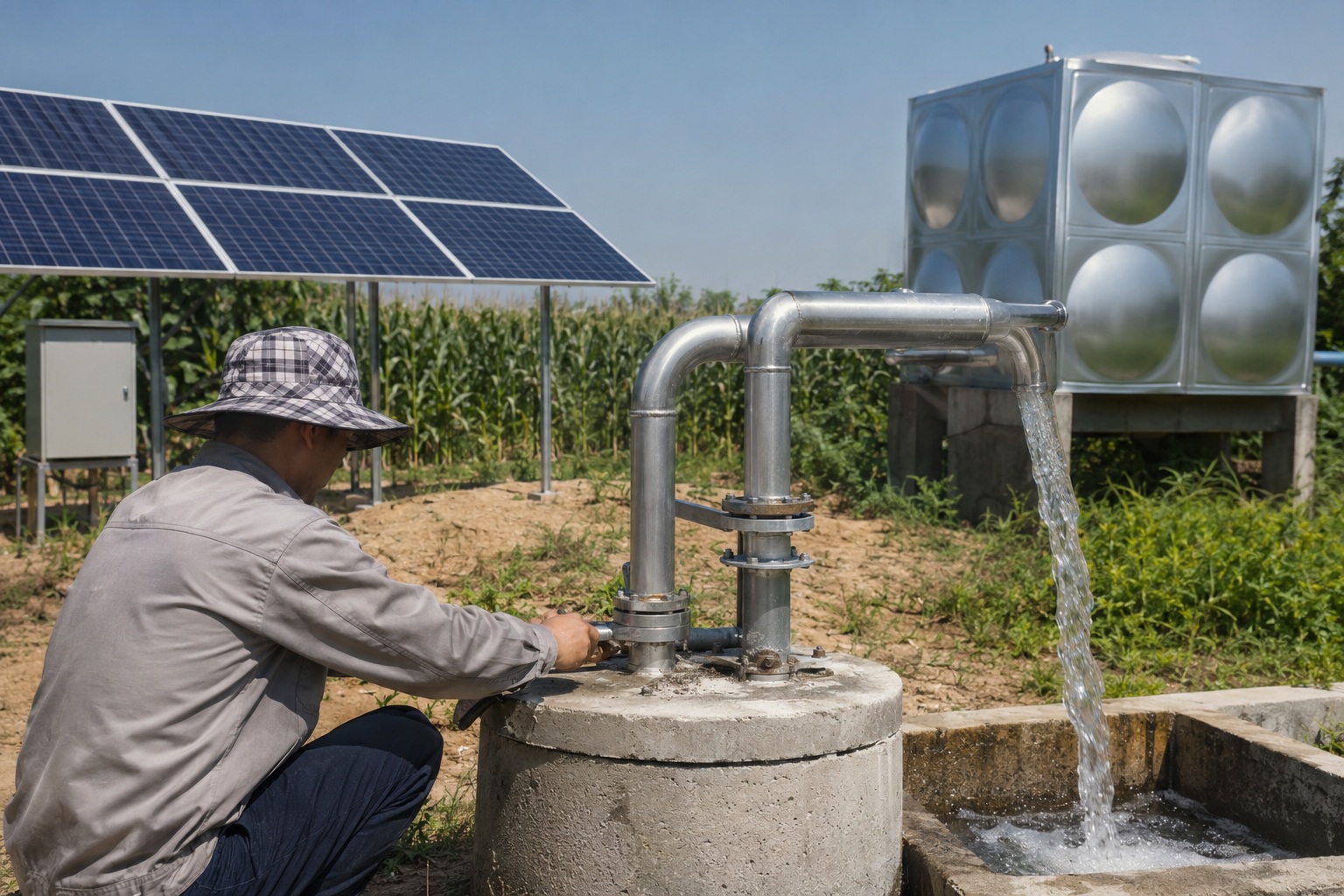 Choosing the right solar deep well pumps for your inventory can feel overwhelming.
With demand soaring in regions like Africa, the Americas, and Australia, distributors need a clear strategy.
You need to know which pump to recommend for a small homestead versus a large farm.
This requires a deeper understanding of the technology behind each pump type.
By breaking down the three most popular models, you can build a competitive and profitable product lineup.
Let\'s dive into the specifics of each pump to see how they fit into a winning sales strategy.
Solar Screw Pump: The High-Head Specialist
Do your customers need to pull water from extremely deep wells where other pumps fail?
This is a common problem in arid regions with low water tables.
Recommending the wrong pump leads to system failure and a loss of customer trust.
A solar screw pump is the definitive solution for low-flow, high-head applications. Its unique design allows it to push water from incredible depths and handle sandy conditions, making it perfect for domestic water supply in challenging environments.
The solar screw pump, also known as a progressive cavity pump, is a true problem-solver for specific scenarios.
Its core strength lies in its ability to generate very high pressure, or head.
This makes it the go-to choice for wells that are significantly deeper than average.
Understanding its mechanics and ideal use cases is crucial for positioning it correctly in your product catalog.
It serves a vital niche that other pump types simply cannot fill effectively.
How a Screw Pump Generates High Head
The magic of the screw pump is in its simple yet powerful design.
It uses a single helical rotor, which looks like a corkscrew, rotating inside a rubber stator.
As the stainless steel screw turns, it forms a series of sealed cavities with the stator.
These cavities "progress" from the pump\'s inlet to its outlet, pushing a fixed volume of water with each rotation.
This positive displacement action is what creates the immense pressure.
Unlike centrifugal pumps that "throw" water, the screw pump "pushes" it.
This method is less dependent on rotational speed for generating pressure.
It can therefore maintain high head even at lower motor speeds, which is a significant advantage in variable solar conditions.
Performance Profile: Low Flow, High Head
The defining characteristics of a solar screw pump are its flow and head capabilities.
It is engineered to prioritize pressure over volume.
This trade-off is essential for deep well applications where the primary challenge is lifting water, not moving large quantities of it.
| --- | ||||||
|---|---|---|---|---|---|---|
| Flow Rate | Low | 1-4 m³/hour | ||||
| Maximum Head | Very High | Up to 200+ meters | ||||
| Sand Resistance | Excellent | Can handle up to 3% sand content | ||||
| Efficiency at Peak | Good | 75-85% | ||||
| Initial Cost | Moderate | Higher than plastic impeller pumps |
Ideal Applications and Target Markets
This pump is not designed for large-scale agricultural irrigation.
Its strength is in providing reliable water for daily life in hard-to-reach places.
Key Applications:
- Domestic Water Supply: Providing water for homes and small communities in off-grid areas with deep wells.
- Livestock Drinking Water: Supplying water to troughs in remote pastures where groundwater is far below the surface.
- Small-Scale Drip Irrigation: Suitable for small garden plots or orchards where high volume is not the primary need.
Geographically, these pumps are in high demand across Africa and parts of Latin America.
These regions often contend with deep water tables and a lack of reliable grid electricity.
Offering a robust screw pump can make you the preferred supplier in these markets.
Solar Plastic Impeller Pump: The High-Flow Workhorse
Are your agricultural clients demanding a cost-effective way to irrigate their fields?
They need high volumes of water, but budget constraints are always a concern.
Standard pumps may be cheap but often fail quickly in water with fine sand, leading to frequent replacements.
The solar plastic impeller pump is a high-flow, wear-resistant solution designed for farm irrigation and general water supply. This multi-stage centrifugal pump delivers impressive water volume at a medium head, offering an excellent balance of performance and economy.
When the goal is moving a lot of water without breaking the bank, the plastic impeller centrifugal pump shines.
This model is the most common type of solar pump for a reason.
It addresses the widespread need for irrigation and livestock water supply in sunny regions.
Its design focuses on maximizing water output (flow rate) at a reasonable lifting height (head).
The use of engineered plastic for the impellers is a key feature that provides both performance and value.
For distributors, this pump is a high-volume seller that caters to the largest segment of the market.
Multi-Stage Centrifugal Design
This pump works on the centrifugal principle.
A motor spins an impeller, which is a disc with angled vanes.
Water enters the center of the impeller and is thrown outward by centrifugal force.
This action increases the water\'s velocity and pressure.
A "multi-stage" design means the pump contains several impellers and diffusers stacked in a series.
Water passes from one stage to the next, with each stage adding more pressure.
This allows the pump to achieve a higher head than a single-stage pump while still maintaining a high flow rate.
The number of stages directly correlates to the maximum head the pump can produce.
A 6-stage pump, for example, will generate more pressure than a 4-stage pump of the same diameter.
Why Use Plastic Impellers?
The term "plastic" can sometimes be misleading.
The impellers are made from high-strength, wear-resistant engineering polymers like Noryl.
This material offers several distinct advantages.
Key Advantages:
- Wear Resistance: These polymers have excellent resistance to abrasion from fine sand, outperforming cast iron in many common well conditions. This extends the pump\'s life.
- Cost-Effectiveness: Manufacturing polymer impellers is more economical than casting and machining stainless steel ones, which lowers the pump\'s final price.
- Lightweight: A lighter pump is cheaper to ship and easier for a single person to install, reducing total project costs for the end-user.
Performance and Economic Value
This pump\'s profile is geared towards productivity.
It is designed to be the economic engine for farms, ranches, and large gardens.
| --- | ||||||
|---|---|---|---|---|---|---|
| High Flow Rate | Often exceeds 10 m³/hour | Meets the needs of irrigation, attracting the large agricultural customer base. | ||||
| Medium Head | Typically 40-80 meters | Suitable for the majority of wells that are not exceptionally deep. | ||||
| Economical Price | Lower initial cost | Makes solar pumping solutions accessible to a wider range of customers. | ||||
| Good Sand Resistance | Handles fine sand well | Reduces warranty claims and increases customer satisfaction in typical well conditions. |
However, it\'s important to recognize its limitations.
This pump is not ideal for very deep wells (over 80-100 meters) or for water that is highly corrosive.
Positioning it correctly is key to customer success.
Solar Stainless Steel Impeller Pump: The Premium Durability Expert
Do you have customers in regions with aggressive water that destroys standard pumps?
Corrosion from acidic or alkaline water can cause pumps to fail in as little as a year.
This leads to frustrated customers and damages your reputation for quality.
The solar stainless steel impeller pump is the ultimate solution for corrosive water environments. Built with SS304 components, it offers unmatched durability and a long service life, justifying its premium position for high-end and specialized applications.
When water quality is the biggest enemy, material science becomes the most important feature.
This premium pump is built to withstand chemical attacks that would decimate lesser materials.
While it carries a higher price tag, its value is realized through longevity and reliability.
It is the right choice for customers who prioritize long-term performance over short-term cost savings.
Offering this pump demonstrates your commitment to providing solutions for even the most challenging water conditions.
It targets a niche but highly profitable segment of the market.
The Power of SS304 Stainless Steel
The key to this pump\'s resilience is its construction material.
SS304 is a specific grade of stainless steel known for its excellent corrosion resistance.
It contains high amounts of chromium and nickel, which form a passive, protective layer on the surface.
This layer self-repairs when scratched, preventing rust and degradation.
| --- | ||||||||
|---|---|---|---|---|---|---|---|---|
| Acidic Water (pH < 6.5) | Fair to Poor | Poor (Rapid Corrosion) | Excellent | |||||
| Alkaline Water (pH > 8.5) | Good | Fair | Excellent | |||||
| High Salinity | Poor (Becomes Brittle) | Poor (Pitting Corrosion) | Very Good |
This material choice ensures the pump maintains its structural integrity and hydraulic efficiency for years.
The entire "wet end" of the pump, including the impellers, diffusers, and pump body, is typically made from stainless steel.
Target Applications for High-Value Markets
This pump is not for every customer, but it is indispensable for some.
Its application is defined by water chemistry rather than well depth.
Prime Use Cases:
- Regions with Alkaline Soils: Areas like those found in parts of Australia often have alkaline groundwater that is corrosive to standard pumps.
- Industrial or Mining Runoff Areas: Water in these regions can be acidic and requires a pump that can resist chemical attack.
- High-End Homes and Ranches: For property owners who want a set it and forget it solution and are willing to invest in the highest quality equipment.
- Coastal Areas: While not a desalination pump, its higher resistance to salinity makes it a better choice than plastic for wells with some saltwater intrusion.
Justifying the Higher Cost
The primary objection to this pump will be its price.
It is crucial to frame the conversation around Total Cost of Ownership (TCO).
A stainless steel pump might cost 40-60% more upfront than a plastic impeller model.
However, if it lasts 2-3 times longer, the long-term cost is significantly lower.
For example, in a corrosive well, a plastic pump might last 2 years, while a stainless steel pump could last 7-10 years.
The customer avoids the cost and hassle of replacing the pump multiple times.
This TCO argument is a powerful sales tool for sophisticated buyers.
BLDC Motor: The High-Efficiency Heart of the System
Are your customers complaining about the high cost of the solar panels needed for a pump system?
The initial investment in a large solar array can be a major barrier to a sale.
Many distributors don\'t realize that the pump\'s motor is the key to solving this problem.
The core of a modern solar pump is the high-efficiency BLDC motor. With efficiency rates exceeding 90%, it requires up to 25% fewer solar panels than older motor technologies, drastically reducing the total system cost and making solar water solutions more affordable.
The pump head—be it screw or centrifugal—is only one half of the equation.
The motor that drives it is equally, if not more, important.
All three pump types discussed are powered by a Brushless DC (BLDC) permanent magnet motor.
This advanced motor technology is the secret behind the performance and competitiveness of modern solar pump systems.
Understanding its value is essential for explaining why your systems are superior to cheaper, less efficient alternatives.
It is the technological core that drives down costs and increases reliability.
What Makes BLDC Motors Superior?
A BLDC motor is fundamentally different from older brushed DC or standard AC motors.
It uses powerful permanent magnets on the rotor (made of materials like 40SH neodymium iron boron) and electronic controllers to switch the electromagnets in the stator.
This design eliminates the physical brushes found in traditional DC motors.
Key Technical Advantages:
- High Efficiency: No energy is lost to friction from brushes. This allows efficiencies to exceed 90%, compared to 60-75% for brushed motors.
- Long Lifespan: With no brushes to wear out, the motor is virtually maintenance-free and can operate for over 25,000 hours.
- Compact & Lightweight: The high power density means the motors can be much smaller and lighter. A BLDC motor can be up to 47% smaller and 39% lighter than a traditional motor of the same power output.
- High Torque: They provide high starting torque, which is essential for getting water moving from a deep well or starting a pump against pressure.
The Impact of 90%+ Efficiency on System Cost
The motor\'s efficiency has a direct and significant impact on the customer\'s wallet.
The main job of the motor is to convert electrical energy from the solar panels into mechanical energy to turn the pump.
An inefficient motor wastes a large portion of this energy as heat.
Let\'s compare a 1HP (750W) pump system.
| --- | ||||||||
|---|---|---|---|---|---|---|---|---|
| BLDC Motor | 92% | 815 W | 4 x 250W Panels (1000W) | |||||
| Brushed DC Motor | 70% | 1071 W | 5 x 250W Panels (1250W) |
*Calculated as Pump Power / Motor Efficiency. A panel array must be oversized to account for non-ideal conditions.
A system with a BLDC motor requires one fewer solar panel.
At a cost of $150-$250 per panel, that\'s a direct saving for the customer.
This makes your total system price more competitive and the investment more attractive.
The Role of the MPPT Controller
The BLDC motor works in tandem with an intelligent Maximum Power Point Tracking (MPPT) controller.
The controller constantly adjusts the electrical load of the motor to match the solar panels\' output.
It ensures the panels are always operating at their peak efficiency, regardless of the sun\'s intensity.
This synergy between the MPPT controller and the BLDC motor maximizes the amount of water pumped per watt of solar energy generated.
It\'s this complete system—pump head, BLDC motor, and MPPT controller—that creates a truly efficient and reliable water solution.
Hybrid AC/DC Systems: Ensuring 24/7 Water Access
Does the fear of cloudy days or nighttime water needs stop your customers from committing to solar?
The reliance on sunshine is the single biggest perceived drawback of a standard solar pump system.
This uncertainty can be a significant barrier to closing a sale.
Hybrid AC/DC controllers eliminate this concern by offering a dual-power solution. The system runs on free solar energy when available and automatically switches to AC grid or generator power when it\'s not, ensuring an uninterrupted, 24/7 water supply.
The evolution of solar pumping has moved beyond just being an off-grid solution.
With the development of hybrid controllers, solar pumps are now a compelling option for grid-connected customers as well.
This technology provides energy savings without sacrificing the reliability of a conventional electric pump.
It represents a massive expansion of the potential market for your products.
By offering hybrid systems, you can target not only remote farms but also suburban homes, commercial properties, and anyone looking to reduce their electricity bills.
How Hybrid Power Management Works
The intelligence of the system lies in the AC/DC hybrid controller.
This controller is designed with two separate power inputs: one for DC power from the solar panels and one for AC power from the grid or a generator.
It constantly monitors the availability of solar power and manages the energy source automatically.
The Operating Logic:
- Sufficient Sunlight: The controller prioritizes solar power, using 100% free energy from the panels to run the pump. The AC input remains on standby.
- Insufficient Sunlight (e.g., a cloudy spell): When solar input drops below the level needed to run the pump, the controller activates a hybrid function. It blends AC power with the available DC power, maximizing the use of every bit of solar energy before drawing more from the grid.
- No Sunlight (Night or Heavy Overcast): When the solar input is zero or negligible, the controller seamlessly switches over to 100% AC power.
The end-user experiences no interruption in their water supply.
The entire process is automatic, requiring no manual switching.
Expanding Your Market with Hybrid Solutions
A standard DC-only solar pump is limited to the off-grid market.
A hybrid AC/DC pump system opens up a much larger and more lucrative market segment.
| --- | ||||||
|---|---|---|---|---|---|---|
| Off-Grid Farmer | Water during the day | Uses solar for irrigation. Can connect a generator for nighttime use if needed. | ||||
| Grid-Connected Homeowner | Lower electricity bills | Uses solar during the day to fill a tank or for irrigation, reducing grid consumption. Has grid backup for guaranteed water 24/7. | ||||
| Small Commercial Operation | Cost reduction & reliability | Reduces operational costs with solar power while maintaining the complete reliability required for a business. | ||||
| Community Water Project | Uninterrupted supply | Guarantees water is always available to the community, powered by solar when possible and the grid when necessary. |
This feature transforms the solar pump from a niche product into a mainstream energy-saving appliance.
It\'s a powerful argument for customers who are on the grid but want the economic and environmental benefits of solar.
It provides peace of mind, which is often the final factor in a purchasing decision.
Conclusion
A successful solar pump business relies on a flexible and strategic product portfolio.
It\'s not about one pump, but the right pump for the right job.
By pairing specialized pump heads with high-efficiency motors and hybrid controllers, you can meet any customer need and dominate the market.
FAQs
How long do solar water pumps last?
A well-maintained solar pump system can last 15-20 years. The pump motor and controller often last over 10 years, while solar panels are typically warrantied for 25 years.
Can a solar pump work without a battery?
Yes, most solar water pumps are designed to work directly from solar panels during the day. Batteries are only needed if you require water storage for nighttime use.
How many solar panels are needed for a water pump?
This depends on the pump\'s power rating and your location\'s sunlight. A high-efficiency BLDC motor can reduce the number of panels needed by up to 25%.
Can solar pumps run at night?
A standard solar pump only runs when the sun is out. To run at night, you need either a battery bank or a hybrid AC/DC controller connected to grid/generator power.
What maintenance do solar pumps require?
Solar pump systems are very low-maintenance. The main tasks are to keep the solar panels clean and occasionally inspect the wiring and plumbing for any issues.
How deep can a solar pump go?
It depends on the pump type. Solar screw pumps are designed for deep wells and can lift water from over 150 meters, while centrifugal pumps are for shallower depths.
Are solar water pumps a good investment?
Yes, especially for off-grid locations or to reduce electricity bills. The return on investment is often 2-3 years, after which you get free water powered by the sun.
What is the difference between a solar submersible pump and a surface pump?
A submersible pump is placed down inside the well, underwater. A surface pump sits on the ground and pulls water from a shallow source like a pond or tank.