Struggling with unreliable water access or high electricity bills for your pump?
You need a solution that is both cost-effective and dependable, especially in off-grid areas.
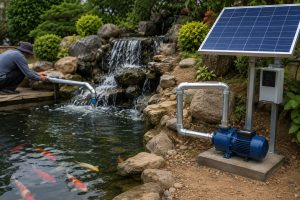
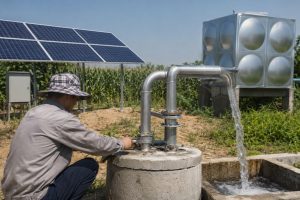
Yes, a small solar panel can absolutely power a water pump.
The key is pairing it with a high-efficiency brushless motor and an intelligent controller.
This combination minimizes the number of panels needed, making solar-powered water pumping an affordable and reliable solution for various needs.
This technology isn't a far-off dream.
It's a practical reality for farms, homes, and communities worldwide.
The secret lies not just in the solar panel itself, but in the efficiency of the entire system.
By understanding how these components work together, you can unlock a sustainable and independent water source.
Let's explore how modern advancements make this powerful combination more accessible than ever.
Why Water Movement is Crucial for Your Needs
Relying on stagnant water for livestock or crops is a huge risk.
It can lead to disease, poor growth, and financial loss.
You need a reliable way to keep water fresh and oxygenated.
Consistent water circulation is vital for health and productivity.
It prevents the buildup of harmful toxins, reduces algae, and ensures water is safe for livestock and effective for irrigation.
A good pump is the heart of a healthy water system.
The importance of moving water goes far beyond just preventing it from looking murky.
In any water storage system, from a small pond to a large agricultural tank, a lack of circulation creates a dangerous environment.
Without movement, the water becomes stratified, with different layers having vastly different temperatures and oxygen levels.
This process quickly depletes the dissolved oxygen that is essential for a healthy aquatic ecosystem and for keeping the water fresh.
The Dangers of Low Oxygen
Low oxygen levels, a condition known as hypoxia, trigger a cascade of negative effects.
Fish and other aquatic life become stressed and may die off within as little as 6 to 12 hours in warm conditions.
Harmful anaerobic bacteria thrive in these environments.
They break down waste and organic matter, releasing toxic substances like ammonia and hydrogen sulfide.
This not only creates foul odors but also contaminates the water, making it unsafe for livestock to drink and unsuitable for crops.
Preventing Stagnation and Contamination
A pump solves this by creating constant water movement.
This circulation serves two primary purposes.
First, it forces the water to interact with the surface air, naturally infusing it with oxygen.
Second, it eliminates dead zones where waste can accumulate and decompose anaerobically.
By keeping the water homogeneous and well-oxygenated, a pump maintains a stable, healthy environment.
This prevents toxic spikes, suppresses excessive algae growth, and ensures the water remains a valuable asset rather than a liability.
| Feature | Stagnant Water | Circulated Water |
|---|---|---|
| Oxygen Level | Very Low (<2 mg/L) | High & Stable (>5 mg/L) |
| Toxin Buildup | High (Ammonia, Nitrites) | Low to None |
| Bacteria Type | Harmful Anaerobic | Beneficial Aerobic |
| Algae Growth | Uncontrolled & Excessive | Controlled & Balanced |
| Safety for Livestock | Unsafe / Dangerous | Safe & Healthy |
The Heart of the System: How Solar Pumps Work
You might think solar pump systems are complicated and inefficient.
Worried that they won't provide the power you need when you need it?
A modern solar pump system is simple, robust, and surprisingly powerful.
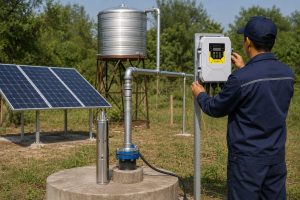
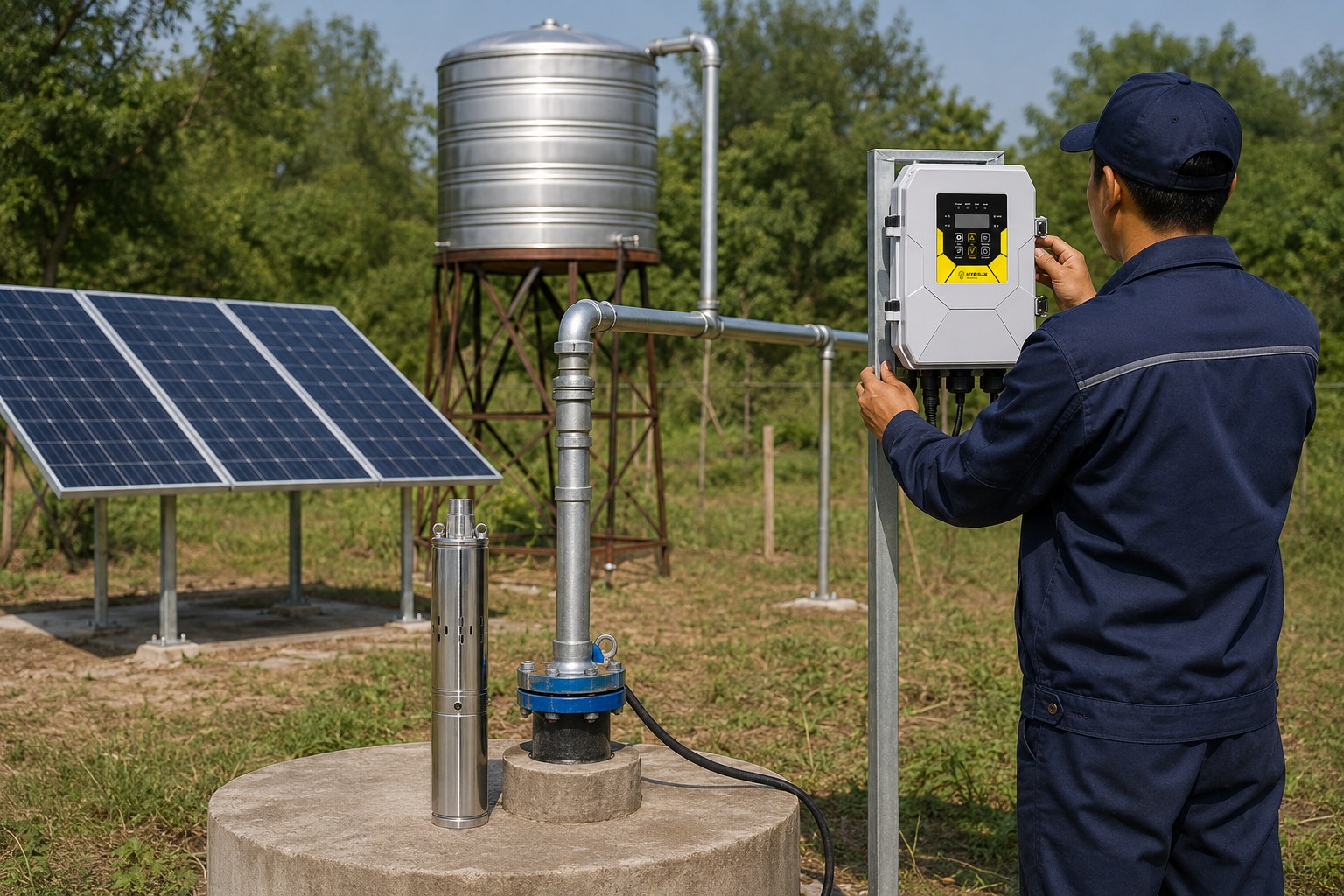
A solar pump works by converting sunlight into electrical energy to drive a highly efficient motor.
An intelligent controller manages this power, ensuring the pump runs optimally even in varying light conditions.
This synergy delivers reliable water flow without relying on the grid.
The magic of a solar water pump isn't in a single component, but in how three key parts work together seamlessly.
It's a straightforward yet powerful setup designed for efficiency and longevity.
Understanding this system demystifies the technology and reveals why it's such a reliable solution for off-grid water needs.
The entire process begins with the sun and ends with flowing water, powered by remarkable engineering.
The Power Source: Photovoltaic (PV) Panels
This is the most visible part of the system.
Solar panels, or photovoltaic modules, are made of semiconductor cells that convert sunlight directly into DC (Direct Current) electricity.
When sunlight hits the panel, it energizes electrons, creating an electrical current.
The amount of power generated depends on the panel's size and the intensity of the sunlight.
The key is that they produce power with no moving parts, making them incredibly durable and maintenance-free.
The Brains: The MPPT Controller
The electricity from the panels doesn't go directly to the pump.
It first flows to a crucial device called a Maximum Power Point Tracking (MPPT) controller.
Think of the MPPT controller as the system's brain.
Its job is to constantly adjust the electrical load to extract the maximum possible power from the solar panels as sunlight conditions change throughout the day.
This smart management can boost the system's output by up to 30% compared to a direct connection, ensuring the pump works efficiently from dawn until dusk.
The Muscle: The Brushless DC (BLDC) Motor
The controller sends the optimized power to the motor, which is the muscle of the operation.
The most advanced solar pumps use Brushless DC (BLDC) permanent magnet motors.
Unlike older brushed motors, these are electronically controlled, eliminating friction and parts that wear out.
This results in astonishing efficiency levels, often exceeding 90%.
They are also significantly more compact and powerful for their size.
A BLDC motor can be 47% smaller and 39% lighter than a traditional motor with the same output, making installation easier and reducing the overall system cost.
| Feature | Traditional AC Motor | High-Efficiency BLDC Motor |
|---|---|---|
| Efficiency | 50-70% | >90% |
| Maintenance | Requires regular brush replacement | Maintenance-free |
| Lifespan | Shorter | Significantly Longer |
| Size & Weight | Larger & Heavier | Up to 47% Smaller, 39% Lighter |
| Control | Limited | Precise speed & torque control |
Choosing the Right Tool: Types of Solar Deep Well Pumps
You know you need a solar pump, but your well is deep and the water is sandy.
Using the wrong pump could mean low pressure, constant clogging, and premature failure.
You need a solution designed for your specific water conditions.
Choosing the right pump type is critical for performance and longevity.
Whether you need high pressure for a deep well, high flow for irrigation, or corrosion resistance for harsh water, there is a specialized solar pump designed for the job
A solar pump isn't a one-size-fits-all solution.
The actual pump mechanism, the part that moves the water, must be matched to the water source and the application.
For deep wells, three main types of solar pumps dominate the market, each with unique strengths.
These pumps are all driven by the same ultra-efficient BLDC motor technology but use different methods to move water.
Selecting the correct one ensures you get the performance you expect and a system that lasts for years.
The Deep-Well Specialist: Solar Screw Pumps
When you need to lift water from extreme depths, a solar screw pump is the ideal choice.
This pump uses a single helical rotor (the screw) that spins inside a flexible rubber stator.
This action creates sealed cavities of water that are pushed progressively up towards the surface.
This design generates very high pressure (head) but at a lower flow rate.
Its major advantage is an exceptional resistance to sand and grit, which would quickly destroy other pump types.
This makes it perfect for domestic water supply and livestock watering in areas with deep boreholes and less-than-perfect water quality.
The High-Volume Workhorse: Solar Plastic Impeller Pumps
For applications that demand more water, like farm irrigation or filling large tanks, a multi-stage centrifugal pump with plastic impellers is the go-to.
This pump uses a series of stacked impellers that spin at high speed, adding energy to the water at each stage to push it to the surface.
They are designed to deliver high flow rates at a medium head.
The use of engineered, wear-resistant plastic for the impellers makes these pumps lightweight and highly economical.
They offer excellent performance and good resistance to fine sand, making them a popular, cost-effective choice for agriculture and general water supply.
The Premium Performer: Solar Stainless Steel Impeller Pumps
In environments with corrosive water, such as high acidity or alkalinity, durability is paramount.
This is where solar pumps with stainless steel impellers excel.
These pumps operate on the same multi-stage centrifugal principle but use high-grade SS304 stainless steel for the impellers and pump housing.
This material provides superior resistance to corrosion and abrasion, ensuring a very long service life even in harsh water conditions.
While they come at a higher initial cost, they are the most reliable long-term investment for high-end homes, ranches, and regions with challenging water chemistry.
| Pump Type | Best For | Flow Rate | Head (Pressure) | Sand Resistance | Key Advantage |
|---|---|---|---|---|---|
| Solar Screw Pump | Deep Wells, Homes | Low | Very High | Excellent | Handles depth & sand |
| Plastic Impeller Pump | Irrigation, Farms | High | Medium | Good | High flow, economical |
| SS Impeller Pump | Corrosive Water | High | Medium-High | Very Good | Ultimate durability |
Making it Work: Sizing Your Solar Panel and Pump
You're ready to go solar, but you're worried about mismatching the components.
An undersized panel will leave you without water, while an oversized one is a waste of money.
Getting the balance right feels like a complex puzzle.
Correctly sizing your panel to your pump is simple and ensures optimal performance.
The key is to match the solar panel's wattage to the pump's power requirement, with a small buffer.
An efficient pump motor dramatically reduces the size and cost of the required panel.
The question "Can a small solar panel power a water pump?" is answered right here, in the matching of components.
Thanks to modern high-efficiency motors, the answer is a resounding yes.
A pump that uses less energy simply requires a smaller, less expensive solar array to do the same amount of work.
But getting it right involves a few simple considerations to ensure your system is both effective and economical.
Understanding Pump and Panel Wattage
Every pump has a power rating in watts (W), which is the energy it consumes to operate.
Every solar panel also has a wattage rating, which is the maximum power it can produce under ideal test conditions.
The fundamental rule is that the solar panel array's total wattage must be greater than the pump motor's wattage.
As a general rule of thumb, it's best to size the solar array to be about 1.5 times the pump's wattage rating.
For example, a 250W pump would be ideally paired with a solar array of around 375W.
This 50% buffer accounts for real-world factors like cloudy weather, high temperatures, and low sun angles, ensuring the pump receives enough power to start and run effectively throughout the day.
The Role of Head and Flow
When selecting a pump, you also need to consider your "Total Dynamic Head" (the total vertical height the water must be lifted plus friction loss in the pipes) and your required "Flow Rate" (how much water you need, measured in gallons or liters per hour).
A pump's performance chart will show you its flow rate at different head levels.
Choosing a pump that efficiently meets your head and flow requirements is crucial before you even think about the solar panel.
An oversized pump will waste energy, while an undersized one won't deliver the water you need.
The Hybrid AC/DC Advantage
For applications requiring water 24/7, regardless of sunshine, a hybrid system is the ultimate solution.
Advanced controllers are available that can accept both DC power from solar panels and AC power from the grid or a generator.
The controller automatically prioritizes solar power.
When sunlight is insufficient, it seamlessly blends in or switches completely to the AC source.
This ensures you have a reliable water supply around the clock while maximizing the use of free energy from the sun.
| Scenario | Pump Power (W) | Min. Solar Panel (W) | Recommended Panel (W) |
|---|---|---|---|
| Small Domestic Well | 150W | 150W | ~225W |
| Livestock Watering | 300W | 300W | ~450W |
| Small Farm Irrigation | 750W | 750W | ~1125W |
Conclusion
Yes, a small solar panel can power a water pump.
The success lies in combining it with a high-efficiency motor and smart controller, creating an affordable, reliable, off-grid water solution.
FAQs
How many solar panels does it take to run a water pump?
It depends on the pump's wattage.
A small 150W pump may only need one or two panels, while larger pumps require more.
Efficiency is key.
Can a 100-watt solar panel run a water pump?
Yes, it can run a very small DC pump, typically a feature or fountain pump with low wattage, around 50-70W.
It's not suitable for most well pumps.
How long will a solar pump run?
A solar pump runs whenever there is sufficient sunlight, typically 6-8 hours a day.
With a battery backup or hybrid controller, it can run 24/7.
Are solar-powered water pumps any good?
Yes, they are excellent.
Modern systems are highly reliable, efficient, and cost-effective for off-grid water needs, with very low operating costs and long lifespans.
Do solar pumps work on cloudy days?
Yes, but at a reduced flow rate.
The MPPT controller maximizes the limited power, and hybrid systems can supplement with AC power if needed.
What size solar pump do I need?
This depends on your water depth (head) and required flow rate.
Calculate your daily water needs and total vertical lift to select the correct pump model.
How deep can a solar water pump go?
Solar pumps can service a wide range of depths.
Solar screw pumps are specifically designed for very deep wells, capable of lifting water from over 200 meters (650+ feet).
How much does a solar water pump system cost?
Costs vary widely based on pump size, depth, and panel requirements.
Small domestic systems can start from a few hundred dollars, while large irrigation systems cost several thousand.