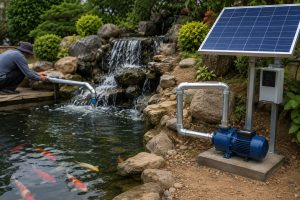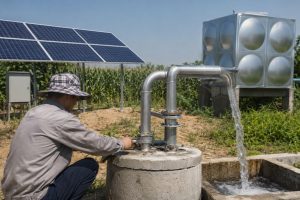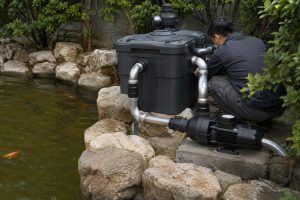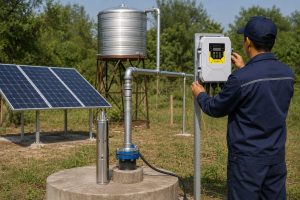
Struggling to find the right pump for your water feature?
The wrong choice can lead to poor circulation, cloudy water, and a disappointing waterfall.
Let's find the perfect heart for your pond.
The best pump for a pond depends entirely on your specific needs. For small decorative features, a mag-drive pump is ideal. For waterfalls, you must calculate flow rate and head pressure to select a powerful asynchronous or direct-drive pump that can circulate the pond's volume every 1-2 hours.
Choosing a pump can feel overwhelming with all the options available.
It's the single most important piece of equipment for keeping your pond healthy and beautiful.
A pump is not just about moving water; it's about creating a living ecosystem.
To make the right choice, you need to understand a few key factors that determine a pump's performance.
Let's break down the process so you can shop with confidence and ensure your water feature looks its best.
How to Choose a Pump for Your Pond
Are you building a new pond or replacing an old pump?
The sheer number of options can be confusing, leading to a purchase that doesn't meet your expectations.
To choose a pump, first identify its application (fountain, filter, or waterfall). Then, calculate the required flow rate (GPH) and total head pressure (vertical lift + tubing length). Match these numbers to a pump's performance chart to find the perfect fit for your feature.
Dive Deeper into Pump Selection
Choosing the right pump is a science.
It ensures your water is filtered properly and your waterfall has the desired visual effect.
Let's explore the critical measurements and calculations you need to make an informed decision.
Understanding Your Application
The first step is to define the pump's job.
Different applications have vastly different requirements.
- Fountains or Spitters: These decorative features typically require lower flow rates. The goal is a gentle stream or spray, not massive water movement. A small, efficient pump is usually sufficient.
- Filtration Systems: Your filter has a specific flow rate for optimal performance. A pump that is too powerful can force water through the filter too quickly, reducing its effectiveness. A pump that is too weak won't circulate enough water. Check your filter's manual for the recommended Gallons Per Hour (GPH).
- Waterfalls and Streams: This is where calculations become crucial. The look of your waterfall is directly determined by the pump's output. A weak pump results in a disappointing trickle, while a strong pump creates a powerful, sheeting cascade.
Calculating Minimum Pump Size
A common rule of thumb is to circulate the entire volume of your pond at least once every two hours.
This means for a 2,000-gallon pond, you need a pump with a flow rate of at least 1,000 GPH.
However, this is a bare minimum for basic circulation.
If you have fish, especially koi, you should double this rate.
So, for that same 2,000-gallon pond with fish, you should aim for a 2,000 GPH pump.
This ensures ample oxygenation and waste removal, keeping your fish healthy.
But remember, the size of your waterfall or stream often overrides this calculation and becomes the primary factor.
Mastering Head Pressure and Flow Rate
These two factors are the most important for sizing a waterfall pump.
-
Head Pressure: This is the total resistance the pump has to overcome. It's a combination of vertical lift and friction from the tubing.
- Vertical Lift: Measure the vertical distance from the pond's water surface to the very top of the waterfall.
- Tubing Friction: For every 10 feet of flexible tubing, add 1 foot of head pressure.
- Example: A waterfall that is 4 feet high with 20 feet of tubing has a total head pressure of 6 feet (4' vertical + 2' from tubing).
-
Flow Rate for Waterfalls: This determines how much water flows over the weir (the edge of the waterfall).
- Average Flow: A good starting point is 1,500 GPH for every 1 foot of waterfall width. A 2-foot wide waterfall would need a 3,000 GPH pump.
- Heavy Flow: For a more dramatic, powerful look, use 2,000 GPH per foot of width. That same 2-foot waterfall would now need a 4,000 GPH pump.
| Waterfall Width | Desired Flow | Recommended GPH |
|---|---|---|
| 1 foot | Average | 1,500 GPH |
| 1 foot | Heavy | 2,000 GPH |
| 2 feet | Average | 3,000 GPH |
| 2 feet | Heavy | 4,000 GPH |
| 3 feet | Average | 4,500 GPH |
| 3 feet | Heavy | 6,000 GPH |
Once you have your required head pressure and flow rate, you can look at pump performance charts.
Using our example, you'd need a pump that delivers 4,000 GPH at 6 feet of head.
You would find a pump model whose chart shows it produces approximately that flow at that specific head pressure.
Types of Conventional Pond Pumps
Feeling lost in the technical jargon of pump types?
Terms like "mag-drive" and "direct drive" can be confusing, making it hard to know which is best for your budget and needs.
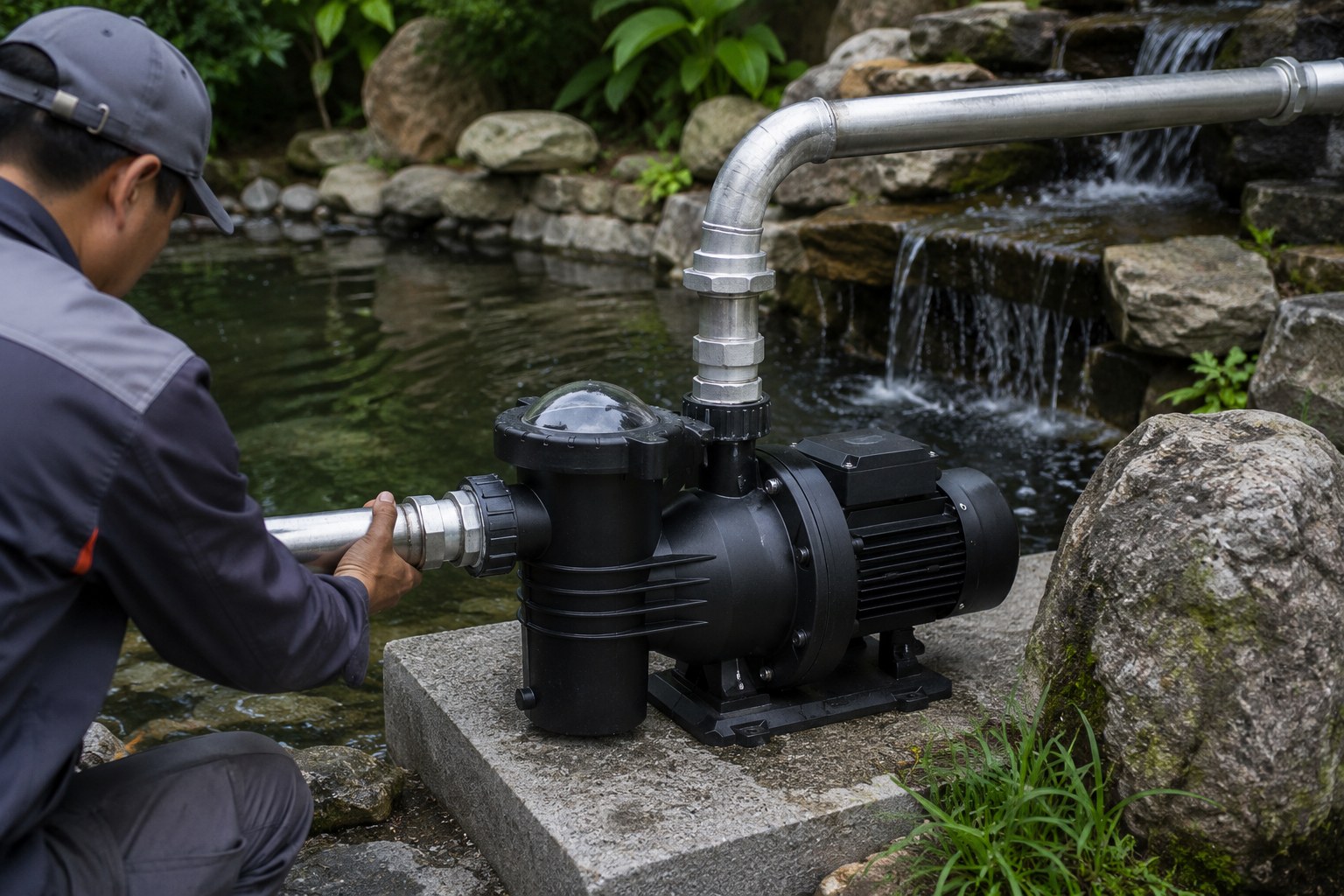
Conventional pond pumps fall into three main categories. Mag-drive pumps are efficient for small features. Asynchronous pumps offer a balance of power and efficiency for medium to large ponds. Direct-drive pumps provide maximum power for high-head applications like large waterfalls.
Dive Deeper into Pump Technologies
Submersible pumps are the most popular choice for ponds because they are quiet and can be easily hidden in a skimmer box.
Understanding the motor technology inside the pump will help you choose one that is energy-efficient, long-lasting, and right for the job.
Magnetic-Drive (Mag-Drive) Pumps
These pumps are the workhorses for smaller water features.
They operate using a magnet connected to an impeller, which is spun by another magnet in the motor.
This indirect connection means they are very energy-efficient.
- Best For: Small to medium ponds, fountains, spitters, and small in-pond filters.
- Advantages: They consume very little electricity, often less than 50% of a comparable direct-drive pump. They are also generally long-lived.
- Maintenance: Maintenance is simple. If performance drops, the impeller is usually the only part that needs cleaning or replacing. This makes them economical to maintain over their lifespan.
- Limitations: They are not designed for high head pressure. Their flow rate drops significantly as the vertical lift increases.
Asynchronous & Hybrid Pumps
These pumps represent a middle ground, combining features from both mag-drive and direct-drive technologies.
They use a more complex magnetic field to spin the impeller.
This design allows them to perform like powerful direct-drive pumps but with the energy efficiency closer to a mag-drive.
- Best For: Medium to large ponds, most waterfalls, and circulation for filtration systems.
- Advantages: They offer significantly higher flow rates at lower head pressures compared to mag-drives. They are built for continuous duty and have a long service life. They are the go-to choice for most modern pond builders.
- Energy Use: They strike a great balance, providing substantial flow without the high electricity costs associated with older direct-drive models.
Direct-Drive Pumps
These are the powerlifters of the pump world.
The impeller is connected directly to the motor shaft, transferring 100% of the motor's power to moving water.
This design allows them to push water to great heights and handle high head pressure with ease.
- Best For: Large waterfalls, tall water features, and situations requiring very high flow rates or high head pressure.
- Disadvantages: They are the least energy-efficient type of pump, consuming more electricity to operate. Many models also require periodic oil or lubrication changes to maintain the shaft seals, adding to their long-term running cost.
- Lifespan: While they are economical to purchase initially, they often have a shorter lifespan than asynchronous or mag-drive pumps due to having more moving parts that can wear out.
| Pump Type | Best Application | Energy Efficiency | Head Pressure | Lifespan |
|---|---|---|---|---|
| Mag-Drive | Fountains, Small Ponds | Highest | Low | Long |
| Asynchronous | Medium-Large Ponds | High | Medium | Very Long |
| Direct-Drive | High Waterfalls | Lowest | High | Shorter |
The Rise of Solar Pumps for Modern Water Needs
What if your water needs go beyond a simple garden pond?
You might need to irrigate a farm, water livestock, or supply a home in an area with no reliable electricity.
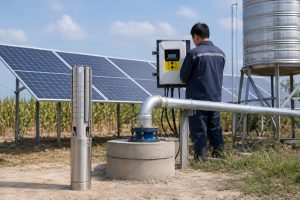
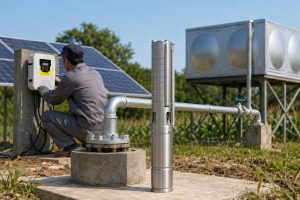
Solar pumps are the solution for off-grid water needs. They operate independently of the power grid, using free energy from the sun. With advanced motors and durable designs, they provide reliable water for agriculture, livestock, and domestic use in remote locations worldwide.
Dive Deeper into Solar Pump Solutions
While conventional pumps are perfect for grid-connected garden ponds, a new class of pumps is revolutionizing water access globally.
Solar water pumps have become essential in Africa, the Americas, Australia, and Asia.
They offer a sustainable, cost-effective, and reliable way to move water.
These systems are powered by highly efficient brushless DC (BLDC) motors, making them more powerful and durable than ever before.
Let's explore the three most popular types of solar deep-well pumps that form a competitive product portfolio for any water need.
Solar Screw Pumps: Low Flow, High Head
This pump is a specialist in lifting water from extreme depths.
It uses a unique progressing cavity design, with a stainless steel screw (rotor) turning inside a rubber stator.
This action creates sealed cavities that move water upward through compression.
- Performance: It is designed for low flow rates but can achieve very high head, making it perfect for deep wells.
- Applications: Ideal for domestic water supply in remote homes, providing drinking water for livestock, and small-scale drip irrigation. It is a vital tool in electricity-scarce regions of Africa and Latin America.
- Advantages: Its key advantage is its ability to handle sandy or silty water without damage. The simple, robust design can operate reliably in harsh water conditions where other pumps might fail.
- Limitations: The flow rate is limited, making it unsuitable for applications requiring large volumes of water, such as flood irrigation for large farms.
| Feature | Specification |
|---|---|
| Mechanism | Progressing Cavity |
| Flow Rate | Low |
| Head | Very High |
| Sand Resistance | Excellent |
| Primary Use | Deep Well Domestic |
This targeted design makes the solar screw pump an indispensable solution for life-sustaining water access in challenging environments.
Solar Plastic Impeller Pumps: High Flow, Wear-Resistant
Need to move a lot of water for your farm or garden without a high electricity bill?
Traditional pumps can be costly to run, and may not be durable enough for your water quality.
Solar plastic impeller pumps are the answer for high-volume needs. This multi-stage centrifugal pump uses durable, wear-resistant plastic impellers to deliver high flow at a medium head. They are lightweight, economical, and perfect for farm irrigation and pasture water supply.
Dive Deeper into High-Flow Solar Pumps
When the goal is moving large volumes of water efficiently, the solar plastic impeller pump excels.
This pump is a multi-stage centrifugal design, meaning it uses a series of impellers stacked on top of each other.
Each stage adds pressure, allowing the pump to deliver a high flow rate to a moderate height.
Engineered for Performance and Durability
The key to this pump's success lies in its materials.
The impellers are made from a high-strength, engineered plastic that is specially formulated for wear resistance.
This makes the pump highly effective at handling water with fine sand or sediment, a common issue in agricultural wells.
- Applications: Its ability to produce high water output makes it the top choice for farm irrigation, filling livestock troughs, and supplying water to large gardens or community projects. It is widely used across Africa and the Americas for these purposes.
- Advantages:
- High Flow: It can deliver significantly more water than a screw pump, making it suitable for applications that demand volume.
- Wear Resistance: It offers excellent resistance to abrasion from fine sand.
- Cost-Effective: The use of plastic impellers makes it more economical to produce and purchase compared to all-metal alternatives.
- Lightweight: It is easier to handle and install, reducing labor costs.
- Limitations: While durable, it is not intended for highly corrosive water (very high or low pH). In deep wells with aggressive water chemistry, a more robust material may be required.
| Feature | Specification |
|---|---|
| Mechanism | Multi-stage Centrifugal |
| Flow Rate | High |
| Head | Medium |
| Sand Resistance | Good (Fine Sand) |
| Primary Use | Farm Irrigation |
This pump provides a perfect balance of performance, durability, and cost, making it the workhorse of solar-powered agriculture.
Solar Stainless Steel Impeller Pumps: Premium Quality, Corrosion Resistance
Is your well water acidic, alkaline, or salty?
Standard pumps can corrode and fail quickly in these conditions, leading to costly replacements and downtime.
Solar stainless steel impeller pumps are built for the toughest water. Using SS304 stainless steel for the impeller and pump body, this model offers maximum corrosion resistance. It delivers high flow and is ideal for harsh water conditions found in coastal areas or alkaline soil regions.
Dive Deeper into Premium Pump Construction
For the most demanding environments, you need a pump built from premium materials.
The solar stainless steel impeller pump is the top-tier solution for water that would destroy lesser pumps.
This model utilizes the same high-flow, multi-stage centrifugal design as the plastic impeller version, but every component that touches water is made from SS304 stainless steel.
Unmatched Durability and Reliability
SS304 is a grade of stainless steel known for its excellent resistance to a wide range of corrosive agents.
This makes the pump immune to rust and degradation from acidic or alkaline water.
- Applications: This pump is specifically designed for challenging water sources. It is the perfect choice for coastal regions with saltwater intrusion, areas with alkaline soil like parts of Australia, and industrial applications with corrosive liquids. It is also chosen for high-end homes and ranches where longevity and reliability are the top priorities.
- Advantages:
- Superior Corrosion Resistance: It can operate for years in water that would ruin other pumps in months.
- Long Service Life: The robust construction ensures maximum durability and a very long operational lifespan.
- High Reliability: It provides peace of mind in critical water supply situations.
- Limitations: The premium materials and construction come at a higher cost. The pump is also heavier than its plastic counterpart, which can make installation more demanding. It targets a niche but critical segment of the high-end market.
| Feature | Specification |
|---|---|
| Mechanism | Multi-stage Centrifugal |
| Flow Rate | High |
| Head | Medium to High |
| Corrosion Resistance | Highest |
| Primary Use | Corrosive Water |
When water quality is a challenge, investing in a stainless steel pump is the most cost-effective decision in the long run.
The Core Technology: High-Efficiency BLDC Motors
What truly powers the performance of a modern solar pump?
The pump itself is only half the story. The motor is the heart of the system, determining its efficiency and reliability.
All three leading solar pump types are driven by a high-efficiency Brushless DC (BLDC) permanent magnet motor. With efficiencies exceeding 90%, these motors use powerful magnets to deliver more power in a smaller, lighter, and more reliable package, reducing overall system costs.
Dive Deeper into the Motor That Drives Success
The single biggest leap in solar pumping technology has been the development of the BLDC permanent magnet motor.
This is the core technology that makes the entire system viable and competitive.
Unlike older brushed motors that lose energy to friction and heat, a BLDC motor uses electronics to switch the magnetic field, resulting in dramatically higher efficiency.
Technical and Market Advantages
The rotor, the spinning part of the motor, is made of 40SH neodymium iron boron.
This is a powerful rare-earth permanent magnet that creates a strong magnetic field.
This advanced design provides numerous benefits.
- Unmatched Efficiency: BLDC motors regularly achieve efficiencies of over 90%. A conventional AC motor might only be 60-70% efficient. This means more of the sun's energy is converted into pumping water, not wasted as heat.
- Compact and Powerful Design: This technology results in a motor that is significantly smaller and lighter. Compared to an equivalent AC motor, a BLDC motor can be up to 47% smaller and 39% lighter. This makes installation easier and less expensive.
- High Torque: They produce high torque even at low speeds, which is crucial for starting the pump under load, especially in deep wells.
- Maintenance-Free and Long Life: With no brushes to wear out, these motors are virtually maintenance-free and are designed for a service life of over 10 years.
The Strategic Value
The high efficiency of the BLDC motor has a cascading effect on the entire solar pumping system.
| Advantage | Impact on System |
|---|---|
| Higher Efficiency | Reduces the number of solar panels needed by up to 30%. |
| Lower Panel Cost | Directly lowers the total initial investment for the user. |
| Compact Size | Simplifies transportation and installation. |
| Maintenance-Free | Eliminates long-term operating costs and service calls. |
The BLDC motor is not just a component; it is the central pillar of the system's value proposition.
It is what makes solar pumping an economically superior choice to diesel generators or grid-powered pumps in many parts of the world.
Smart Pumping: Hybrid AC/DC and MPPT Controllers
What happens on a cloudy day or at night when you still need water?
Relying solely on solar power can be a concern for applications that require a 24/7 water supply.
Modern solar pump systems solve this with intelligent controllers. An MPPT controller maximizes solar energy usage during the day. A hybrid AC/DC controller automatically switches to grid or generator power when sunlight is insufficient, ensuring a reliable, uninterrupted water supply.
Dive Deeper into Intelligent Water Management
The "brains" of a solar pumping system is its controller.
The controller manages the power from the solar panels and protects the motor.
Advanced controllers now include two key technologies that dramatically improve performance and usability: MPPT and Hybrid AC/DC input.
MPPT: Maximizing Every Ray of Sun
MPPT stands for Maximum Power Point Tracking.
It is an electronic algorithm that constantly adjusts the electrical operating point of the solar panels.
This forces the panels to produce their maximum possible power, regardless of light conditions or temperature.
- Performance Boost: An MPPT controller can increase the water output of a pump by up to 30% over the course of a day compared to a basic controller.
- How it Works: It acts like an automatic transmission, perfectly matching the output of the solar panels to the needs of the motor. This is especially effective in the early morning, late afternoon, and on overcast days, extending the pump's daily run time.
Hybrid AC/DC: The Best of Both Worlds
The most significant innovation for user convenience is the hybrid AC/DC controller.
This controller is designed with two simultaneous power inputs.
You can connect both your solar panels (DC power) and a backup power source like the grid or a generator (AC power) at the same time.
- Automatic Switching: The controller's logic prioritizes solar power. When the sun is shining, it runs the pump entirely on free solar energy.
- Hybrid Function: If solar power drops due to clouds, the controller intelligently blends in just enough AC power to maintain the pump's operation, maximizing the use of free solar energy.
- Uninterrupted Supply: When the sun goes down or if there is no solar input, the controller automatically switches over to the AC power source. When the sun returns, it seamlessly switches back to solar.
- User Benefit: This provides a completely worry-free, 24-hour water supply without any manual intervention. It is perfect for households, critical livestock watering, and irrigation systems that cannot afford downtime.
This combination of an efficient BLDC motor and an intelligent hybrid controller creates a pumping system that is not only sustainable and cost-effective but also more reliable than traditional solutions.
Conclusion
The "best" pump is the one that fits your specific application, from a small garden fountain to a deep agricultural well.
Understanding your needs is the key to success.
FAQs
What size pump do I need for a 1000-gallon pond?
For basic circulation, you need at least 500 GPH. If you have fish, you should aim for 1000 GPH to ensure the water is turned over once every hour.
Can a pond pump be too strong?
Yes. A pump that is too powerful can create excessive turbulence, stress fish, and overwhelm your filtration system, making it less effective at cleaning the water.
How many hours a day should a pond pump run?
A pond pump should run 24 hours a day, 7 days a week. Continuous circulation is essential for oxygenating the water for fish and beneficial bacteria.
What is the difference between a pond pump and a fountain pump?
Pond pumps are designed for continuous duty and higher flow to power filters and waterfalls. Fountain pumps are typically smaller, designed for decorative effects, and may not be built for 24/7 operation.
How do I calculate the GPH for my pond?
To calculate the minimum GPH, divide your pond's total volume in gallons by two. For waterfalls, a common rule is 1,500 GPH for every foot of waterfall width.
Do solar pond pumps work on cloudy days?
Solar pumps work best in direct sun. On cloudy days, their output will be significantly reduced. Systems with battery backup or hybrid AC/DC controllers can operate in any condition.
How long do submersible pond pumps last?
A good quality submersible pump can last 5 to 10 years. Longevity depends on the pump type (asynchronous last longer), water quality, and proper maintenance.
Can I use a sump pump in my pond?
No. Sump pumps are not designed for continuous operation and are often oil-filled, which can be toxic to fish and aquatic life if a seal fails.