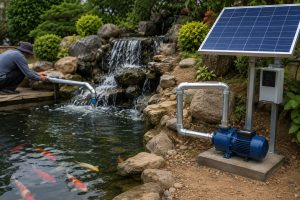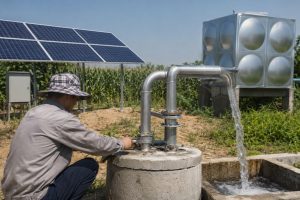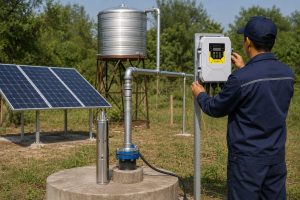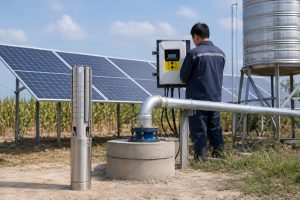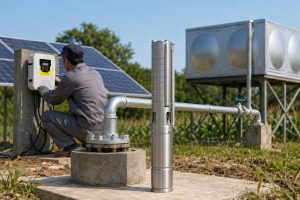
Struggling with unreliable grid power or high fuel costs for your water pump?
This dependency can threaten crops and limit access to essential water, impacting your livelihood and security.
Yes, you can absolutely run a water pump with solar power.
A properly designed solar water pumping system uses solar panels to generate electricity, a controller to manage the power, and a specialized pump to move water efficiently and cost-effectively, even in remote locations.
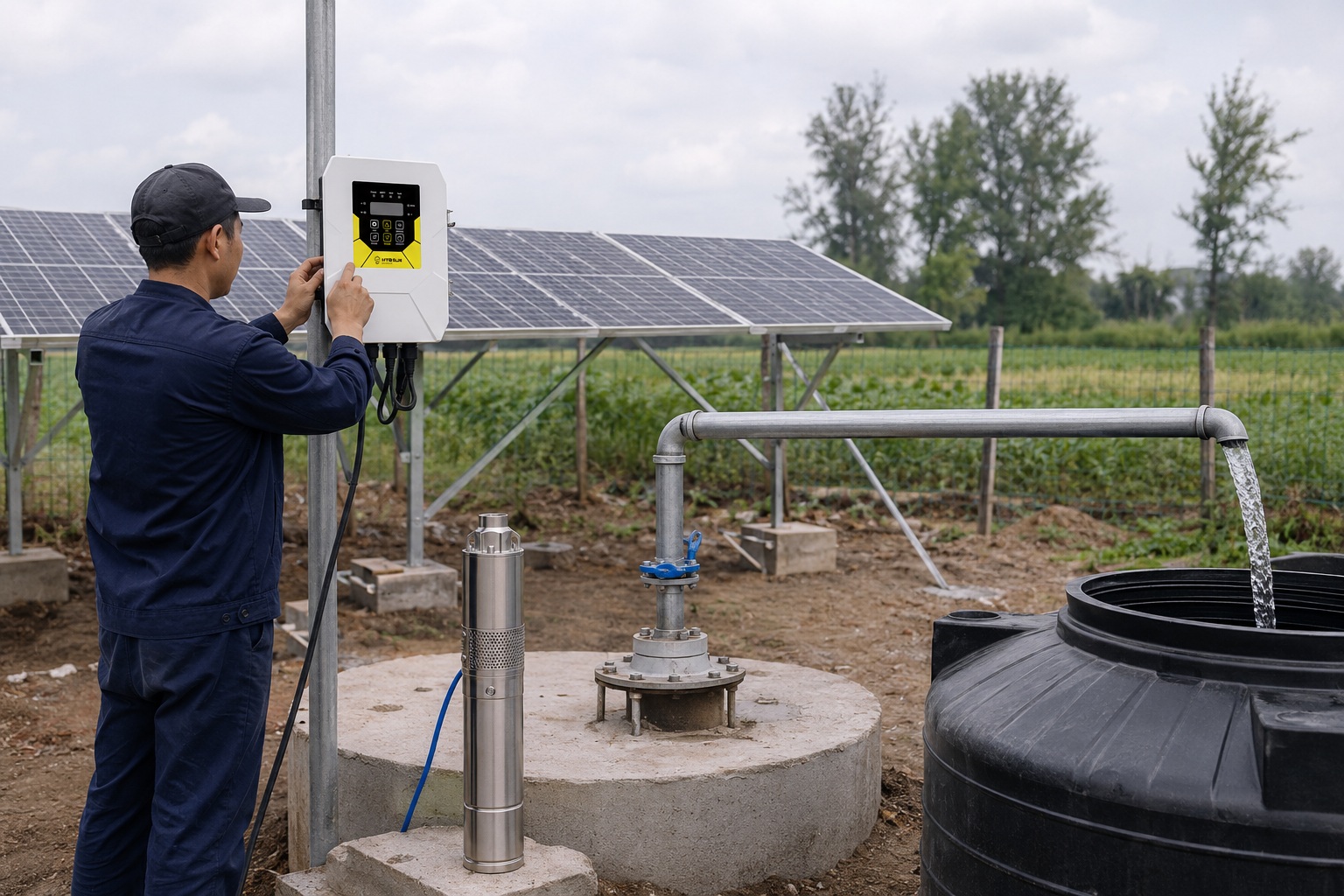
Running a water pump on solar is not just possible; it's a game-changer for agriculture, domestic water supply, and livestock management worldwide.
This technology offers a reliable, sustainable, and increasingly affordable alternative to traditional pumping methods that rely on fossil fuels or unstable electrical grids.
But how does it all work, and what do you need to know to build an effective system?
This guide will walk you through the entire process, from the fundamental components and their functions to selecting the right type of pump and motor for your specific needs.
We will explore the key technologies that make these systems so efficient and provide practical data to help you understand the real-world benefits and requirements.
How Do Solar-Powered Water Pumps Work?
Your farm or property needs water, but the grid is unreliable and diesel is expensive.
This constant uncertainty makes it hard to plan irrigation and manage costs effectively.
A solar water pumping system works by using photovoltaic (PV) panels to convert sunlight into DC electricity.
This power is then managed by a controller, which runs the pump's motor to draw water from a source like a well, river, or pond for various uses.
To truly understand the efficiency and reliability of a solar water pump, it's essential to break down the system into its core components.
Each part plays a critical role in converting sunlight into a steady flow of water.
The entire process is a seamless integration of physics and engineering designed for maximum output with minimal operational input.
System Components
A complete solar pumping system consists of several key parts working in harmony.
- Solar Panels (PV Array): These are the power source. They capture photons from sunlight and convert them into direct current (DC) electricity. The size of the array, measured in watts, determines how much power the system can generate.
- Solar Pump Controller: This is the brain of the system. It takes the DC power from the panels and optimizes it for the pump motor. Crucially, most modern controllers include Maximum Power Point Tracking (MPPT) technology.
- Pump Motor: This is the heart of the pump. It converts electrical energy from the controller into the mechanical energy needed to pump water. High-efficiency motors, like Brushless DC (BLDC) motors, are vital for maximizing water output.
- Water Pump: This is the part that physically moves the water. Different types exist, such as centrifugal or screw pumps, each suited for different applications based on required water volume (flow) and pumping height (head).
The Role of the Controller and MPPT
The solar pump controller is more than just an on/off switch.
Its most important feature is Maximum Power Point Tracking (MPPT).
The power output of a solar panel fluctuates with sunlight intensity and temperature.
MPPT technology constantly tracks these changes and adjusts the electrical load to extract the maximum possible power from the solar panels at any given moment.
This can increase the system's overall efficiency by up to 30% compared to systems without it, ensuring the pump runs effectively even in less-than-ideal sunlight conditions like early mornings or cloudy days.
| Component | Function | Key Feature/Benefit |
|---|---|---|
| Solar Panels | Converts sunlight into DC electricity. | The system's renewable energy source; long lifespan (25+ years). |
| Pump Controller | Manages and optimizes power from panels to pump. | MPPT technology boosts efficiency by over 30%; provides motor protection. |
| Pump Motor | Converts electricity into mechanical force. | High-efficiency BLDC motors reduce power needs and panel costs. |
| Water Pump | Moves water from the source to the destination. | Various types available for different flow and head requirements. |
AC vs. DC Systems
Solar panels naturally produce DC power.
Some solar pumps use a DC motor to run directly from this power (managed by a controller).
However, many standard water pumps are designed to run on alternating current (AC) power, the same type that comes from the grid.
In these cases, the system requires an inverter.
An inverter's job is to convert the DC electricity from the panels into AC electricity to power the pump.
Many modern "solar pump inverters" combine the functions of an inverter and an MPPT controller into a single, efficient unit.
What Are The Benefits of Solar-Powered Water Pumps?
Relying on diesel generators means dealing with fluctuating fuel prices, constant maintenance, and harmful emissions.
This makes water access expensive and environmentally damaging over the long term.
Solar-powered water pumps offer significant long-term savings by eliminating fuel costs.
They are also eco-friendly, require minimal maintenance, and provide a reliable water source, making them ideal for remote or off-grid locations where grid power is unavailable or unstable.
The advantages of switching to solar for water pumping extend far beyond simply "going green."
They represent a strategic investment that delivers tangible economic, operational, and social returns.
For farmers, ranchers, and communities in developing regions, these benefits can be life-changing, transforming subsistence agriculture into a more productive and profitable enterprise.
Let's examine these benefits with a closer look at the numbers.
Economic Benefits
While the initial setup cost of a solar pump system is higher than a conventional diesel pump, the long-term savings are substantial.
The primary saving comes from the complete elimination of fuel costs.
Furthermore, solar systems have very few moving parts compared to a diesel engine, resulting in significantly lower maintenance needs and costs.
- Zero Fuel Costs: The sun provides free energy.
- Low Maintenance: No oil changes, filter replacements, or engine servicing. The main task is occasionally cleaning the solar panels.
- Long Lifespan: Solar panels are typically warrantied for 20-25 years of production, and brushless DC motors can operate for many years without service.
- Quick ROI: In many agricultural applications, the return on investment can be realized in as little as 2-3 years due to fuel savings and increased crop yields.
Here’s a simplified 5-year cost comparison for a pump requiring approximately 3kW of power:
| Cost Factor | Diesel Pump System (5-Year Total) | Solar Pump System (5-Year Total) |
|---|---|---|
| Initial Investment | $1,500 | $4,000 |
| Fuel Cost (@ $5/gallon, 4hrs/day) | $18,250 | $0 |
| Maintenance (annual) | $1,500 ($300/year) | $250 ($50/year for cleaning) |
| Total 5-Year Cost | $21,250 | $4,250 |
As the table shows, the solar system can save over 75% in total costs over five years.
Environmental and Social Benefits
Switching to solar power has a profound positive impact.
- Eco-Friendly: Solar pumps produce no greenhouse gases or noise pollution during operation, protecting the local environment.
- Water Security: They provide a dependable water source for drinking, sanitation, and irrigation, which is crucial in areas with scarce rainfall. In many regions, a reliable solar pump can allow farmers to grow 3 or 4 crops per year instead of just 1 or 2, boosting food security and income.
- Improved Quality of Life: Automating water collection saves countless hours of manual labor, particularly for women and children, allowing them to pursue education or other economic activities.
What Size System Do I Need to Run a Water Pump?
Choosing the wrong size pump or panels can lead to poor performance or system failure.
An undersized system won't pump enough water, while an oversized one is a waste of money.
Properly sizing a solar water pump system is critical.
You must match the solar panel wattage and inverter capacity to the pump's power requirements, including its high starting current, and your daily water needs and local sunlight conditions.
Sizing a solar pumping system isn't just about matching the pump's running watts to the solar panel's output.
Two critical calculations must be made: sizing the inverter/controller to handle the pump's startup power surge and sizing the solar array to meet the pump's energy demands throughout the day.
Getting this right ensures the system operates efficiently and reliably for years to come.
Sizing the Inverter or Controller
When a motor starts, it draws a brief but massive surge of current, known as the starting or inrush current.
This surge can be 3 to 8 times the motor's normal running current.
The solar pump inverter or controller must be able to supply this peak power without shutting down or sustaining damage.
A common rule of thumb is to choose an inverter with a peak power rating (often listed in kVA) that is at least five times the pump's continuous power rating (in kW).
- Example: For a 1 HP (~0.75 kW) water pump, you need an inverter with a capacity of at least 3.75 kVA. A 5 kVA inverter would be a safe and reliable choice.
Failing to account for this surge is a primary cause of system failure. An undersized inverter will trip its overload protection circuits, preventing the pump from ever starting.
Sizing the Solar Panel Array
The amount of solar wattage needed depends on the pump's power consumption, the total daily water volume required, and the amount of peak sun hours available at your location.
A good starting point is to provide about 1.5 to 2 times the pump's running wattage in solar panel capacity.
This oversizing helps compensate for non-ideal conditions like cloudy weather, panel soiling, and high temperatures, which can reduce panel output.
- Example: A 1 HP pump (~750 watts) will typically run well on a solar array of 1200 watts. This could be comprised of four 300-watt solar panels.
Here’s a general guide for sizing a solar array based on pump horsepower (HP):
| Pump Size (HP) | Pump Power (Watts) | Recommended Solar Array (Watts) |
|---|---|---|
| 0.5 HP | ~375 W | 600 - 750 W |
| 1 HP | ~750 W | 1200 - 1500 W |
| 2 HP | ~1500 W | 2400 - 3000 W |
| 3 HP | ~2200 W | 3500 - 4500 W |
To fine-tune this, you must also consider:
- Total Dynamic Head (TDH): The total vertical distance the water needs to be lifted plus friction loss in the pipes. Higher head requires more power.
- Required Flow Rate: The volume of water needed per day (e.g., in gallons or cubic meters).
- Peak Sun Hours: The average number of hours per day your location receives strong sunlight. An area with 4 peak sun hours will need a larger solar array than an area with 6 hours to pump the same amount of water.
What Are The Different Types of Solar Pumps?
You know you need a solar pump, but the choices are confusing.
A pump designed for a shallow well will fail in a deep borehole, and one for clean water will clog with sand.
The three main types of solar deep well pumps are screw pumps, plastic impeller pumps, and stainless steel impeller pumps.
Each is designed for specific conditions: screw pumps for high head, plastic impeller pumps for high flow, and stainless steel pumps for corrosive water.
Choosing the correct pump is as important as sizing the system correctly.
The right pump type ensures efficiency, longevity, and reliable water delivery based on your specific water source and needs.
Each pump technology uses a different mechanism to move water, making it uniquely suited for certain applications.
All these advanced pumps are typically powered by highly efficient BLDC permanent magnet motors, forming a powerful and versatile product portfolio.
Solar Screw Pumps: The Deep Well Specialist
Solar screw pumps, also known as progressing cavity pumps, are engineered for high-head, low-flow applications.
- How it Works: It uses a single helical rotor (the screw) rotating inside a double helical rubber stator. As the rotor turns, it forms sealed cavities that progress along the pump, pushing the water upward.
- Key Characteristics:
- High Head: Can pump water from very deep wells, often exceeding 150 meters.
- Low Flow: Delivers a lower volume of water compared to centrifugal pumps.
- High Sand Resistance: The design can handle water with a higher concentration of sand and silt without clogging or rapid wear, making it extremely durable in harsh well conditions.
- Best Applications: Domestic water supply for homes, livestock drinking water, and small-scale drip irrigation in areas with very deep water tables, common in parts of Africa and Latin America.
Solar Plastic Impeller Pumps: The High-Volume Workhorse
This is a type of multi-stage centrifugal pump designed for high-flow applications.
- How it Works: It uses a series of rotating impellers to build pressure and move a large volume of water. The impellers are made of durable, wear-resistant engineering plastics.
- Key Characteristics:
- High Flow: Excellent for applications requiring a large volume of water.
- Medium Head: Suitable for shallow to moderately deep wells.
- Cost-Effective: Generally more economical than stainless steel models.
- Good Wear Resistance: Modern plastic impellers are highly resistant to abrasion from fine sand.
- Best Applications: Farm irrigation, filling large reservoirs, pasture water supply, and community water projects. It's a popular choice in Africa and the Americas for its balance of performance and price.
Solar Stainless Steel Impeller Pumps: The Premium Durability Option
This pump is built for longevity and performance in challenging water conditions.
- How it Works: Similar to the plastic impeller pump, it is a multi-stage centrifugal pump, but its impellers, diffusers, and pump body are all made from SS304 or SS316 stainless steel.
- Key Characteristics:
- Superior Corrosion Resistance: Ideal for pumping water with high or low pH levels (acidic or alkaline water) that would corrode other materials.
- High Reliability & Long Lifespan: The robust construction ensures maximum durability, even in demanding environments.
- High Flow & Medium-to-High Head: Offers excellent performance across a range of applications.
- Best Applications: Water supply in coastal regions with saline intrusion, areas with alkaline soil like Australia, high-end homes, and industrial applications requiring pure, uncontaminated water.
| Pump Type | Primary Advantage | Best For | Flow Rate | Head | Sand Resistance |
|---|---|---|---|---|---|
| Screw Pump | Very High Head | Deep wells, domestic use | Low | Very High | Excellent |
| Plastic Impeller | High Flow & Value | Farm irrigation, high volume | High | Medium | Good |
| Stainless Steel Impeller | Corrosion Resistance | Corrosive water, premium use | High | Medium-High | Good |
What is The Core Technology Driving Modern Solar Pumps?
You might think the pump itself is the most important part.
But an inefficient motor will waste precious solar energy, forcing you to buy more panels and increasing your total system cost.
The core technology is the high-efficiency Brushless DC (BLDC) permanent magnet motor.
This motor, combined with an intelligent hybrid controller, determines the overall efficiency, reliability, and cost-effectiveness of the entire solar pumping system, delivering more water for less power.
While the pump end (screw or impeller) determines the application, it's the motor and controller that dictate the system's performance.
The move towards advanced BLDC motors and smart hybrid controllers has revolutionized the solar pumping industry, dramatically reducing both initial investment and long-term operating costs.
These technologies are the true drivers behind the competitiveness of modern solar water pumps.
The Power of BLDC Permanent Magnet Motors
A Brushless DC (BLDC) motor is the engine of a modern solar pump.
Unlike traditional brushed motors, they have no brushes to wear out, making them virtually maintenance-free.
Their real advantage lies in their incredible efficiency.
- Unmatched Efficiency: BLDC motors can achieve efficiencies of over 90%, compared to 60-75% for traditional AC or brushed DC motors. This means more of the sun's energy is converted into useful water pumping.
- Technical Advantages:
- High Power Density: They are significantly smaller and lighter. A BLDC motor can be up to 47% smaller and 39% lighter than a traditional motor of the same power output.
- High Torque: They provide high starting torque, which is essential for getting the pump running quickly.
- Long Service Life: With no brushes to replace, their operational lifespan is significantly longer.
- Market Value: The high efficiency directly translates to cost savings. A system with a 90% efficient BLDC motor might require 15-20% fewer solar panels than a system with a 75% efficient motor to pump the same amount of water. This lowers the initial system cost and simplifies installation.
Intelligent Control: The Rise of Hybrid Systems
The biggest limitation of a pure solar system is its dependence on the sun.
No sun means no water.
Intelligent AC/DC hybrid controllers solve this problem.
These controllers are designed with inputs for both solar (DC) and grid/generator (AC) power.
- How It Works: The controller's logic is programmed to prioritize solar power.
- Full Sun: The system runs 100% on solar power.
- Low Sun (Cloudy): The controller blends power, using all available solar energy and supplementing it with just enough AC power to meet the pump's demand. This maximizes the use of free solar energy.
- No Sun (Night): The system automatically switches to 100% AC power from the grid or a generator.
- The Benefit: This ensures a reliable, 24/7 water supply regardless of weather or time of day, making it perfect for critical applications like household water supply or intensive irrigation. It offers the best of both worlds: the cost savings of solar and the reliability of the grid.
Conclusion
Running a water pump with solar is a highly effective and economical solution.
The key lies in combining the right pump type with a high-efficiency BLDC motor and an intelligent controller.
This creates a reliable, low-maintenance system tailored to your exact needs.
FAQs
Can I run a water pump straight from a solar panel?
No, it's not advisable. You need a controller to manage the variable power from the panel and provide the correct voltage and current for the pump motor to run safely.
How many solar panels does it take to run a 1 hp water pump?
A 1 HP pump typically requires about 1200 watts of solar power. This can be supplied by four 300-watt panels, depending on panel efficiency and local sun conditions.
What size inverter do I need for a water pump?
To handle the startup power surge, the inverter's capacity should be 3-5 times the pump's running power rating. For a 1kW pump, a 3-5 kVA inverter is recommended.
Do solar water pumps work on cloudy days?
Yes, but at reduced output. Systems with MPPT controllers perform better in low light, and hybrid systems can use grid power to ensure consistent operation during cloudy weather.
How long do solar water pumps last?
Solar panels can last over 25 years. The pump and high-quality BLDC motor are very durable, often lasting for many years with minimal maintenance required.
Can a solar pump fill a water tank?
Yes, this is a very common and efficient application. The pump fills a storage tank during sunny hours, providing a water reserve that can be used 24/7.
Is it cheaper to run a pump on solar or a generator?
Solar is significantly cheaper in the long run. While the initial cost is higher, you have no ongoing fuel expenses, making the total cost of ownership much lower.
What maintenance does a solar water pump require?
Maintenance is minimal. It mainly involves cleaning the solar panels a few times a year and periodically checking the pump intake for debris. The brushless motor requires no service.